Submitted by Berrin Chatzi Chousein
The bridge that became a house and resembled a cocoon in Karjat, designed by Wallmakers
India Architecture News - Nov 12, 2025 - 11:26 3924 views
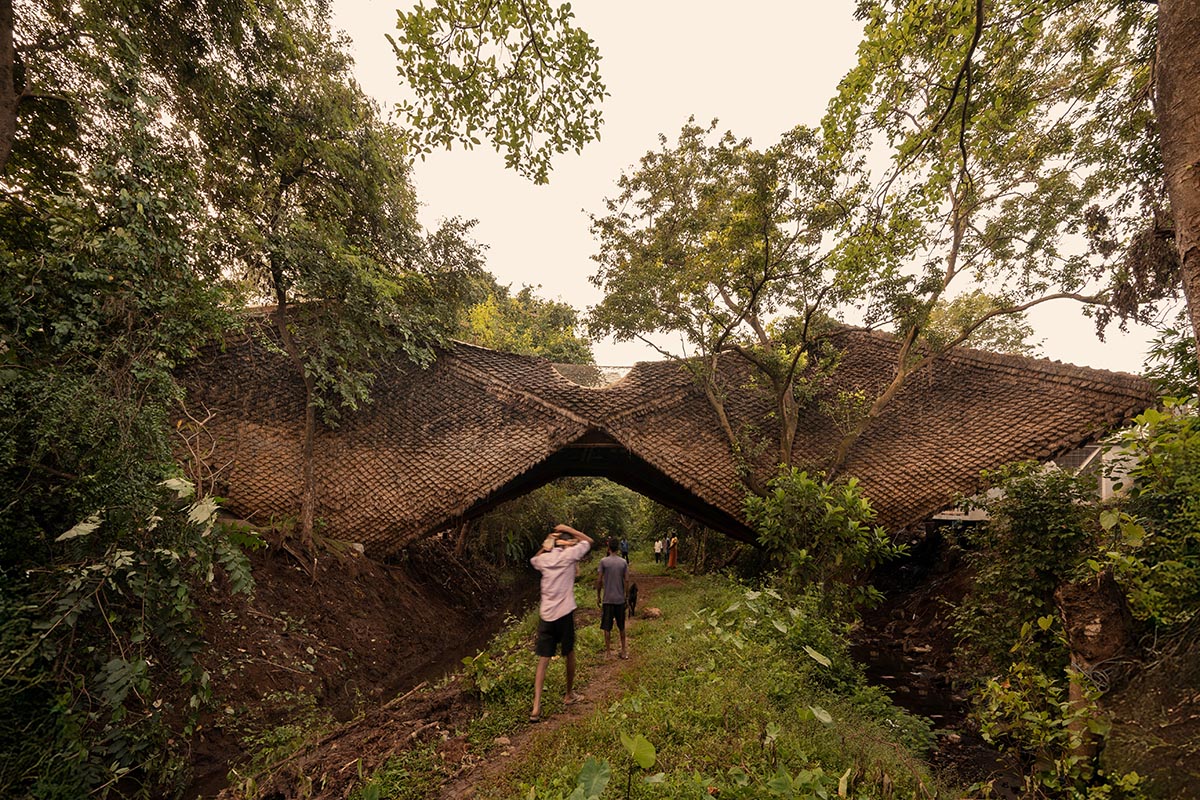
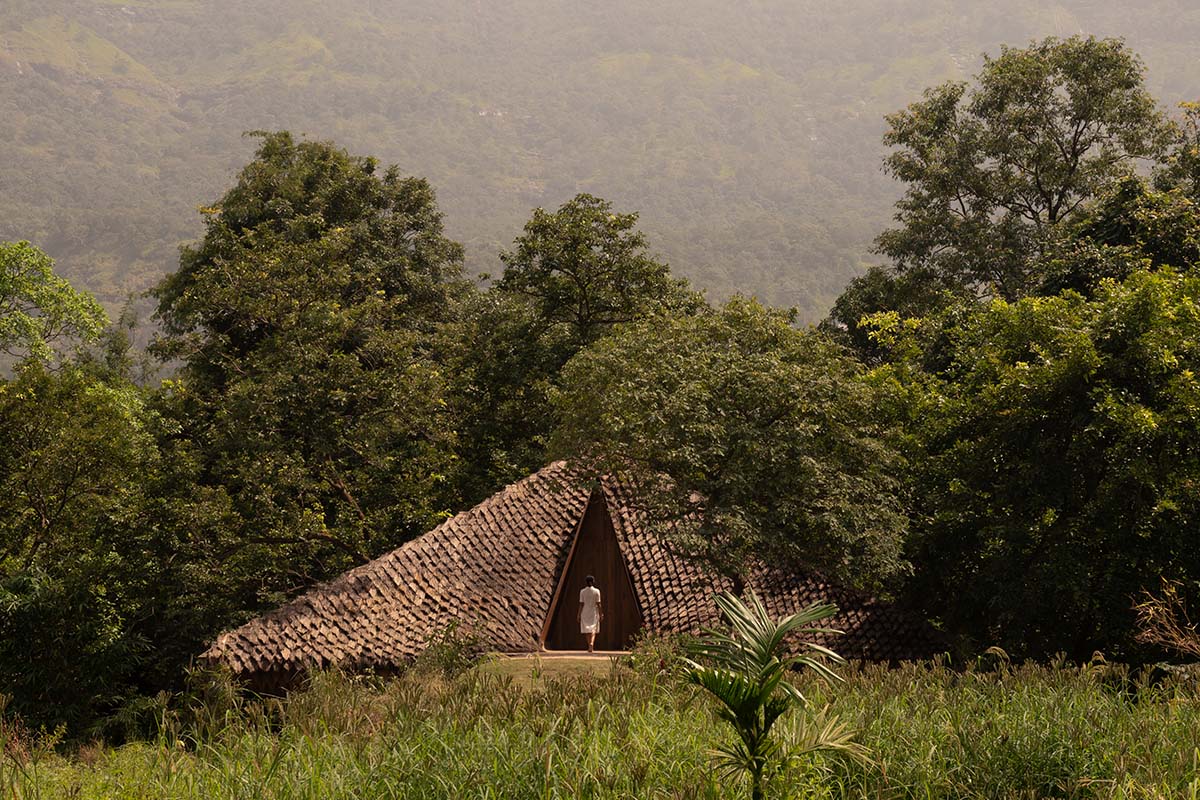
Perched amidst the undulating hills of Karjat, a cocoon-like house has reimagined the relationship between architecture, landscape, and site constraints.
Named The Bridge House, the 418-square-metre house was designed by the architecture practice Wallmakers, an Indian architecture studio led by Vinu Daniel, the recipient of the 2022 Royal Academy Dorfman Award for Architecture.
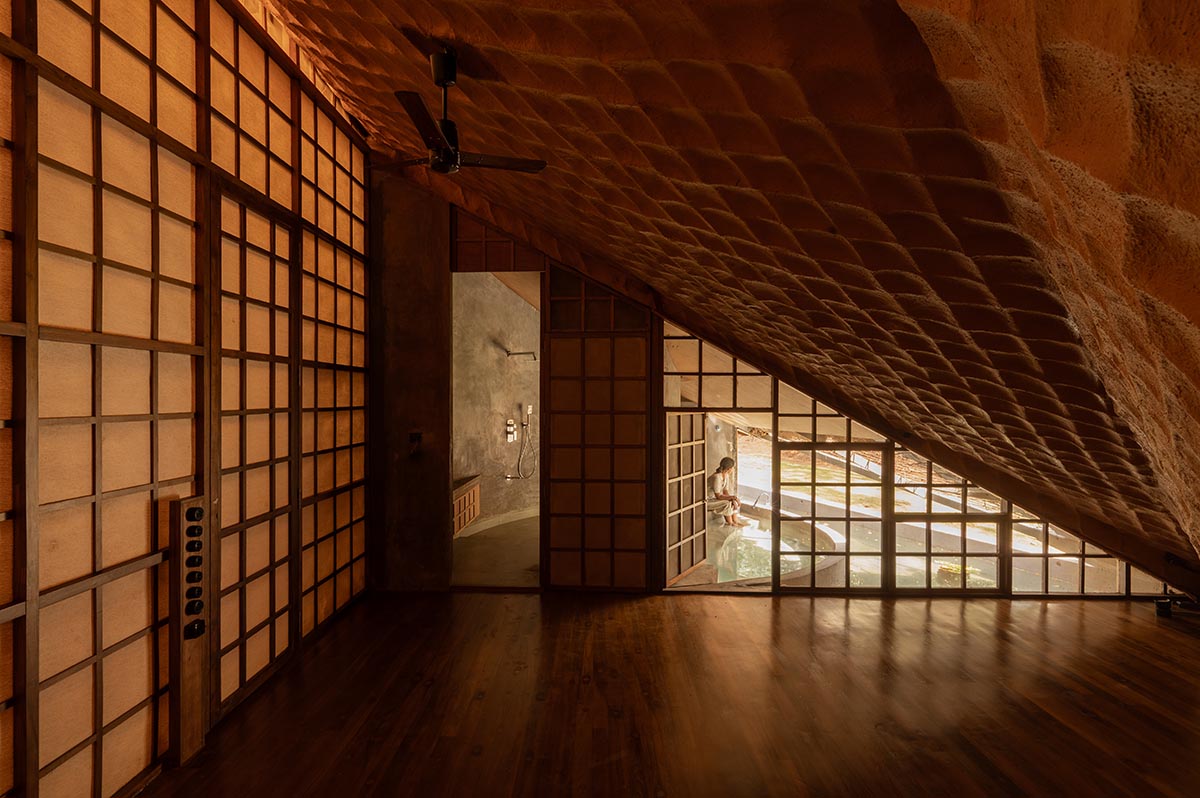
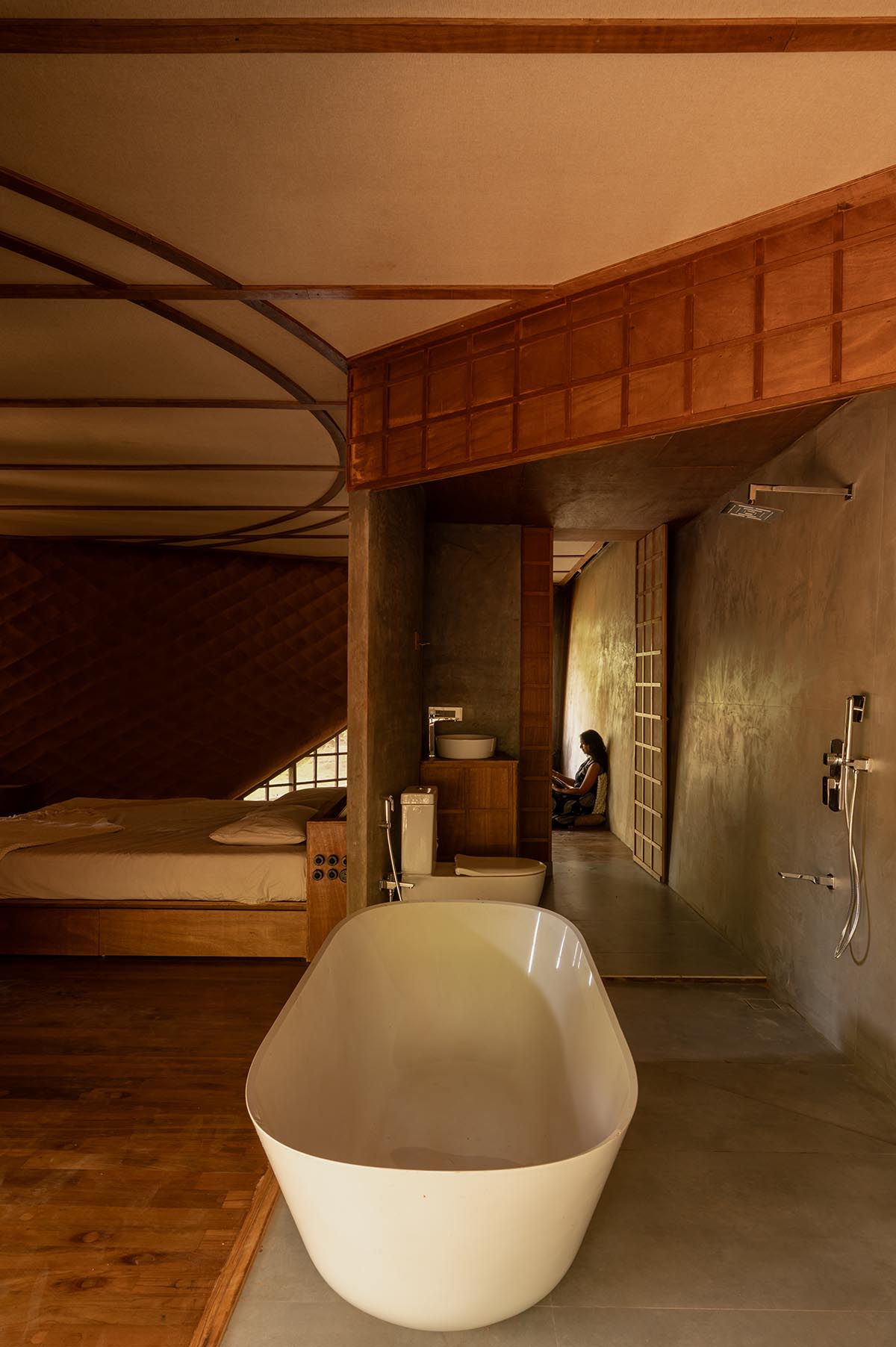
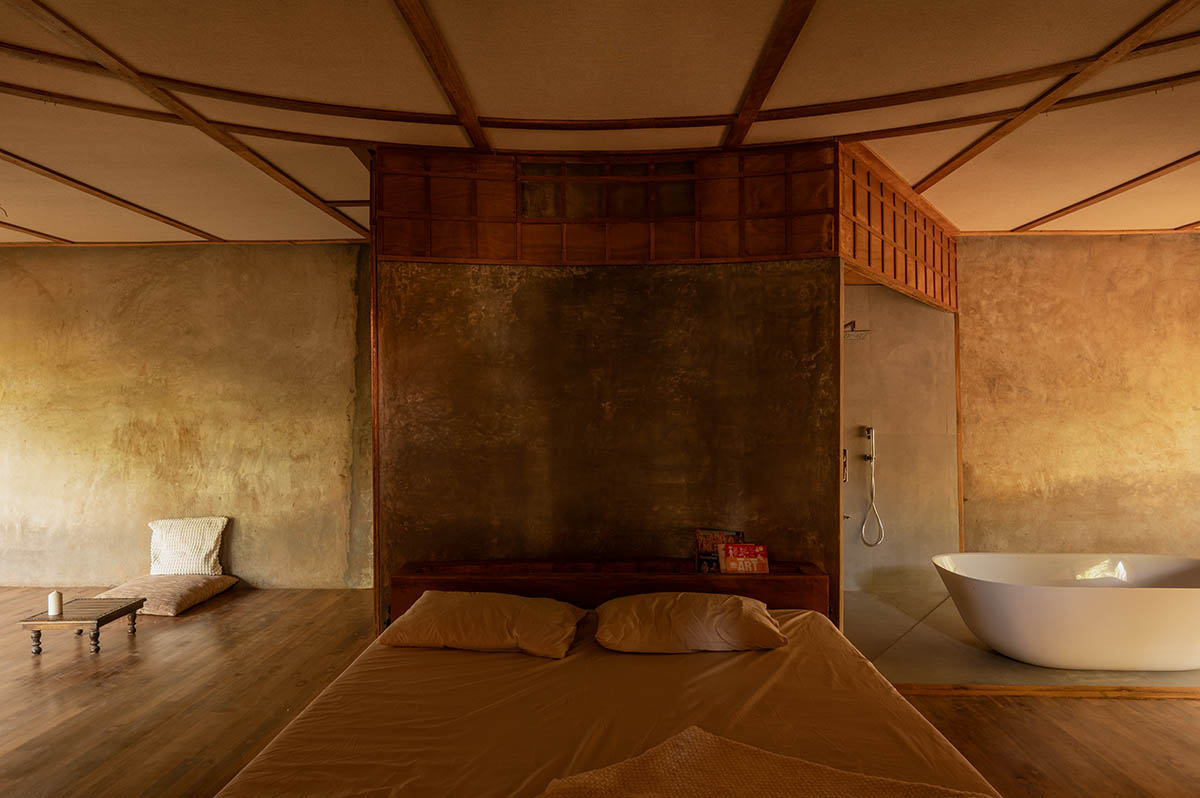
While a bedroom is situated at the lower level, the upper level consists of the main entrance, entry foyer, living room, courtyard, pond, bath, swimming pool, and deck.
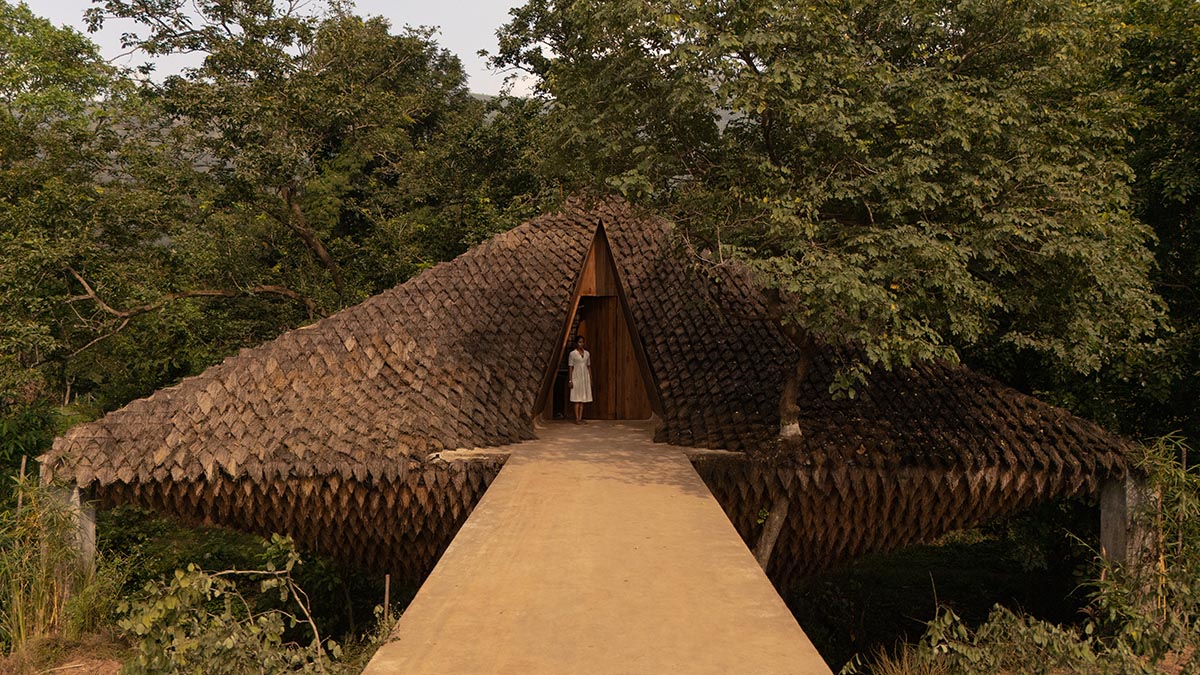
The site, intersected by the TATA spillway stream, presented an unusual challenge—a 7-metre-deep gorge split the land into two parcels, demanding connection without disturbing the fragile terrain.
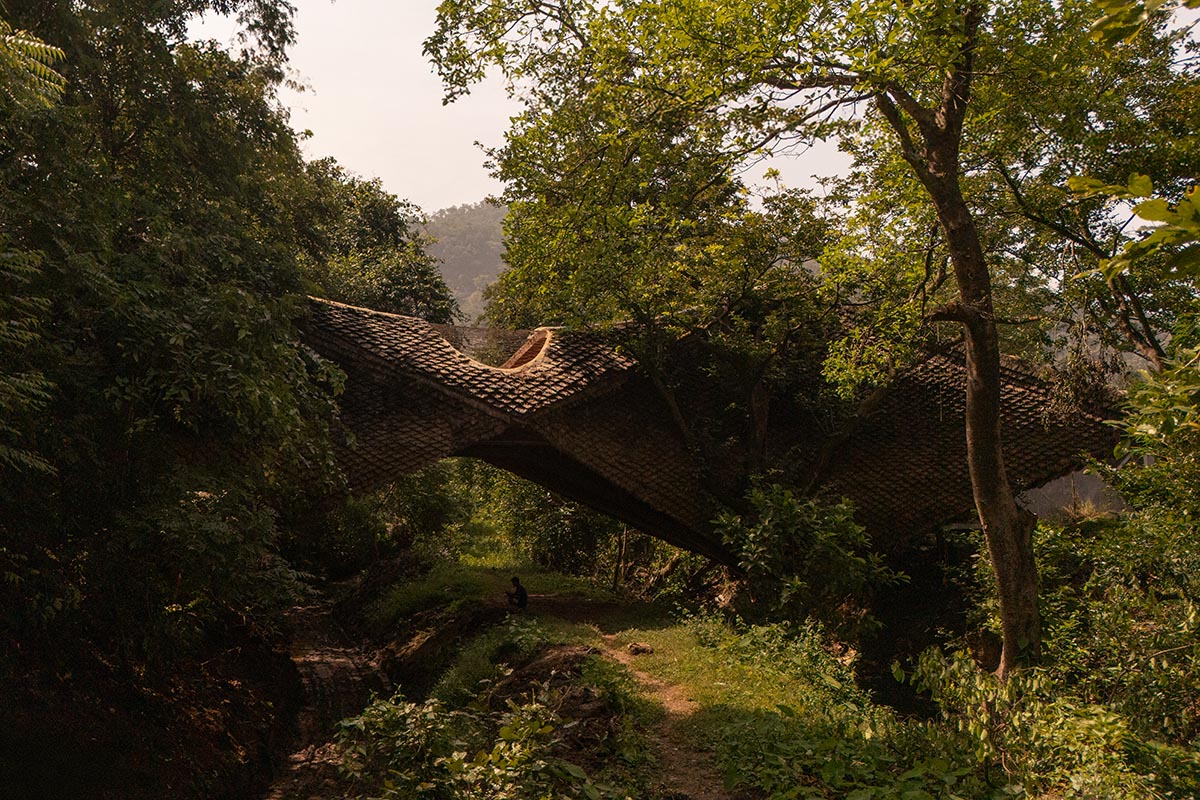
"The project was defined by limitations"
"From the very beginning, the project was defined by limitations," recalls the studio. Foundations could not be placed within the 100-foot-wide (30-metre) spillway.
Any bridge across it had to leave enough clearance for a JCB to clean the two streams beneath. And while the team aspired to use local materials, the only resource readily available within miles was wild grass.
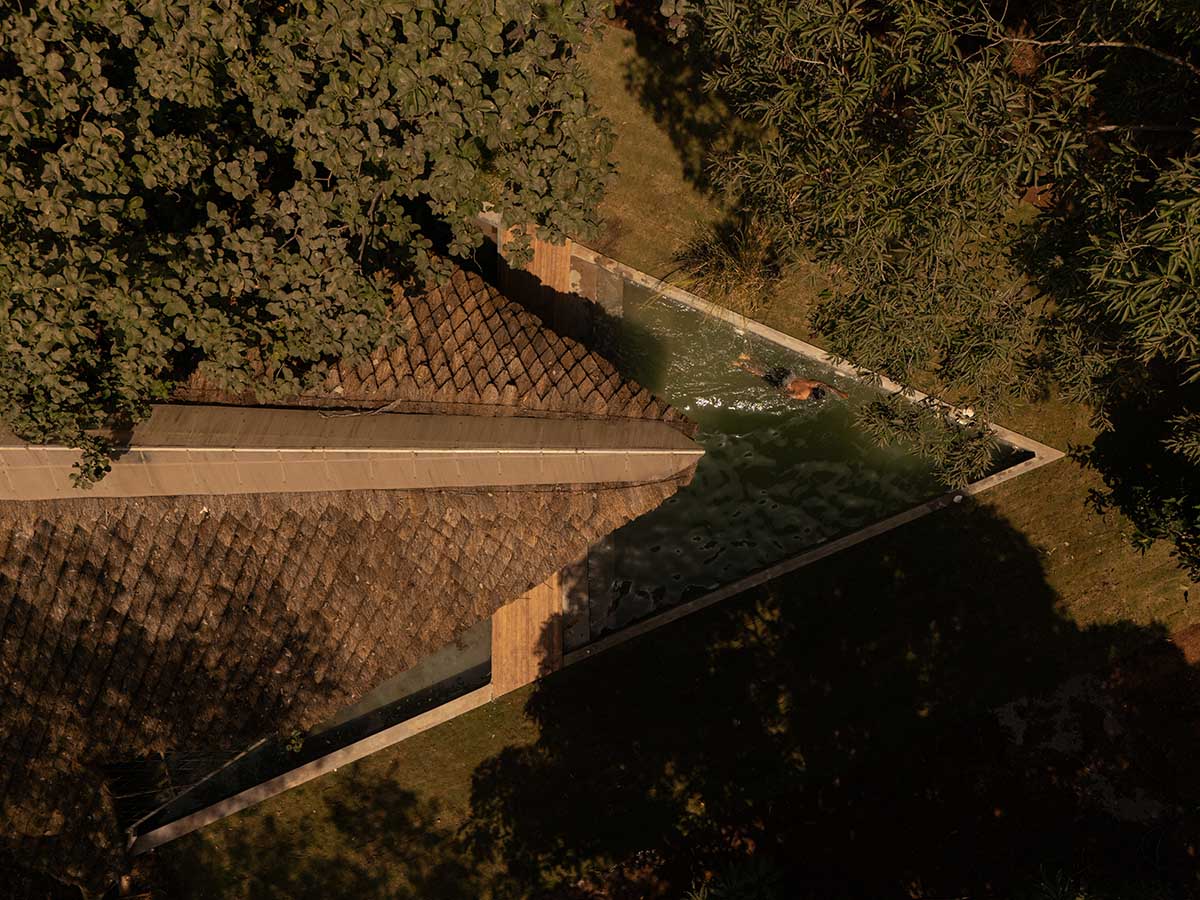
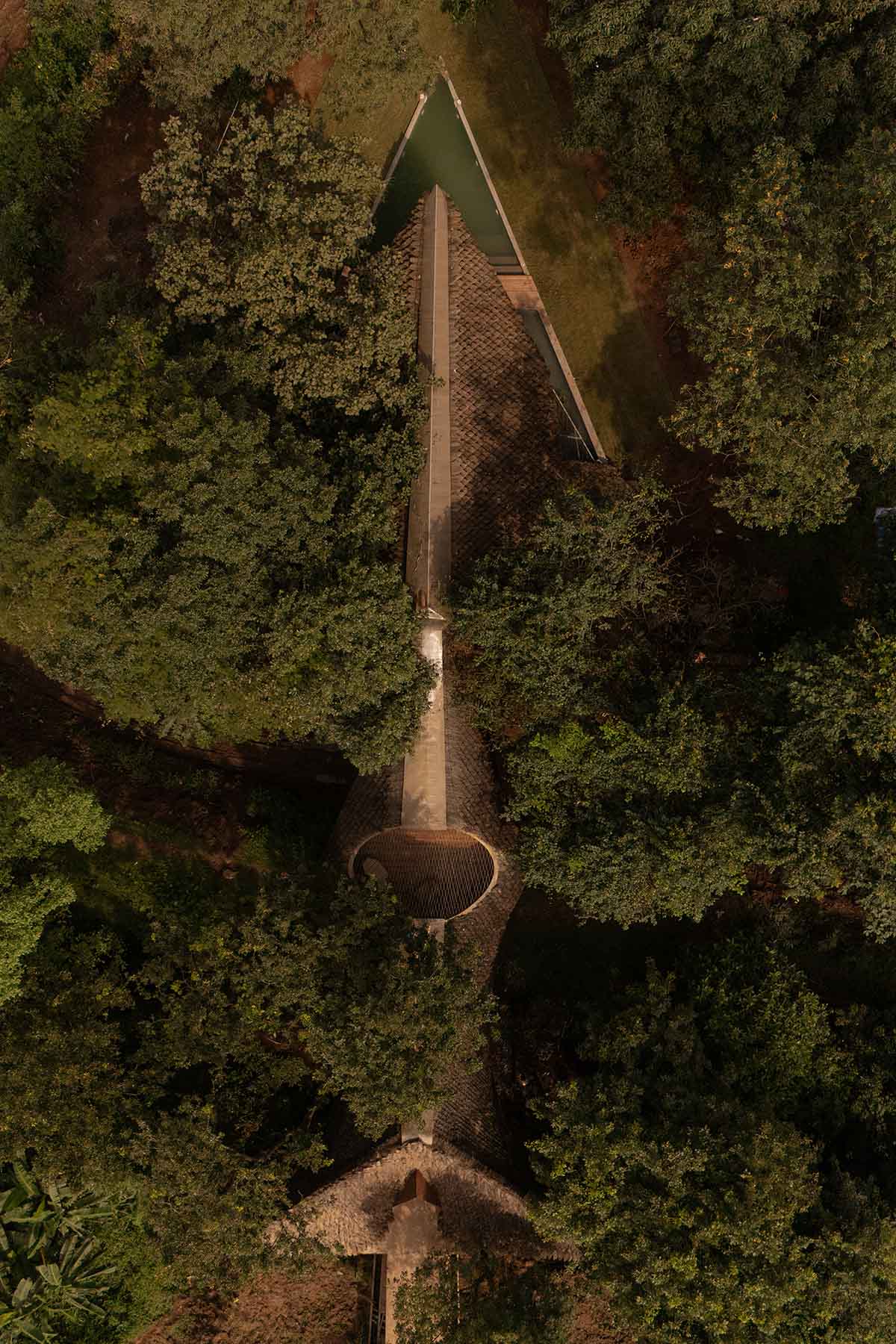
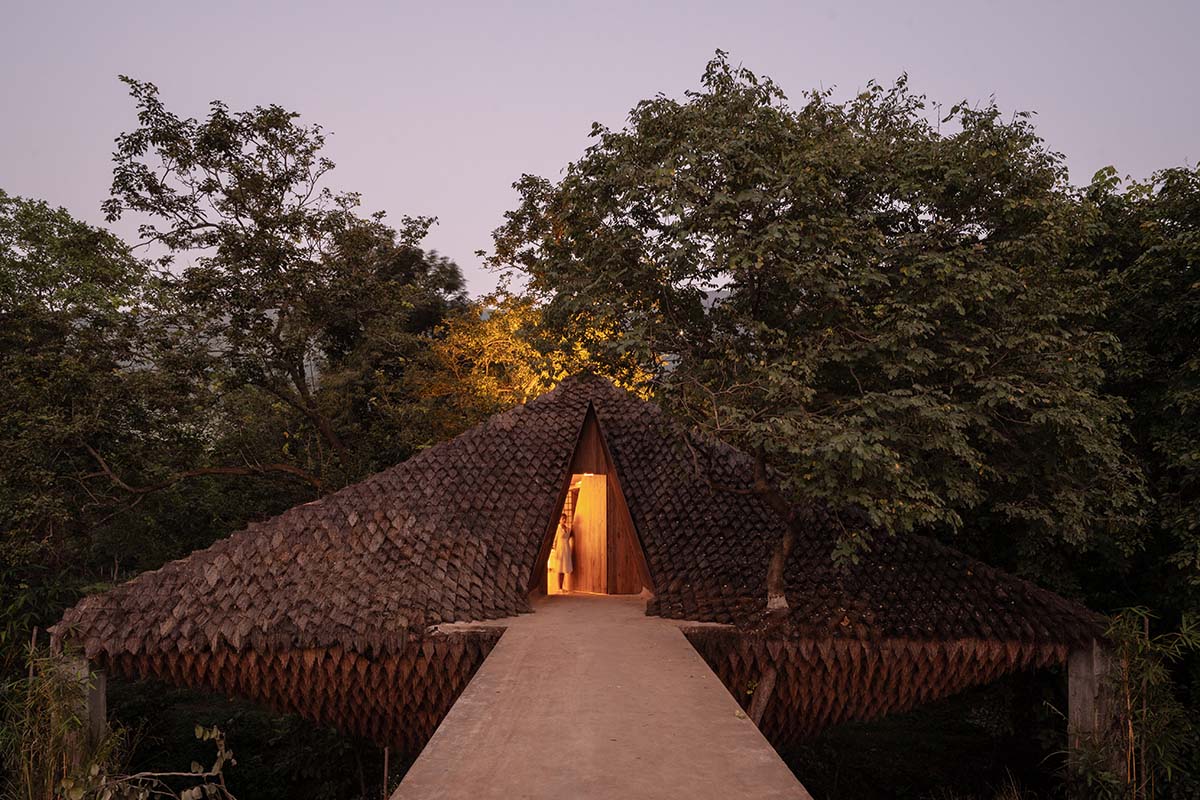
Out of these constraints emerged an idea that was both daring and poetic: a 100-foot suspension bridge formed from four hyperbolic parabolas, combining minimal steel pipes and tendons for tensile strength with a thatch–mud composite that provides compressive resilience.
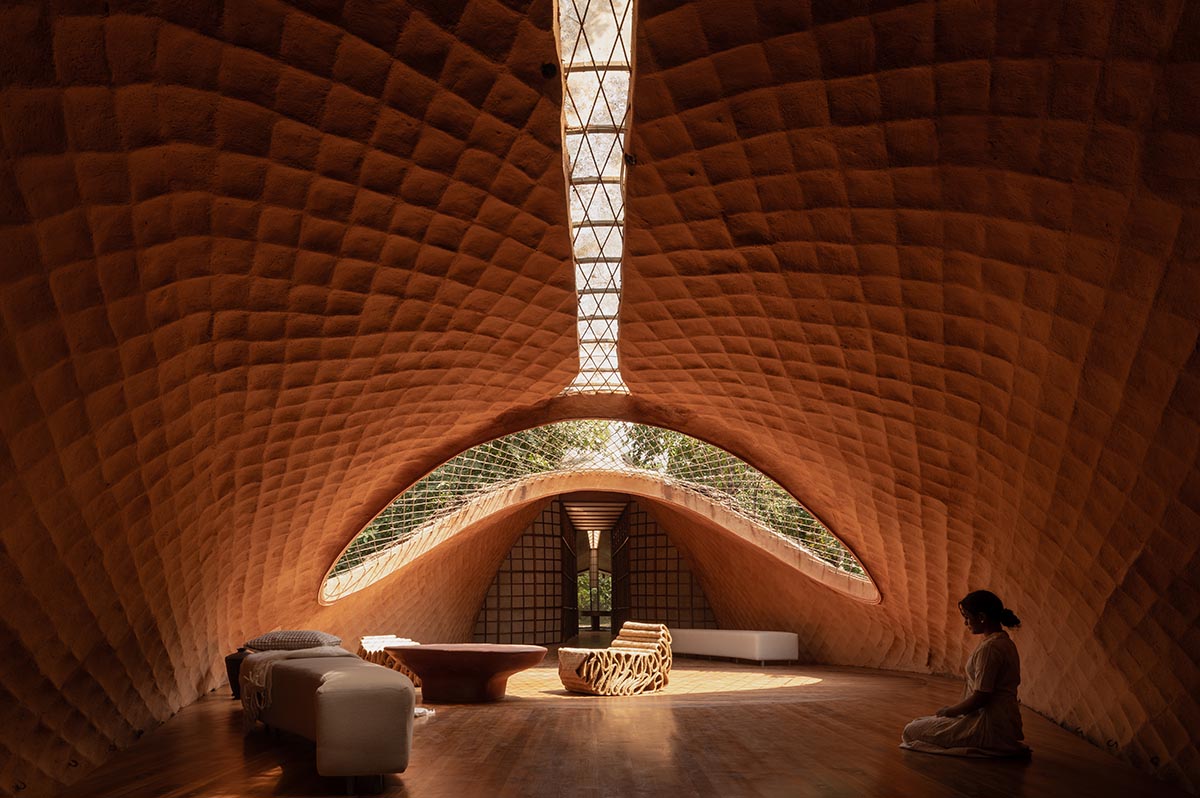
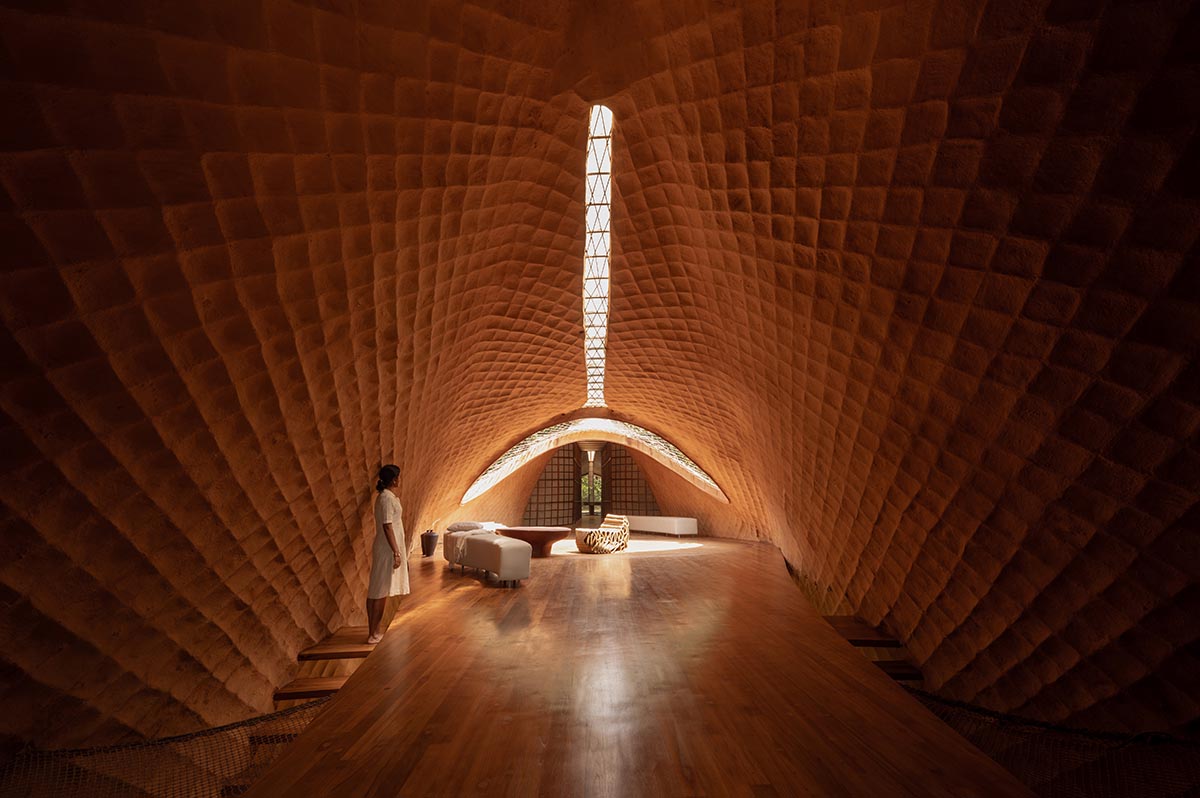
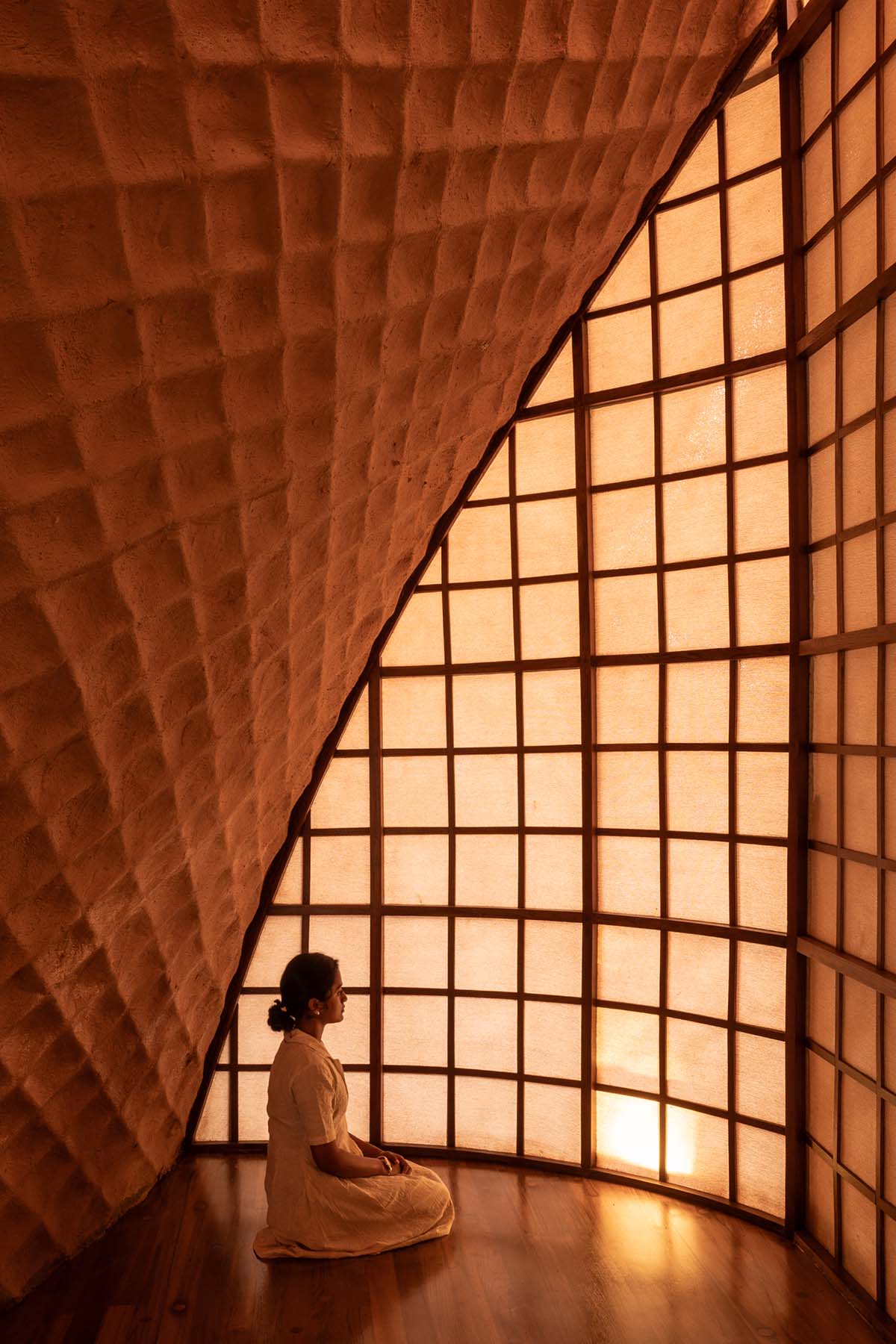
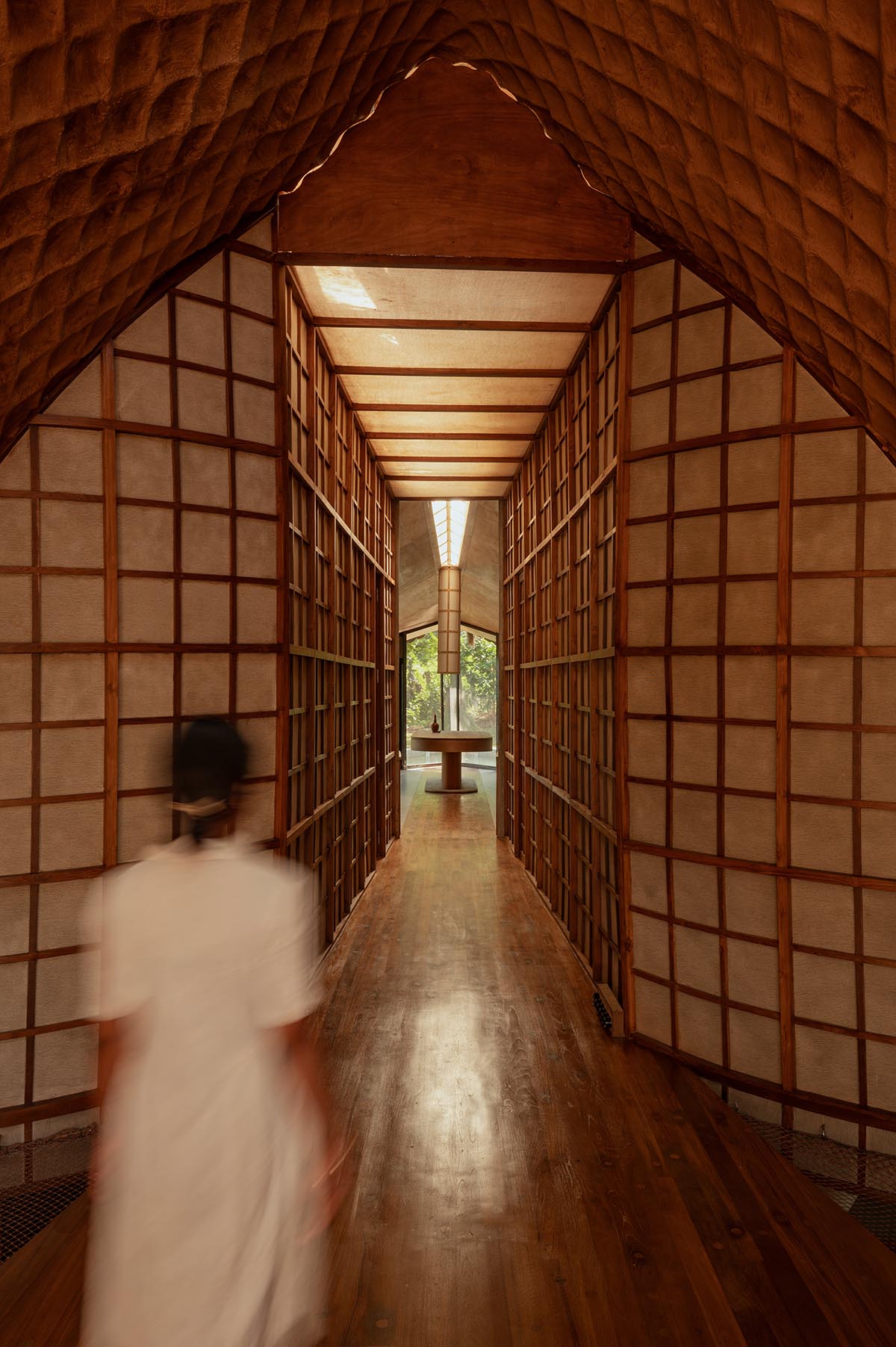
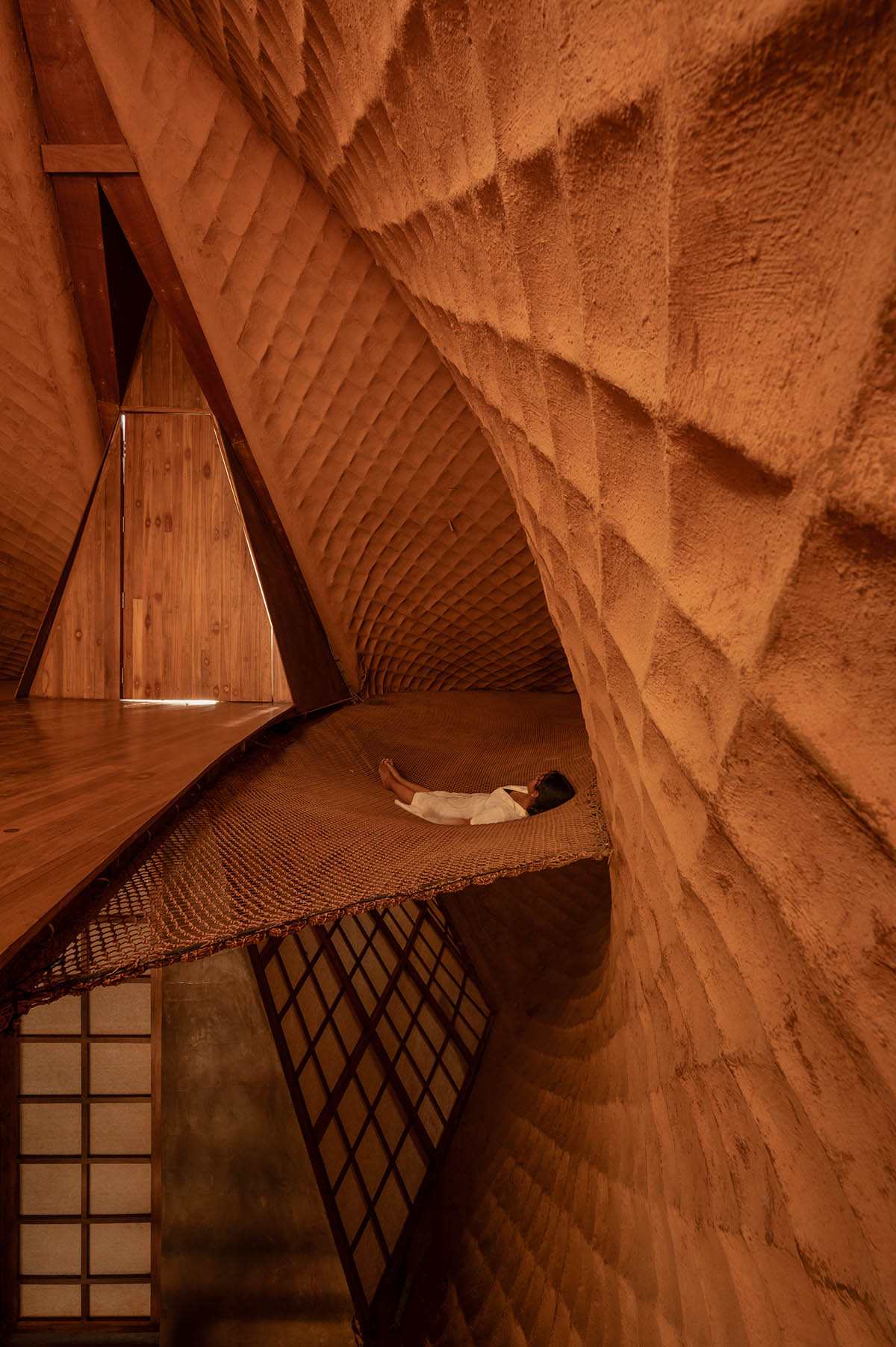
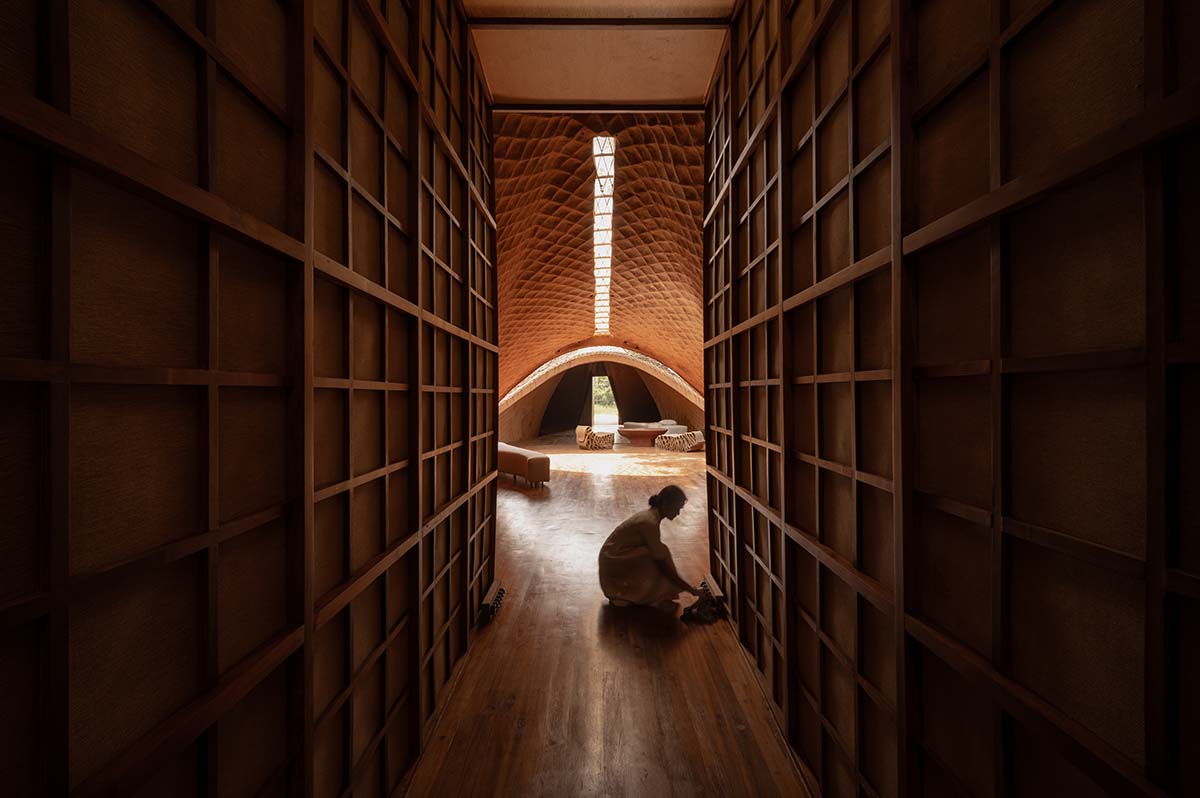
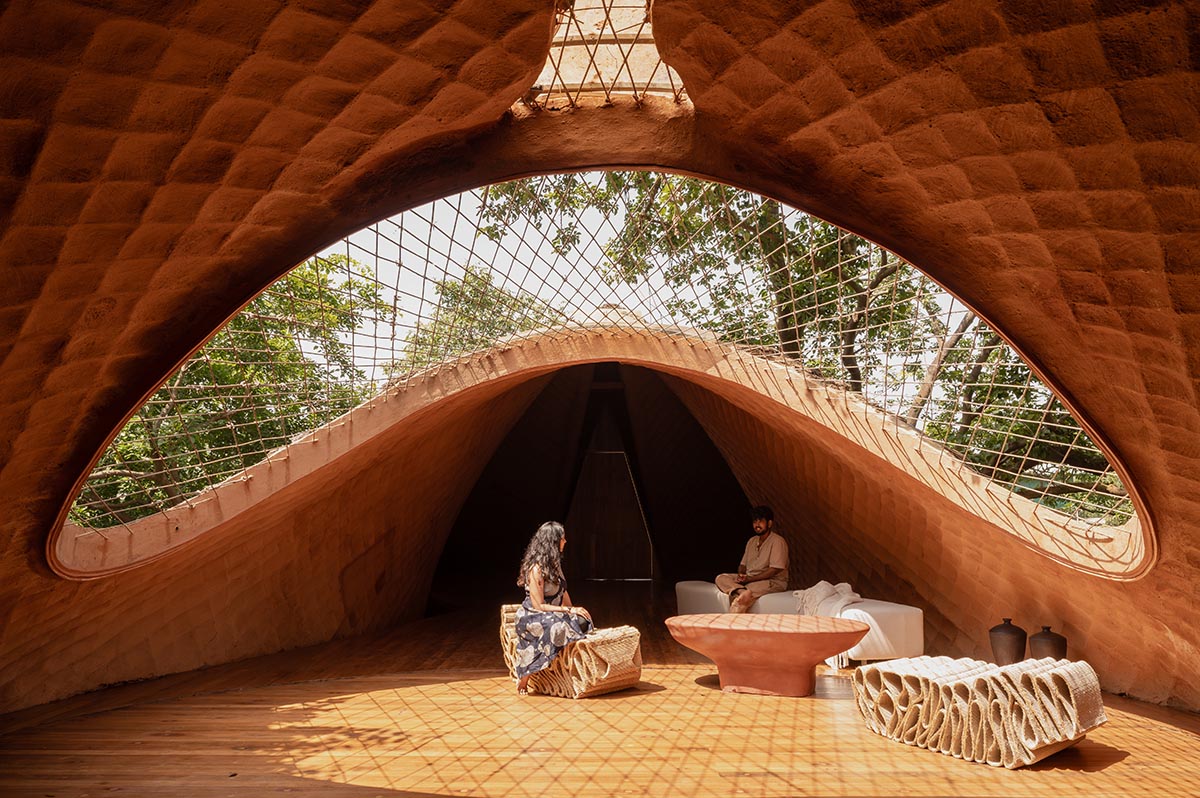
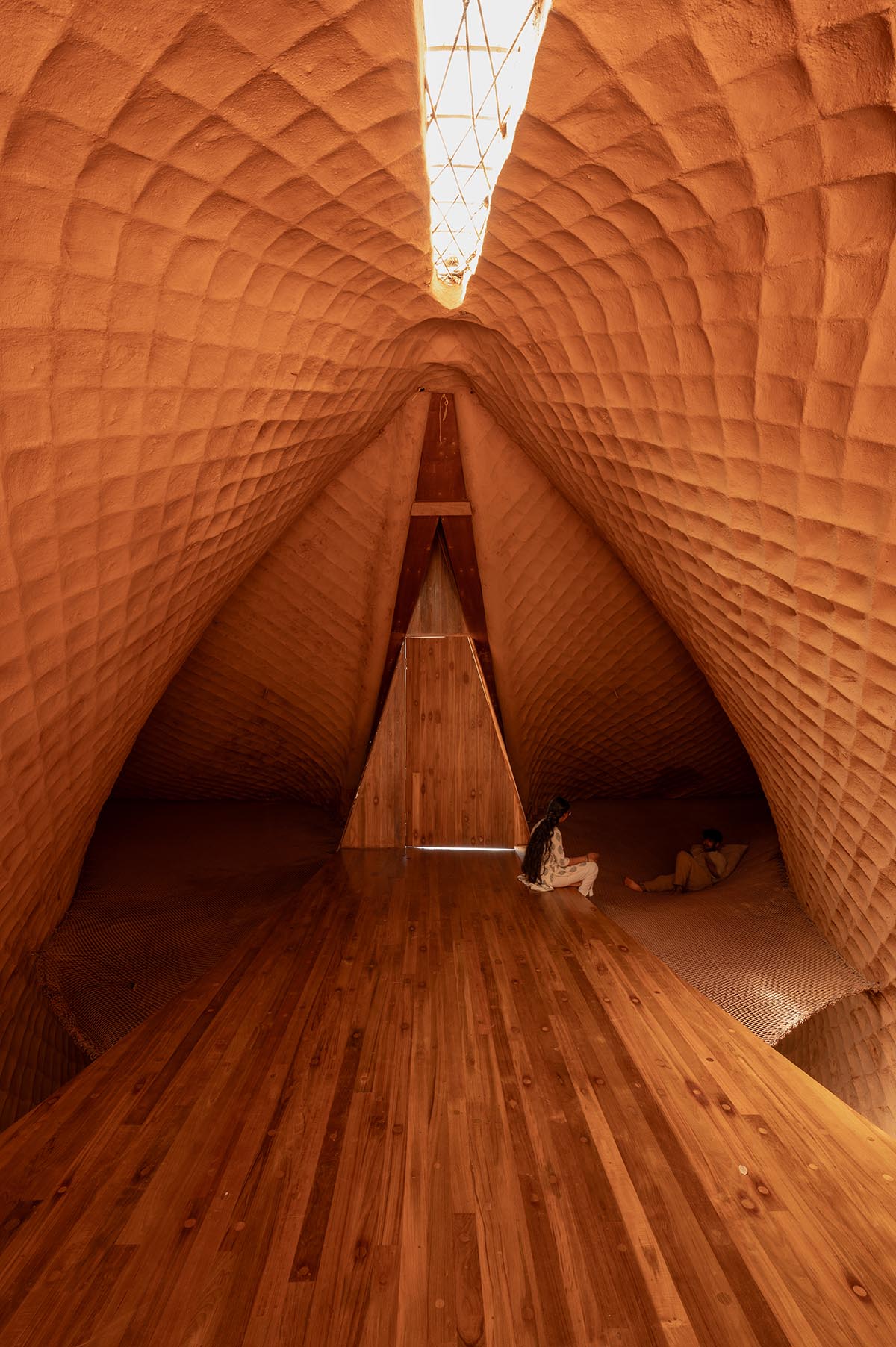
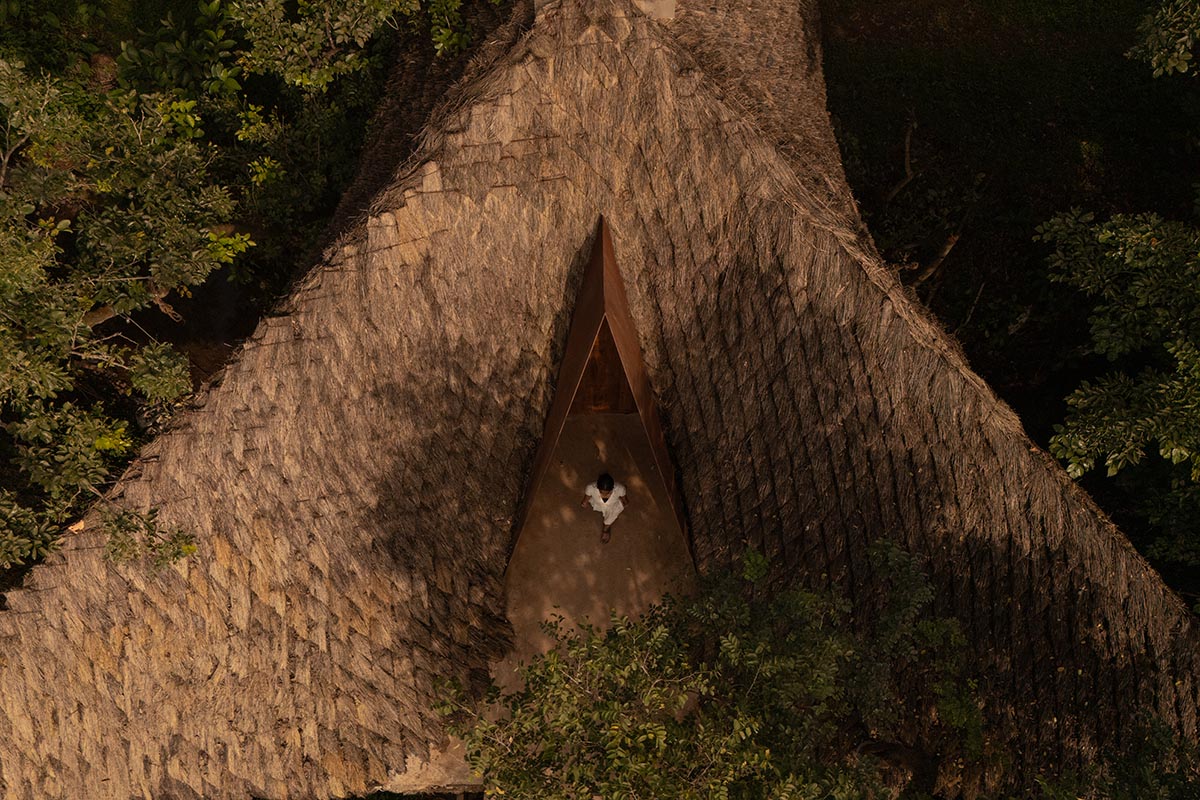
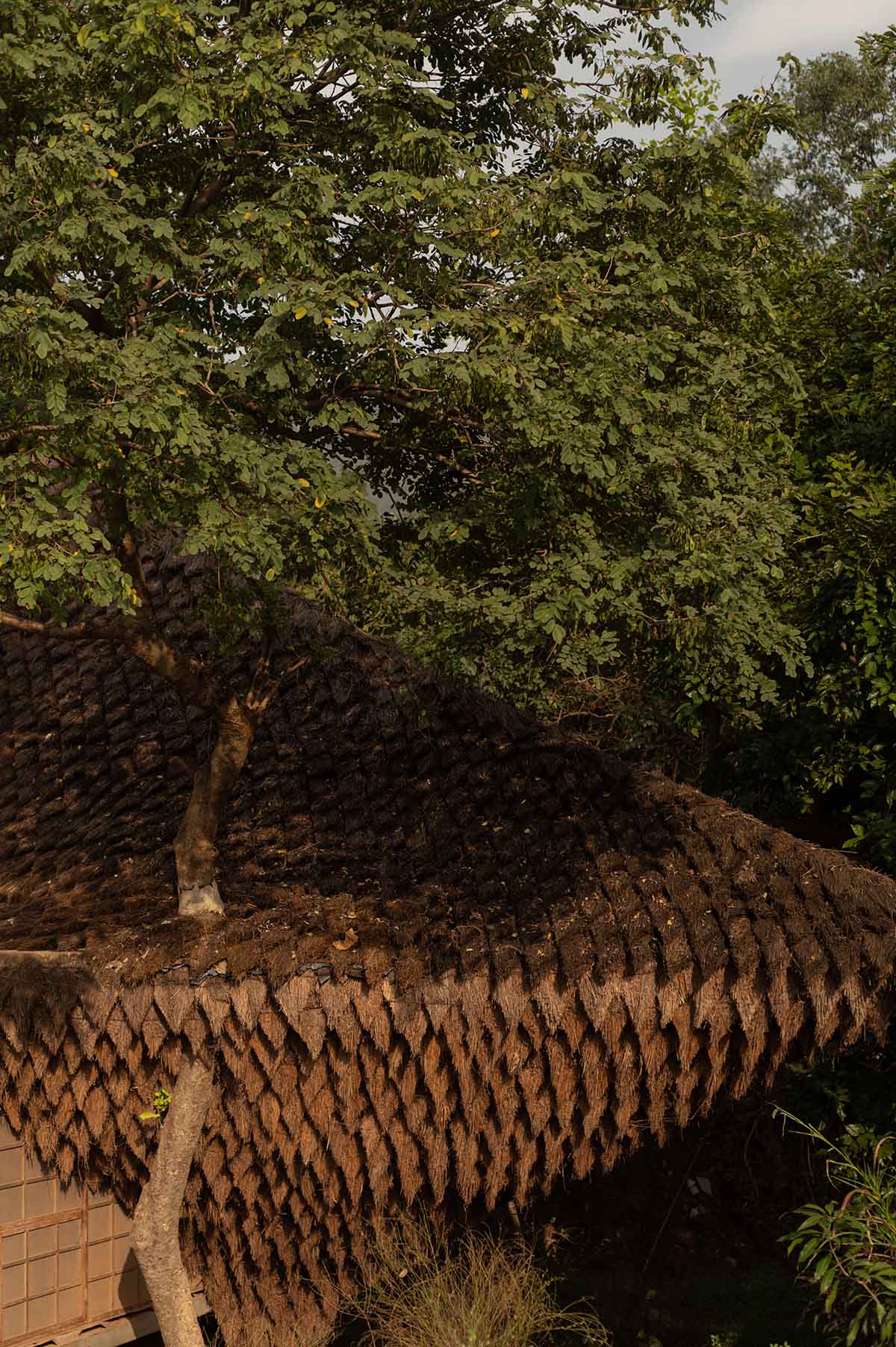
Inset within the natural canopy, the structure hovers gently above the gorge—its thatched shell inspired by the overlapping scales of a pangolin.
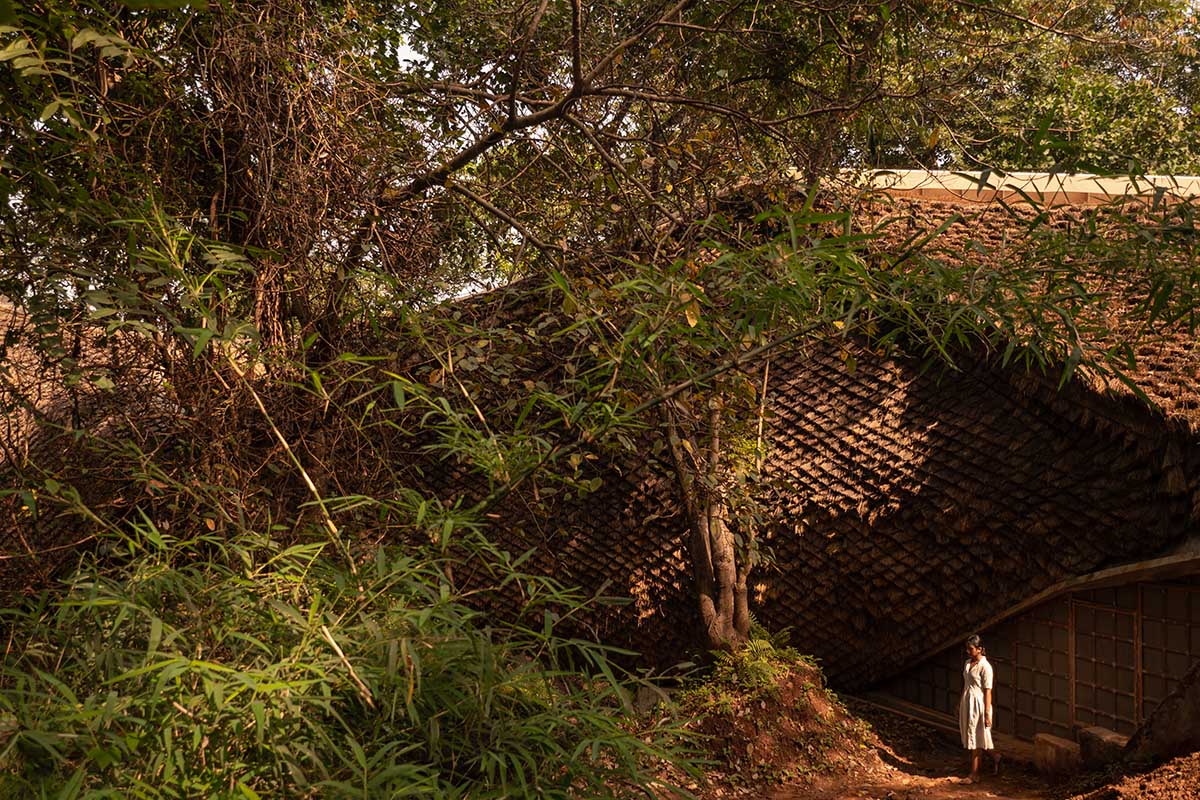
This layered skin not only offers insulation and cooling but also enables a lightweight span supported by just four footings, minimizing disturbance to the land’s natural contours.
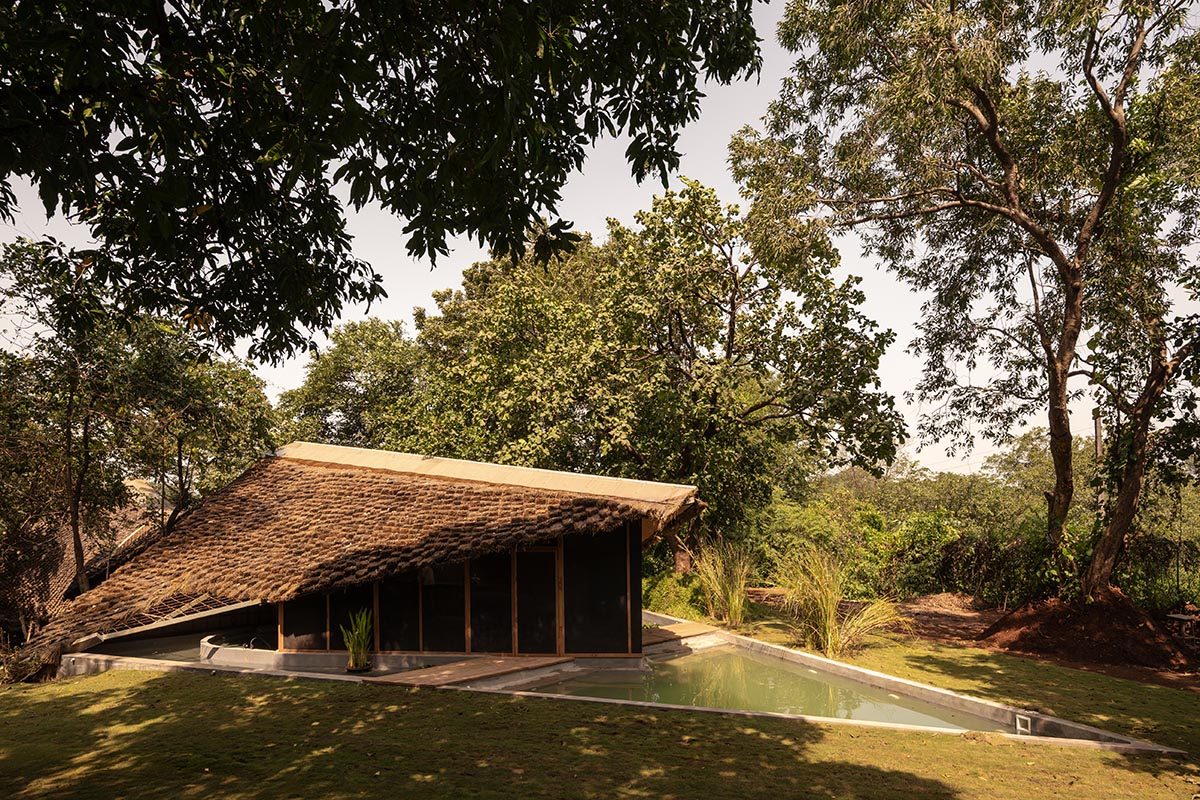
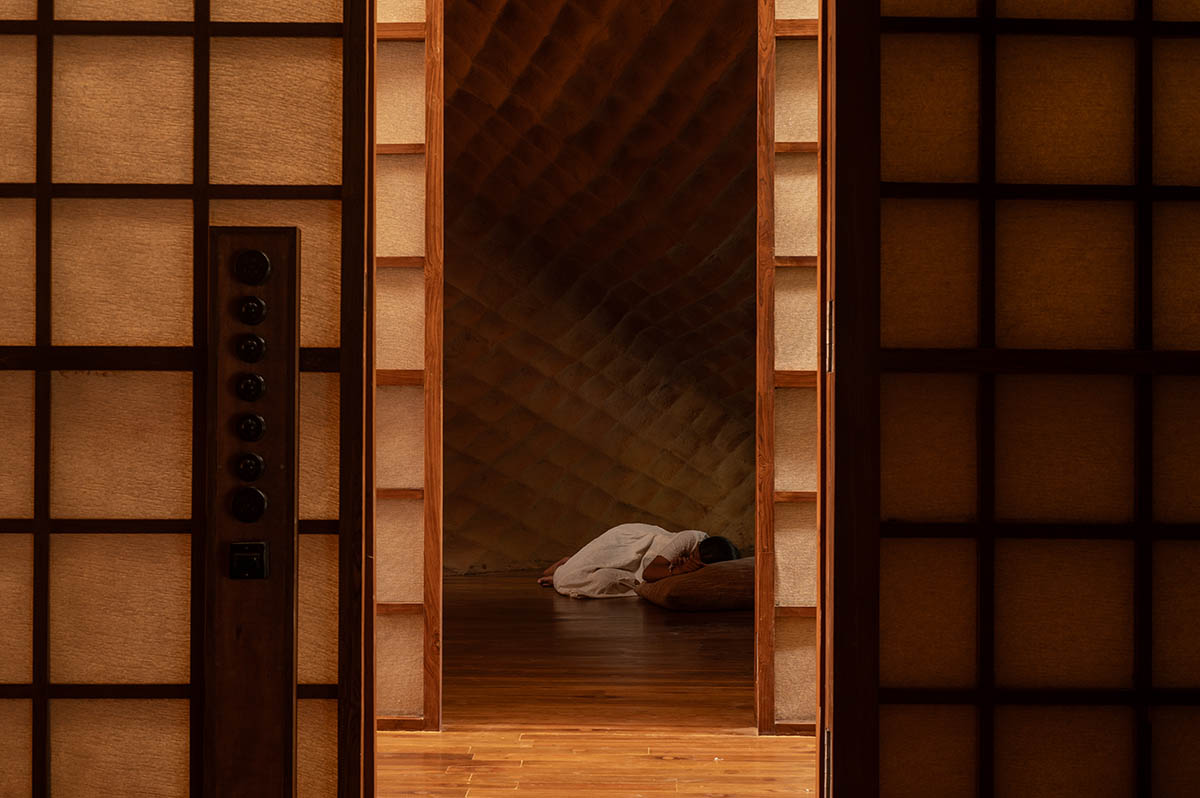
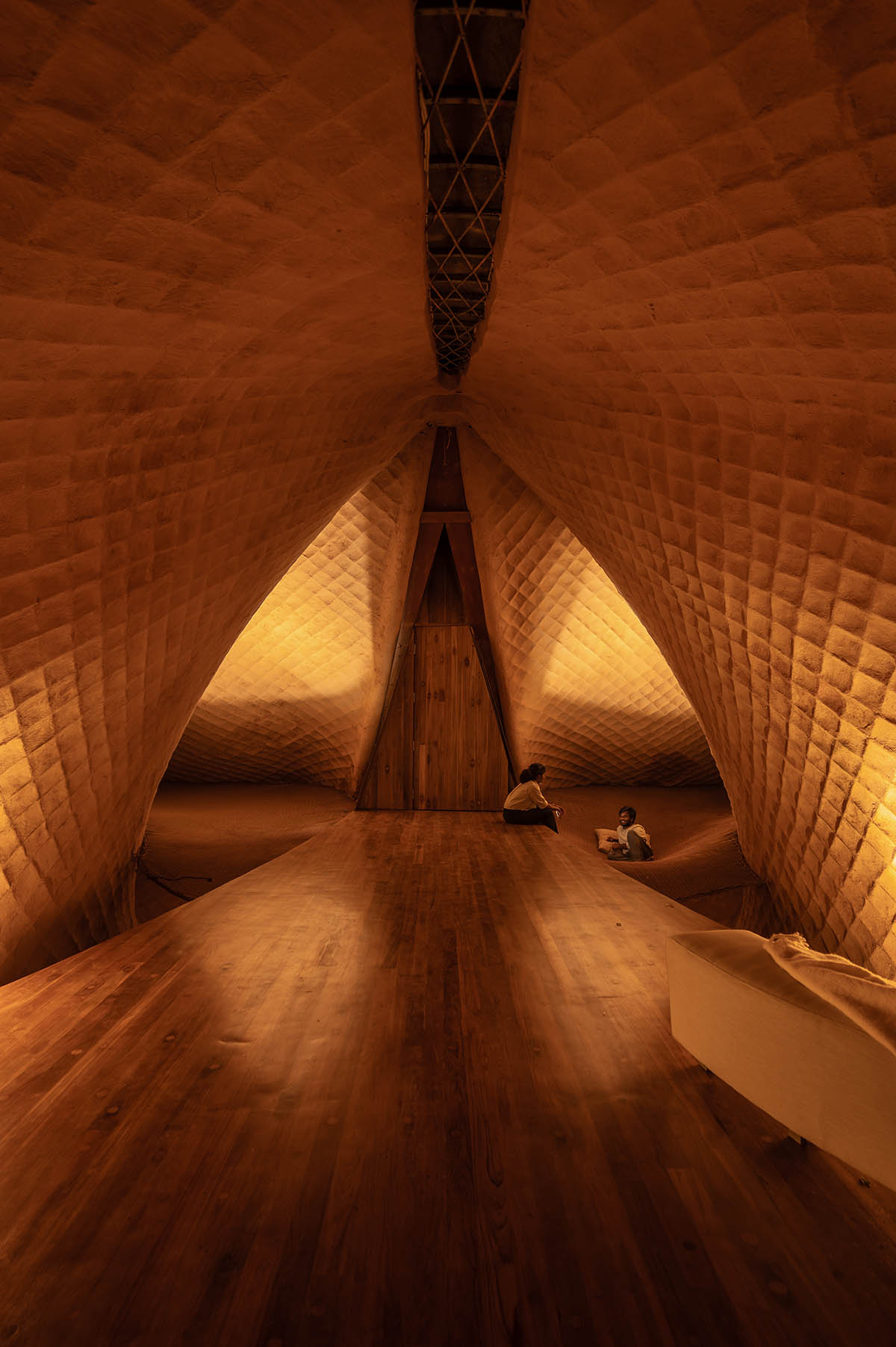
The mud plaster serves a dual purpose: deterring pests that often compromise traditional thatch and reinforcing the shell’s compressive strength in the absence of vertical suspension supports.
According to the studio, the result is a living ecosystem—a structure that shelters human life within, while nature continues to thrive around it.
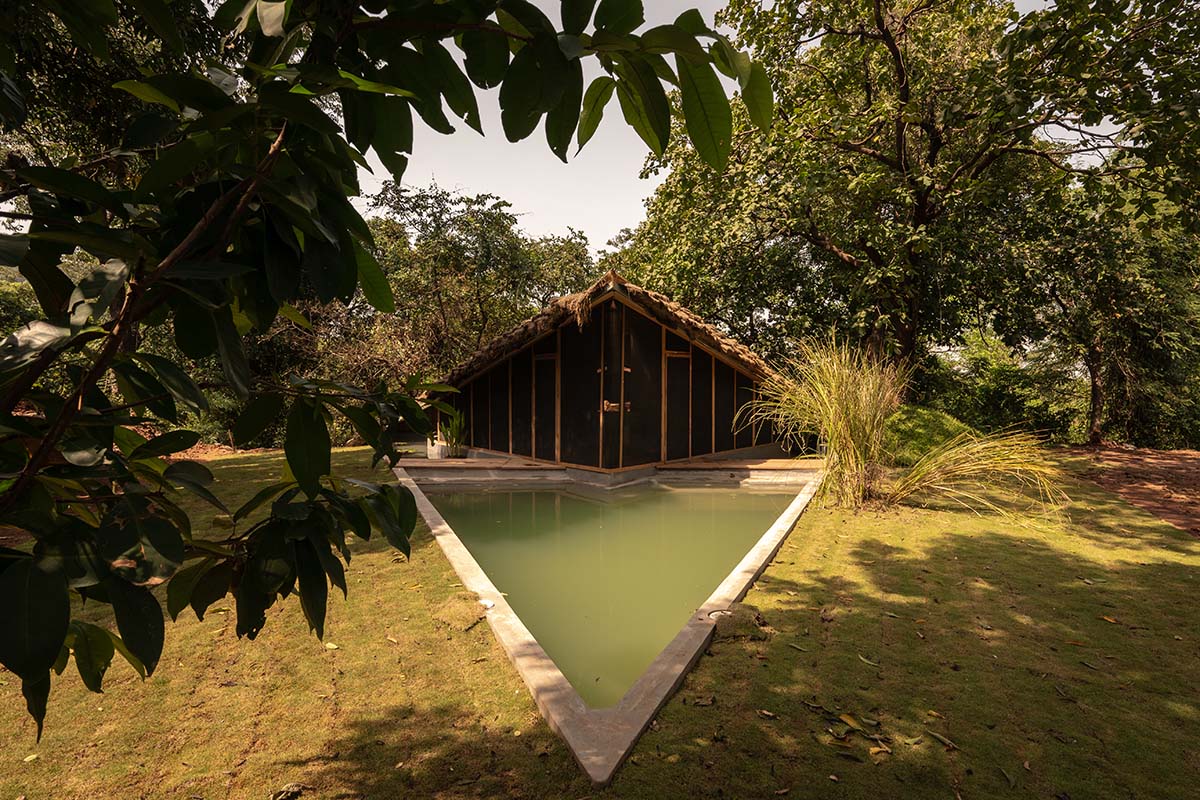
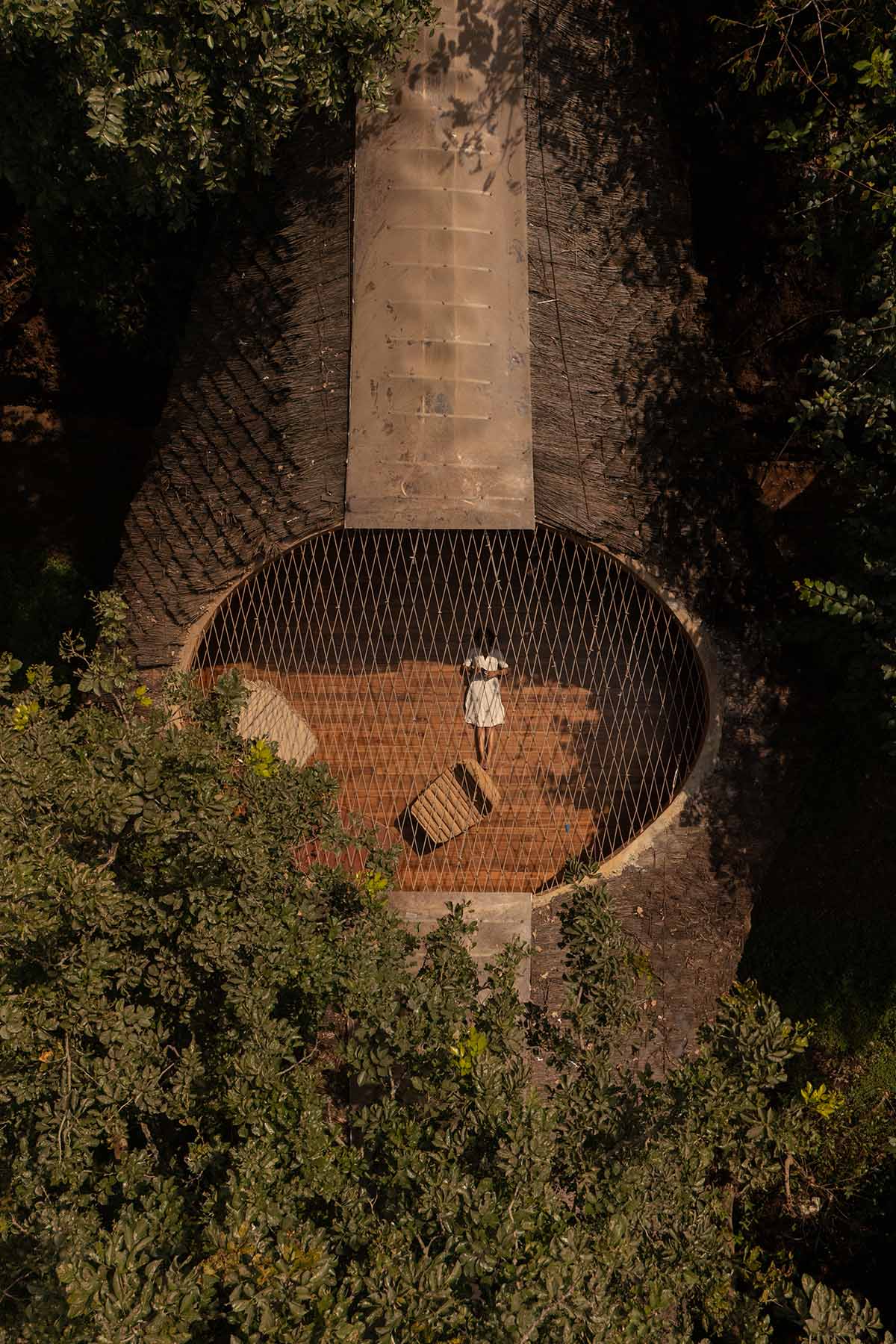
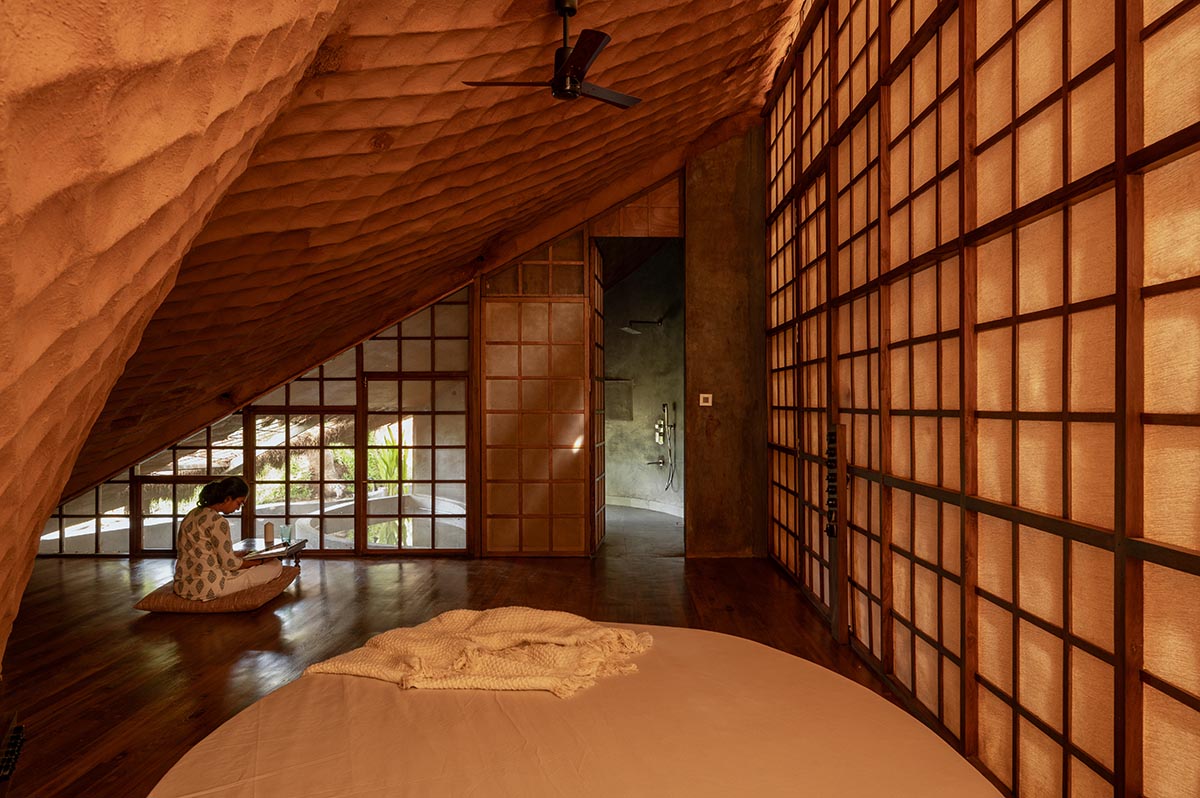
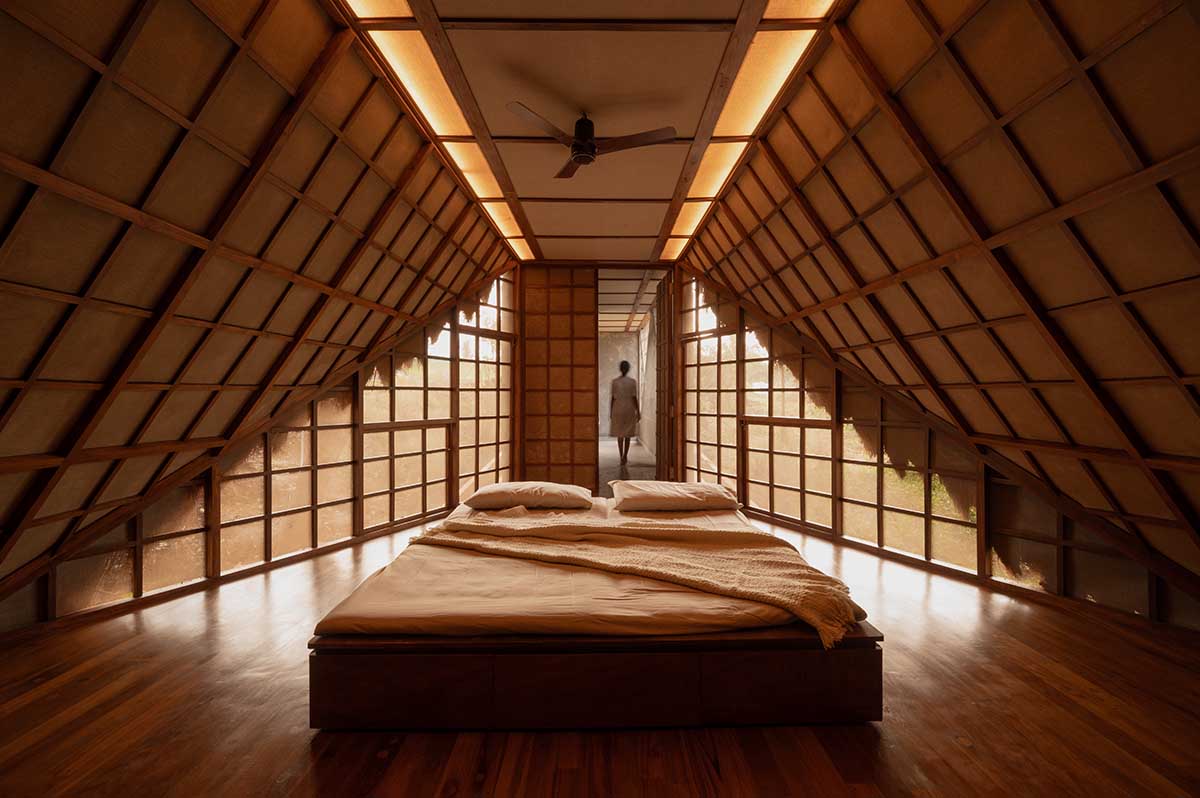
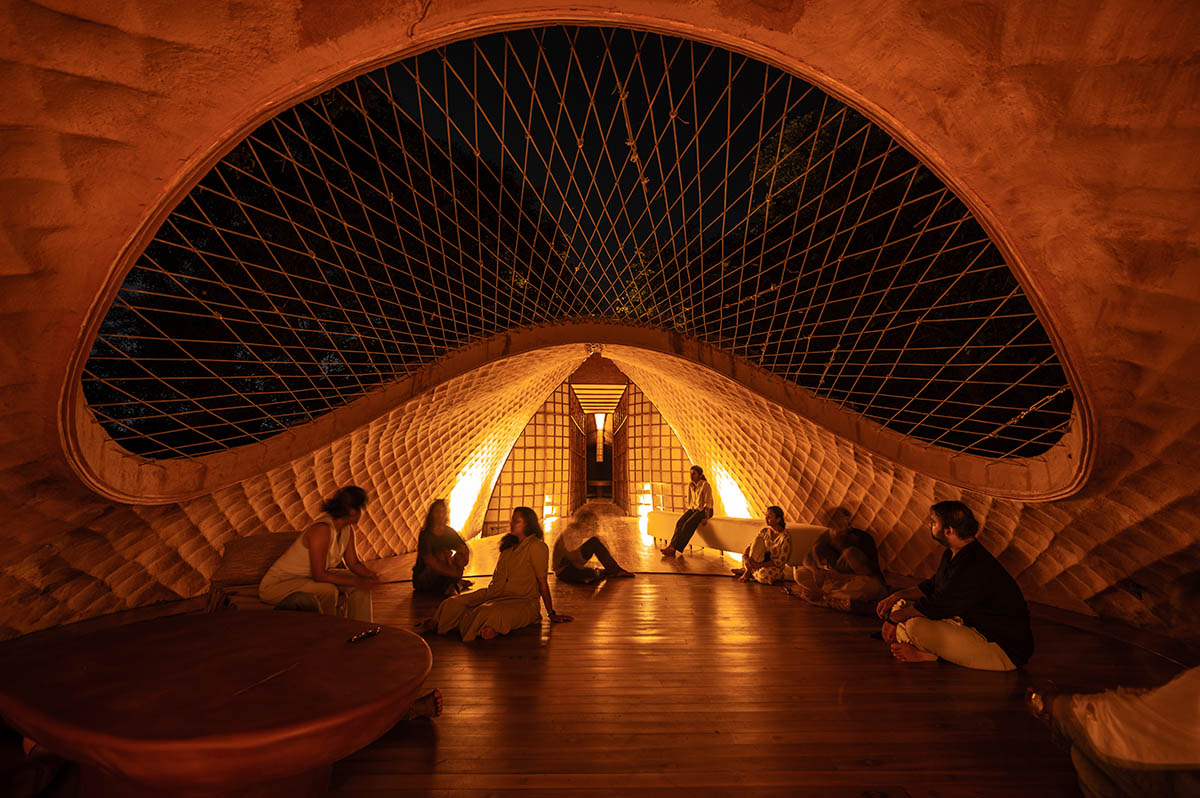
The farmhouse itself unfolds around a central oculus, an open void that acts as a courtyard and frames the sky above. The four bedrooms open outward, either toward the dense forest or overlooking the stream below.
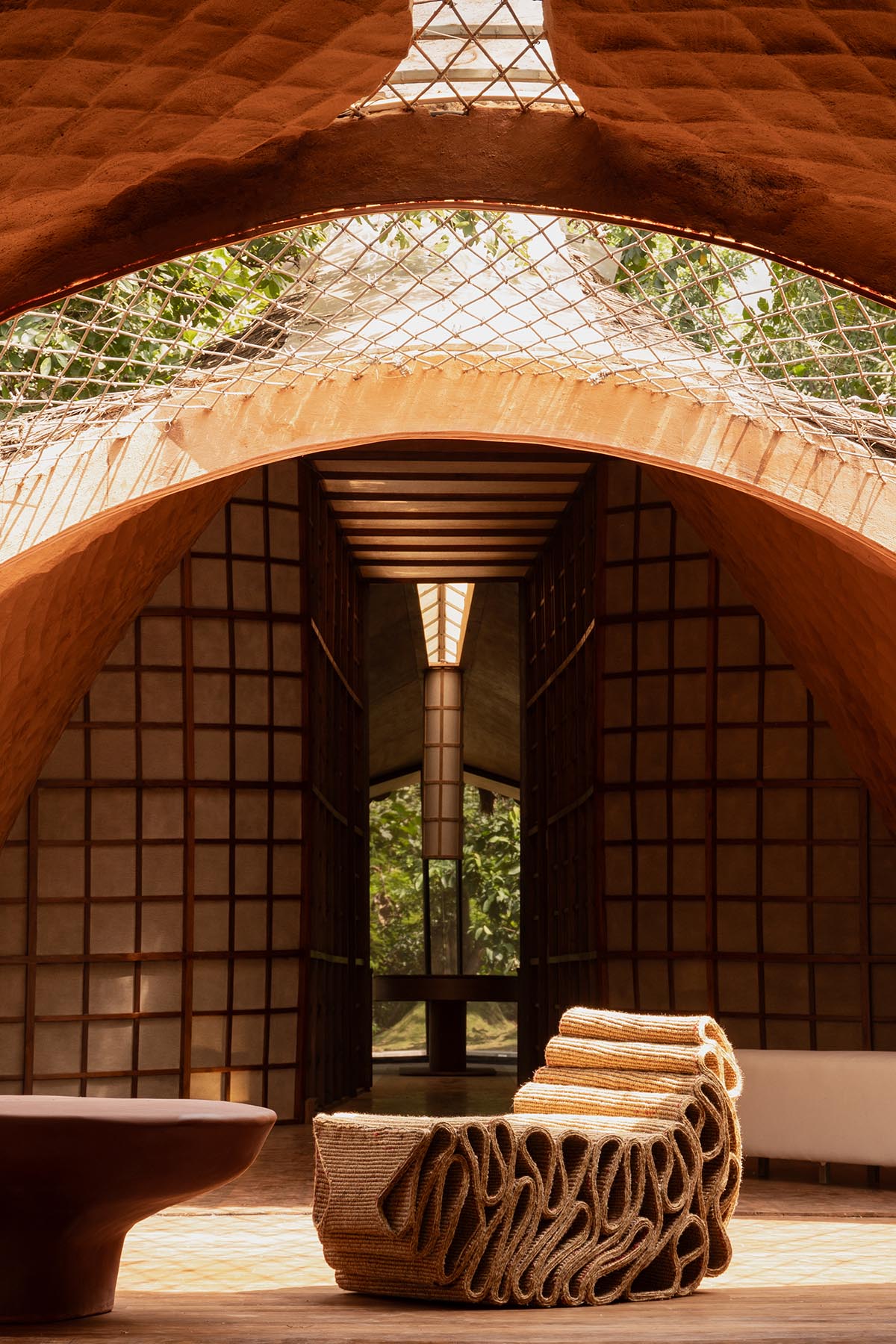
Natural finishes—jute screens, mesh partitions, and reclaimed ship-deck timber flooring—create a tactile connection to the landscape while underscoring Wallmakers’ ethos of adaptive reuse and material honesty.
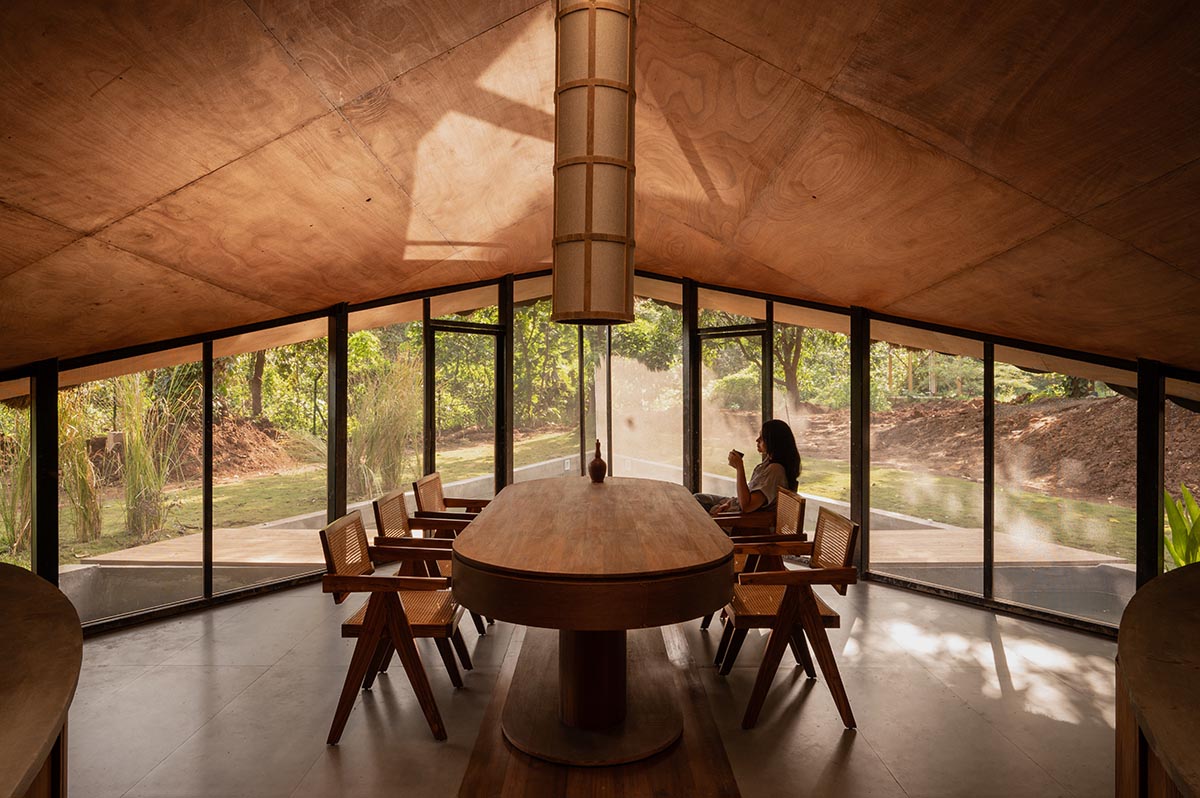
The Bridge House is more than an architectural feat; it is a meditation on ingenuity born from constraint. For Wallmakers, every obstacle became an opportunity—to build lightly, to think deeply, and to let architecture coexist with the wildness of its setting.
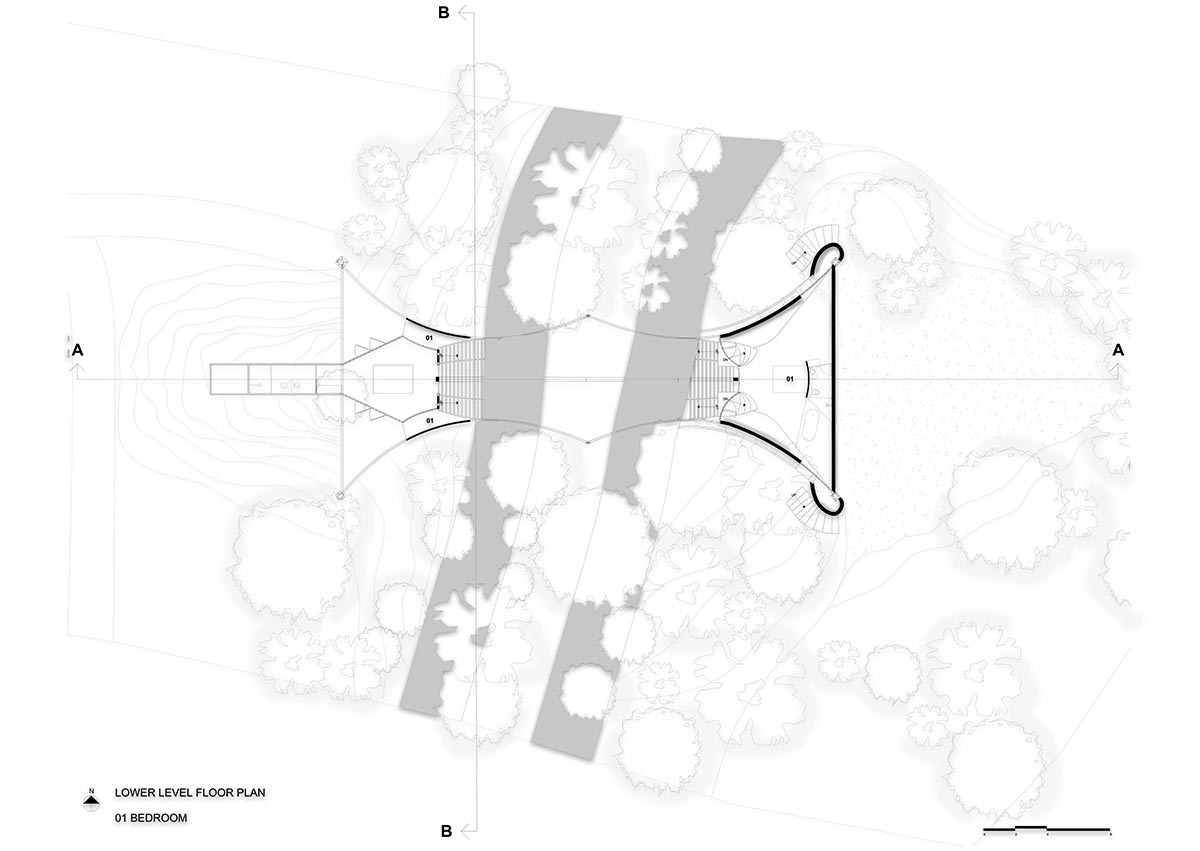
Lower-level floor plan
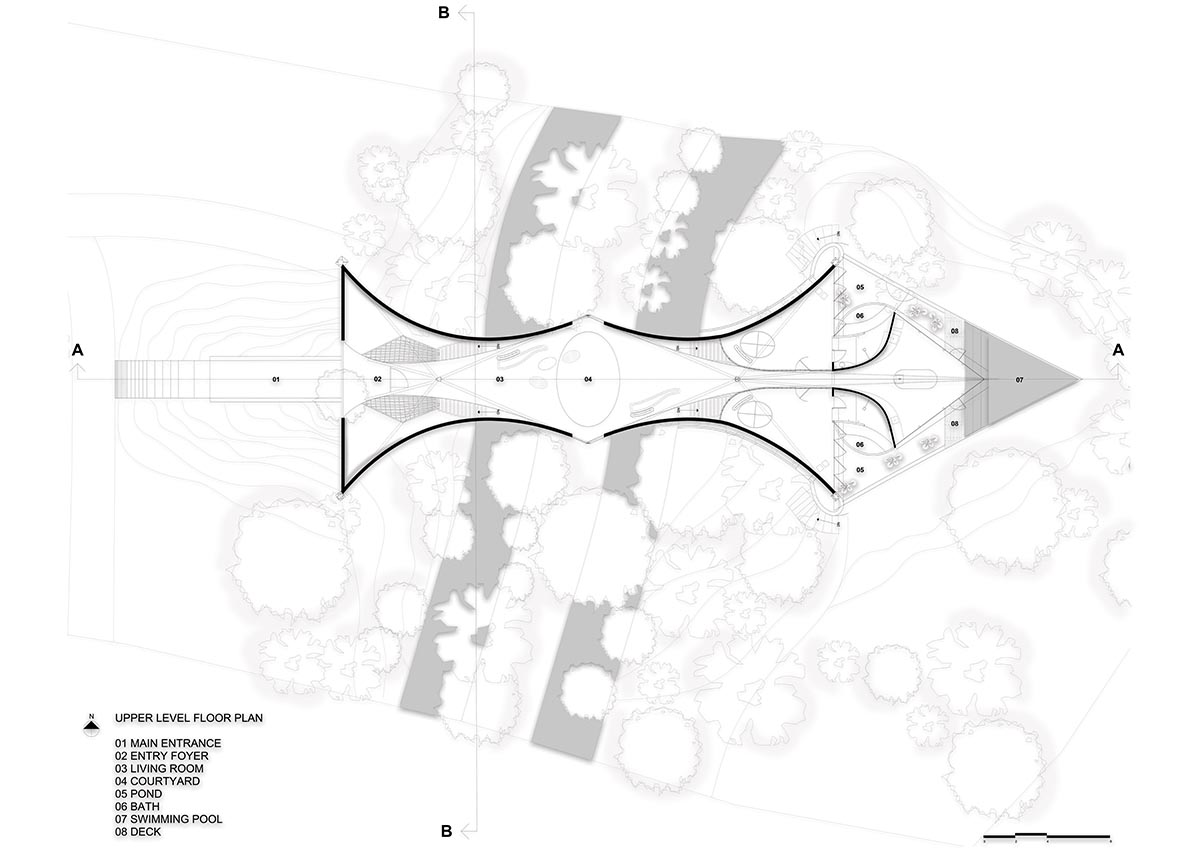
Upper-level floor plan
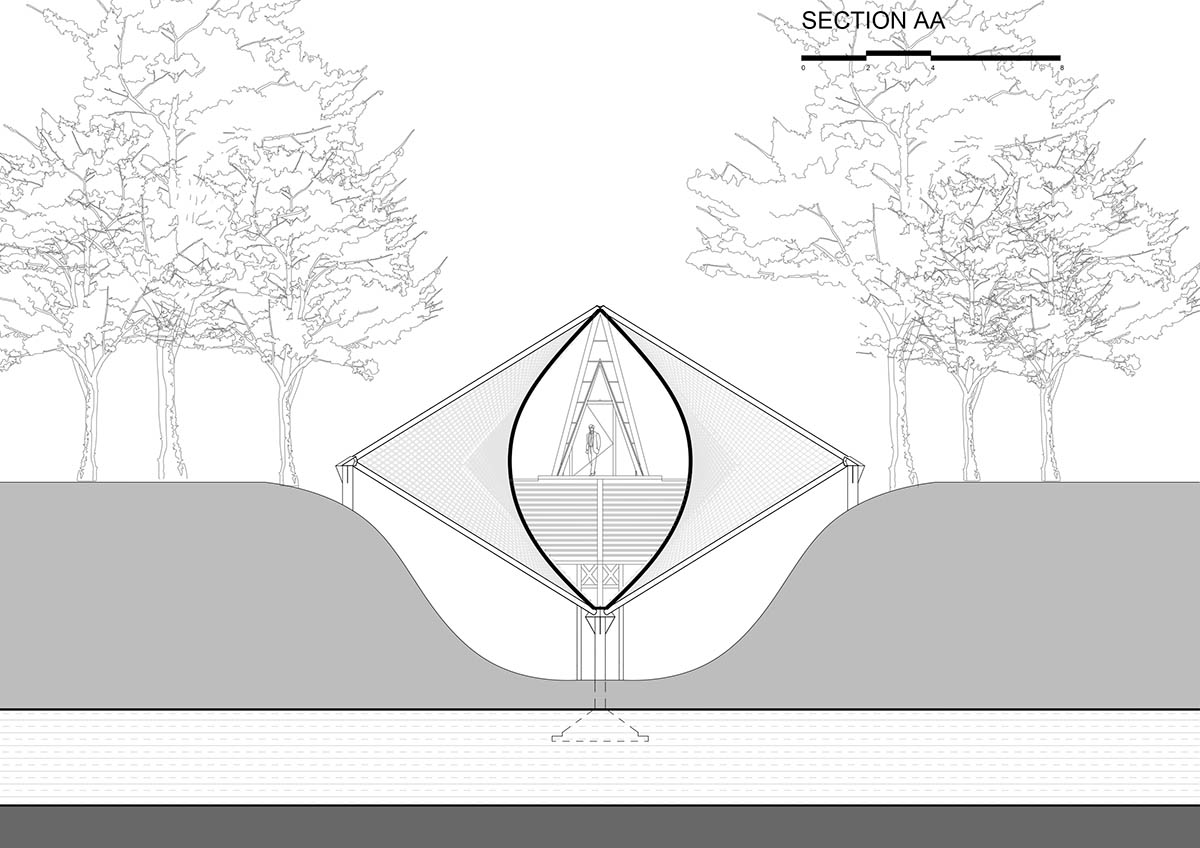
Section A-A
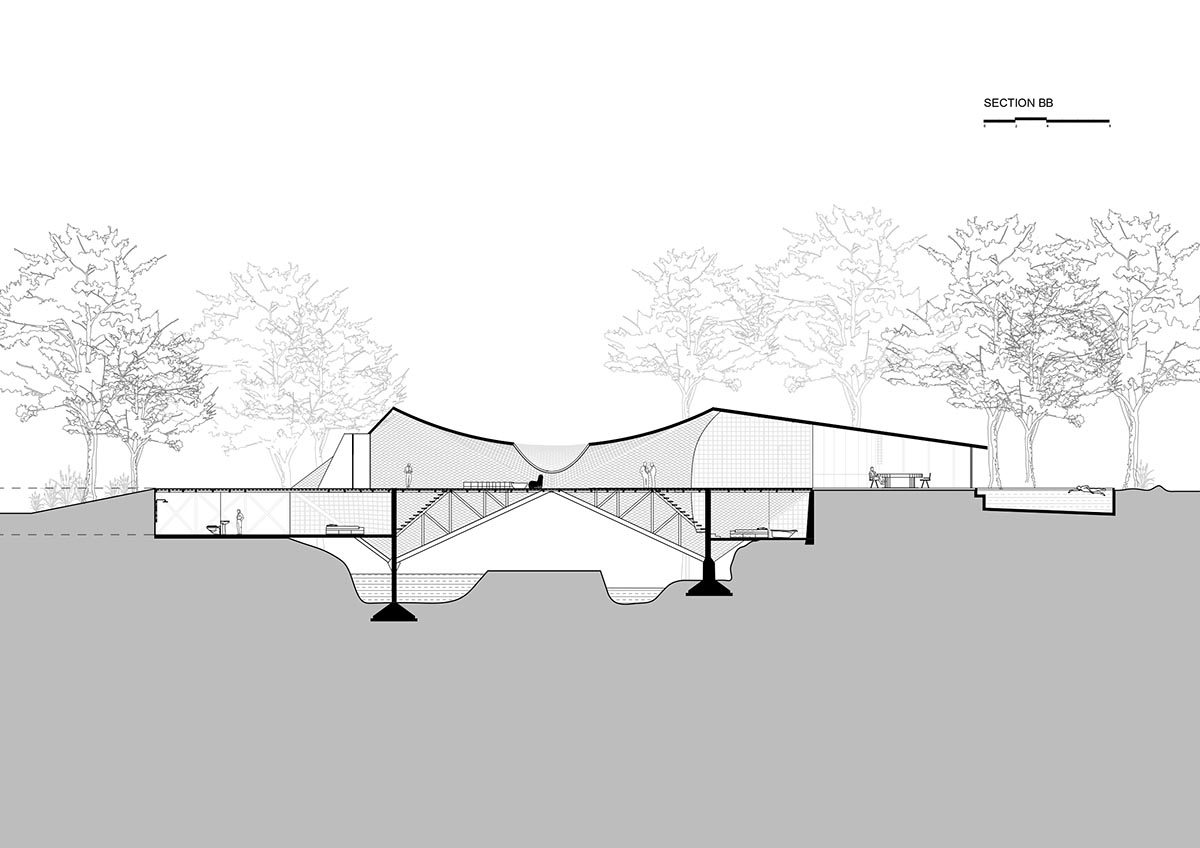
Section B-B
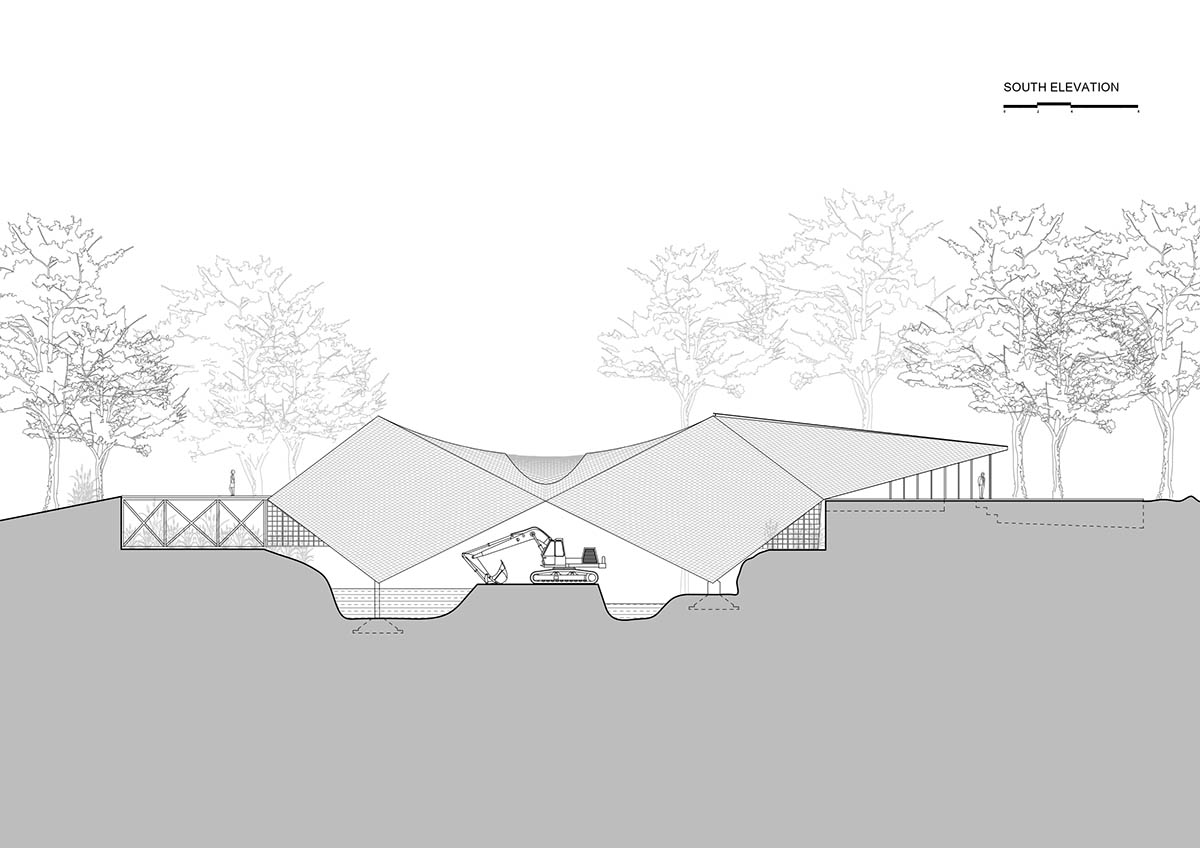
South elevation
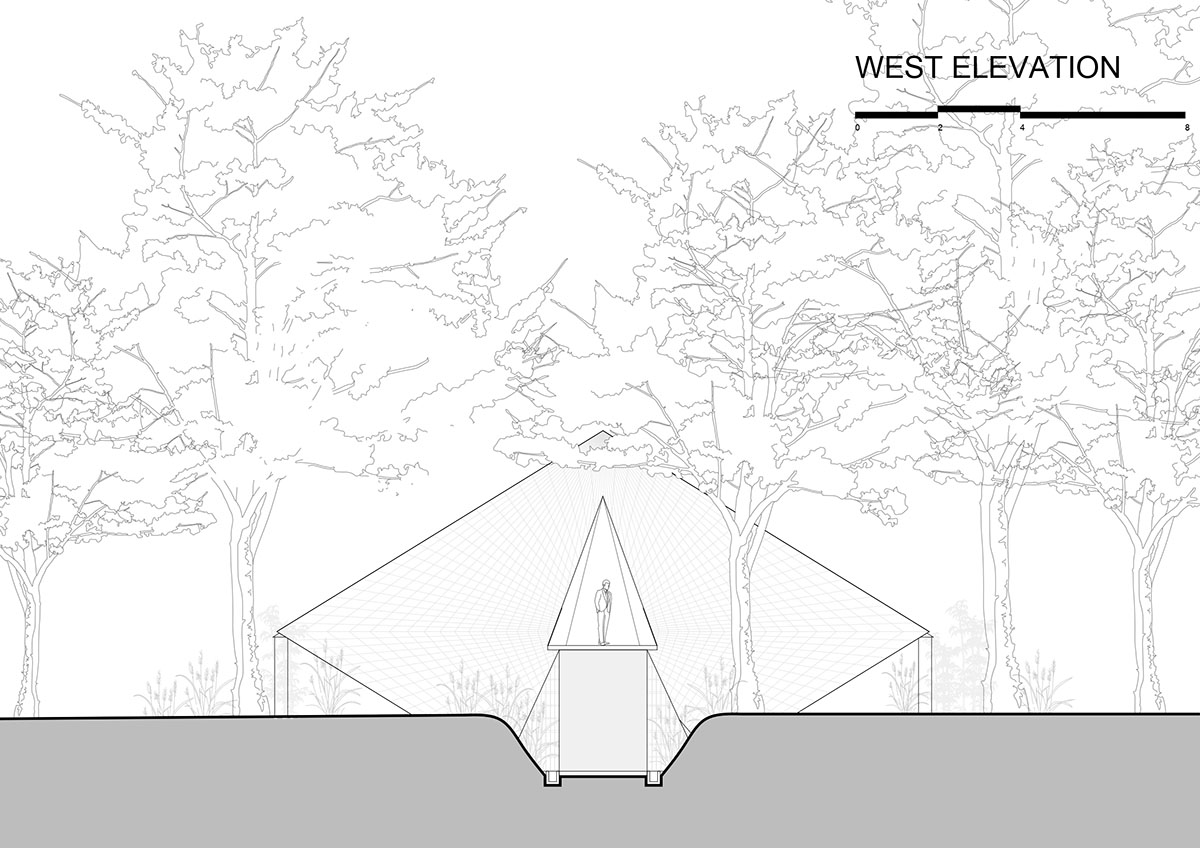
West elevation
Recently, Wallmakers completed the Chuzhi House, wrapping around two trees, creating a snake shape, and offering a surprising visual experience in Shoolagiri village, India. In addition, the studio turned an art hub's spacious roof into an open-air amphitheatre in Ernakulum, Kerala, India.
Wallmakers was founded in 2007 by Vinu Daniel. The firm focuses on minimizing carbon footprint in buildings by working with natural materials, such as mud and waste originating in and imported to, India.
Project facts
Project name: Bridge House
Architects: Wallmakers
Completion year: 2025
Gross Built Area (m2/ ft2): 4,500 ft2.
Project location: Karjat, Maharashtra.
Program / Use / Building Function: Habitable Bridge - Residential
Lead architects: Vinu Daniel, Preksha Shah
Junior Architects: Ramika Gupta
All images © Studio IKSHA.
All drawings © Wallmakers.
> via Wallmakers
bridge cocoon habitable bridge house residence Vinu Daniel Wallmakers