Submitted by WA Contents
BIG imagines the new home of Hamburg State Opera as "a landscape of concentric terraces"
Germany Architecture News - Dec 02, 2025 - 05:25 4137 views
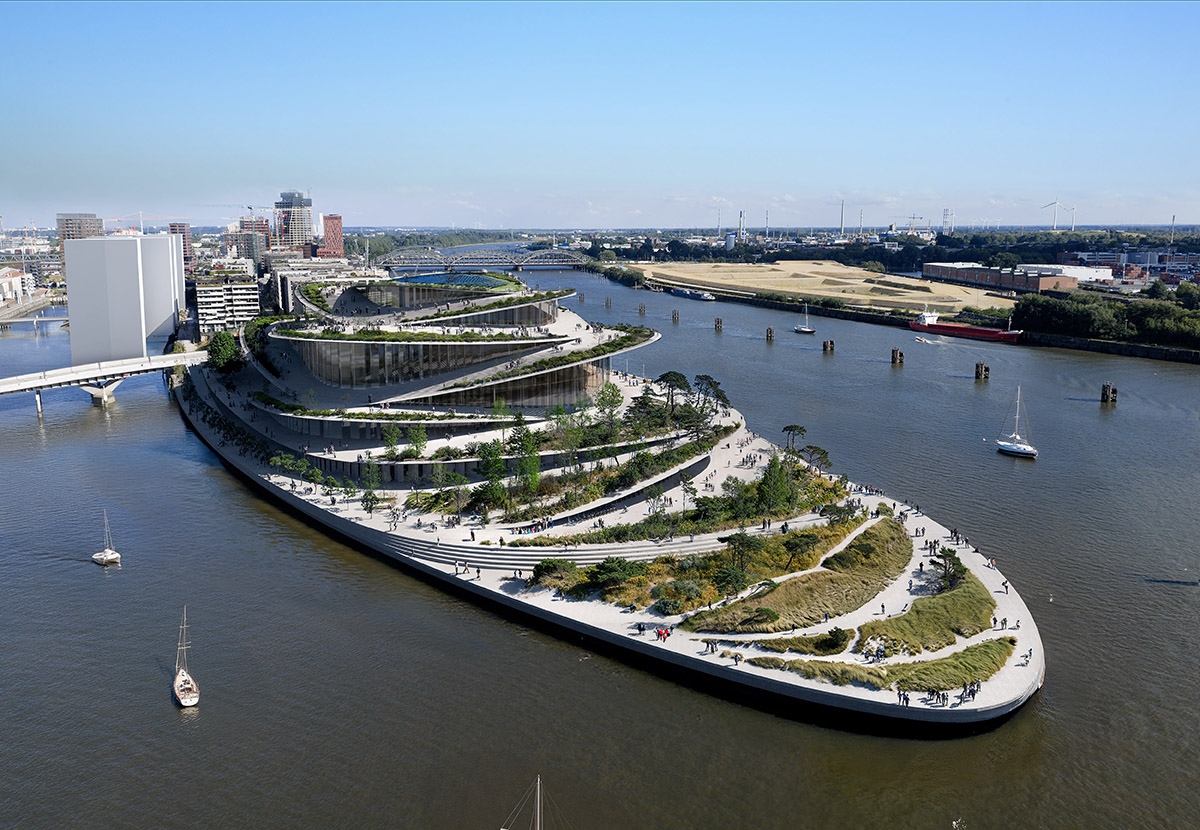
Bjarke Ingels Group (BIG) has been selected by a unanimous jury to design the new home of the Hamburg State Opera, Hamburg, Germany.
The State Opera and the Hamburg Ballet will be housed in the project, which will create new public areas along the waterfront and provide the city with state-of-the-art production and performance facilities on the Baaken Münft peninsula in HafenCity.
The new 45,000-square-meter venue, which replaces the State Opera building from the 1950s on Dammtorň, satisfies the city's desire for a contemporary structure that satisfies modern acoustic, spatial, and technical requirements.
The new opera continues the conversation between municipal architecture and the water's edge on Hamburg's changing waterfront, a city that has long blended culture and harbor life, from the Elbphilharmonie to the Speicherstadt warehouses.
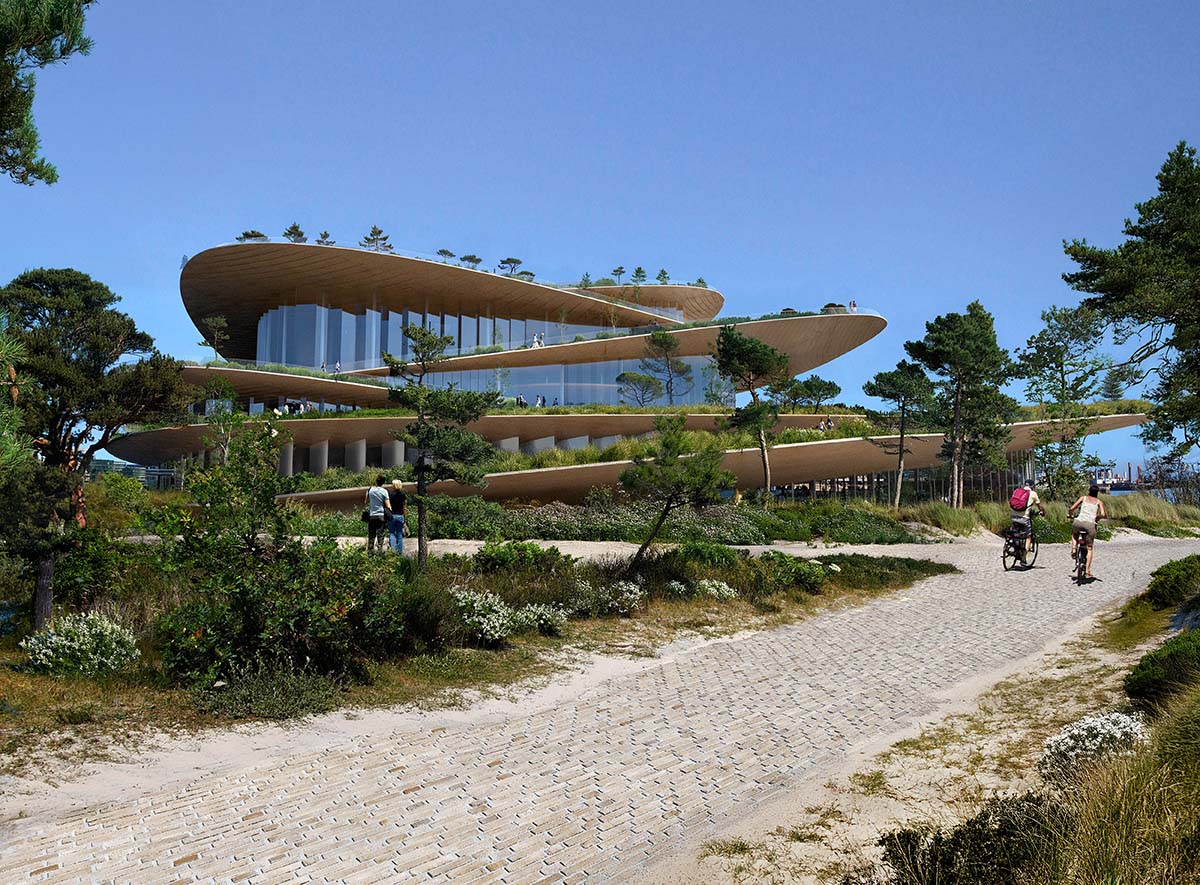
"The new Hamburg State Opera inhabits an island at the heart of HafenCity bookended by the vertical landmarks of Elbturm and Elbphilharmonie," said Bjarke Ingels, Founder & Creative Director, BIG.
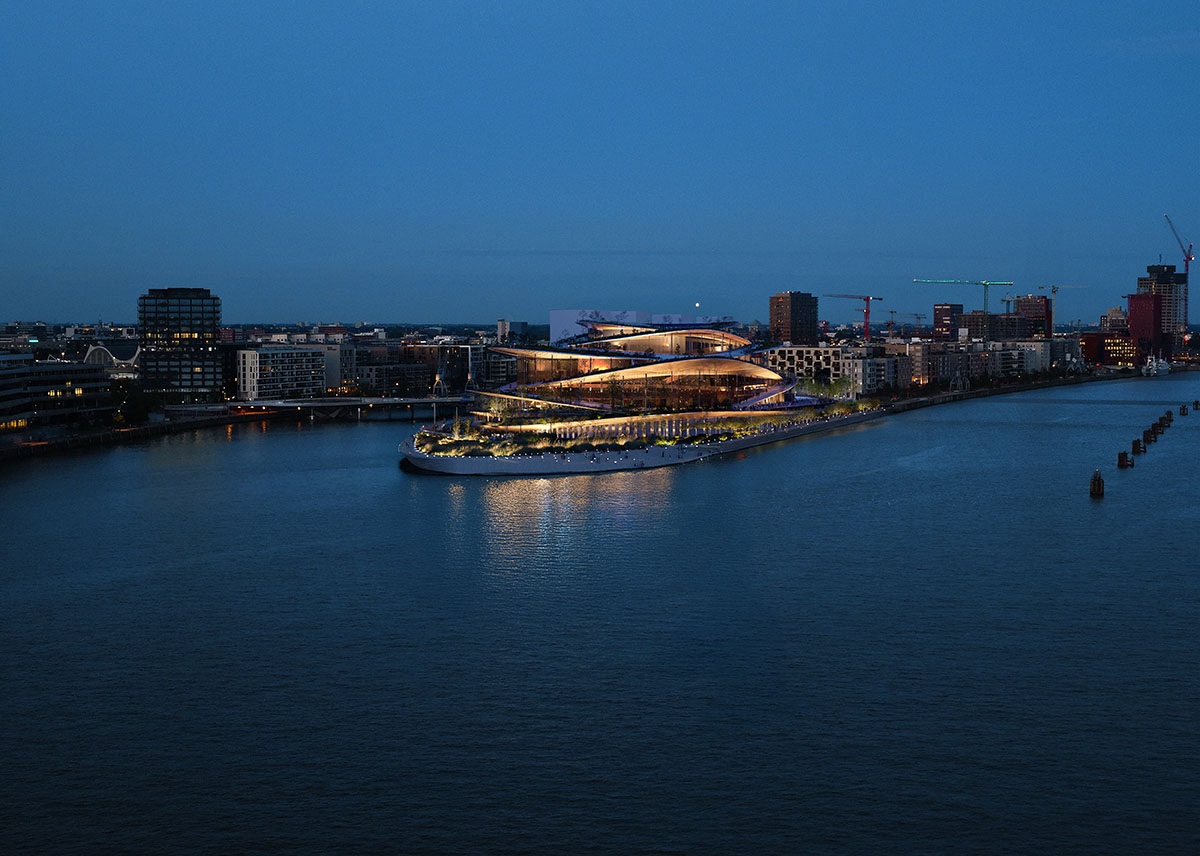
"The opera will appear like a landscape of concentric terraces – emanating like soundwaves from a central beating heart of music, expanding outward into the harbor like ripples on the surface of the sea."
"The result is a three-dimensional public park open and accessible from all sides, with expansive views in all directions – to the old city and the new, to Lohse Park and the industrial port," he explained.
"We are honored to have been chosen to imagine this key puzzle piece in the transformation of Hamburg’s HafenCity, and we are deeply grateful to Herr und Frau Kühne to be entrusted to turn their generosity into the city’s new epicenter for the performing arts," Ingels added.
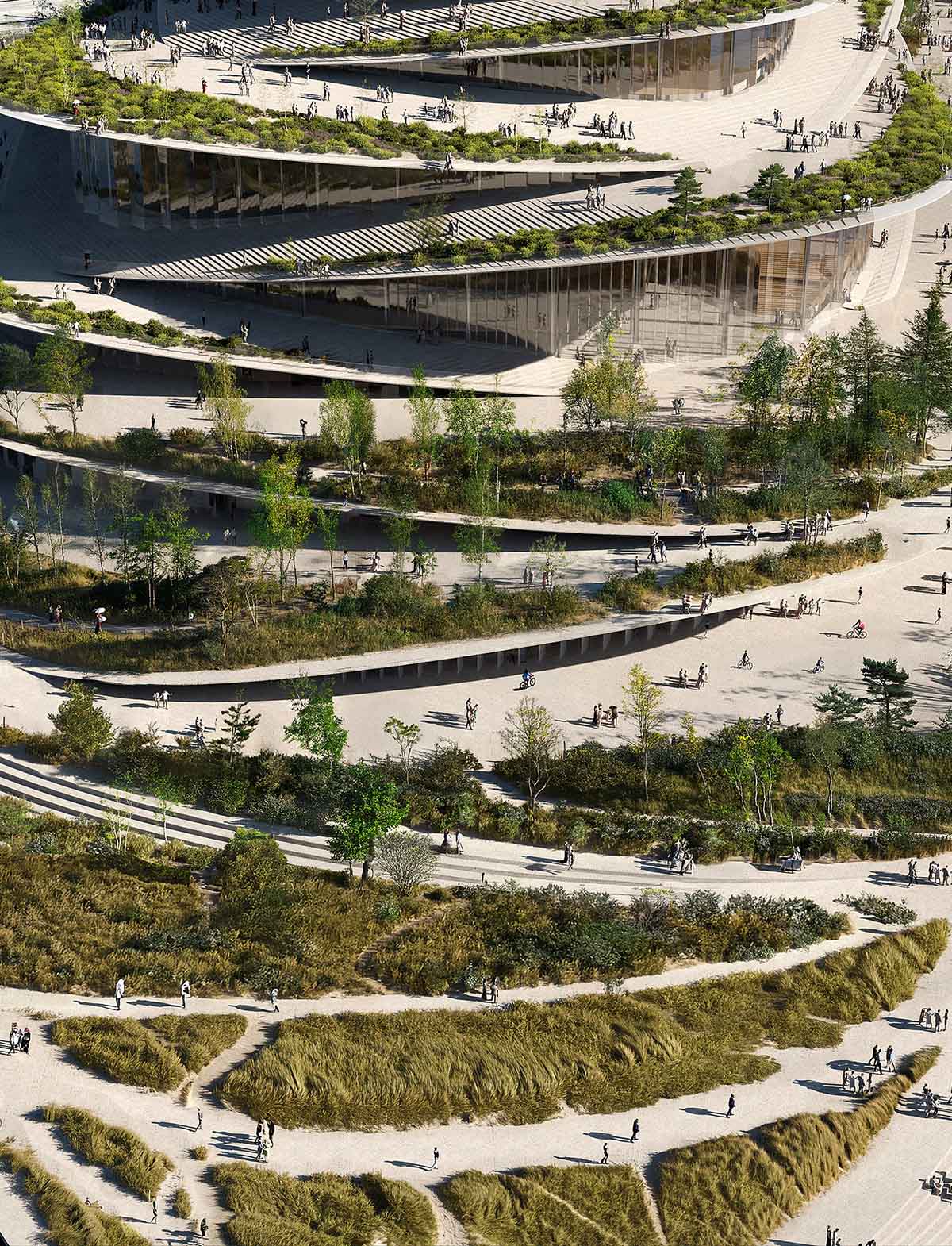
The opera house, which was intended to be a public structure inside a park, is actually a collection of tiered landscapes that rise from the water's edge.
When viewed from above, the roof forms a continuous circle that opens up to the bay. The building's sculpted topography creates outdoor gathering areas and a new public connection between the city and the river by providing walkways from the quay to elevated gardens.
Visitors can enter the opera from a number of locations, including the park, the pier, or the "opera street" at Baakenhafenbrücke, whether they are arriving by foot, cab, or bus. The main foyer, which serves as an urban living room and has two central timber stairs that guide guests around the structure, continues the park's stone pavers. Every major floor has direct access to outdoor terraces that may be used as gathering spots for performers, guests, and tourists alike, as well as arrival points and event spaces.
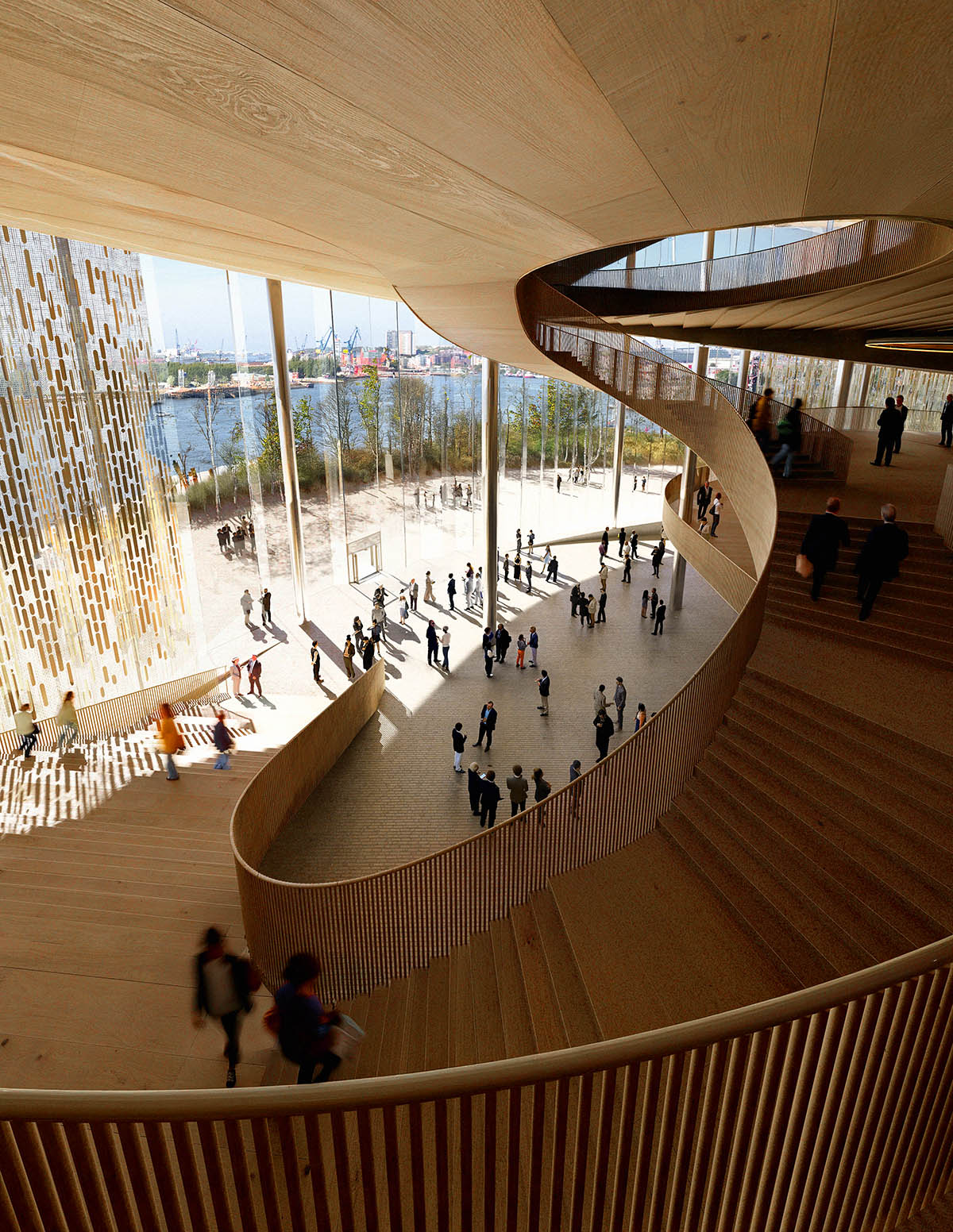
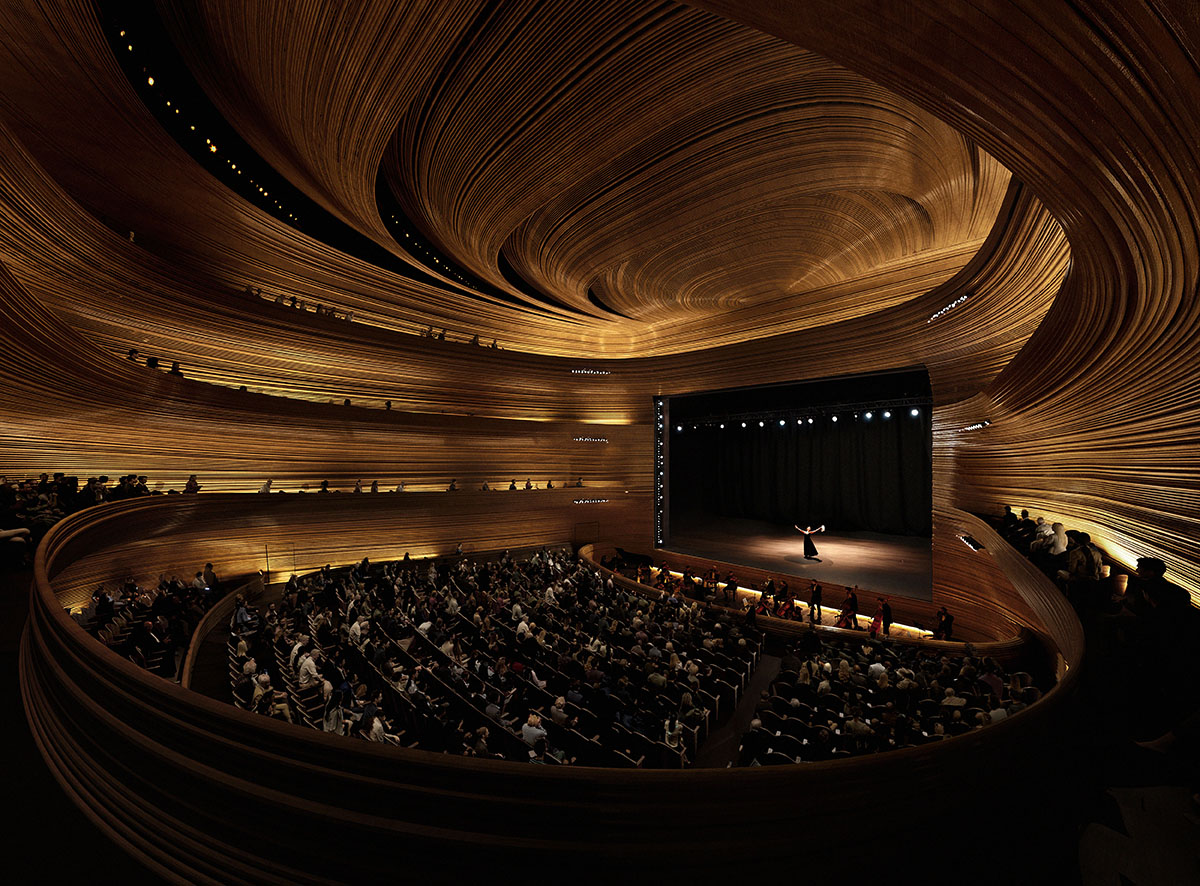
The main hall, which is located in the center of the structure, is a space with gently curving balconies where the audience and performers congregate. The interior is wound with bands of horizontally stacked wood, forming a continuous surface that distributes sound uniformly across the room.
"The main hall is the heart of the project - a space with state-of-the-art acoustics and perfect sightlines to the stage. Immersive concentric wooden rings shape the hall and its balconies, dissolve the boundaries between spectators and artists, between reality and fiction," said Jakob Sand, Partner, BIG.
Rehearsal rooms, back-of-house spaces, and a smaller studio stage behind the main hall are set up for direct connectivity to the stage, enabling artists to move freely between practice and performance and ensuring an effective flow of activity throughout the facility.
"The new state opera is an invitation to the public to experience their city, the harbor and the opera from a new perspective. Visitors can move along the facades and glimpse into the foyer, rehearsal rooms, backstage areas and offices, revealing the complexity behind a working opera house," said David Zahle, Partner, BIG.
"With no back side and indoor levels connected to the three-dimensional landscape, the building is open toward its surroundings on all fronts," Zahle added.
BIG Landscape created the surrounding park, which is shaped by the flow of water. It uses vegetated dunes, sloping terraces, and wetland gardens to slow and absorb storm surges.
By collecting and holding onto rainwater, basins provide habitats for local species, aquatic plants, and amphibians. Tidal zones, resilient vegetation, and permeable surfaces work together to promote biodiversity and create a dynamic environment that changes with the Elbe's rhythms.

BIG recently completed a new science center at Claremont McKenna College (CMC) in California, United States. In addition, the firm revealed new images for the masterplan of Telosa City, focusing on "people-centric" design, developing a comprehensive framework for sustainable and equitable urban living.
Project facts
Project name: Hamburg State Opera
Size: 45,000 m2
Location: Hamburg, Germany
Client: Kühne Foundation, The Free and Hanseatic City of Hamburg represented by the Ministry of Culture and Media, Hamburgische Staatsoper GmbH
Collaborators: Theatre Projects, Bollinger + Grohmann, Transsolar, K+H, Duschl, Yanis Amasri
Project team
Partner-in-Charge: Bjarke Ingels, Jakob Sand, David Zahle
Design Lead: Sarkis Sarkisyan, Michael Leef
Team: Mariia Nakonechnaia, Carlos Ramos Tenorio, David Benjamin Wilden, Jianuo Xuan, Jacob Engelbrecht Ødum, Celia de la Osa Muñoz, Gilana Antonova, Giovanni Vergantini, Mathis Paul Gebauer, Hou Ming Ng, Martino Hutz, Veronica Hamilton
BIG Landscape: Giulia Frittoli, Ulla Hornsyld, Gaspard Del Marmol, Lucia Ayala.
All renderings © Yanis Amasri.
> via BIG