Submitted by WA Contents
Architect Alina Sanina unveils vision for gothic futurist drone station for mountain regions
Ukraine Architecture News - Jan 20, 2026 - 05:23 4910 views

Architect Alina Sanina has unveiled vision for "gothic futurist" drone station, proposing high-altitude rescue infrastructure for mountain regions.
Called Lynx, the structure is a proposed drone station created by architect Alina Sanina - who is the founder of Sanina Arch Club, and intended to assist eco-tourism and search and rescue efforts in isolated mountainous areas.
The idea envisions a new building typology in which guests, natural landscape, and drones coexist in a common high-altitude habitat.
Designed for areas where mobility is restricted due to mountainous terrain, such as the Carpathians, Alps, and Pyrenees, the plan presents a network of self-governing outposts that integrate drone technology with structures that are visible to the public.
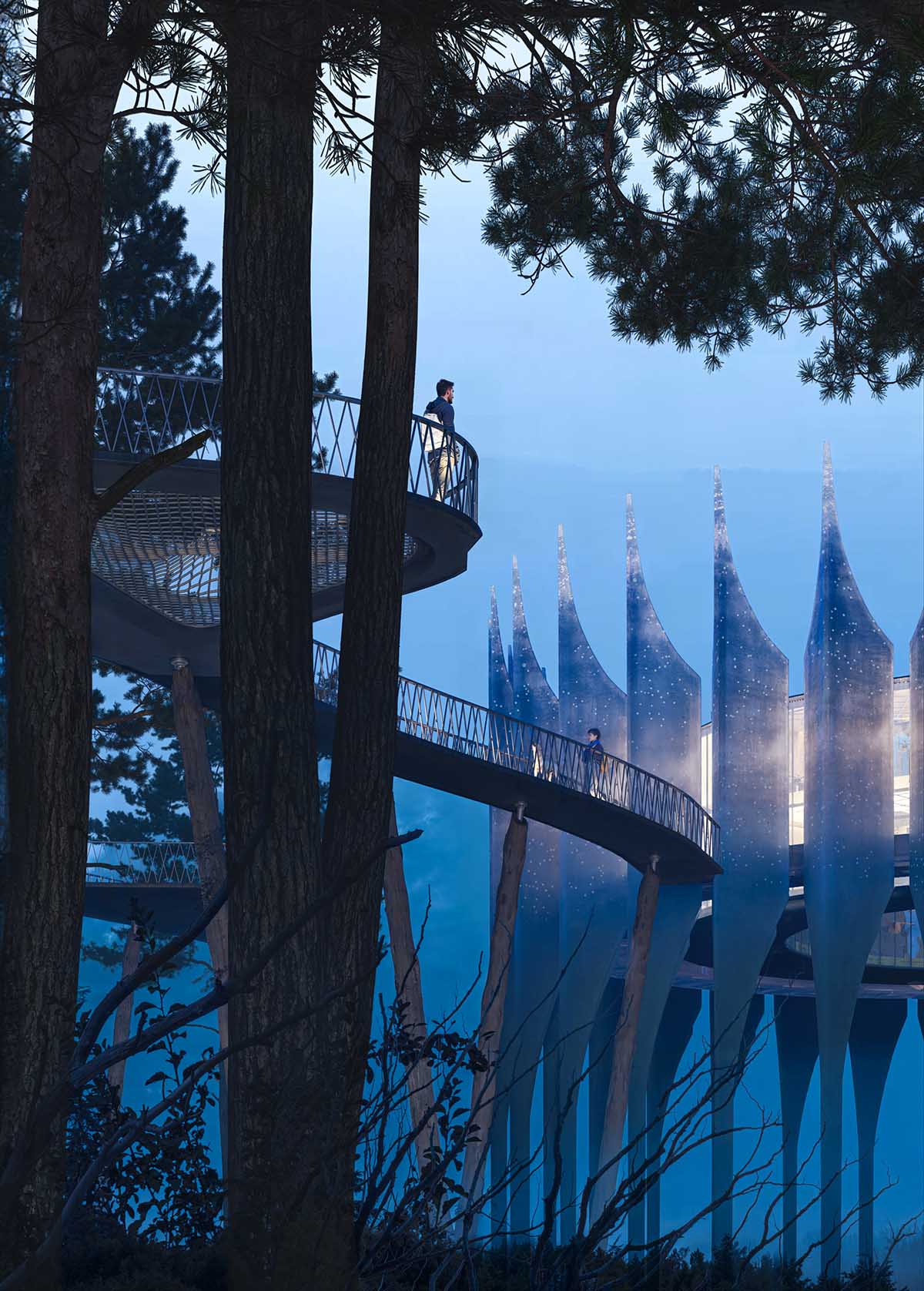
Each Lynx station acts as a hub for drone storage, charging, maintenance and flight coordination. Depending on its location, the circular structure could also incorporate a planetarium observatory, scientific research spaces, viewing terraces, a media library or compact accommodation, positioning the stations as architectural destinations rather than solely technical infrastructure.
Placed in hard-to-reach areas and linked into a single system, the stations would monitor environmental conditions, support tourism routes and coordinate emergency responses.

Service drones would deliver essentials such as water, food and medical supplies to high-mountain hiking segments, while a separate category of passenger sightseeing drones would offer aerial tours.
Through a specialized smartphone app that offers route information, weather updates, and an integrated SOS feature, visitors would communicate with the network. According to Sanina, the system suggests a "new layer of mountain infrastructure — for both people and drones."
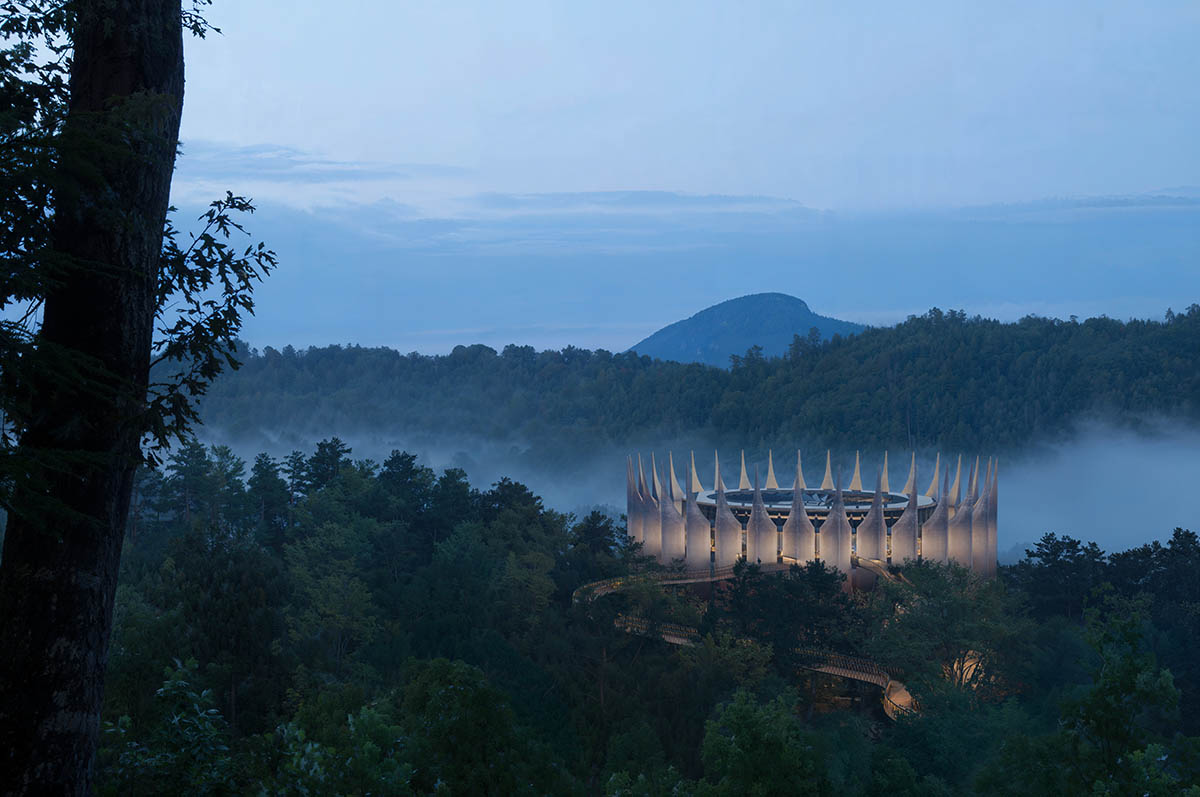
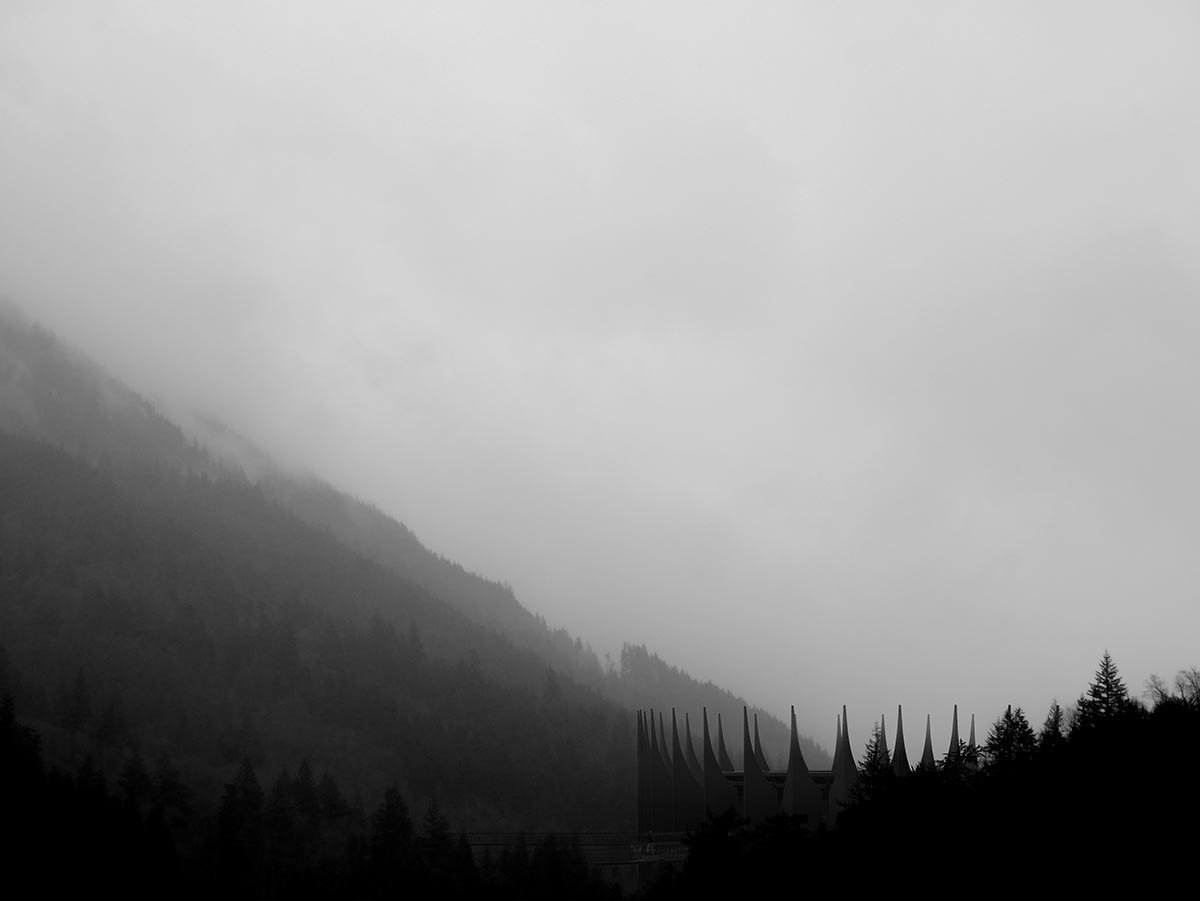
Lynx is known for its "gothic futurist" style, which combines lightweight glass with monolithic concrete. In reference to historic defensive fortifications, the station is set up as a sequence of concentric rings. The neighboring ridgelines are echoed by the rhythmic vertical peaks formed by a serrated concrete wall throughout the perimeter.
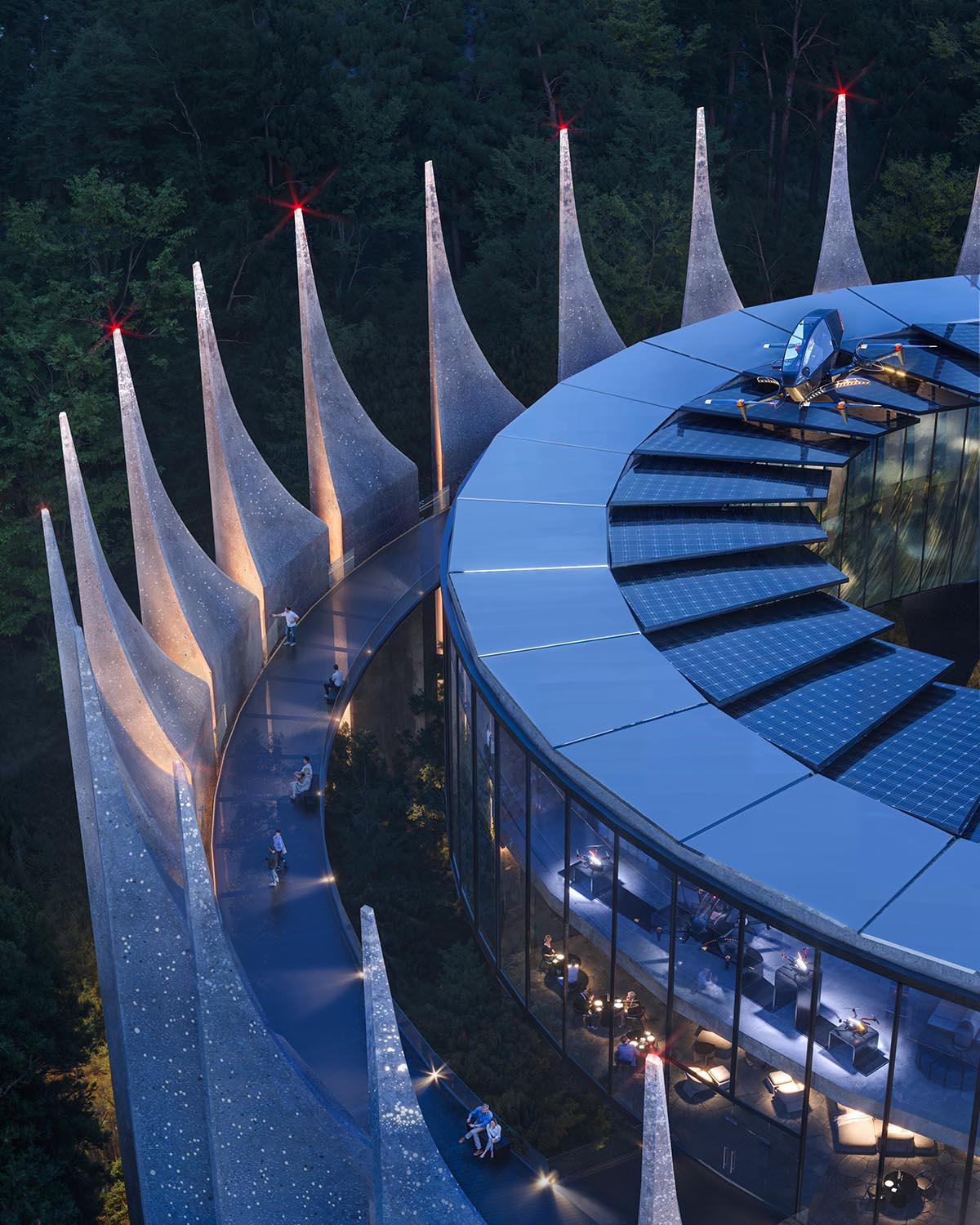
Concrete and scattered glass inclusions are combined to create the composite material used to construct the structure. The construction appears to melt into the sky as the ratio gradually changes from solid concrete at the base to a higher proportion of translucent glass toward the upper floors.
The combination contains microscopic glass particles that refract light, giving the façade a crystalline sheen that varies throughout the day according to cloud and sun conditions. The station can function independently in distant mountainous areas thanks to photovoltaic cells built within the glass panels, which transform the façade into an energy-generating skin.
Internal systems and drone charging are powered by additional solar panels on the roof. The boundaries between the building and its environs are blurred as the glass-covered volume inside opens to expansive views. The typology is intended to be adaptable, serving as a wayfinding beacon, observatory, tiny airport, or public area next to a resort.
The idea addresses the growing difficulties associated with mountain tourism. In 2024, almost 500 rescue operations were carried out in the Ukrainian Carpathians alone. Hikers are regularly put in danger by unexpected weather changes, communication breakdowns, and challenging routes, necessitating resource-intensive operations including rescuers, dogs, specialized equipment, and helicopters.
Drones, which can survey large areas in just a few of minutes, detect thermal signatures, provide necessary supplies, and transmit instructions, provide a more rapid and secure option, according to Sanina.
"It’s time to imagine how drones can serve rescue, care and human well-being"
The project also demonstrates Ukraine's rapid progress in autonomous aerial systems, which was spurred by technology advancements during the war.
"The moment for Lynx has come," Sanina said. "The technology is ready, aerial routes exist, and there are hundreds of skilled operators. It’s time to imagine how drones can serve rescue, care and human well-being," Sanina added.
Lynx views drones as a component of a larger ecological and humanitarian infrastructure rather than as military or strictly utilitarian tools. According to the notion, drone stations will become just as ubiquitous in mountainous areas as vistas, shelters, or lift stations, but they will be much more intelligent and adaptable.
Lynx envisions a future where innovation and nature work together to create mountain settings that are safer and easier to reach by fusing technology with landscape-driven design.
Project facts
Project name: Lynx
Project: Lynx Drone Station
Author: Alina Sanina, Sanina Arch Club
Year: 2025
Status: Architectural Concept
All images © Sanina Arch Club.
> via Sanina Arch Club