Submitted by WA Contents
ZHA and partners unveil Malpensa Hospital where healthcare meets innovation and community
Italy Architecture News - Dec 24, 2025 - 05:30 4167 views
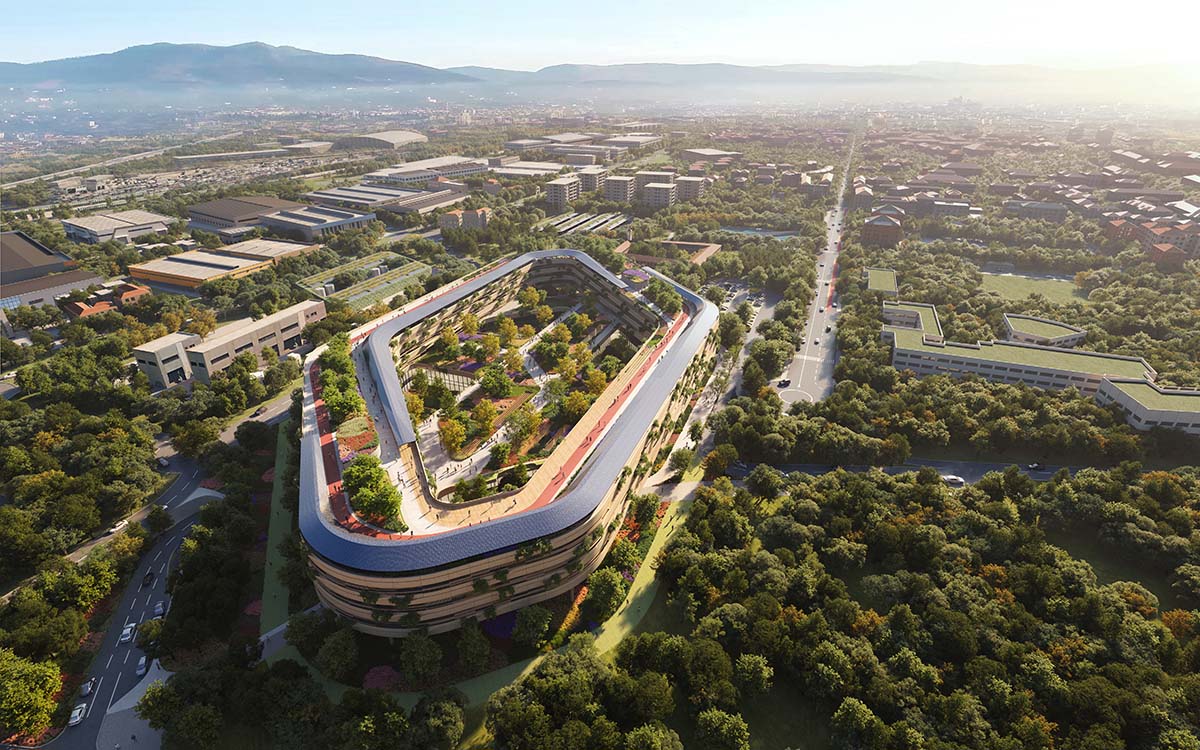
Zaha Hadid Architects (ZHA), in collaboration with RINA, the team leader, Studio Plicchi, WSP, STI Engineering, and BC Building Consulting, won the international competition to design Malpensa Hospital (Grande Ospedale della Malpensa).
Nearly a million people who live in the area between Milan and Varese will be served by the new medical complex, which will combine the former Gallarate and Busto Arsizio hospitals into a single facility offering 21st-century healthcare.
The Lombardy Regional Health Authority commissioned the design of Malpensa Hospital, which will adapt to the Olona Valley's changing needs while maintaining operating effectiveness and productivity.
Meeting the region's rising healthcare needs, fusing cutting-edge medical technology with human-centered design, and guaranteeing the community has access to top-notch medical treatment are the three main goals of the new hospital's design.
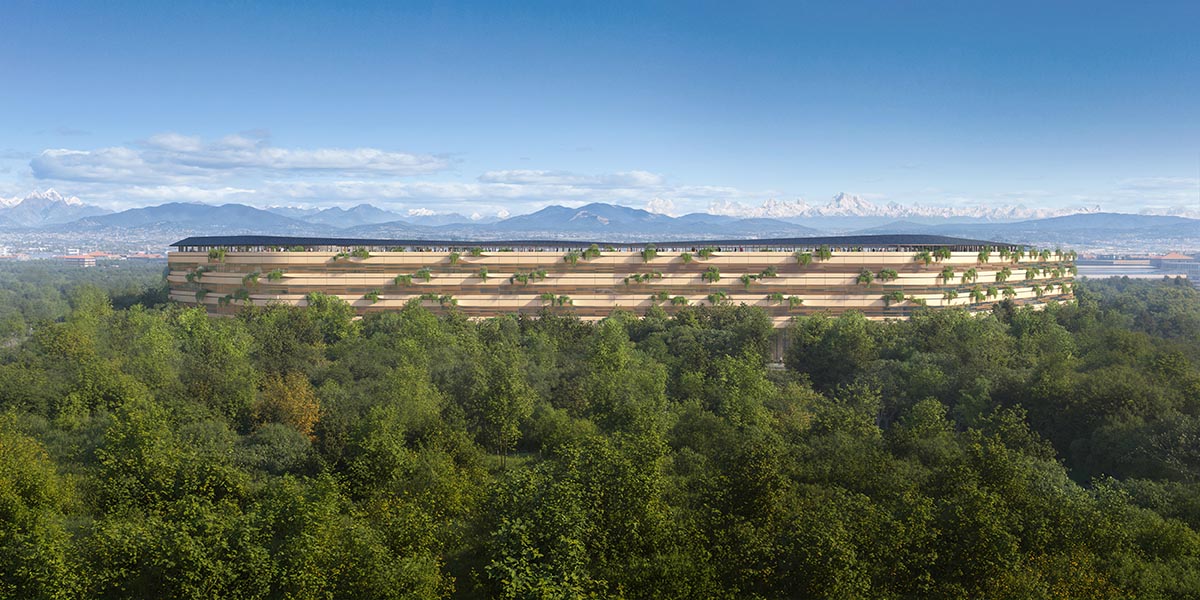
The project is an example of how healthcare innovation, local cultural preservation, and ecological regeneration can be integrated holistically to create an inclusive and sustainable campus that can serve its community now and adapt to its future requirements.
The modular design of the hospital allows for future expansion and quick reconfiguration in an emergency. It was built to adapt to changing health issues and climate circumstances. This strategy combines cutting-edge medical technology with a design that prioritizes individual comfort to address the region's expanding healthcare demands.
The hospital will occupy about 90,000 square meters in a compact structure with five above-ground levels and one basement. It will be arranged according to the intensity of care, including emergency services, surgery, and critical care within a multipurpose operating block with radiology, interventional, and diagnostic rooms.
In addition to diagnostic and therapy zones with treatment rooms, the hospital will include large outpatient and inpatient facilities, as well as maternity and baby care units. Additionally, the design includes specialized sections for rehabilitation, laboratories, and logistics, as well as additional clinics for maternal-infant healthcare and first and second level clinics. The hospital's facilities are all made to be readily modified to accommodate changing needs.
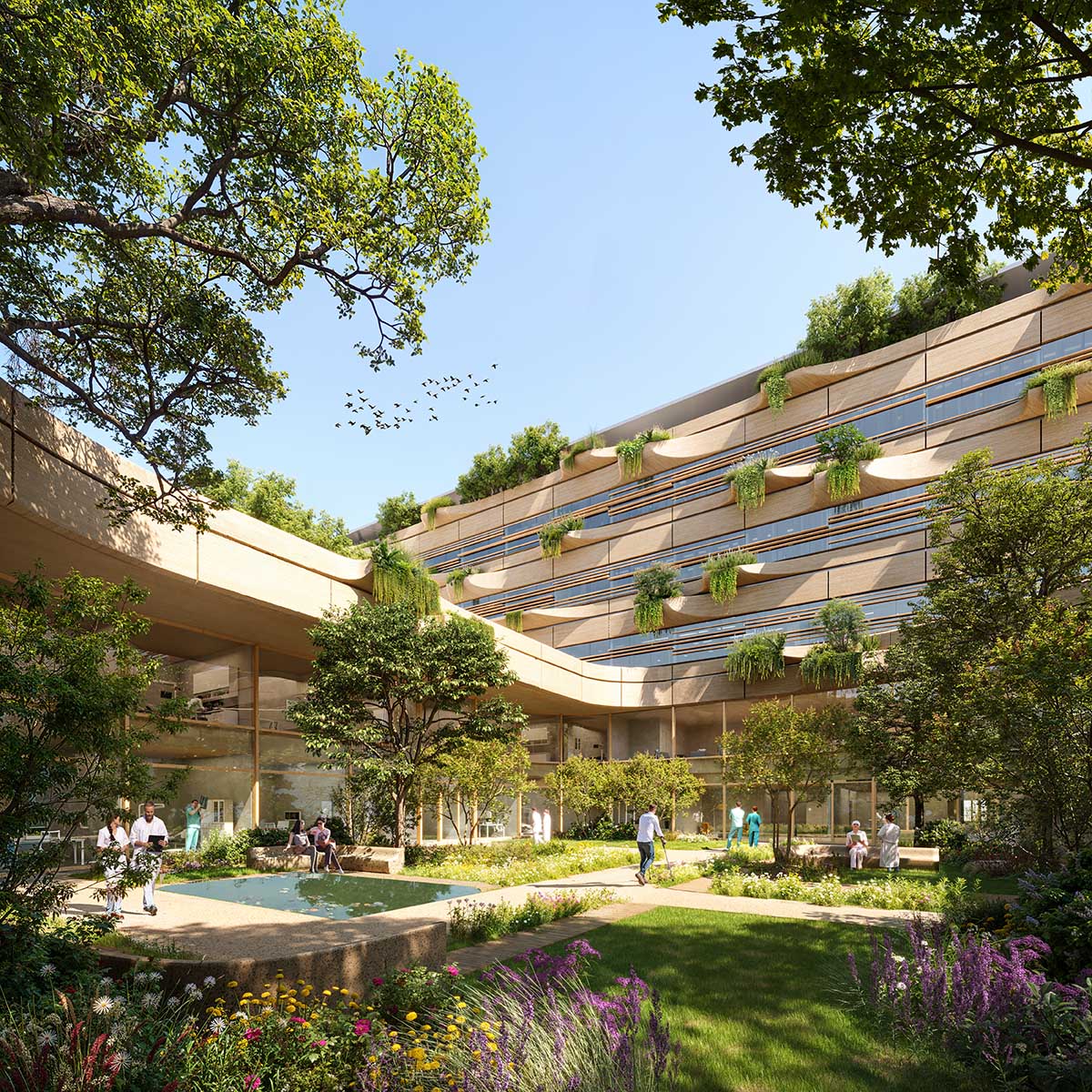
With a distinct division between the routes utilized by the general public and those utilized by technicians and healthcare professionals, the hospital's designated circulation pathways for guests, patients, employees, and items will minimize interference and lower the danger of contamination.
To prevent interference with patients and guests, separate elevators for medical supplies, commodities, and rubbish are placed in strategic locations. Patients and employees will receive the most effective logistical services if an automated delivery system is installed across the hospital.
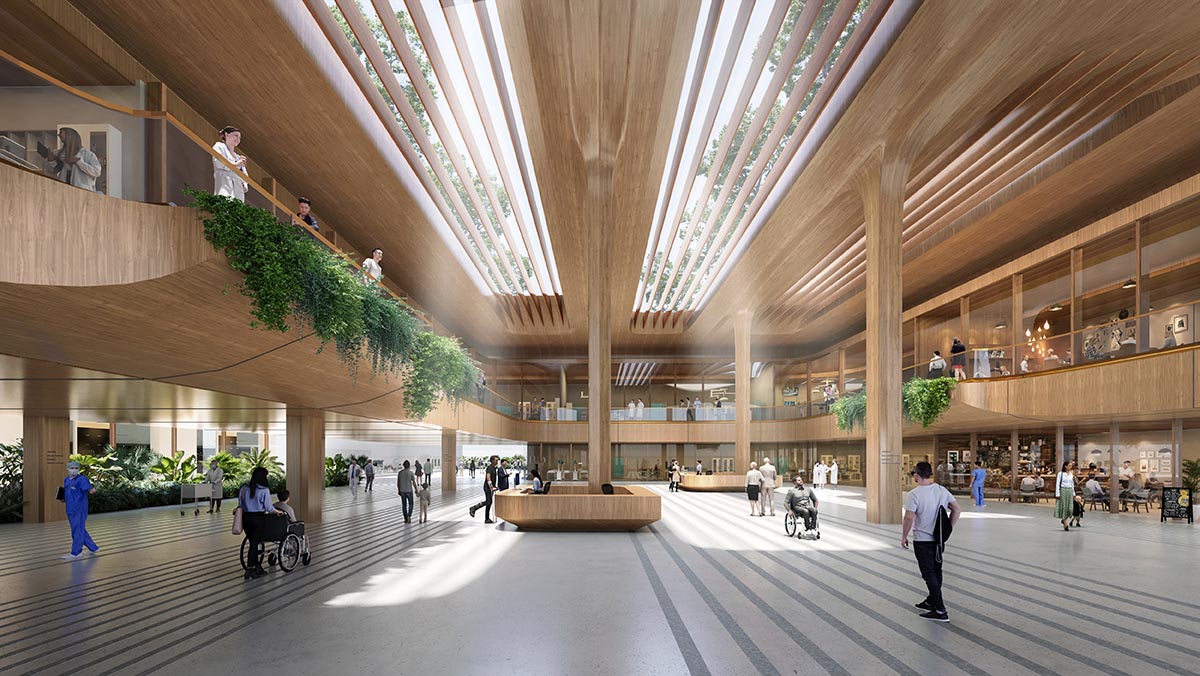
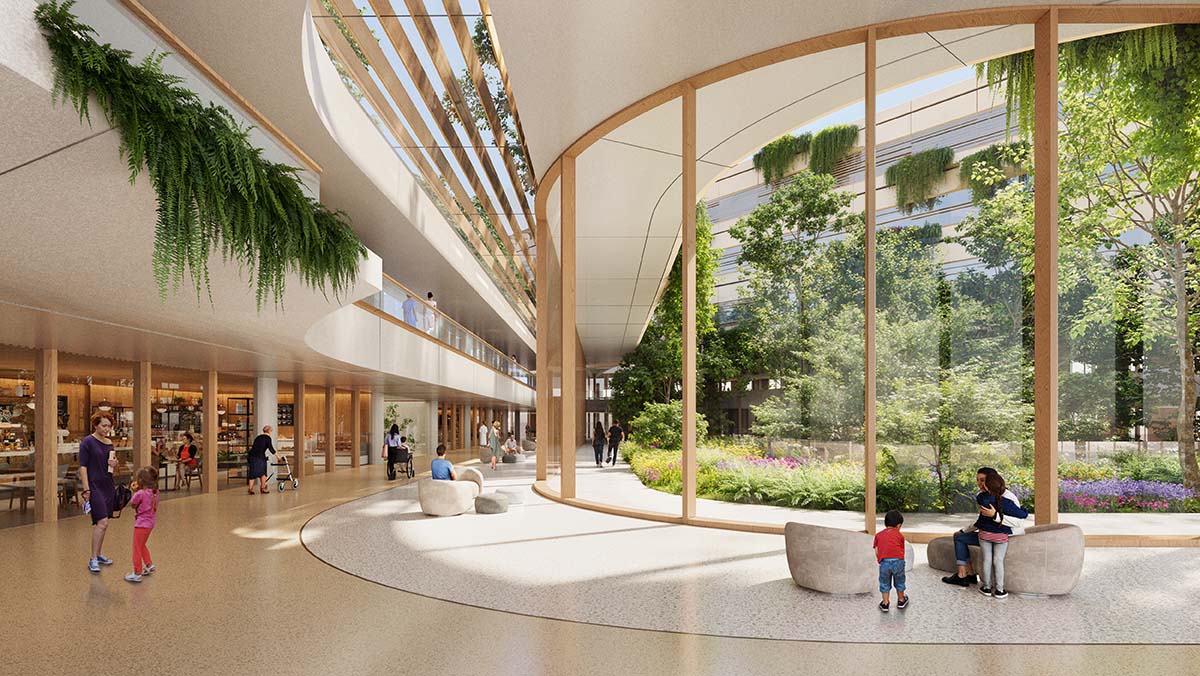
By establishing rest areas for both patients and employees, the design places a high priority on comfort and privacy in order to lessen tension. In order to promote accessibility and community integration, a central "Main Street" serves as a public axis at ground level, connecting the entrance plaza and landscaped areas. In order to create an atmosphere that promotes health and wellbeing, indoor spaces are designed to maximize natural light and acoustic comfort.
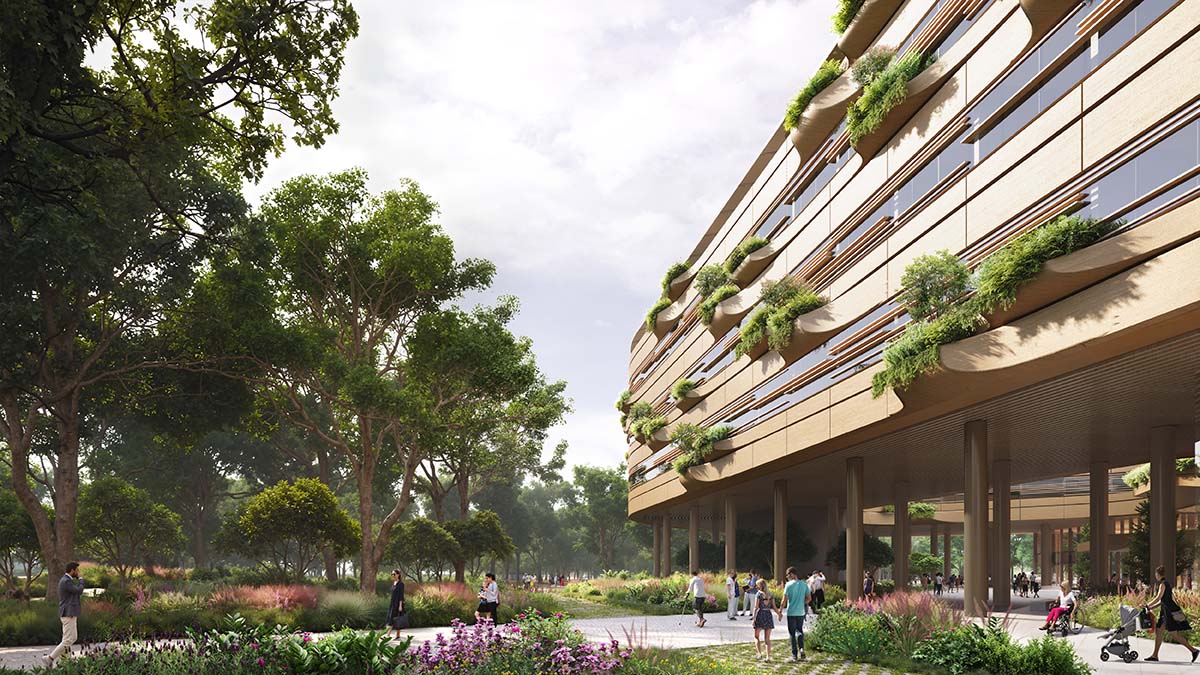
The architecture is based on human-centric design principles, which include gardens, courtyards, and landscaped rooftop terraces that provide a range of settings for rest and recuperation. A healing atmosphere is encouraged by the rooms' material palette.
While universal design incorporates tactile maps, multilingual signs, and barrier-free circulation, areas for socializing, education, and cultural activities will allow the hospital to build the strongest links with its local populations to improve every element of patient care.
The location, which is near the Parco Regionale della Valle del Ticino and bordered by forests and agricultural area under the Regional Ecological Network, is rich in natural heritage.
By incorporating the historic Cascina dei Poveri, an old rural complex from the 12th and 13th centuries, into the campus, the hospital's landscape design honors its legacy and creates a new hub for the neighborhood while also protecting these ecosystems and reducing hydrological impact.
The hospital is built to surpass CAM compliance environmental performance standards by the use of efficient passive design techniques, and it has the potential to obtain the highest sustainability certification through the use of smart building technologies and renewable energy sources.
The new hospital is easily accessible by a network of designated public access routes from Via Quintino Sella and SS33, as well as by its numerous public transportation connections, bike lanes, and pedestrian walkways.
The modular aluminum rainscreen panels with integrated plants and solar shade that make up the exterior of the new medical complex were selected for their low embodied carbon, durability, and recyclability. Natural finishes like wood and fabrics are used in the interiors to make all patients, guests, and employees feel more at ease, secure, and at ease.
All materials are chosen for their low CO2 footprint, recycled content, and adherence to strict EPD and LCA requirements. Advanced modular prefabrication technologies are used to cut waste, investment, and construction time. A photovoltaic system larger than 1 MWp will provide about 25% of the hospital's electricity consumption, while a high-performance building envelope and solar shading will improve operational efficiency throughout the campus by reducing cooling demand by 30%. Long-term adaptability is ensured by preparing a hybrid heating system for hydrogen integration.
The project has the capability of implementing the most efficient predictive maintenance programs and optimizing energy performance because it was designed with the potential to integrate new smart technologies, such as sophisticated building management systems and digital twin models.
The campus's landscaping will include new public parks and gardens with drought-resistant plants to lower evaporation and irrigation requirements while maintaining the current woodland and adding new wetlands and bioswales to collect and reuse runoff and improve biodiversity.
Malpensa Hospital will offer the best possible patient care in a cutting-edge, human-centered, climate-responsive medical complex that integrates cutting-edge medical care with conscientious Olona Valley ecological stewardship.
Zaha Hadid Architects revealed the silk-inspired bridge of Hangzhou with a sinuous form in Hangzhou, China. In addition, the firm and Bureau Cube Partners (BCP) won an international competition to design a new mixed-use tower in Belgrade, Serbia. Moreover, the firm completed a new community sports and leisure hub in Hong Kong. The project, described as "a lifted village," is ZHA's first sports and commercial project completed in Asia.
Project facts
Architect: Zaha Hadid Architects (ZHA)
ZHA Principal: Patrik Schumacher
ZHA Project Director: Paolo Zilli
ZHA Competition Project Director: Paolo Zilli
ZHA Competition Associates: Tommaso Casucci and Johannes Elias
ZHA Competition Team: Valentina Cerrone; Daniel Coley; Daniele Ferrentino; Alex He; Yooyeon Noh; Prashant Phirke; Angelica Videla Cardenas
ZHA Environmental & Sustainability Team: Bahaa Alnassrallah; Carlos Bausa Martinez; Jing Xu
Consortium
Zaha Hadid Architects: Lead Architect, coordination, and wellbeing.
RINA: TEAM Lead, Civil Engineering, and Safety.
Studio Plicchi: Hospital Specialist and Local Architect
WSP: Environment, Landscape, and Sustainability
STI Engineering: MEP and Fire Strategy
BC Building Consulting: Quantity Surveyor, and Maintenance
All renderings © X Universal.
> via ZHA News
community concept healthcare innovation Zaha Hadid Architects