Submitted by WA Contents
ZHA begins construction on the Bishoftu International Airport in Addis Ababa, Ethiopia
Ethiopia Architecture News - Feb 09, 2026 - 05:22 13104 views
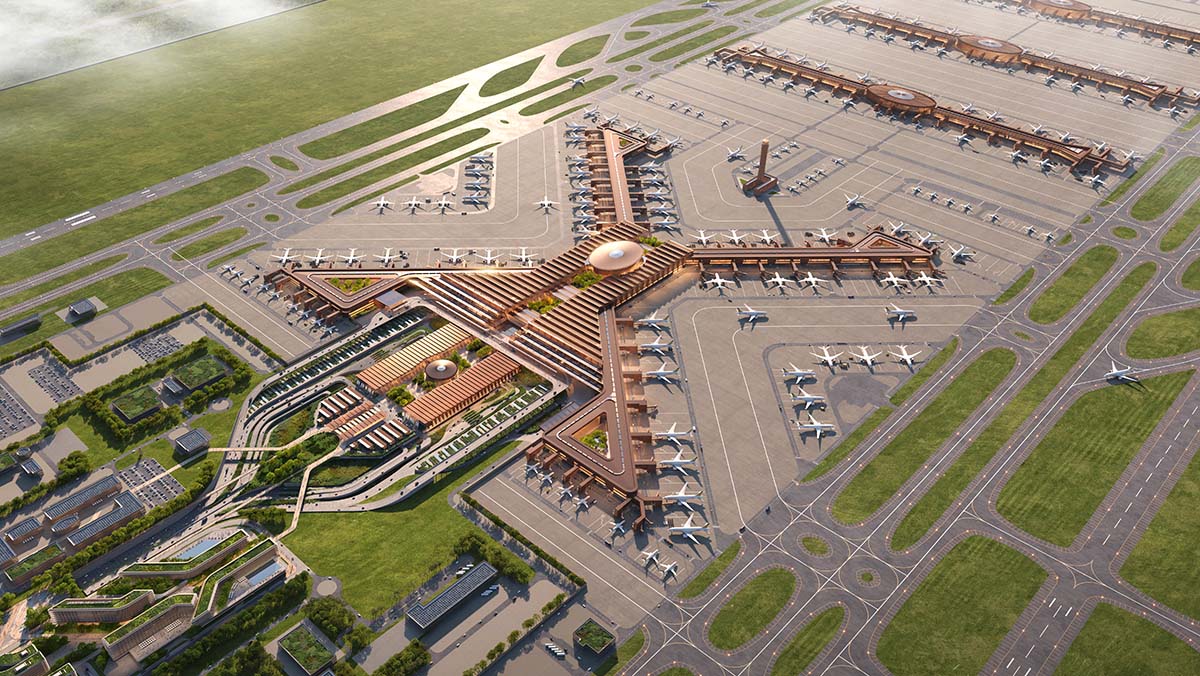
The largest airport on the continent is being built in Bishoftu, some 40 kilometers south of Addis Ababa, the capital of Ethiopia, by Ethiopian Airlines Group, the continent's top airline.
60 million travelers will be served annually by Phase One of the planned Bishoftu International Airport (BIA). With four runways and parking for 270 aircraft, future phases will accommodate up to 110 million passengers yearly.
The US$12.5 billion investment in BIA will optimize Ethiopia's location at the intersection of Africa, Asia, and the Middle East with a global transportation hub for the twenty-first century, meeting IATA regional growth estimates for passenger demand.
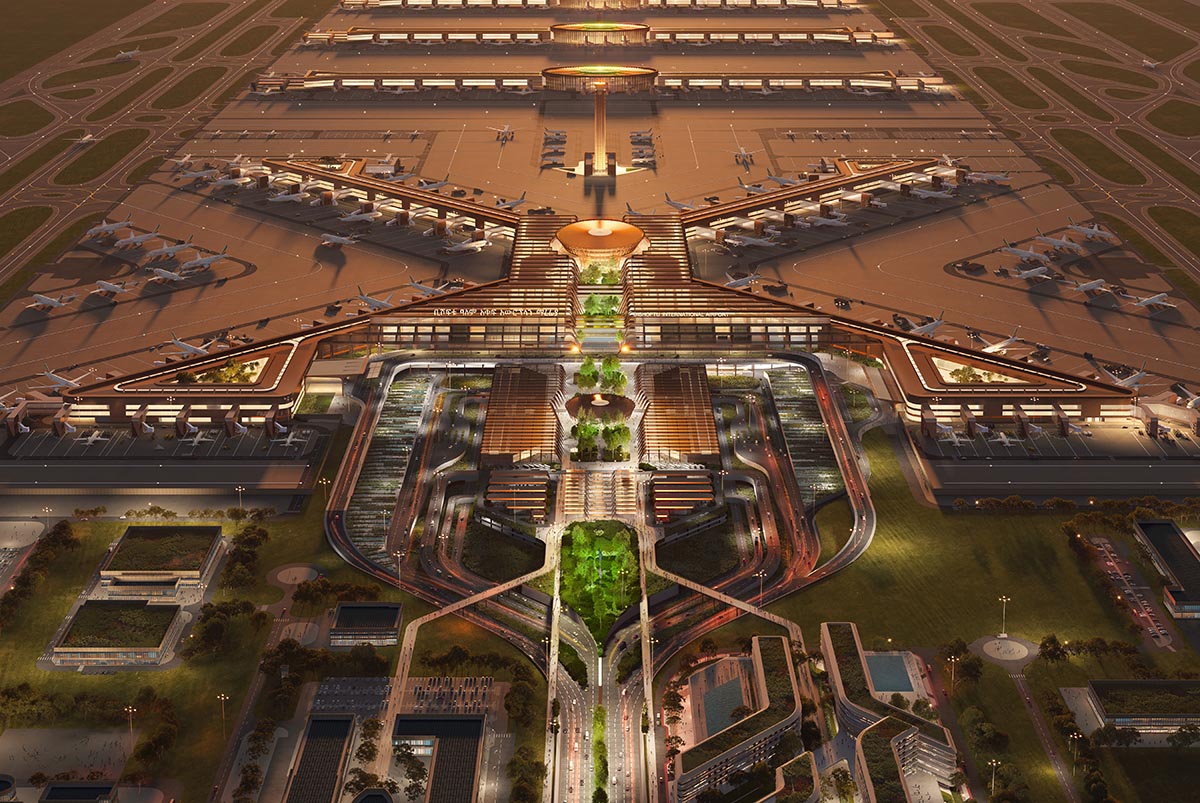
The new Bishoftu International Airport (BIA), located about 40 kilometers south of Addis Ababa, the capital of Ethiopia, is now under construction. At the airport's groundbreaking event on Saturday, January 10, 2026, Ethiopia's Prime Minister Abiy Ahmed Ali set the cornerstone.
"Bishoftu International Airport will be the largest aviation infrastructure project in Africa's history, more than four times the capacity of Ethiopia's current main airport which will reach its limits on existing traffic in the next two to three years," said the Prime Minister.
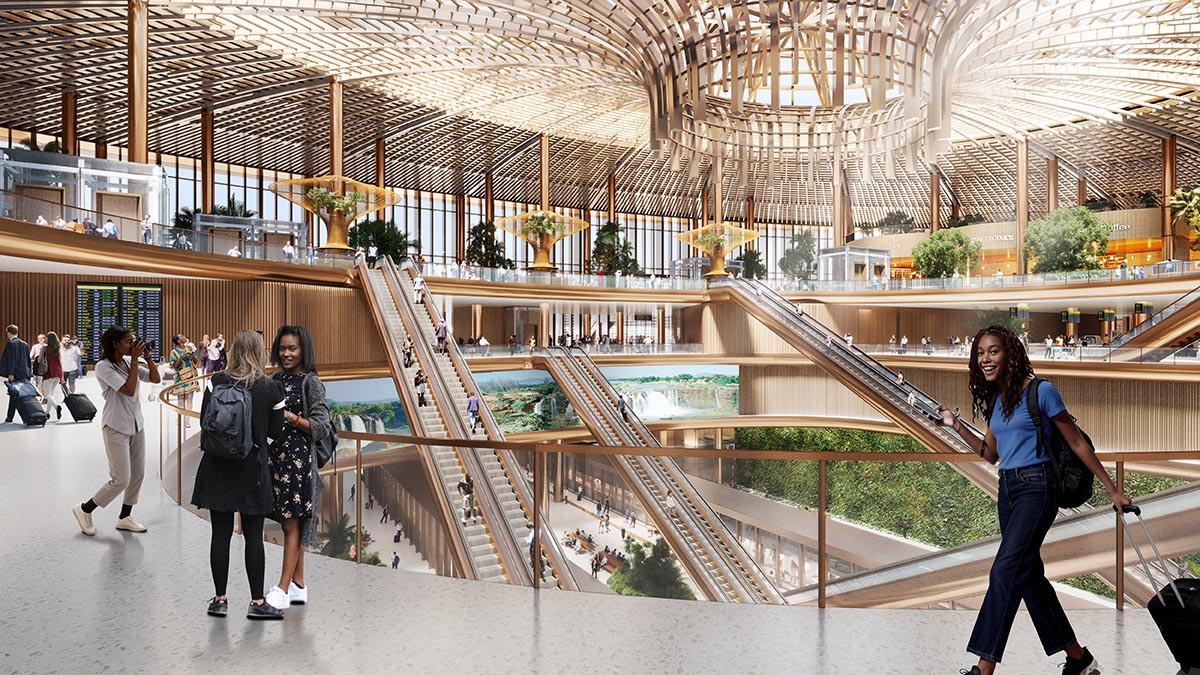
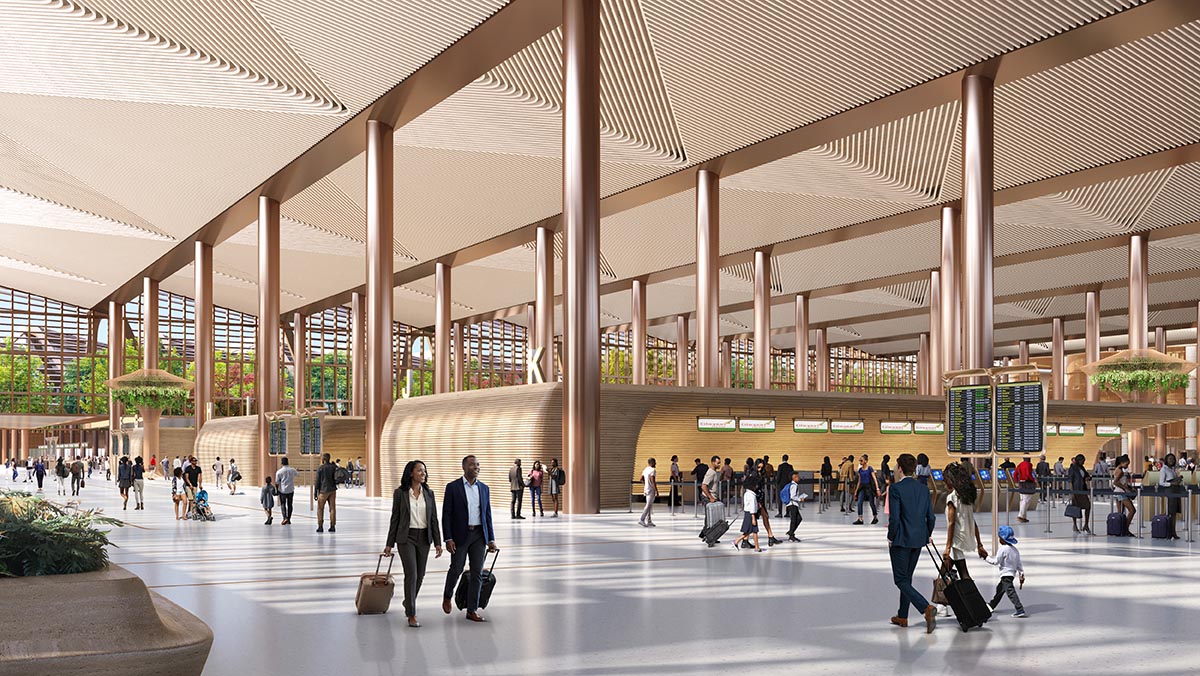
The biggest airline in Africa, Ethiopian Airlines, will be served by BIA. BIA will become Africa's global aviation hub, offering top-notch facilities with a strong emphasis on passenger transfers. The building was designed by Zaha Hadid Architects to meet the airline's future passenger demand and operational needs.

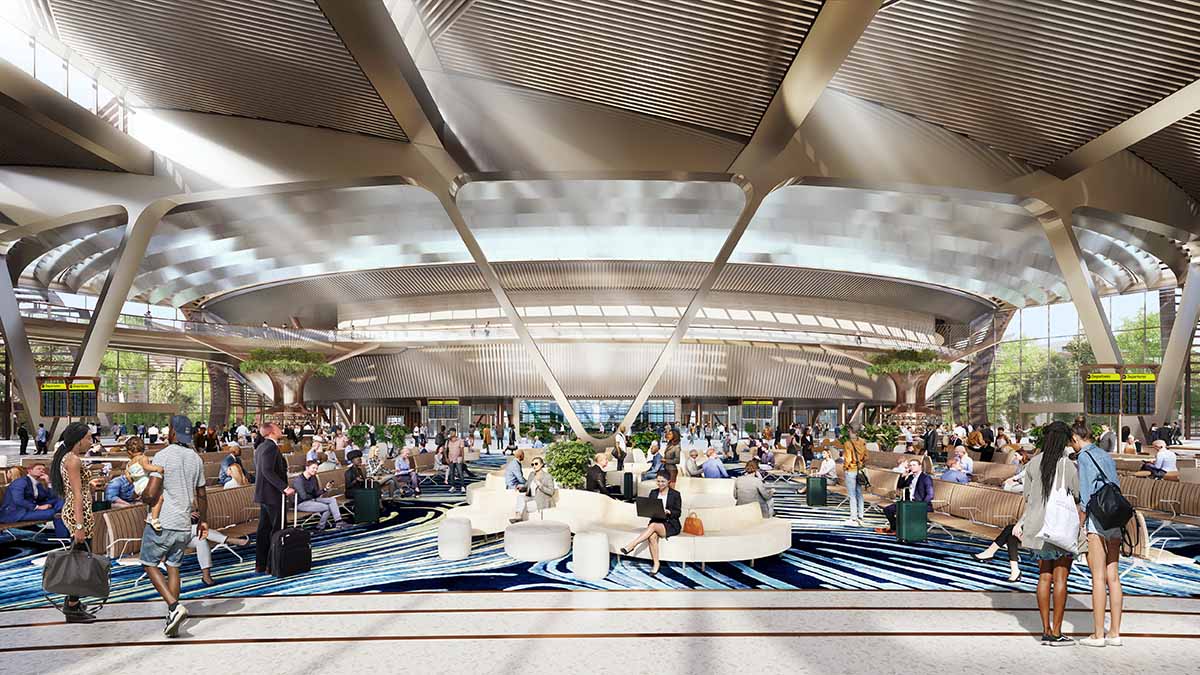
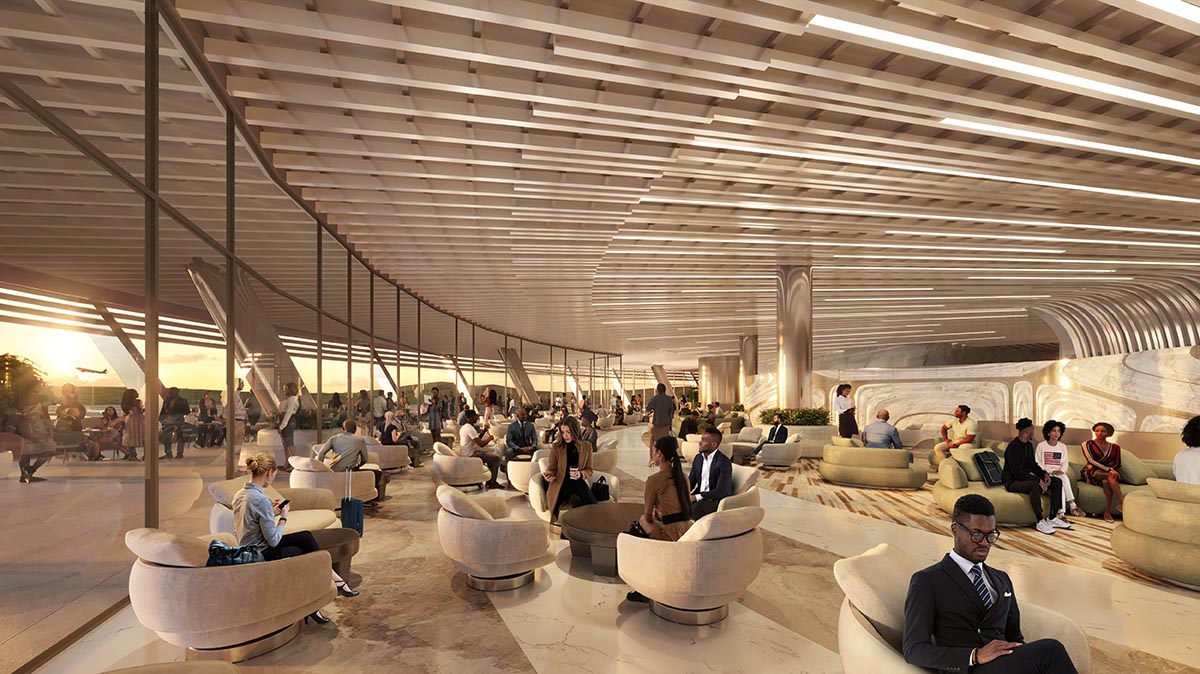
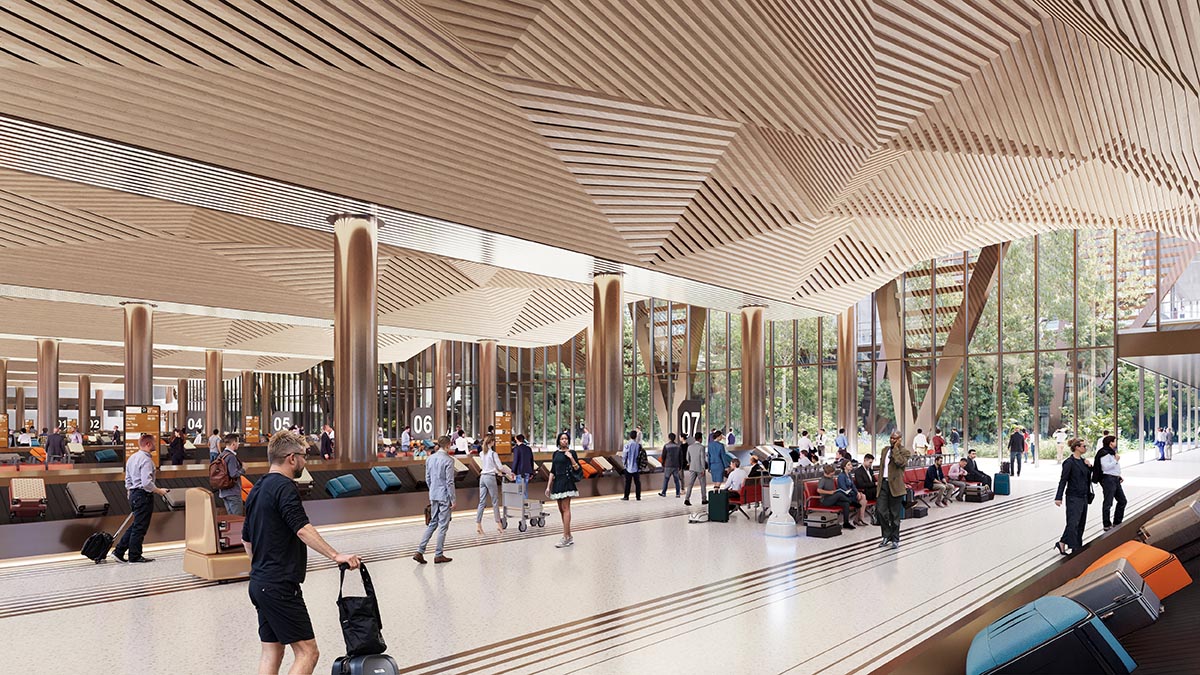
Since up to 80 per cent of travelers travel between destinations without ever leaving the airport, BIA has been built to meet these needs by offering a wide range of amenities for travelers, such as an airside hotel with 350 guestrooms, a variety of dining and entertainment options, and outdoor courtyards and gardens for leisure.
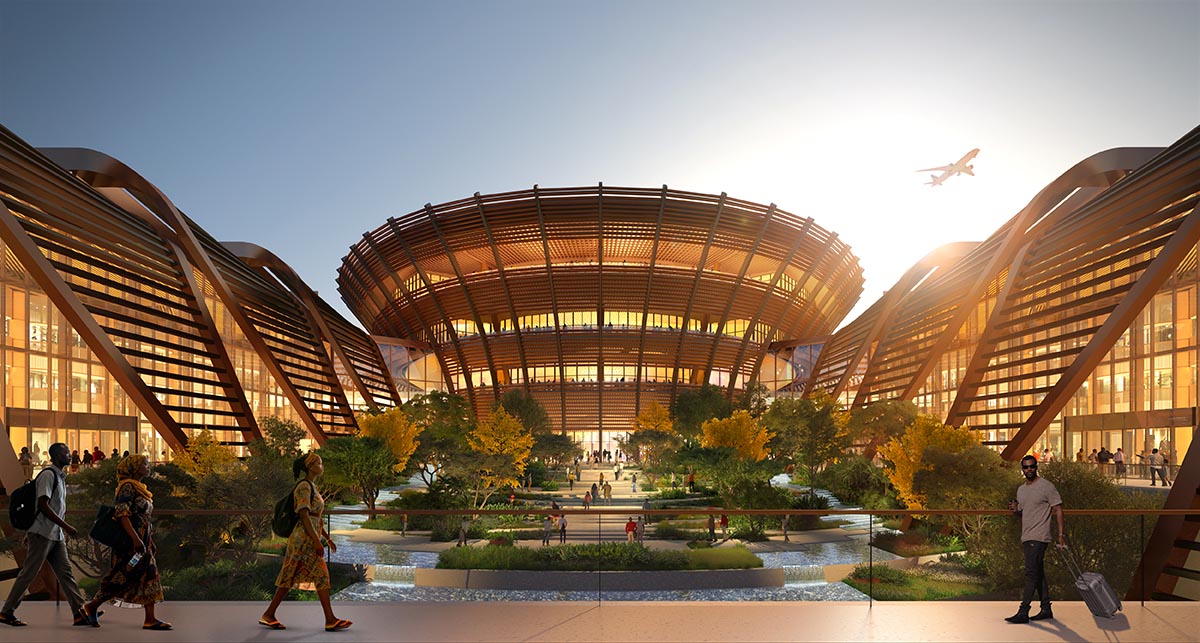
To represent the various regions of Ethiopia, each pier of the terminal has a distinct interior material and color scheme. The terminal's facilities and aircraft piers are connected by a single central spine, which minimizes transfer distances and ensures connecting passengers can simply get to their next departure gate. This design was inspired by the Great Rift Valley, which passes close to Bishoftu as it traverses the country.
Ethiopian Airlines will be able to optimize the maximum take-off weight (MTOW) of their modern fleet of aircraft, using less fuel to carry more passengers and cargo on longer-range, nonstop flights to further global destinations, thanks to BIA's longer runways and elevation, which is nearly 400 meters lower than Addis Ababa's current Bole Airport.
BIA will be built in phases with an initial opening scheduled around 2030. Two Code 4E independent parallel runways and a 660,000m2 terminal that can accommodate 60 million passengers a year (60MAP) are part of the first phase. With four runways and parking for 270 aircraft, BIA will eventually be able to handle up to 110 million people annually.
"Bishoftu International Airport is a visionary project for Ethiopia and Africa as a whole. Airports bring people together and bridge national divides. ZHA is honoured to be part its development—connecting every region of the continent as Africa’s global gateway," said Cristiano Ceccato de Sabata, Zaha Hadid Architects' Director of Aviation.
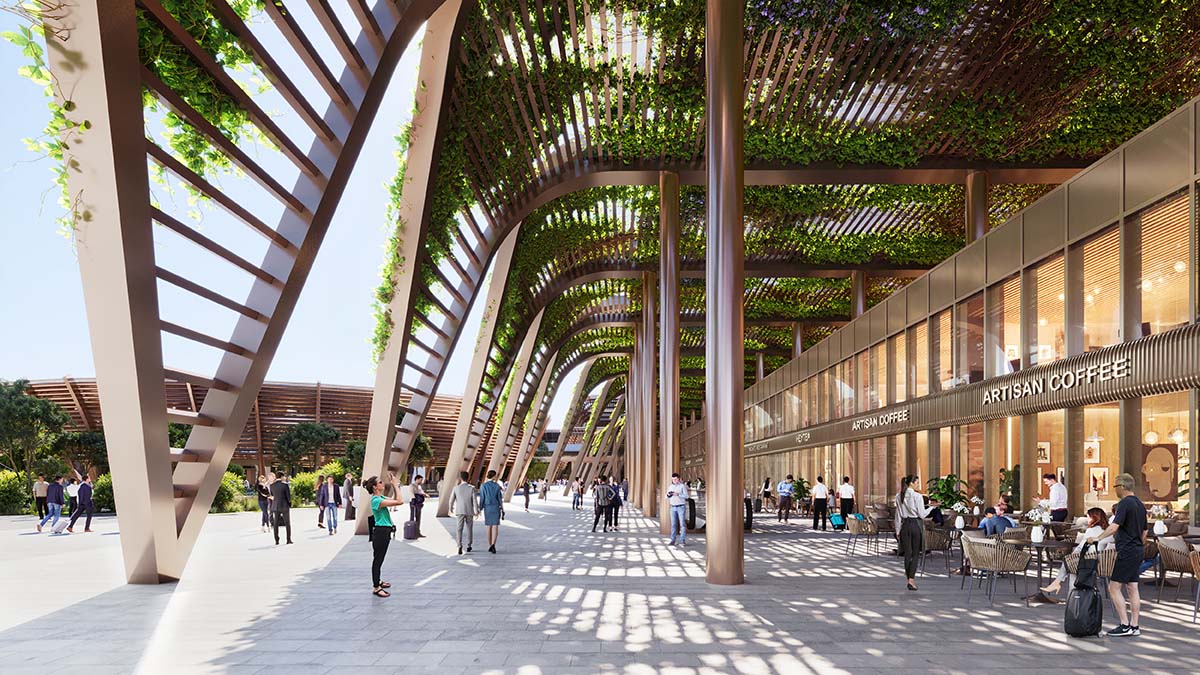
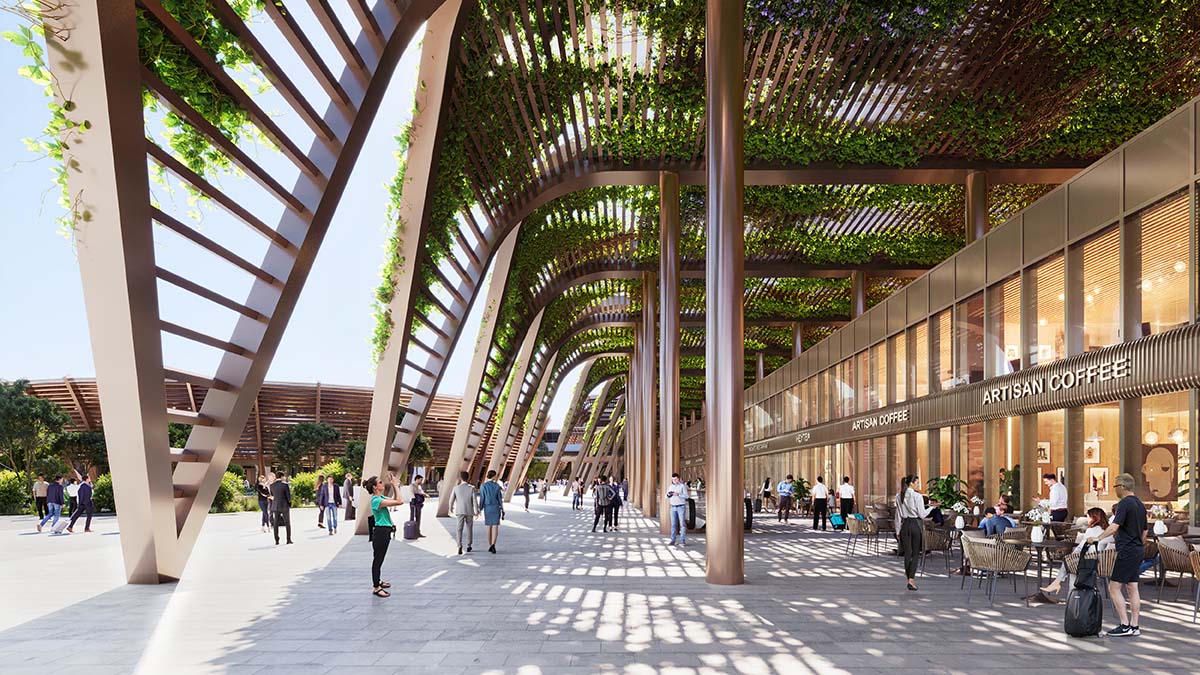
Located in the Oromia area of Ethiopia, which has a temperate subtropical highland environment, BIA's passenger terminal is LEED Gold certified.
In order to take use of the region's warm summers and mild winters, the terminal will have semi-enclosed spaces and outdoor areas for passenger transfers. It will also be naturally ventilated with efficient solar shading.
Built with modular construction and assembly for flexibility and economical efficiency, BIA's procurement will use locally made or recycled steel, concrete, and aggregates from Bishoftu.
In addition to improving the airport's local biodiversity, stormwater from the airport's runways, taxiways, and aprons—as well as the roofs of the passenger terminal and cargo buildings—will be directed into new wetlands and bioswales for storage and reuse. On-site energy production will be made possible by photovoltaic panels placed throughout BIA.
Landside public parks for locals and airside gardens for travelers are integrated into BIA's design, which is landscaped with native drought-resistant plants, including relocated trees.
As the foundation of a new regional transportation network, BIA will be connected by high-speed rail to the heart of Addis Ababa and the current Bole Airport.
BIA and its integrated Airport City of mixed-use buildings, which is specifically situated for 24-hour operations without the need for a curfew, will provide new jobs to sustain the 80,000 residents of the area and allow Ethiopian Airlines to maintain its rapid development and satisfy future passenger demand.
The airline's "Vision 2035" plan, which aims to become a preeminent worldwide aviation group providing passenger, cargo, and MRO (Maintenance, Repair, and Overhaul) services with an emphasis on efficiency and technology, is supported by these new advancements.
Zaha Hadid Architects unveiled its most recent project, a vertex hotel that honors the region's distinctive environmental landscape while embodying the fusion of design and technology. In addition, the studio revealed the silk-inspired bridge of Hangzhou with a sinuous form in Hangzhou, China. Moreover, the firm together with Bureau Cube Partners (BCP) won an international competition to design a new mixed-use tower in Belgrade, Serbia.
Project facts
Project Team
Client: Ethiopian Airlines (Federal Government of Ethiopia)
Lead Consultant and Airport Planner: DAR (Dar Al Handasah)
Terminal Planner and Design Architect: Zaha Hadid Architects (ZHA)
ZHA Project Director: Cristiano Ceccato de Sabata
ZHA Project Manager: Paul Brislin
ZHA Project Leader: Clara Martins
ZHA Board Oversight: Charles Walker, Mouzhan Majidi
ZHA Project Architects: Leo Alves (Planning), Sai Prateik Bhasgi (Design), Electra Mikelides (Airport City)
ZHA Project Team: Abhilash Menon, Abhishek Jain, Adam Twigger, Aditya Ambare, Afsoon Eshaghi, Akis Polykandriotis, Aleksander Mastalski, Amin Divshali, Arnon van Embden Spanjaard, Aurora Santana, Bahaa Alnassrallah, Bechara Malkoun, Canon Lee, Carlos Bausa Martinez, Charles Walker, Chiara D'Anna, Christoph Geiger, Clara Martins, Cristiano Ceccato de Sabata, Cristina Barrios Cabrera, Dahyun Kim, Danae Mavridi, David Fogliano, Disha Shetty, Electra Mikelides, Elizabeth Konstantinidou, Evgeniya Yatsyuk, Fara Tengku Nasrudin, Genci Sulo, Ghanem Younes, Haohao Chen, Haoyue Zhang, Hyun Jin Kim, Jasmine Abu Hamdan, Jing Xu, Juan Fernandez Castanada, Julian Lin, Jung Yeon Kwak, Karmung Sze, Ken Bostock, Khaled Omara, Laetitia Khachwajian, Lars Elseth, Lenie Mets, Leo Alves, Liam Rogers, Marcella Fedele, Marco Cosmi, Maria Bystrova, Maria-Christina Manousaki, Mariagrazia Lanza, Matt Walker, Meenakshi Sharma, Michael O'Reilly, Michael Rogers, Michelle Sin, Mouzhan Majidi, Murathan Alp Ozok, Nassim Eshaghi, Nicolas Tornero, Ninad Katdare, Ningxin Zheng, Paul Brislin, Pavlos Symianakis, Peter Safranka, Ruzena Maskova, Sai Prateik Bhasgi, Shajay Bhooshan, Shao-wei Huang, Shibani Choudhury, Simona Viviani, Tul Srisompun, Ulrich Blum, Vasiliki Sargkani, Vegard Elseth, Vishu Bhooshan, Wo Lin, Yara Manla, Yaseen Bhatt.
Consultants
Contractors: Beijing Urban Construction Group (Enabling Works), China Communications Construction Company (Infrastructure)
Lead Consultant and Executive Architect: DAR Dar Al Handasah
Executive Interiors Architect: Pascall + Watson
Structural Engineers: DAR
Geotechnical Engineers: DAR
Cost Management: DAR
Environmental Sustainability: DAR
Façade Engineering: Maffeis
MEP Engineering: DAR
VHT Engineering: DAR
Transport Consultant: DAR
Fire Engineer: DAR
Landscape Consultant: DAR UK
Architectural Lighting Design: Spectrum
Acoustic Consultant: DAR
Baggage Handling System: BNP Associates Inc.
ICT & Low Voltage: DAR
Security Planning: DAR
Wayfinding: DAR
Retail Planning & Analytics: Portland Design
Airfield and Apron Planning: Landrum & Brown
Airfield City Planner: SPADA Ltd.
Airport Master Planner: DAR + ZHA
All renderings © X-Universe.
> via ZHA News