Submitted by WA Contents
Atelier Sergio Rebelo adds organic elegance to a winery by mimicking the zigzags of the vineyards
Portugal Architecture News - Feb 10, 2026 - 05:30 6241 views
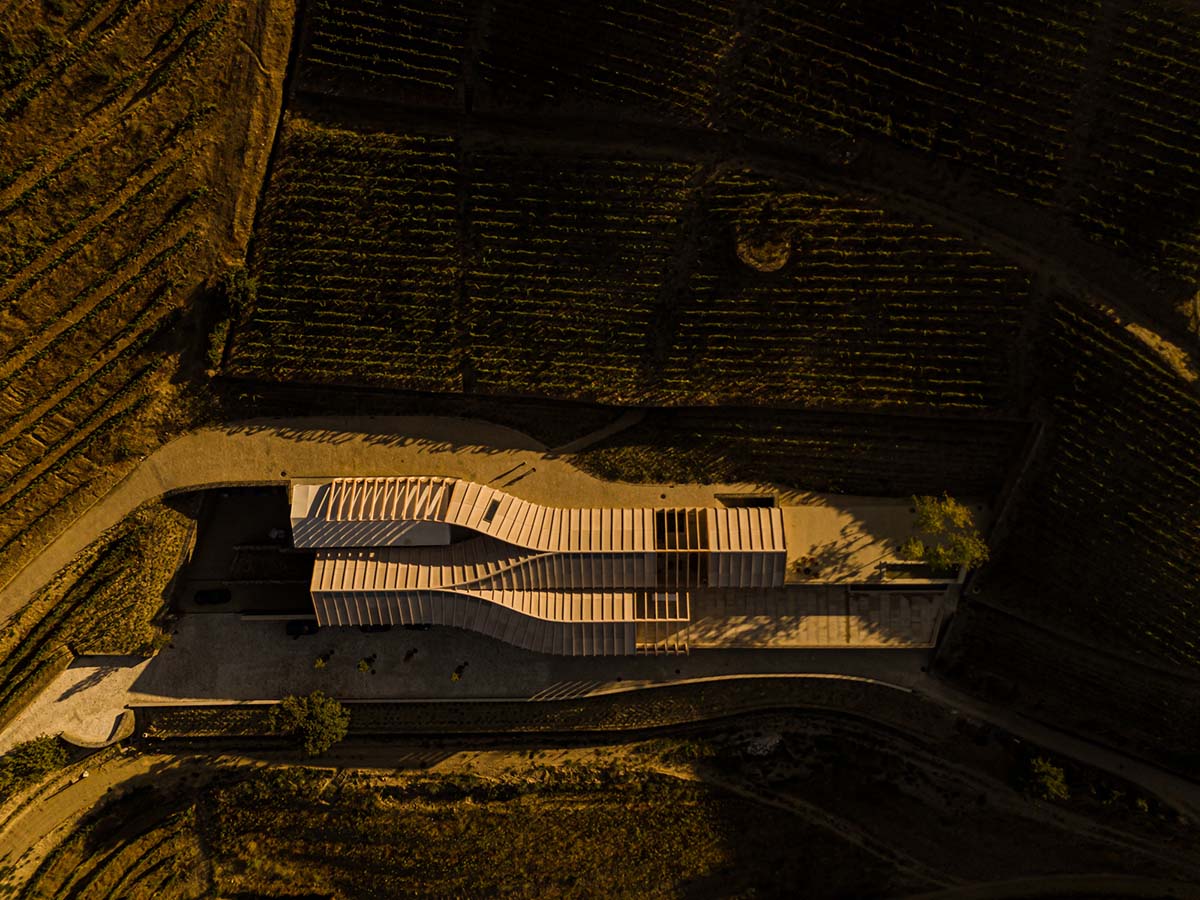
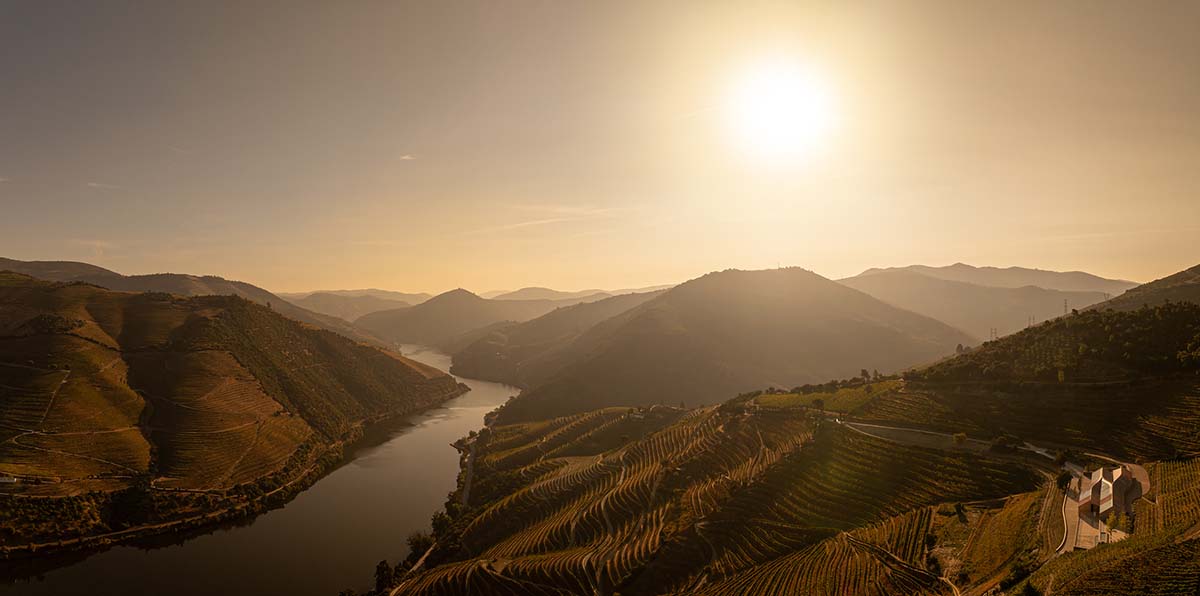
Porto-based architecture studio Atelier Sergio Rebelo has added an organic elegance to a winery by mimicking the zigzags of the vineyards in the Alto Douro Vinhateiro, Portugal's most prestigious wine-growing area, listed by UNESCO as a World Natural and Cultural Heritage Site since 2001.
Named Wine Cellar Of The Quinta De Adorigo, the 1,100-square-metre building, completed in 2024, was developed as part of a family wine tourism complex that also includes a hotel, which is still under construction.
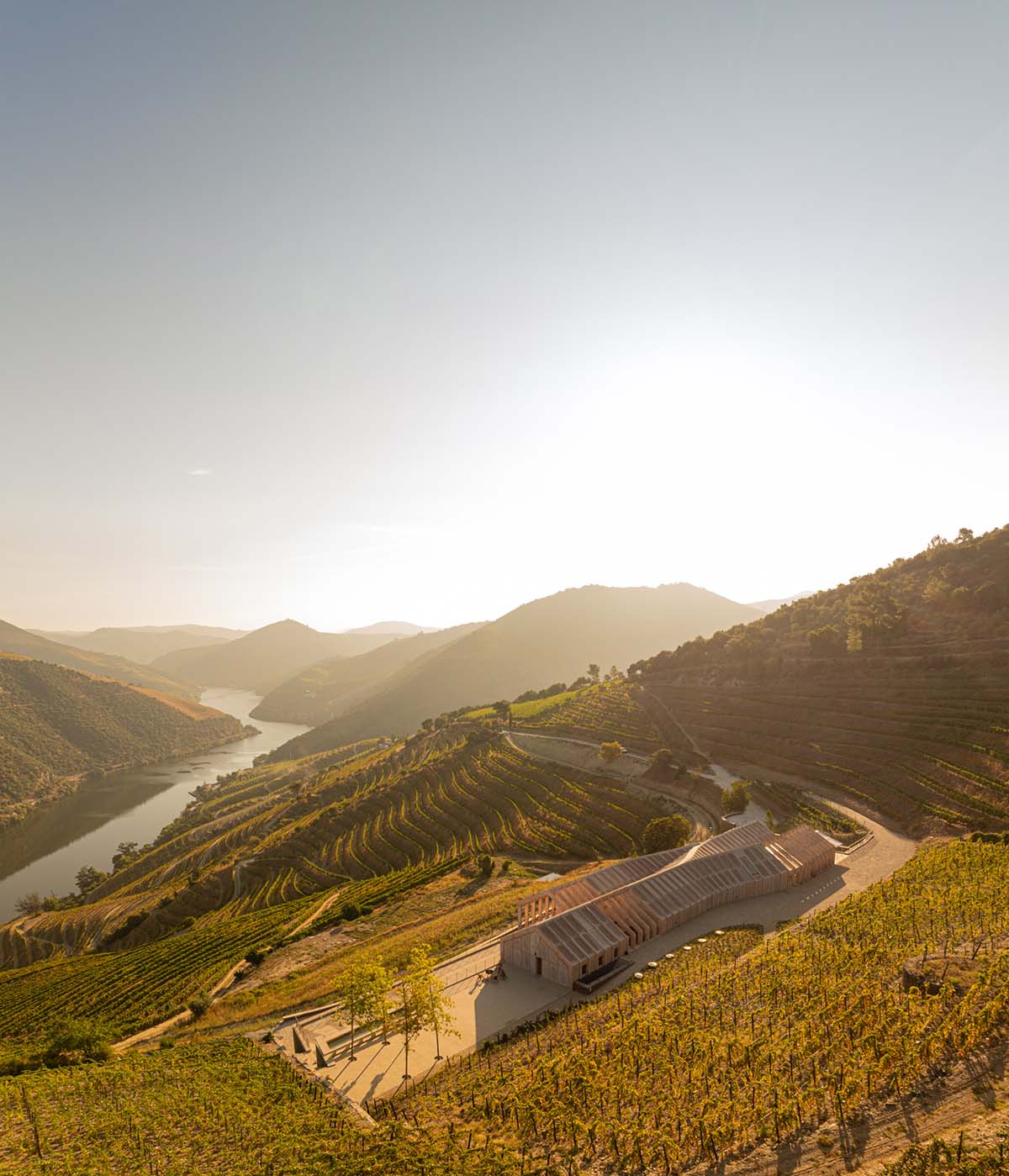
An architectural proposal that respects the nature and local culture while showcasing creative building techniques and practical sustainability was inspired by the extraordinary beauty of the natural surroundings, the millennia-old human vocations, and the centuries-old tradition of wine production.
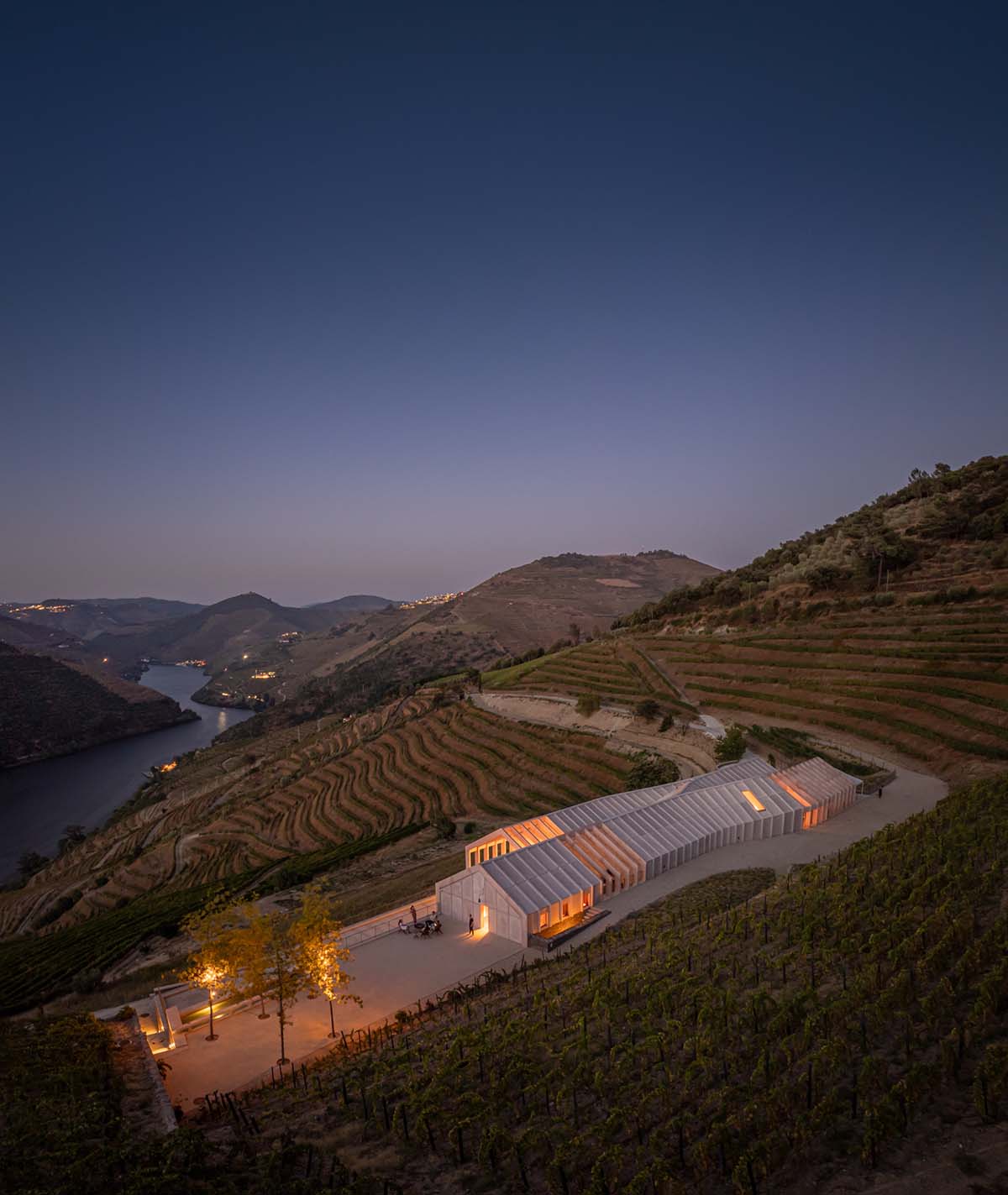
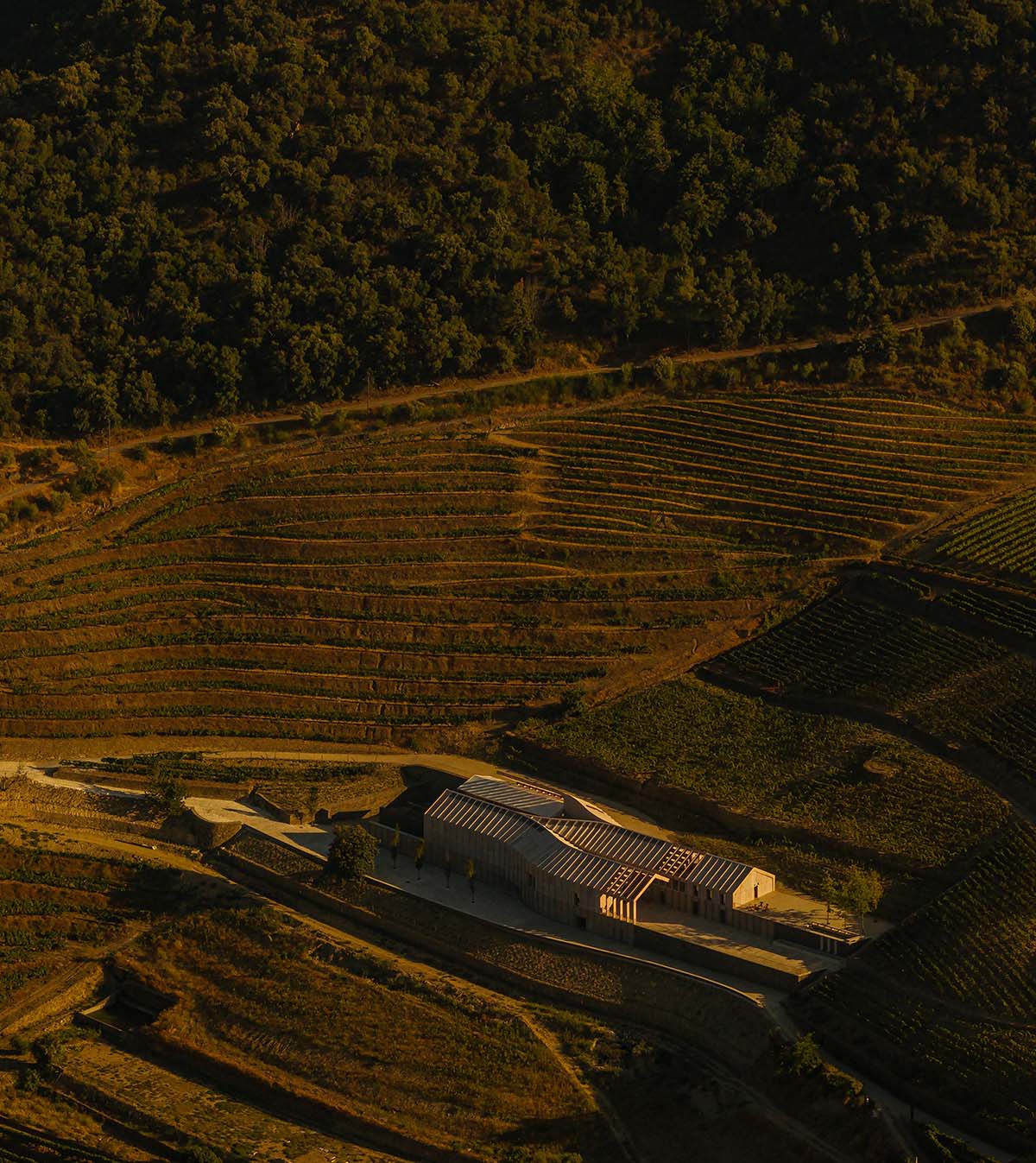
The zigzags of the grapes in the nearby hills and valleys are reflected in the winery's horizontal curved contours and the circuits connecting its many sections. The studio did not literally quote the landscape, jeopardizing communication, circulation, and daily activities.
Conversely, the building's downward descent on the land's terraces represents its interior mechanics, where the winemaking process is carried out by gravity, as is typical on the banks of the Douro River.
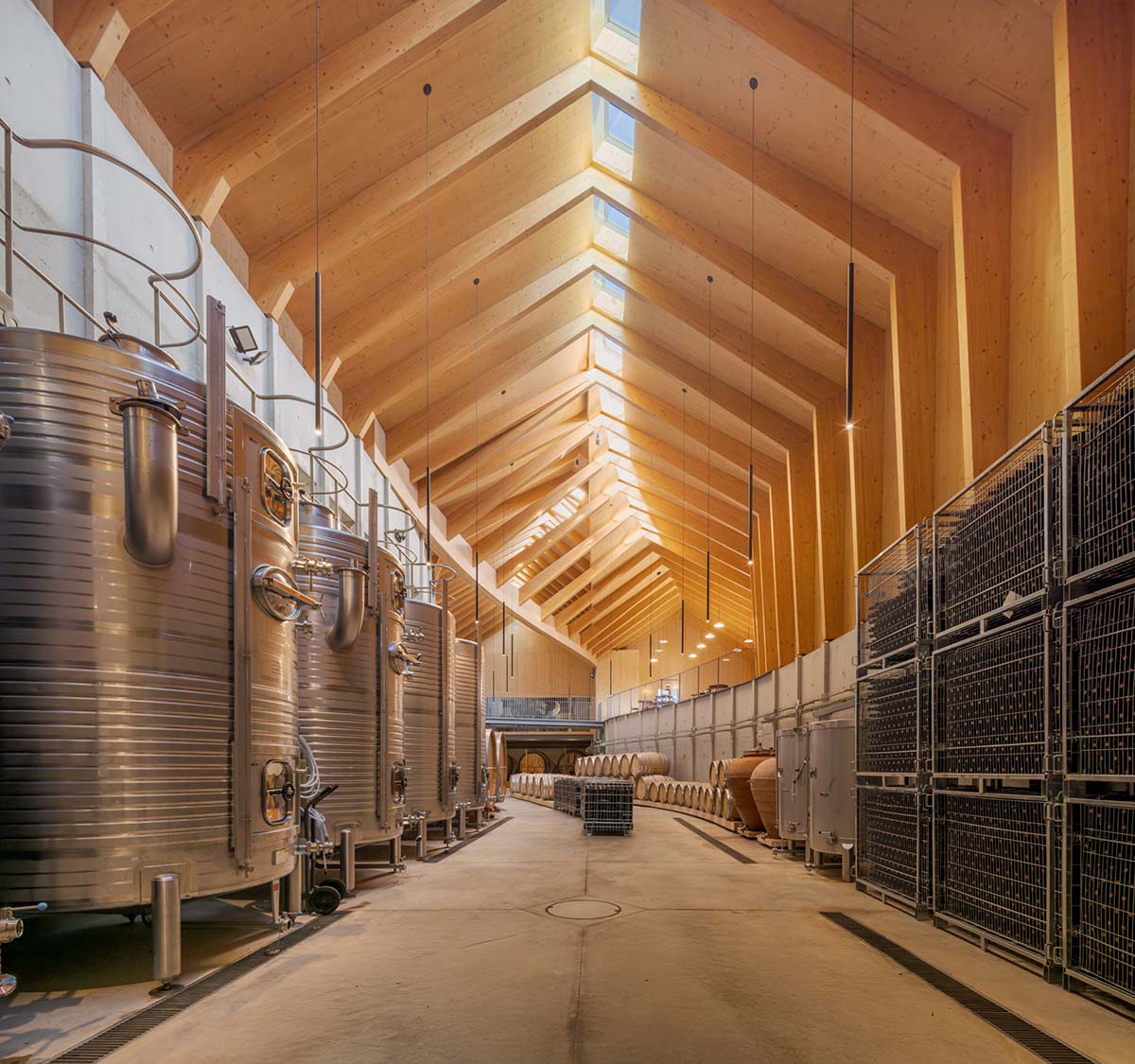
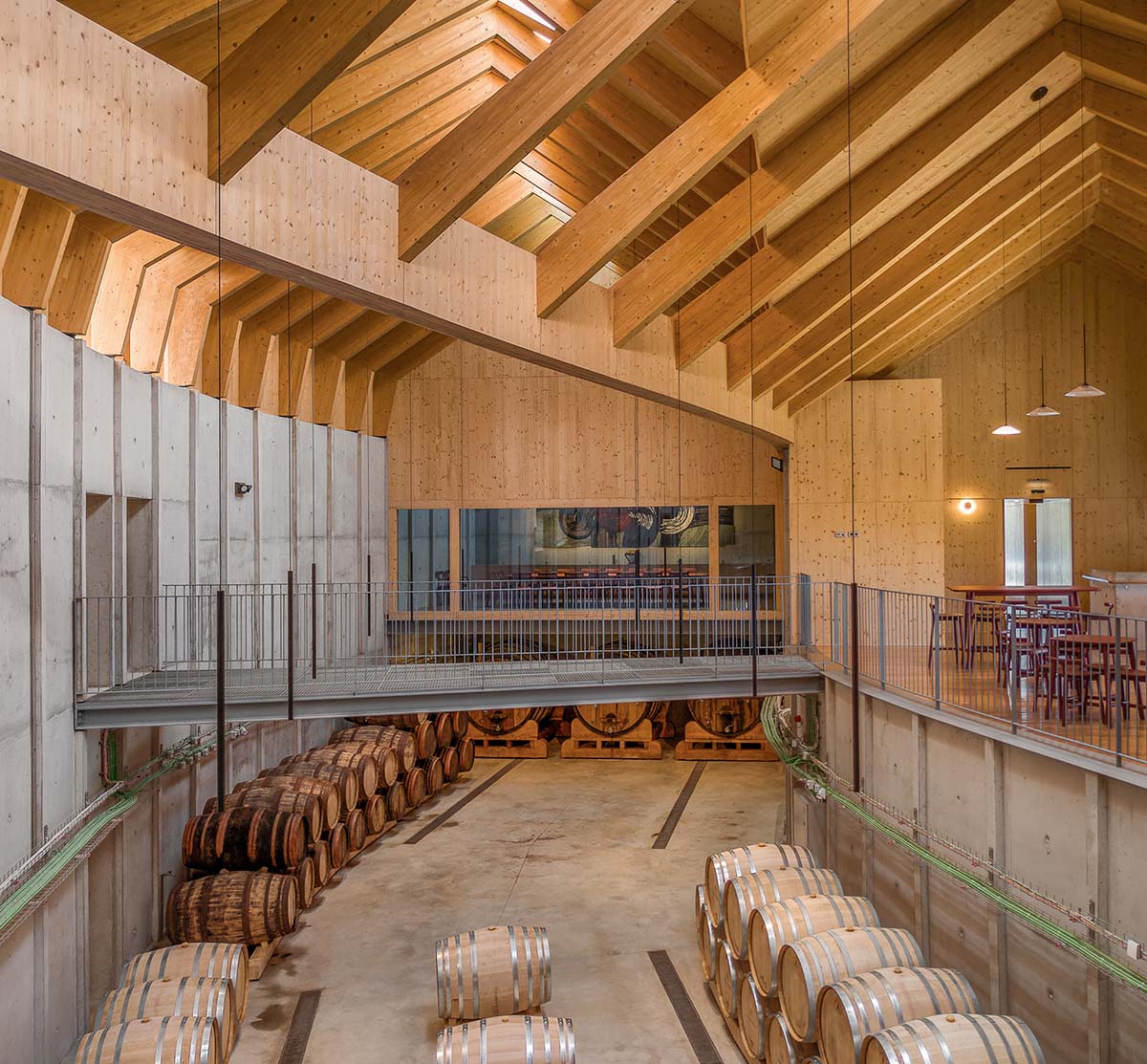
Here, the region's gravitational wine production system is illustrated with its current operational capabilities. As a result, the building's layout is a series of interlaced naves that mirror the topographic slope on the several interior levels.
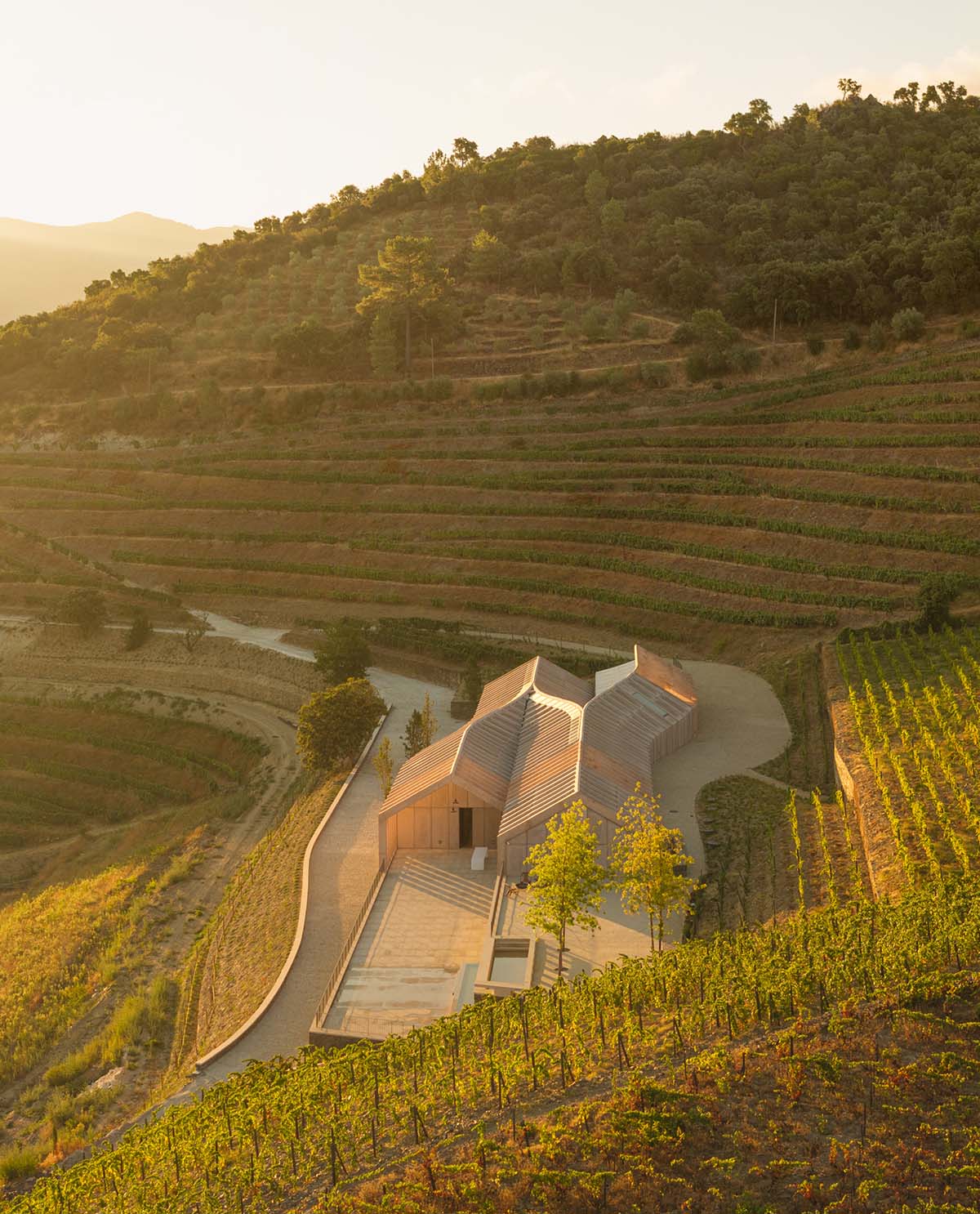
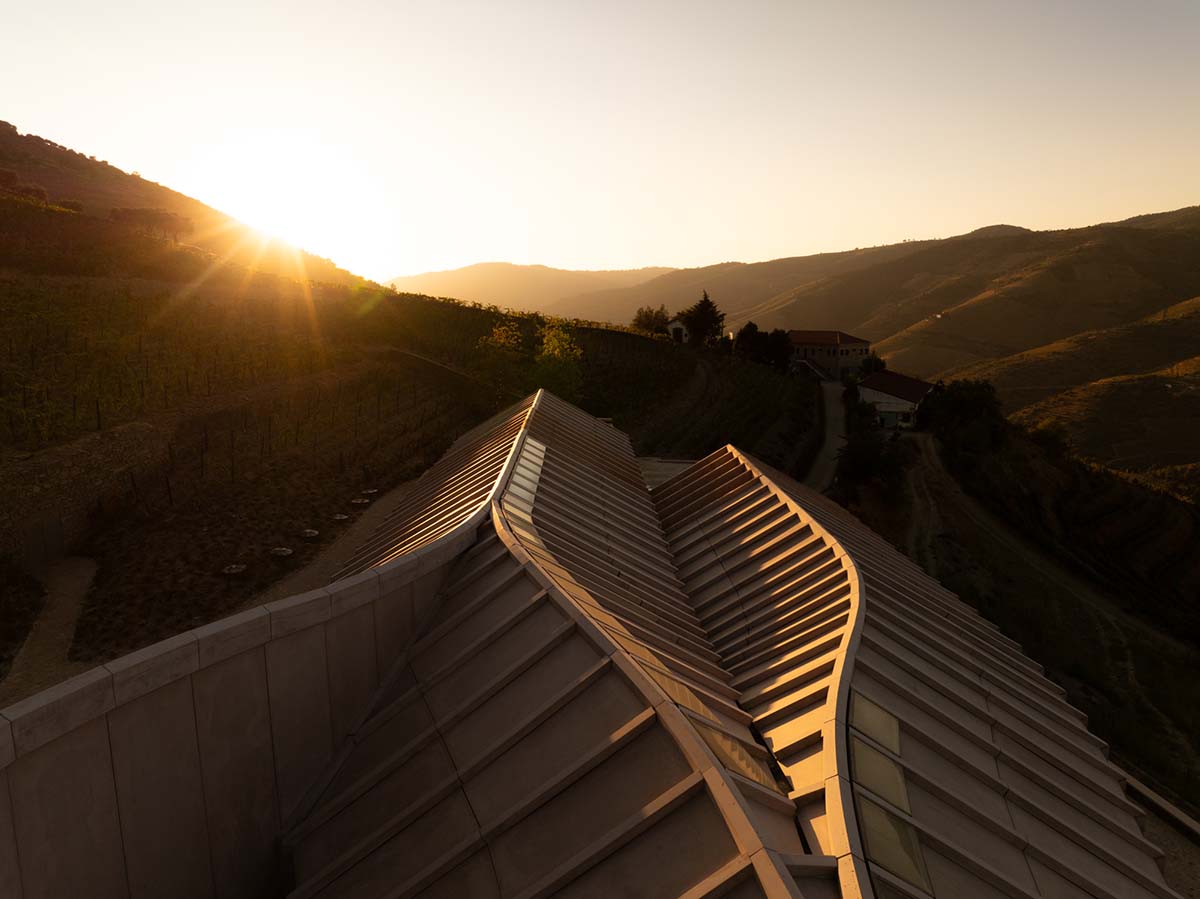
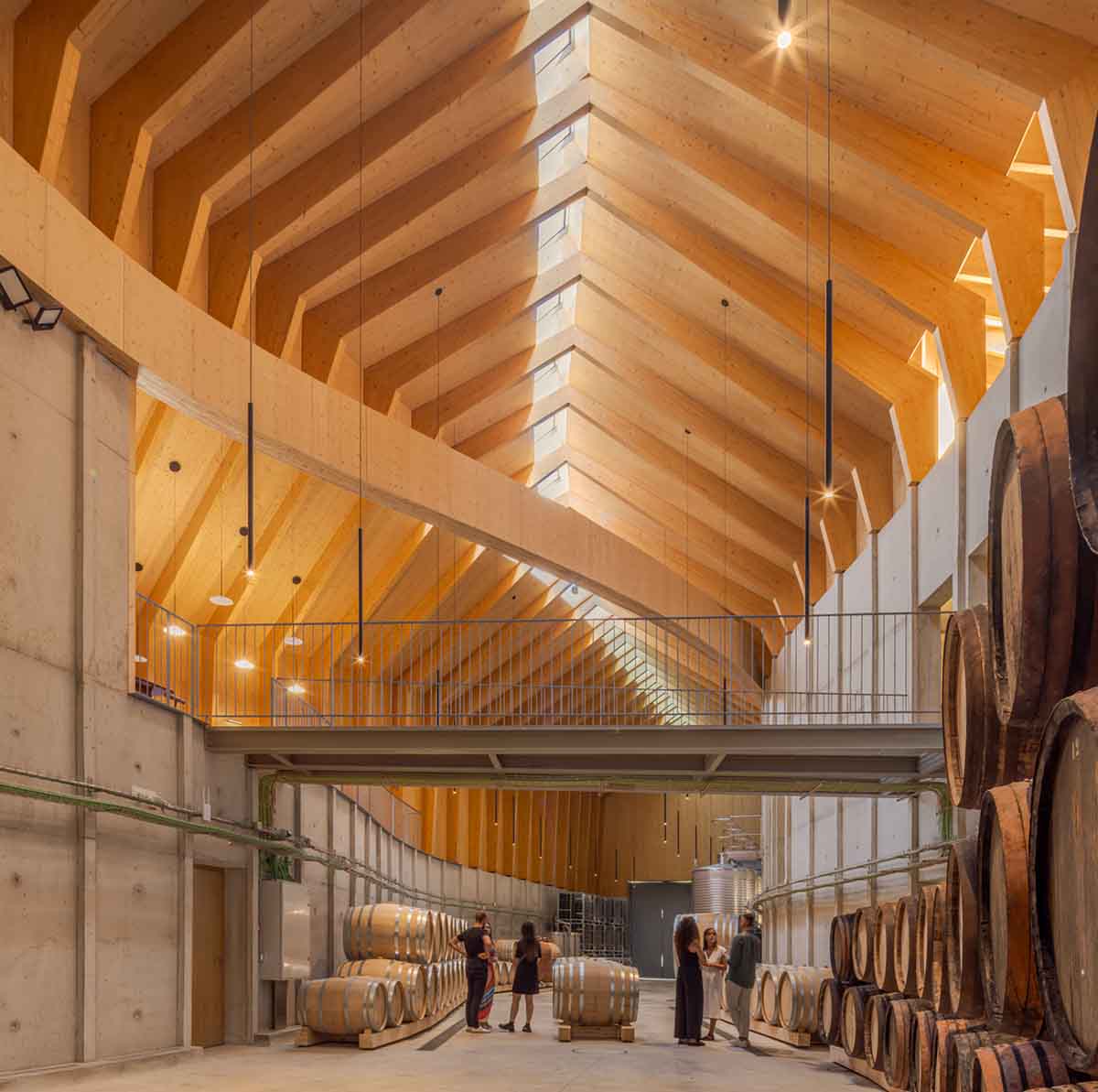
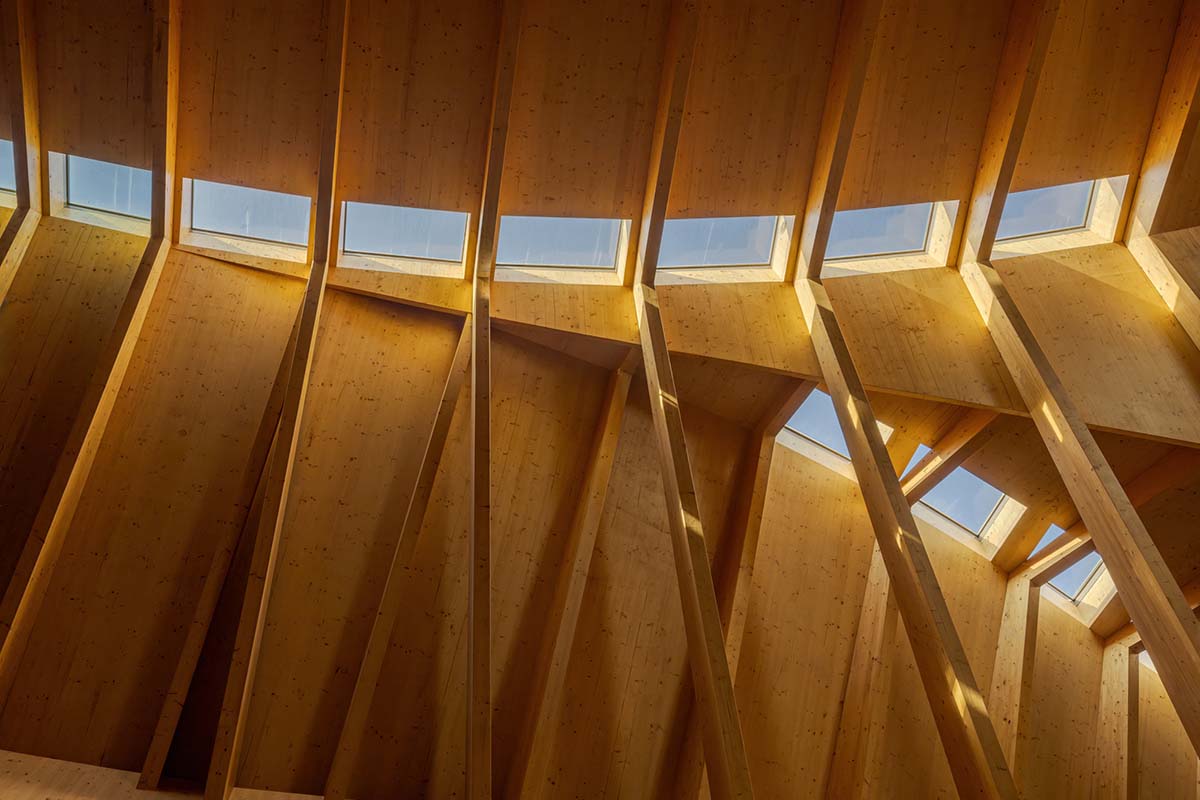
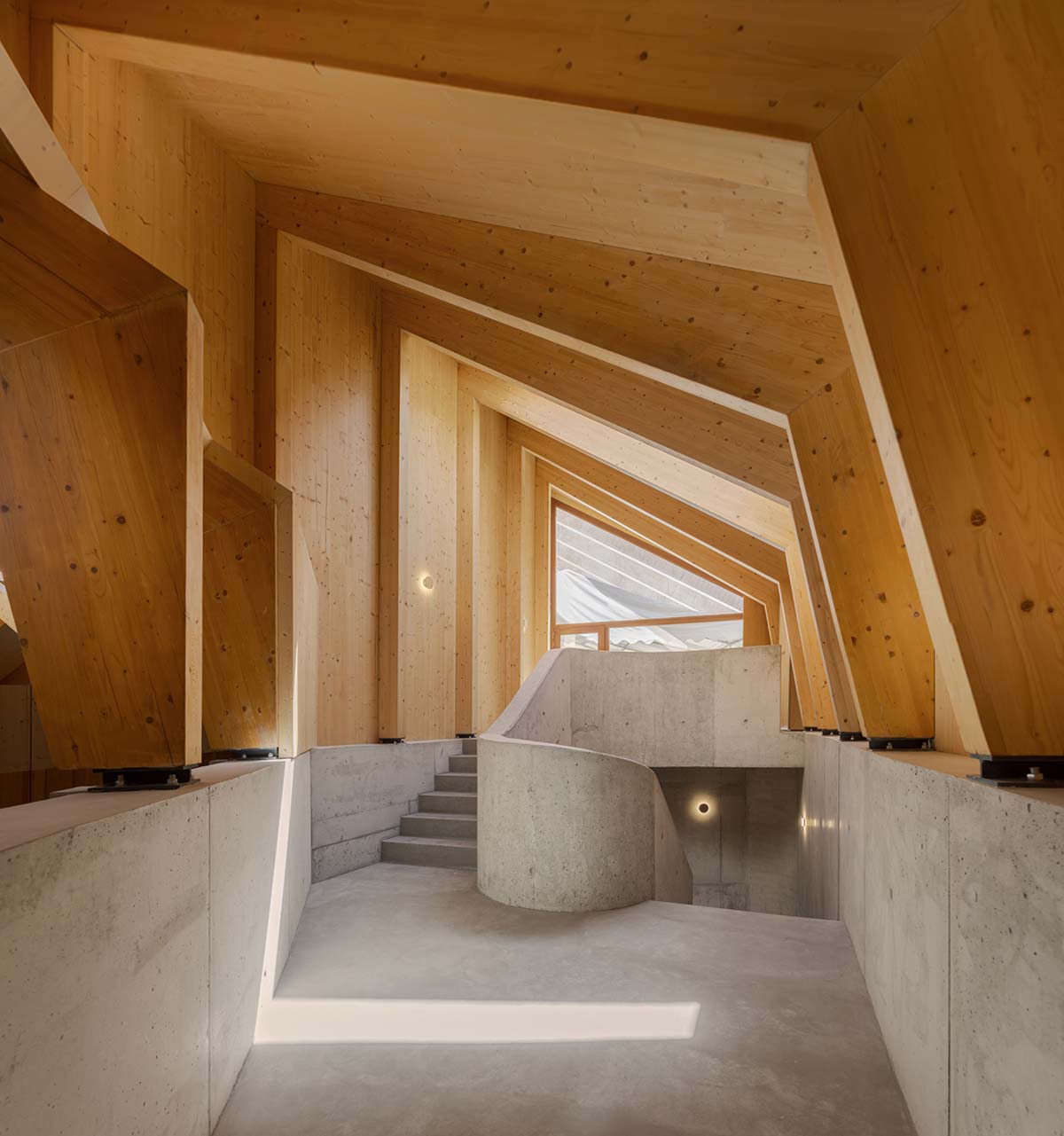
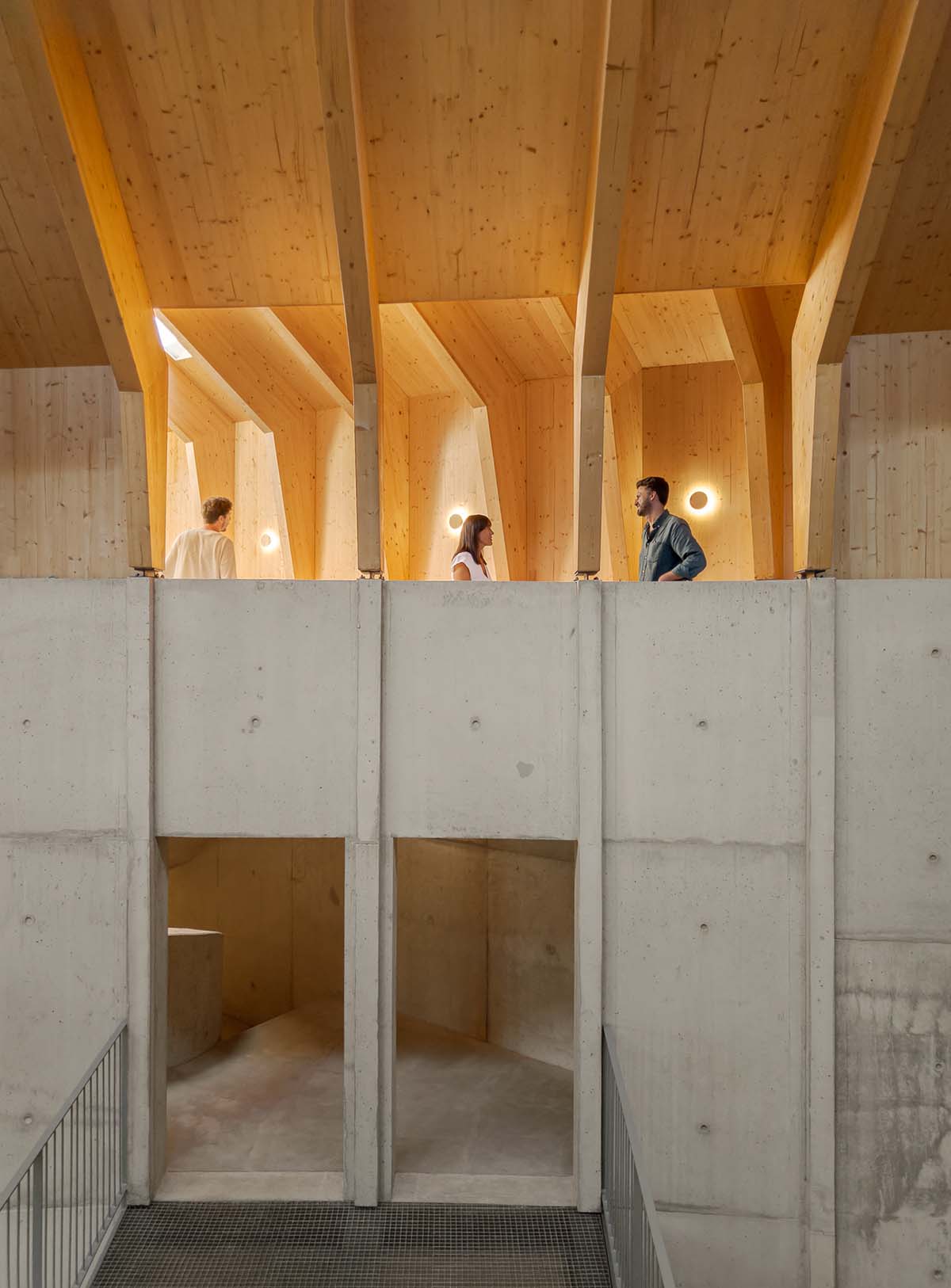
The winery's roof's geometry explains the wood-structured vernacular gable roof. This structure has been taken over and exposed in this winery, where it now flows through the tangential curves of the vineyard slopes as an organic, continuous, and sinuous sculptural element.
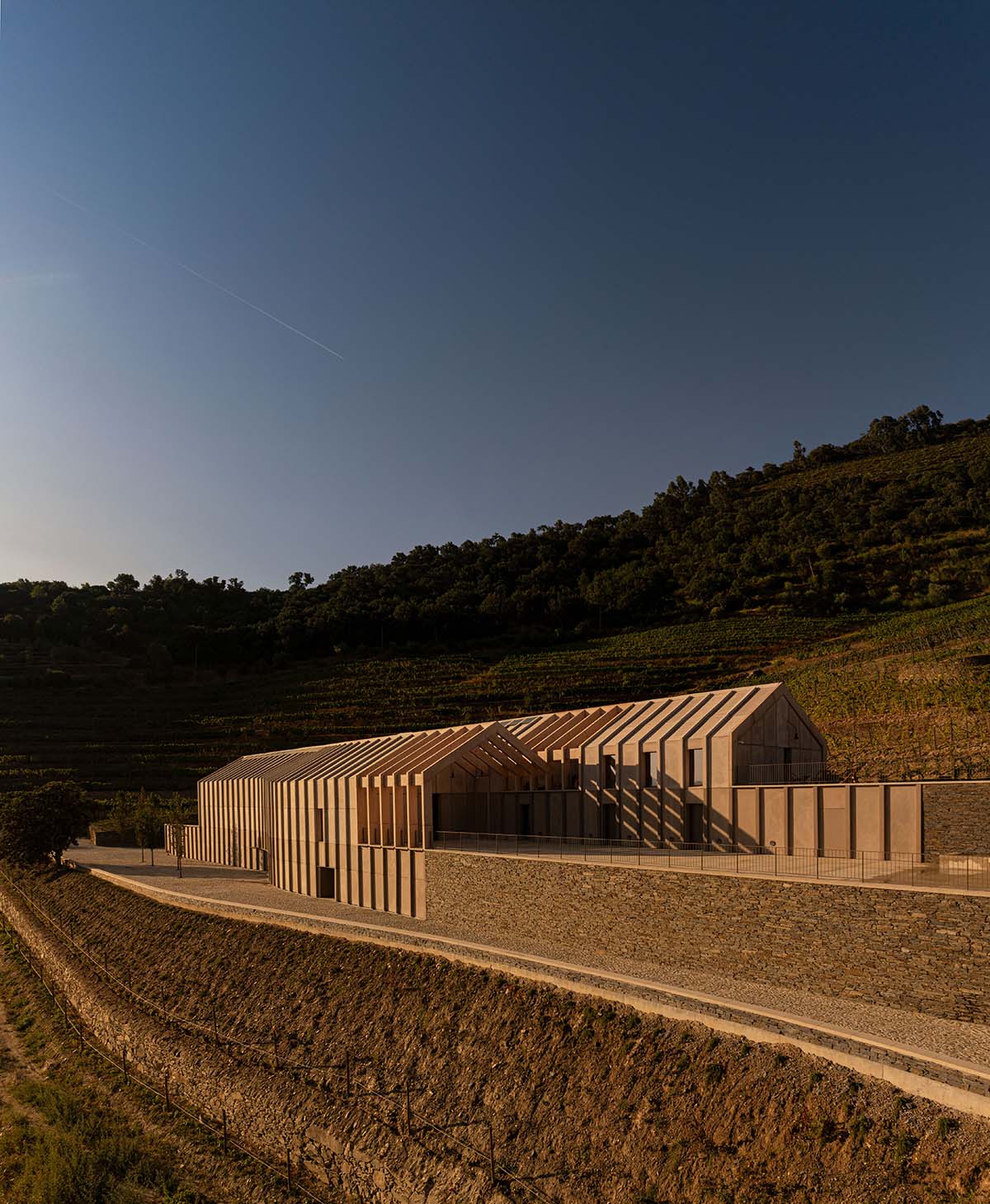
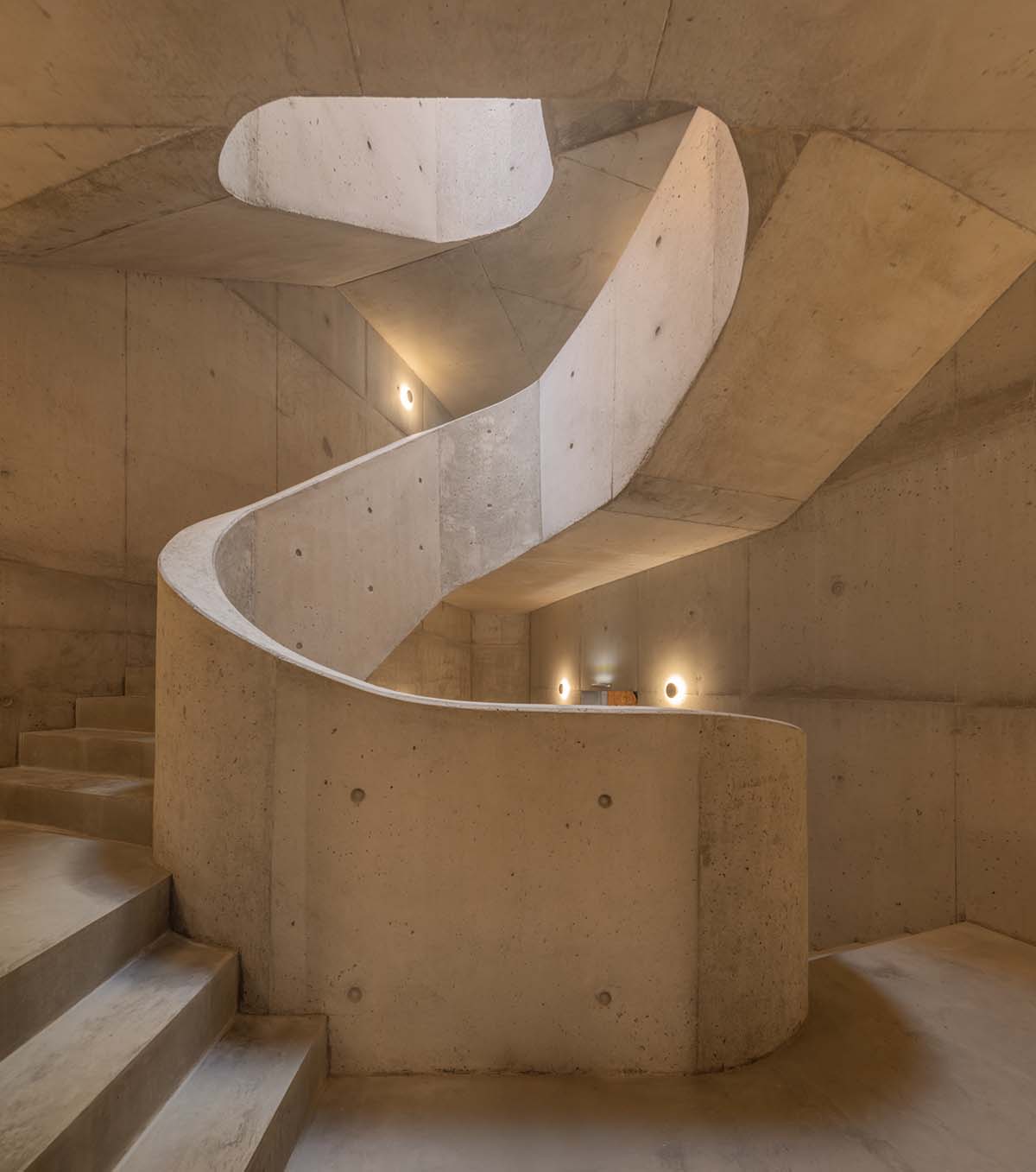
The winery's materials, which emphasize traditional techniques and crafts but are modernized by new technologies, mimic the natural palette of pinkish browns, greens, and greys. Both the outside features and the internal concrete retaining walls were made of granite and schist.
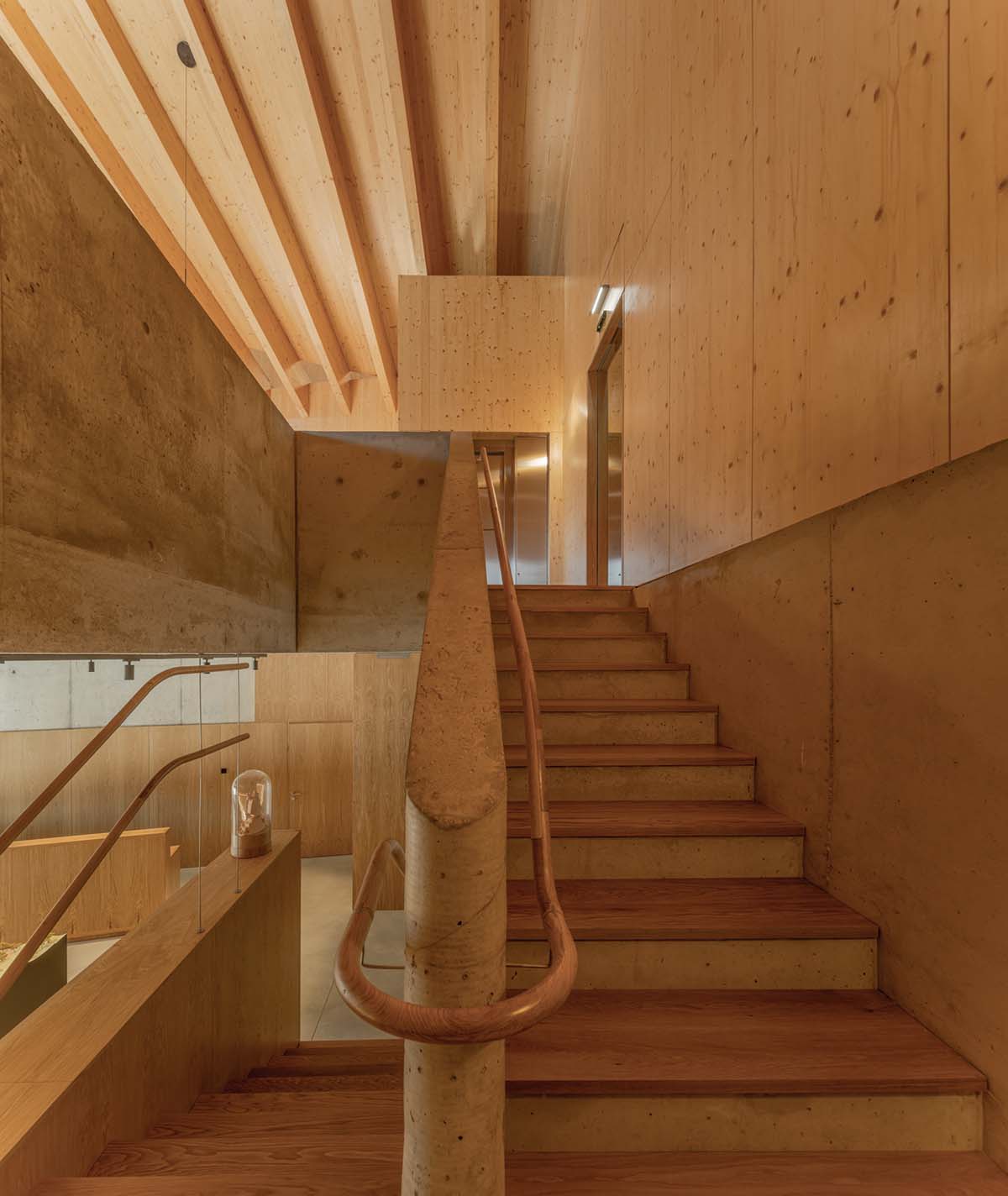
Less than 150 kilometers from the winery, prefabricated GRC (Glass-Fiber Reinforced Concrete) cladding panels cover the laminated wood frames and CLT (Cross Laminated Timber) panels that make up the building's nave structure.
"This building encourages an involvement with nature"
"This benefits the northern industry and community and reflects the sustainable practice of cutting down on the long-distance transportation of materials," said Atelier Sergio Rebelo, led by the founder Sérgio Rebelo.
"These prefabricated building elements also saved on-site construction and reduced traffic on the property."
"Wooden structures have been used at the points where the building does not touch the ground, to also minimize the use of concrete, which has reduced CO2 emissions into the atmosphere by 40 per cent, compared to what a building completely made of concrete would emit," the studio added.
"Exposed to the effects of the climate, all these materials take on beautiful shades of tone and texture, that better integrate the winery into its natural surroundings and allows the building to improve its quality over time, just like a good Port wine."
"This building encourages an involvement with nature by framing views from inside the winery and, outside, there are trails, nooks and patios that invite introspection, contemplation, meditation, walking and socializing," the studio explained.
In order to select the lowest energy consumption and lower greenhouse gas emissions into the atmosphere, the winery's energy optimization combines preservation and energy production methods.
The energy solutions explore how architecture can use passive techniques to maintain the inside temperature of the wine ageing area, which is between 14 and 16 degrees Celsius, while the outside temperature ranges from -5 to 45 degrees Celsius from winter to summer.
By positioning the building with the southern envelope in contact with the ground, utilizing its inertia, and rotating the main façade to the north, where there is no sunlight, even during the summer, the studio was able to accomplish the project's goal.
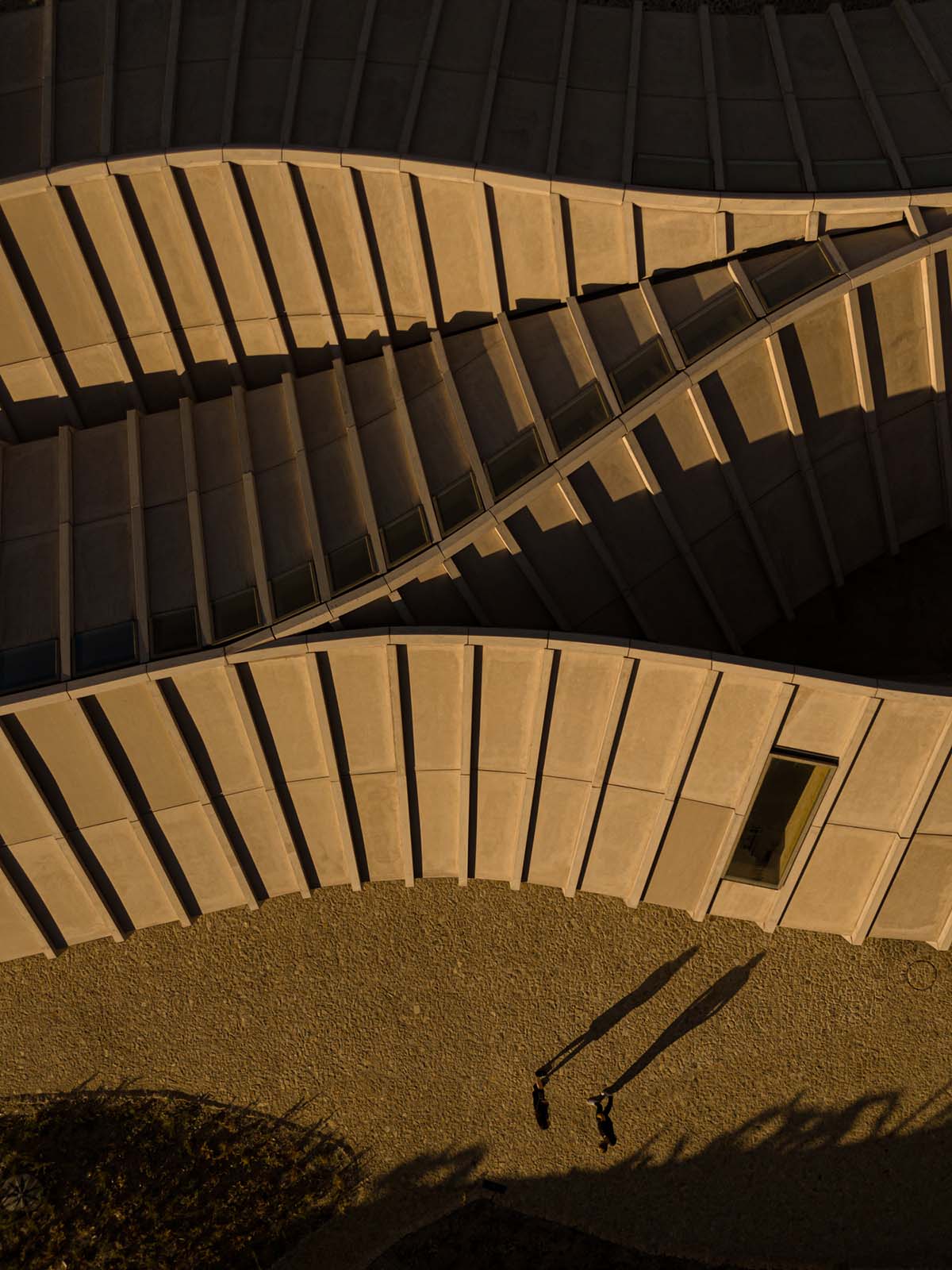
Local electricity production solutions managed by a central system were implemented and combined to save energy and better control and monitor the energy modus operandi.
The partially buried building takes advantage of the thermal stability of the ground and a low enthalpy geothermal solution produces, recovers and stores electricity.
The high initial cost of this energy program is recovered in the short term, as it has high renewable potential, requires little maintenance and ensures ideal hydrothermal levels for the wine industry and human comfort.
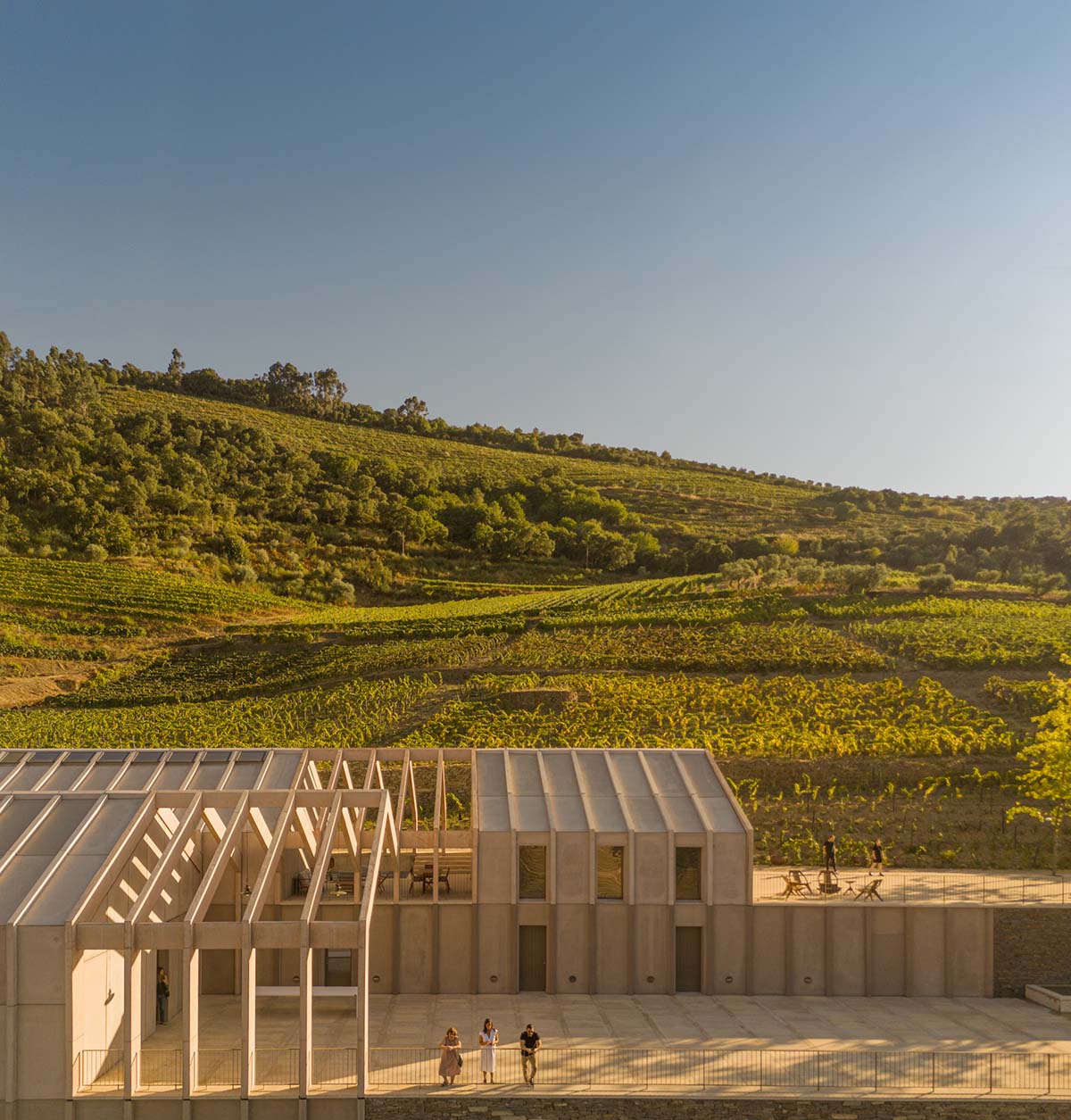
This combination of passive and active systems has significantly reduced the thermal power and energy consumption of the mechanical systems installed.
Solutions were developed to use rainwater, extract drinking water from artesian boreholes, and treat and recycle water for cleaning, firefighting, and irrigation in this winery without a public water supply infrastructure.
Rainwater is recycled back into agricultural operations, and the external sidewalks of parks, pathways, and sidewalks are permeable to prevent water waste.
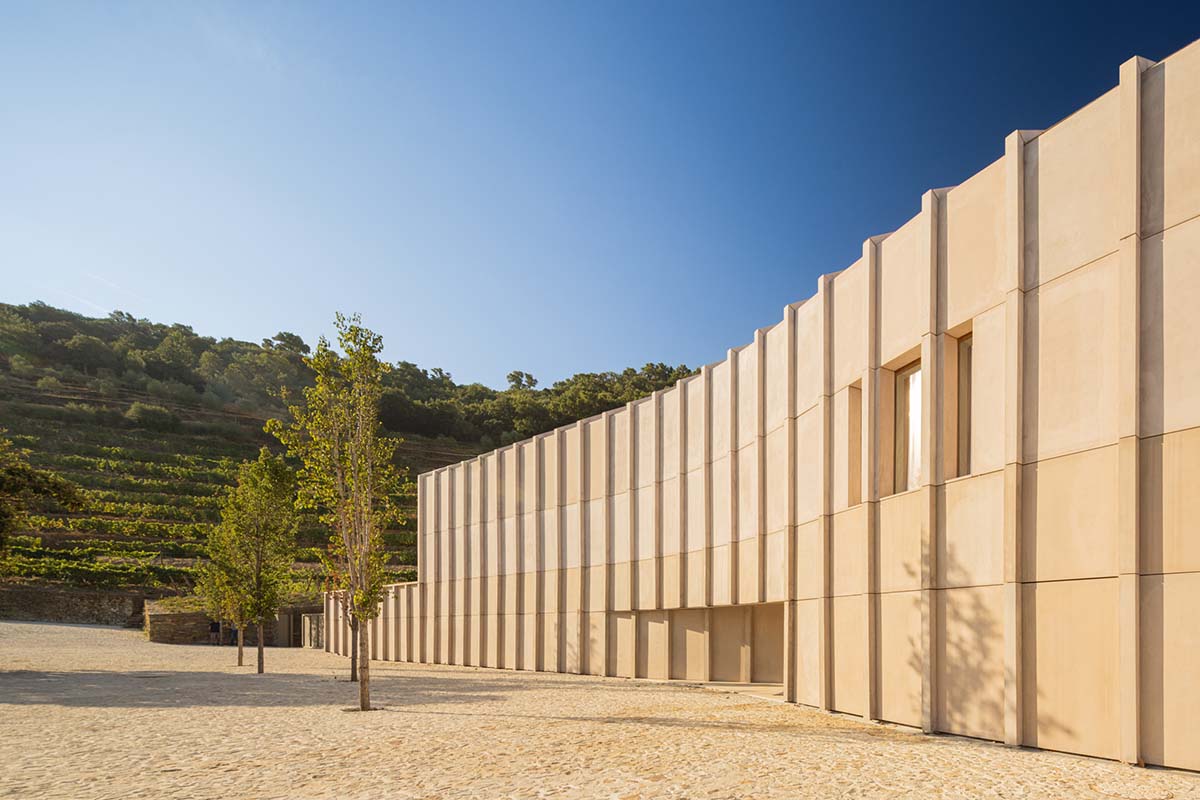
The landscape design recovers native plant species that enhance the landscape's color and fragrance, provide a home for animals that benefit the vines, and support operations that run concurrently with wine production.
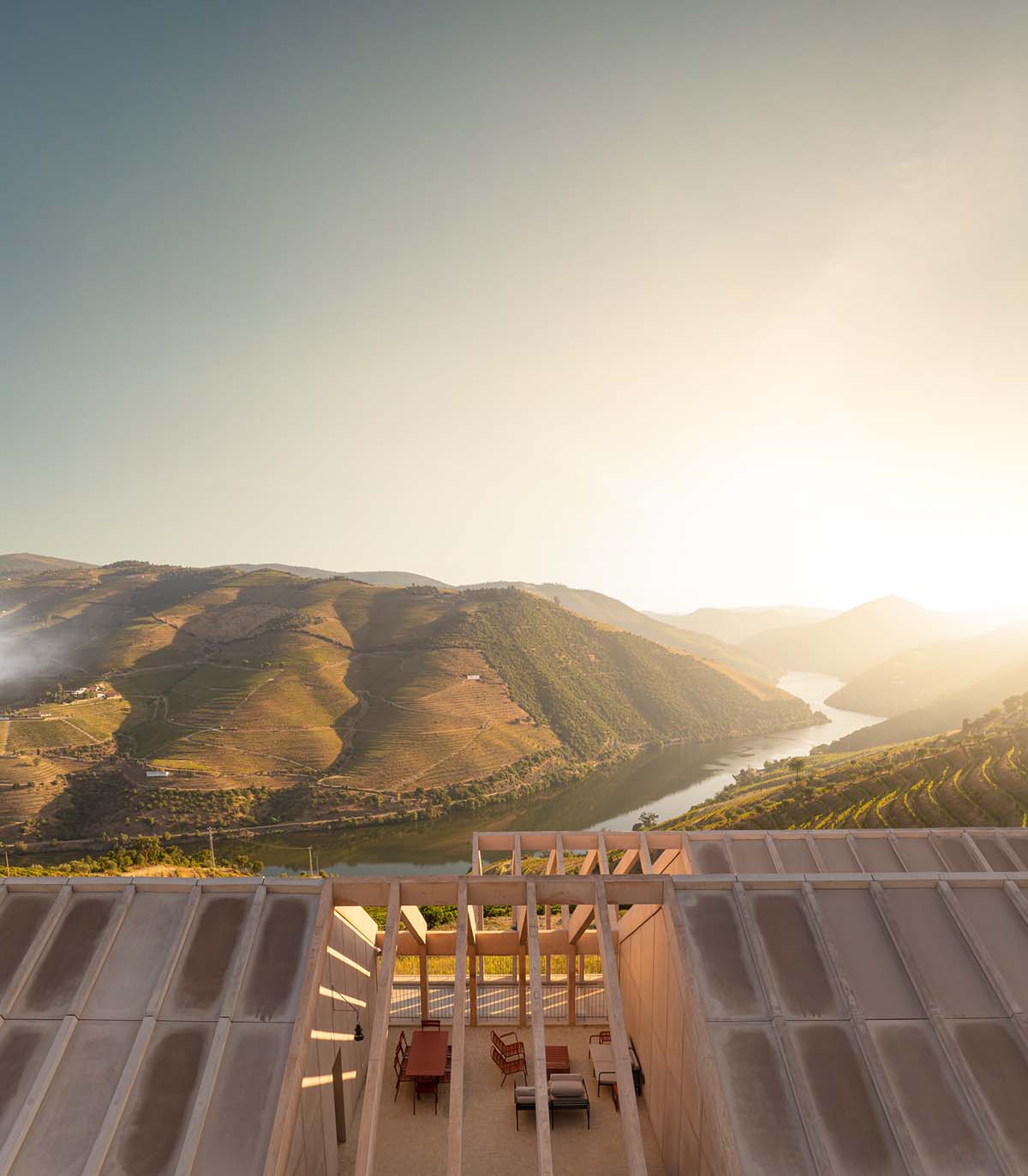
The entrance to a visitor center featuring a wine store and a reception desk is located on the winery's main façade.
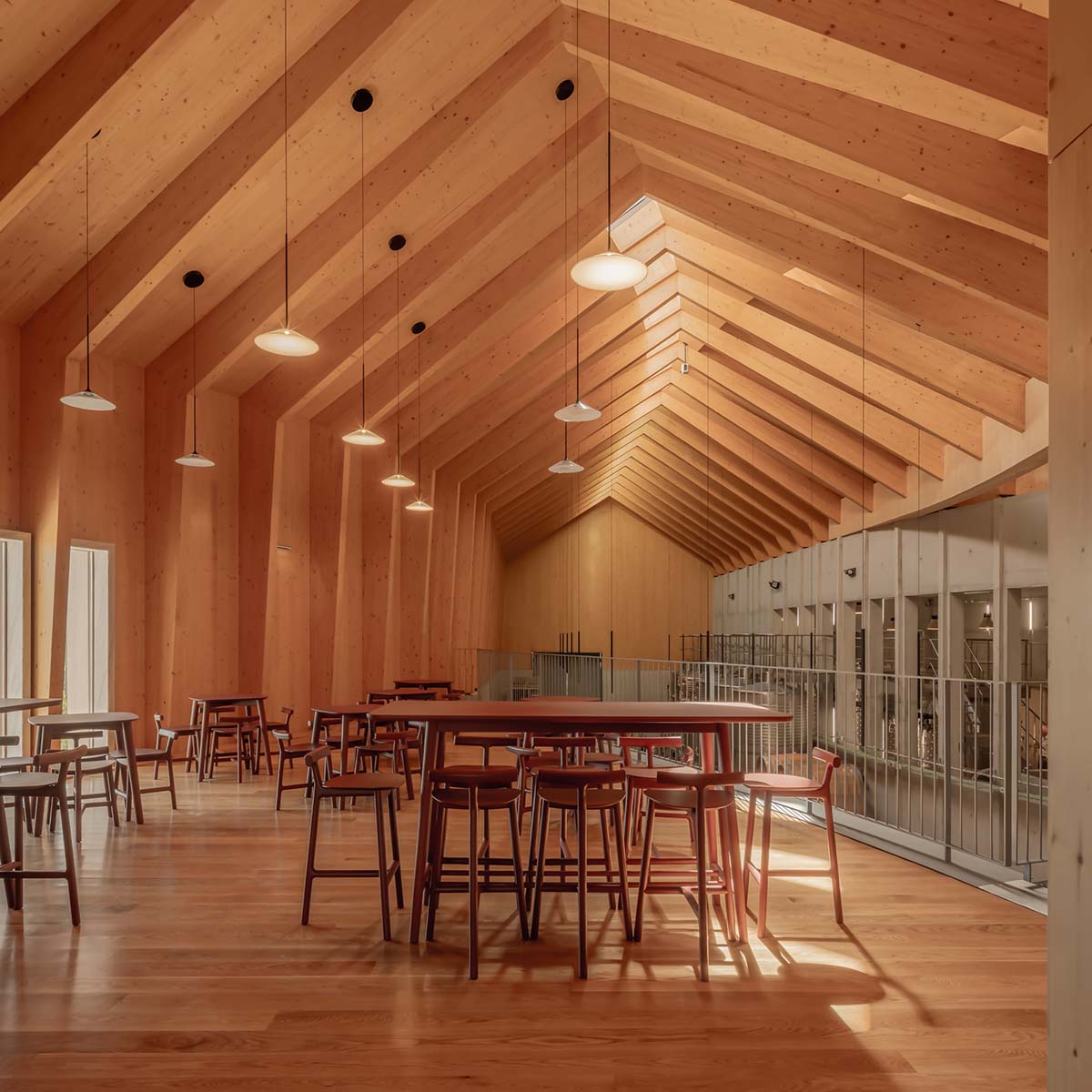
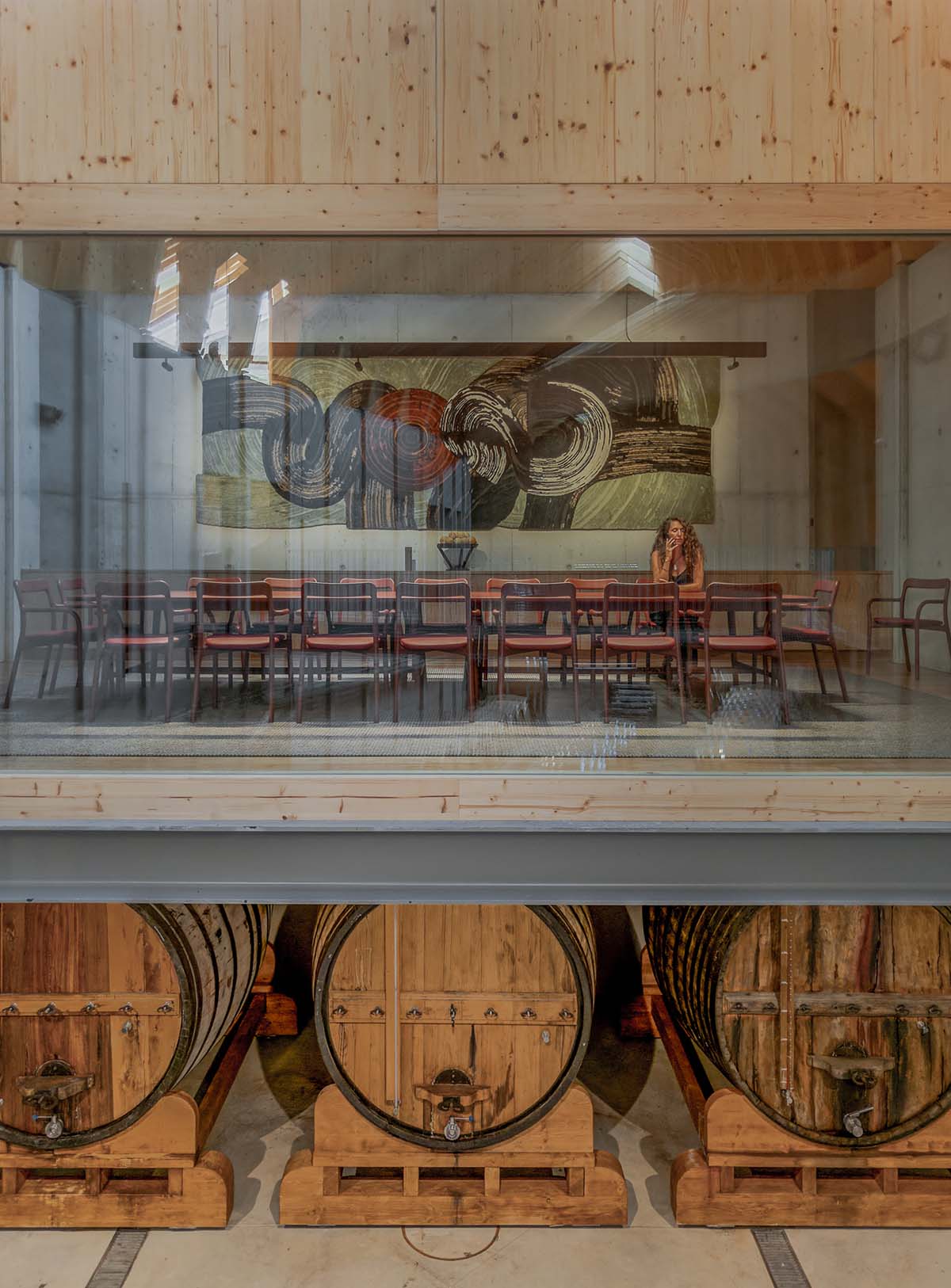
From here, you ascend to a conference room with an all-glass wall and the wine tasting area in a large balconied gallery with views of the vineyard and river as well as the wine aging space in the building's center nave.
Through a spacious terrace with a view of the Douro, these rooms provide access to the exterior, the chapel, and the vineyards. This location hosts events that highlight the winery and the area, showcasing the architecture and nature while encouraging upscale wine tourism.
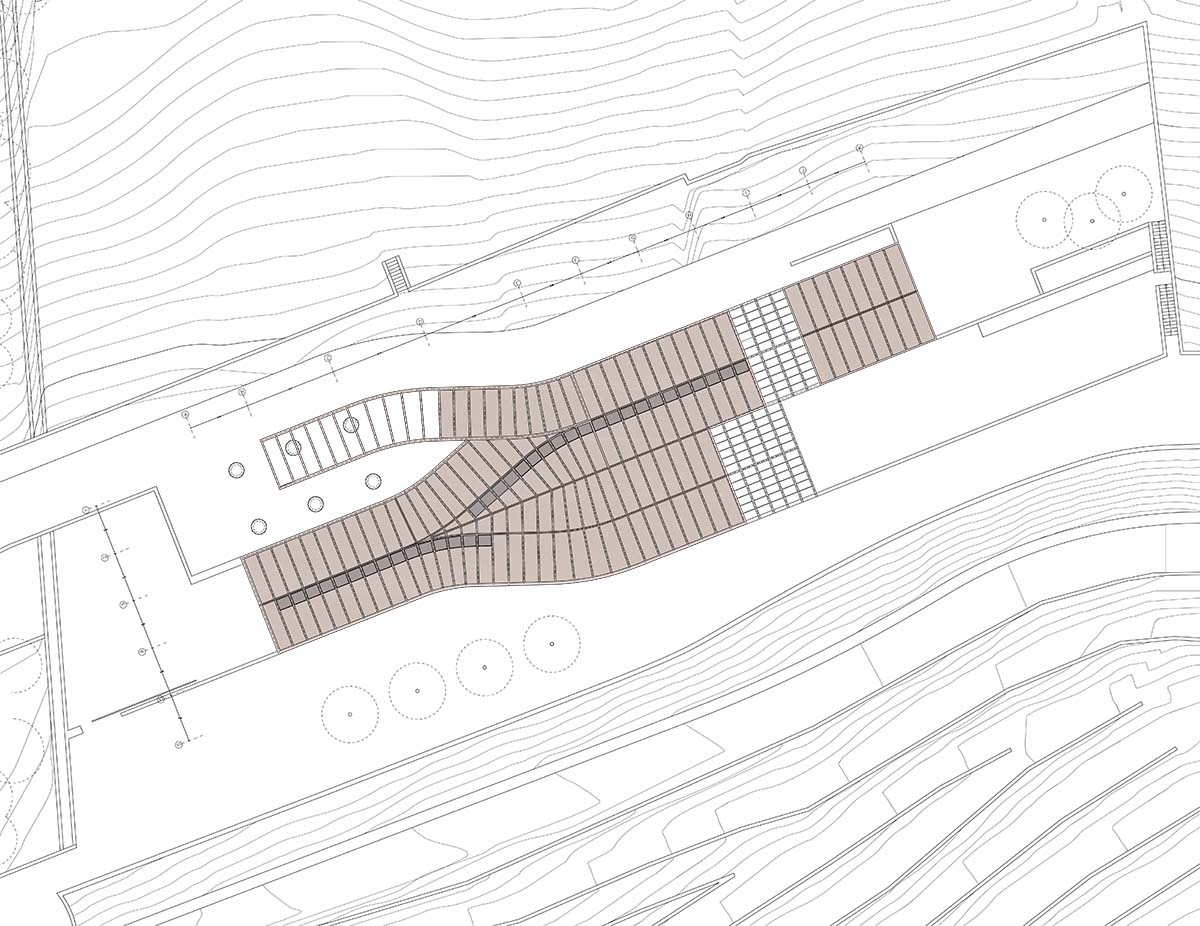
Site plan
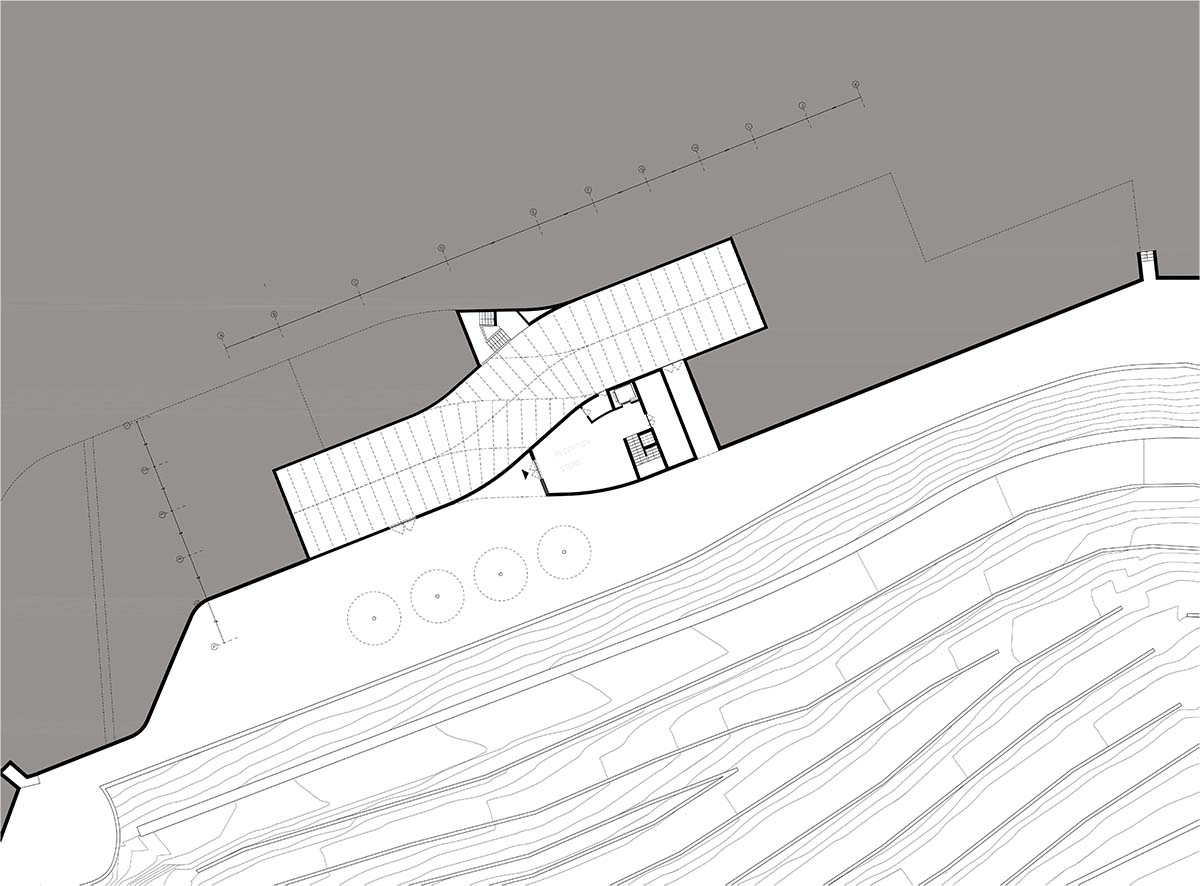
Ground floor plan
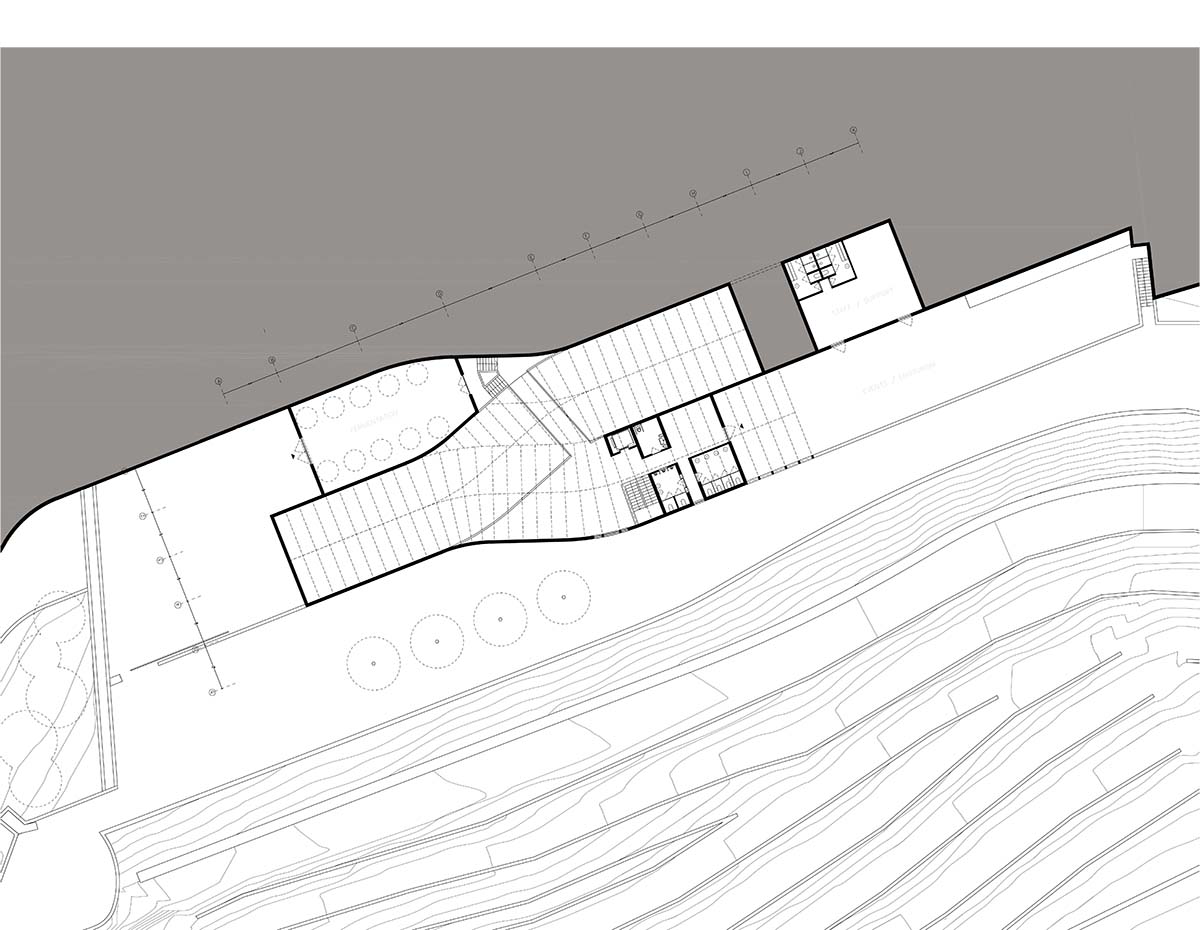
First floor plan
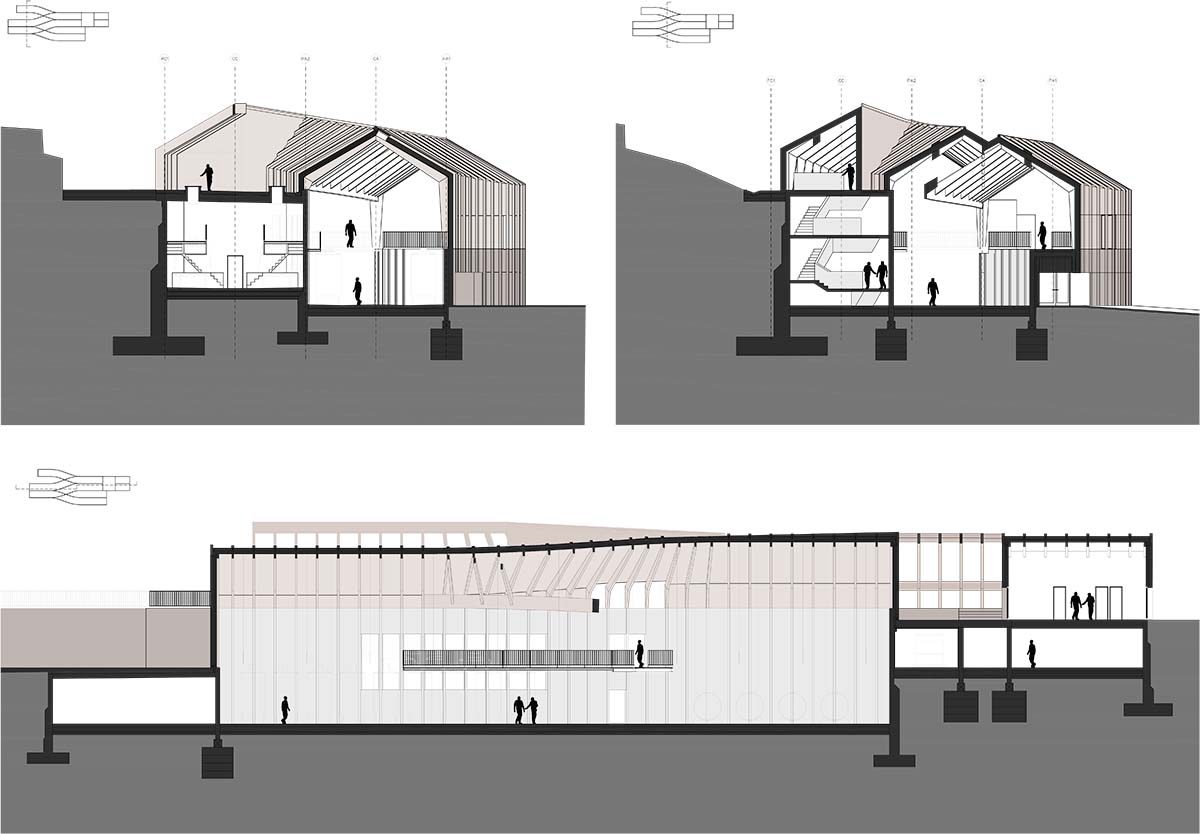
Sections
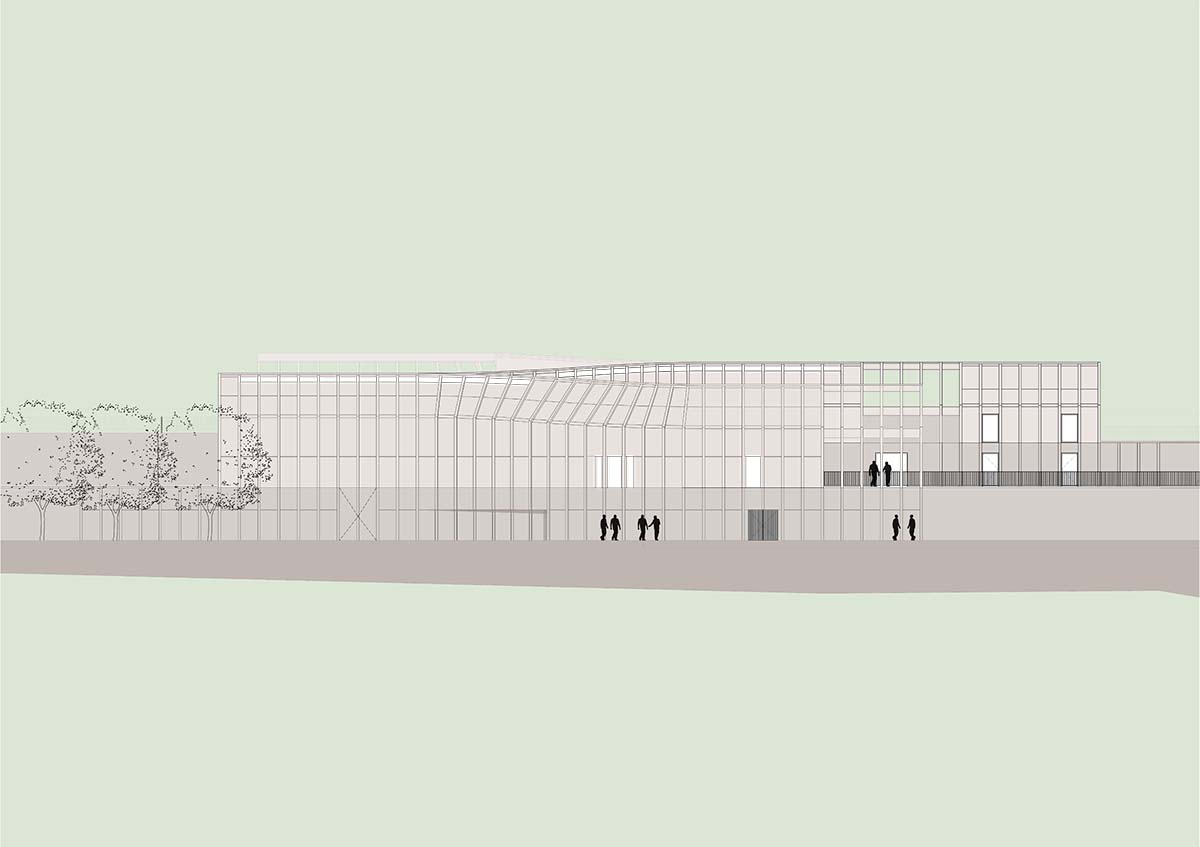
Elevation
Project facts
Project name: Wine Cellar Of The Quinta De Adorigo
Architects: Atelier Sergio Rebelo
Location: Tabuaço, Alto Douro Vinhateiro, Portugal
Client: Quinta de Adorigo
Size: 1,100m2
Completion: 2024
Architecture team: Sérgio Rebelo, Nuno Borges, Tiago Pinto de Carvalho, Joana Portela, Tiago Martins, Ricardo Gouveia, La-Salete Carvalho, Lourenço Barreto, Catarina Araújo, Bruna Campos, Fátima Séneca, Paulo Cunha Martins
Landscape design: Sofia Pera
Concept of Structures and Sustainability: Thornton Tomassetti, Scott Lomax, Gunnar Hubbard
Concrete Structure, Hydraulics, Electricity, ITED, SADI and Electromechanical Design: Pormin - José Guedes, João Guedes, Henrique Araújo, Carolina Freixo, Susana Fernandes
Wooden structure project: Portilame - Marcos Oliveira, José Esteves
Mechanical Design: Greenbeelt - João Sousa, Filipa Sucena, Rúben Avelar
Graphic Design and Signage: Eduardo Aires Studio
Interior Design: Atelier Sérgio Rebelo
Enology: Luís Seabra
History: Natália Fauvrelle
History of Art, Text: Fátima Séneca
General Construction: Teixeira, Pinto e Soares SA
Wooden Structure: Portilame
GRC Panels: Betoncrete
All images © Fernando Guerra/FG+SG Architectural Photography.
All drawings © Atelier Sergio Rebelo.
> via Atelier Sergio Rebelo