Submitted by WA Contents
ZHA completes stadium and sports centre that references to historic vessels in Nansha
China Architecture News - Jan 02, 2026 - 05:24 4808 views
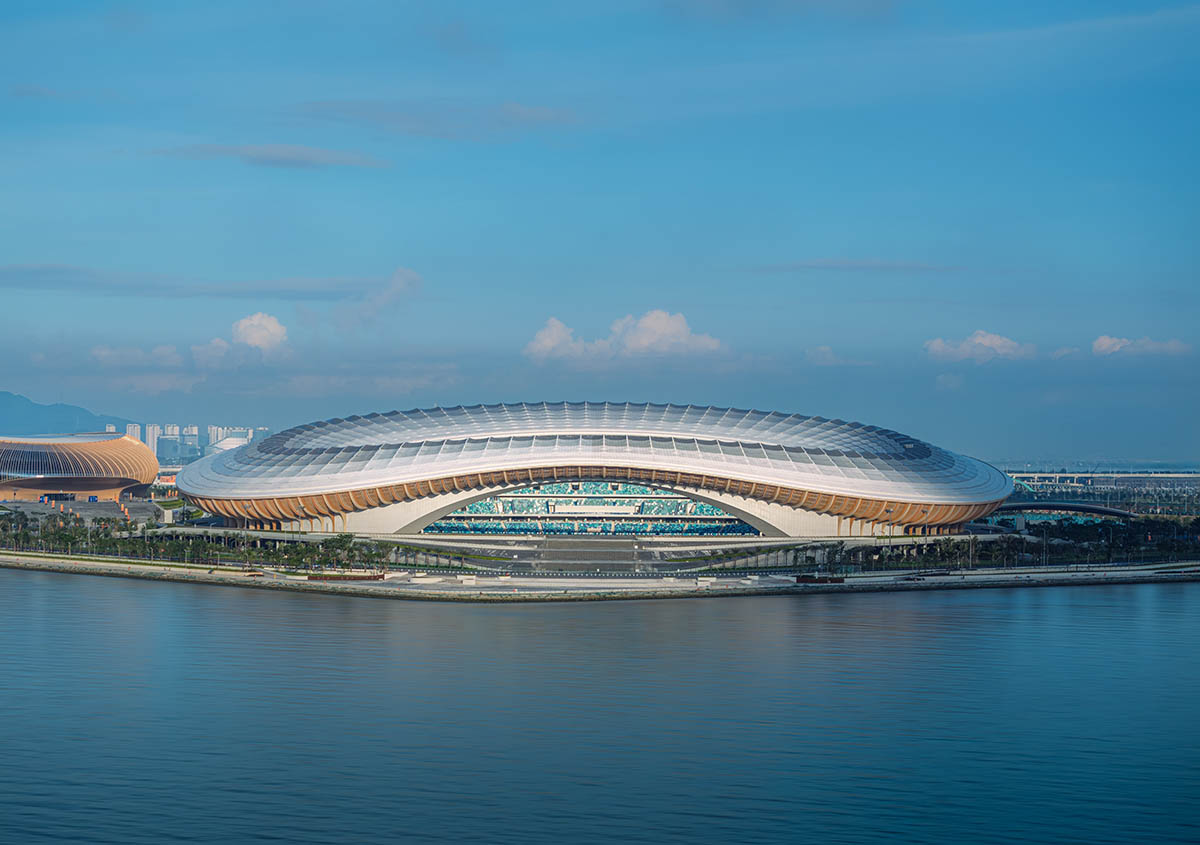
Zaha Hadid Architects has completed a stadium and sports centre that references to historic vessels in Nansha, China.
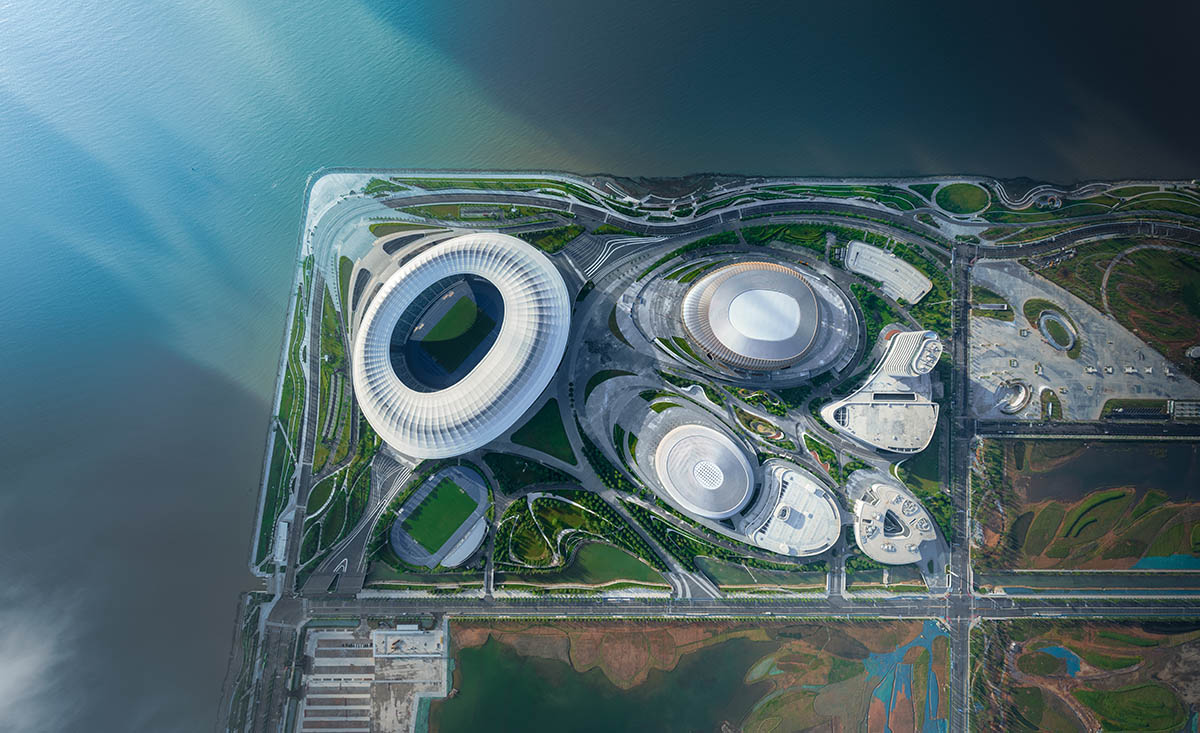
Named Greater Bay Area Sports Centre, the structure incorporates a 60,000-seat stadium, a 20,000-seat arena for basketball and other indoor events, as well as a 4,000-seat aquatic centre with 50-metre swimming pool.
Residents of Nansha have access to a variety of landscaped areas on the riverbanks for entertainment and sports thanks to the center's 70-hectare park.
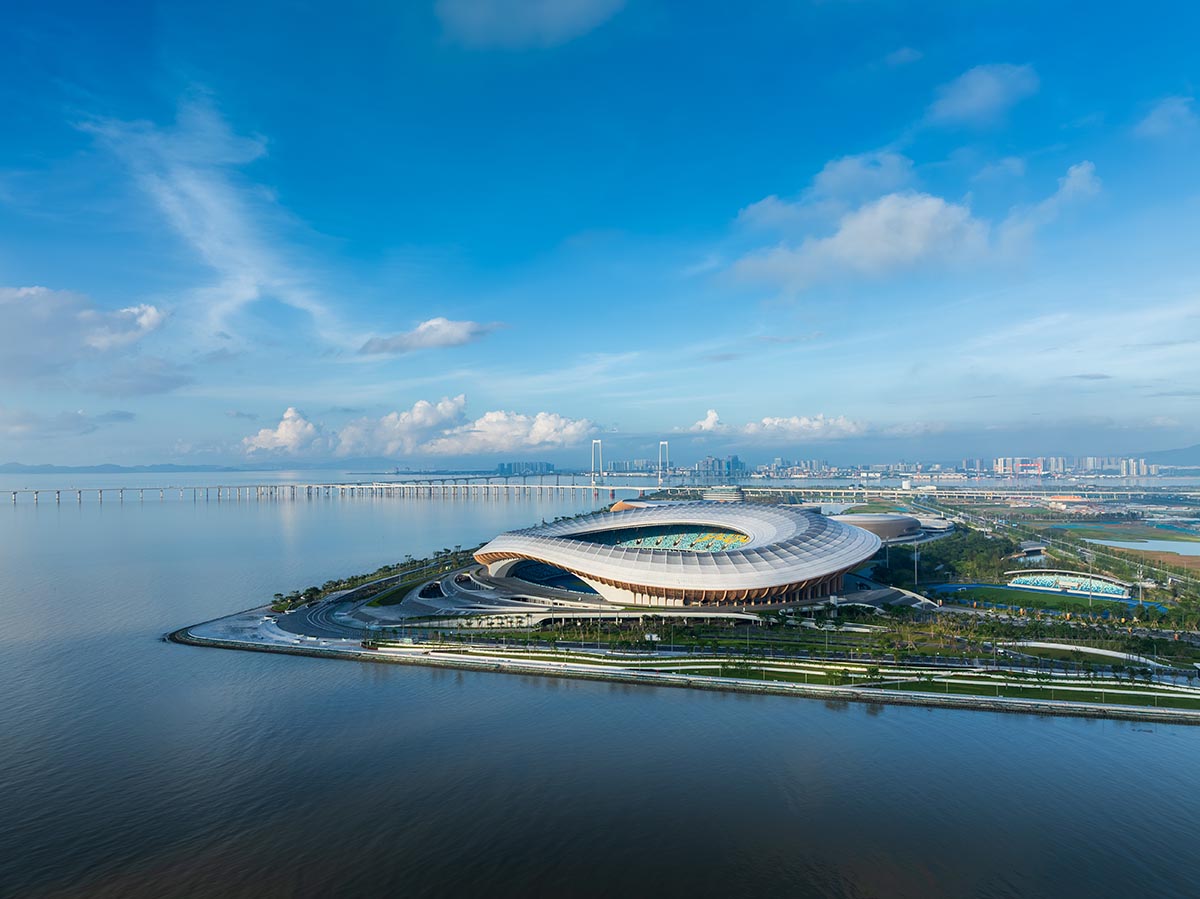
Starting on December 5, 2025, the Greater Bay Area Sports Centre will have its first major events, including four sold-out concerts.
The Pearl River Delta's cities, such as Guangzhou, Shenzhen, Hong Kong, and Macau, which make up the Greater Bay Area—the largest conurbation in the world, with a projected population of 100 million by 2030—are served by the new sports center.
The sports center will serve as the focal point of a new business, residential, and civic district in the center of the Greater Bay Area. It is located on the western bank of the river delta, south of Guangzhou's Nansha District.
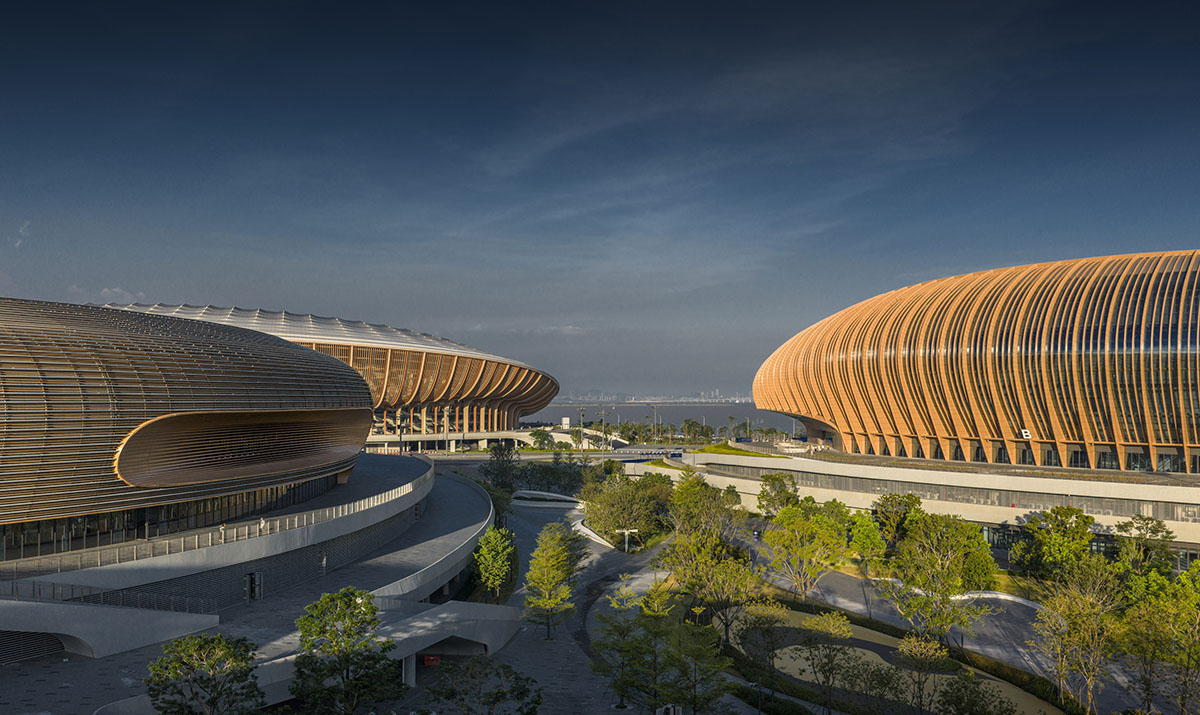
Image courtesy of CRLand
All residents of the Greater Bay Area can easily access the center via Line 18 of the Guangzhou Metro and the new Shenzhen-Zhongshan Bridge.
In addition to providing top-notch local community sports facilities, the center has been designed to host a diverse program of major national and international sporting events as well as cultural performances.

The center will focus on China's current regional and national sports development initiatives in addition to offering top-notch facilities for the local schools and sports clubs in Nansha.
The center's design maximizes Nansha's warm winters to produce the perfect outdoor training facilities and conditions to foster future legacies, while also providing the necessary infrastructure for competitive athletes, including those competing in all track and field disciplines.
In order to support local government initiatives that promote greater sports participation in its schools and improve the wellbeing of the younger generations in the area, the sports center also offers a wide range of auxiliary facilities, such as housing for athletes and outdoor training fields and running tracks.
This 70-hectare waterfront park, which is situated in Guangdong's subtropical monsoon climate, was created as a crucial component of the district's flood prevention measures. It will have wetlands that control surplus water during severe sea-level variations.
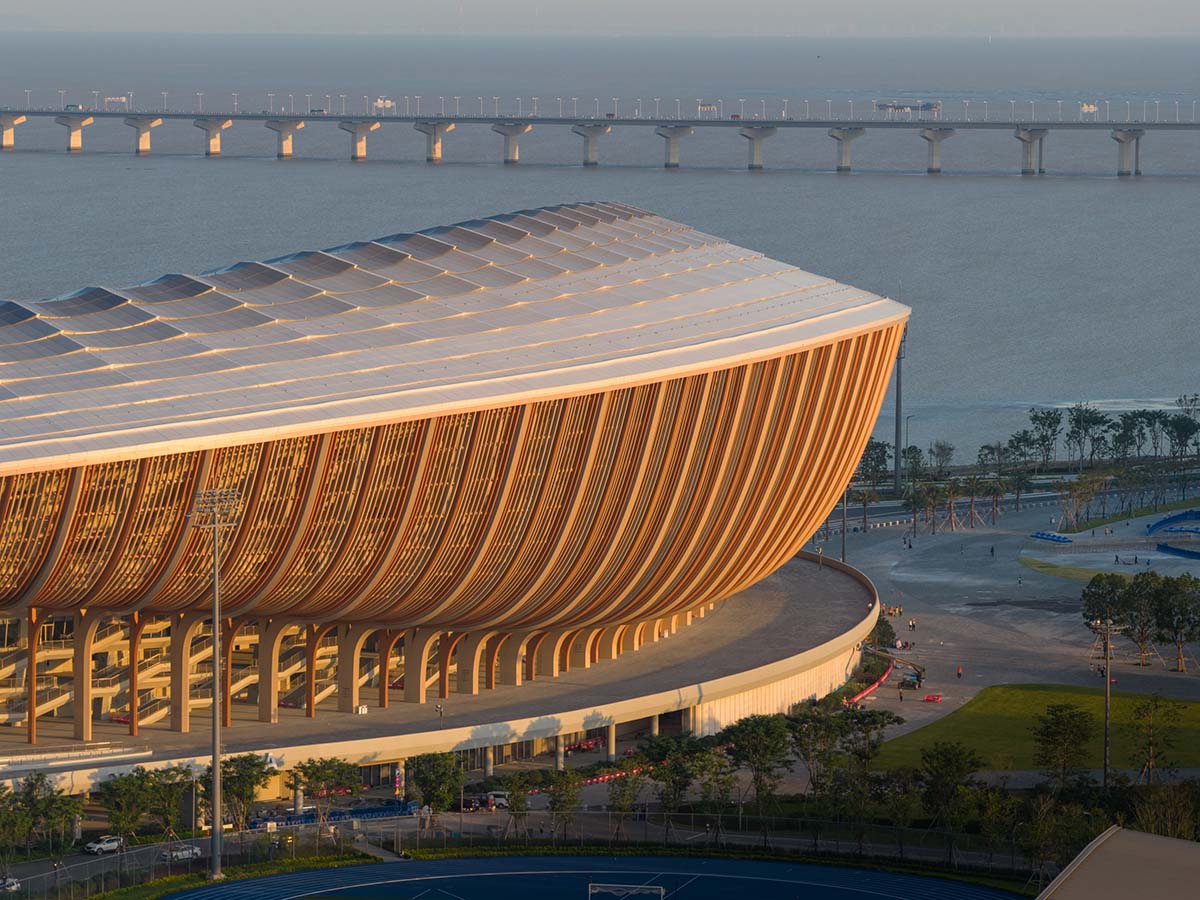
Image courtesy of CRLand
As ZHA mentioned, the tapering geometries observed in the hulls of the area's ancient sailing ships, which were first built around a millennium ago during the Song Dynasty, are echoed in the fluid forms of the center's architecture. The Pearl River became China's entry point to the outside world thanks to these ancient ships.
During the region's humid subtropical summer months, the sports center incorporates environmental elements from the native Lingnan traditional architecture, such as large expanses of shaded spaces cooled with efficient natural ventilation techniques.
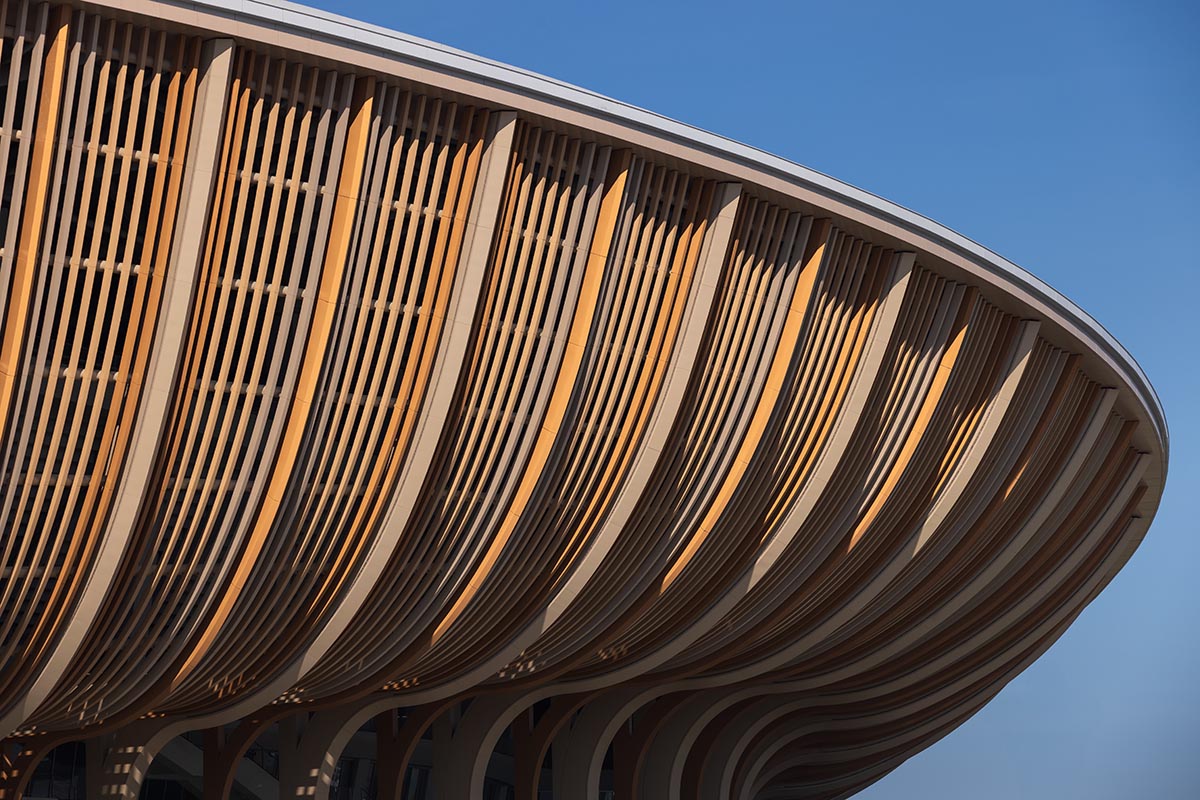
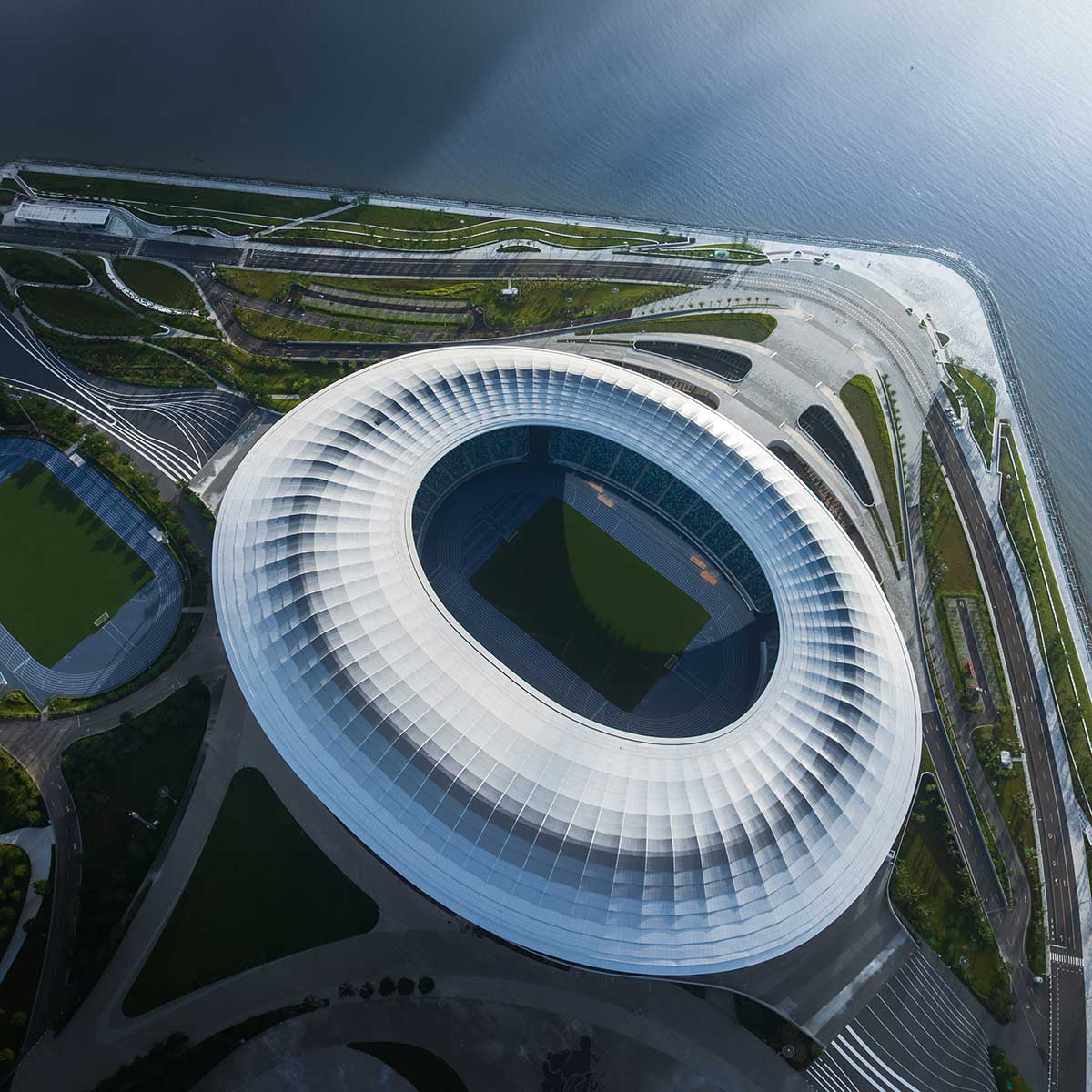
The roof of the stadium is made up of layers that allow rising warm air to naturally vent outside the building envelope while protecting the 60,000 spectators from sunlight and rain. The stadium is surrounded by a unique layered canopy that mimics the pleated silk structures of traditional Chinese fans.
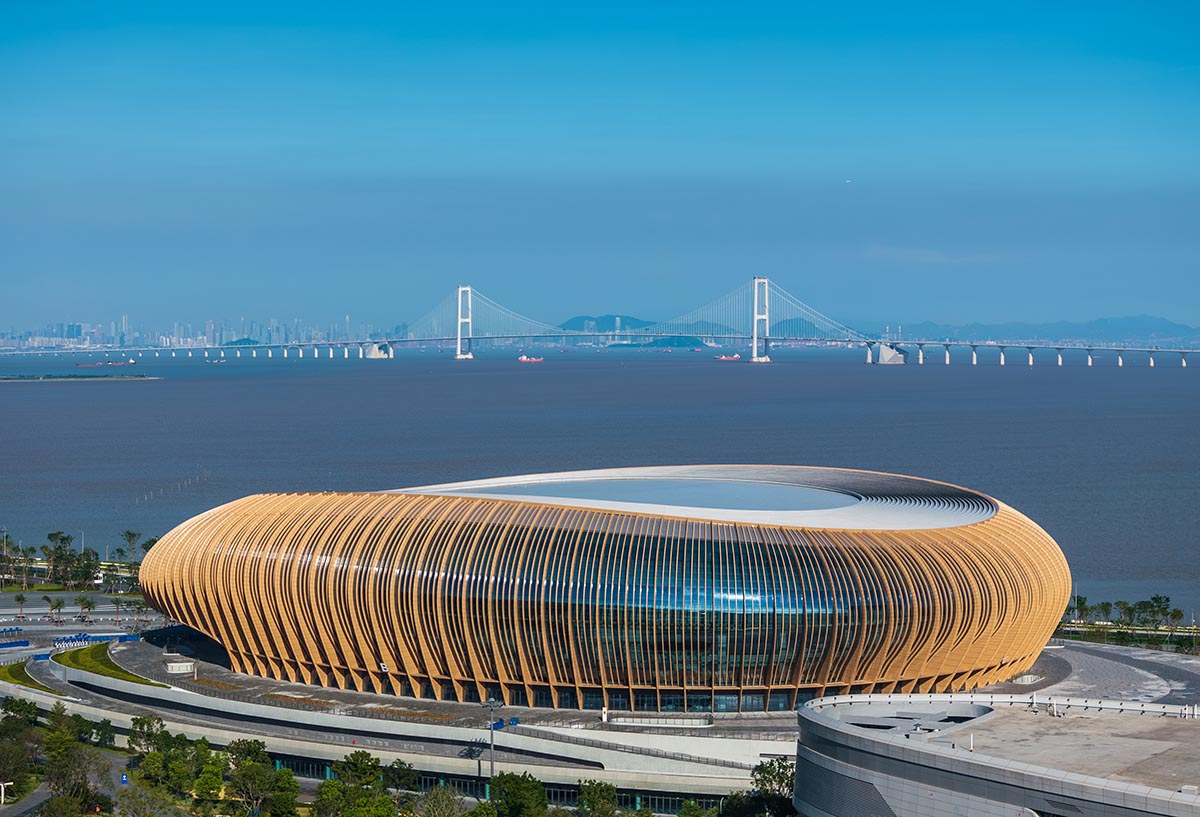
The sports center's architecture on the banks of the Pearl River marks the entrance to Guangzhou and the northern Greater Bay Area districts. It is situated on the main approach from the north to the Shenzhen-Zhongshan Bridge, which connects the Greater Bay Area's major urban areas.
Each building's curvatures within the center are defined by a system of vertical louvres. Each building's composition and orientation have been planned to promote cooling by the dominant summer winds that blow inland from the South China Sea.
These strategies are informed by comprehensive data analytics and sophisticated digital 3D modeling to optimize shading and natural ventilation within their public spaces.
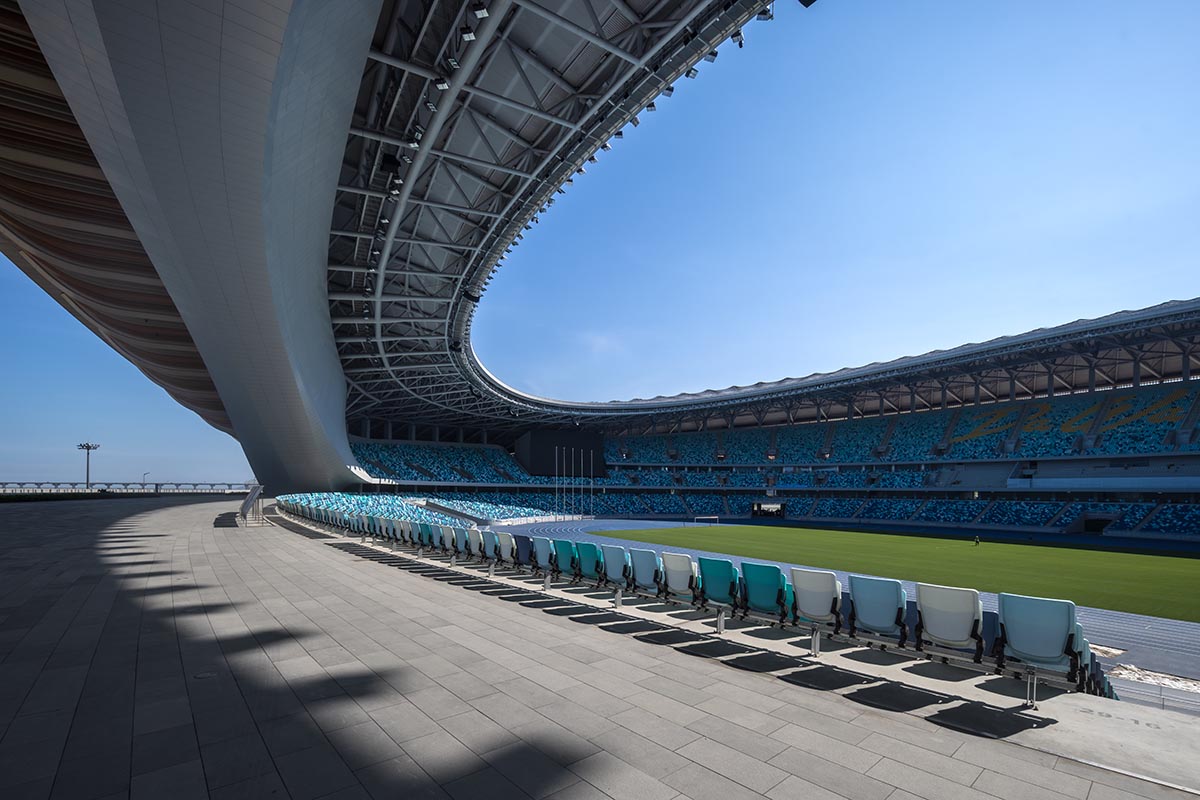
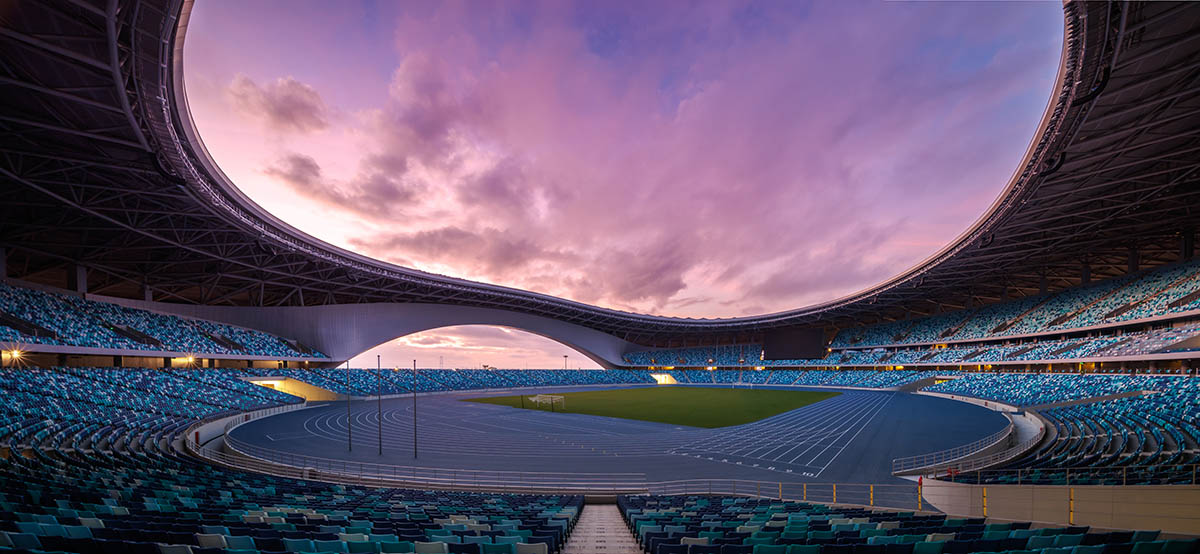
The stadium's seating bowl, which can accommodate 60,000 spectators for a range of sports, can be adjusted to provide the best spectator conditions for each particular event, guaranteeing the best views of the athletes and the most thrilling event atmosphere, along with maximum flexibility for various uses throughout the year.
The stadium can also be set up for cultural events, with fans confronting a stage with a distinctive backdrop. In addition to providing views of the river during sporting events and creating a direct link between fans and the stadium's riverside environment, the grand arch in the design allows colder sea air from the Pearl River estuary to enter the stadium, cooling athletes and spectators.
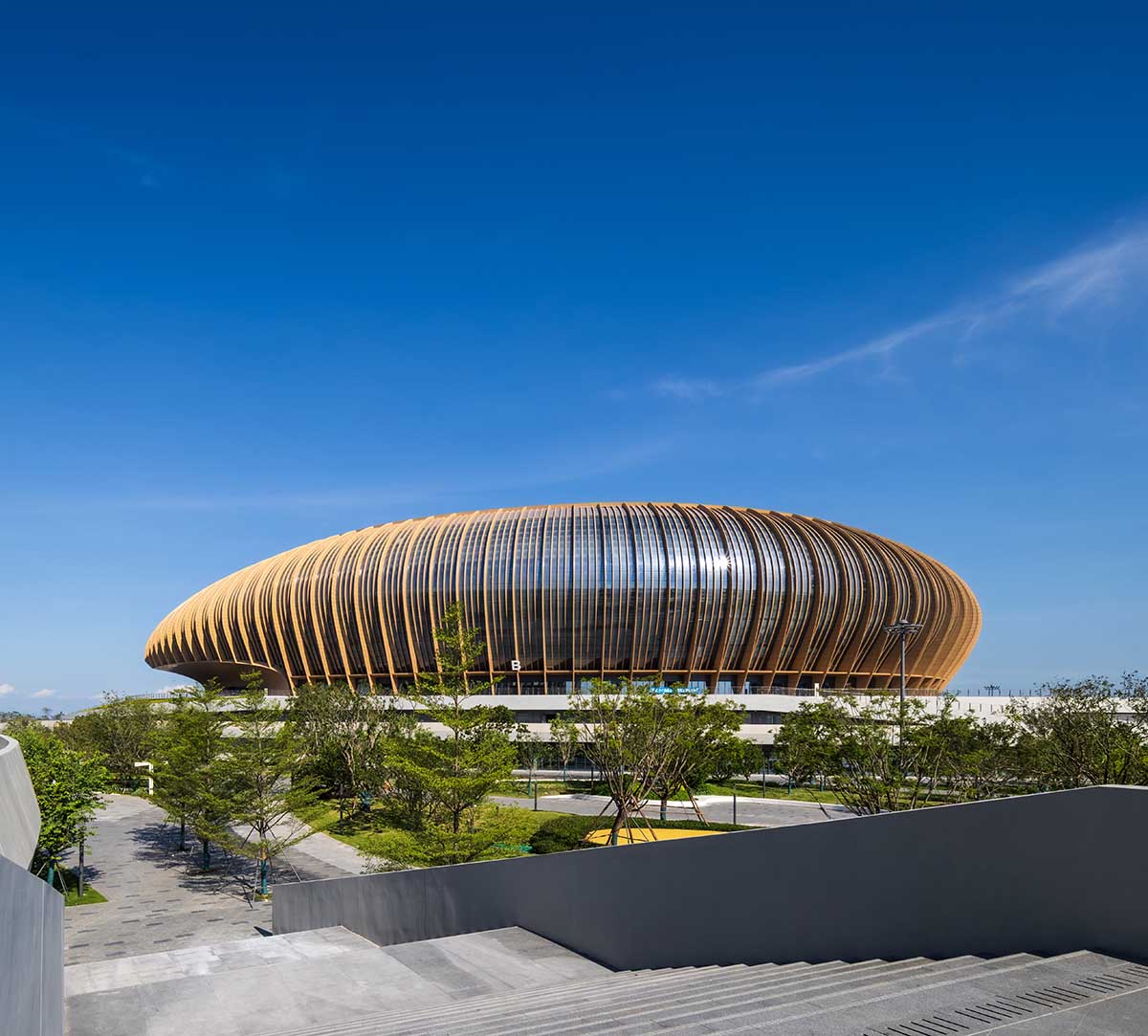
Zaha Hadid Architects and the Guangdong Architectural Design & Research Institute collaborated to design the center, which was commissioned by the Nansha District Bureau of Culture & Sports after the 2023 worldwide design competition.
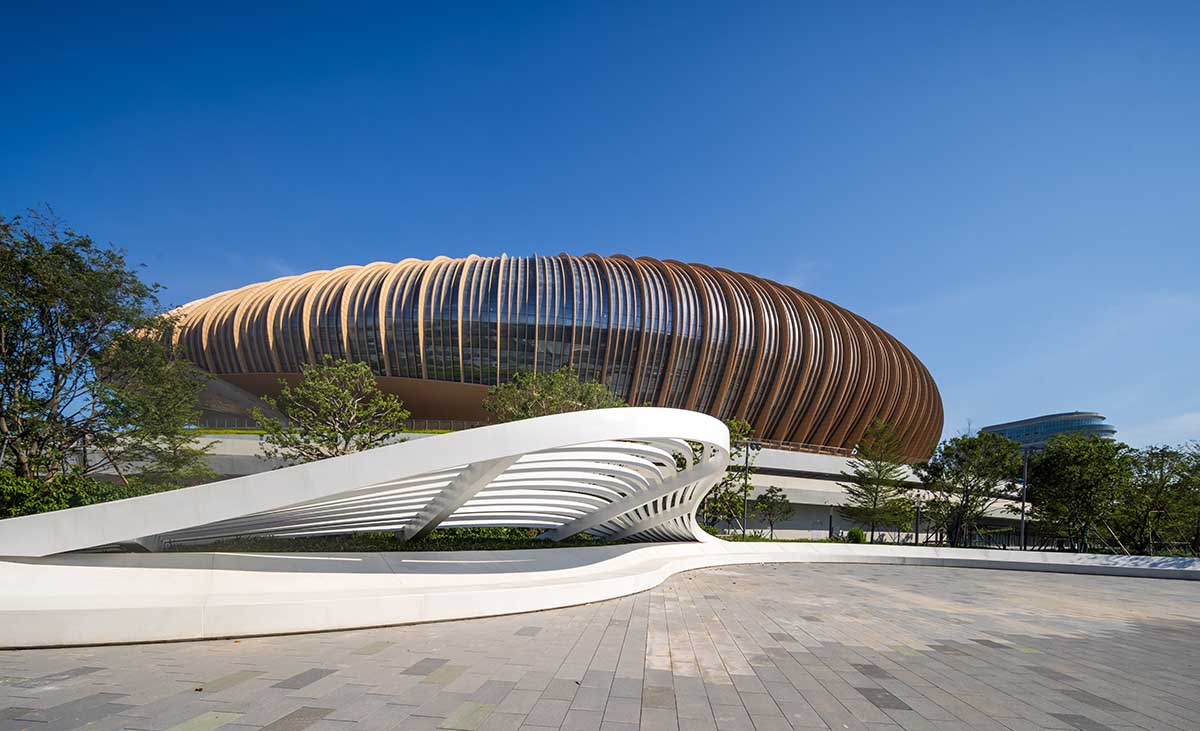

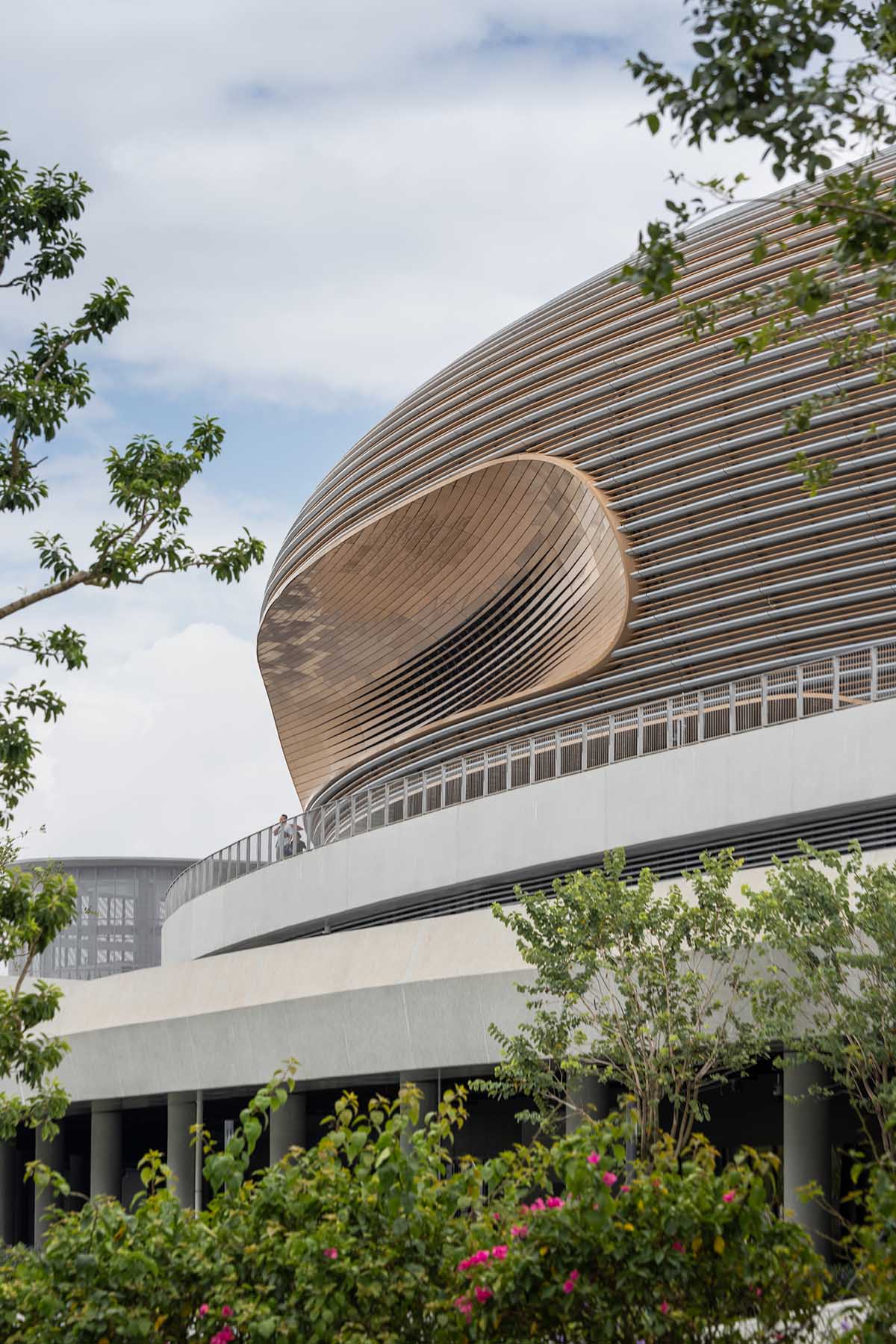
Image courtesy of CRLand
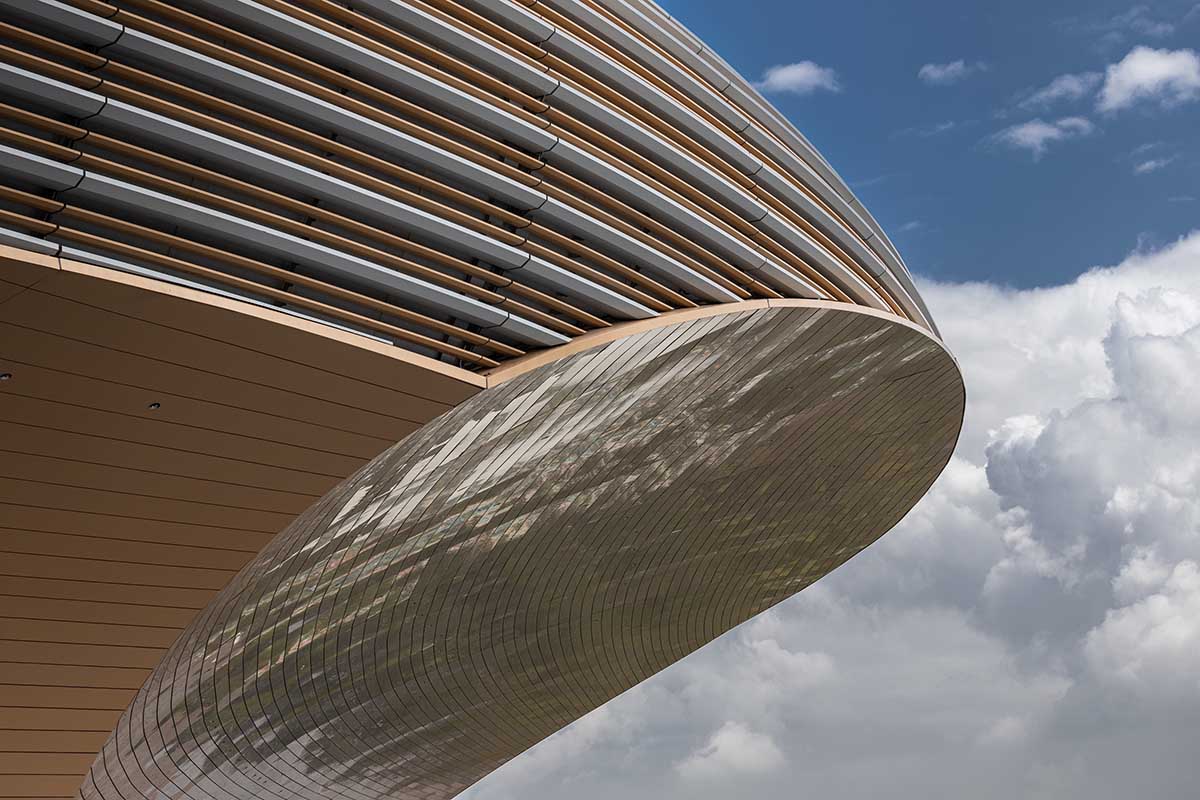
Image courtesy of CRLand
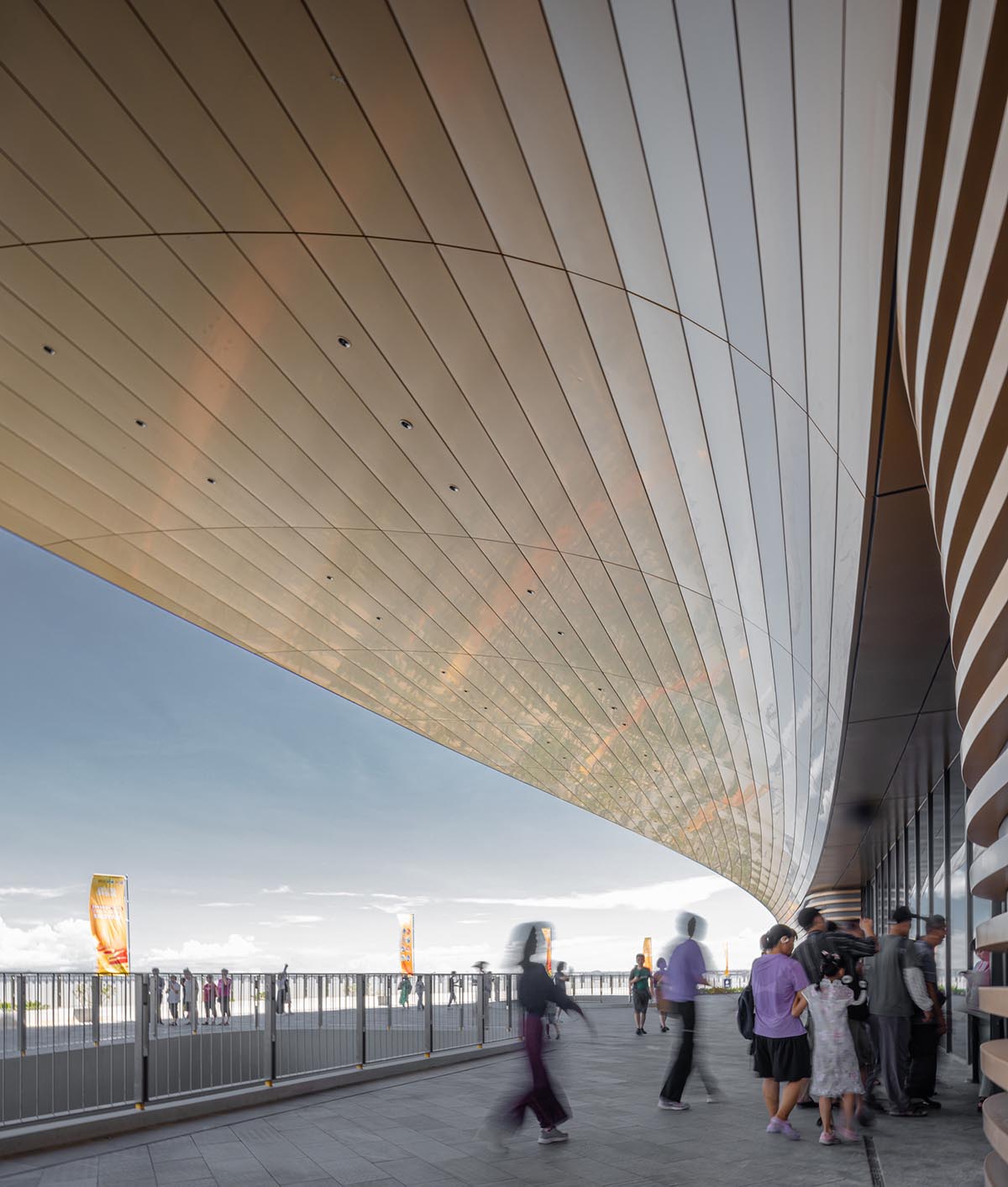
Image courtesy of CRLand


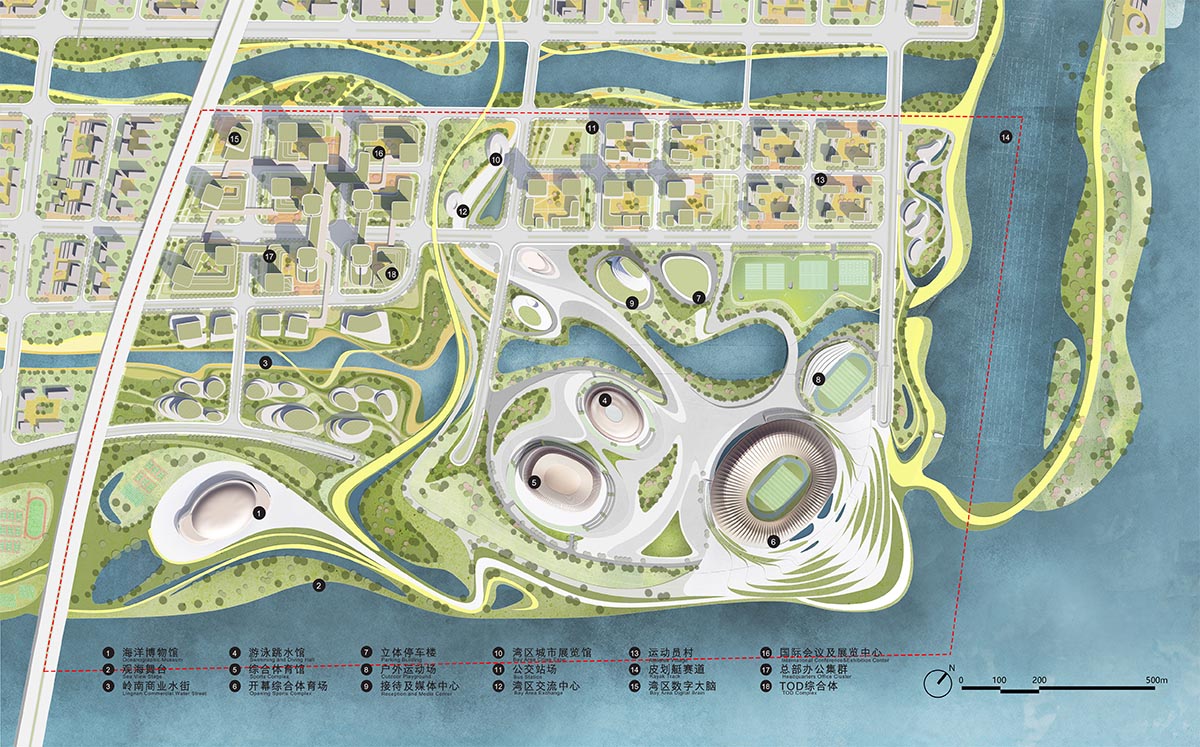
Site Plan
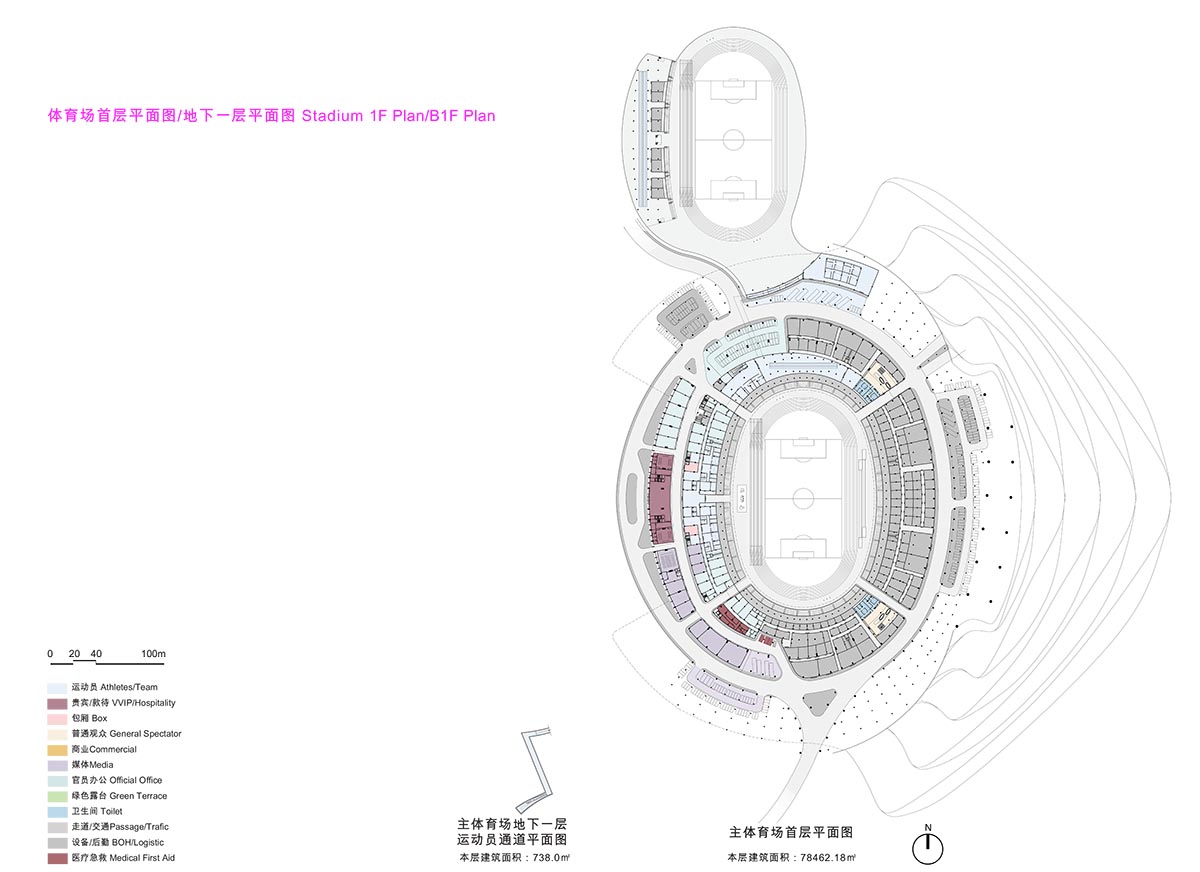
The Greater Bay Area Sports Centre Stadium, 1F Plan-B1F Plan
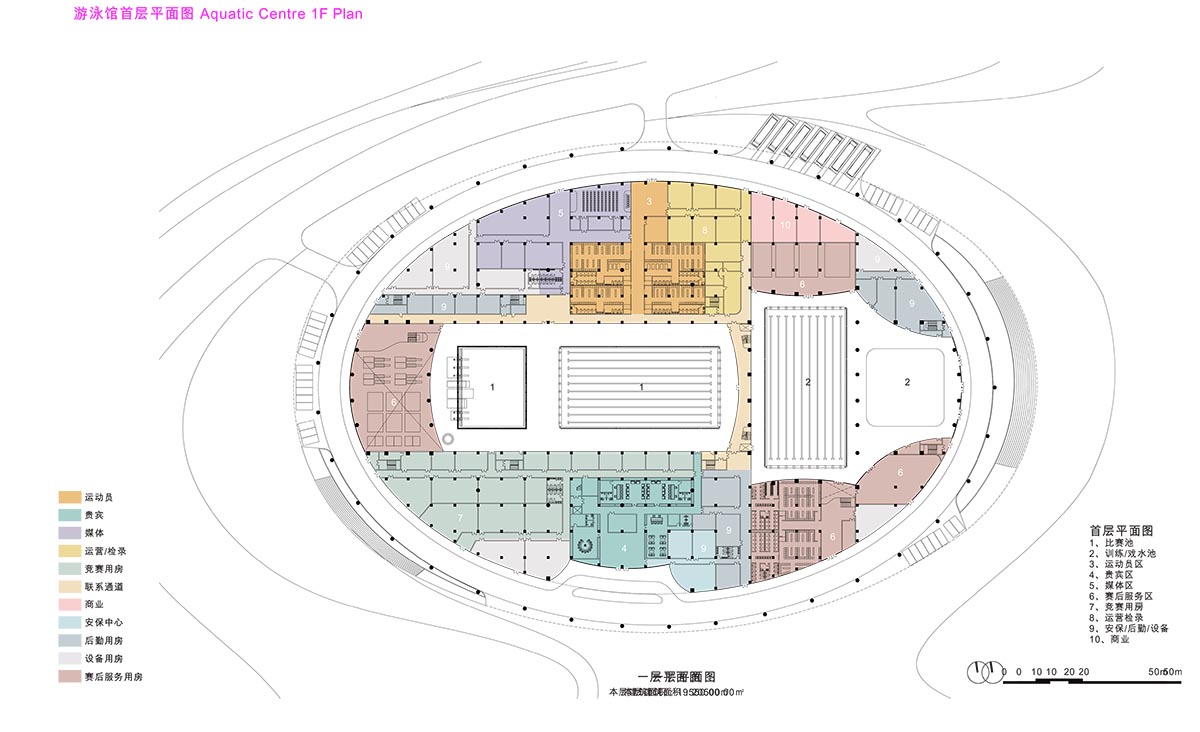
The Greater Bay Area Sports Center, Aquatic Centre, 1F Plan
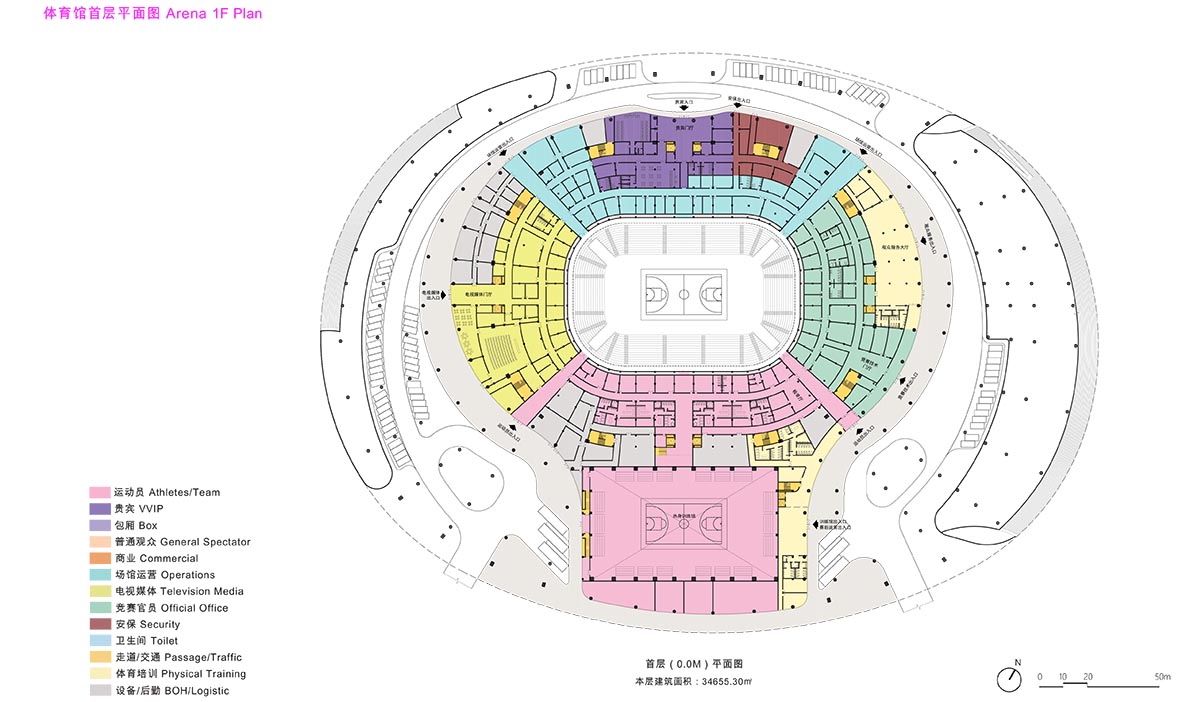
The Greater Bay Area Sports Centre, Arena 1F Plan
ZHA recently unveiled plans for El Bulto, the transormation of the city's industrial port into a new residential neighborhood with cultural and recreational amenities. In addition, Zaha Hadid Architects, Cox Architecture and Woods Bagot completed the Western Sydney International Airport in Sydney, Australia. Moreover, the firm revealed plans for a masterplan, resembling "wind-swept desert dunes" in Sharjah, United Arab Emirates.
Project facts
Architect: Zaha Hadid Architects (ZHA)
ZHA Principal: Patrik Schumacher
ZHA Project Directors: Lei Zheng, Nils Fischer
ZHA Project Associates: Jinqi Huang, Vishu Bhooshan, Jakub Klaska
ZHA Project Architect: Hung-da Chien
ZHA Project Team: Teodor Andonov, Shajay Bhooshan, Taizhong Chen, Heba Eiz,Vegard Elseth, Matthew Gabe, Sonia Magdziarz, Ling Mao, Keerti Manney, Xin Swift, Ke Yang, Chris Whiteside, Svenja Siever, Tul Srisompun
ZHA Competition Team: Luca Bacilieri, Niran Buyukkoz, Junfei Chen, Nils Fischer, Matthew Gabe, Jakub Klask, Han Hsun Hsieh, Jingwen Yang, Paul Joseph, Shuaiwei Li, Juan Liu, Sonia Magdziarz, Yuling Ma, Satoshi Ohashi, Michael On, Xin Swift, Ceren Tekin, Ke Yang, Bo Zhang, Chu Zhou, Lei Zheng
Competition Sports Consultant: Clive John Lewis
Competition Consortium Member: Guangzhou Architectural Design & Research Institute
Consultants
Executive Architect: Guangdong Architectural Design & Research Institute Group Co.ltd (GDAD), China Southwest Architectural Design and Research Institute (CSWADI)
Structural Engineers: GDAD, CSWADI
General Contractor: China Construction Eighth Engineering Division & China Construction Third Engineering Division
Façade Engineering: RFR(Rice Francis Ritchie sarl) Engineers, GDAD, CSWADI
M&E Engineering: GDAD, CSWADI
Landscape Consultant: AECOM
Lighting Design: Lichtvision Design & Tsinghua Urban Planning and Design Institute (THUPDI)
Site Supervision: Guangzhou Runhe Consulting, Guangzhou Pearl River Supervision and Consulting Group, Guangzhou Construction Engineering Supervision Co.
All images © Seilaojiong unless otherwise stated.
All drawings © ZHA.
> via ZHA