Submitted by WA Contents
OMA and Circlewood develop Modular Wood System for Asylum Facilities in the Netherlands
Netherlands Architecture News - Mar 02, 2026 - 05:02 2752 views
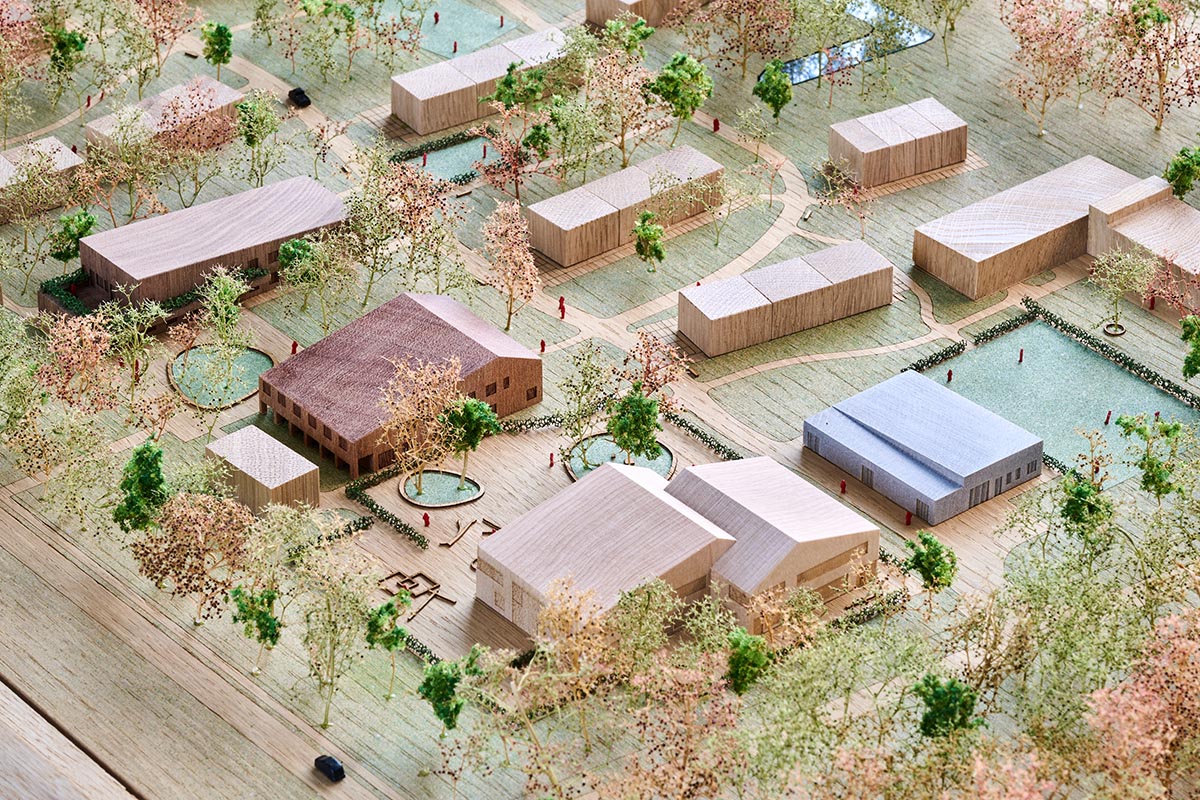
For the development of new reception facilities in Oisterwijk, the Netherlands, the Central Agency for the Reception of Asylum Seekers (COA) has chosen the HoutKern construction method, a modular wood system created by Circlewood and OMA's David Gianotten and Michael den Otter.
The system promotes inclusive, respectable surroundings in line with contemporary sustainability requirements and is made for quick assembly and long-term flexibility.
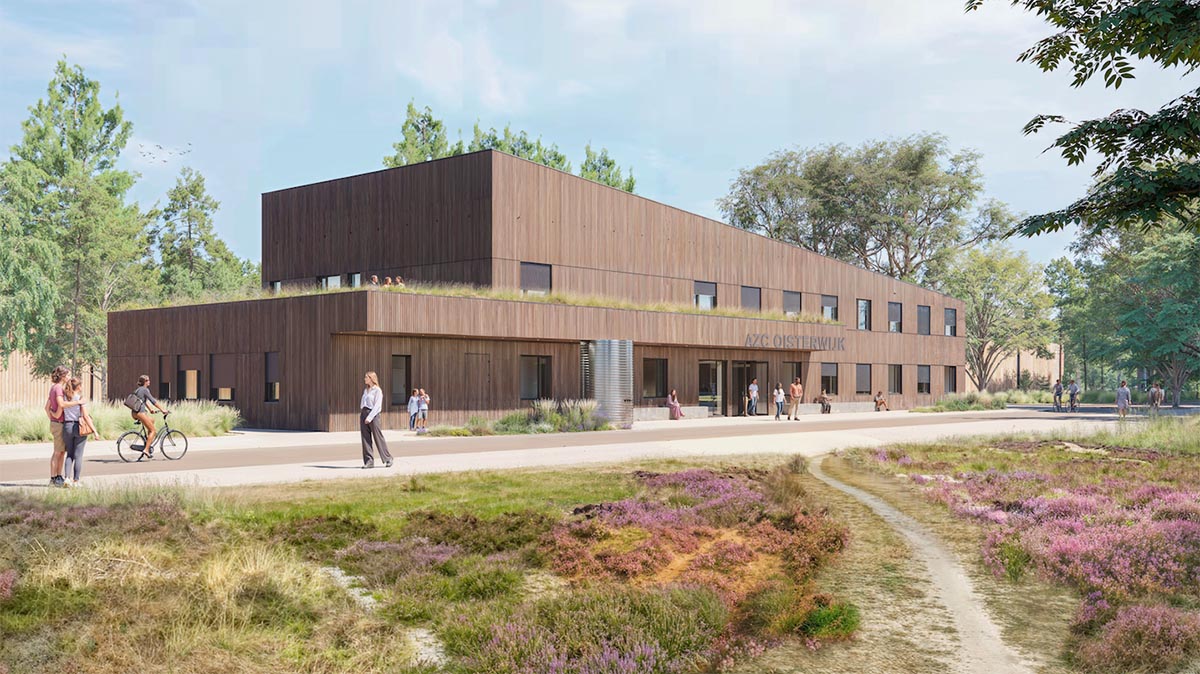
Office. Image © OMA
The Spreidingswet, or Asylum Reception Facilities in towns (Enablement) Act, was approved by the Dutch government in February 2024 and mandates that towns accept asylum seekers in order to increase the country's capacity for reception. Despite advancements, the goal of 96,000 spaces by July 2025 is not met because half of the existing facilities are still emergency shelters.
In order to expedite the supply of adaptable, superior receiving centers, COA has implemented the HoutKern approach. In Oisterwijk, the first facilities are expected to be finished in 2026.
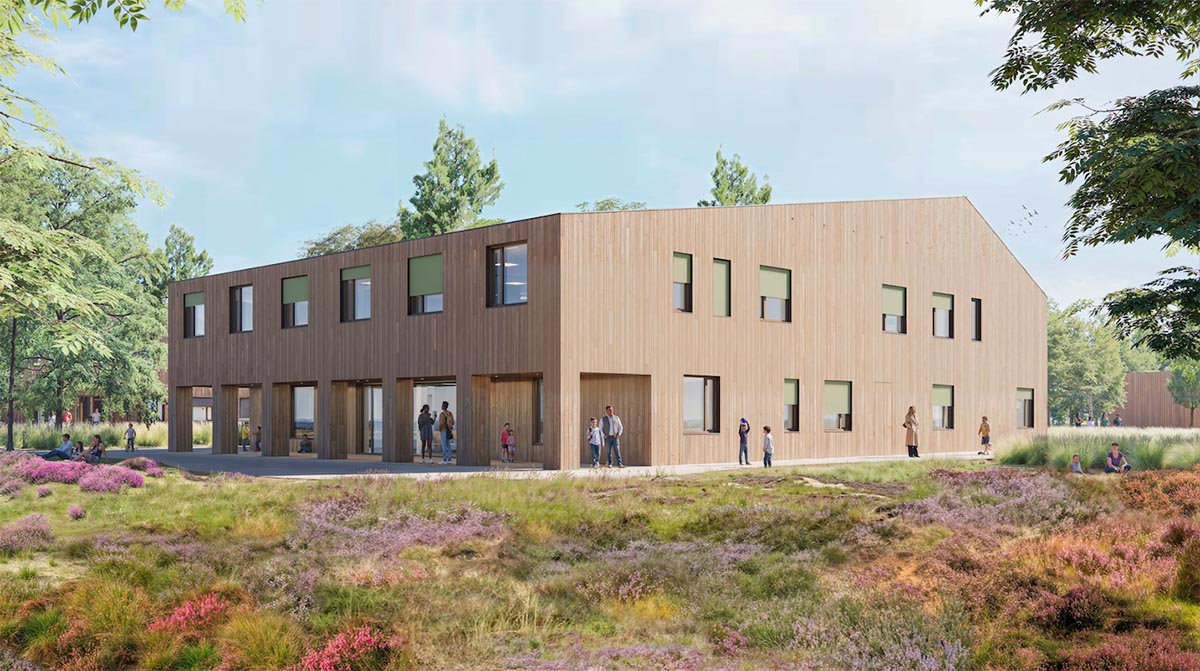
Activity Center. Image © OMA
"As Dutch architects, we see it as our responsibility to design safe, welcoming spaces that support integration and social cohesion. The HoutKern method offers a resilient, humane solution that helps asylum seekers rebuild their lives and contributes to a more cohesive Dutch society," said David Gianotten, OMA Managing Partner, and Architect.
With the use of cross-laminated floor panels, bio-based partition walls, and standardized timber columns and beams, the system makes it possible to build workplaces, schools, and shelters. Electric cranes are used to build these on-site. For flexibility and convenience, building services are mounted above ceilings.
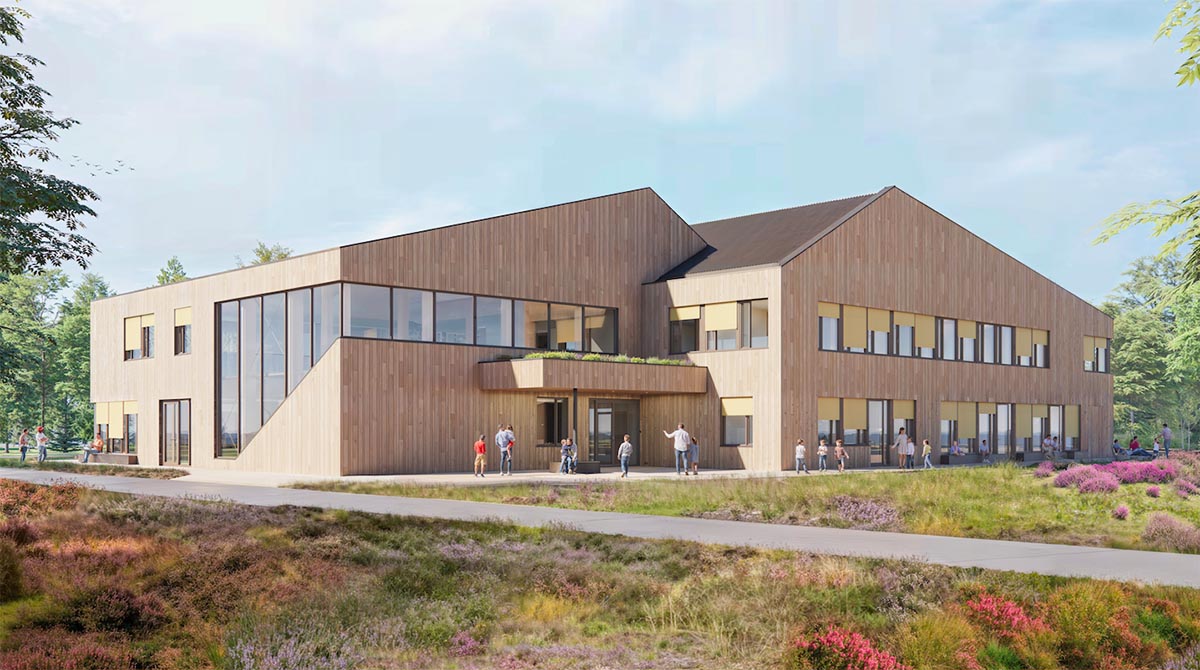
School. Image © OMA
Asylum seekers, employees, and local communities can all find open, welcoming spaces thanks to the modular framework's ability to adapt a variety of finishes. Structures can be completely disassembled, and their parts can be used again as building supplies. The method helps achieve CO2 reduction targets, meets COA's purpose of promoting self-reliance, and allows for scaling in reaction to changes in policy and demographics.
The HoutKern system's pilot site is the Oisterwijk receiving center, which has been accepting refugees since 1990. Up to 450 inhabitants will be served by an office, activity center, school, and storage facility constructed using the system as part of its renovation, which is overseen by David Gianotten.
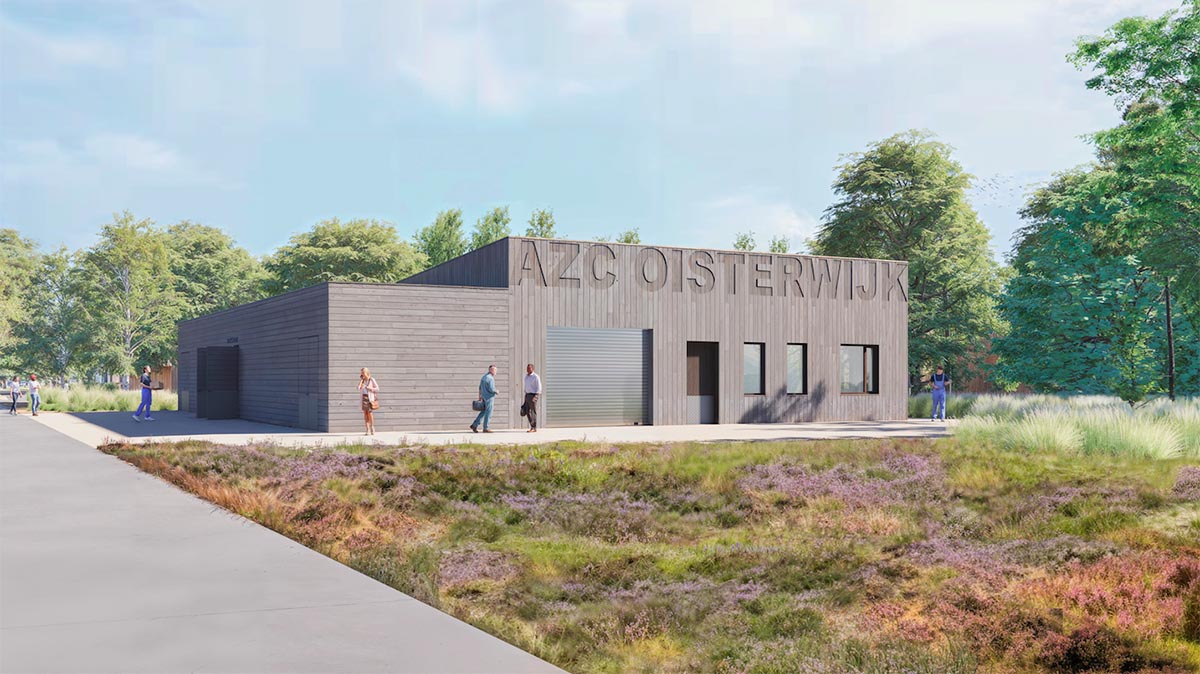
Storage facility. Image © OMA
With unique color schemes for easy navigation, ample glass windows, and wooden facades that exude coziness and security for both occupants and the area, each structure is intended to improve everyday living.
Every building serves a certain purpose. The main floor of the two-story office has consultation rooms and a waiting area, while the rooftop terrace and staff areas are located above. Integration programs are supported by the activity center.
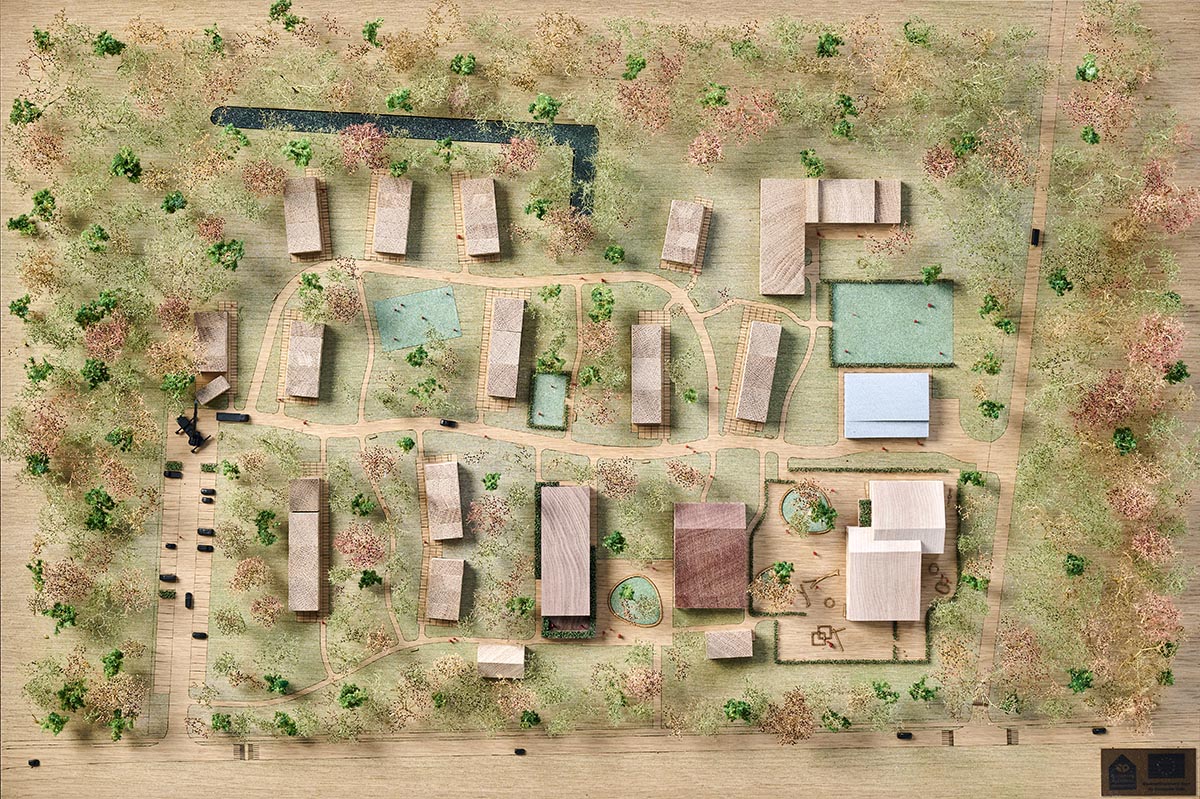
Photography © Frans Parthesius for OMA
A children's playroom, exercise rooms, a flexible-use area, and a recreational hall are located on the ground floor, while the top level provides a more subdued environment for concentrated learning.
The school offers classrooms for kindergarten, primary, and secondary education in addition to a playground that creates a secure and motivating atmosphere. The recycling facility in the storage building helps COA with its waste separation initiatives.
The HoutKern system was modified in 2023 for Amsterdam's Innovation Partnership Schools program, which intends to construct nine to thirty "high-quality, flexible, and sustainable" schools by 2050. The system was first created for the Natural Pavilion at the Floriade World Expo 2022.
A consortium comprising Friso, Circlewood, ABT, Hedgehog, DWA, Lomans, Heko Spanten, Luning, and OMA implements the HoutKern system for COA.
Project facts
Project: Facilities for Central Agency for the Reception of Asylum Seekers
Status: Construction
Client: Central Agency for the Reception of Asylum Seekers (COA)
Location: Oisterwijk, The Netherlands
Program: Office: 1659 sqm; Activity center: 1559 sqm; School: 2427 sqm; Storage building: 524 sqm
Partner in Charge: David Gianotten
Project Architect: Michael den Otter
Team: Roel Teeken, Blanka Miklasz, Annalot Brockhoff, Silvio de Mio
Collaborators
Partner: Friso Bouwgroep, Circlewood
Building Technology: ABT
Building Physics: DWA / ABT
Sustainability: Hedgehog Company
Structural Engineer: Adviesbureau Lüning
Process Management and Cost Calculator: bbn
Contractor: Friso Bouwgroep
Installations: Lomans Amersfoort
The top image in the article: Photography © Frans Parthesius for OMA.
> via OMA