Submitted by WA Contents
ESTUDIO Ignacio Urquiza Ana Paula de Alba completes residence in Mexican forested landscape
Mexico Architecture News - Jan 05, 2026 - 09:16 2758 views
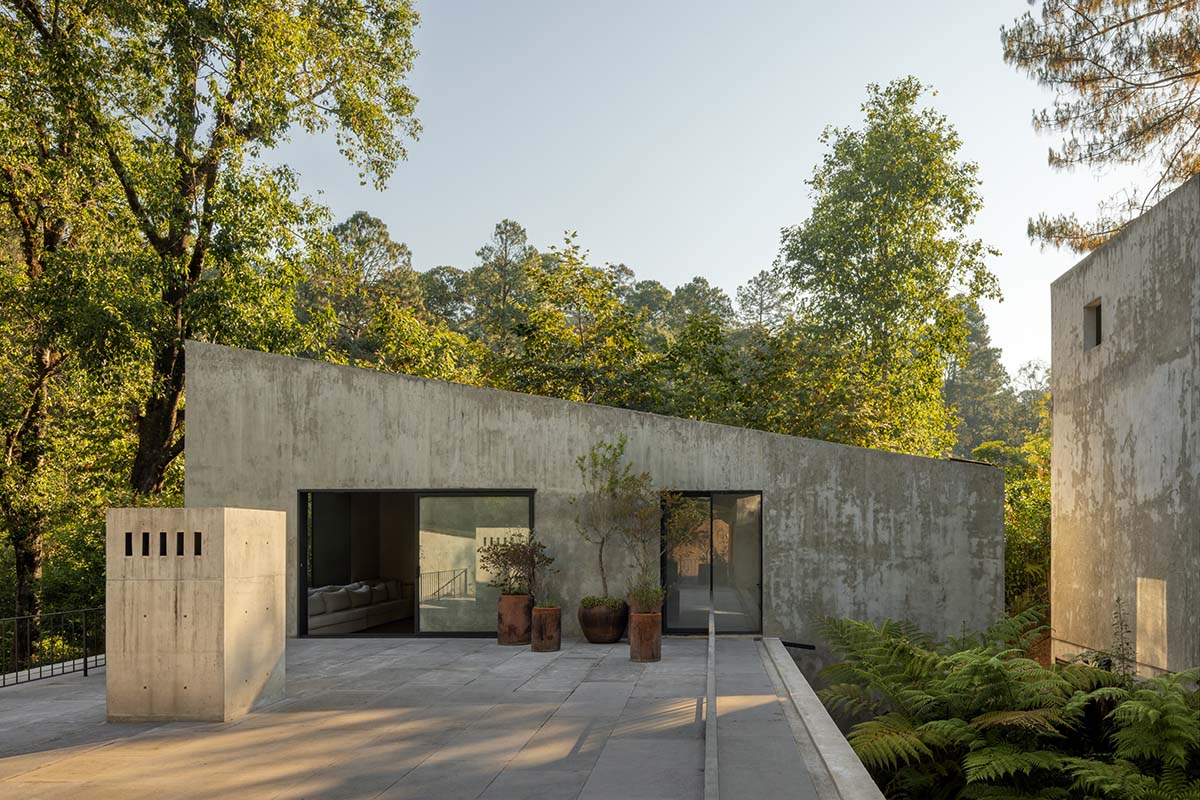
ESTUDIO Ignacio Urquiza Ana Paula de Alba has completed a concrete villa located in the forested landscape of Valle de Bravo, Mexico.
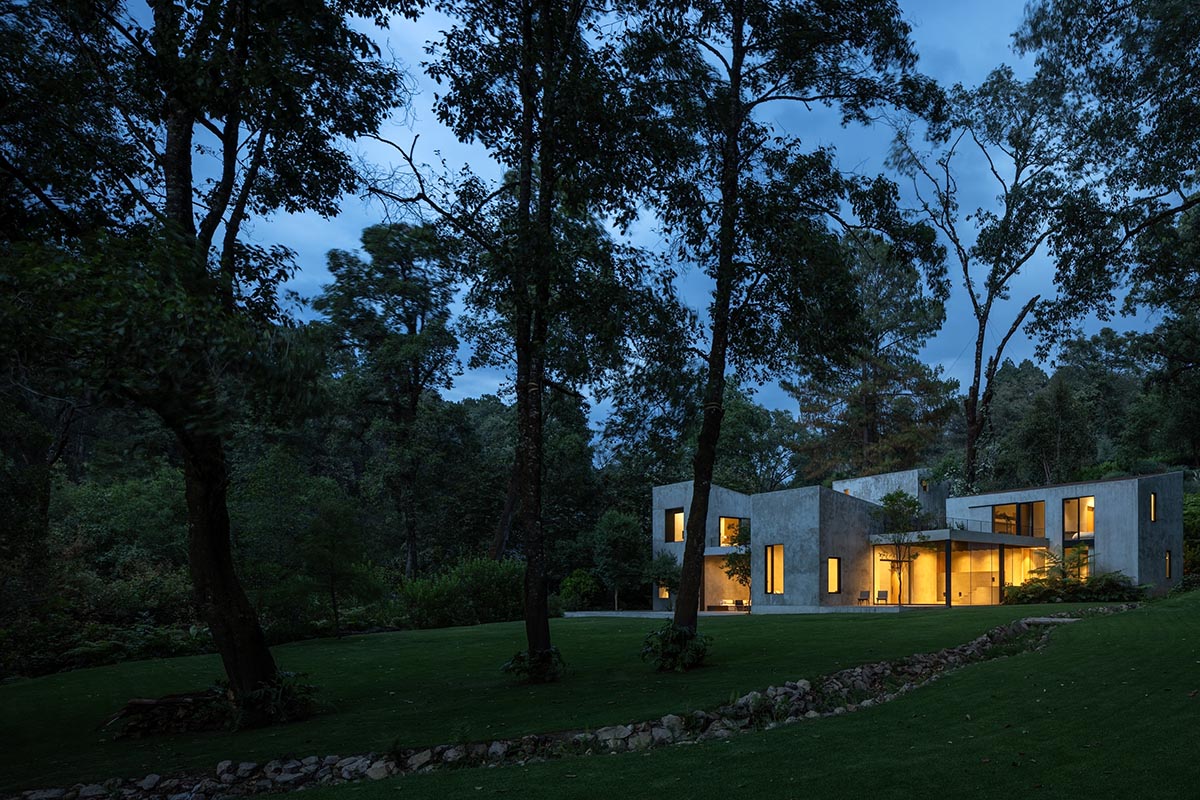
Named Casa en Avándaro, the 537-square-metre house is located on a vegetated slope in Avándaro's lush woodlands, this home's steep topography directs precipitation into a nearby creek.
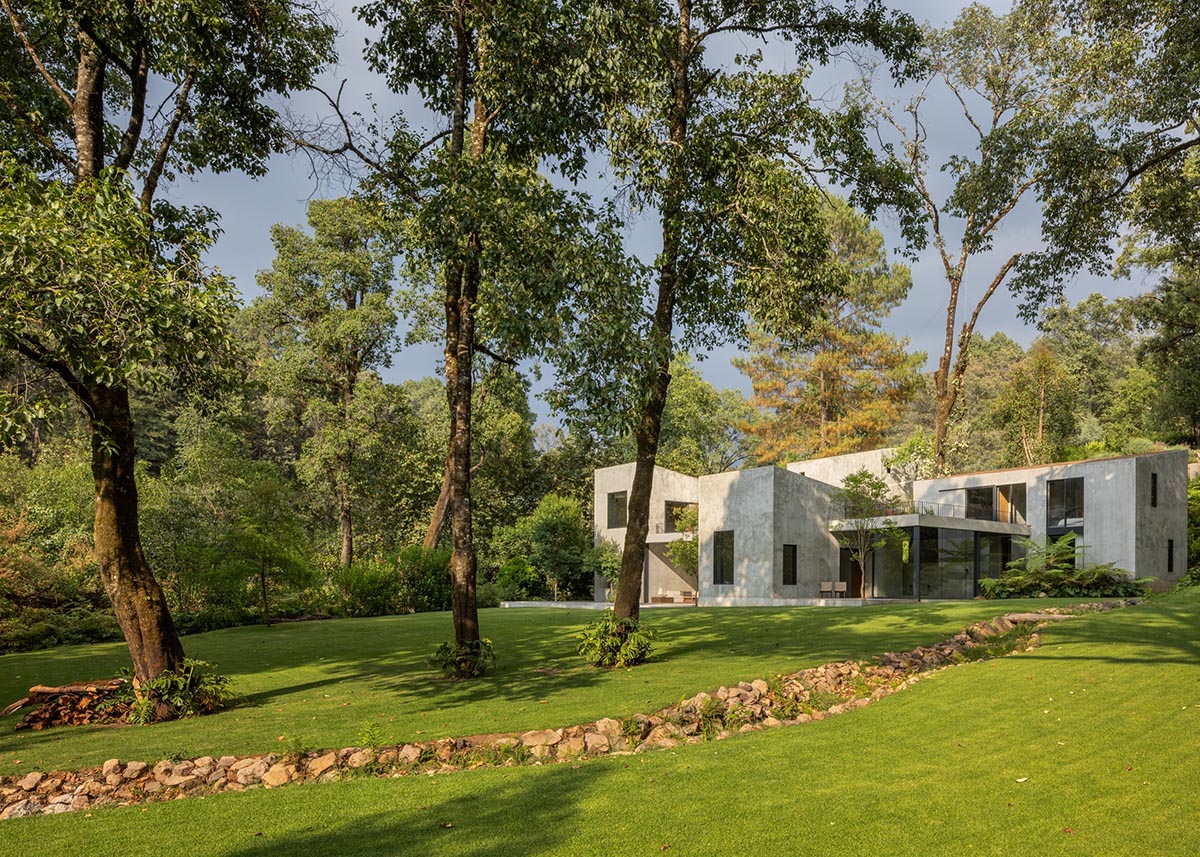
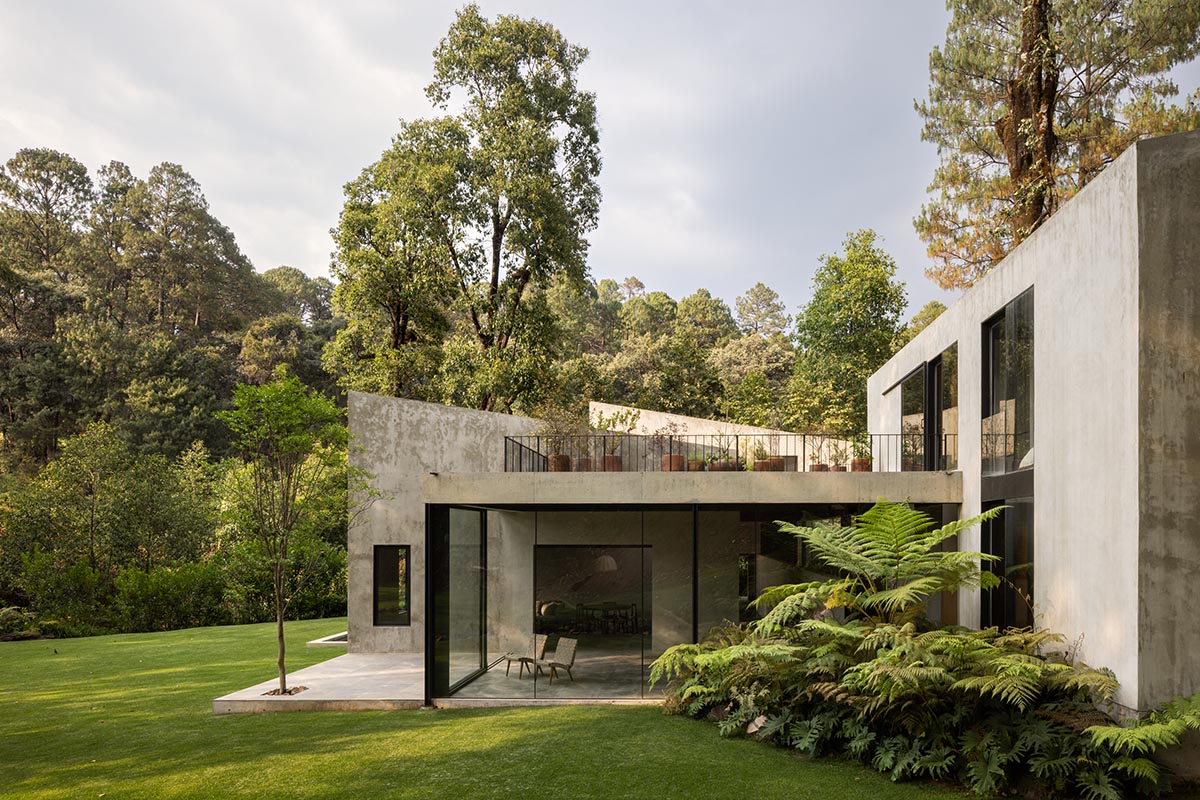
The primary façade of the house faces north and opens toward the stream, allowing in a constant stream of natural light. The orientation and spatial arrangement of the house adapt to the contours of the landscape and the arrangement of old trees.
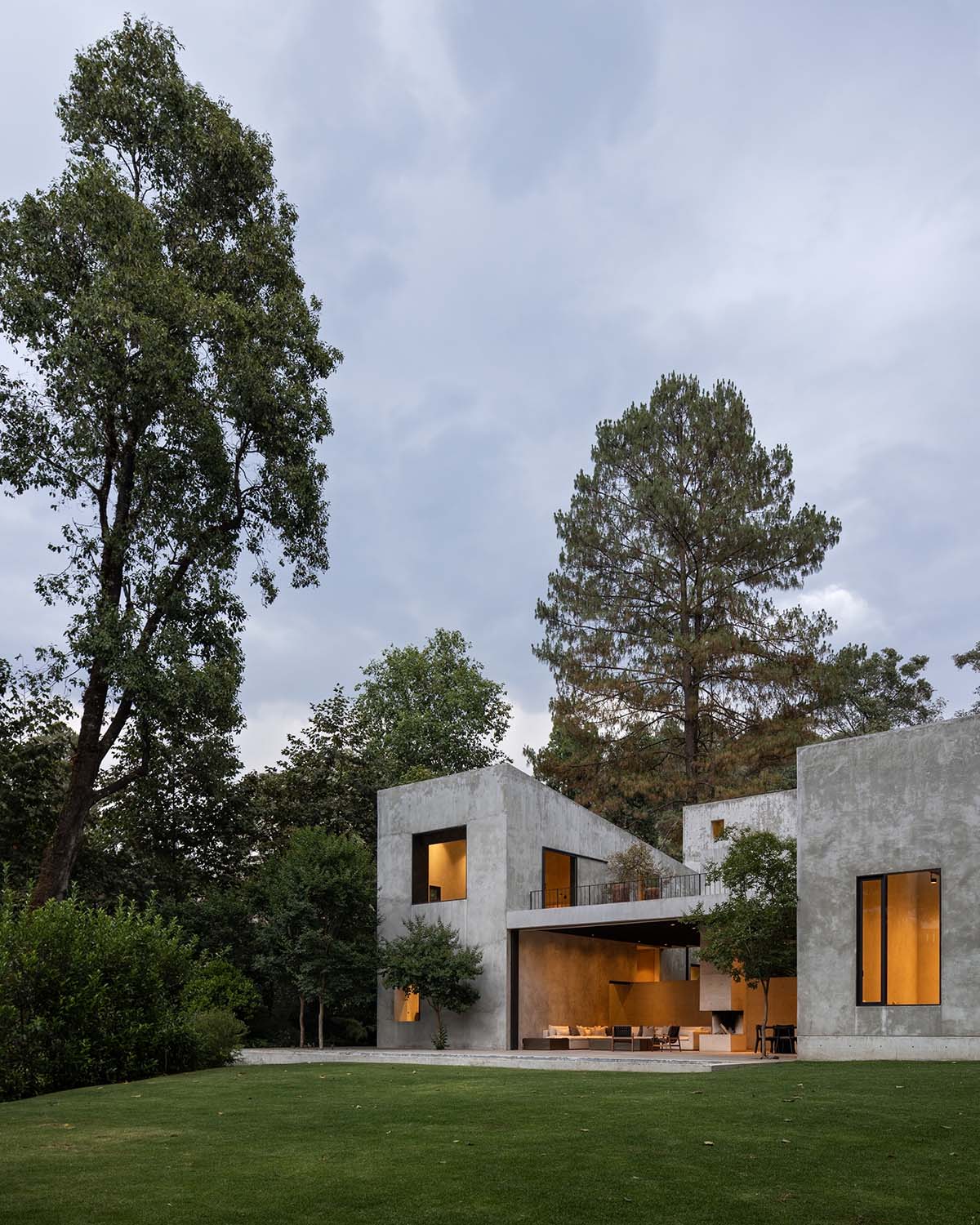
The overlapping volumes create an inner garden with a central void that allows southern sunshine to organically warm the area while preserving the site's towering pines and oaks.

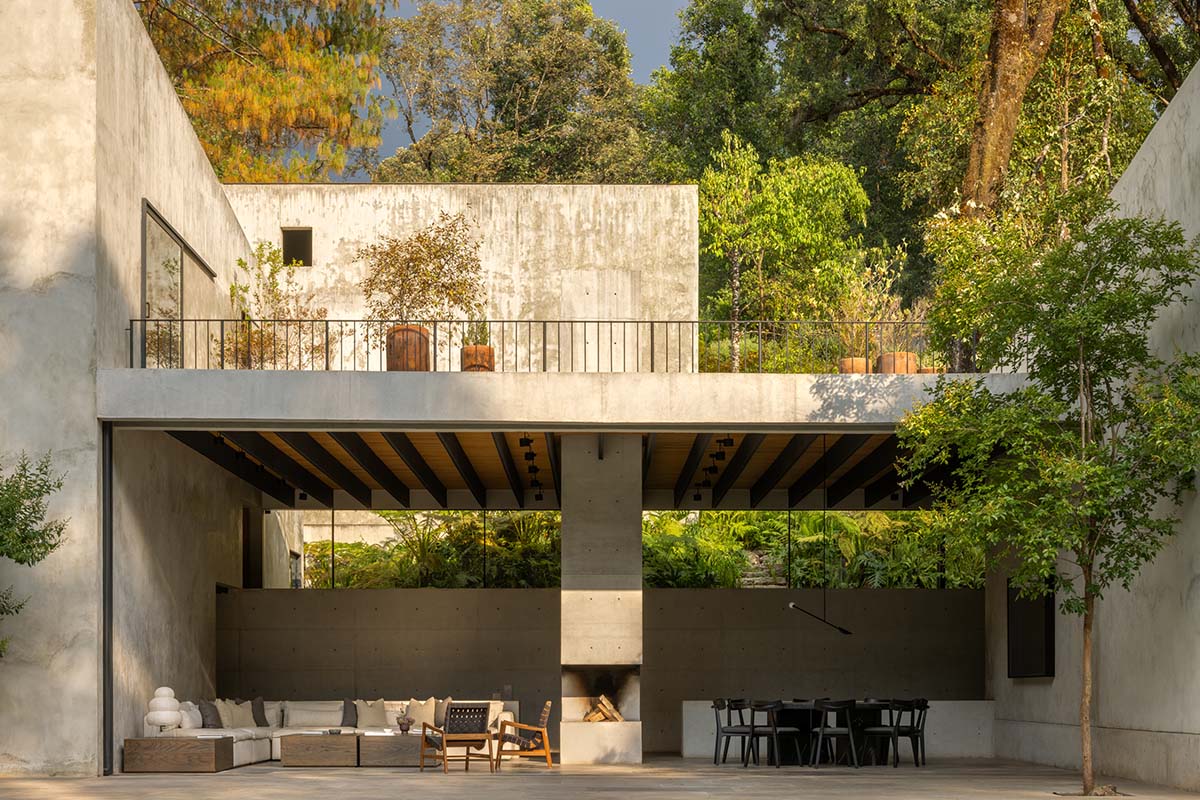
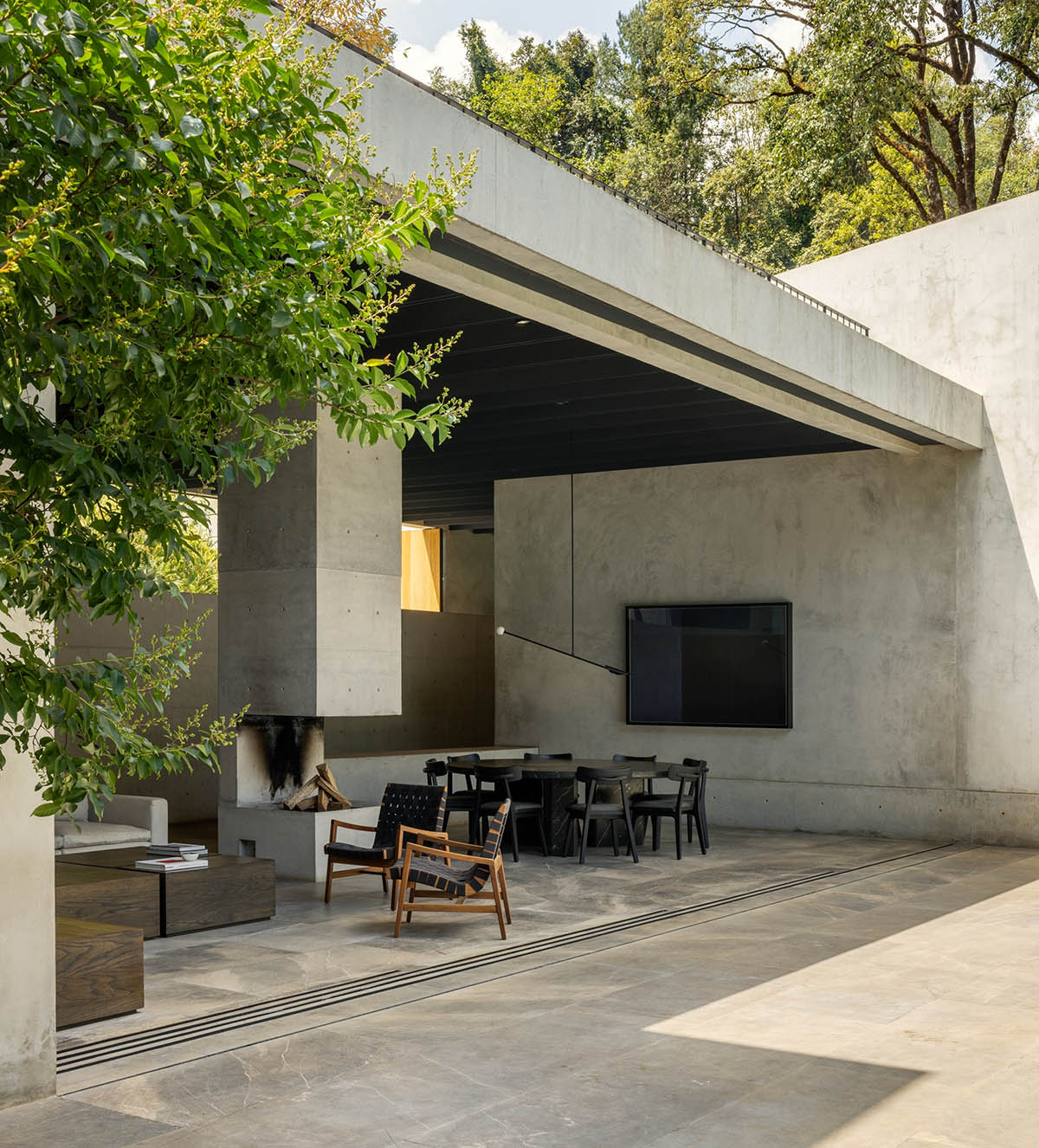
Solid enclosed volumes and an overarching structure that connects three of these make up the project's two main spatial kinds. The fundamental gathering space is a dynamic, open living area that is glass-encased to embrace its surroundings.
A lightweight concrete slab supported by steel beams covers this area, combining structural strength and openness.
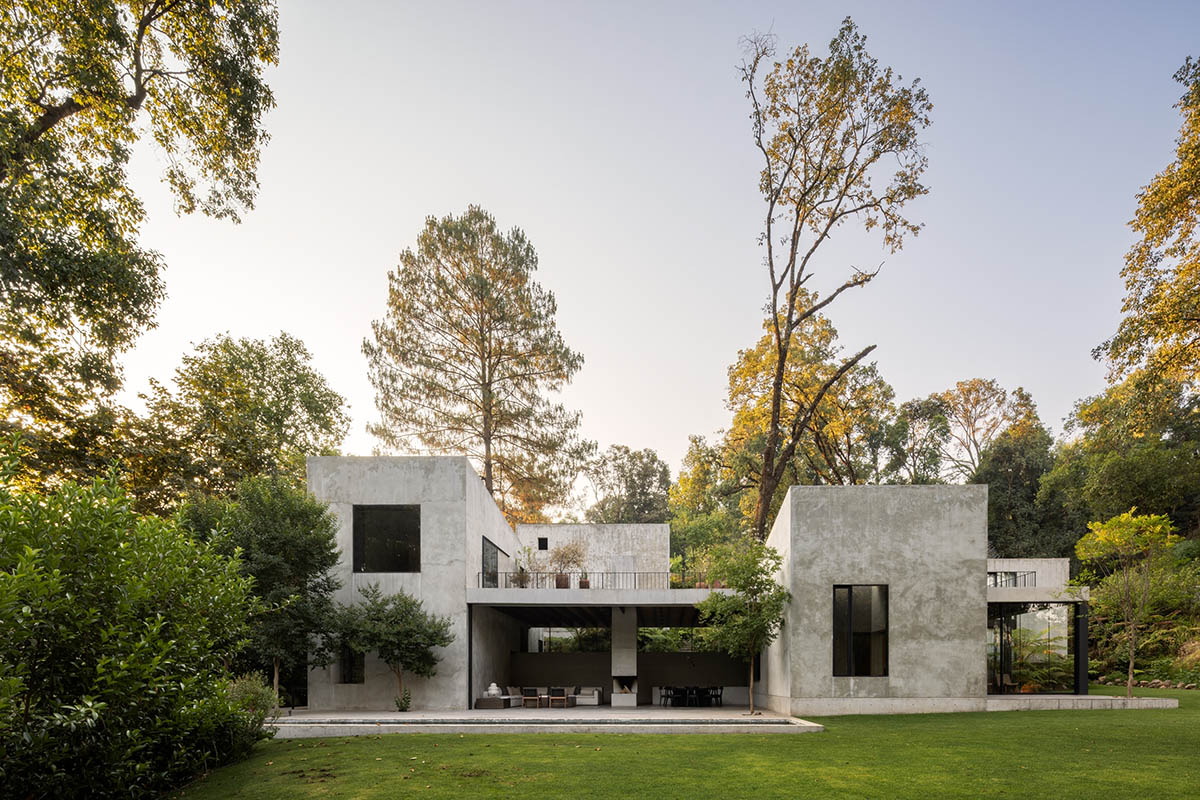
The core framework of the house is made up of the volumes, which house the private areas and provide regulated views through well-placed windows. These enclosed spaces are used for family time, cooking, and relaxation.
Four separate solid volumes are represented. One has two bedrooms with mirrors. Another has a family room or TV that can be used as an extra place to sleep. The ground floor kitchen, the intermediate level study, and the top floor master bedroom are all located in the third volume.
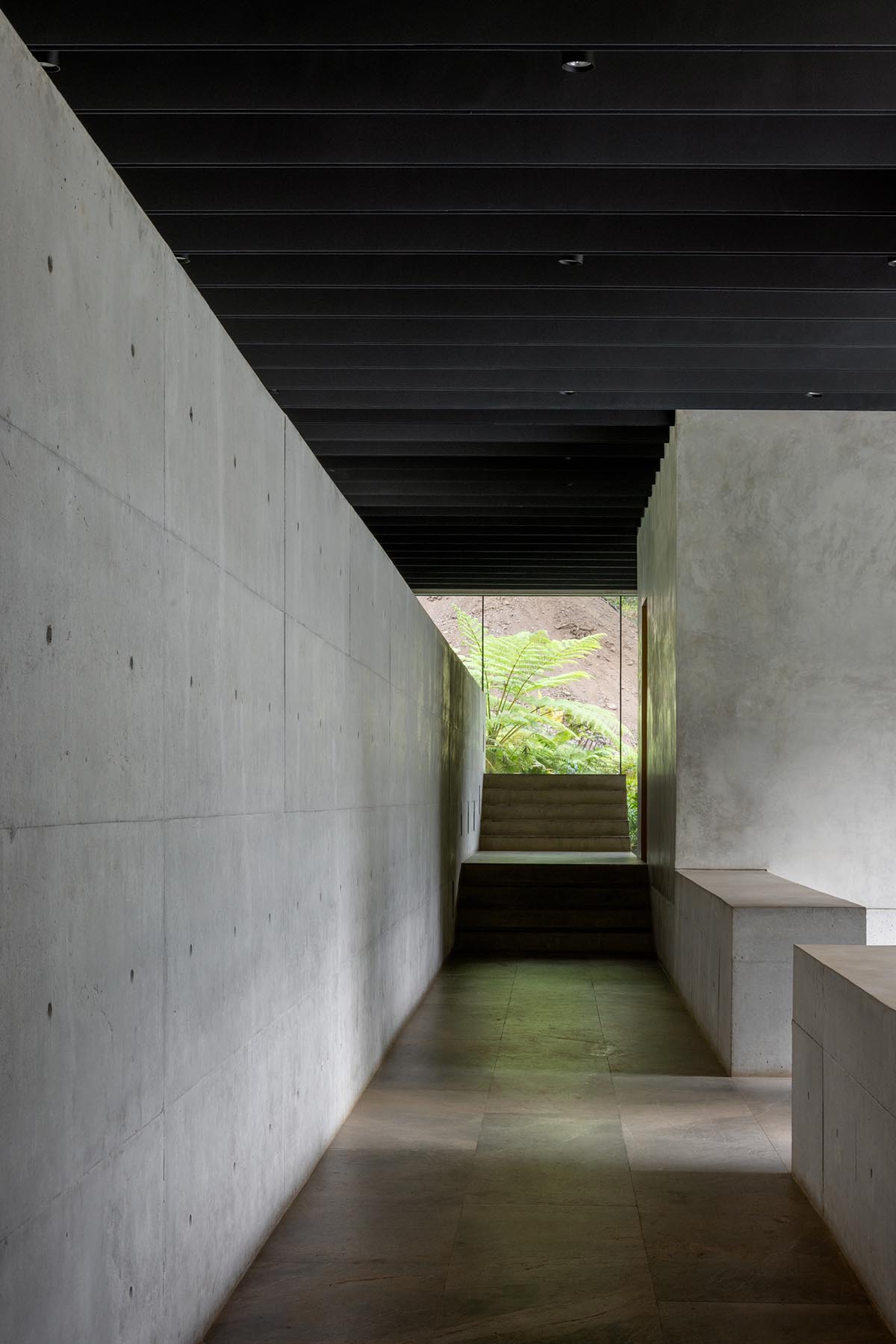
The cistern, mechanical room, service spaces, and parking are located in the fourth, which is distinct from the others. Three of these volumes, along with the main fireplace, which represents the home's hearth and major meeting place, serve as anchors for the roof.
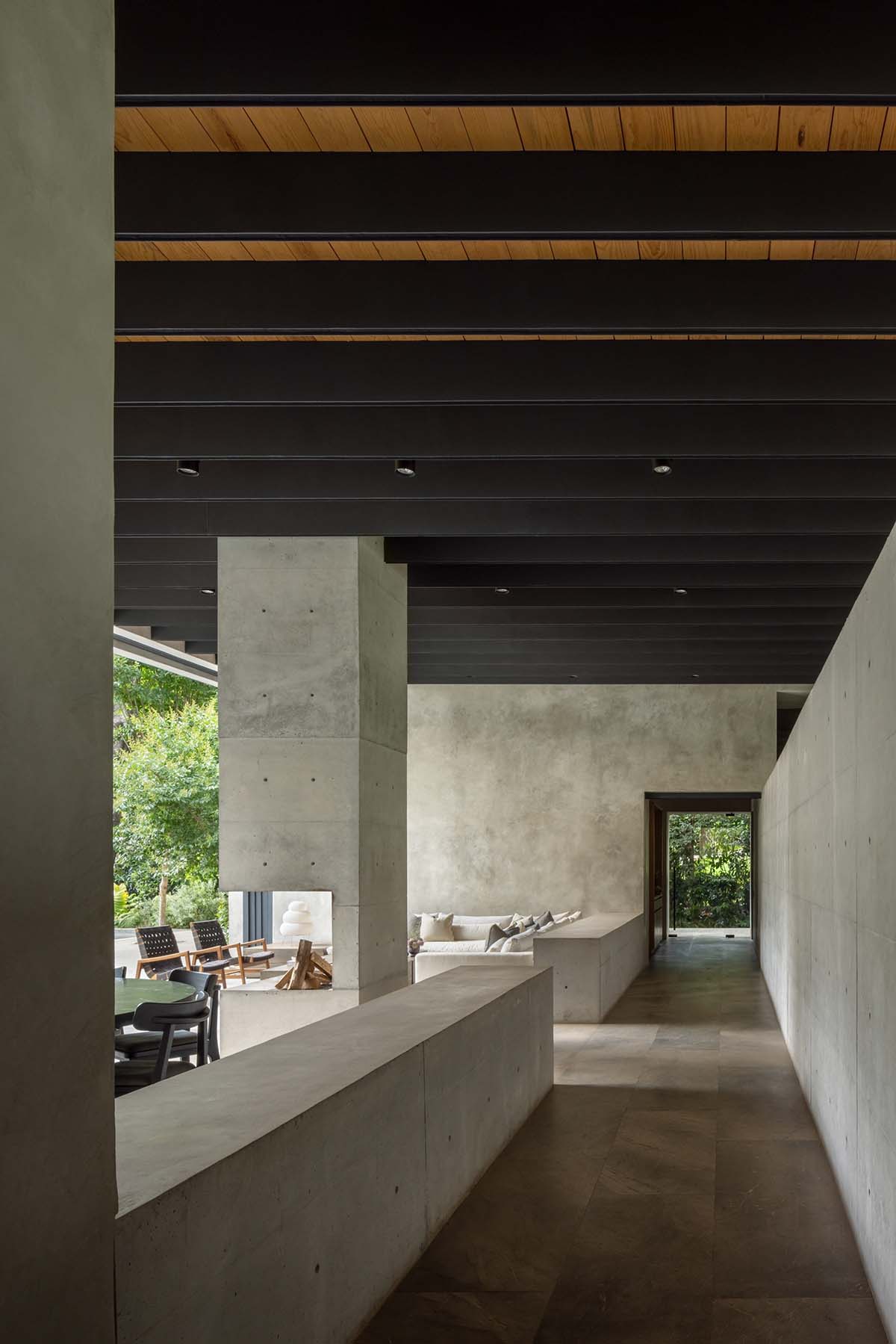
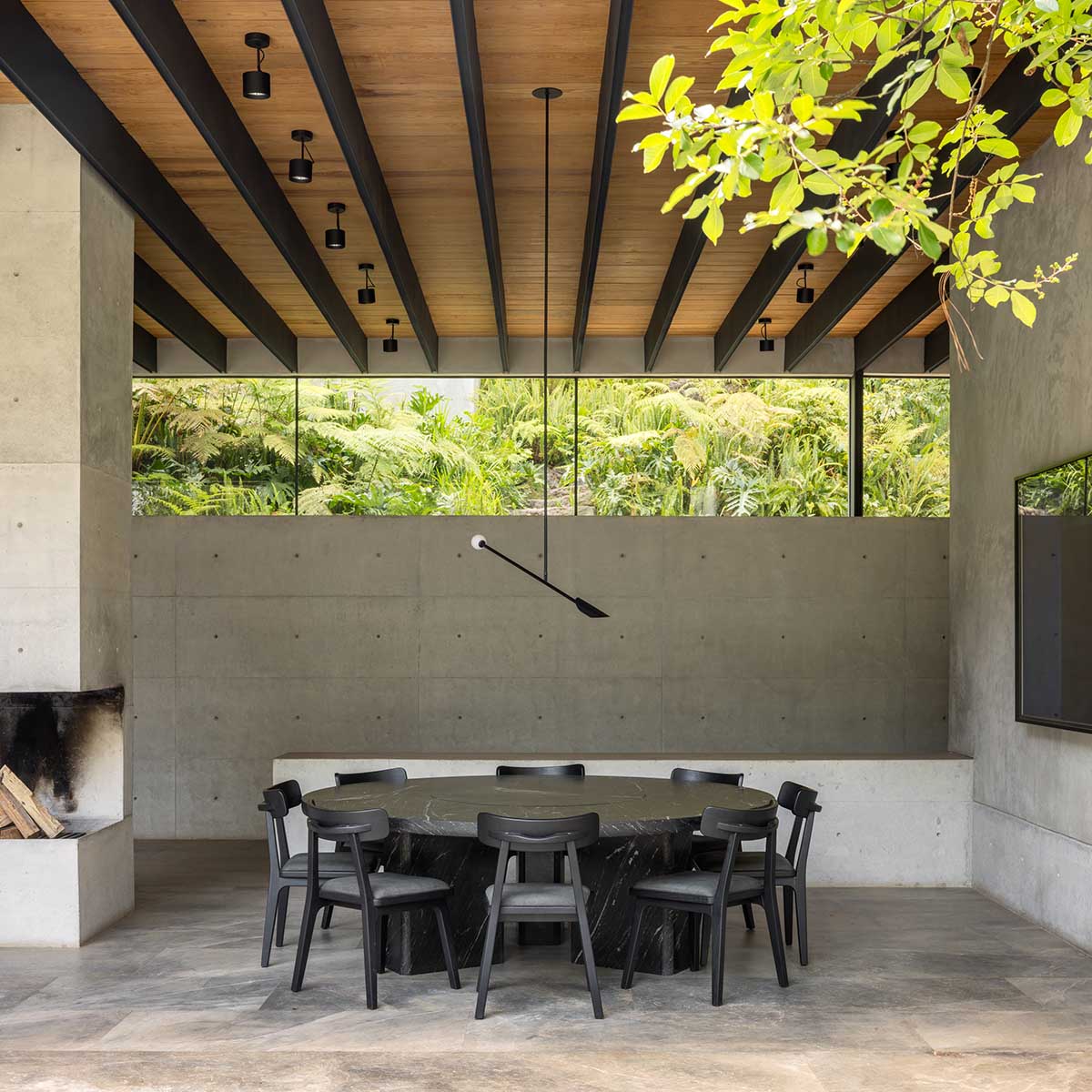
The living and dining areas, as well as a second playroom or children's sitting area, are all part of this structural design that defines the public and communal zones. This area has a direct link to the family room and garden and is transparent on all sides.
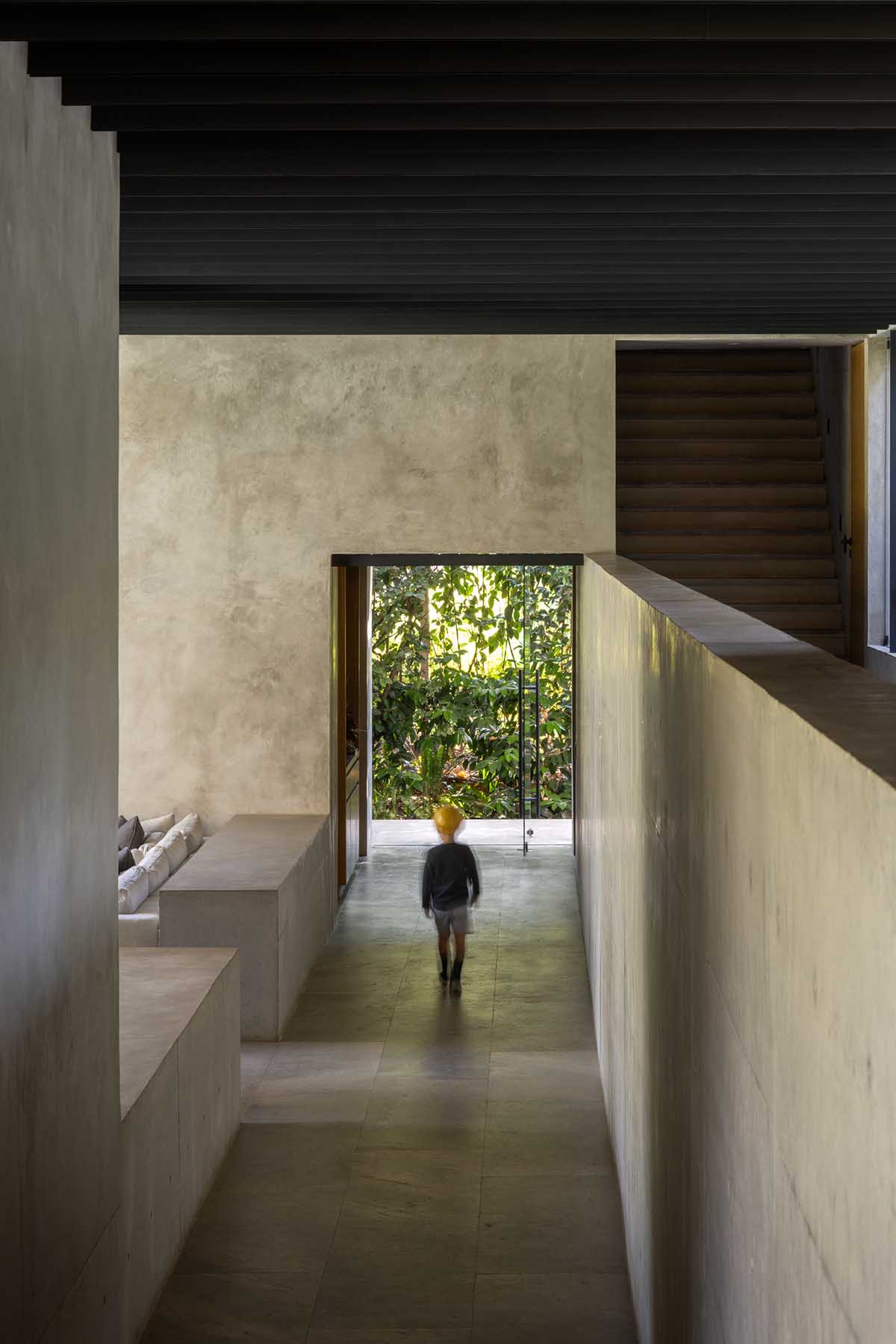
The living and dining room is defined by a floor-to-ceiling window that is 3.6 meters high and 9.6 meters long. This expanse of glass, which is divided into four sliding panels, opens completely to create a covered outdoor patio when the frames vanish into one of the adjacent volumes.
This method made it possible to create a single, central living and dining space that seamlessly blended indoor and outdoor environments.
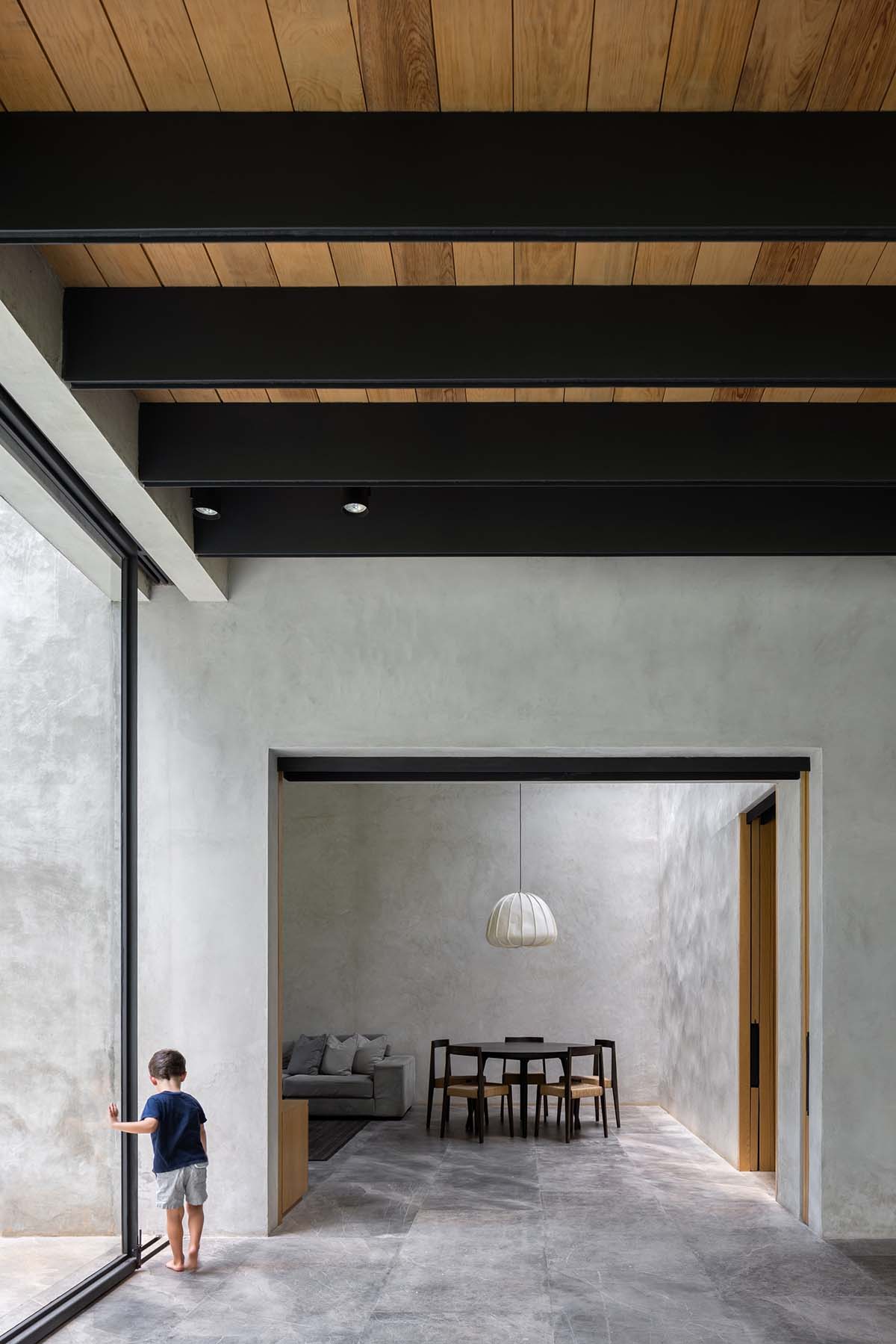
The exposed concrete base on which the entire house is built acts as both an elevation and a foundation, forming a thermal barrier that reduces moisture transfer. The smooth, locally sourced stucco that covers the brick walls is supported by its base.
Rainwater collection is made easier by the four volumes' sloping roofs, which are covered in flat clay tiles. The lightweight roof, on the other hand, stays flat and creates a private terrace that can be accessed from the family's three bedrooms. This extends the experience higher and gives inhabitants a fresh perspective on the trees.

The neutral-toned material palette creates a soft monochromatic backdrop that draws attention to the surrounding verdant surroundings.
By concentrating attention on the natural environment, these decisions allow the forest, plants, rain, and surroundings to become an essential part of the space's experience.
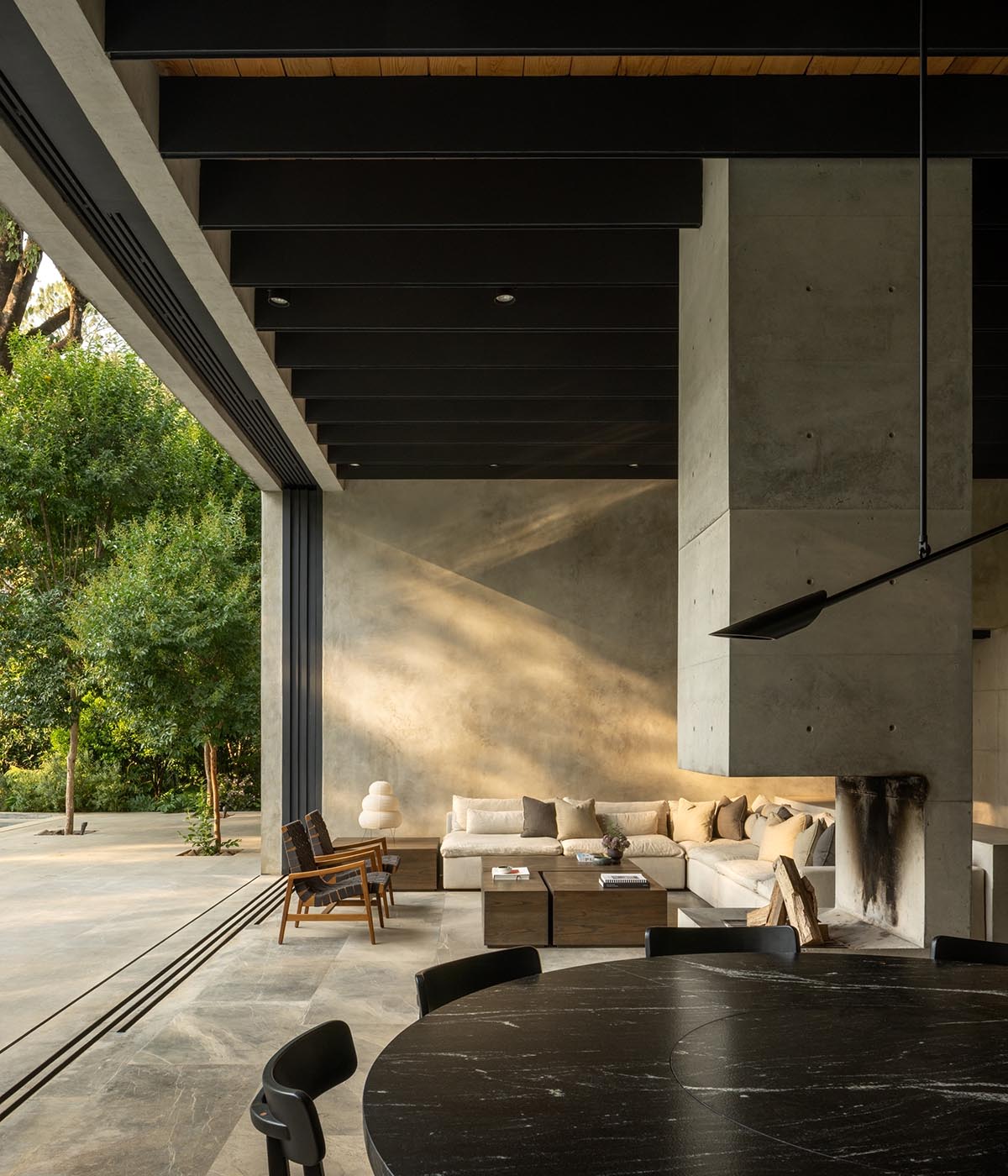
Light materials were utilized for the inside in accordance with this philosophy. The gentle texture of the walls is complemented and contrasted by textiles, and simple, traditional furniture items were chosen to avoid overpowering or upsetting the sober language of the architecture and surrounding landscape.
Warmth in both appearance and tactile feel is enhanced by the harmony of traditional elements and unique pieces, which represents a design idea of simplicity and neutrality.
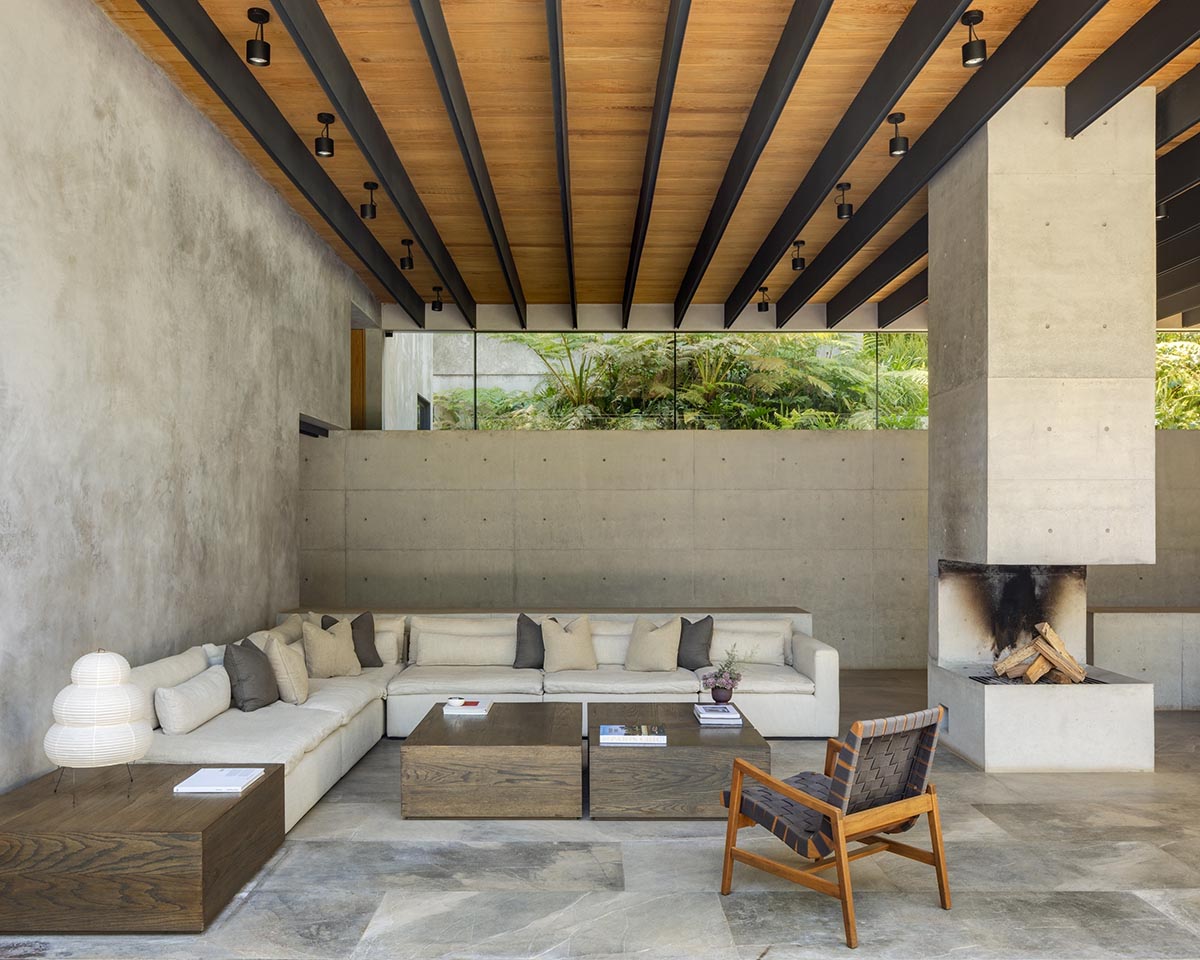
The palette is defined by solid elements like volcanic stone, black marble, and stained and natural oak. Additional texture is provided with textiles made of natural wool, cashmere for warmth, linen in a variety of weights and muted hues, and locally made palm weavings.
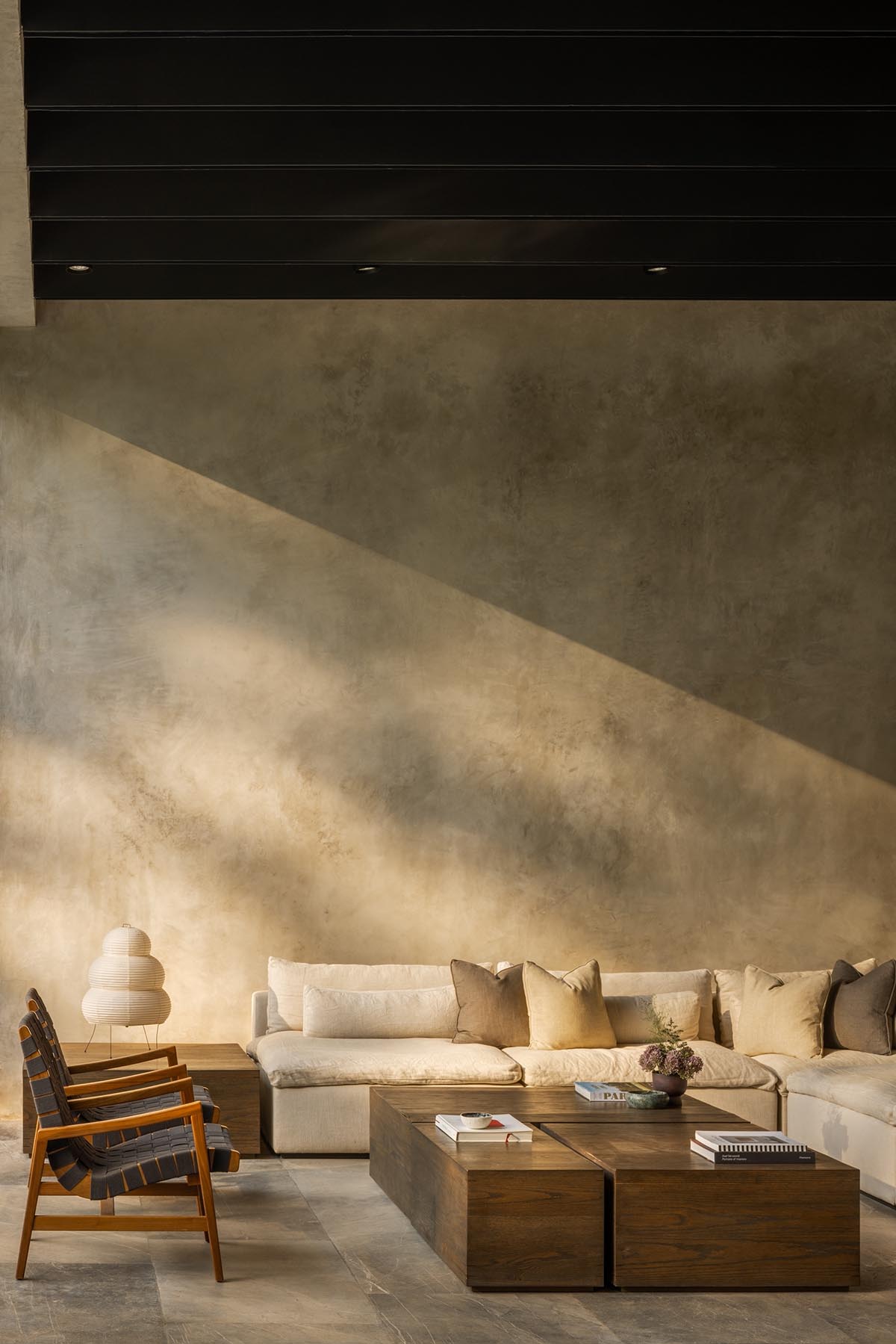
The proposal's elegance is enhanced by the furnishings' and decorative elements' volumetric language, which is based on basic geometries and respects form.
In keeping with the project's architectural and design goals, discrete lighting fixtures provide gentle, ambient light to complete the atmosphere.

Lastly, the house examines the difference between its shape, its close link to the surrounding surroundings, and its living areas. By combining architecture and surroundings into a single, seamless experience, these changes allow each space to be experienced organically.
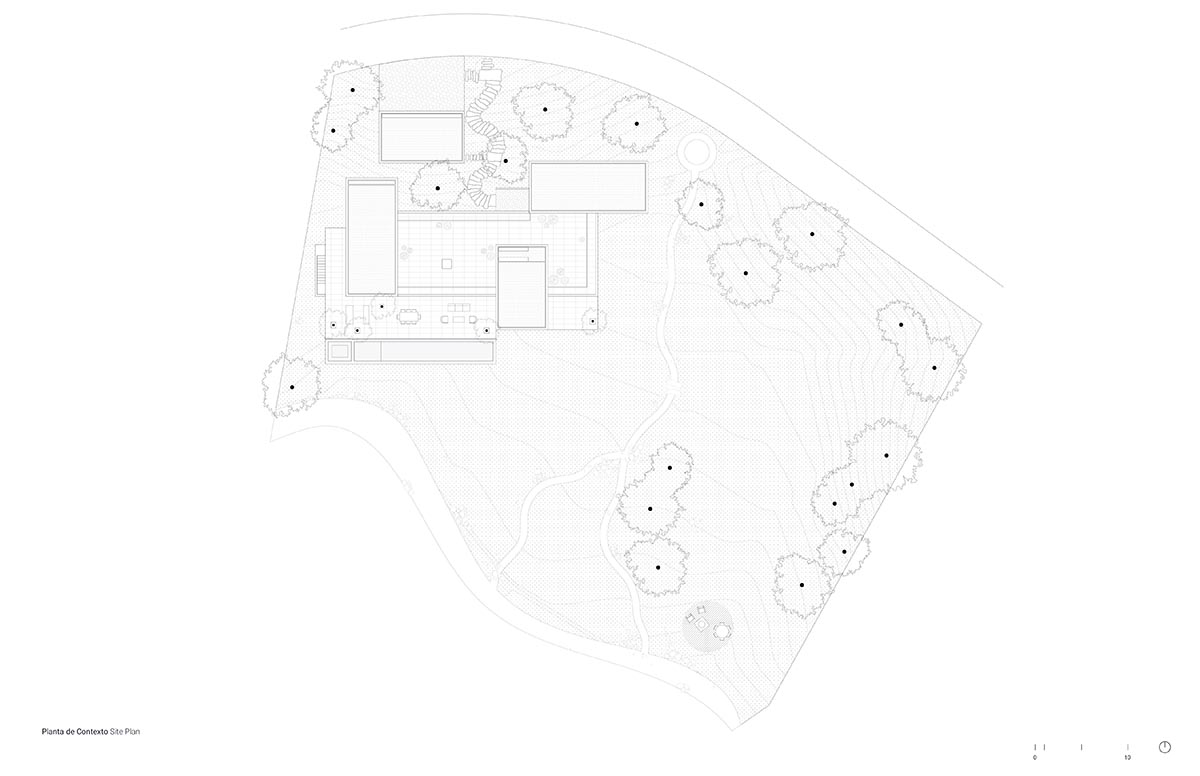
Site plan
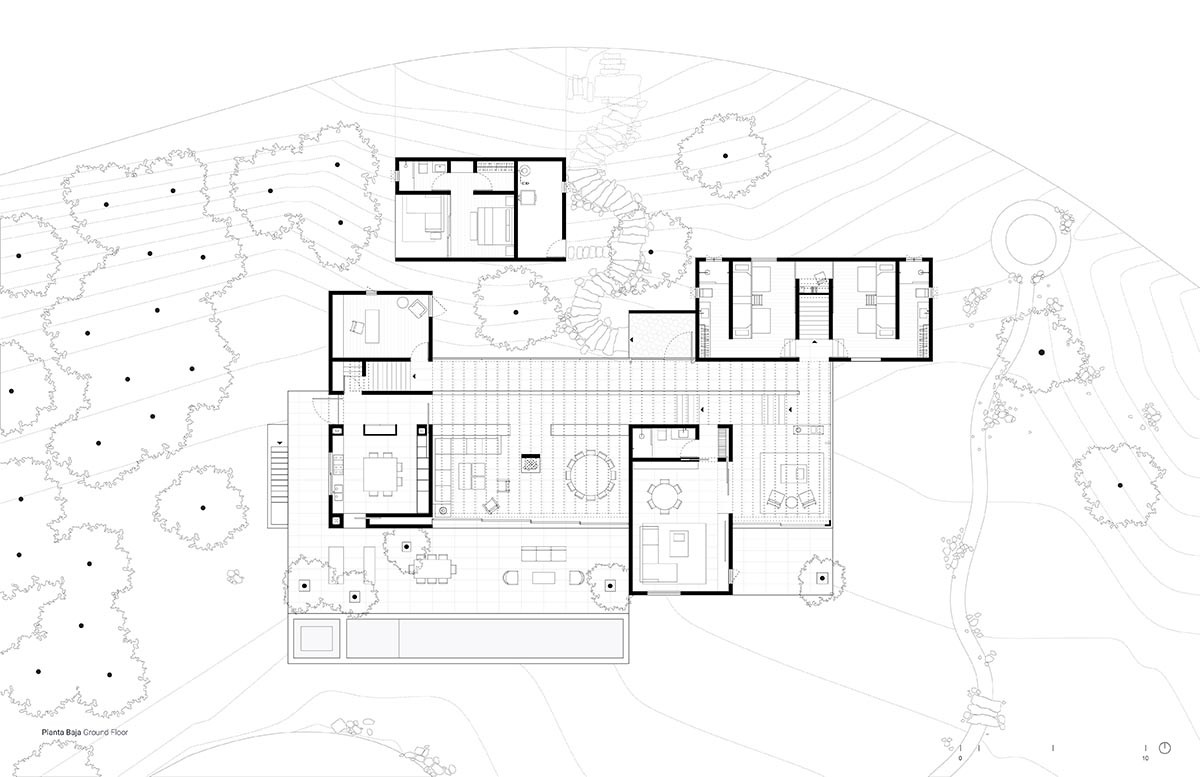
Ground floor plan
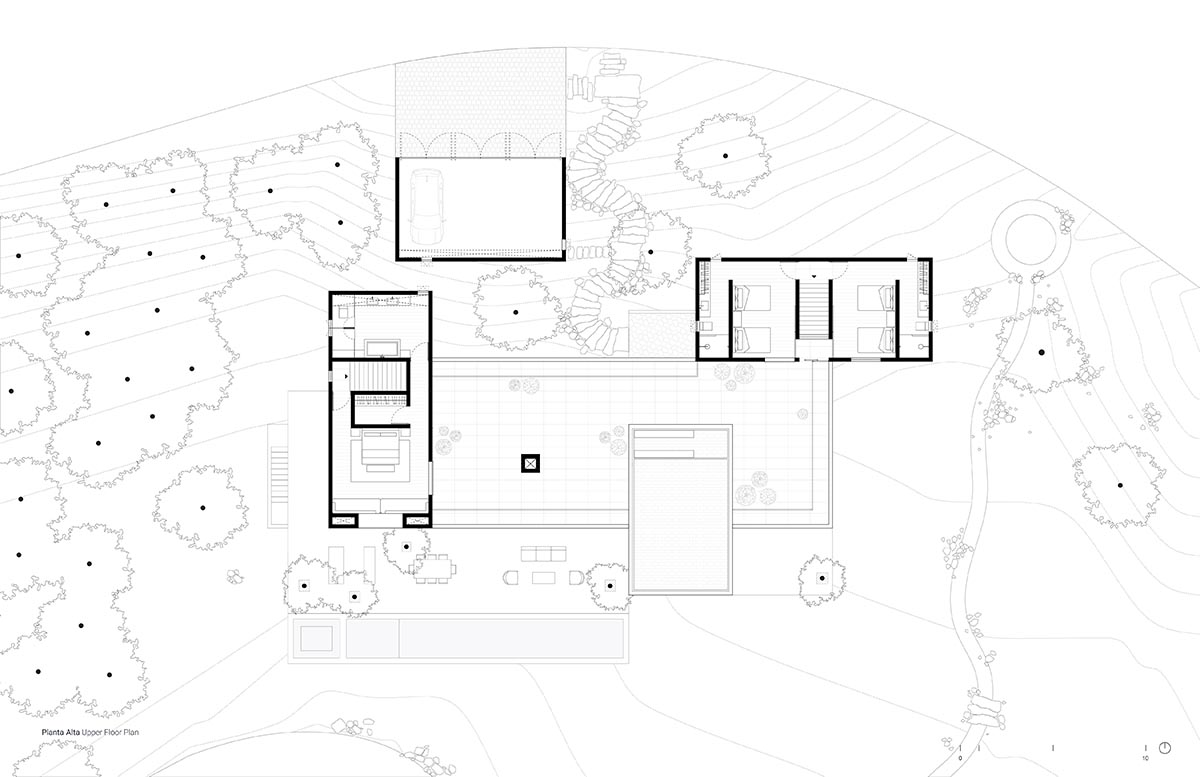
Upper floor plan
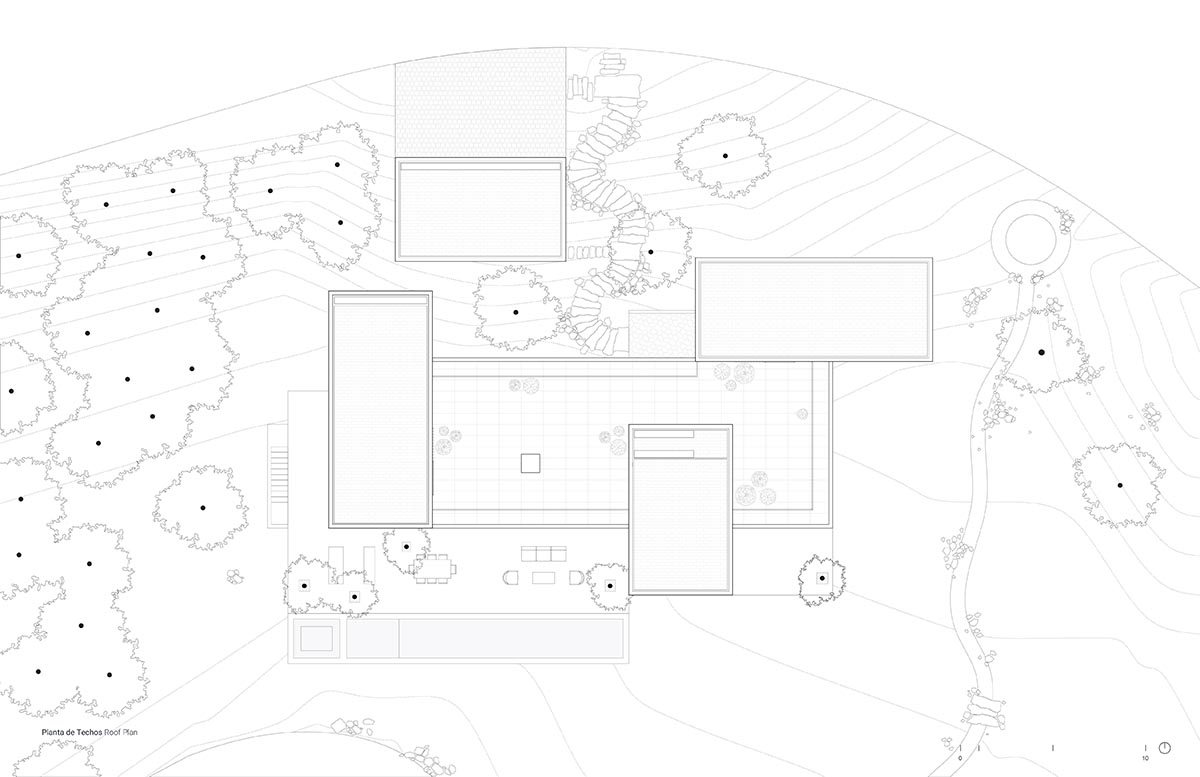
Roof floor plan
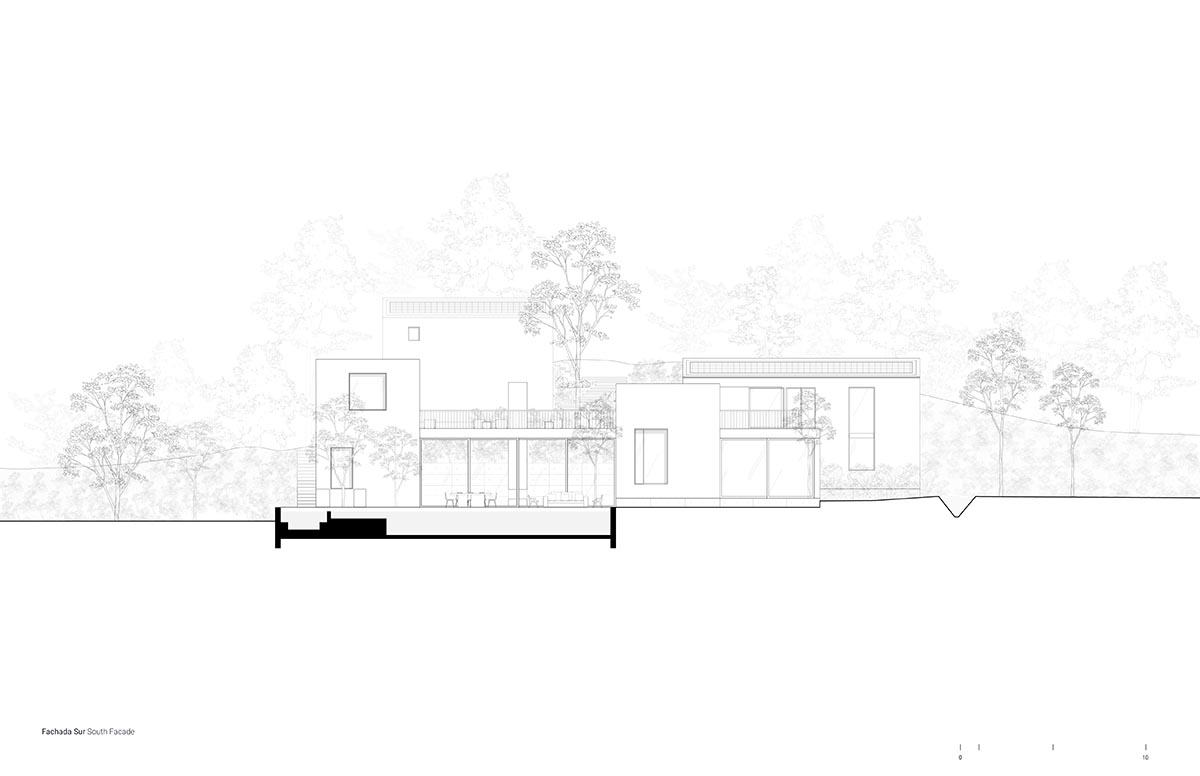
South façade
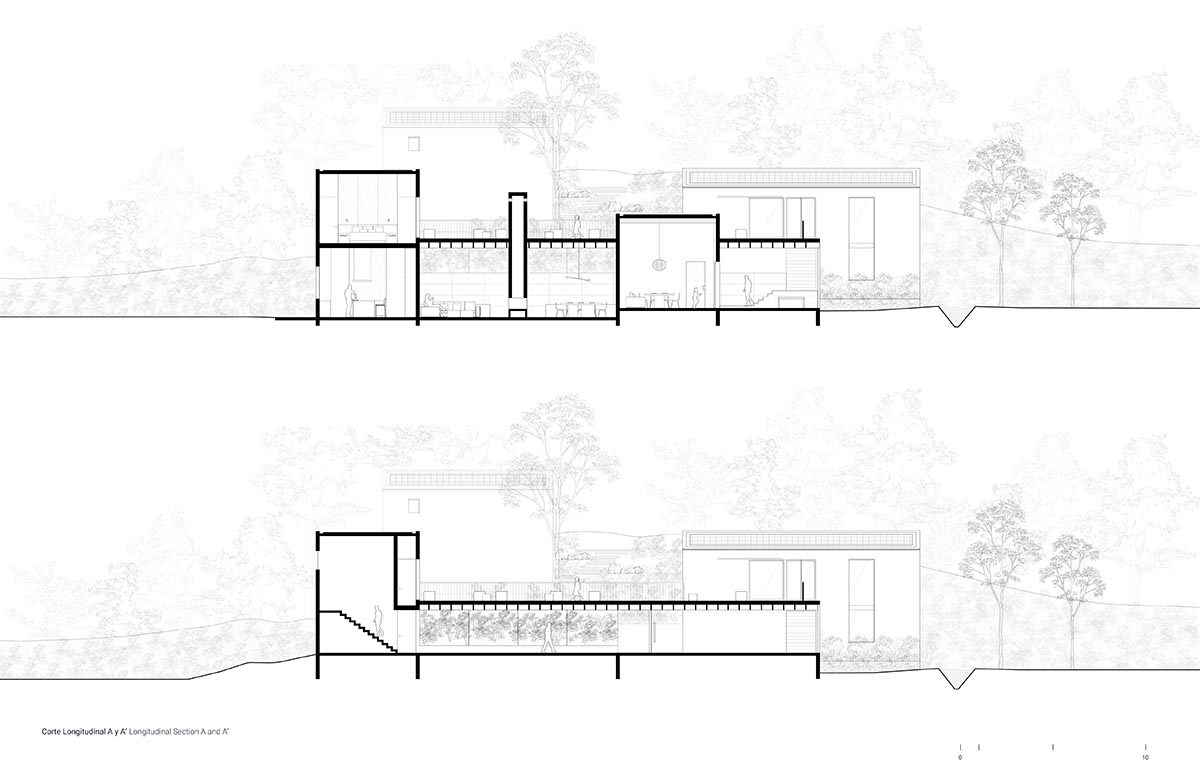
Longitudinal sections
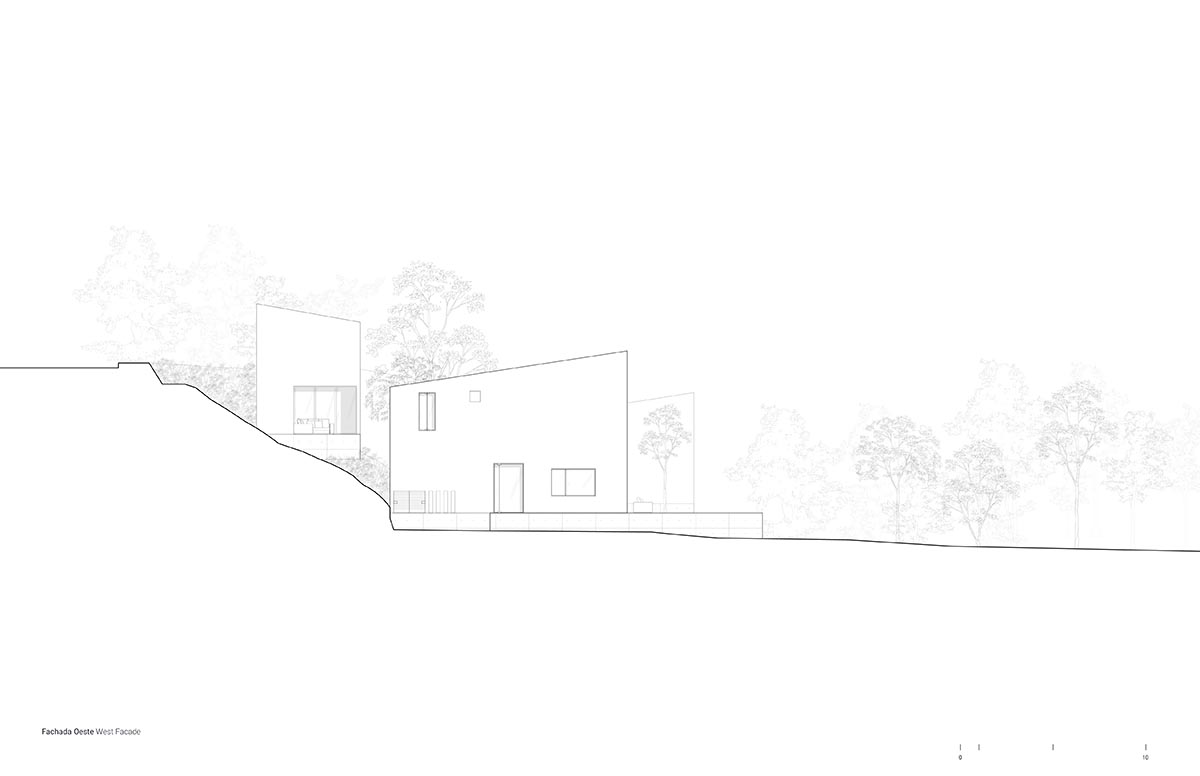
West façade
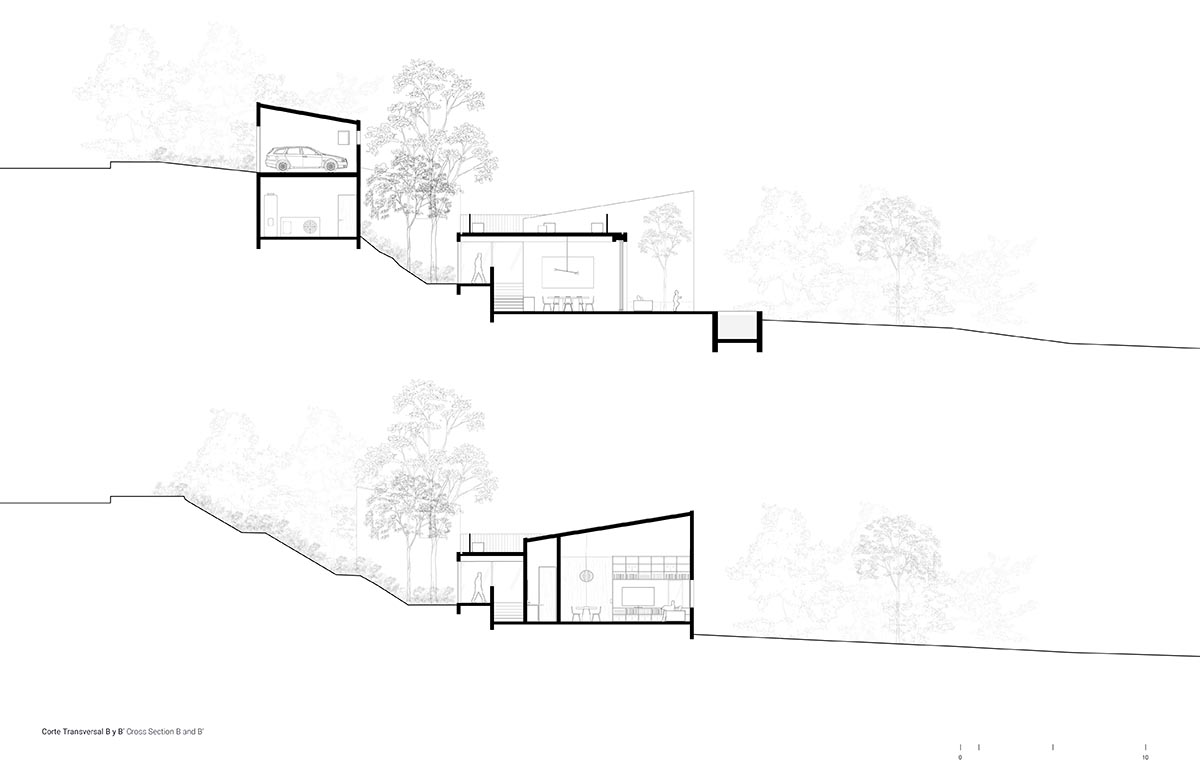
Cross sections
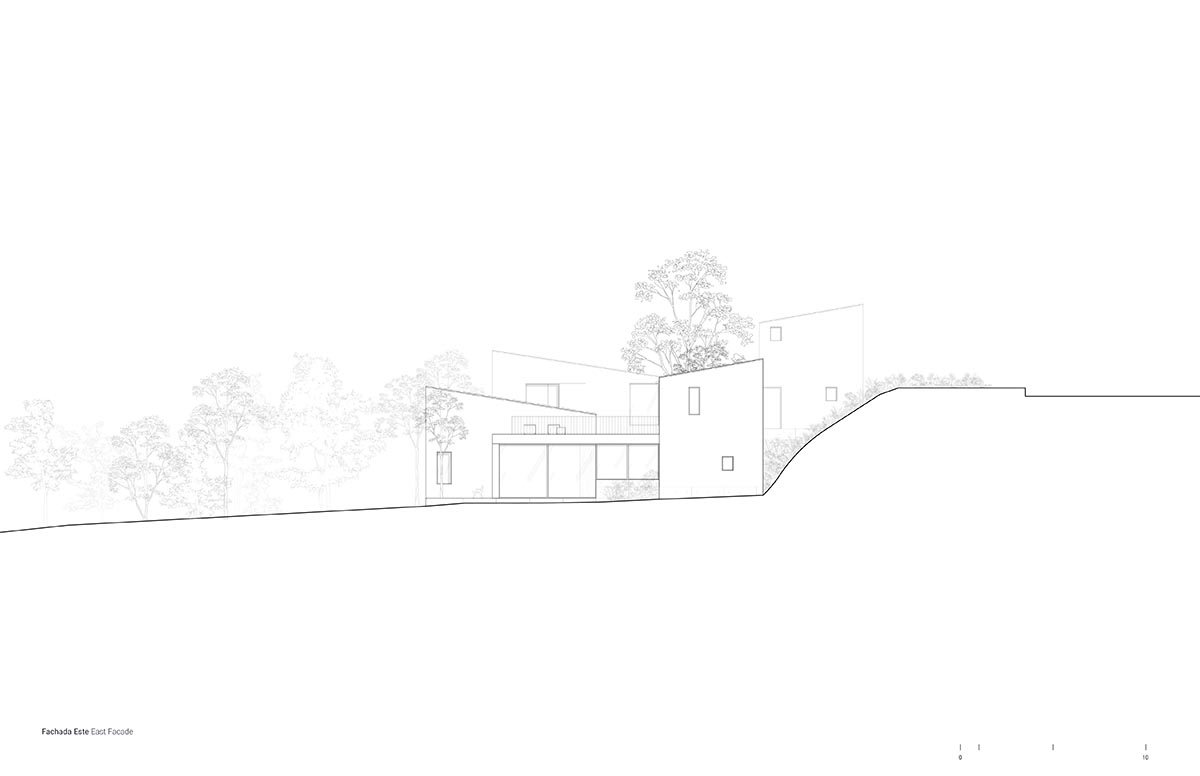
East façade
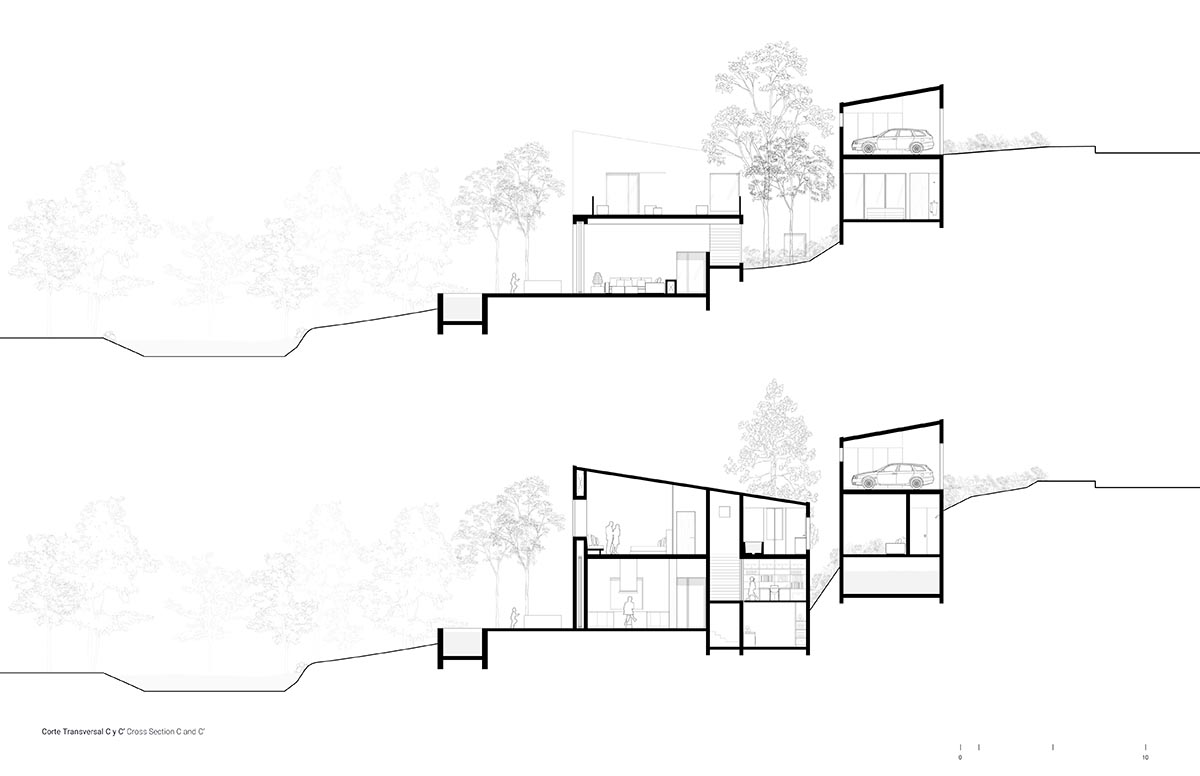
Cross sections
Project facts
Project name: Casa en Avándaro
Architects: ESTUDIO Ignacio Urquiza Ana Paula de Alba
Location: Valle de Bravo, Estado de México
Area: 537m2
Completion year: 2024
Architect: Ana Paula de Alba e Ignacio Urquiza
Design team: Michela Lostia di Santa Sofia, Anet Carmona, Ana Laura Ochoa, Adán Salazar, Valeria González, Miguel Ángel Vega
Landscape: Genfor Landscaping, Tania Eguiluz
Interior design: Ana Paula de Alba
Furniture: Ana Paula de Alba, Rituales Contemporáneos, Perch, Allied Maker
All images © Rafael Gamo.
All drawings © ESTUDIO Ignacio Urquiza Ana Paula de Alba.
> via ESTUDIO Ignacio Urquiza Ana Paula de Alba
ESTUDIO Ignacio Urquiza Ana Paula de Alba house residence residential