Submitted by WA Contents
Sumayya Vally reimagines London's heritage building as "an ongoing choreography of space"
United Kingdom Architecture News - Nov 07, 2025 - 05:27 3238 views
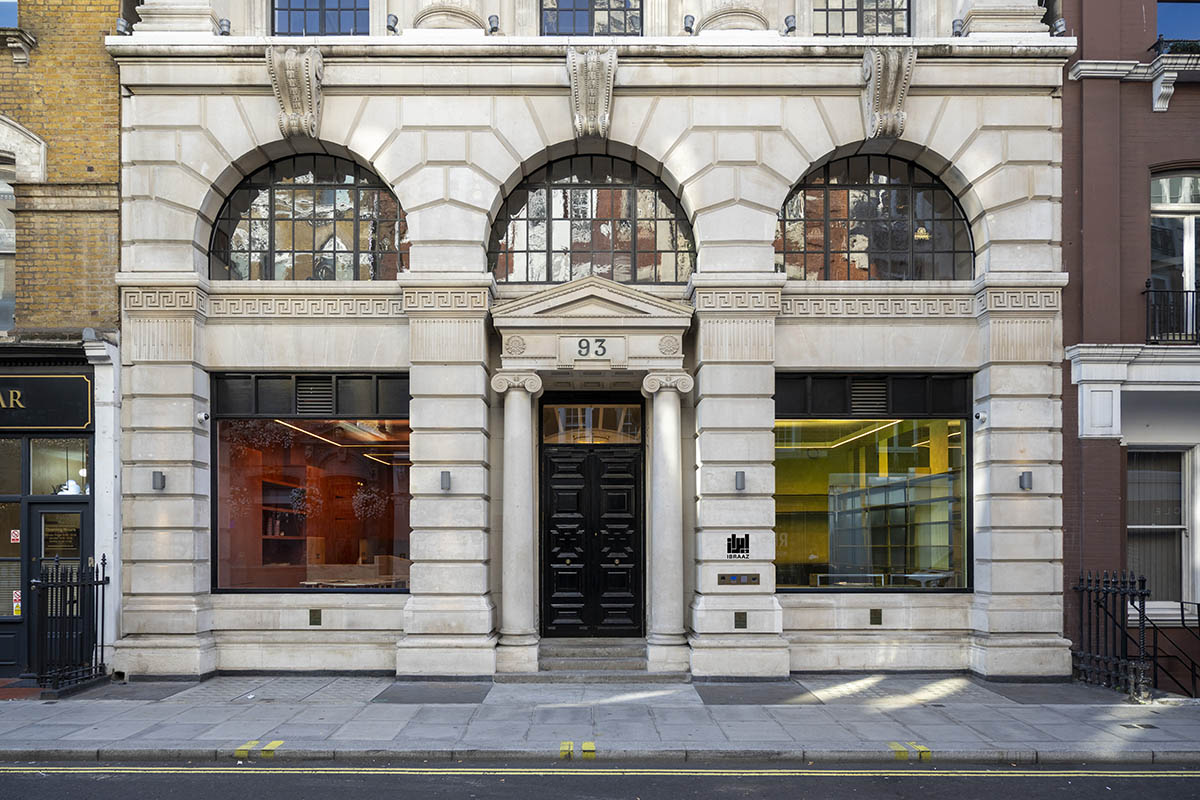
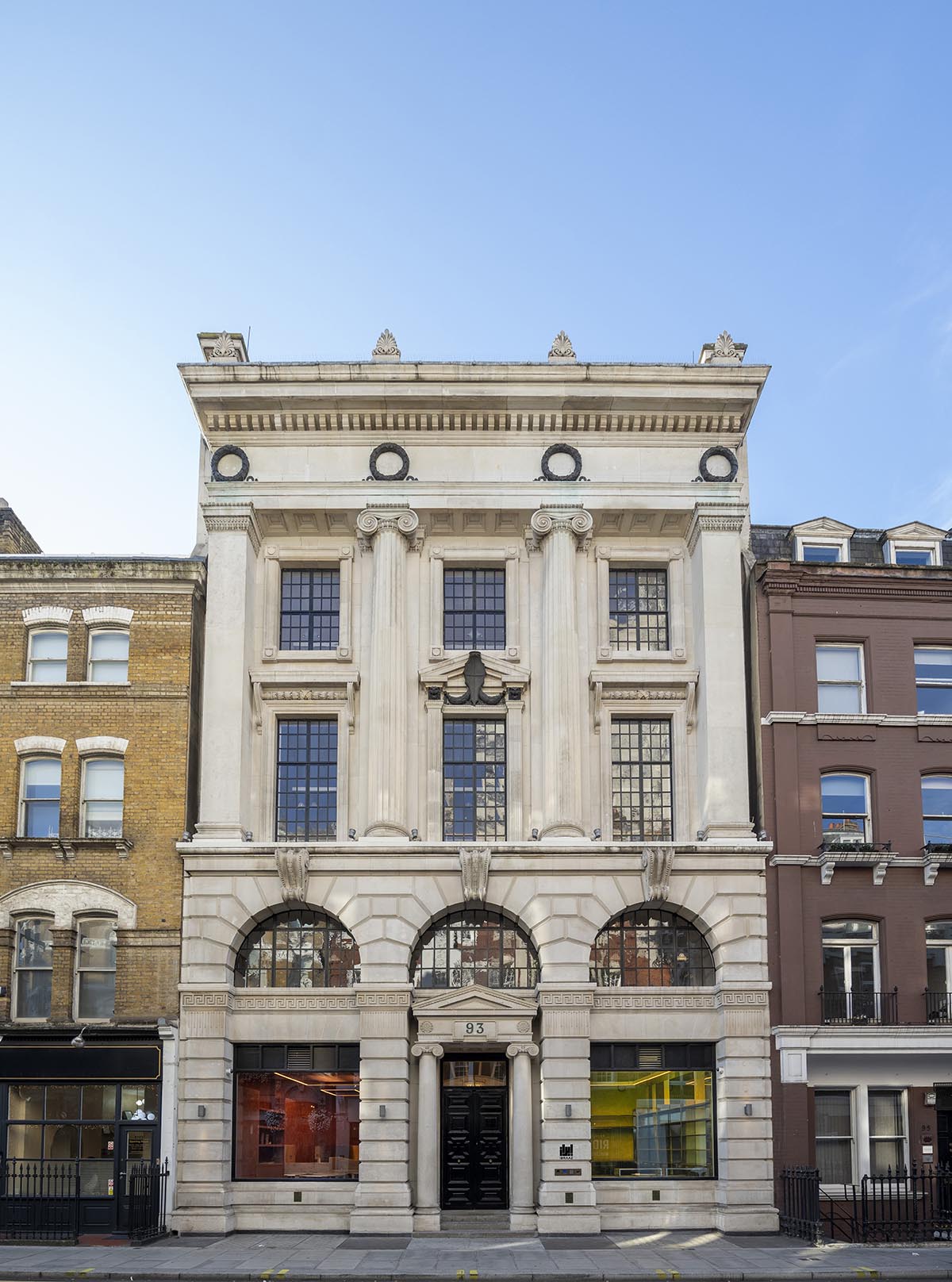
South African architect Sumayya Vally has reimagined a Grade II listed building as a new arts and cultural venue in the heart of London, United Kingdom.
Resident Architect Sumayya Vally, the founder and principal of Counterspace - whose work is renowned worldwide for articulating expressions of hybrid identities and spaces, conceptualized and designed the space at 93 Mortimer Street alongside MSMR Architects.
Vally envisioned Ibraaz as a dynamic, living, and evolving structure that changes over time, placing the institution inside a continuum of cross-border cultural activities, drawing inspiration from London's diverse spaces for gathering.
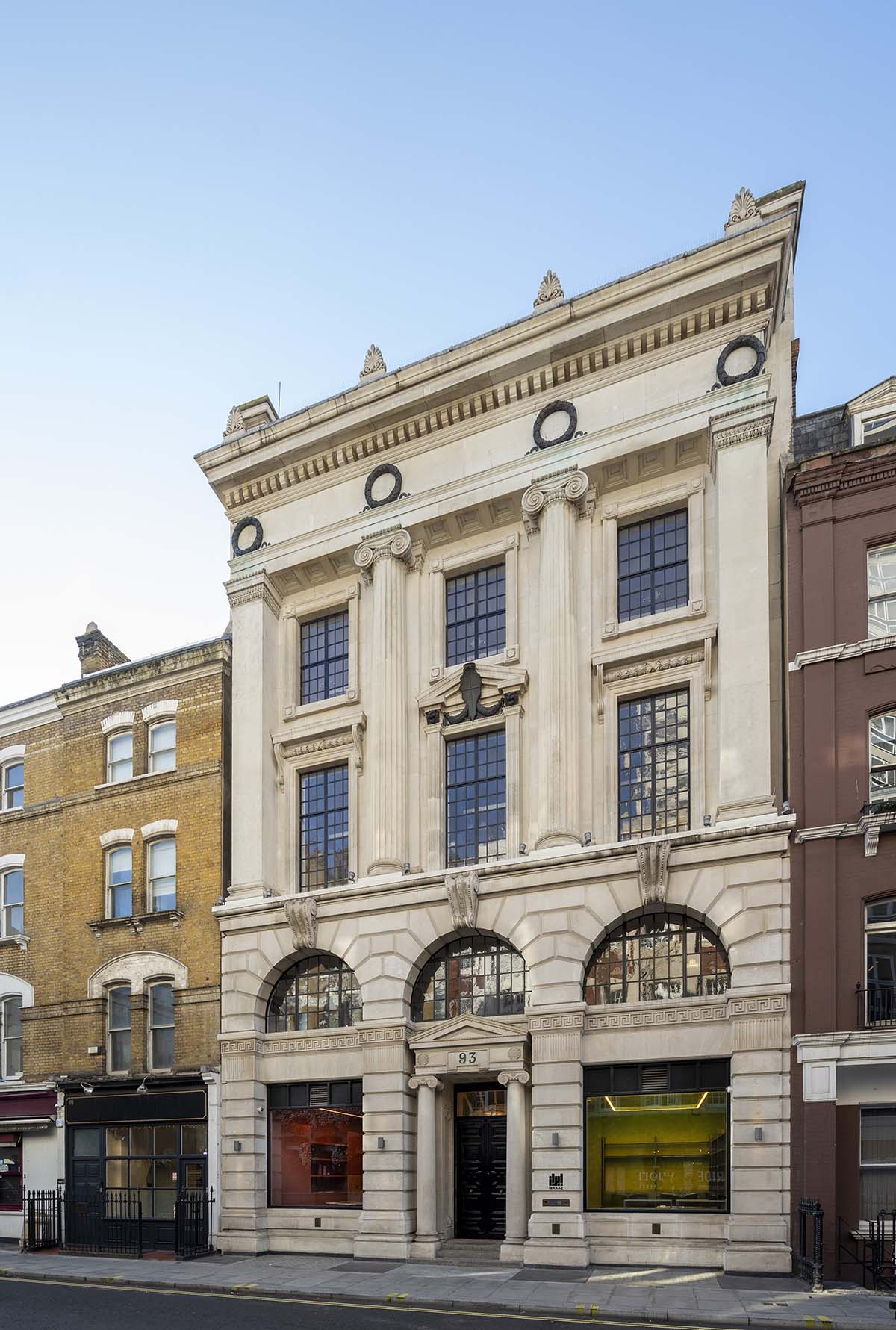
Ibraaz, the premier private cultural foundation committed to promoting artistic practice and critical thinking throughout the Global Majority, was opened to the public on 15 October.
"A gathering of gatherings"
The 929-square-metre headquarters will expand and change over time in response to how people use and occupy it. Across six floors, it is envisioned as a gradual unfolding, "a gathering of gatherings".
Fundamentally, the idea is more about an ongoing dance of space that is sparked by conversation, education, and interaction than it is about static architecture. The project is a living structure that will expand over time through response, adaptation, and use; many of its components allow different configurations to accommodate and develop a plurality of encounters.
Ibraaz, a project of the Kamel Lazaar Foundation, introduces an entirely novel kind of organization that is shaped by artists, intellectuals, and cultural practitioners and is based on compassion, generosity, and joy.
Since its founding in 2011 as an online platform devoted to Middle Eastern and North African visual culture, Ibraaz has developed to elevate the voices of creatives, artists, and thinkers. Ibraaz's message extends outside its walls through its editorial endeavors, both on screen and on page.
Ibraaz, which derives its name from the Arabic phrase meaning "to shine a light on" and is rooted in the cultural heterogeneity of our North African roots, is a courageous forum for discussion over dogma, inquiry over presumption, and culture as a means of recovering our common humanity.
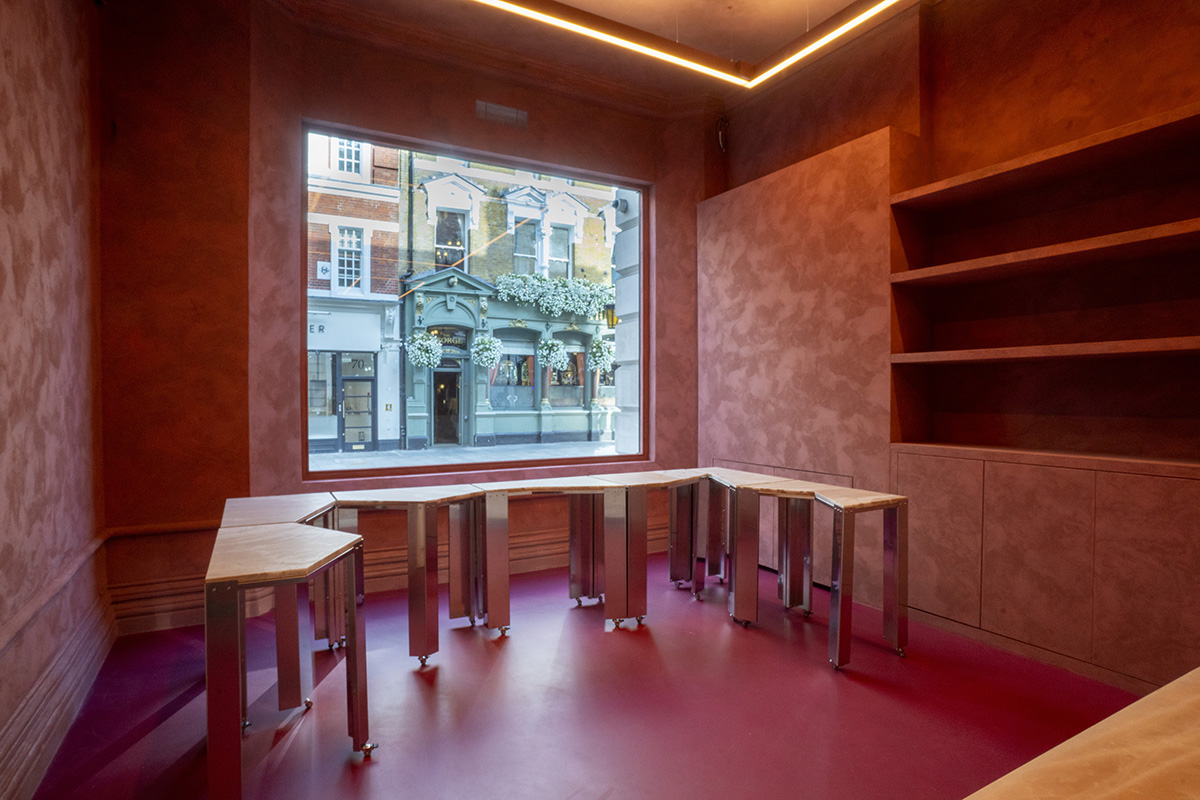
"When I was approached to work on the project, as we would begin to inhabit the building incrementally; I came to think of it as a gathering of gatherings—with the architectures of each space drawing from a typology of collective life: oula, maktaba, minassa, majlis," said Sumayya Vally.
"This first offering will expand and sediment with time, with the attitude of something akin to a city rather than a building — each new layer a trace of our evolving relationships and the communities that gather here," Vally added.
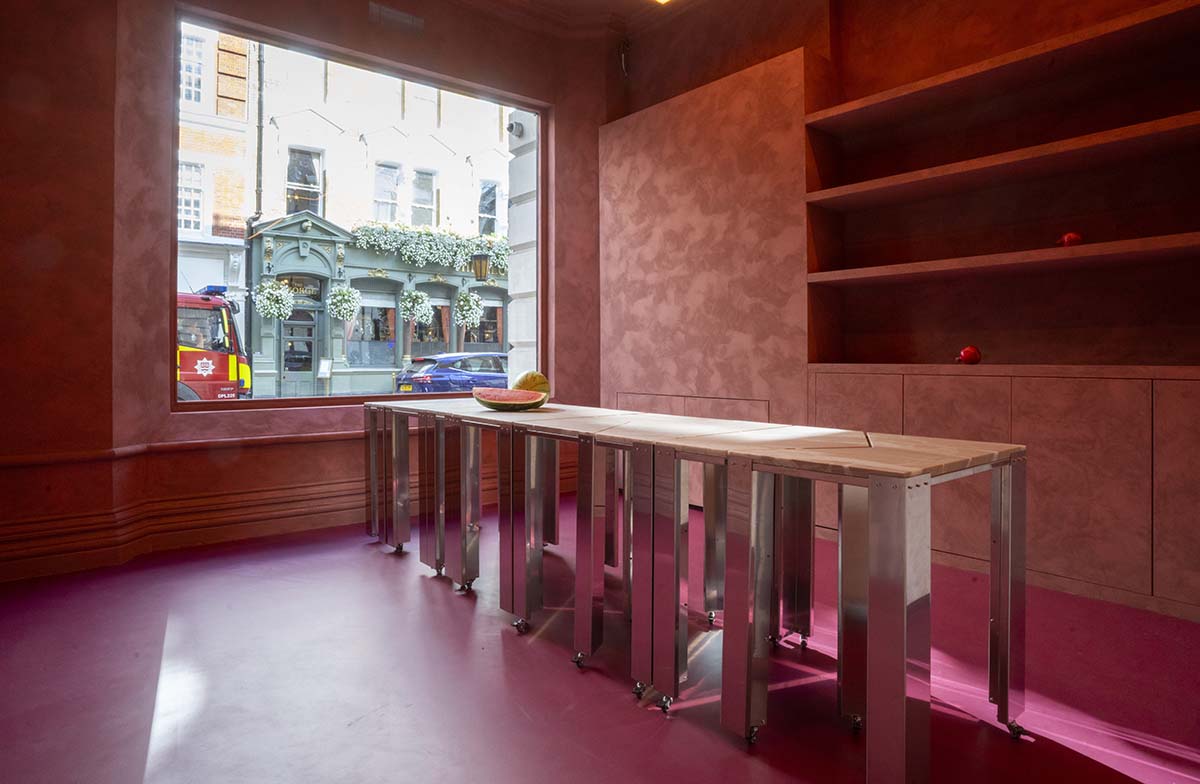
"I love that the spaces at Ibraaz are conceived through the language of the home — a kitchen, a majlis, a prayer room, a library. The infrastructures of these spaces are designed to host artists’ works that, at their core, are also about hosting others."
"Each space will carry the essence of its theme, so that the very structure of the institution becomes inherently architectural, inherently generous."
"I have always believed in fostering belonging within institutional spaces, and I believe this happens most powerfully when works are gently offered in formats that are resonant with our communities," she explained.
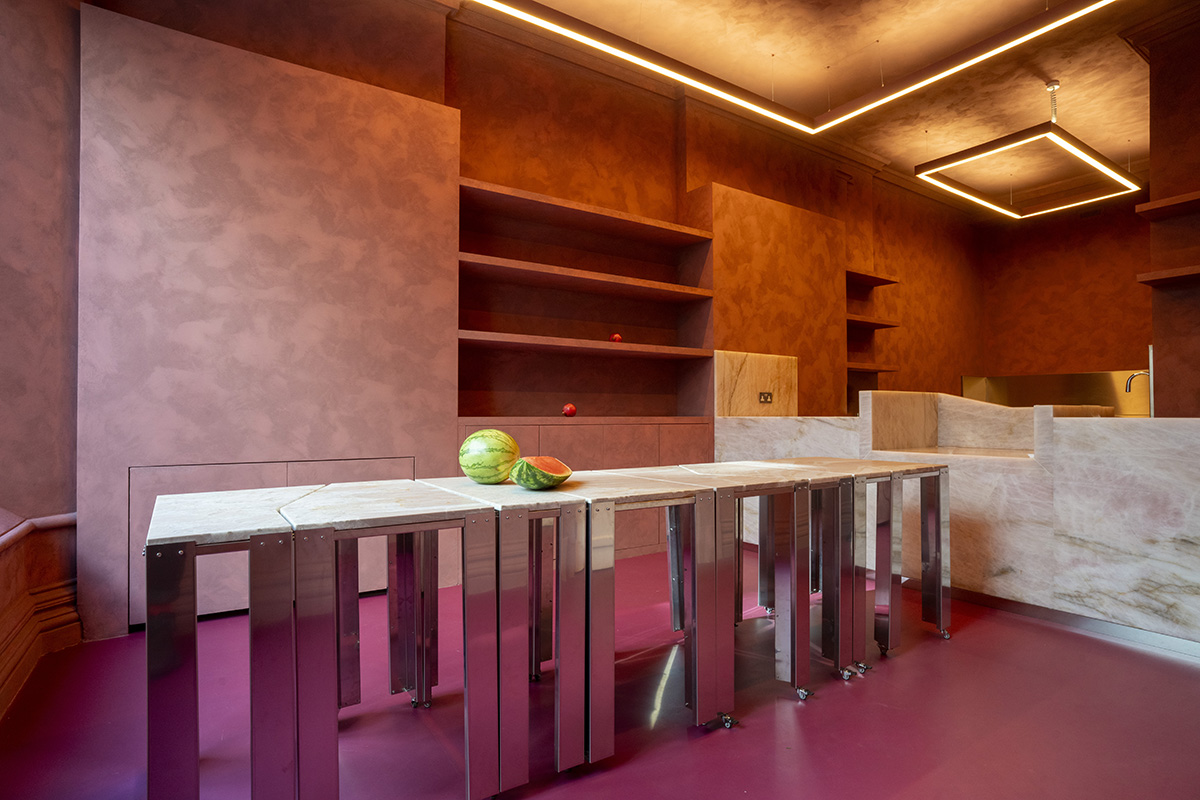
Vally's methodology expands upon her well-known work for the 2021 Serpentine Pavilion, in which she identified London's diasporic and immigrant hubs as dynamic repositories of identity.
In order to place the new headquarters within a continuum of cross-border cultural practices, Ibraaz expands this investigation to Tunisia, the foundation's birthplace. Building on the expertise of local fabricators, the initiative has so far incorporated partnerships between Counterspace and Blocksfinj in Beirut and Local Industries in Bethlehem, Palestine.
The design encourages flexibility and different configurations, drawing from gathering typologies that have long sustained community life throughout Africa and the Arab world. Because each area is made to accommodate a range of purposes, the building may naturally change as its community expands.
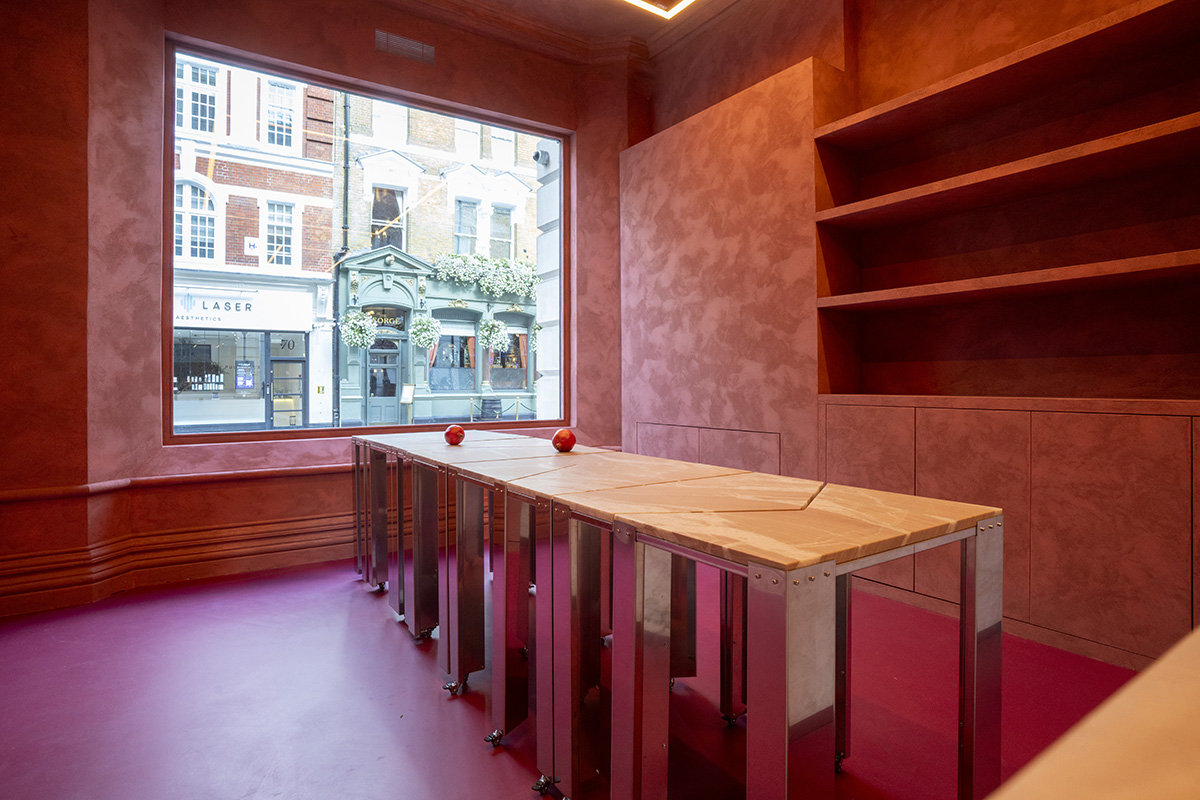
The Maktaba (bookstore) and Oula (café) are open invitations to the city at street level, providing an interactive facade that reflects Ibraaz's values of generosity, openness, and dialogue. The primary exhibition hall on the ground level is the Majlis (assembly space), which is also intended to be a gathering place.
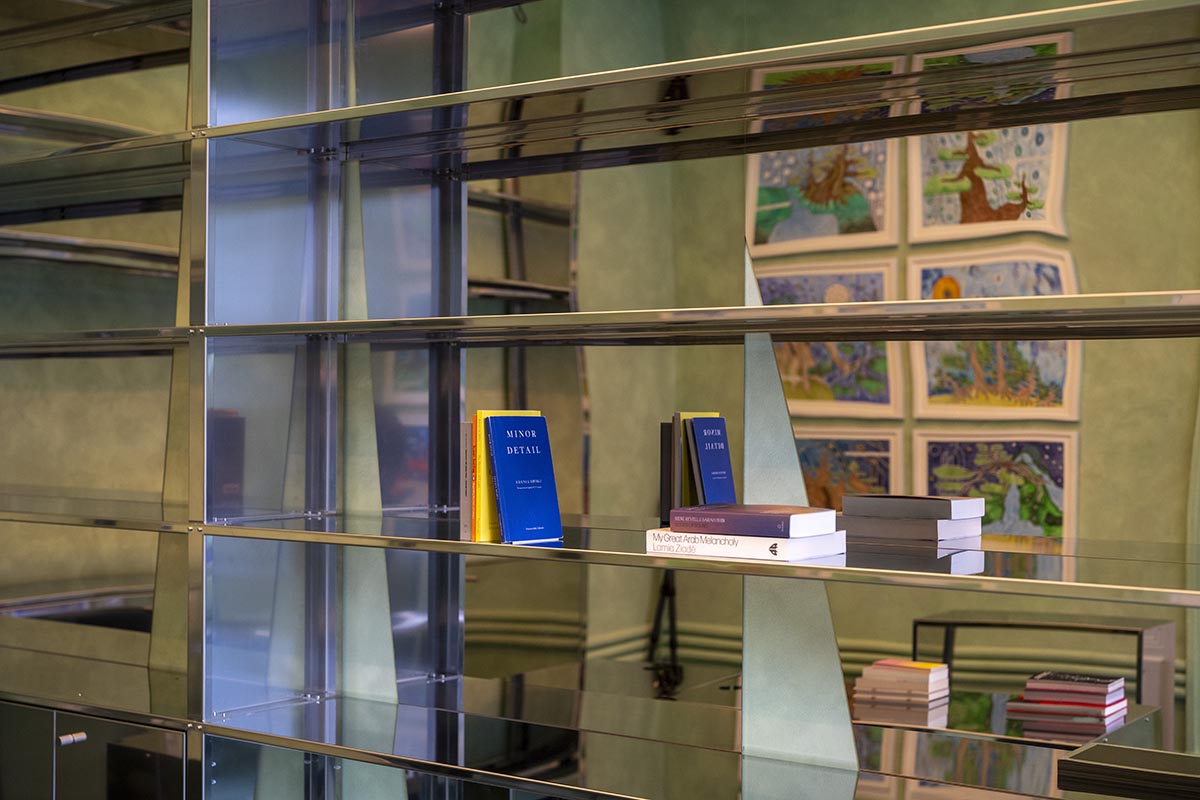
Minassa (platform), a theater for musical performances and movies, is located on the lower ground floor.Iqra, the library, is located on the second floor and invites people to interact, read, and reflect.
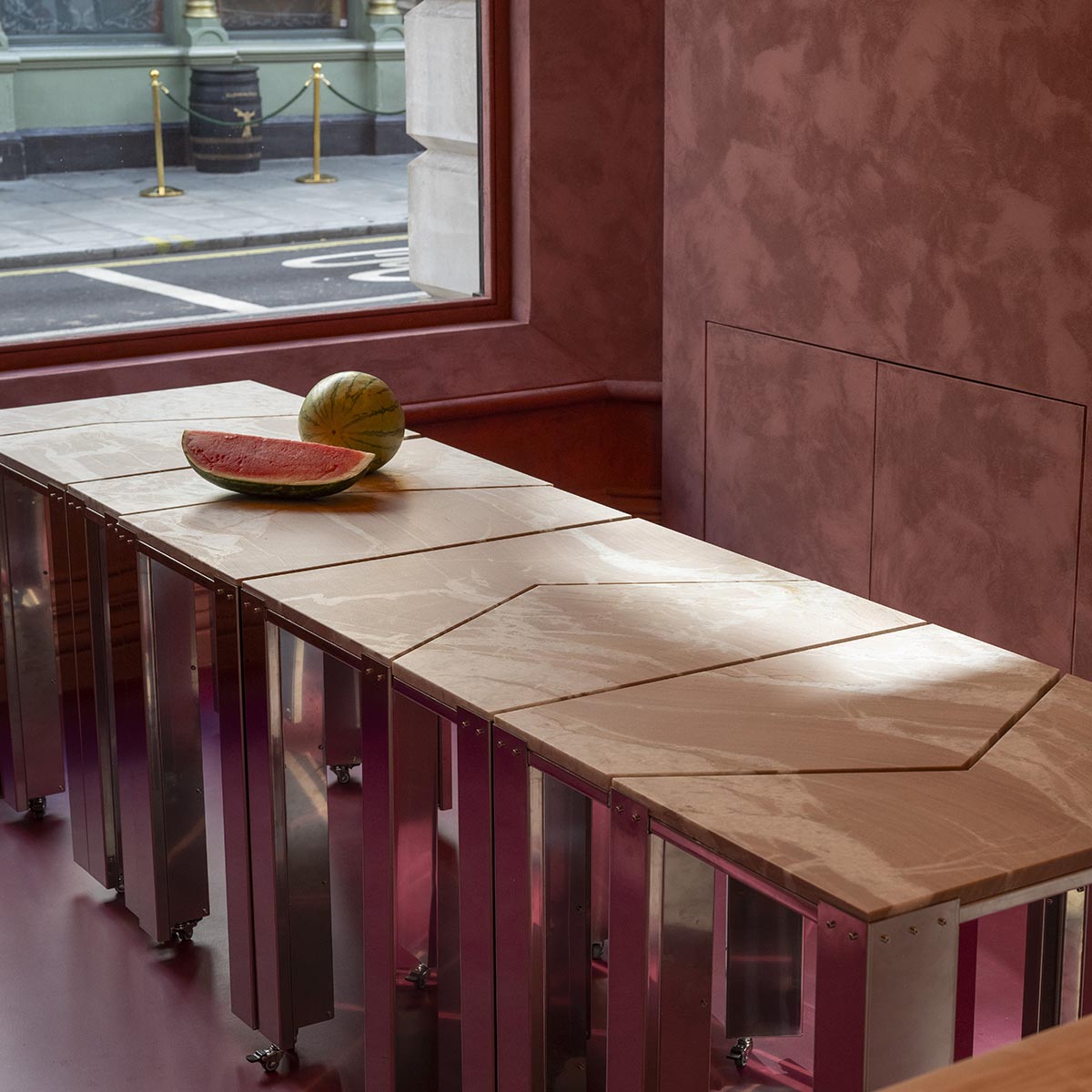
When combined, these areas provide an interactive and performative façade for Ibraaz that reflects the organization's values of transparency, giving, and communication.
The community will write the building's history. It is intended to accommodate meetings of various kinds, including ritual, discussion, exchange, and celebration, and to allow these events to gradually become entrenched in the space itself.
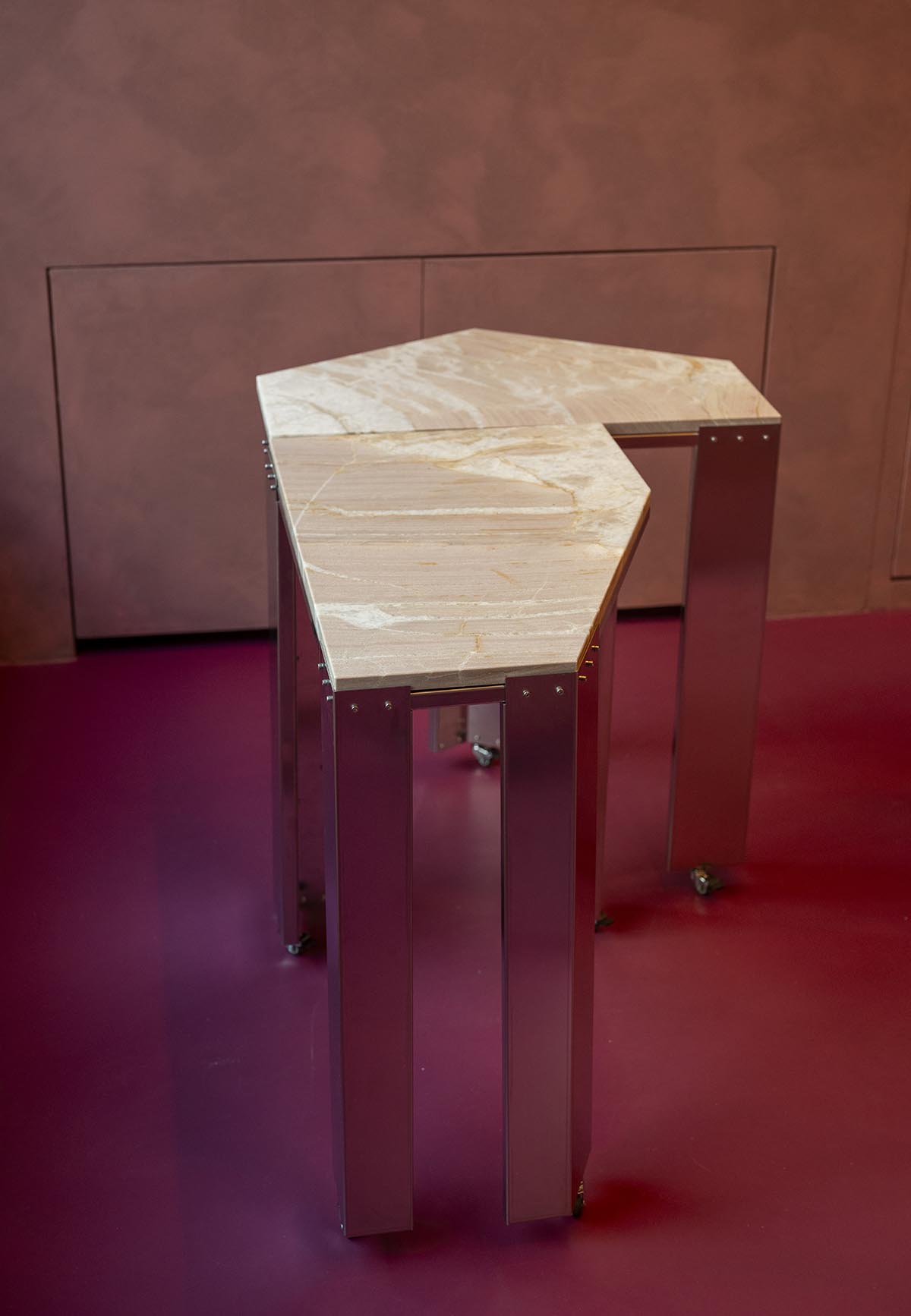
"It's design as sedimentation through time and space"
"Sumayya Vally and the Counterspace team are in a transhistorical dialogue with the neo-classical, Grade II listed architecture of 93 Mortimer Street. Their approach privileges fragments as a way of approaching the whole," said Shumon Basar, Curator and Strategic Advisor, Ibraaz.
"What’s quietly radical about how Ibraaz has engaged Counterspace to transform its new home is that instead of waiting until the entire building (which also includes the Venetian-like 43 Great Portland Street) is fully altered to welcome the public in, visitors will experience the gradual process of architectural change. It’s design as sedimentation through time and space," Basar added.
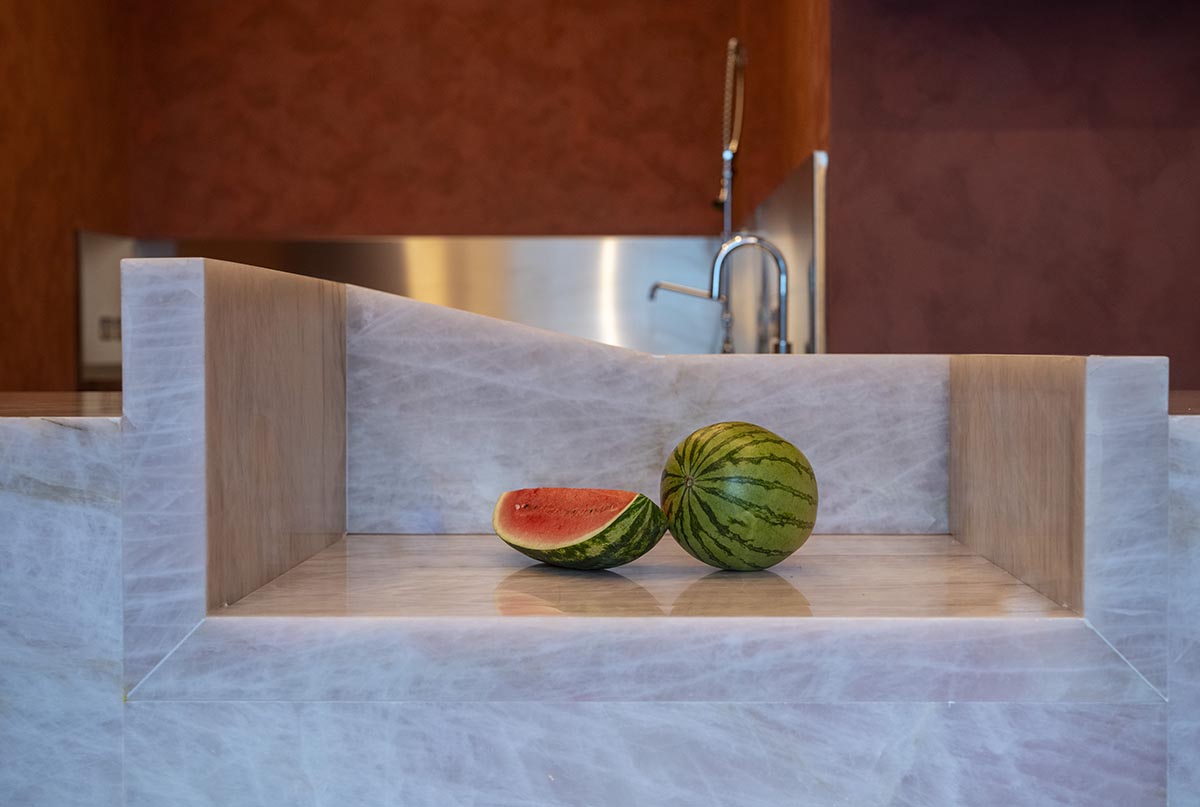
"This approach allows for Ibrahim Mahama’s ‘Parliament of Ghosts’ to play another fragmentary role, where the ornately decorated, blanched ballroom — now known as the ‘Majlis’ — becomes haunted by colonial era Ghanaian floors, shelves and chairs."
"Thus, throughout Ibraaz’s inaugural presentation are the complex cartographies of Africa, embodied in Counterspace’s Johannesburg roots, Kamel Lazaar Foundation’s ancestral Tunisia, and The Otolith Group’s political Afro futurism," Basar continued.
Ibraaz's dedication to cultural production as a dynamic, ever-evolving technique that respects collected histories while envisioning new forms for the future is reaffirmed by this endeavor.
Counterspace have finally found a home in London within the Ibraaz space, a location where the concepts and themes that influence the practice's work may be tested, practiced, and discussed in real time.
"True to our origins in Johannesburg, I am excited to be situated in a space of discourse and community. These typologies — drawn from Tunisia, London, and geographies across Africa and the Arab world — carry resonances of shared cultural memory, offering continuity across places and times and allowing for forms of gathering to emerge, in a time when solidarities and belonging mean everything," said Vally.
Sumayya Vally, a renowned Honorary Professor of Practice, is at the forefront of innovative architecture and cultural redefining. As the director and principal of Counterspace, a design, research, and educational organization, Vally's work aims to express the identities and landscapes of Islamic and African contexts, both diasporic and rooted, with a focus on the intricate connections between areas.
Acknowledged as a Young Global Leader by the World Economic Forum and included in the TIME100 Next, she has been identified as a force that has the potential to transform architectural practice and canon.
Counterspace recently unveiled the design for a new refugee wellness and fitness centre that will blend seamlessly with the Kakuma landscape in Kakuma, Kenya. Additionally, the studio works on a jagged-looking structure that creates a new pedestrian bridge in Vilvoorde, Belgium.
All images are courtesy of Ibraaz, © Hugo Glendinning.
> via Counterspace