Submitted by WA Contents
A new exhibition by Anupama Kundoo demonstrates "a different way of building is possible"
Austria Architecture News - Nov 14, 2025 - 07:36 4551 views
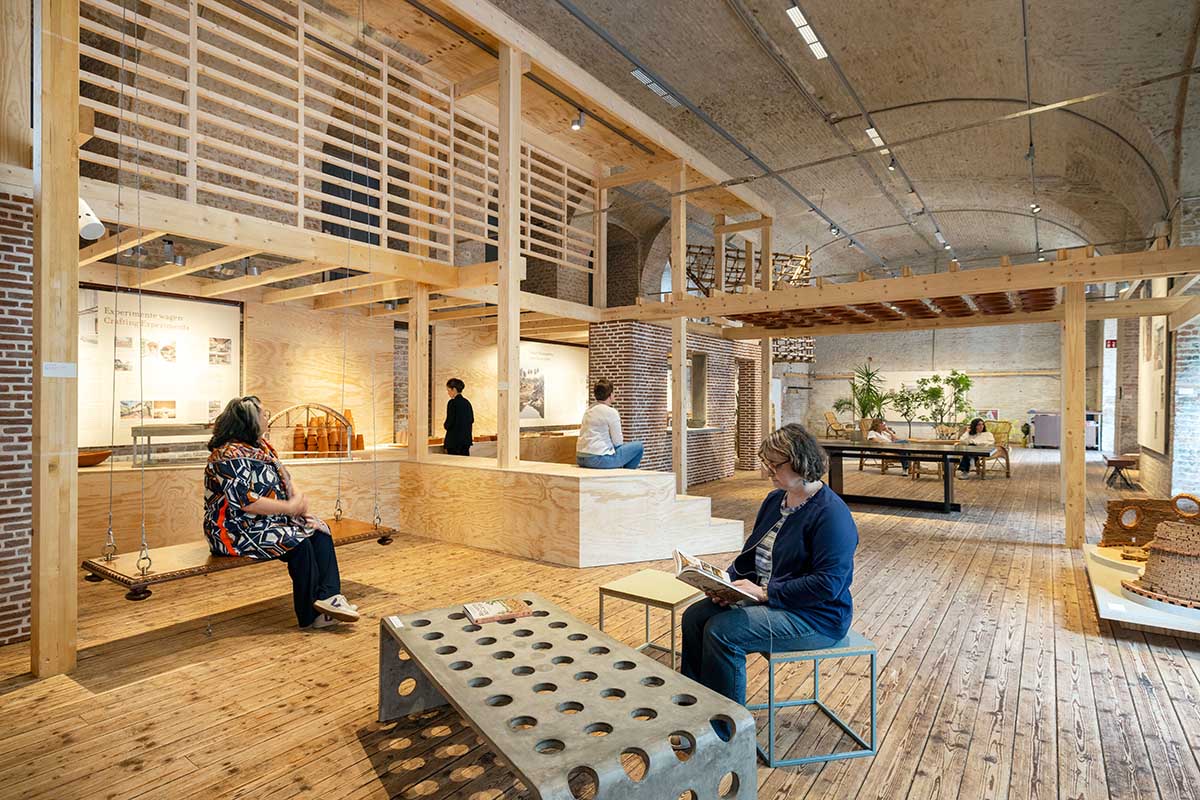
Architekturzentrum Wien has opened a new exhibition in Vienna, Austria. Titled Abundance Not Capital: Anupama Kundoo, the exhibition can be visited from 18 September to February 16, 2026 at the Architekturzentrum Wien.
The exhibition theme focuses on these questions: What if architecture were not an instrument of capital? What if there is enough for everyone? How can anyone even dare to say such a thing out loud?.

Indian architect Anupama Kundoo demonstrates "a different way of building is possible". Kundoo creates incredibly beautiful structures that take into account the demands of both humans and the environment by using local resources.
The building industry exploits labor and natural resources all over the world. At the same time, homes have become investment products because many individuals can no longer afford them. How did construction become so harmful to both people and the environment, and what can architects do to reverse this?

Anupama Kundoo's work, according to the two curators, Angelika Fitz and Elke Krasny, represents a different kind of architecture: an ecological, material, and spatial embodiment of abundance that defies the imperative of "never enough," or as Anupama Kundoo puts it: "What's the point of doing efficiently things that don't need to be done at all?".

Anupama Kundoo studied architecture in the late 1980s after growing up in Mumbai after being born in Pune in 1967. In 1989, Kundoo made the decision to defy the architectural dictum that "form follows money" as international urbanization took over India.
At the age of twenty-three, she relocated to the experimental community of Auroville in South India, where she founded Anupama Kundoo Architects. Kundoo has taught at prestigious universities all over the world.

She has won several awards for her several exhibitions at the Biennale. The majority of her architectural work is located in Auroville and Puducherry in the southern Indian coastal state of Tamil Nadu, although she currently has offices in Berlin, Mumbai, and Puducherry.
Anupama Kundoo's inventive use of locally available materials and techniques, rather than costly materials and flawless industrial goods, is what makes her projects wealthy.
She accomplishes this by fusing high-tech and low-tech, advancing conventional building processes, creating new lightweight construction techniques, utilizing natural cooling, and utilizing local material cycles.
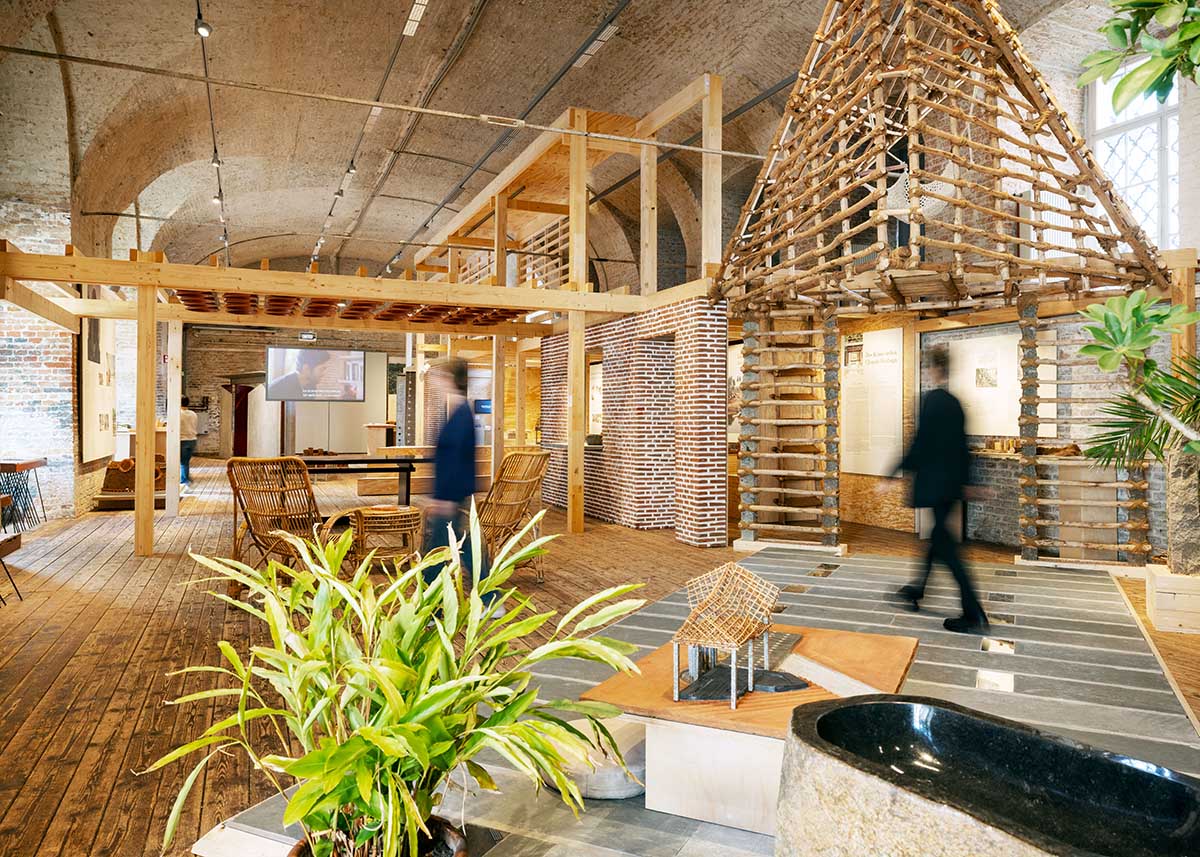
Kundoo transcends the limited boundaries of either/or. In addition to being technological and spiritual, modernist and ecological, traditional and inventive, social and beautiful, she also practices architecture.
In addition to sharing the architect's curatorial study on eight elements of richness and abundance—knowledge, materials, solutions, ambitions, differences, generosity, nature, and regeneration—the show draws upon the architect's more than three decades of work. Anupama Kundoo and her team designed the exhibition based on the layout of her own residence, the Wall House.
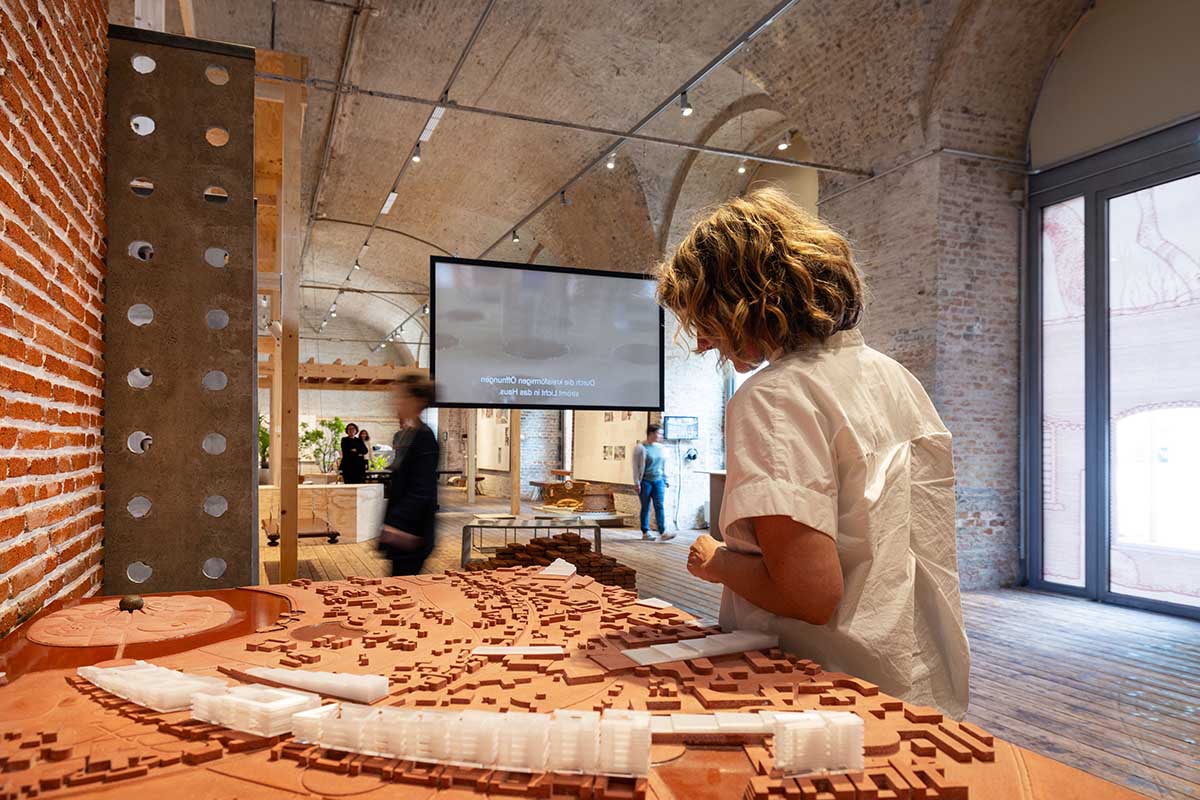
The exhibition allows visitors to experience prosperity and luxury in all their dimensions through a range of models, material samples, and large-scale installations.

Eight Dimensions of Abundance
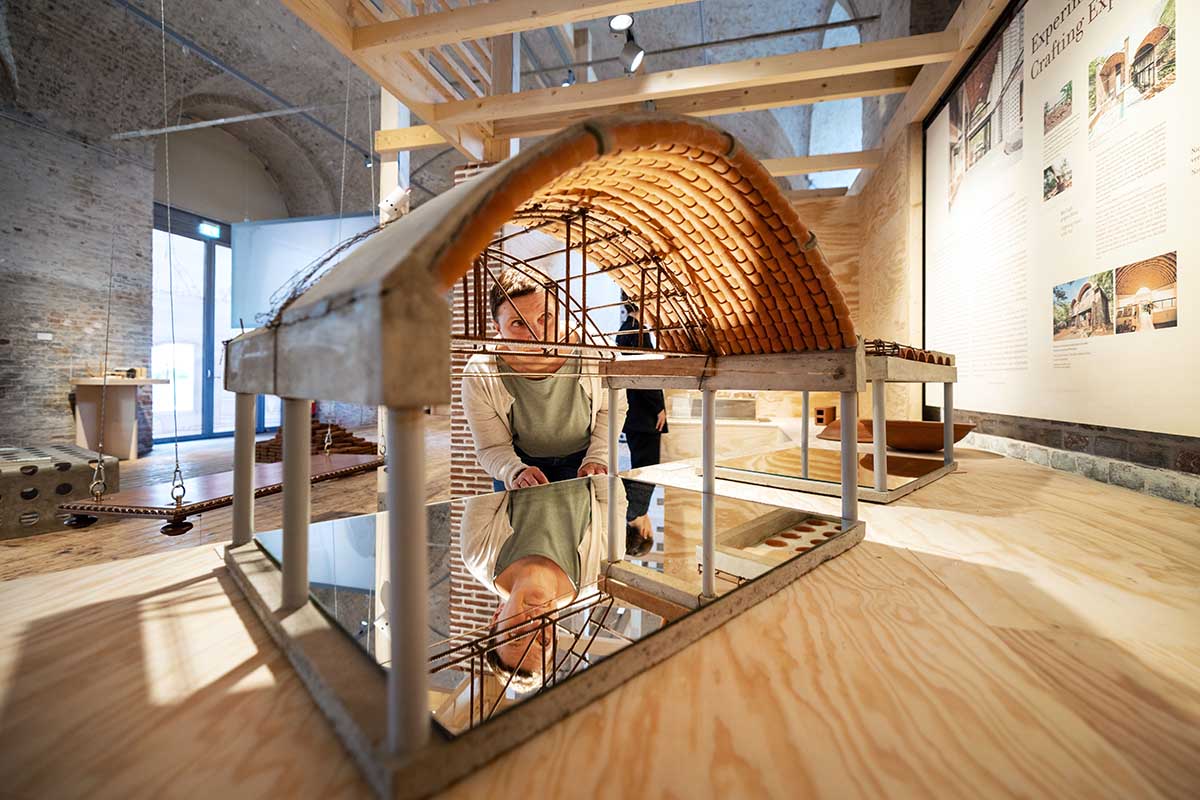
Crafting Experiments: The Abundance of Knowledge
The largest collective endeavor in human history is the built environment. The modern division of labor divided architects, designers, builders, and users from one another, which led to a neglect of "making" forms of knowledge, even though construction had long been a collaborative endeavor.
The inventive use of locally accessible materials and technologies is the foundation of Anupama Kundoo's architectural achievements. Experimental procedures are combined with earth, clay, stone, and manual skills. The architect's Auroville residence, the Wall House, was used as a proving ground for creative techniques that were subsequently used on other projects.

Local Economies: The Abundance of Materials
The international construction industry has resulted in the exploitation of workers and the environment due to the mining, manufacture, transportation, and processing of resources. To what degree are place-based local economies feasible, where the profits stay with the local population instead of being accumulated?
Originally motivated by aesthetics and economics, Anupama Kundoo's interest in materials evolved into a critique of colonial systems. India is not a "poor" nation in need of "development." Rather, she uses indigenous building materials and construction techniques with purpose, acknowledging and appreciating their abundance.
Beyond Norms and Standards: The Abundance of Solutions
Local architectural expertise and indigenous building techniques were supplanted by standardization, which started with colonialism and brought about globalization. Although standards offer protection, all regulations must function with generalizations, making them look excessive for specific circumstances. They are referred to as "broadband antibiotics" by Kundoo. For instance, why must all bricks be of the greatest quality, despite the fact that this makes them too big for many uses?.
"I have always thought it foolish to ignore the building occupant and the craftsperson and instead design for the component manufacturer and building inspector," stated Kundoo.

Experimental City: The Abundance of Aspirations
Auroville, where the idea of a community built on harmony and peace emerged in the 1930s, is linked to several of Kundoo's structures. Here, the desire to create a community for human togetherness is a manufactured architectural experiment rather than a metaphor. Auroville was formally established in 1968 and currently has about 3,300 residents from 58 different countries.
"Auroville belongs to nobody in particular," according to The Mother's Auroville Charter. Auroville is a part of all of humanity. As a result, private land ownership does not exist. Everyone contributes their effort to community services, which are intended to meet all fundamental needs. Contradictory historical elements including colonialism, modernism, integral yoga, Western anti-capitalist ideas, UNESCO backing, and foreign development funding have all inspired the creation of Auroville, an experimental real place.
Reinventing Beauty: The Abundance of Differences
Architectural history has historically been written according to historical eras, architectural styles, and cultural distinctions. The architecture of Anupama Kundoo defies categorization. Modernism, conventional construction techniques, and place-based material explorations are all incorporated into her work.
Kundoo draws inspiration from pioneers such as Le Corbusier and integrates ideas from traditional Tamil homes, old temples, and Laurie Baker's low-tech techniques. A cohabitation that separates itself from spectacle or dominance is produced, one in which things blend together while still being independent, a beauty that is both delicate and potent, modest and approachable.

Maintenance and Care: The Abundance of Generosity
Every architectural design necessitates ongoing maintenance, which in turn influences the environment for reproductive work. It is common to characterize maintenance and care as unseen, unpaid labor that is required to meet fundamental requirements, tedious, and repetitive, rather than as practices that are rich in knowledge, skills, and significance.
According to Anupama Kundoo, "maintenance is part of the ritual of life." Architecture includes the organization of caring and the knowledge of maintenance issues. The exploitation of caregiving is replaced by generosity.

Climate Healing: The Abundance of Nature
In modernism, the idea of "mastery over nature" dominates architecture, which constructs capital's relationships to nature. Building a relationship with nature is necessary if architecture is to be used as a means of mitigating climate change.
In order to recover from capitalism and restore nature's very abundance, it is necessary to understand that nature is neither free nor a cheap resource to maximize profit. According to Kundoo, architecture may help heal the environment by radically rethinking the interaction between humans and nature.

Soothing Architecture: The Abundance of Regeneration
The curators had a deep sense of serenity and rejuvenation while at the Wall House. They also observed that architecture lacks a sophisticated vocabulary for environments that are restorative and calming.
In contrast to many architectural symbols that stand for wealth, power, and spectacle, Kundoo's building encourages guests to relax, rejuvenate, and savor the present. Additionally, visitors can experience architecture as a place to pause and rest thanks to the exhibition design—qualities that are frequently disregarded in the architectural discourse.


Anupama Kundoo is the founder and director of Anupama Kundoo Architects based in Berlin, Mumbai and Puducherry. Her first professional office was established in 1990 in Auroville, India.
Projects in the exhibition
Hut Petite Ferme, 1990, Auroville, India
Wall House, 2000, Auroville, India
Multipurpose Hall S.A.W.C.H.U., 2000, Auroville, India
Village Action Center, 2000, Auroville, India
Keystone Foundation, 2000, Kotagiri, India (ongoing)
Auroville Institute of Applied Technology, 2001, Auroville, India
Residence Spirit Sense, 2001, Auroville, India
Abri Transport Service, 2003, Auroville, India
Sangamam, 2003, Auroville, India
Creativity Co-Housing, 2003, Auroville, India
Town Hall Complex, 2005, Auroville, India
Mitra Youth Hostel, 2005, Auroville, India
Volontariat Homes for Homeless Children, 2008, Puducherry, India
Light Housing Prototype, 2013, Auroville, India
Full Fill Homes, 2015, Auroville, India
Easy-WC, 2015, Auroville, India
Shah Houses, 2016, Brahmangarh, India
Library Nandalal Sewa Samithi, 2018, Puducherry, India
Sharana Daycare Facility, 2019, Puducherry, India
Curators: Angelika Fitz, Elke Krasny
Project coordination and curatorial assistance: Agnes Wyskitensky
Exhibition Design: Anupama Kundoo Architects
Exhibition Graphic Design: Alexander Ach Schuh
All images © Reiner Riedler.
> via Architekturzentrum Wien