Submitted by WA Contents
The U.S's first Ismaili Center opens in Houston
United States Architecture News - Nov 10, 2025 - 07:54 7876 views
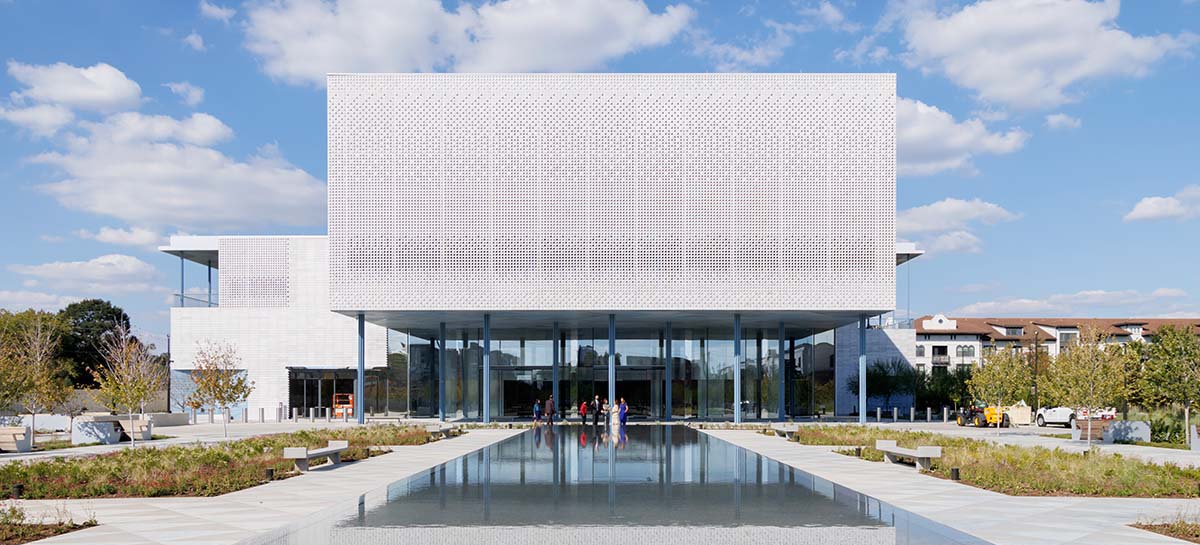
On Thursday, November 6, 2025, Mayor John Whitmire officially opened the Ismaili Center in Houston in front of His Highness Prince Rahim Aga Khan V, the Imam (spiritual leader) of the world's Shia Ismaili Muslims.
The ceremony was attended by leaders and supporters of the Ismaili community from all over the world as well as civic and cultural leaders from Houston and beyond.
The Center is the first Ismaili civic and cultural complex in the country, dedicated to communication, culture, and shared human values.

The North Eivan (veranda) that can accommodate up to 800 people for lectures or receptions and up to 600 for banquets. Image © Iwan Baan
The complex features a 150,000-square-foot (13,935-square-meter), five-story building designed by internationally renowned architect Farshid Moussavi, founder of London-based Farshid Moussavi Architecture and Nelson Byrd Woltz Landscape Architects, in partnership with AKT II (structural, civil, geotechnical, bioclimatic, and façade engineer) and DLR Group (architect and engineer of record).
The Ismaili Center, Houston is the first in the United States and the seventh globally, joining those in London (1985), Vancouver (1985), Lisbon (1998), Dubai (2008), Dushanbe (2009), and Toronto (2014).
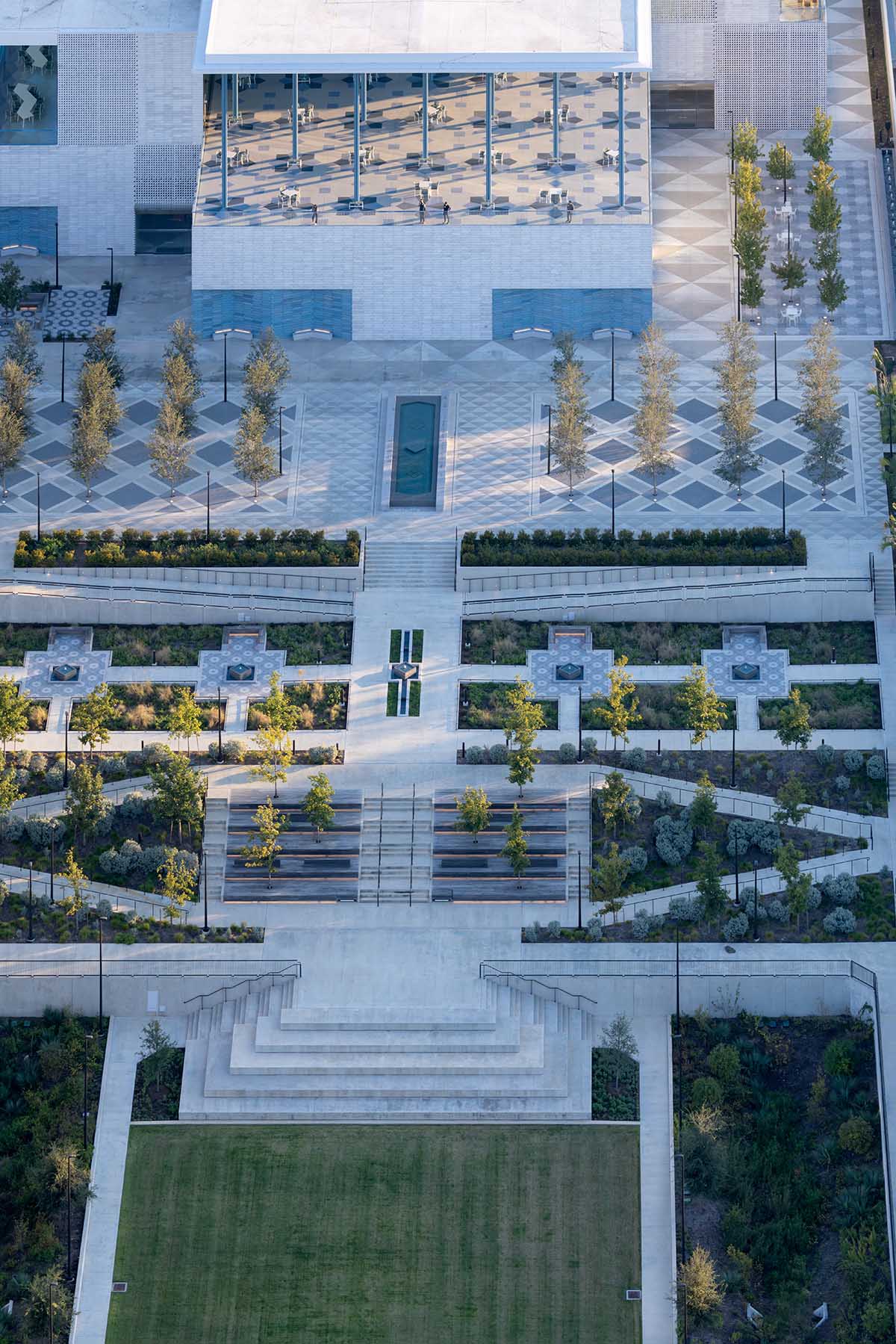
A series of terraced gardens, each planted with native species from a distinct eco-region of Texas, gracefully elevates the building of the Ismaili Center, Houston. Image © Iwan Baan
Set on 11 acres overlooking Buffalo Bayou Park, this achievement in architecture and landscape architecture marks a historic milestone for the Ismaili community and Houston’s vibrant cultural landscape.
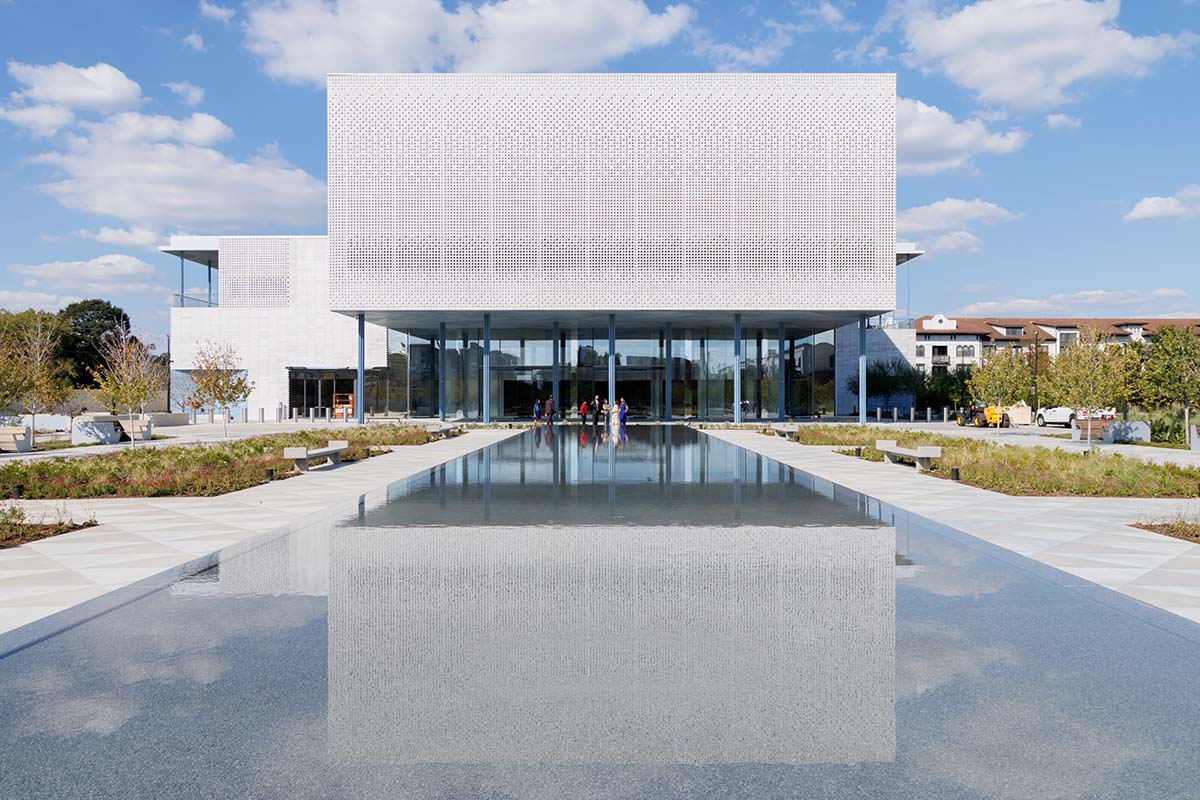
The building and sky are mirrored in the water of the Reflection Fountain, a feature inspired by other architectural designs around the Muslim world. Image © Iwan Baan

The eivans of the Ismaili Center create indoor/outdoor connections while providing covered space for year-round social and cultural gatherings. Image © Iwan Baan
The Ismaili Center in Houston has been carefully planned to function as a welcoming area for the general public as well as a place of religious congregation for the Ismaili community. The Center's facilities will be available for community use, a variety of public programming, and cooperative projects.
The Center, which is prominently located at the intersection of Allen Parkway and Montrose Boulevard along the quickly expanding Allen Parkway corridor overlooking Buffalo Bayou Park, realizes a long-held vision of His Highness Prince Karim Aga Khan IV (1936–2025). This vision started to take shape with the 2006 purchase of the land and was realized under the direction of his son and successor, His Highness Prince Rahim Aga Khan V.

Natural light flows into the Central Atrium through the windows of the North Eivan and the oculus (skylight) at the top. Image © Iwan Baan
The complex, which spans more than nine acres of gardens and courtyards, revolves around the Center's bright main building. It is surrounded by shaded terraces, promenades lined with trees, and a number of serene water features, such as a large reflecting fountain at the main entrance.
The structure and surroundings work together to create a calm civic refuge that exemplifies the Ismaili philosophy of harmony between people, location, and nature.
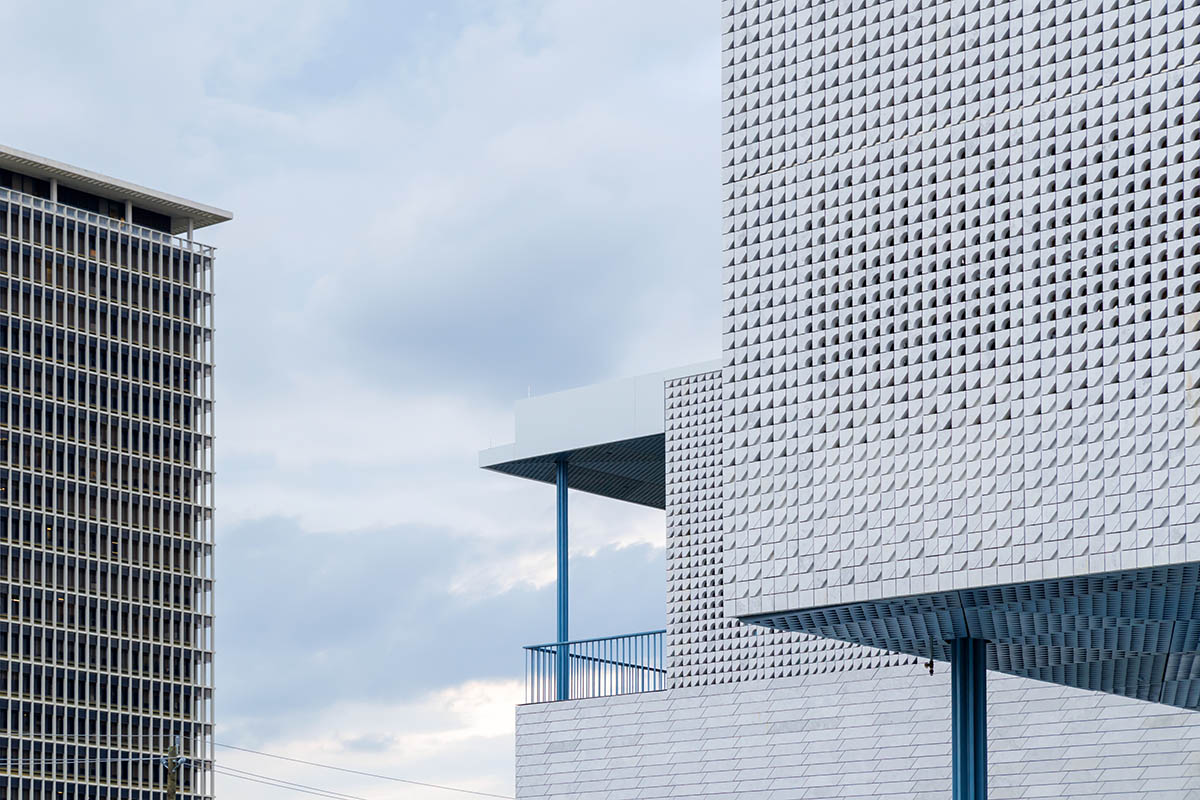
An up close of the stonework on the exterior of the Ismaili Center, Houston. Image © Iwan Baan
"The relationships between Ismailis and the communities in which they live have always been grounded in understanding and common purpose. Today, we honor that tradition, extending the hand of friendship to all, regardless of background or faith," said His Highness Prince Rahim Aga Khan V.
"This building may be called an Ismaili Center, but it is not here for Ismailis only. It is for all Houstonians to use; a place open to all who seek knowledge, reflection, and dialogue."

An up close of the stonework on the façade and the blue soffits of the Ismaili Center, Houston. Image © Iwan Baan
London based firm of structural, civil and transportation engineering firm AKT II, global, integrated design firm DLR Group, who served as an architect and engineer of record, and contractor McCarthy worked together to complete the project.
In order to reduce surprises and enable high craft, the team focused on a comprehensive, client-led approach in which architecture, engineering, landscape, and construction proceeded together.
The Ismaili Center, Houston's architecture uses modern craftsmanship to express timeless concepts from all throughout the Muslim world, such as structure as readable order, adornment as human scale, repetition as unity, and light as substance.
The verandas (eivans) and the perforated stone screens that control light and seclusion are clear examples of Persian home and palace customs. Instead of being trend-driven, large geometric movements resolve into intimate detail to create places that feel serene, timeless, and calm.

Throughout the Ismaili Center, screens shift from triangular apertures to subtle scallops to widen seated views while maintaining structural integrity. Image © Iwan Baan
The Center creates a permeable series of eivans (veranda in Persian) and atria that combine bright interiors with shaded outdoor spaces, shaped by the site's topography and Houston's climate.
The Center's civic function as a daily location for gathering, contemplation, and exchange is reinforced by these covered thresholds, which encourage year-round movement between inside and outside and remain open for informal use outside of planned activities.
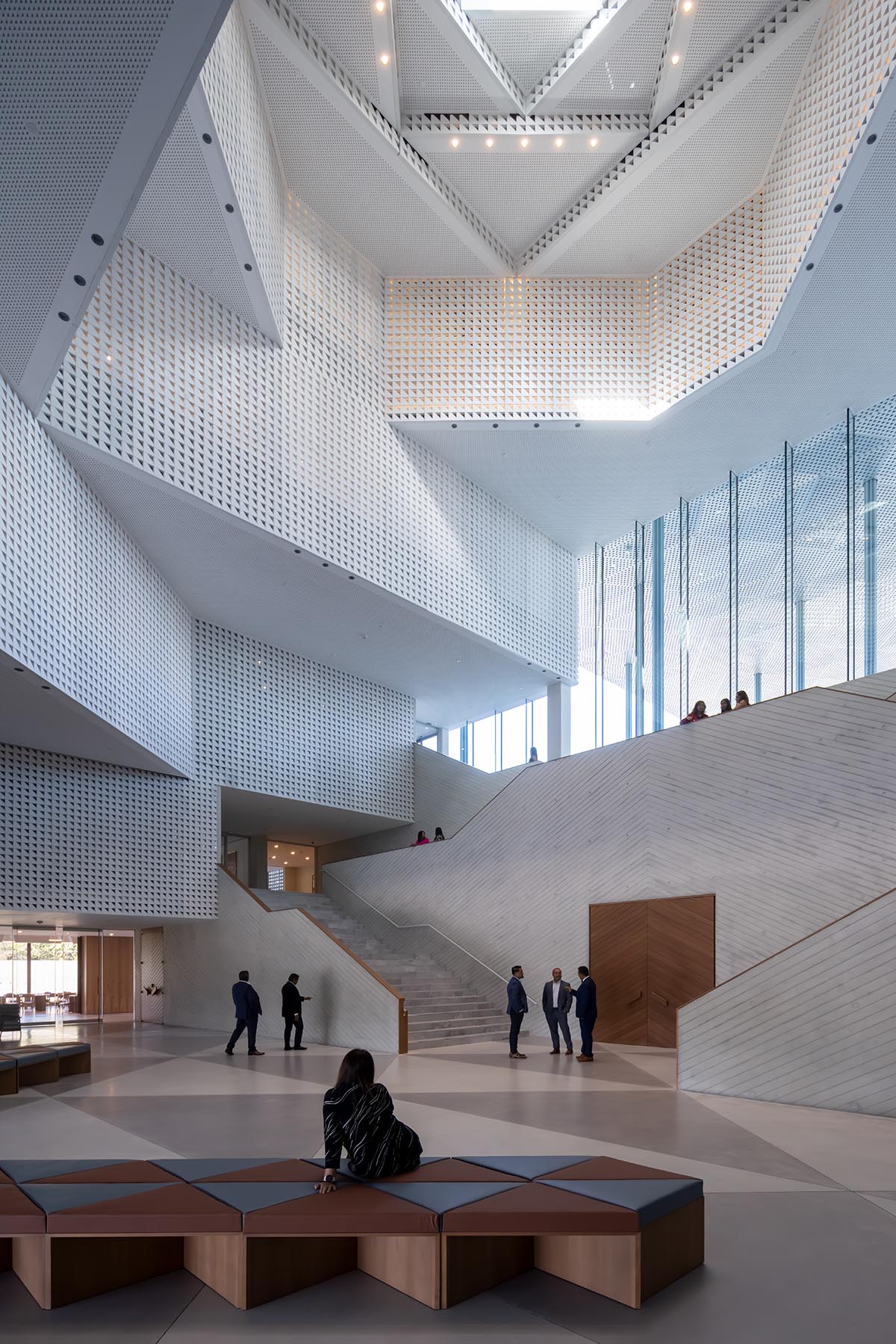
The Central Atrium is the heart of the center – it rises over 70 feet and is made of stepped screens. Image © Iwan Baan
The materials were selected for their clarity, beauty, and 100-year lifespan. Small, variegated stone tiles are used on the façade, which appear as elegant ornamentation up close and as serene massing from a distance.
Geometry is prioritized above finish inside thanks to a subdued color scheme that includes silk-laminated glass, steel, wood paneling, and ultra-high-performance concrete.
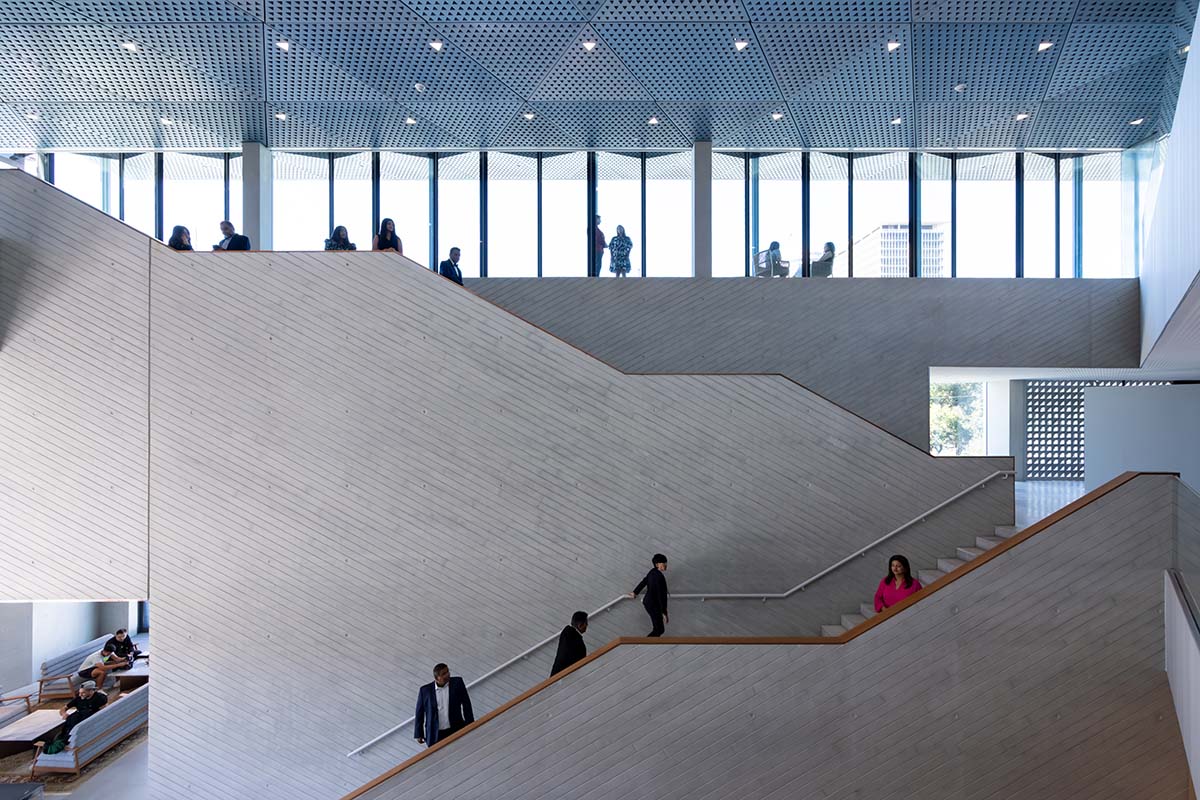
Indoor and outdoor spaces throughout the Ismaili Center foster dialogue and connection for all visitors. Image © Iwan Baan
To increase seated views without sacrificing structural integrity, screens switch from triangle apertures to delicate scallops. Above, the sky and sanctuary are aligned by an oculus that crowns the central atrium across from the portals of the Jamatkhana (prayer hall).
The building is safeguarded since it is located at the highest point on the property above the 500-year floodplain, and the underground parking garage is built to withstand flooding when needed.
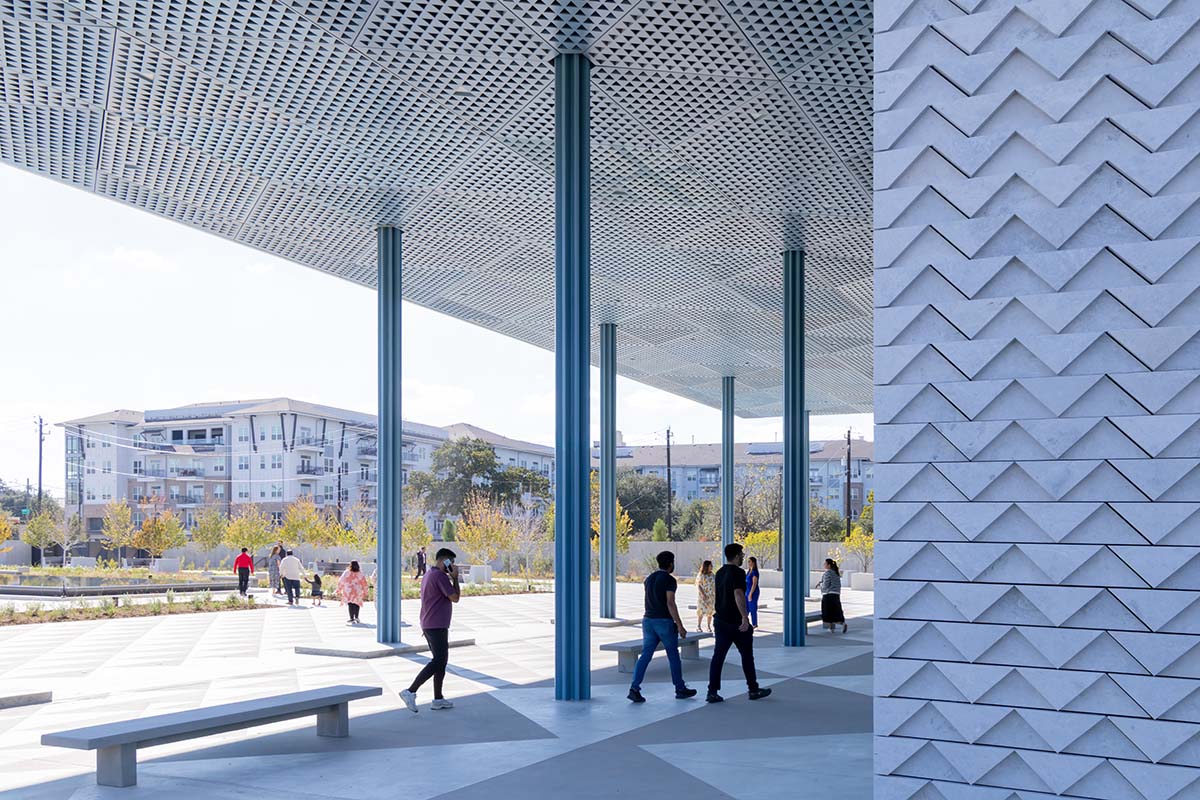
On the south side facing West Dallas St., a covered drop-off porch marks the Ismaili Center’s main entrance. Image © Iwan Baan
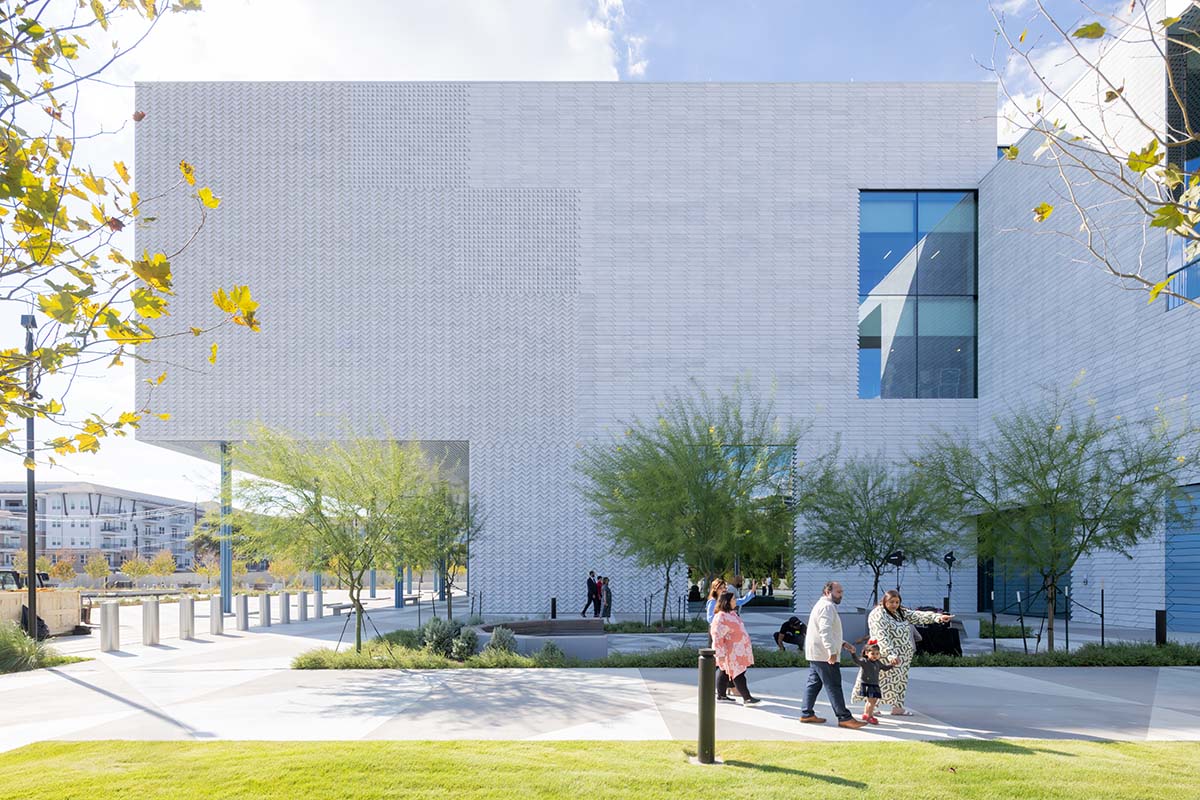
Wide pathways throughout the Ismaili Center allow for people to walk side by side. Image © Iwan Baan
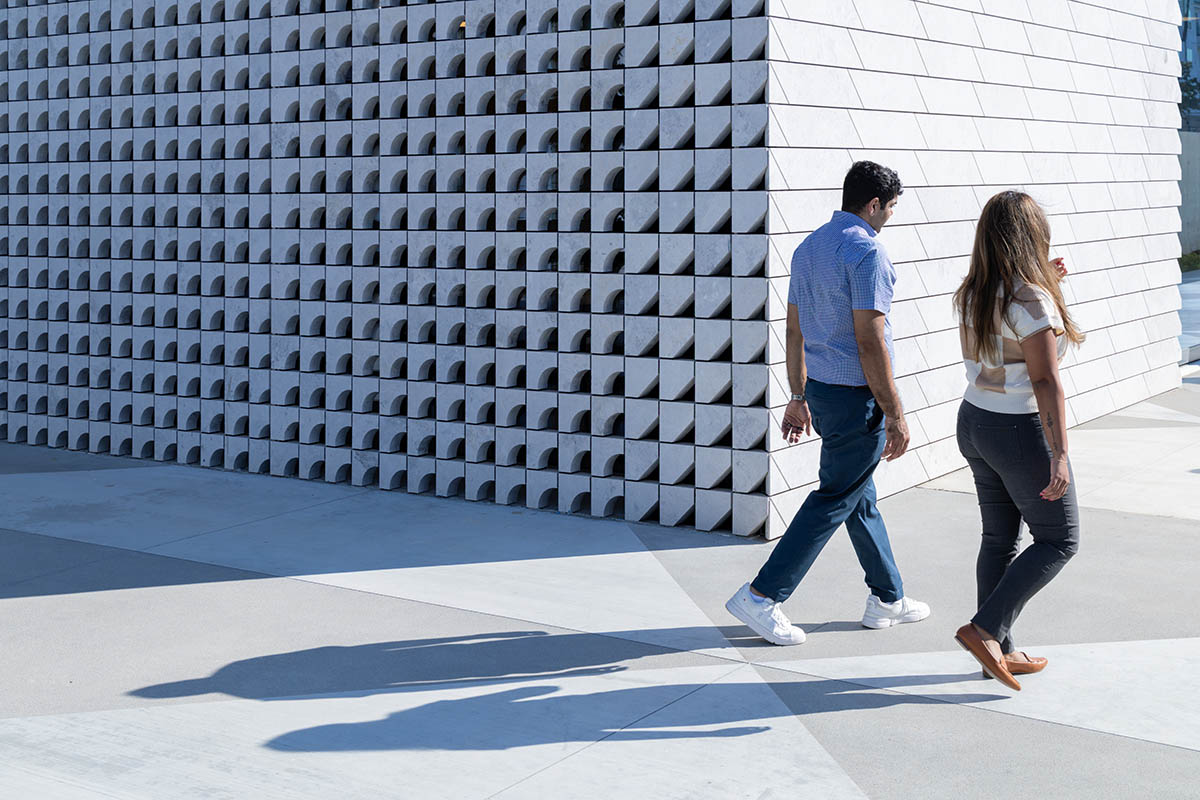
The exterior walls of the Ismaili Center transition from solid areas to porous screens that provide shade and privacy. Image © Iwan Baan
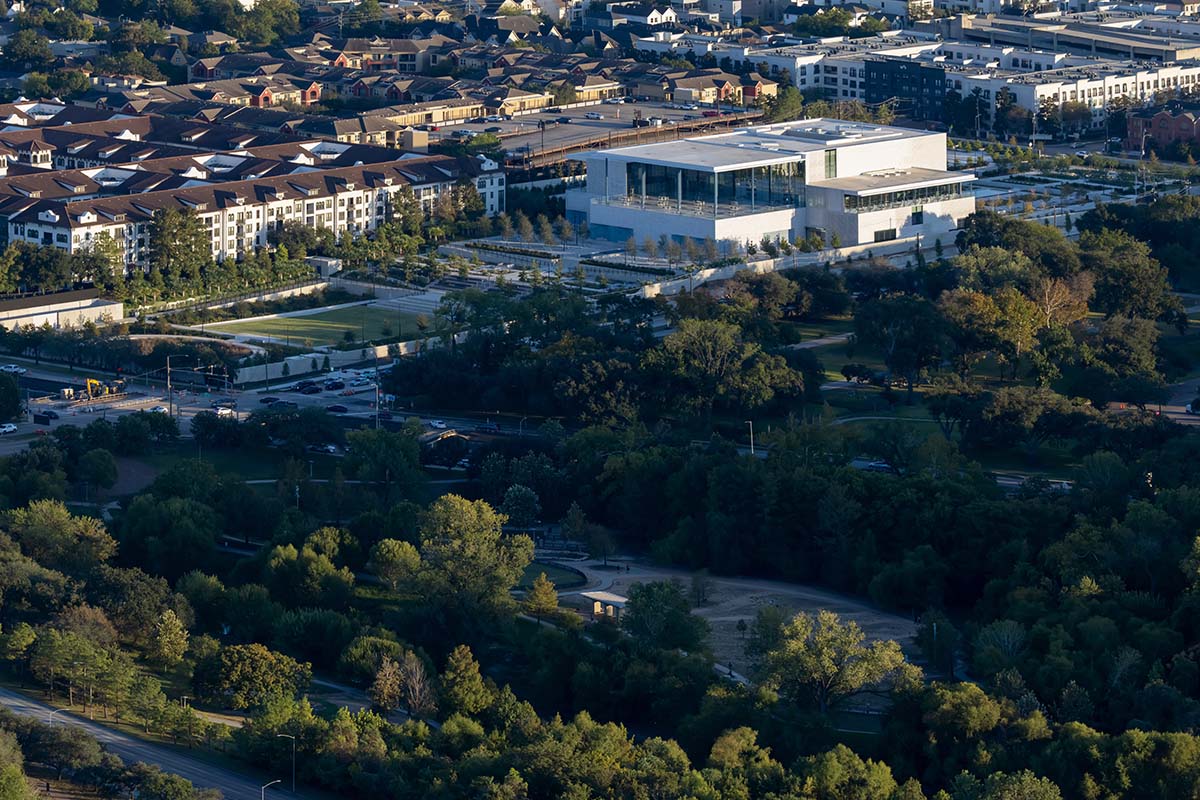
An aerial view of the Buffalo Bayou Park and Ismaili Center. Image © Iwan Baan
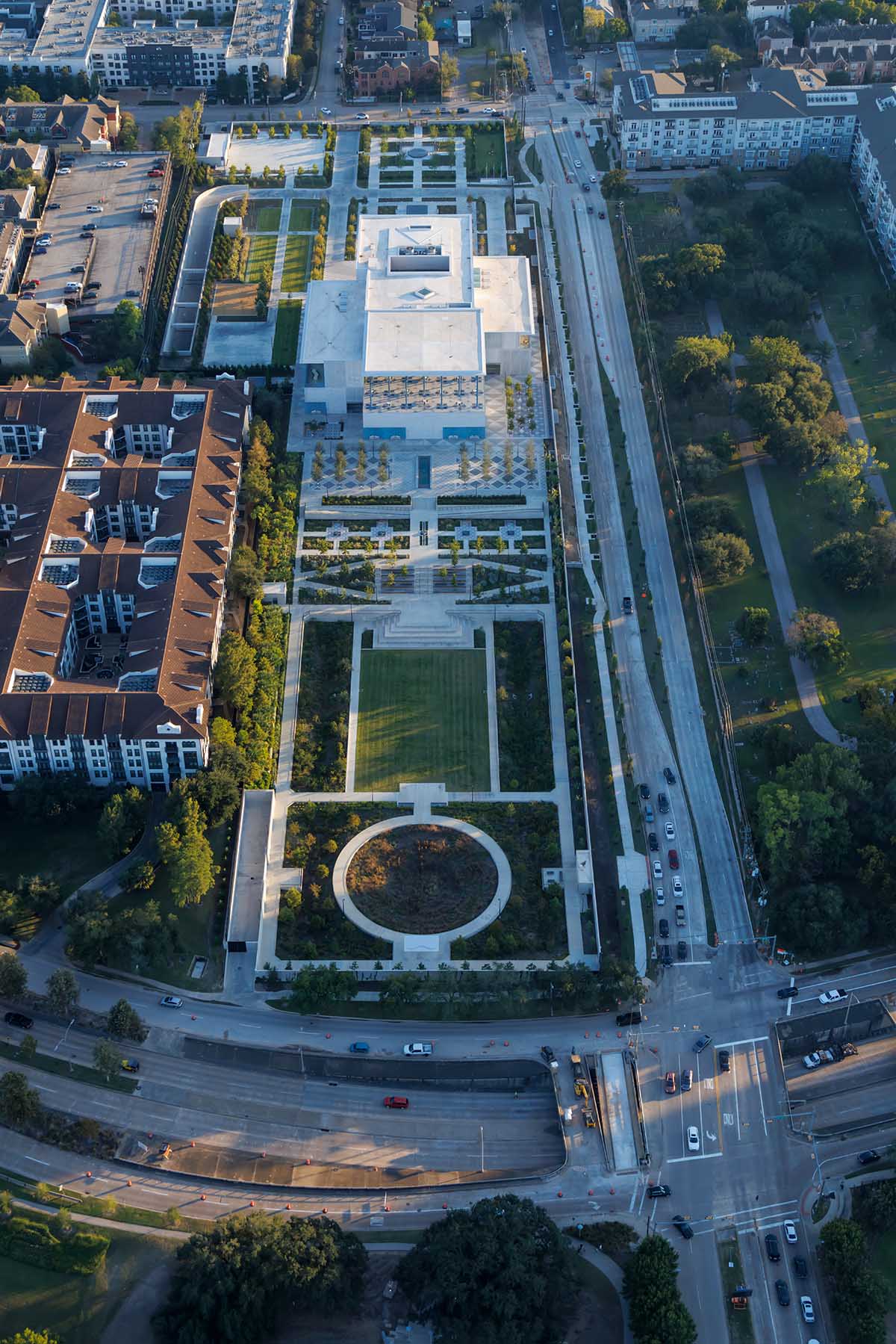
An aerial view of the 11-acre site of the Ismaili Center, Houston. Image © Iwan Baan
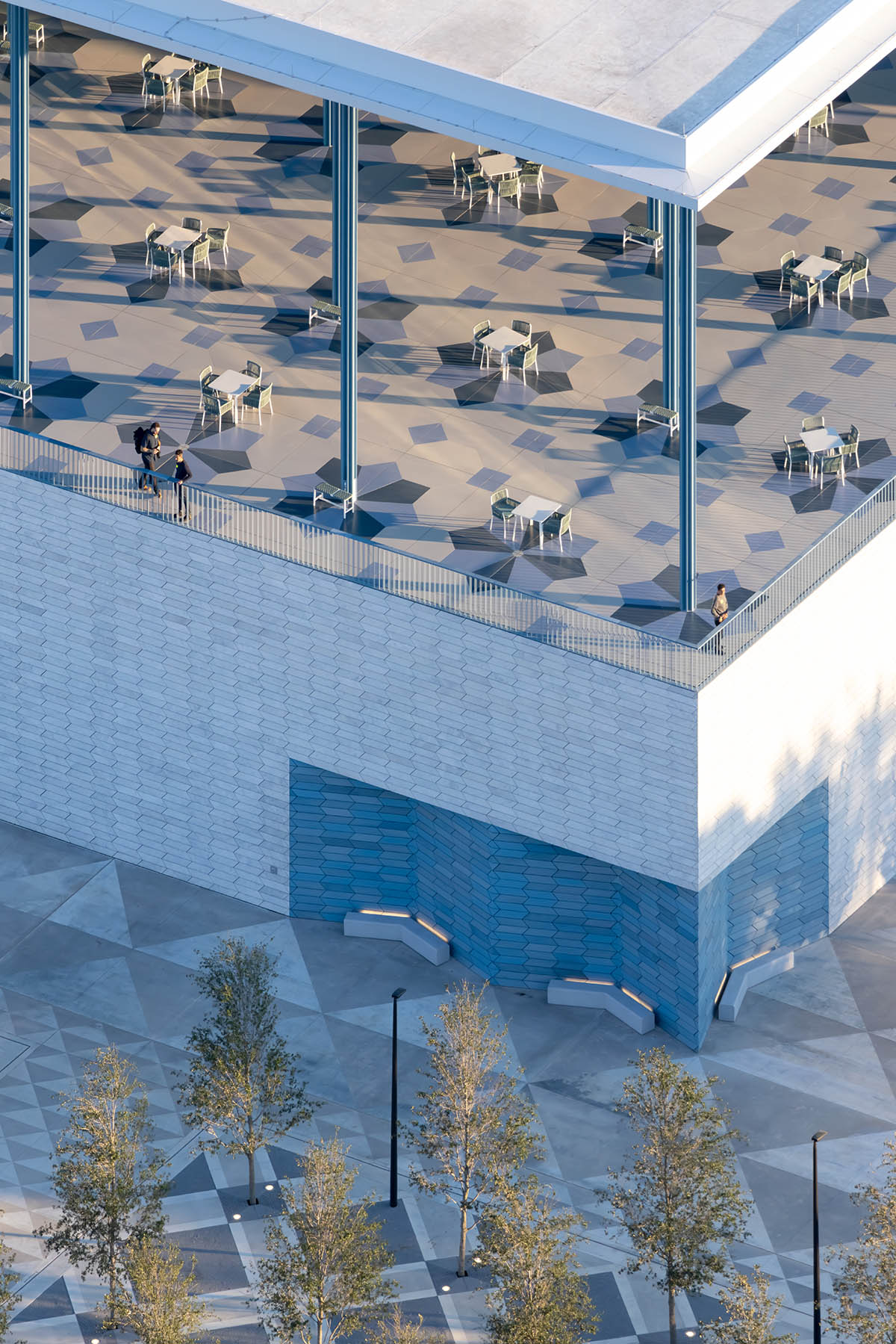
The blue hue seen throughout the Ismaili Center is inspired by traditional Persian architecture, complementing the gardens and evoking a sense of tranquility. Image © Iwan Baan
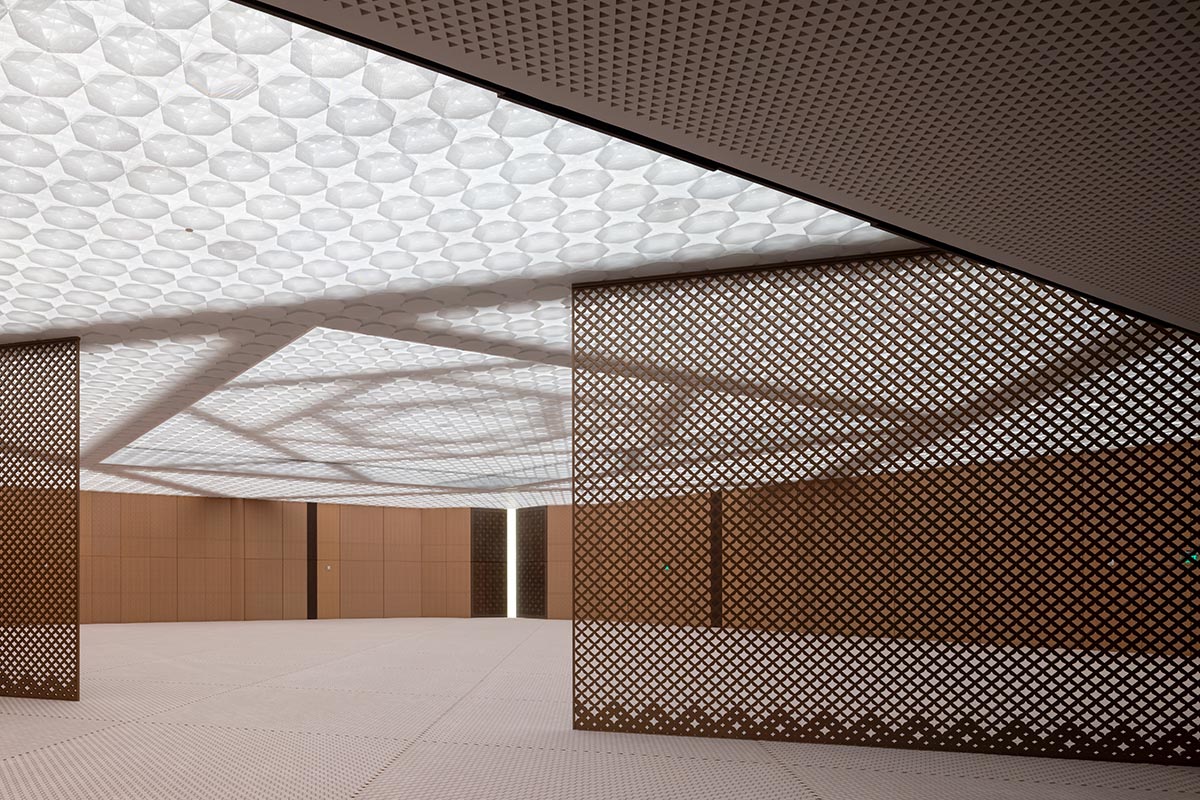
The Jamatkhana (prayer hall) of the Ismaili Center, Houston. Image © Iwan Baan
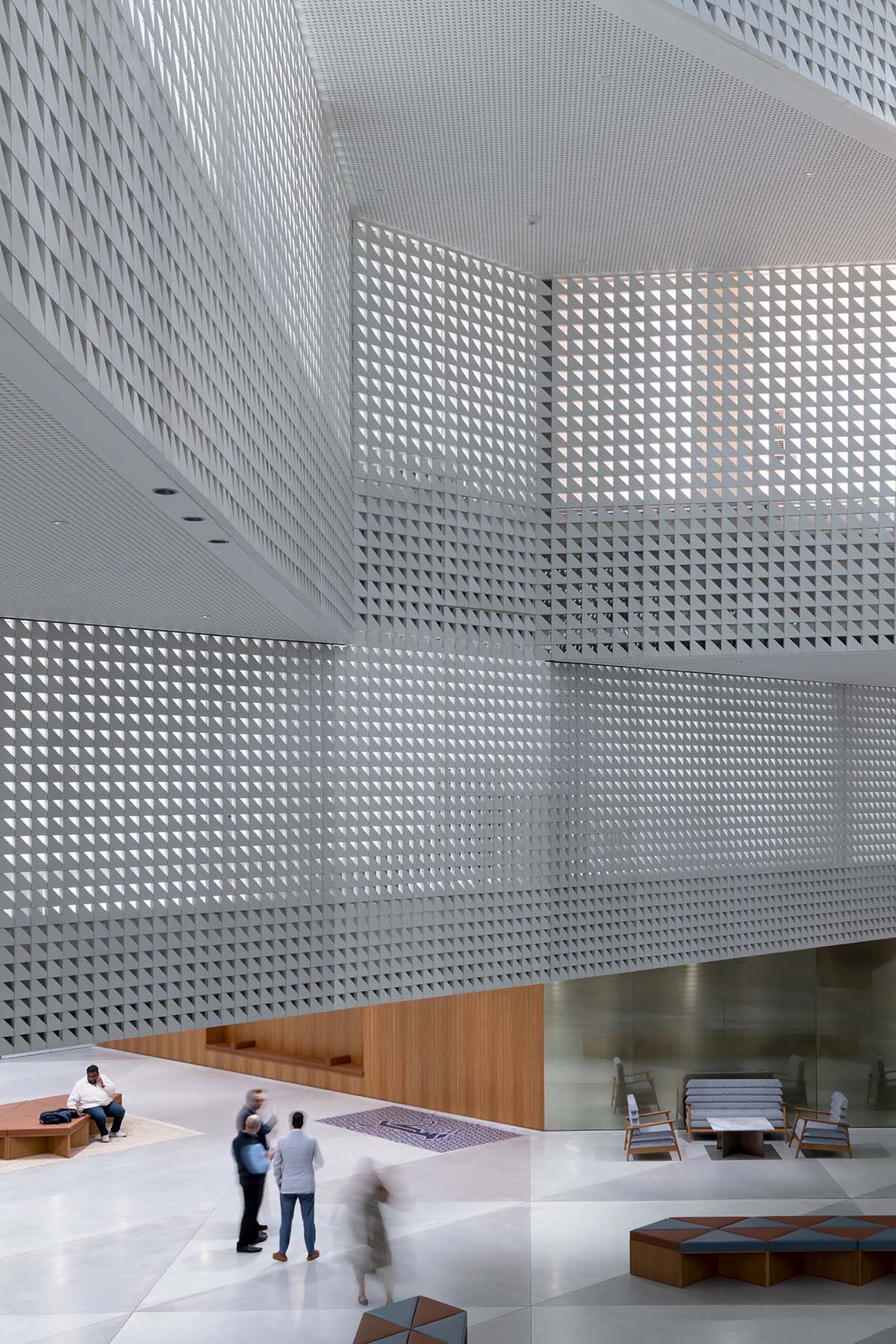
The perforated stone screens throughout the Ismaili Center temper light and privacy. Image © Iwan Baan
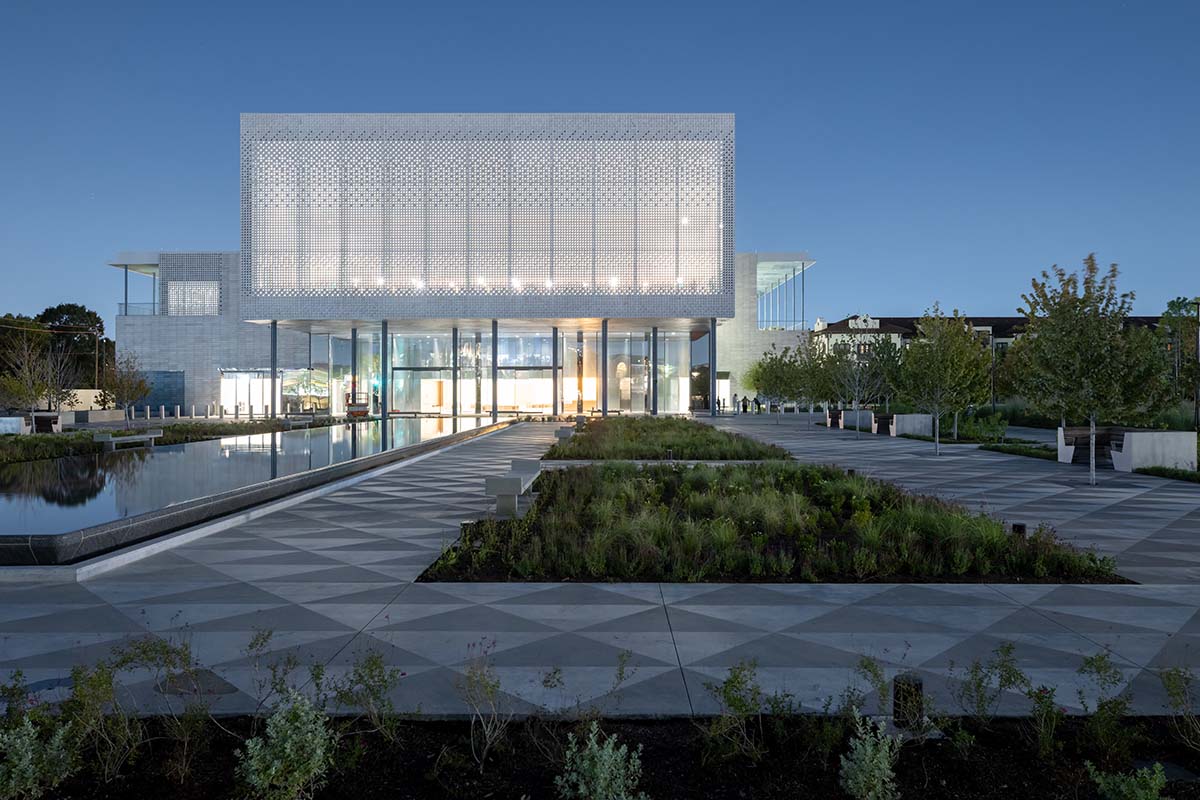
The Ismaili Center’s façade and Reflecting Fountain, as seen in the evening. Image © Iwan Baan

The Social Hall of the Ismaili Center can be used for a wide range of gatherings, including social events, lectures, seminars, and banquets. Image © Iwan Baan
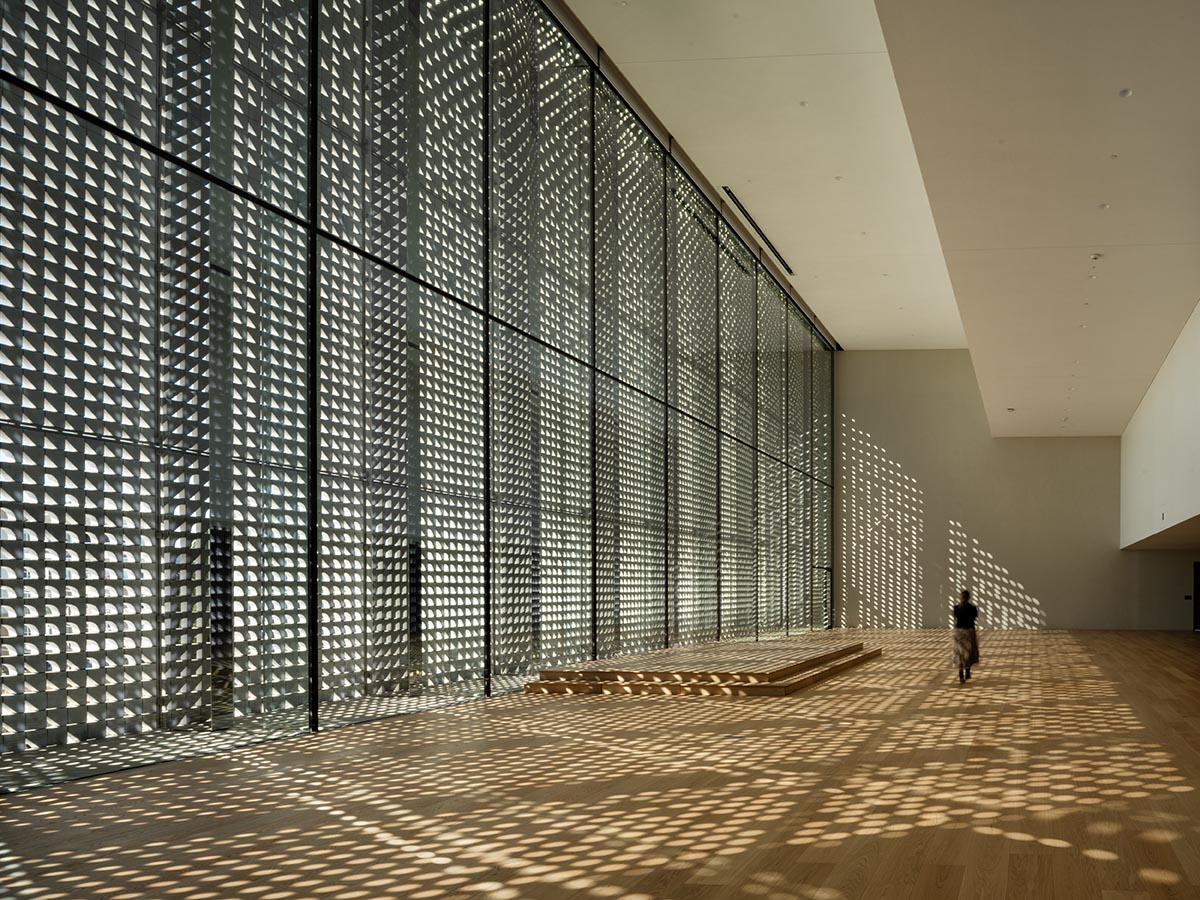
Natural light filters into the Social Hall through the expansive stone screen of the Ismaili Center’s façade. Photography © Nic Lehoux, Courtesy of DLR Group and the Ismaili Center, Houston
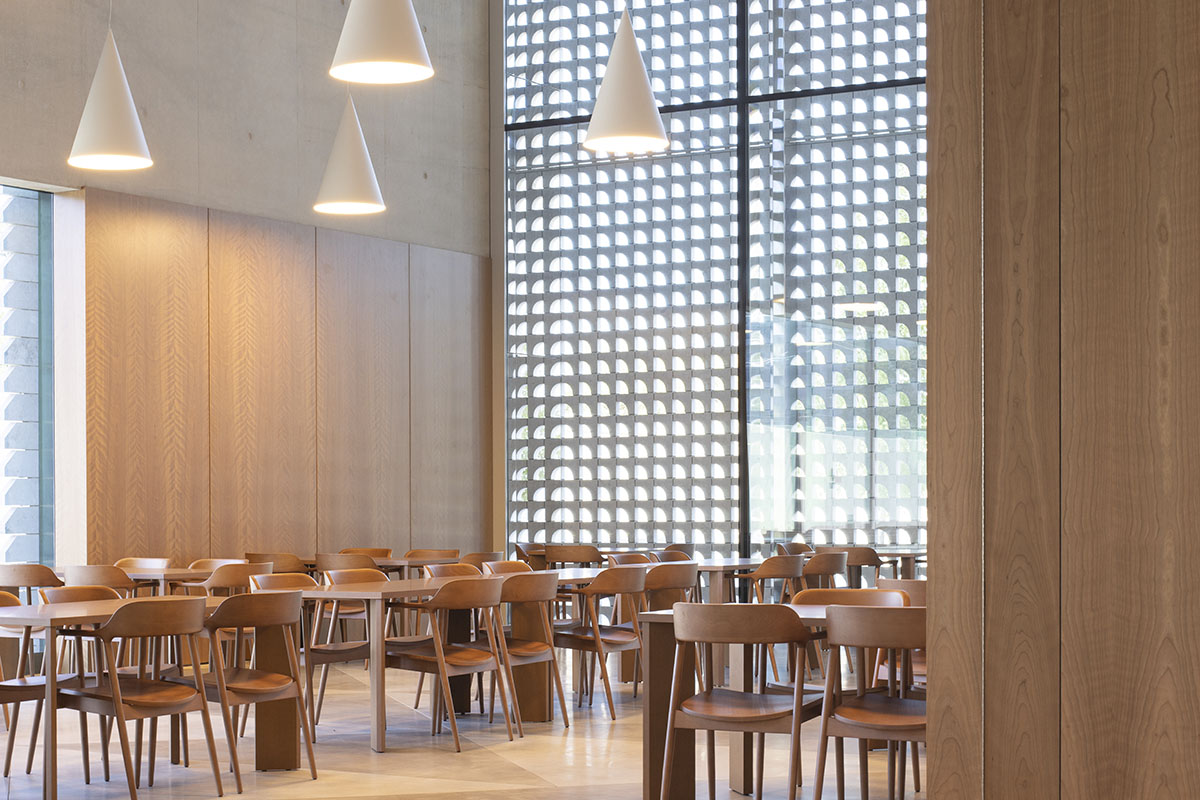
The Ismaili Center features a café on the first floor of the building. Photography © Salina Kassam
The Center is poised to become a major resource for Houston’s nonprofit and cultural sectors, offering access to spaces for meetings, conferences, lectures, performances, and events.
"The City of Houston is proud to welcome the Ismaili Center, a place where people from every background can come together in dialogue, understanding, and learning. When I visited the site during construction, I could already see what it would mean for our city," said Mayor Whitmire.
"Now that it’s complete, it stands as a new monument along the Allen Parkway corridor, and a beacon of light surrounded by some of our most treasured neighborhoods and cultural institutions."
"The Ismaili Center truly reflects the best of Houston’s spirit: our diversity, our compassion, and our commitment to community. It’s a place that invites all Houstonians to come together and celebrate what connects us," Whitmire added.
Welcome events for community partners and neighbors will take place on December 12 and 13. Additional details will be announced by the Ismaili Center Houston in the coming weeks.
The top image in the article: The building and sky are mirrored in the water of the Reflection Fountain, a feature inspired by other architectural designs around the Muslim world. Image © Iwan Baan.
All images © Iwan Baan unless otherwise stated.
> via Ismaili Center Houston