Submitted by WA Contents
MAD completes a tranquil white bird-shaped airport in the wilderness of Lishui, China
China Architecture News - Feb 20, 2026 - 05:01 4404 views
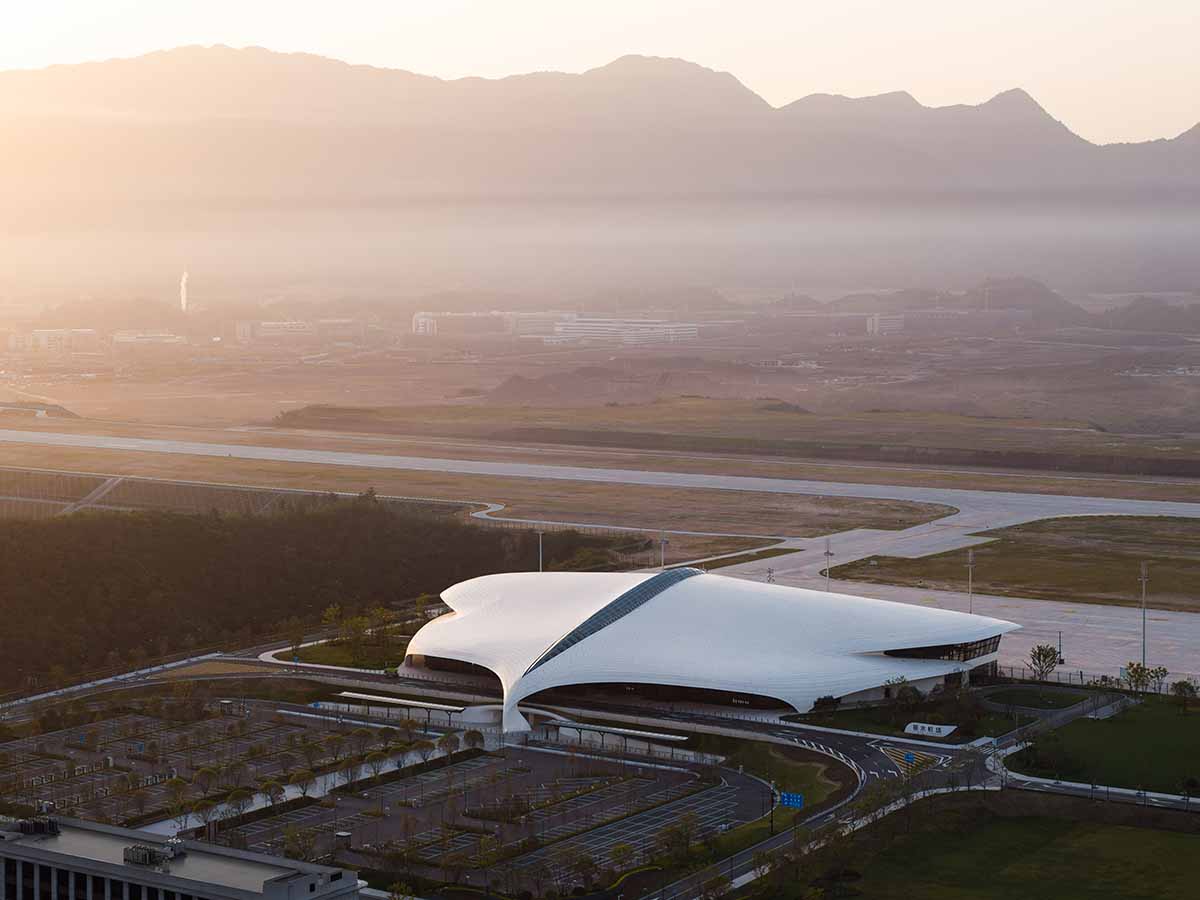
With the official opening of the Lishui Airport in Zhejiang Province, which was completed by MAD, the area now has its first direct link to China's national aviation network.
The project, which was started in 2008 and completed after 17 years of planning and building, marks a new era for the southwest Zhejiang mountains.
The airport, which is situated in a low mountain and foothill valley formed by massive land reclamation, is roughly 15 kilometers southwest of Lishui's center.
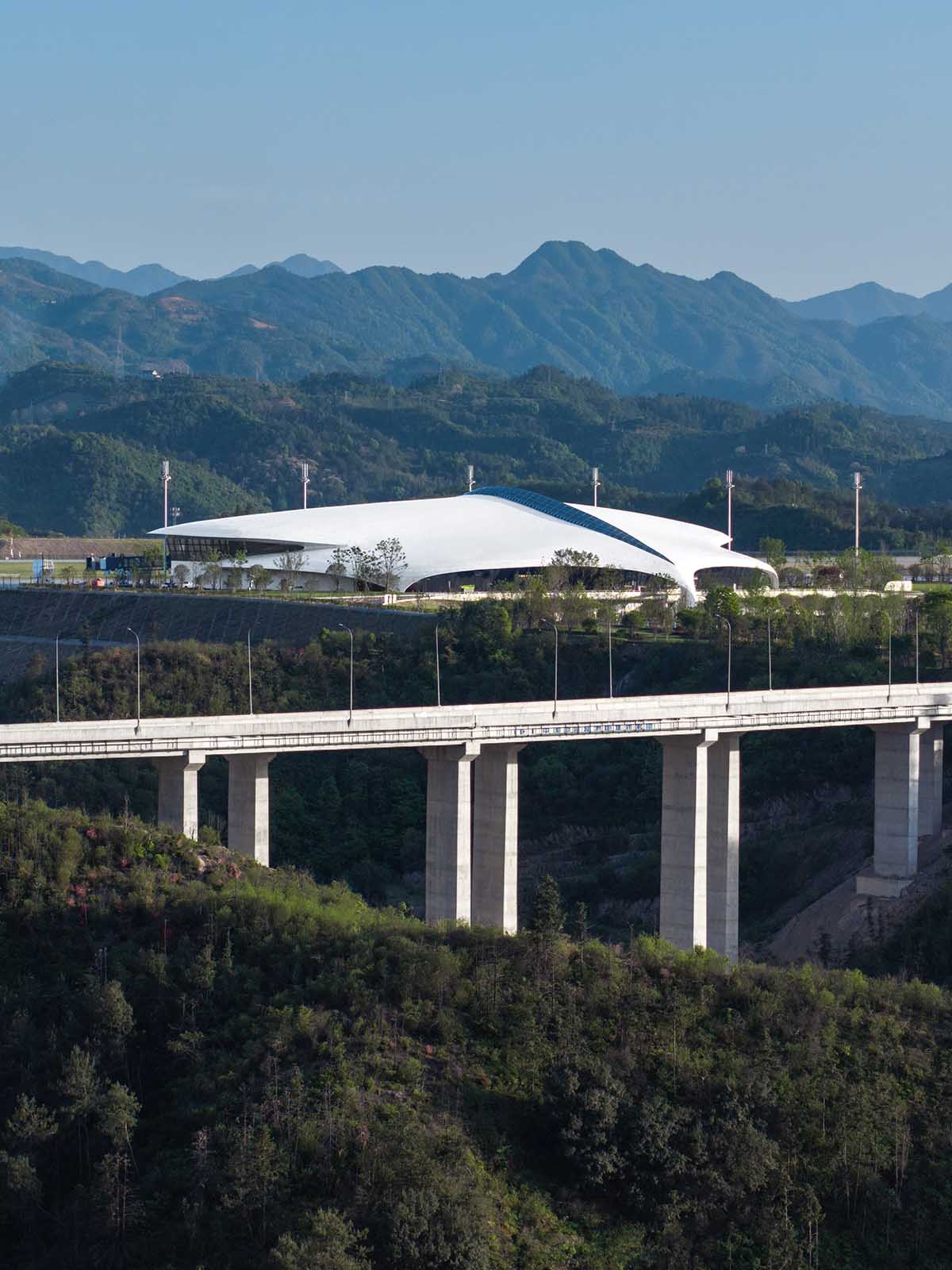
Image © Ding Junhao
Significant earthworks were needed for the construction, with cut-and-fill variations in some places approaching 100 meters. Consequently, Lishui Airport is one of East China's most topographically demanding airport projects.
The airport is located on 2,267 hectares of land. The terminal structure has eight airplane parking bays and is roughly 12,000 square meters in size. During its first phase, the airport will be able to accommodate up to one million people per year and 4,000 tons of cargo.
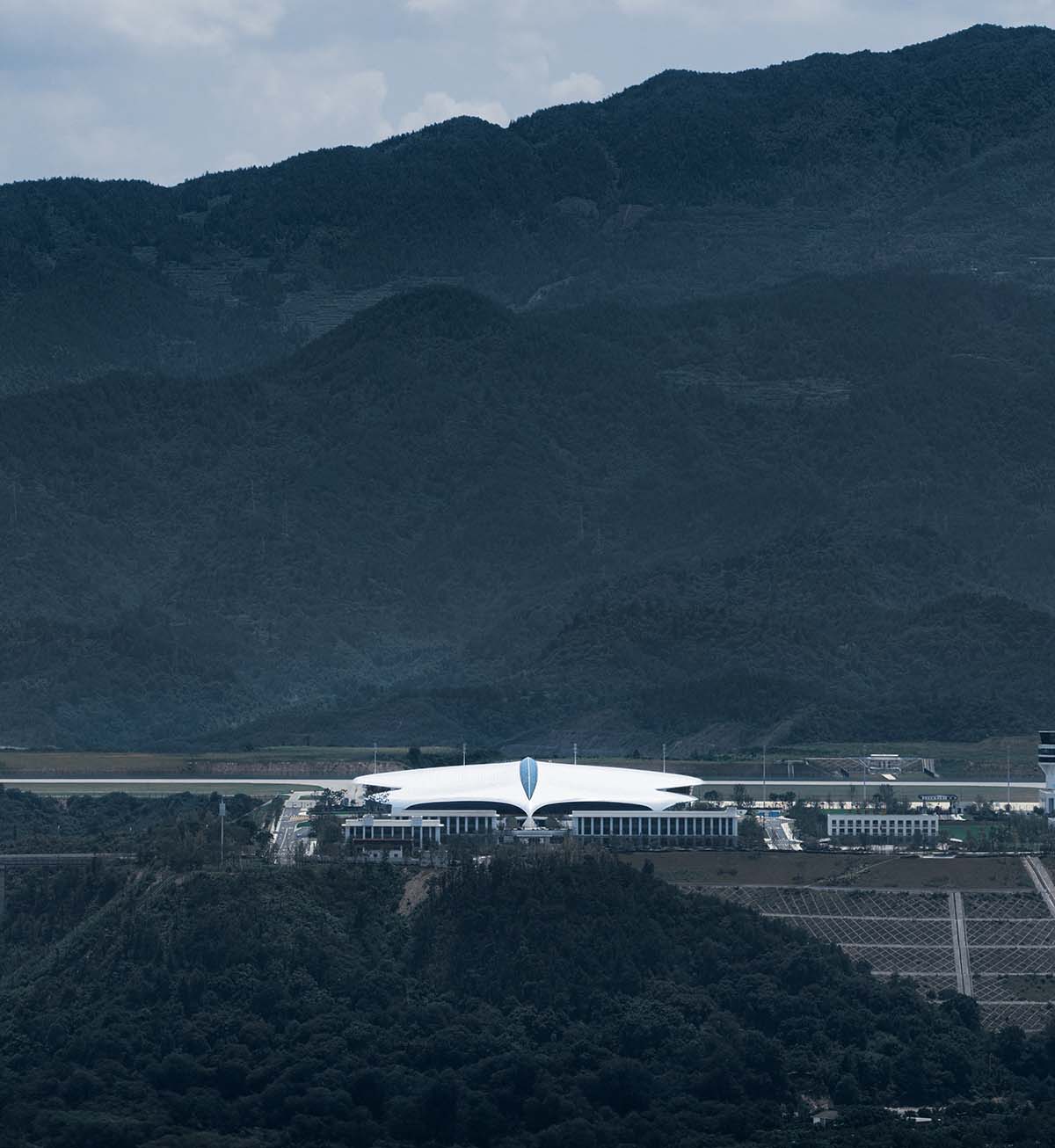
Image © CreatAR Images
Airports are typically thought of as strictly utilitarian infrastructure that is isolated from everyday urban life. MAD offers an alternative model with Lishui Airport: a transportation hub that serves as a municipal area, an ecological monument, and a site of psychological transition, providing travelers with a respite amidst the bustle of travel.
The surrounding scenery serves as a direct inspiration for the building design. With its gently sloping design, the terminal blends well with the site's natural slopes. The structure resembles a white bird peacefully resting amidst the mountains and forests thanks to its soft, continuous volumes and flowing geometries.
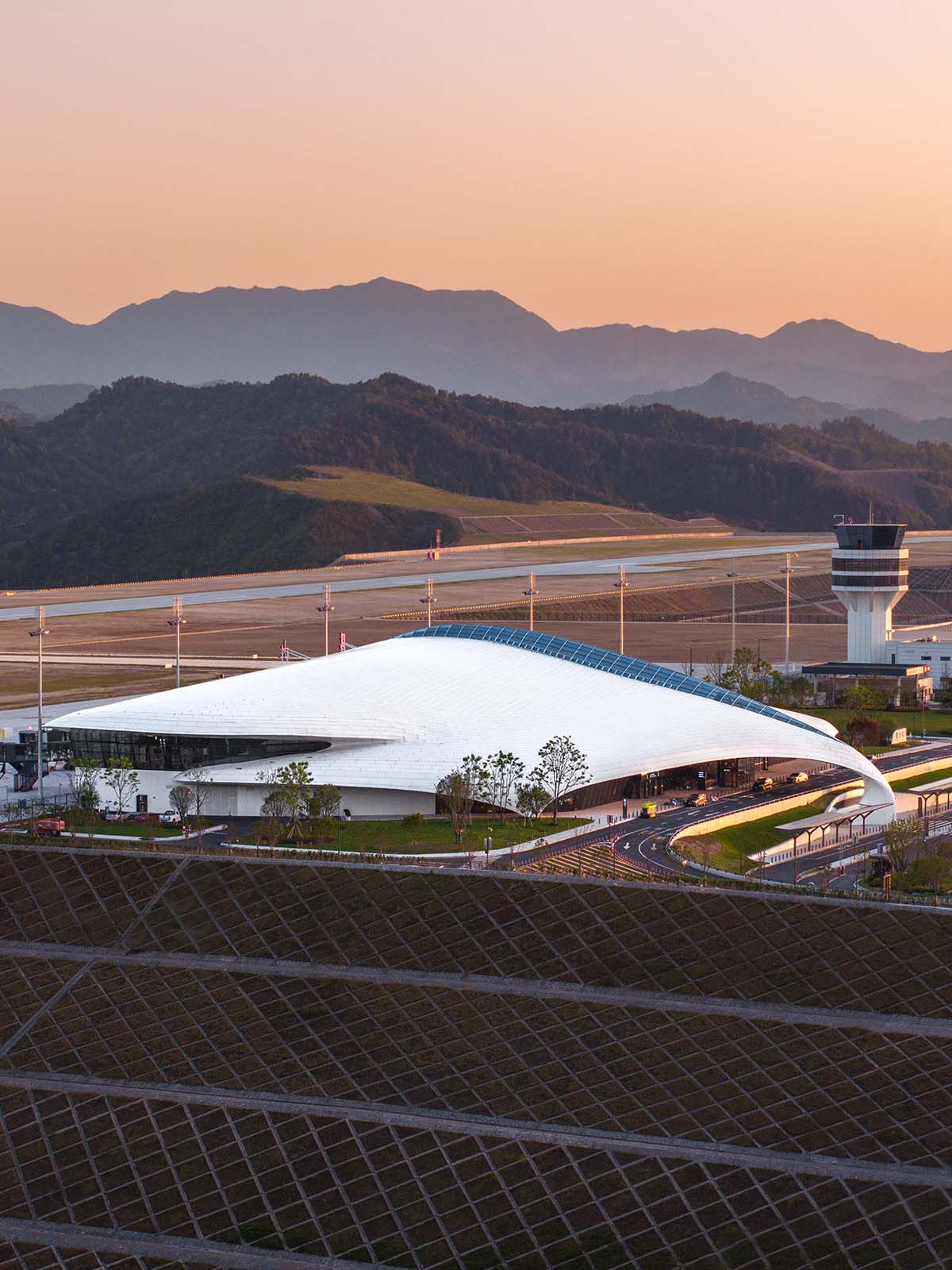
Image © Ding Junhao
Silver-white aluminum panels covering the terminal's double-layered roof provide a small but striking silhouette that adapts to the weather and light conditions. Because of the roofline, which conjures up images of foggy hills and soaring birds, the architecture seems as a part of the larger landscape rather than as a singular feature.
"We used materials with warm tones and natural textures to create a bright and airy interior. By adopting a one and a half story layout, the airport remains compact, while supporting daily comfort and engaging in a dialogue with nature," said Ma Yansong.
The lightweight roof is supported by fourteen umbrella-shaped structural columns, while the inside grilles in wood tones add visual rhythm and warmth. A spindle-shaped skylight at the top of the roof lets natural light stream deep into the terminal, bringing the interior to life with shifting hues.
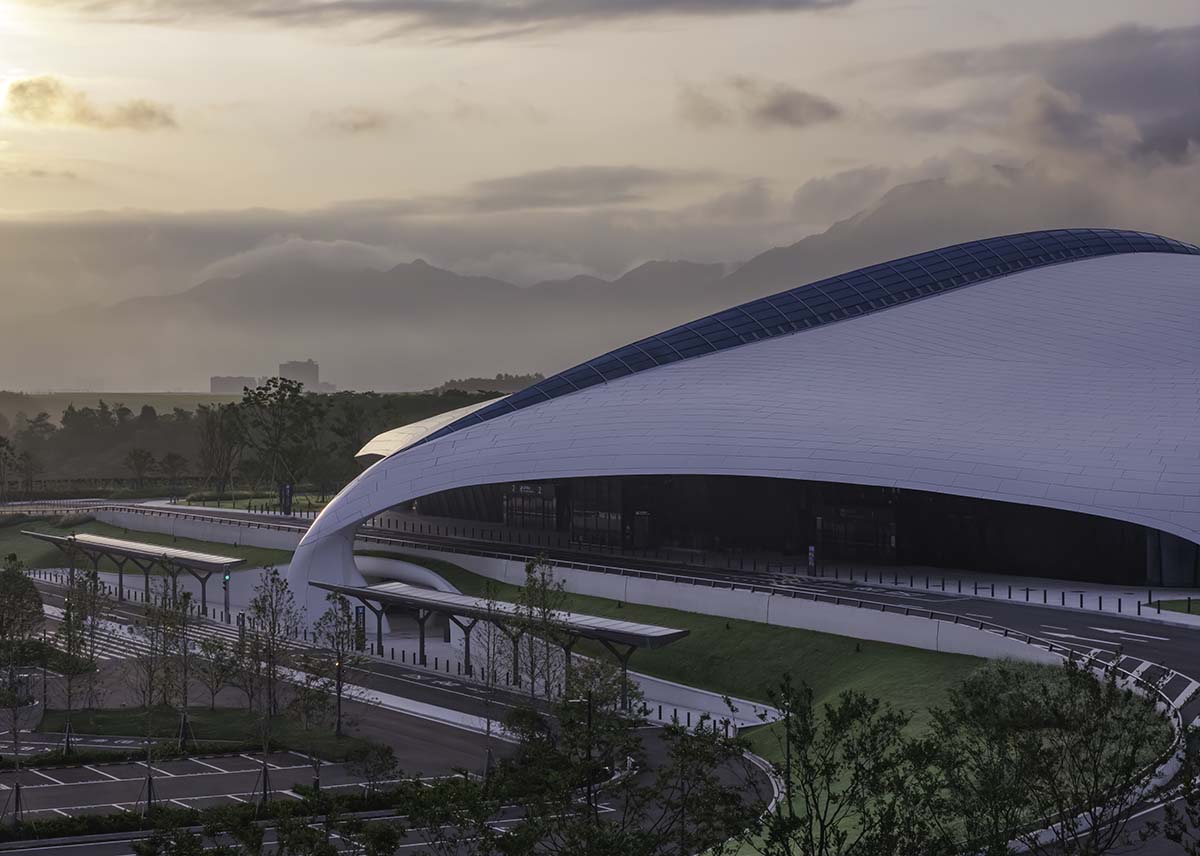
Image © blackstation
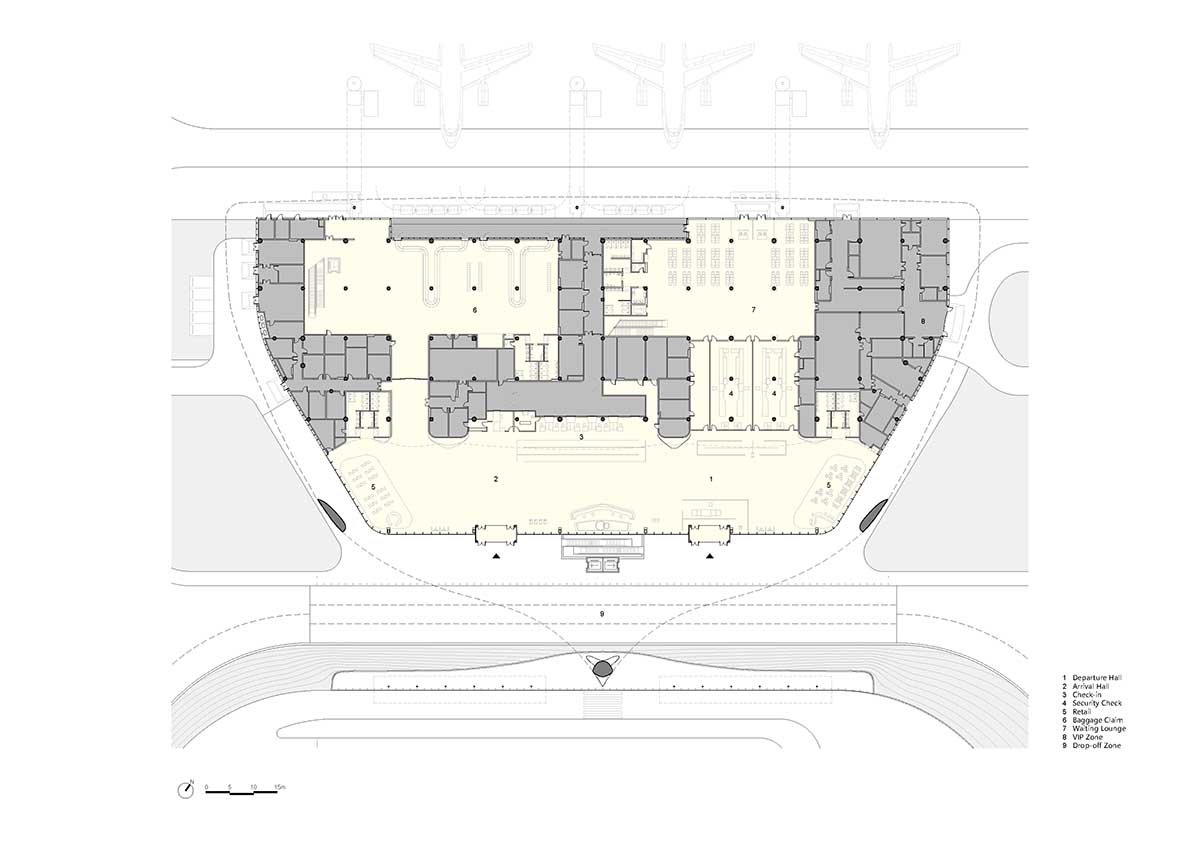
Views of the surrounding mountains are framed by transparent curtain walls that blur the line between inside and outside. With a height range of roughly 4.5 to 13 meters, the first-floor lobby creates a precisely calibrated spatial experience that minimizes energy use and eliminates the excess size common in huge transportation halls.
A calmer and cozier waiting area is created by the integration of narrow acoustic holes between interior panels, which help absorb noise.
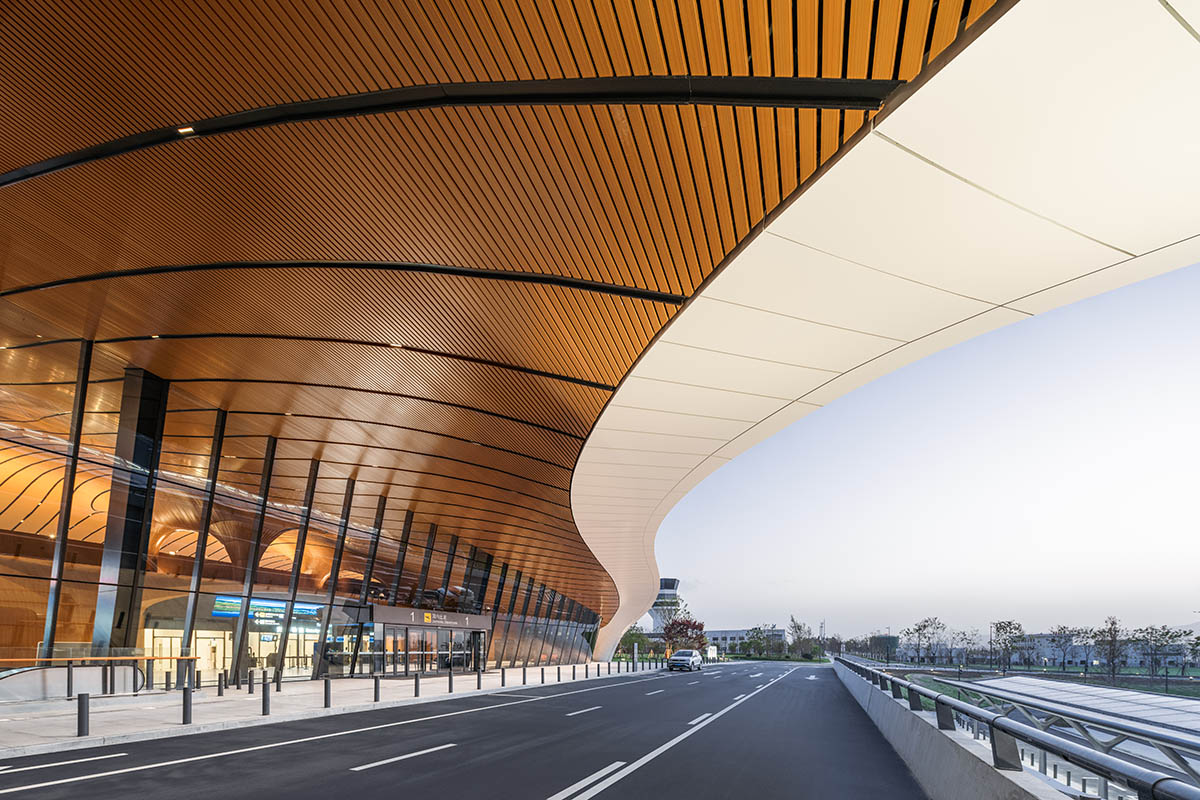
Image © CreatAR Images
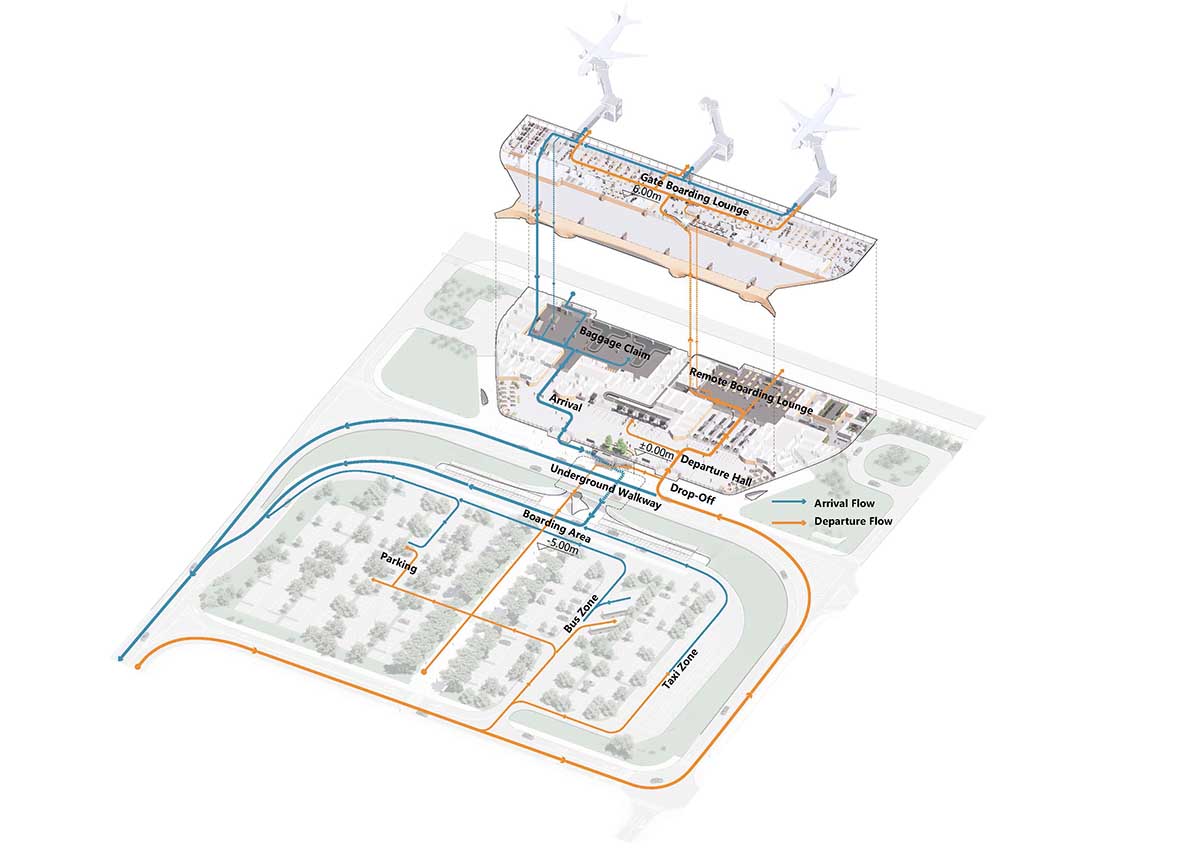
A double-height entrance hall connecting the ground floor arrival areas with the upper-level departure lounge serves as the focal point of the terminal's one-and-a-half-story modular layout. Passenger flow is expedited by its small vertical arrangement, which preserves visual coherence throughout levels.
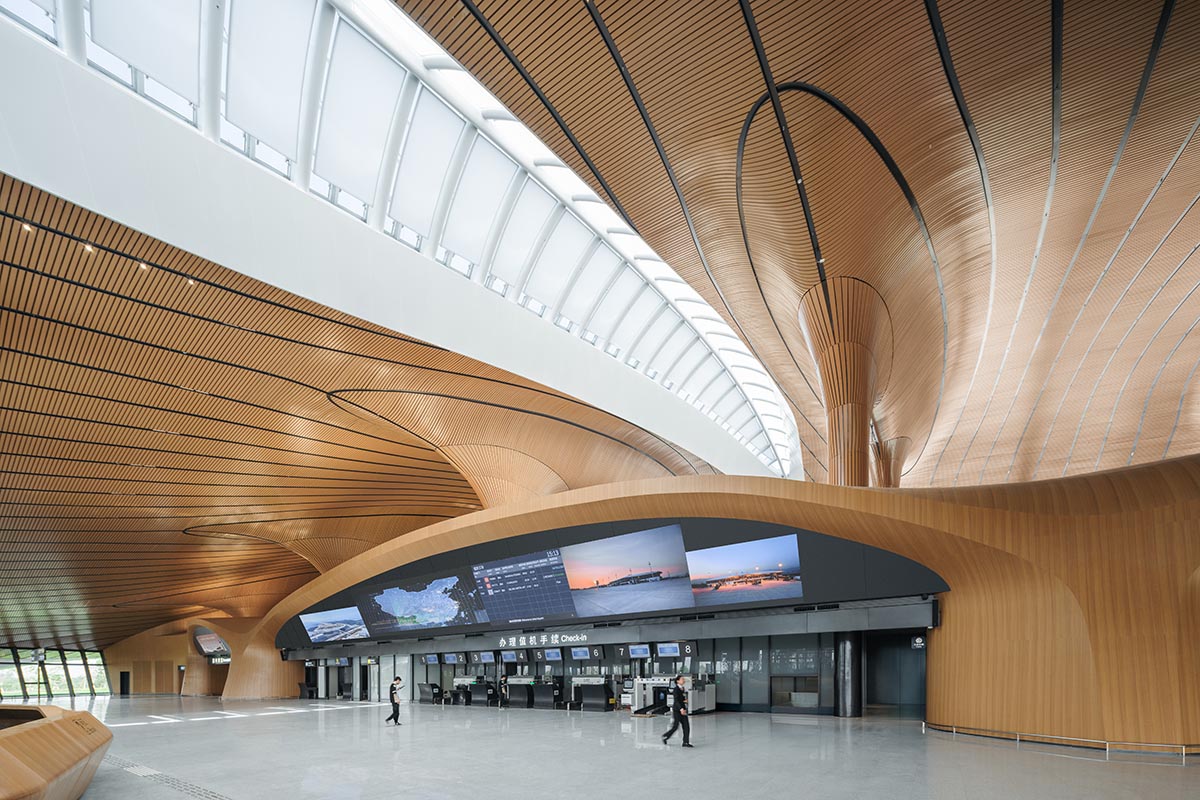
Image © CreatAR Images
The natural terrain is followed by a buried parking structure beneath the terminal. Underneath the structure is a manicured central walkway that points travelers in the right direction toward the departure hall and overcomes the difficulties presented by the mountainous location by using architectural continuity rather than division.
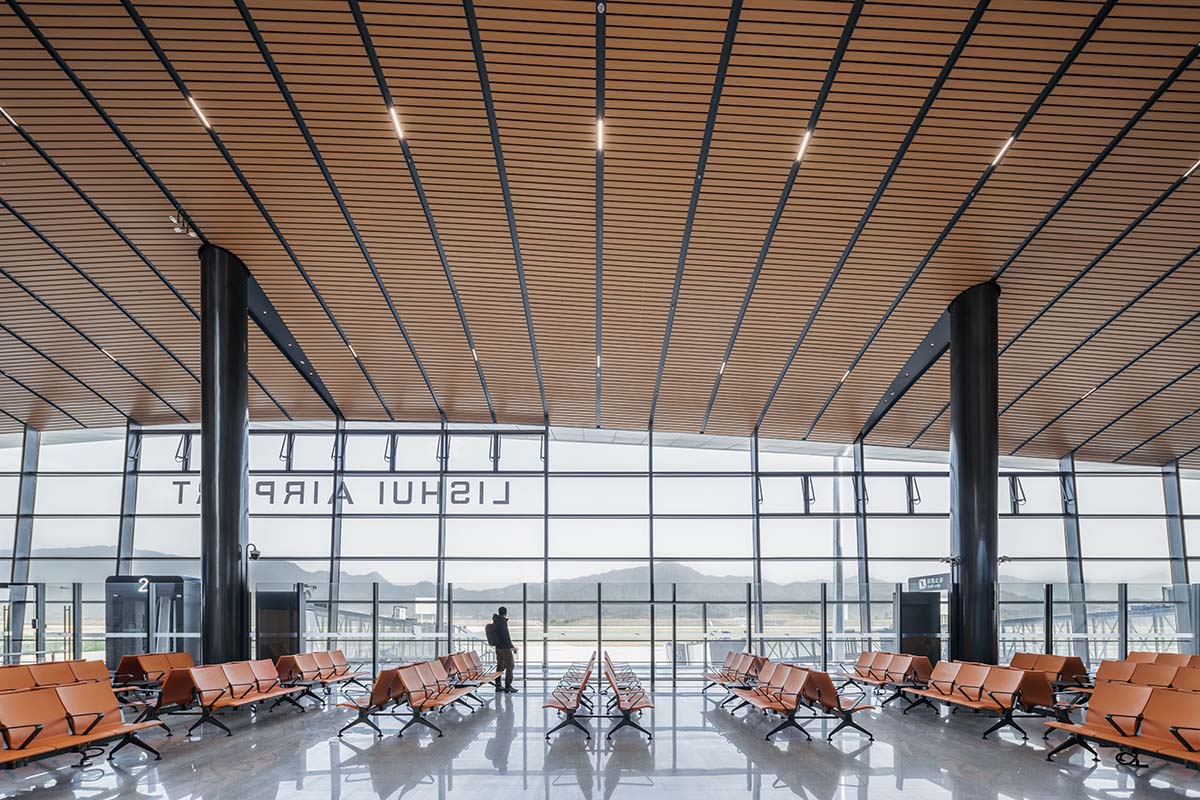
Image © CreatAR Images
Future expansion is also included in the design. The long-term master plan calls for the construction of an international terminal and projects that passenger capacity will increase to 1.8 million by 2030 and 5 million by 2050.
Lishui Airport will serve a number of domestic destinations by the end of 2025, connecting to important tourist sites and economic hubs while creating the airport as a civic threshold and infrastructural entrance to the city.
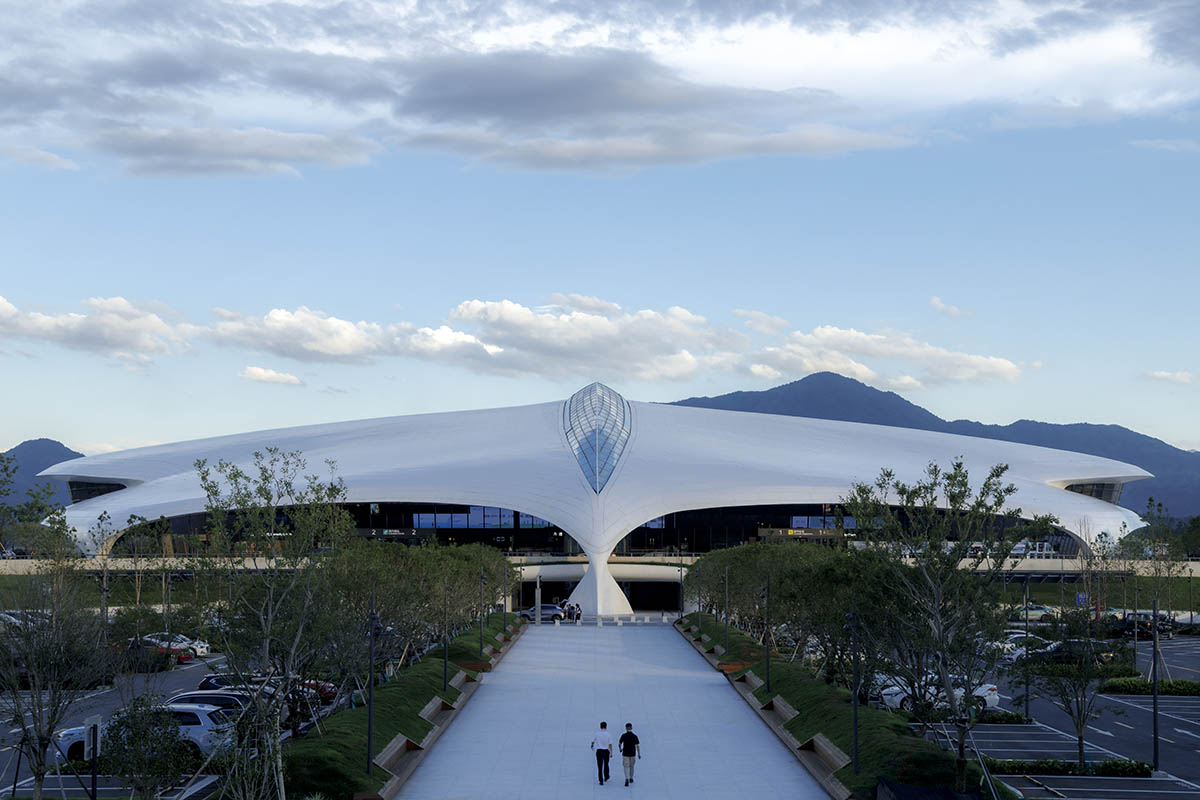
Image © Arch Exist
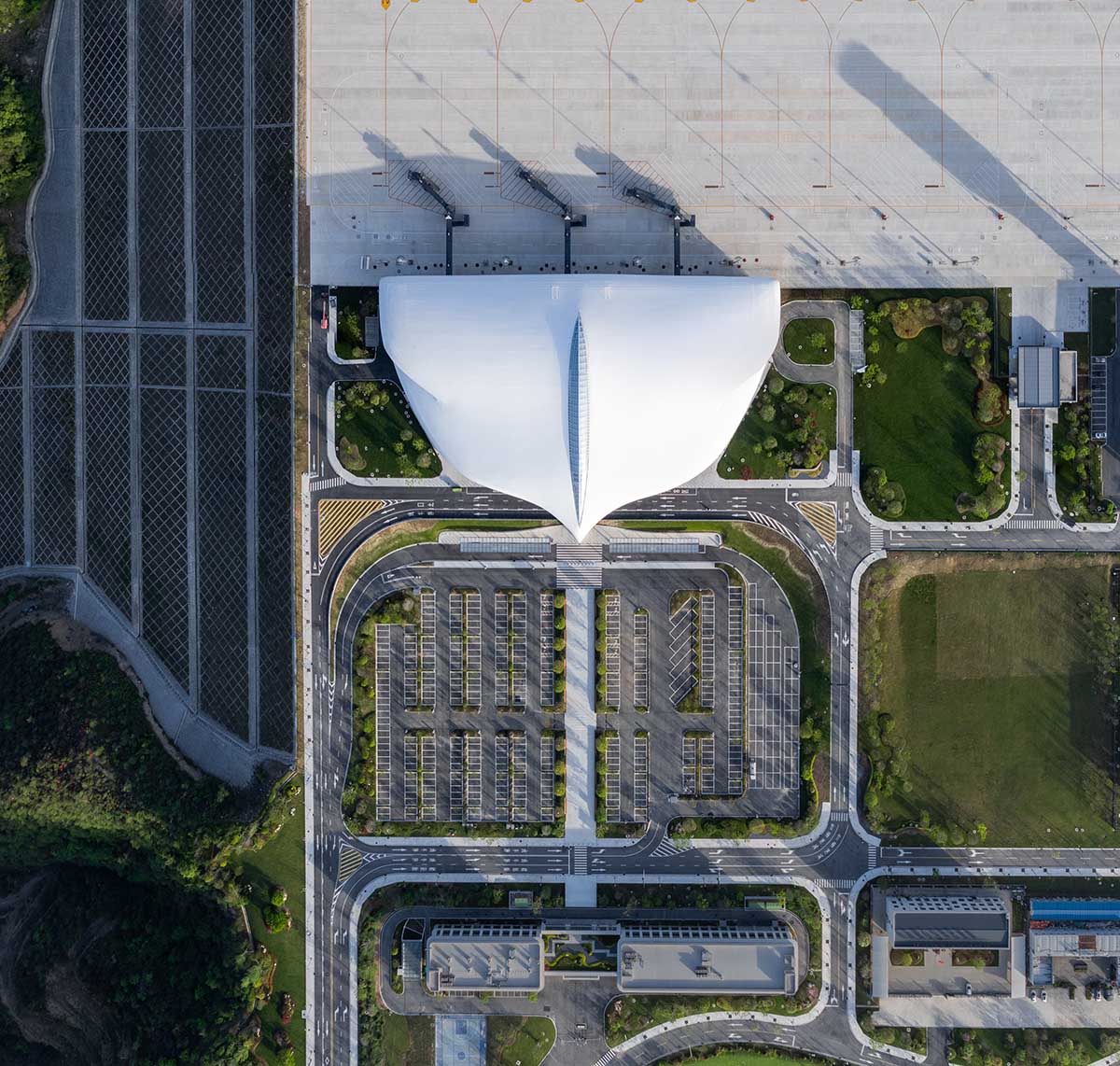
Image © CreatAR Images
Circulation diagram
First floor plan
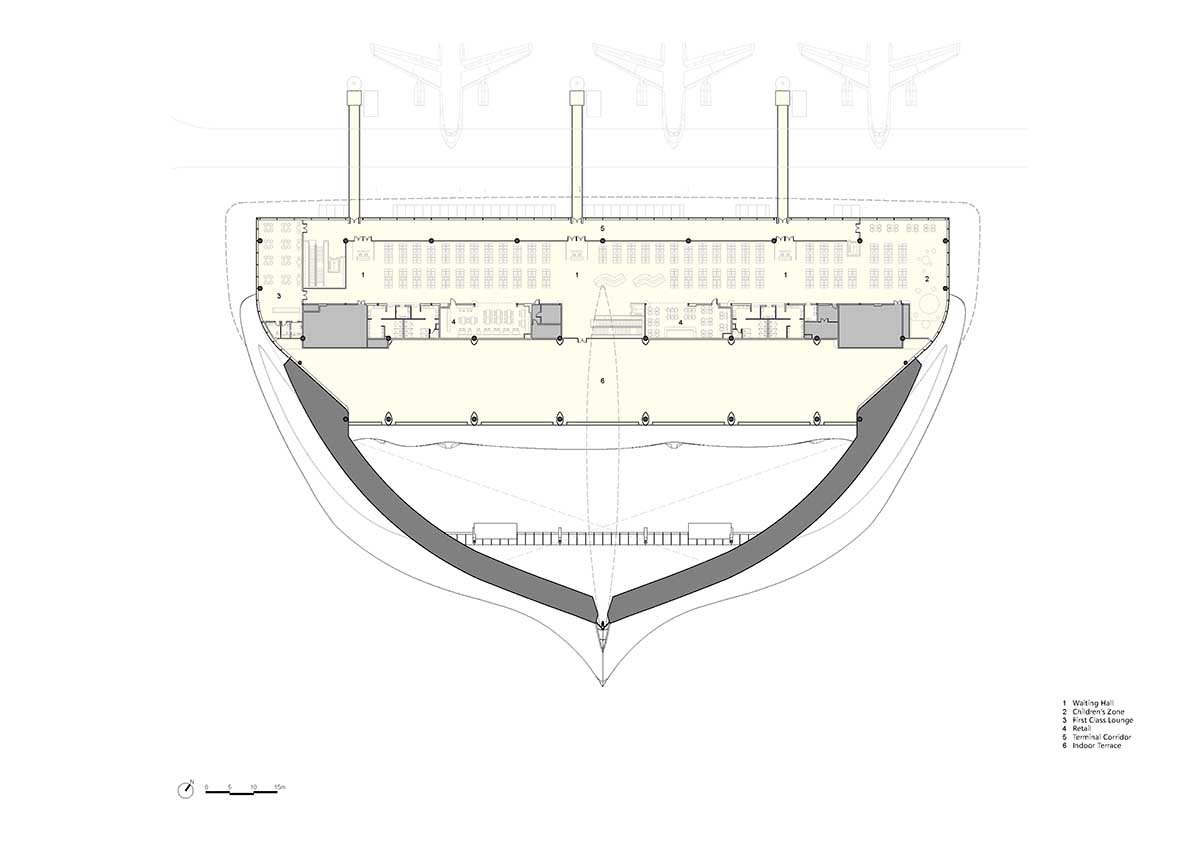
Second floor plan
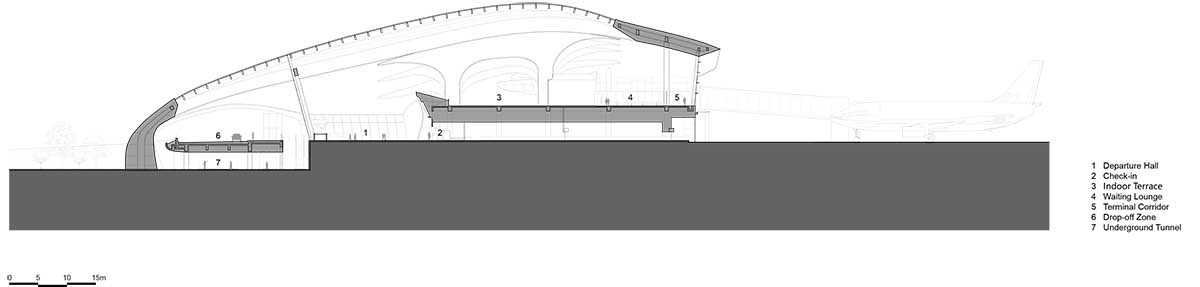
Section
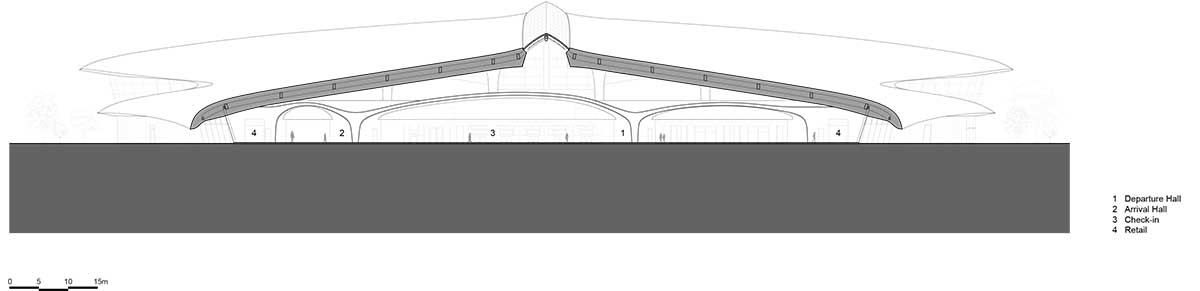
Section
MAD released an update about on the long-awaited Lucas Museum of Narrative Art in Los Angeles’ Exposition Park. In addition, MAD's Fenix, a contemporary art museum about migration situated in Rotterdam's historic port neighborhood, formally opened to the public in May 2025.
Project facts
Project name: Lishui Airport
Location: Lishui, China
Date: 2018 - 2025
Site Area: 2,267 hectares
Building Area: 12,100 sqm
Building Height: 23.95 m
Principal Partners in Charge: Ma Yansong, Dang Qun, Yosuke Hayano
Associate Partners in Charge: Liu Huiying, Kin Li
Design Team: Sun Shouquan, Zhang Xiaomei, Peng Kaiyu, Lei Lei, Yang Xuebing, Sun Mingze, Luo Yiyun, Yin Jianfeng, Punnin Sukkasem, Zhu Yuhao, Yao Ran
Client: Lishui Airport Construction Headquarters
Architectural Design: MAD
Executive Architects: CAAC NEW ERA AIRPORT DESIGN INSTITUTE COMPANY LIMITED
Interior Design: MAD, Shanghai Xian Dai Architectural Decoration & Landscape Design Research Institute CO., Ltd
Façade Consultant: RFR Shanghai
Landscape Consultant: Z' scape Landscape Planning and Design, Huadong Engineering Corporation Limited
Architecture and Landscape Lighting Consultant: Ning field lighting design Corp., Ltd.
Interior Lighting Consultant: Shanghai Xian Dai Architectural Decoration & Landscape Design Research Institute CO., Ltd
Construction: Beijing Construction Engineering Group
Video: blackstation
The top image in the article © CreatAR Images.
All images © Ding Junhao, CreatAR Images, blackstation, Arch-Exist.
All drawings © MAD.
> via MAD