Submitted by WA Contents
Winners announced for the Hungarian Museum of Natural History's New Collection Centre
Hungary Architecture News - Feb 12, 2026 - 05:28 3803 views
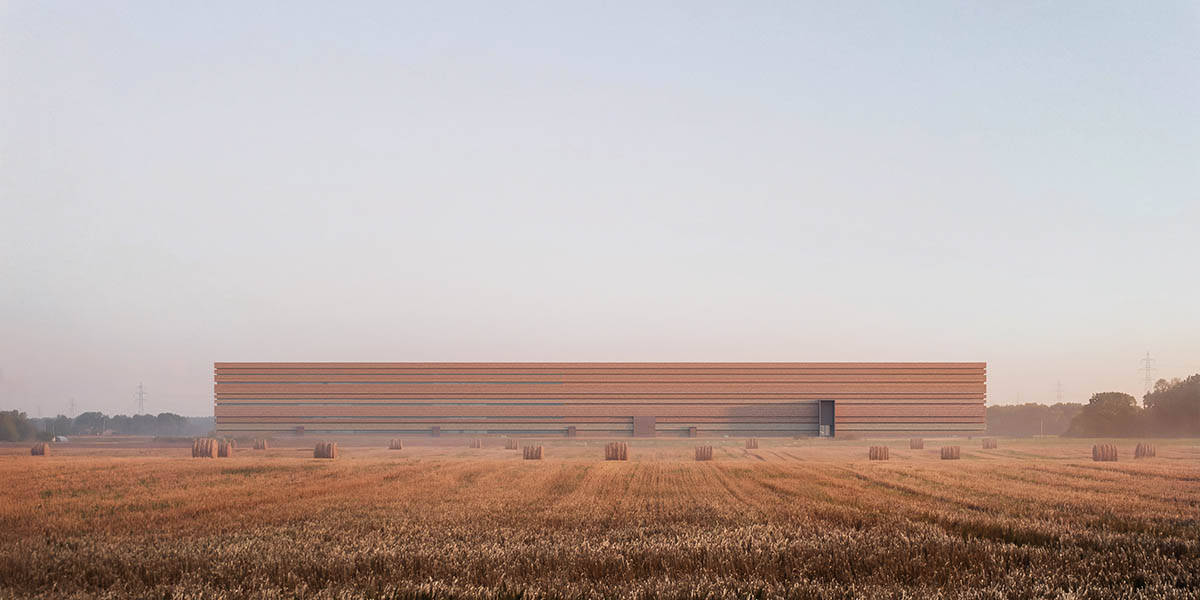
The winners of the internationally design competition for the 43,000 square meter New Collection Centre for the Hungarian Museum of Natural History in Debrecen are Sordo Madaleno with építész stúdió and Buro Happold.
The winning team was selected from a shortlist of twelve architects for the historic scientific center. This is the first cultural project in Europe for Sordo Madaleno, a third-generation Mexican architecture firm with offices in Mexico City and London. In the competition, the architects were chosen from a shortlist of twelve.
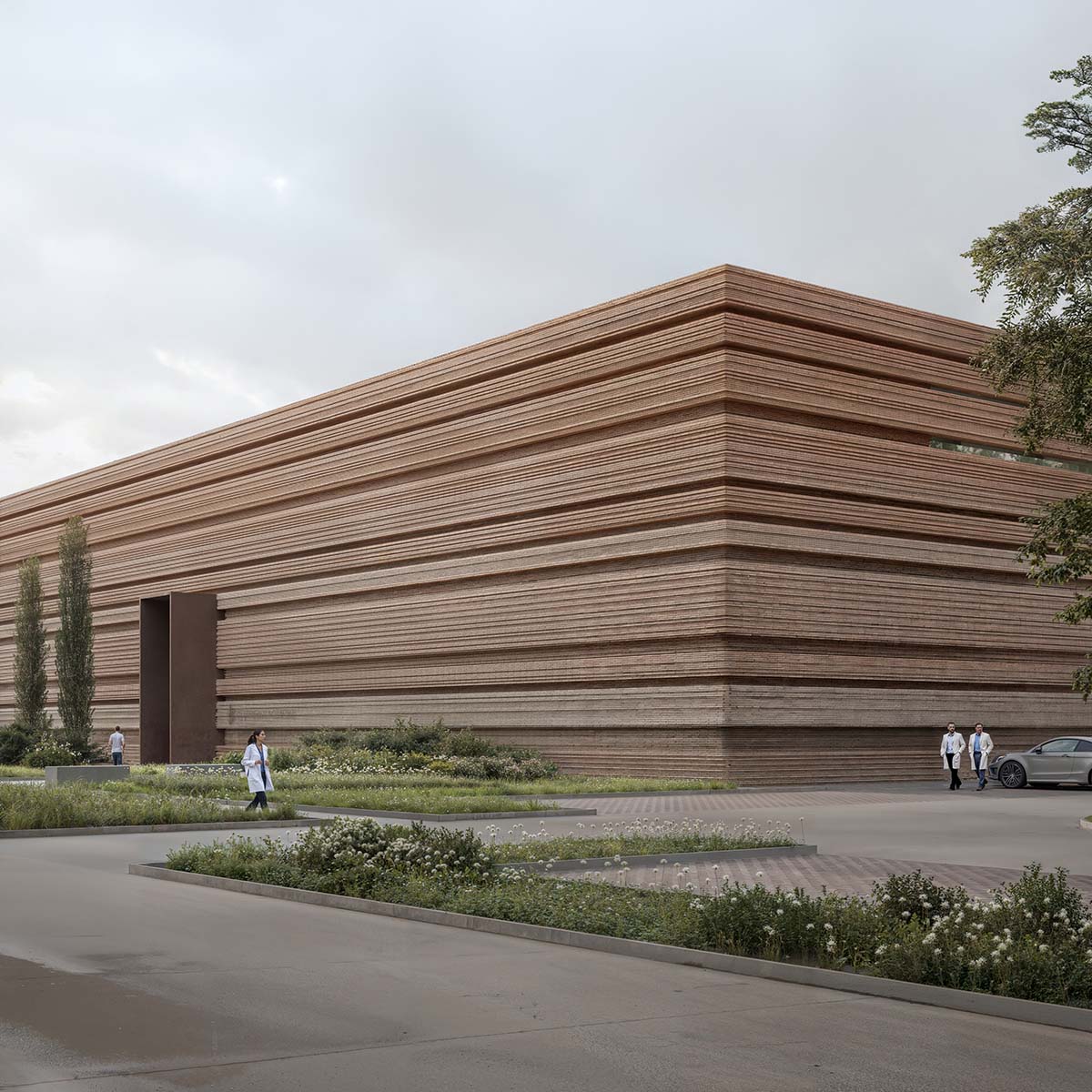
The Hungarian Museum of Natural History was moved from Budapest to the edge of Debrecen's Great Forest as part of significant urban and academic infrastructure development in the country's second-largest city.
Focused on the regulated storage and study of almost 11 million objects, the Museum's New Collection Centre, designed by Sordo Madaleno with építész Stúdió and Buro Happold, is located in the University of Debrecen Science Park approximately 4km from the new Natural History Museum building.
Building as Vessel
The New Debrecen Collection Center is a structure designed to preserve and incubate, adhering to the straightforward reasoning and graceful function of the traditional Hungarian clay vessel.
The 141m by 83m elongated rectilinear building reads as a solid, elemental, and timeless design, drawing from the design team's investigation into the region's craft traditions and material histories, where clay jars and earthenware have long been employed for produce conservation.
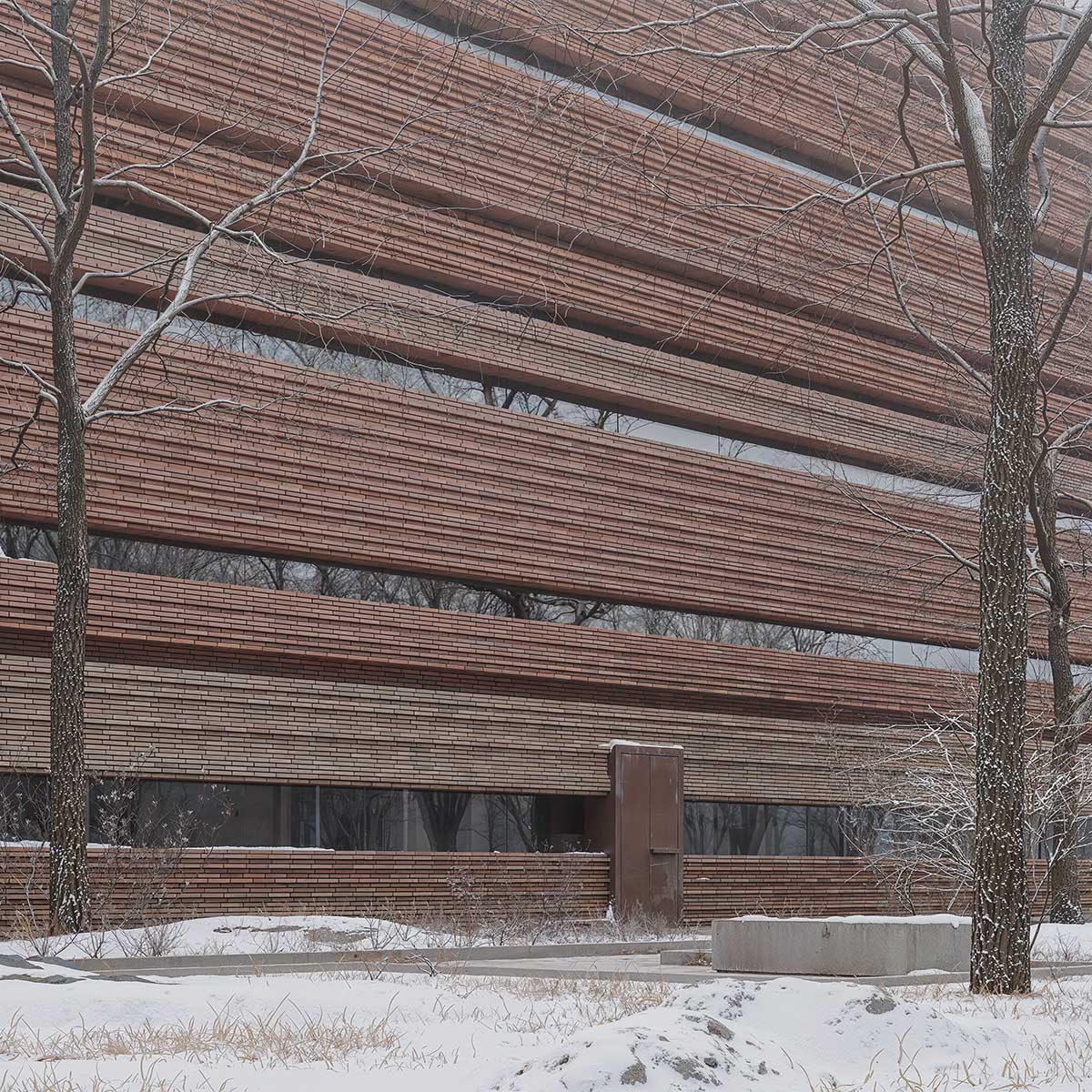
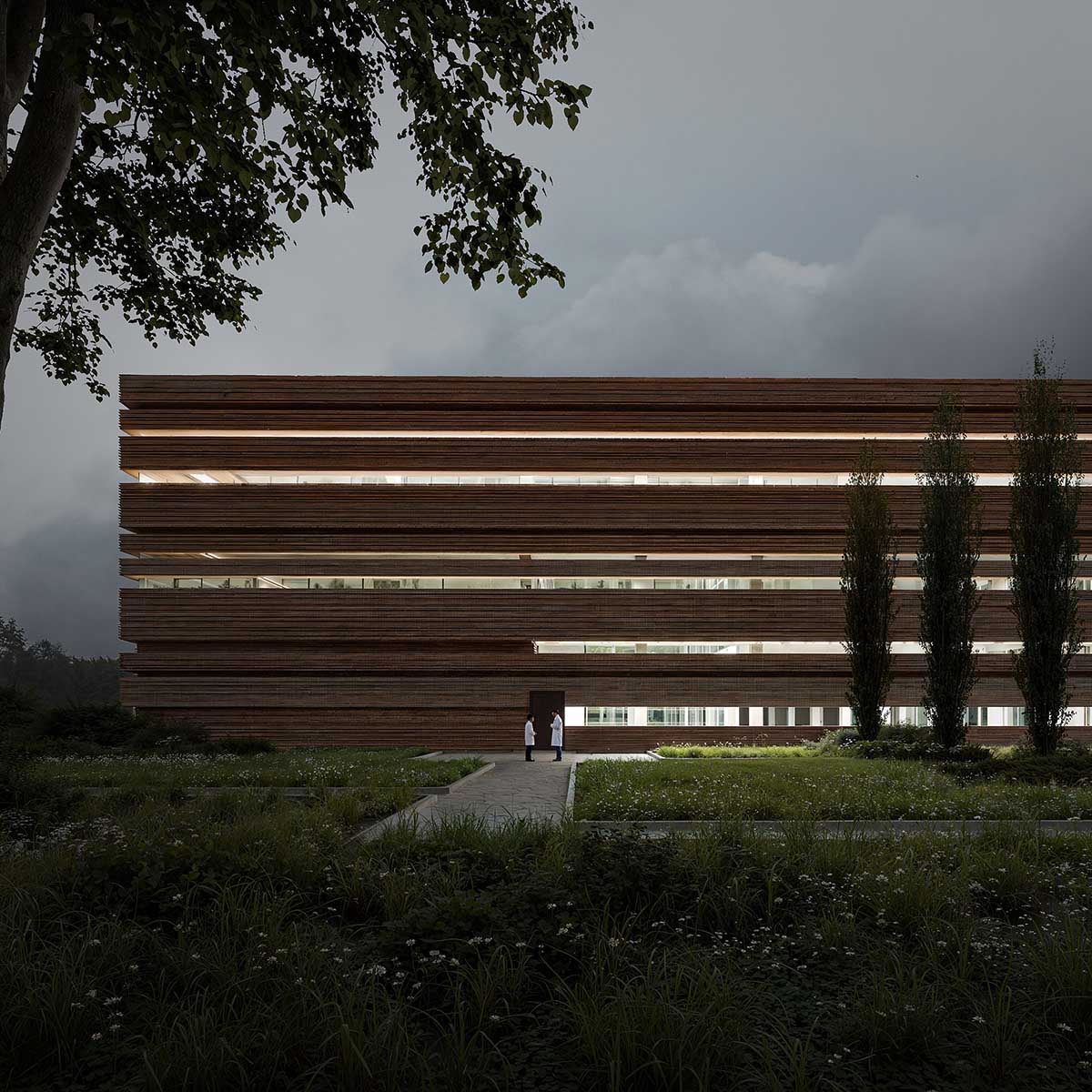
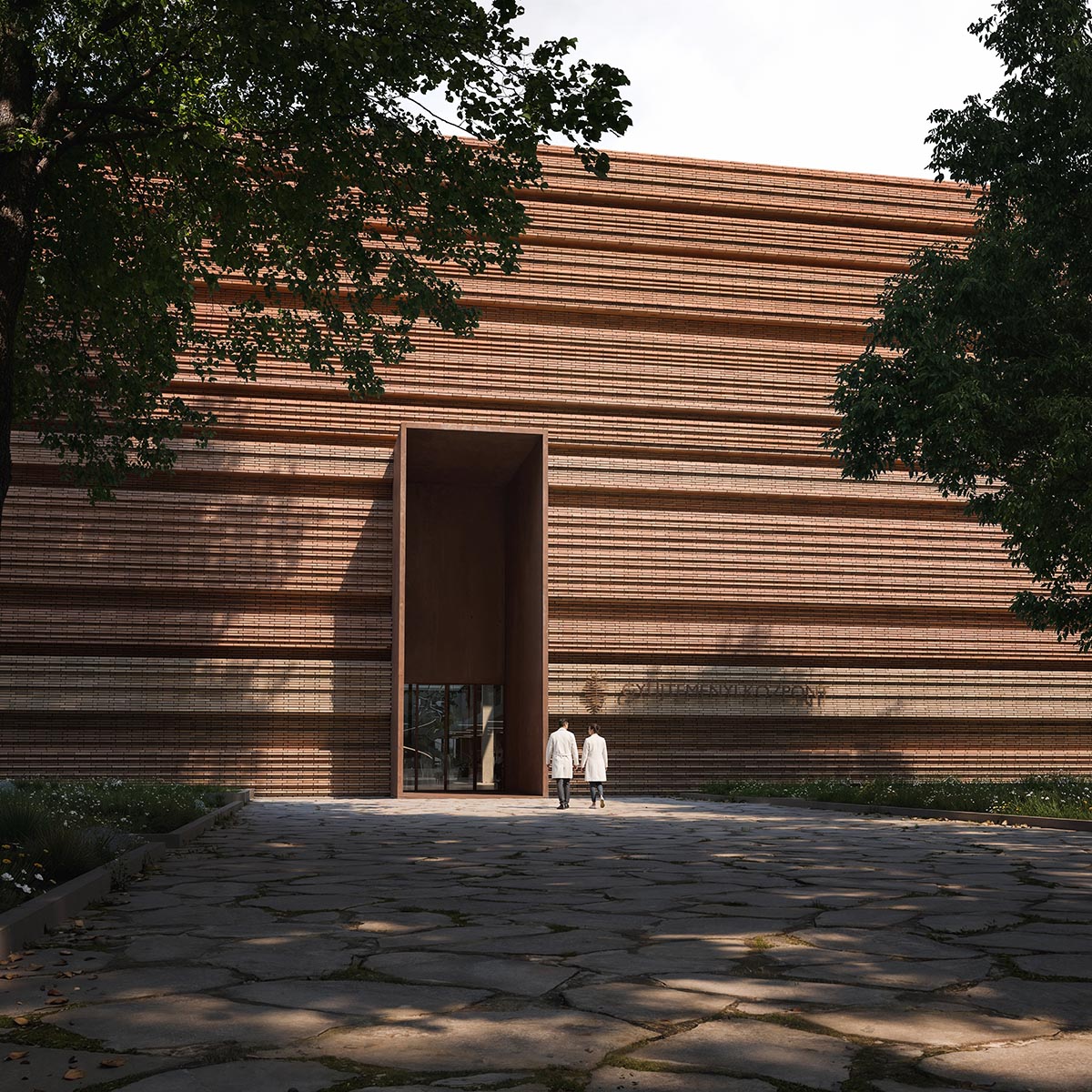
The Center is set up for long-term knowledge generation and preservation, effective research operations, and controlled storage. The center's distinctive feature is its stratified brick façade, which alludes to Hungary's geological and material past by using soils from various parts of the nation to make its bricks.
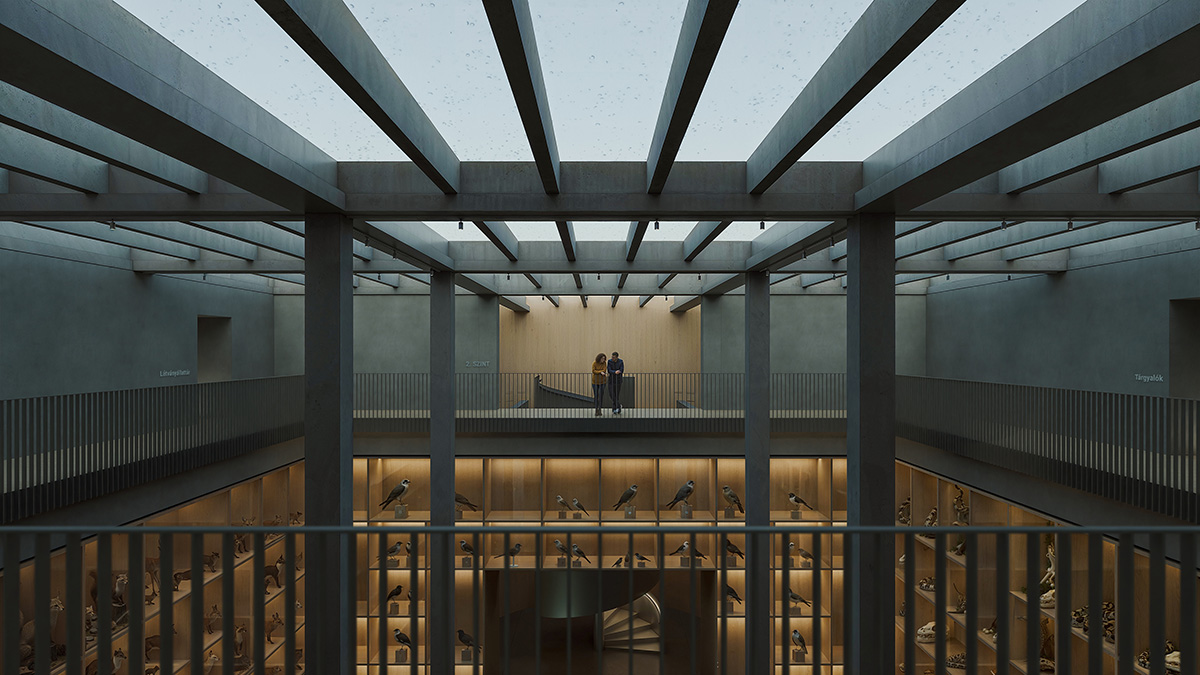
The Collection Center's disciplines—geology, fossils, animal life, human activity, and ecology—as well as its goal of comprehending the bio- and geodiversity of not just the Carpathian Basin but the entire planet are materially represented by the brick tones.
With its low-lying fields and expansive horizons, the building's monolithic form is enlivened by these slight differences. The idea of a facility intended for security, conservation, and collection care is strengthened by a distinct arrival point.
The plan is radically lucid and guarantees the best possible technical and environmental performance. Three floors and a basement level comprise the three main regions.
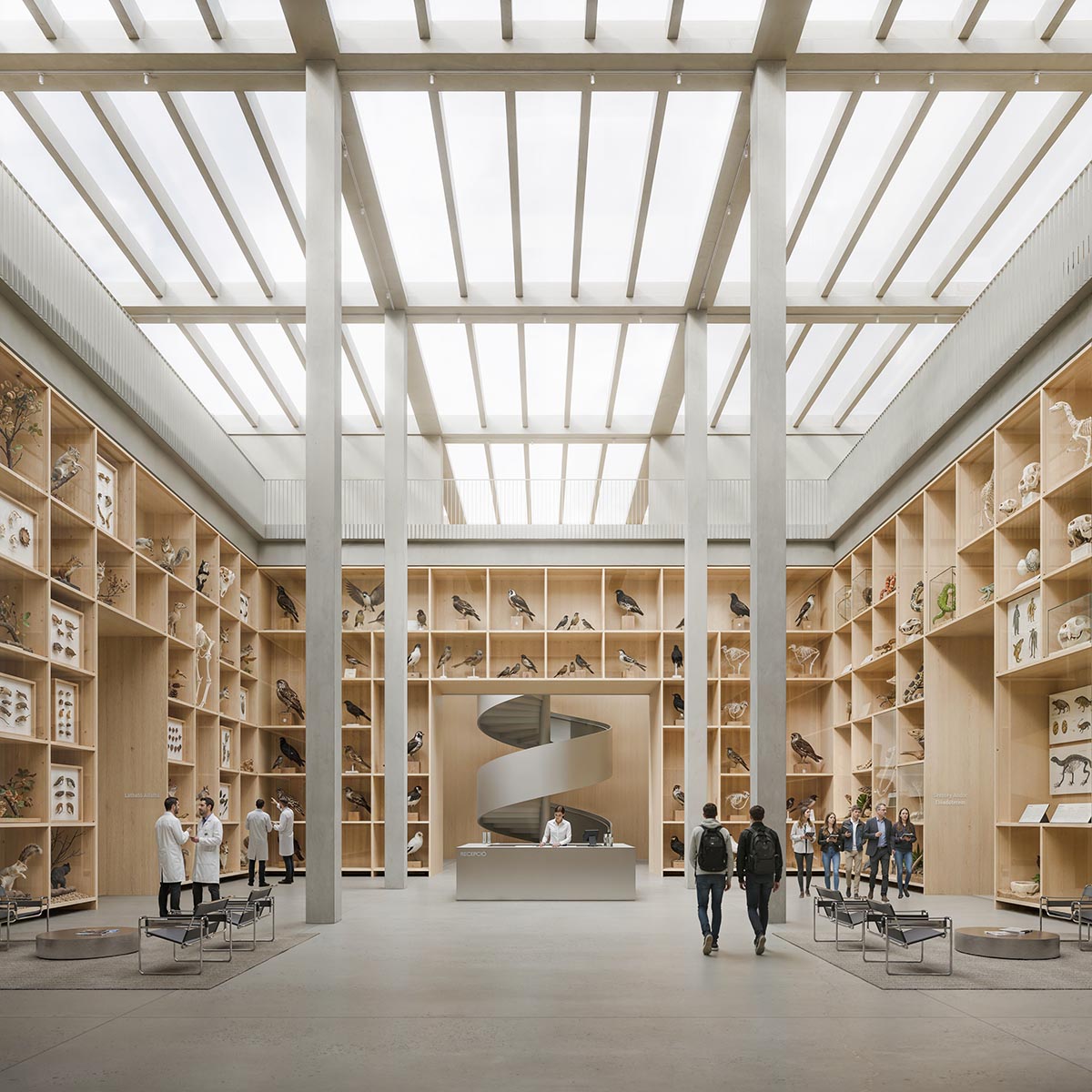
These are separated into 28,000 square meters of archival storage, 6,000 square meters of study areas with conservation labs, and a warm, three-story atrium for visiting research experts and student groups.
Selected pieces from the Museum's collection are on show in the top-lit atrium, creating an exhibition and gallery area with lecture halls that may be used for events.
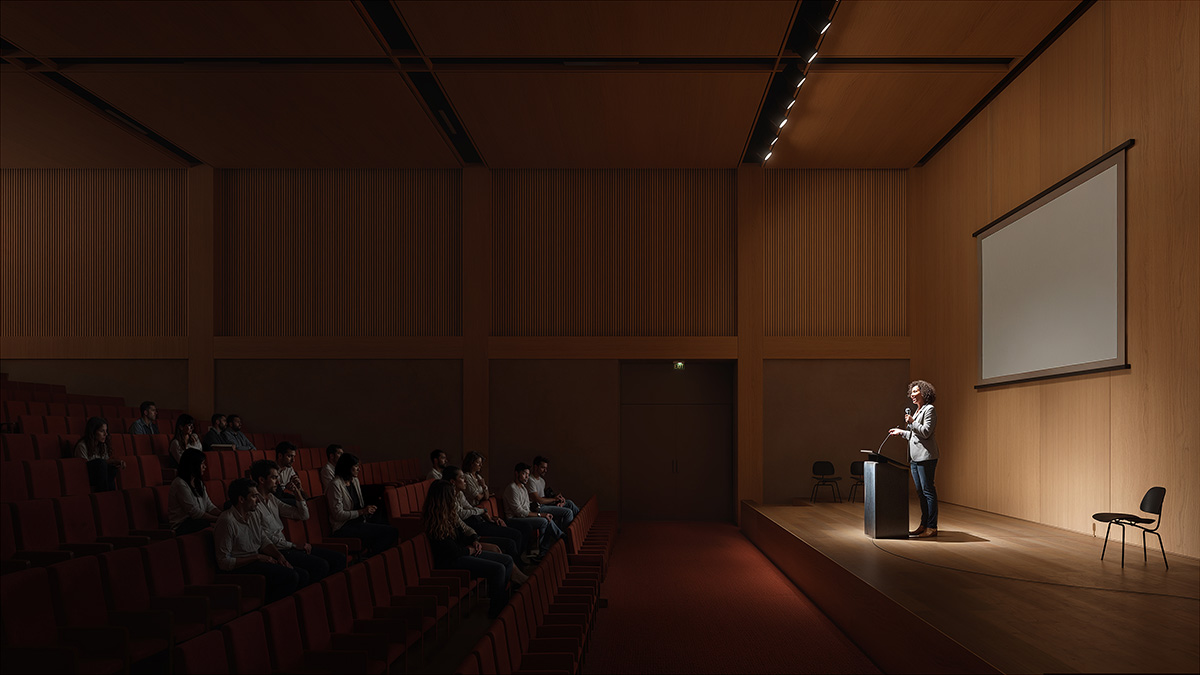
For researchers, students, and educational organizations, this makes it the perfect public offering. Internal courtyards are used to deliver controlled light and ventilation into the study and laboratory areas that staff members use on a daily basis.
This ensures comfortable workspaces with ample views of the outdoors without sacrificing the strict conservation standards required by museums.
"The Centre’s staff are stewards of the objects, and the architecture becomes an extension of that stewardship," said Fernando Sordo Madaleno.
"Within this layered ecology of care, the object is framed not as an isolated artefact but as an embodiment of life-worlds and landscapes that nourish reciprocal relationships."
"Our building reflects this mutuality, providing a space of unity between conservator, stakeholder, architecture, and environment," Madaleno added.
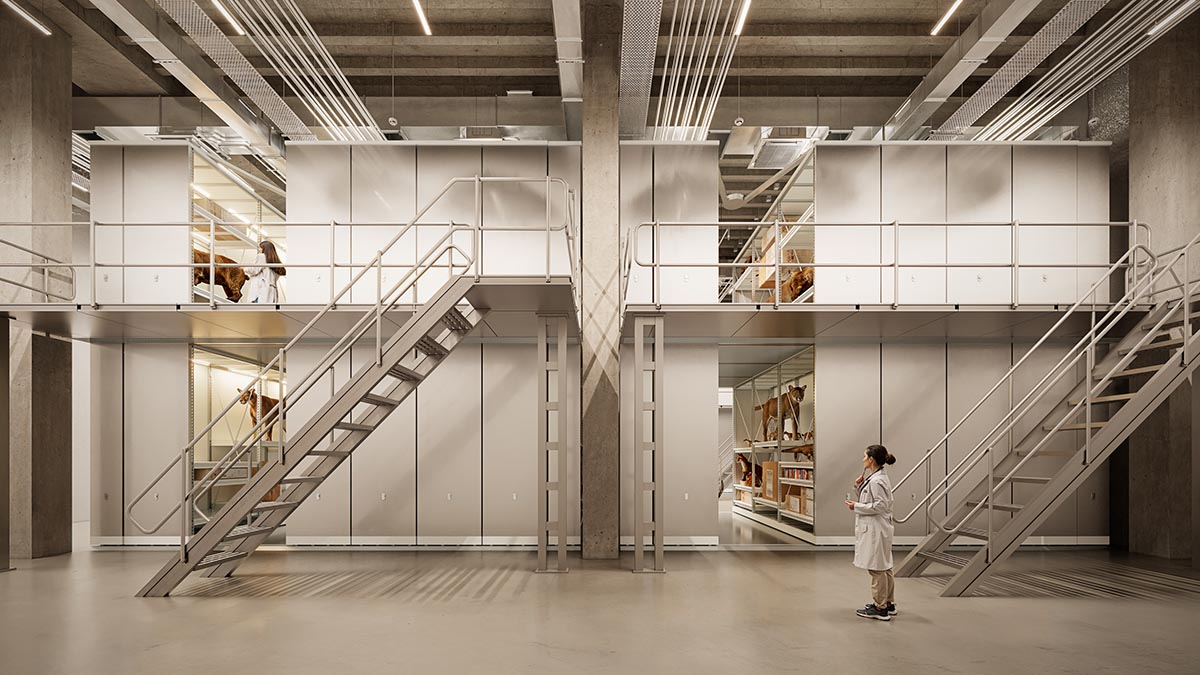
The jury highlighted that the winning design by Sordo Madaleno with építész stúdió and Buro Happold meets the role of the support institution well with its optimal spatial organisation for the stores, study spaces and laboratories while ensuring the long-term preservation of the collections, the smooth operation of research as well as the efficient conduct of international scientific cooperation.
It was said that the design team paid special attention to sustainability, security and innovative logistics solutions relating to the collections, so the Centre can excel in serving as the scientific support base of the Hungarian Museum of Natural History.
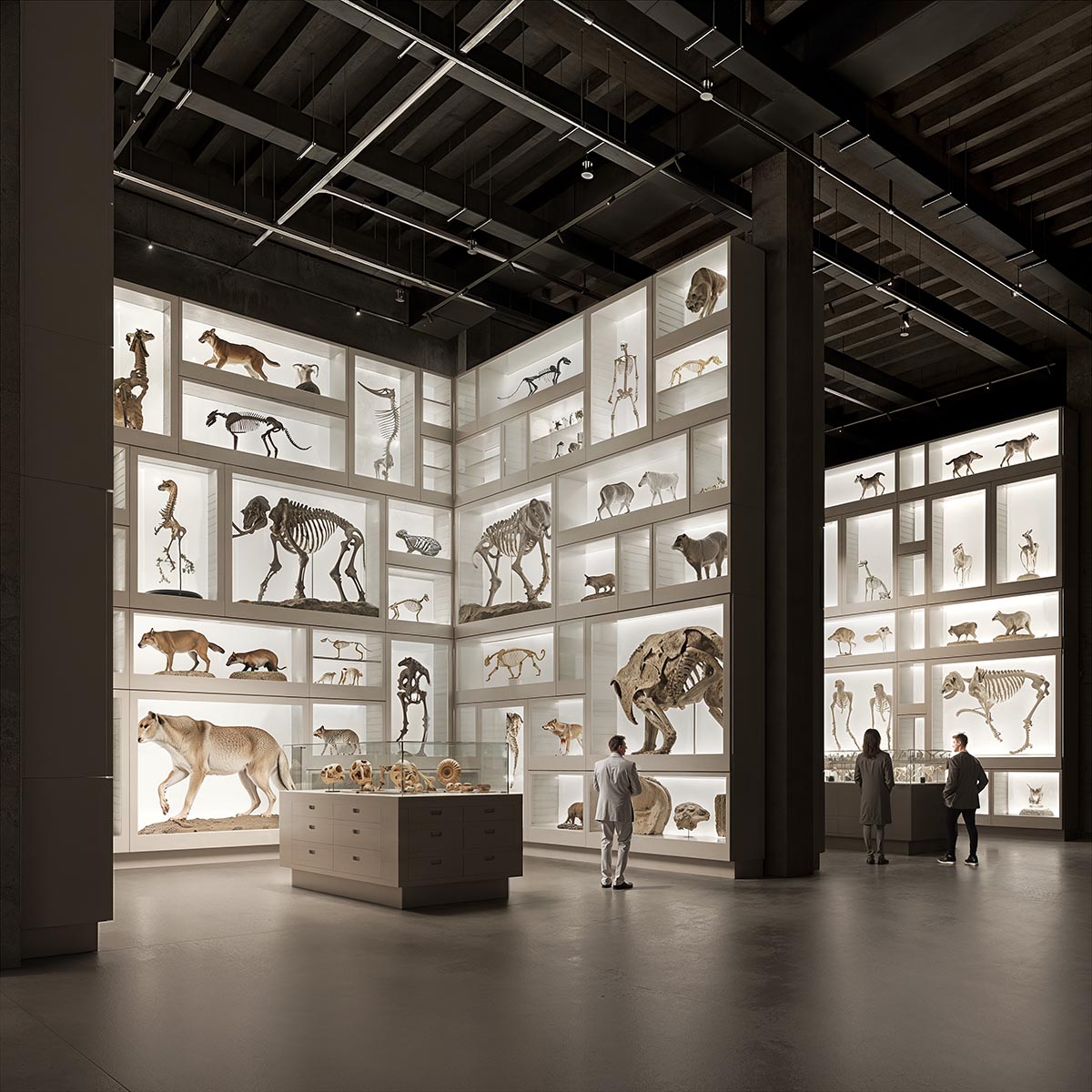
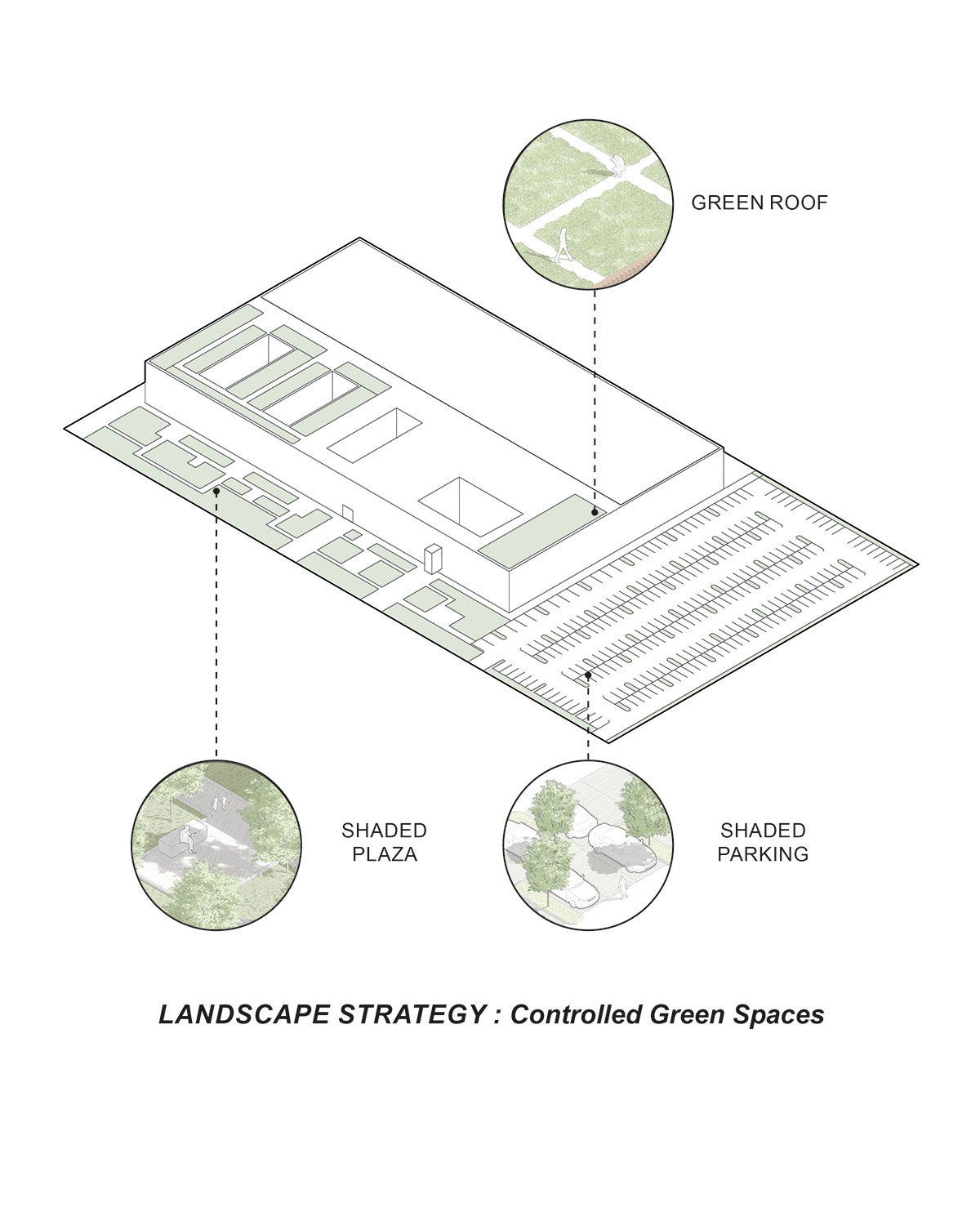
Diagram Landscape Strategy
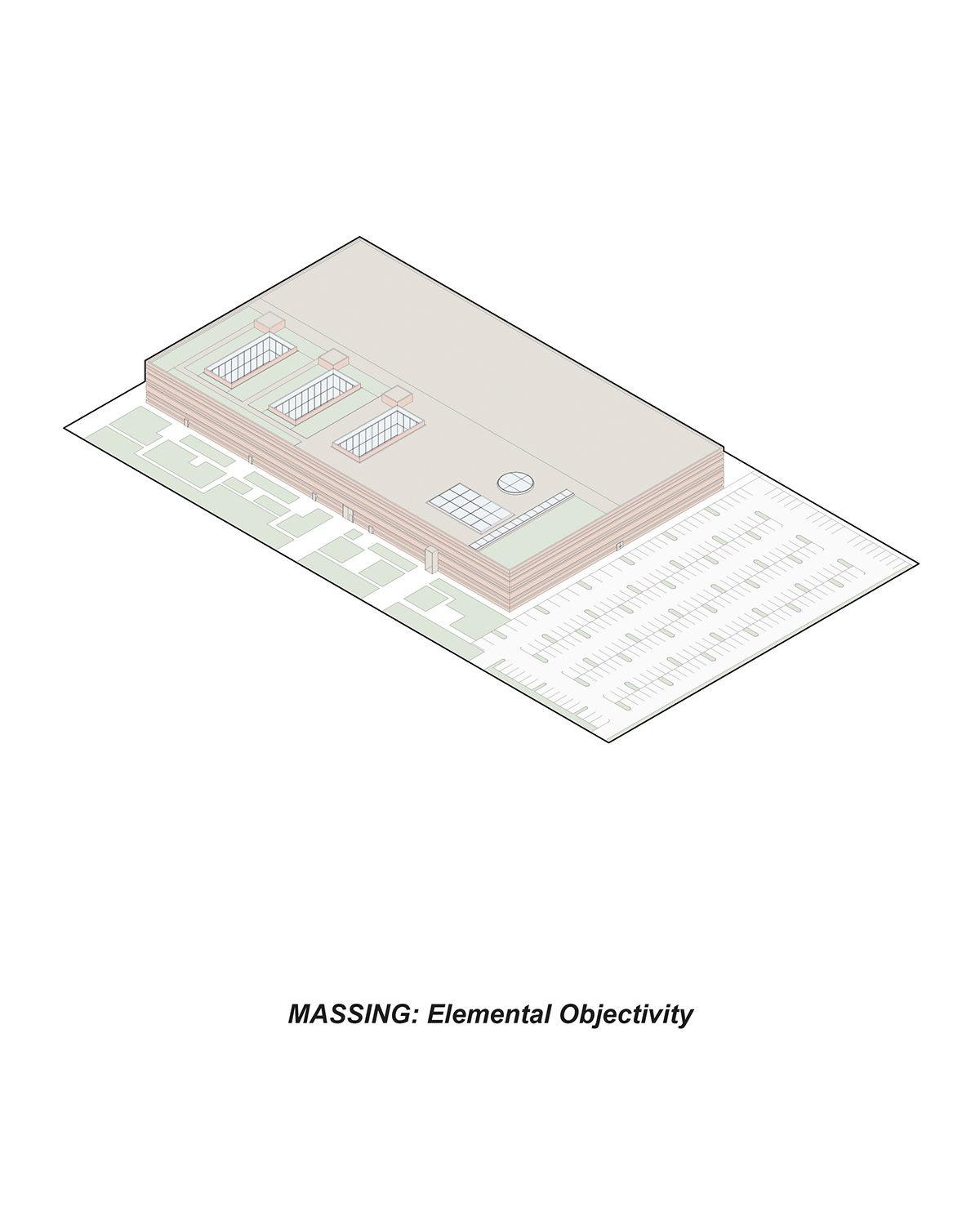
Diagram Massing
Founded in 1937, Sordo Madaleno is a third-generation Mexican architecture studio that currently operates in Mexico City and London. The studio creates environments where memory, tradition, and topography coexist as a way of practicing architecture as charity.
Project facts
Client: Municipality of the City of Debrecen, Hungarian Museum of Natural History
Competition organiser: Debreceni Infrastructure Development Ltd
Project Team: Sordo Madaleno: Javier Sordo Madaleno Bringas, Javier Sordo Madaleno de Haro, Fernando Sordo Madaleno, Tamara Munoz, Jaime Sol, Carlos Reyes, Rick Liu, Audrey Tseng de Melo Fischer, Juliana Biancardin, Marissa Glauberman, Castana Arango, Ann Dingli, Luis Frausto, Diego Velazquez, Aaron Sanchez
Epitezs Studio: Honich Richard, Szántó Hunor
Buro Happold: Thomas Kirchner, Neil Francis, Tom Headley, Nick Greenwood, Nicholas Trowles
All renderings © BsArq.
> via Sordo Madaleno, építész Stúdió, Buro Happold