Submitted by WA Contents
Urbanitree reimagines a kindergarten informed by ancestral African architecture in Cameroon
Cameroon Architecture News - Jul 15, 2025 - 04:34 4494 views
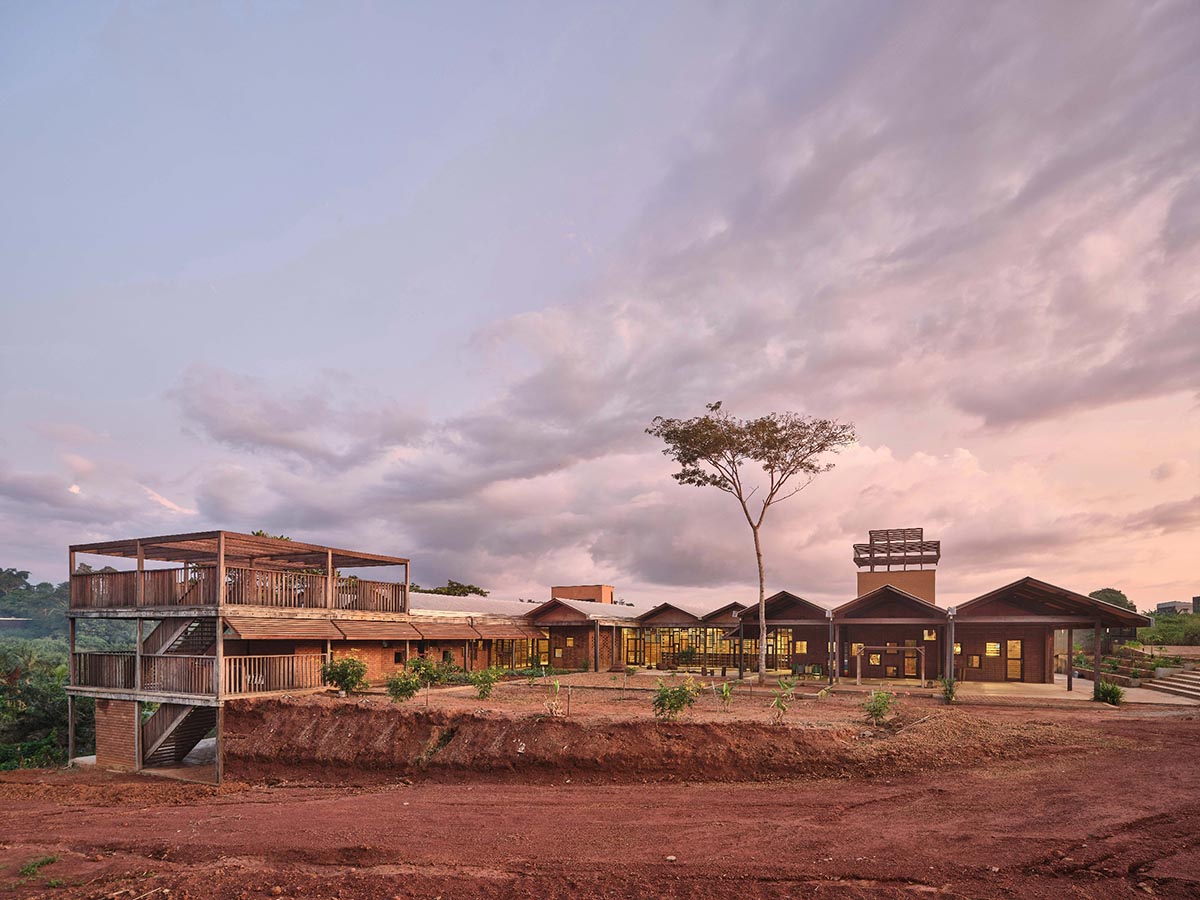
Barcelona-based design and research studio Urbanitree has reimagined a kindergarten informed by ancestral African architecture in Cameroon.
Named African Flow, the new 1,600-square-metre school implements the ideas of traditional African design for a kindergarten in Cameroon, reinventing learning environments.
Its pedagogical methodology cultivates an affective bond between kids and the environments that influence their everyday routines in a natural and intuitive manner.

In response to fast development constraints, architects Vicente Guallart and Daniel Ibáñez at Urbanitree created a low-tech building utilizing wood and rammed earth, collaborating with local artisans and resources.
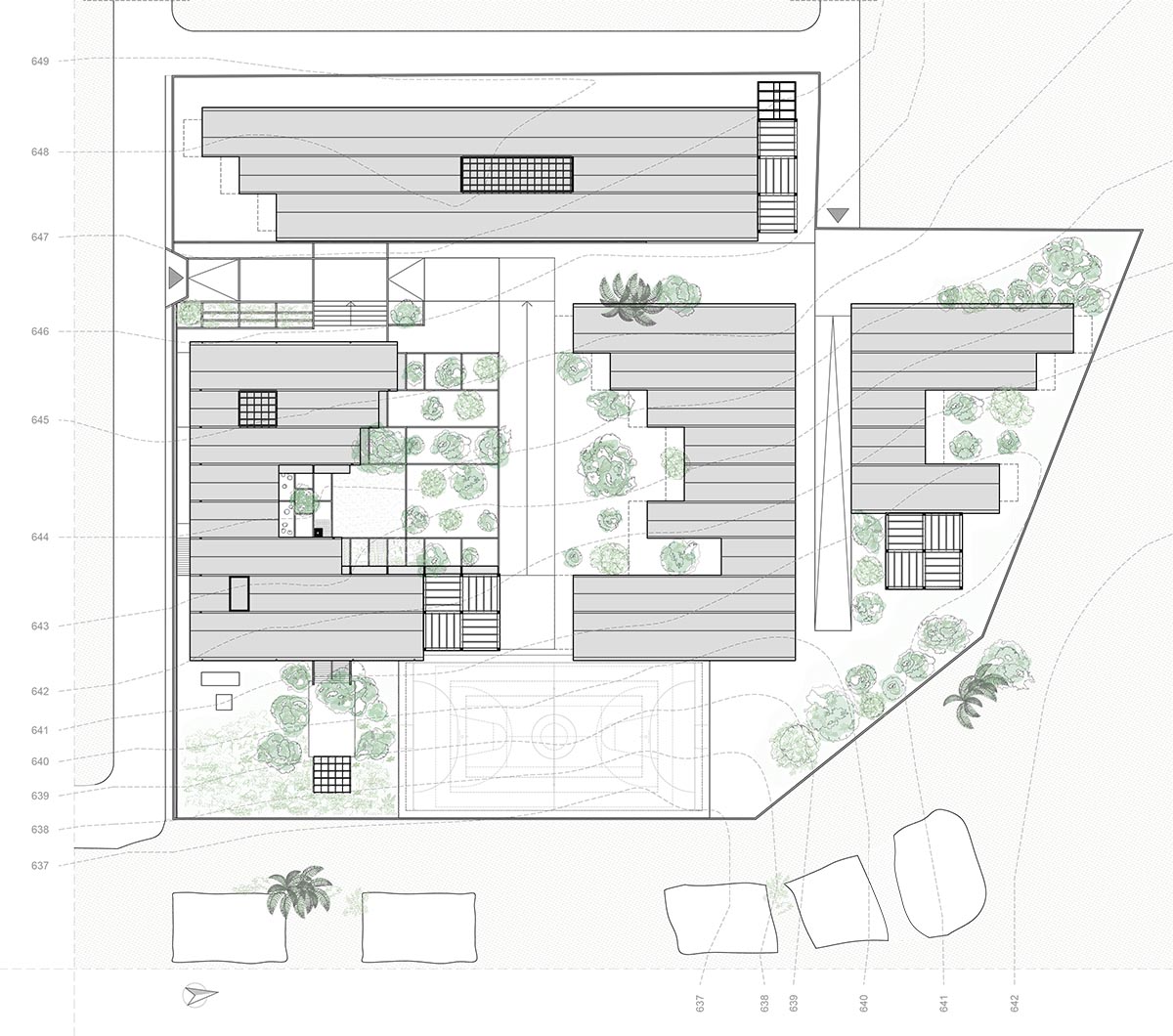
Located in Soa, close to Yaoundé, the capital of Cameroon, this school facility was started by the Missionary Daughters of the Holy Family of Nazareth. It is structured as an ongoing system of ecosystems—forest, savanna, hamlet, and mountain—that help kids connect with their roots and culture.
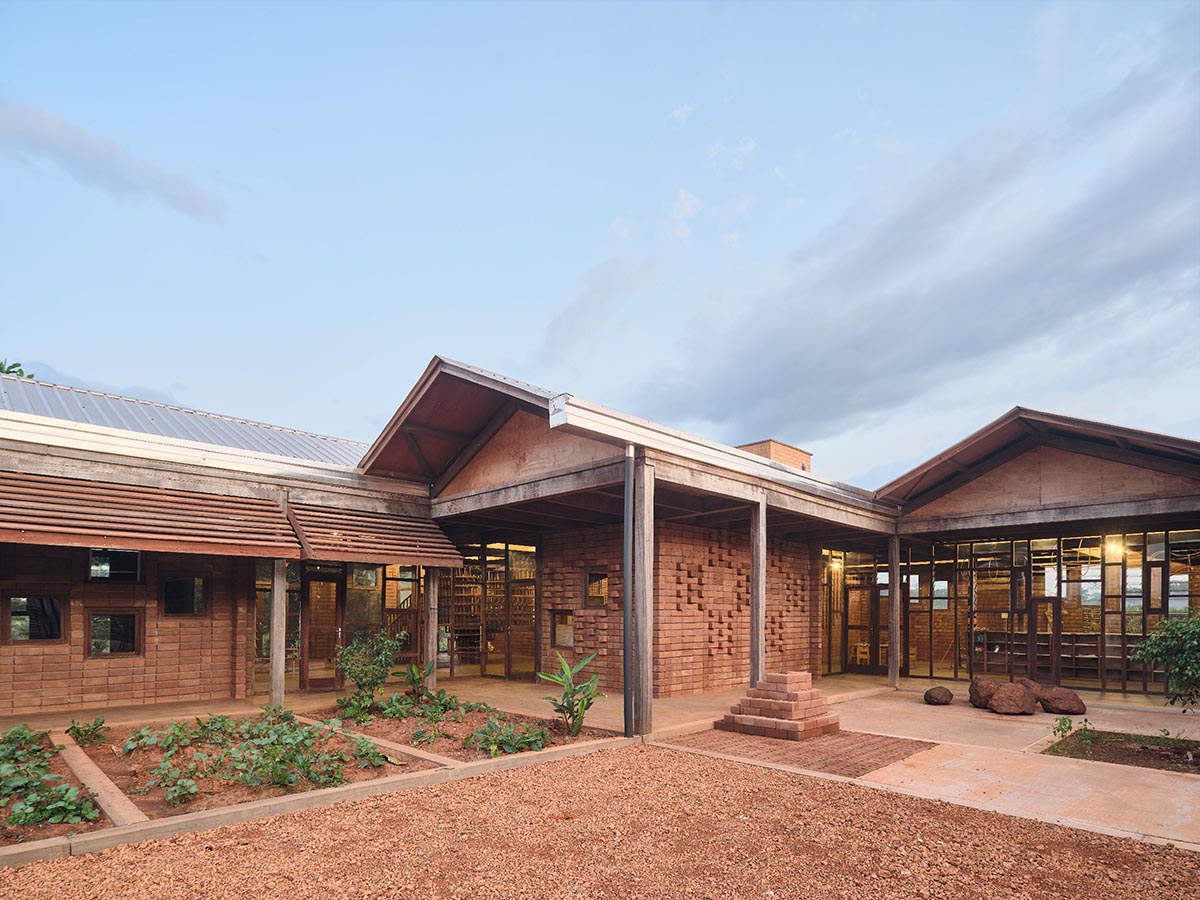
Children travel fluidly between several venues during the school day, where they connect with their classmates and the school community on a variety of relationship sizes and learn skills in a variety of circumstances.

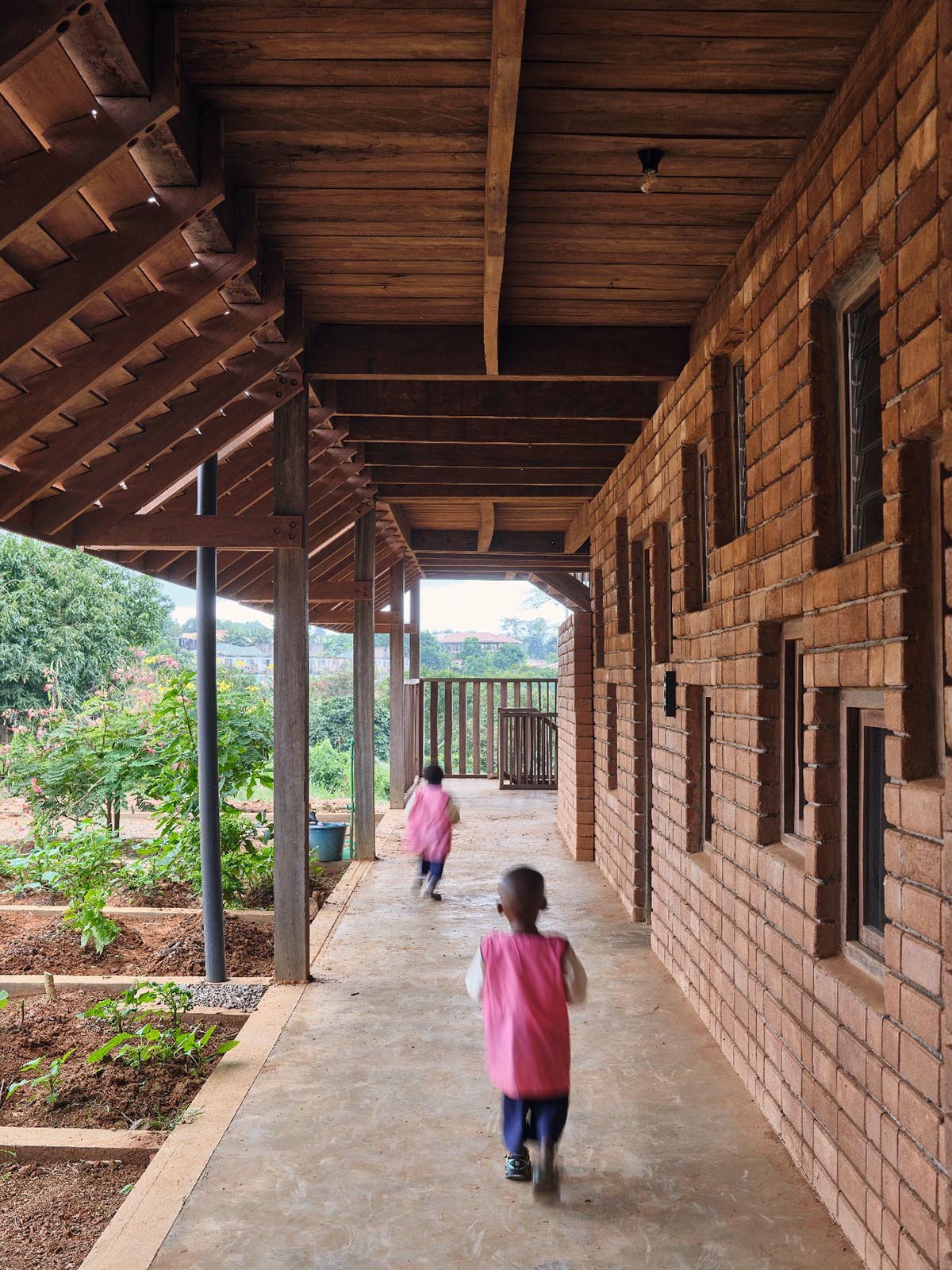
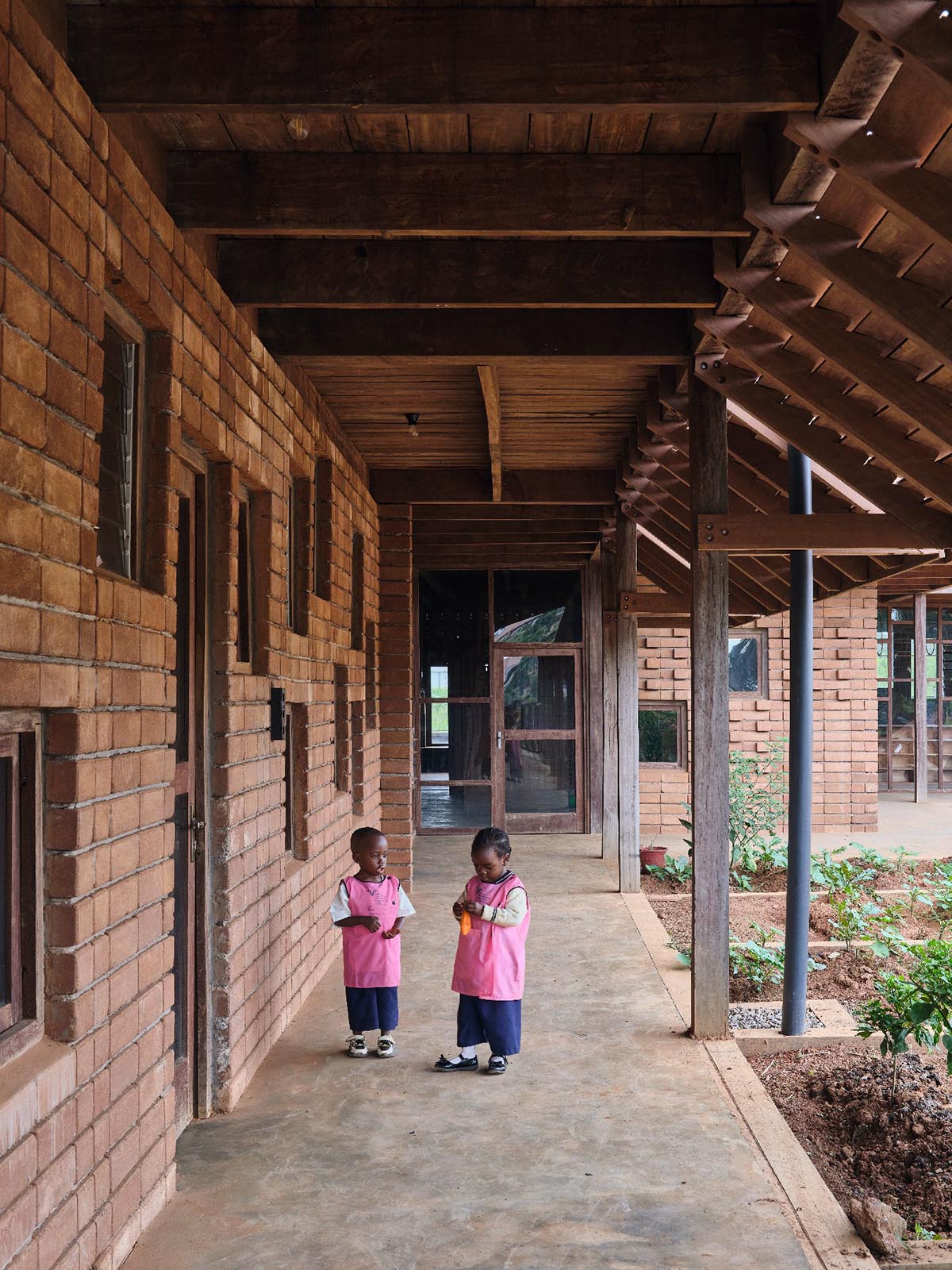
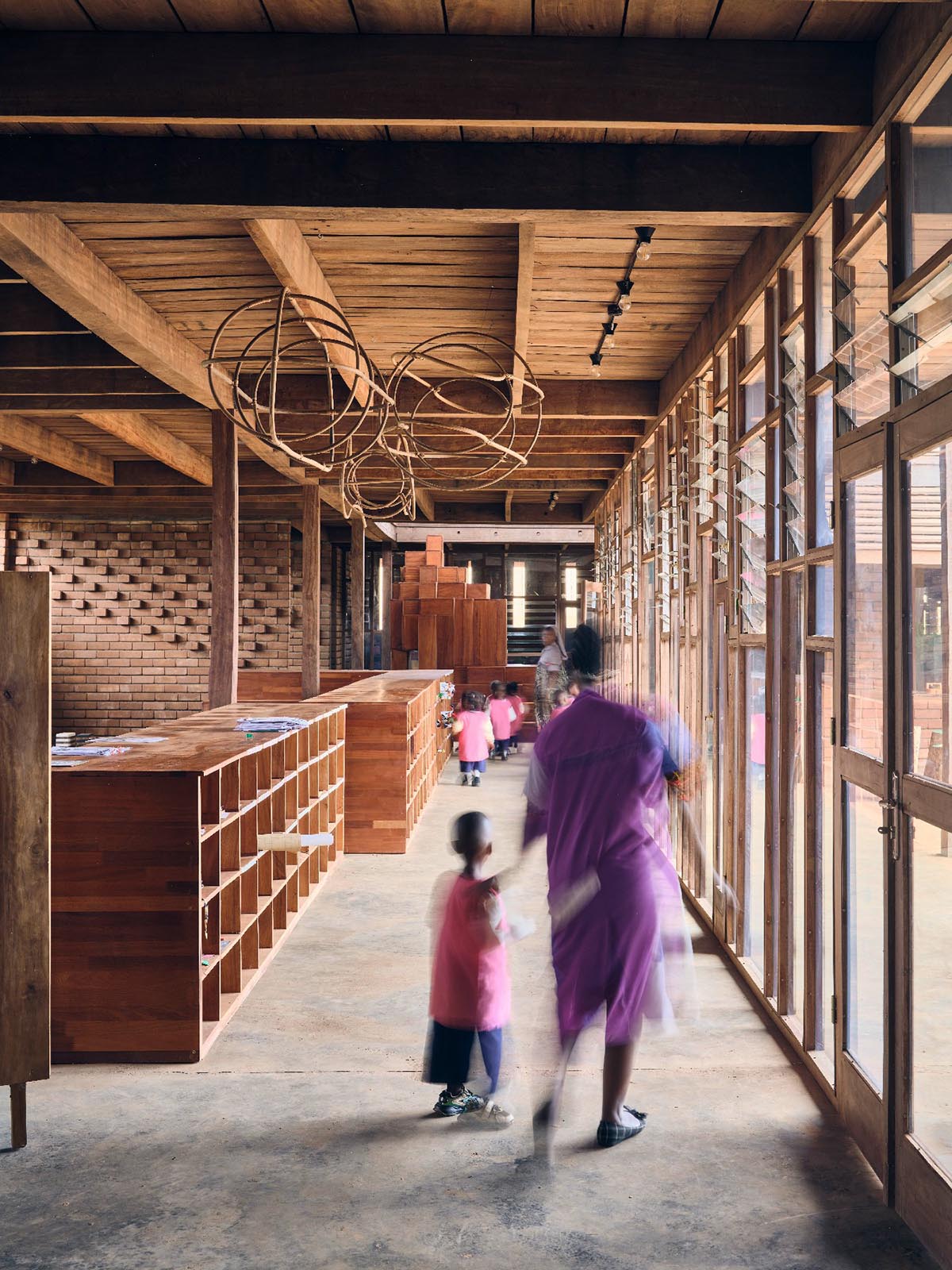
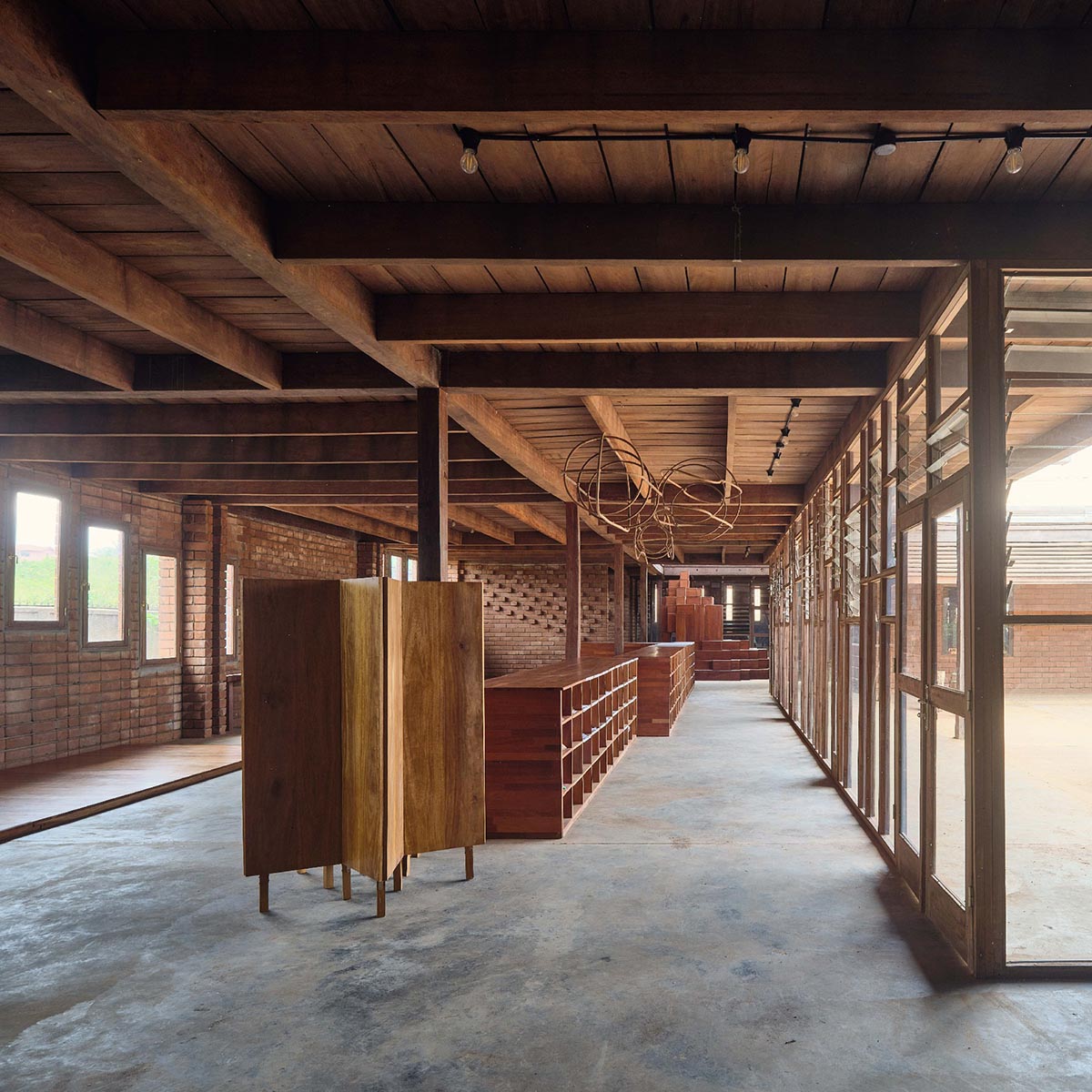
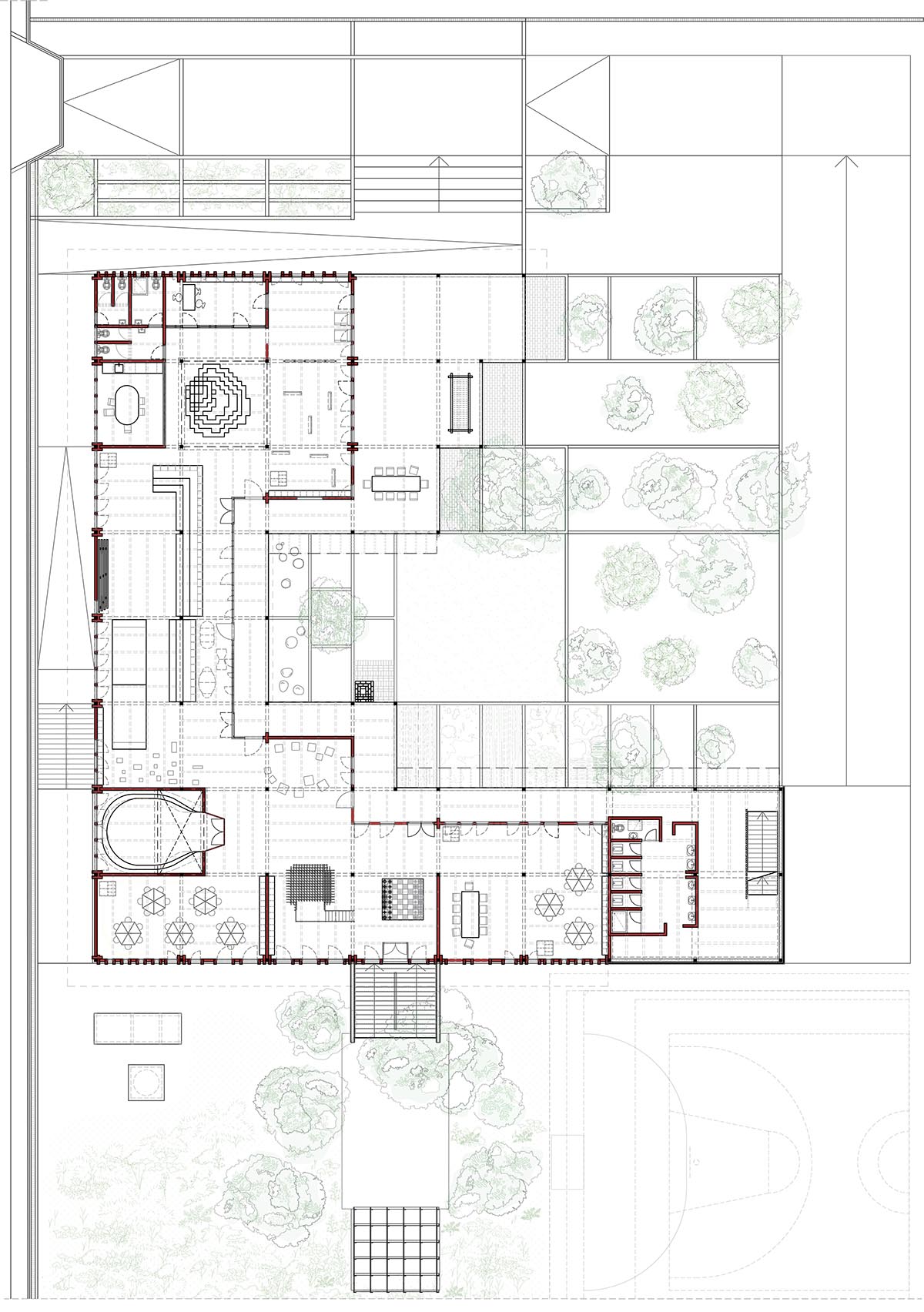
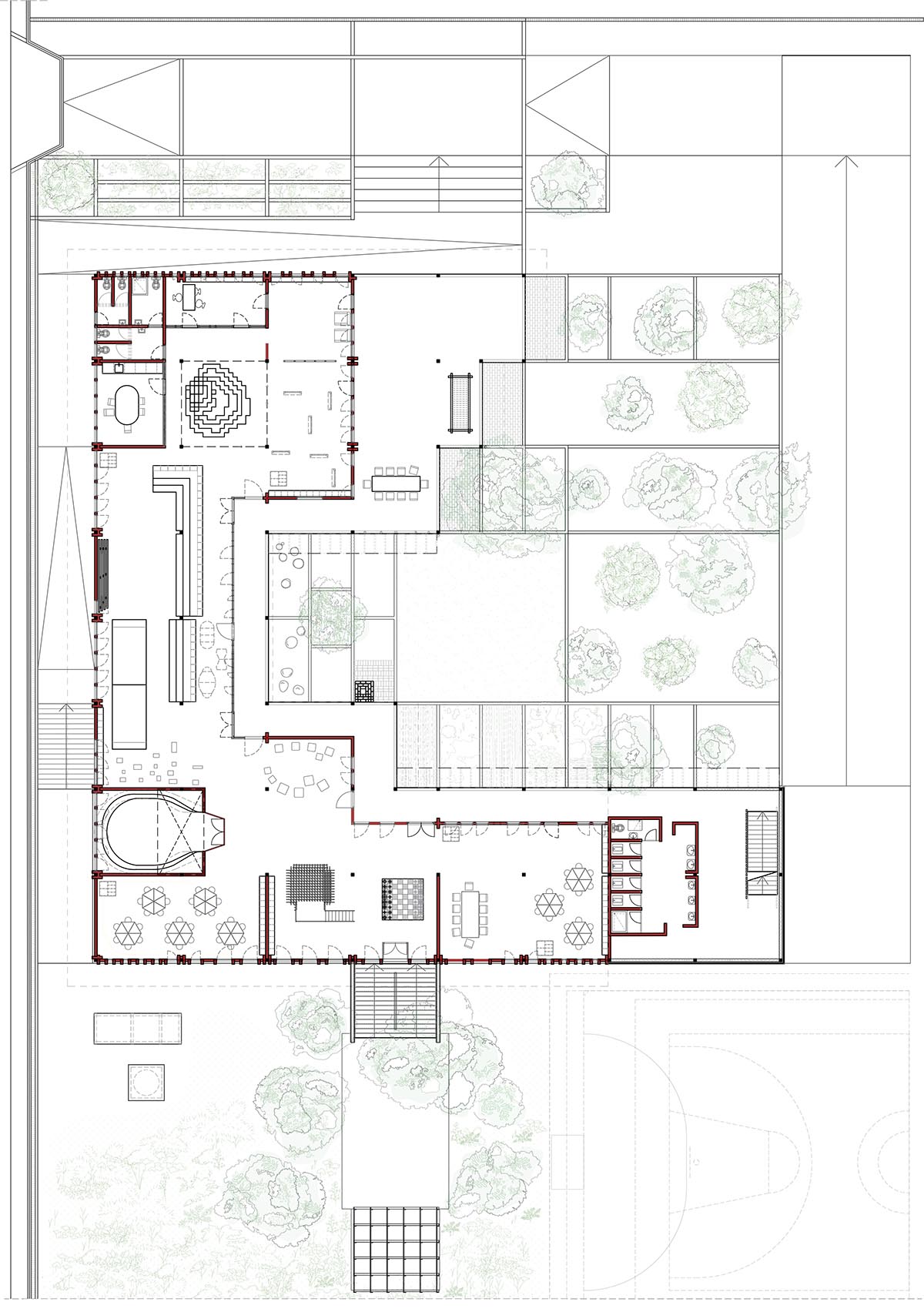
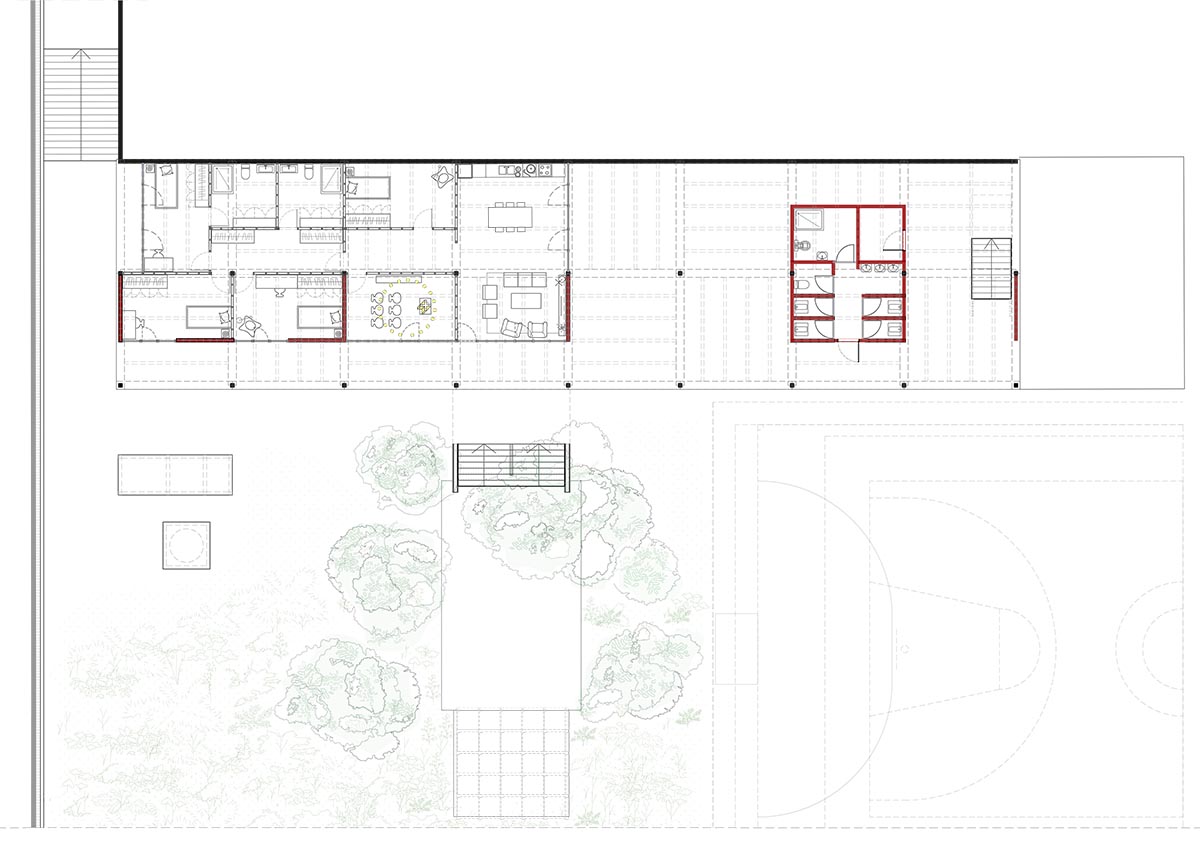
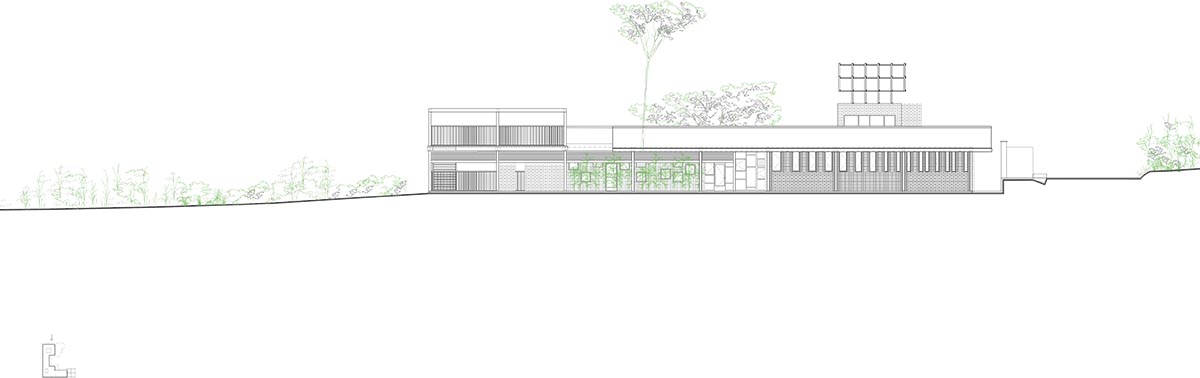
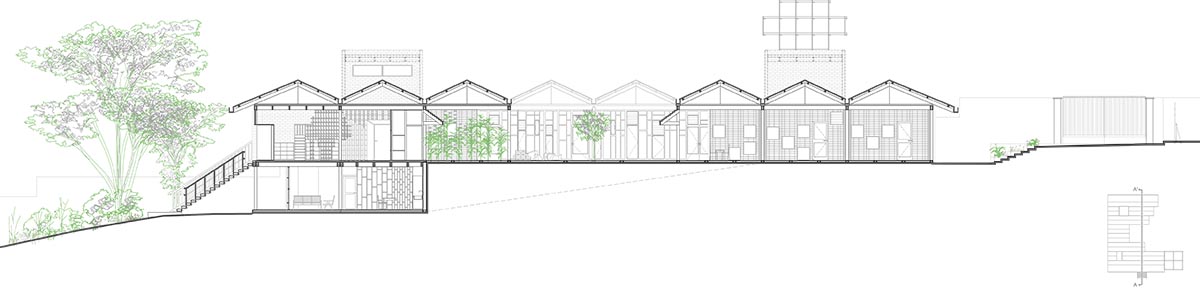
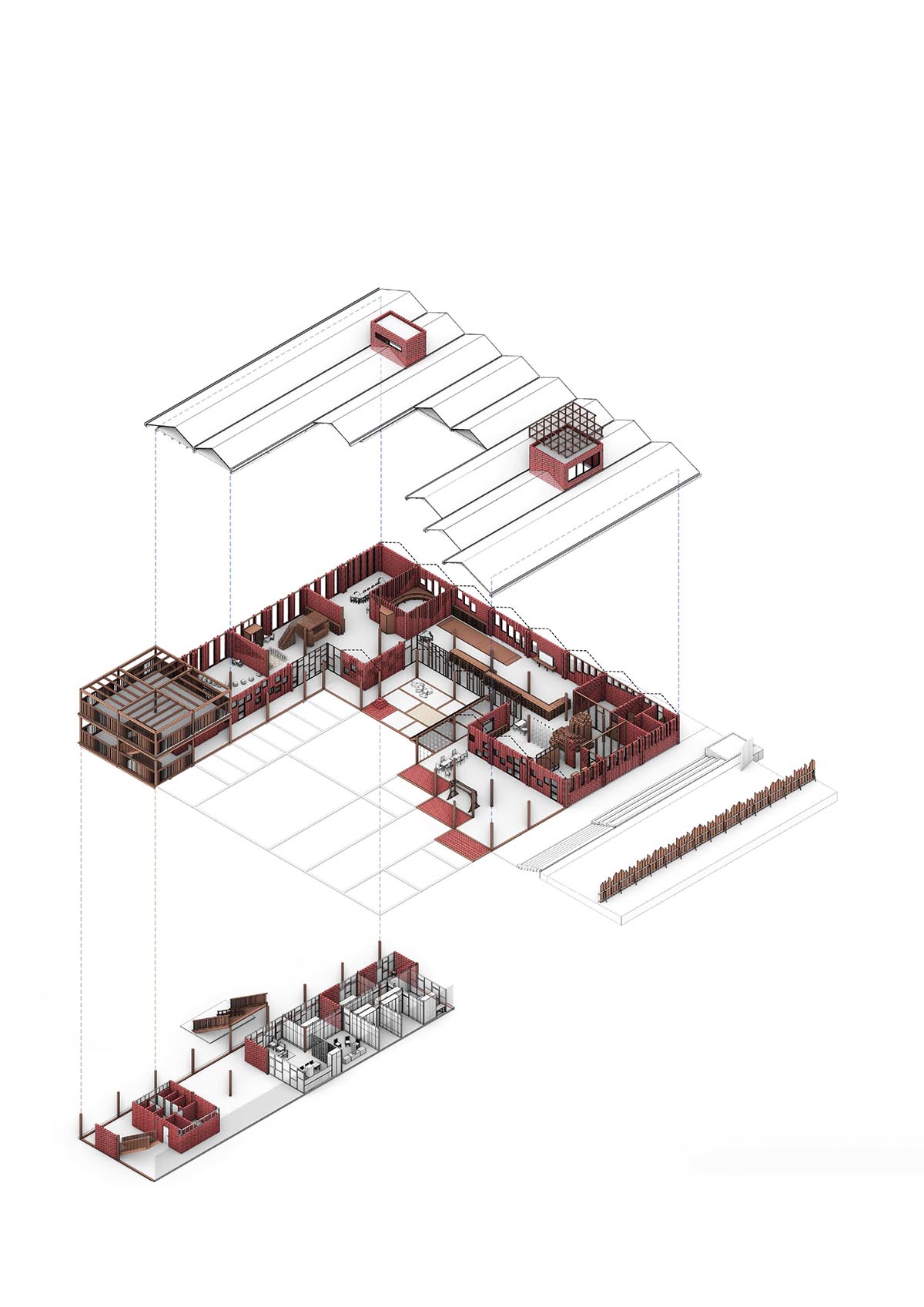
The school's interior areas, which are arranged into four ecosystems, are connected by a hallway that circles the center courtyard. Every ecosystem has elements that children may identify and that help them plan their regular school activities; Mountain is a destination for creativity and inspiration, with a grotto where kids can withdraw and have reflective moments.
Village is a place for social interaction and exchange, featuring a chapel that is intended to be an abstract setting where light and porous walls promote quiet and group contemplation.
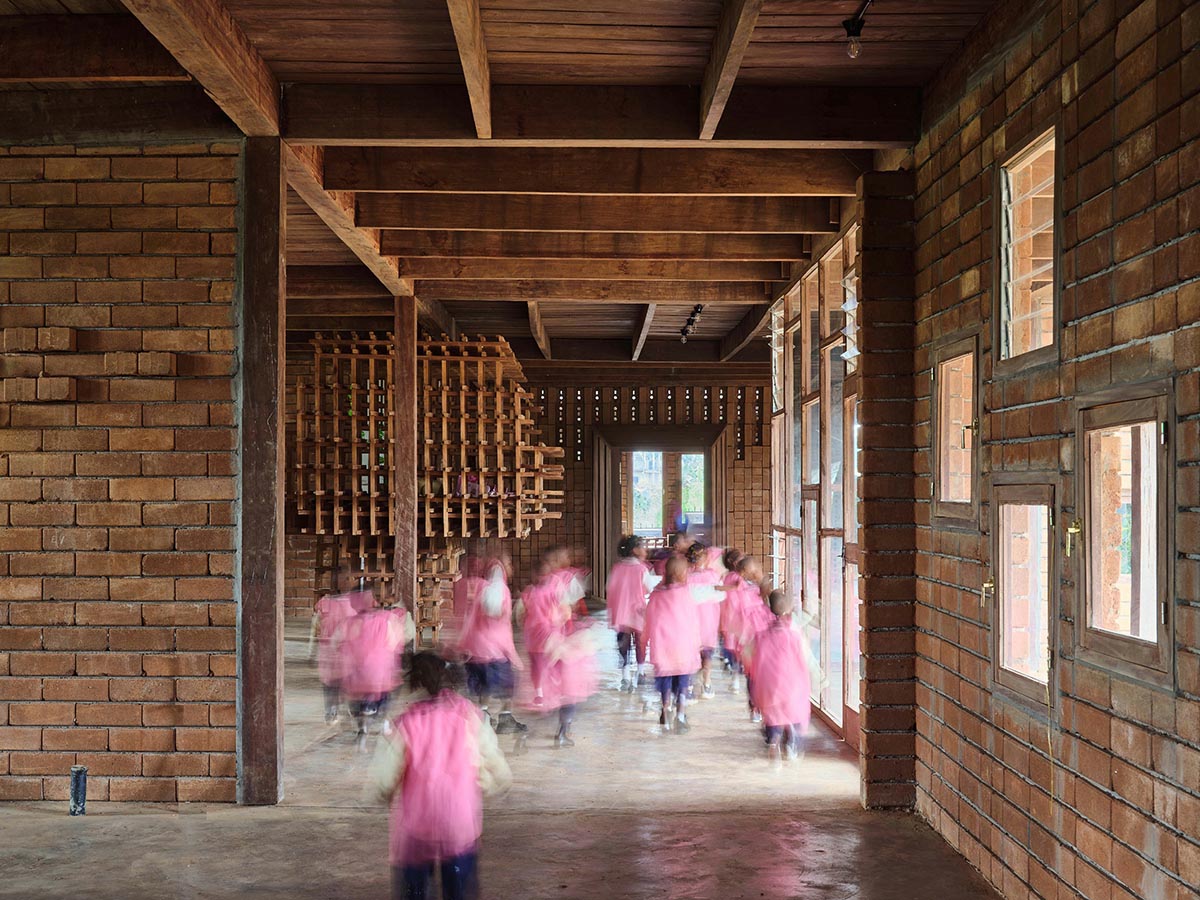
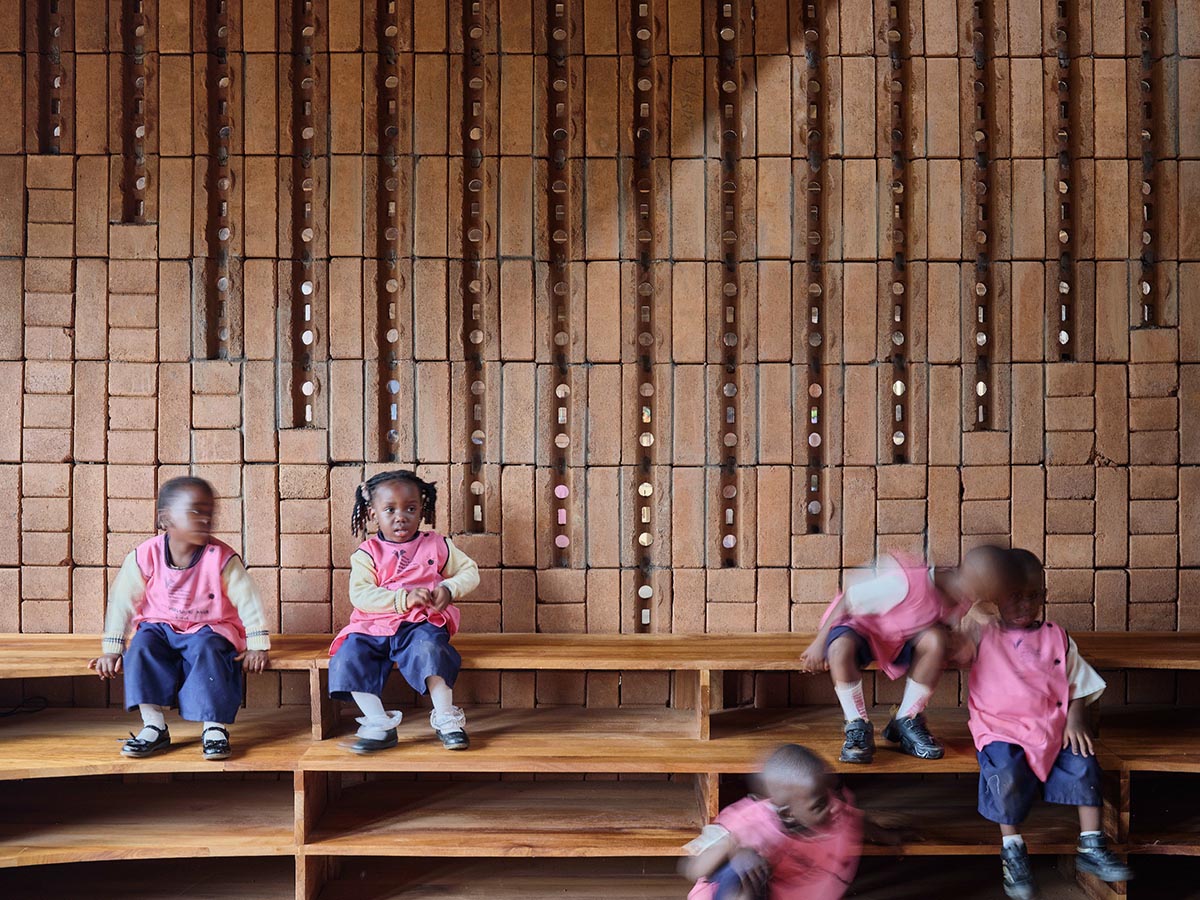
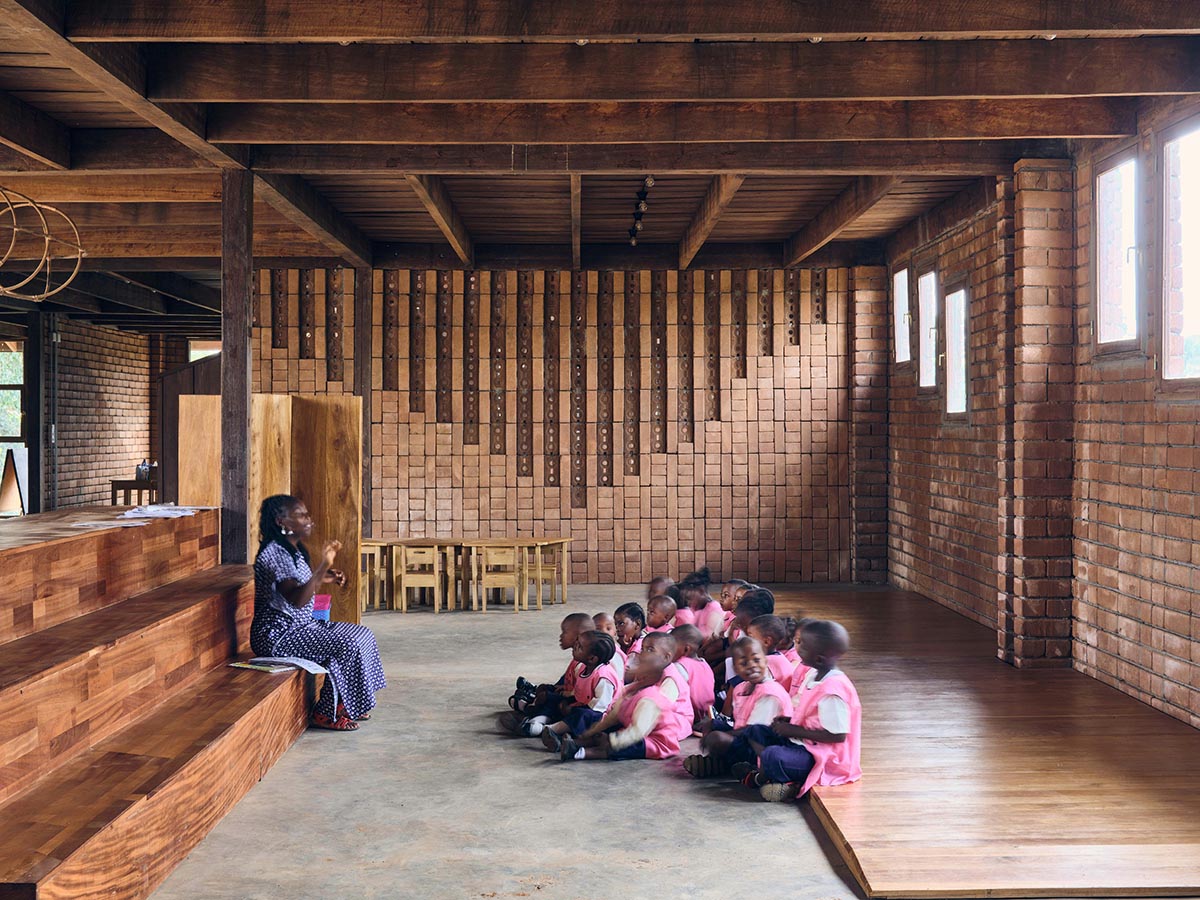
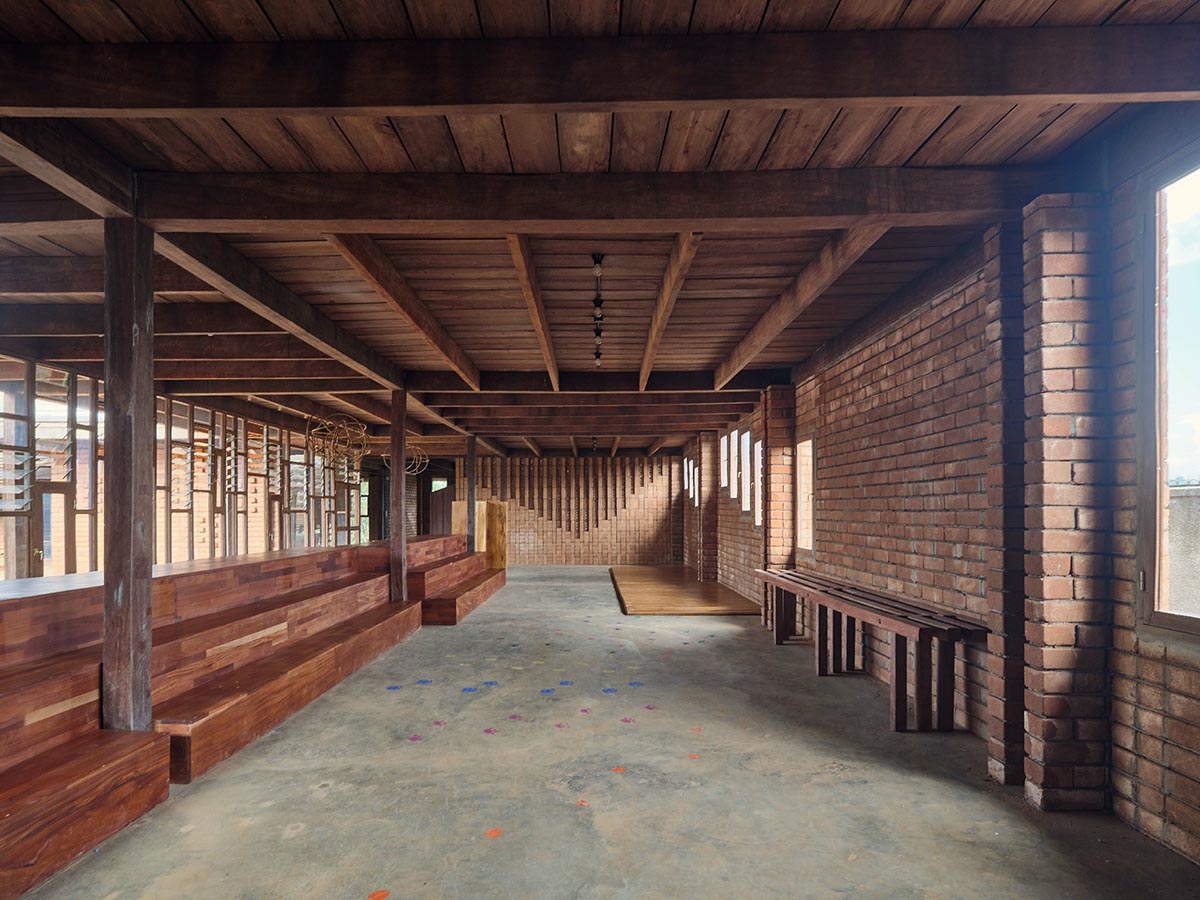
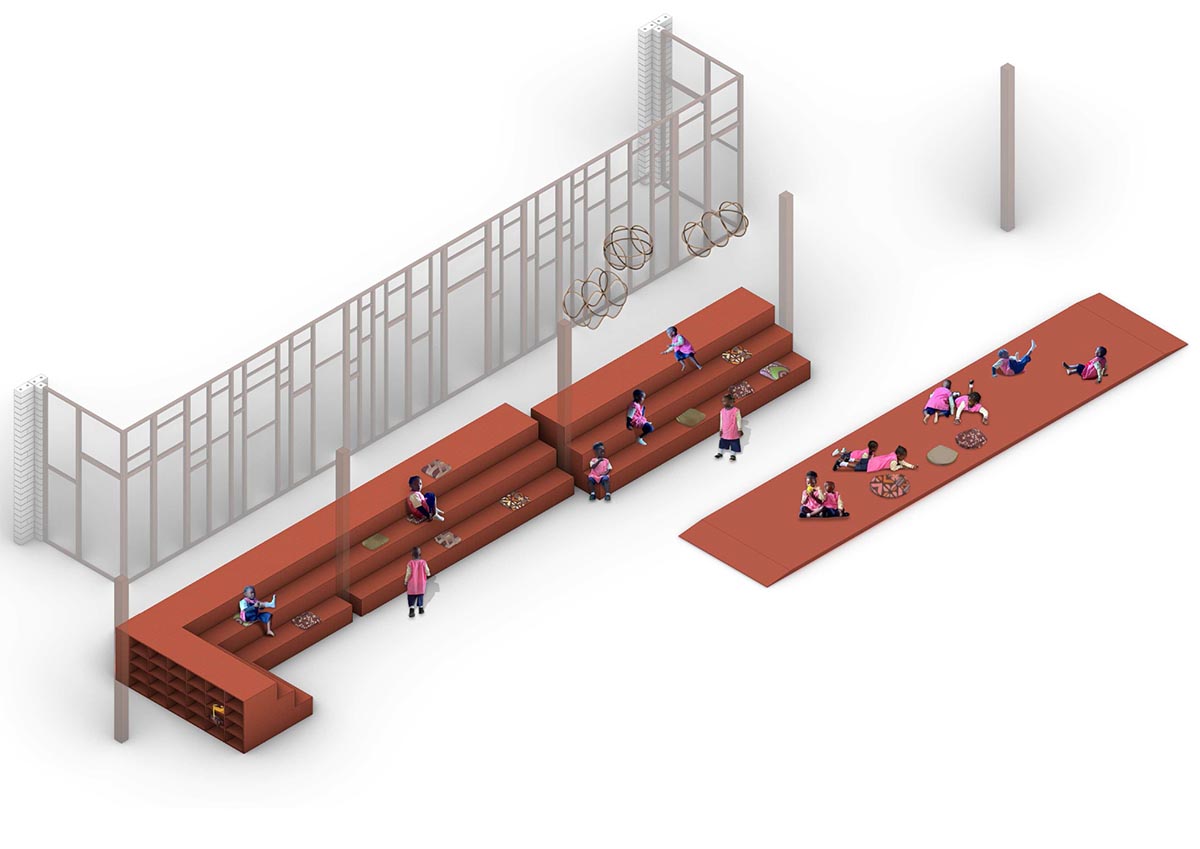
Savanna is a sizable linear space that makes it easier to organize kids into learning groups that resemble a "campfire," letting them play on the ground and on stepped benches.
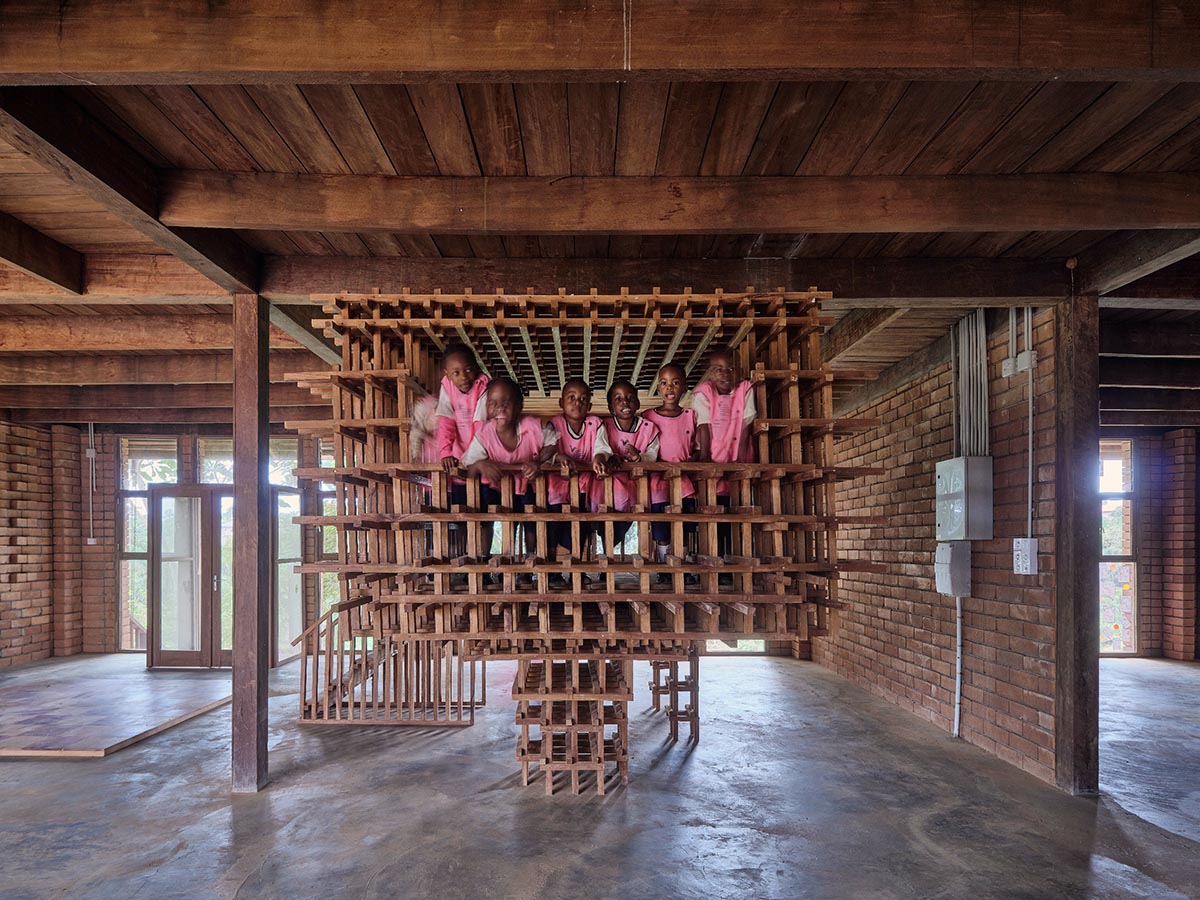
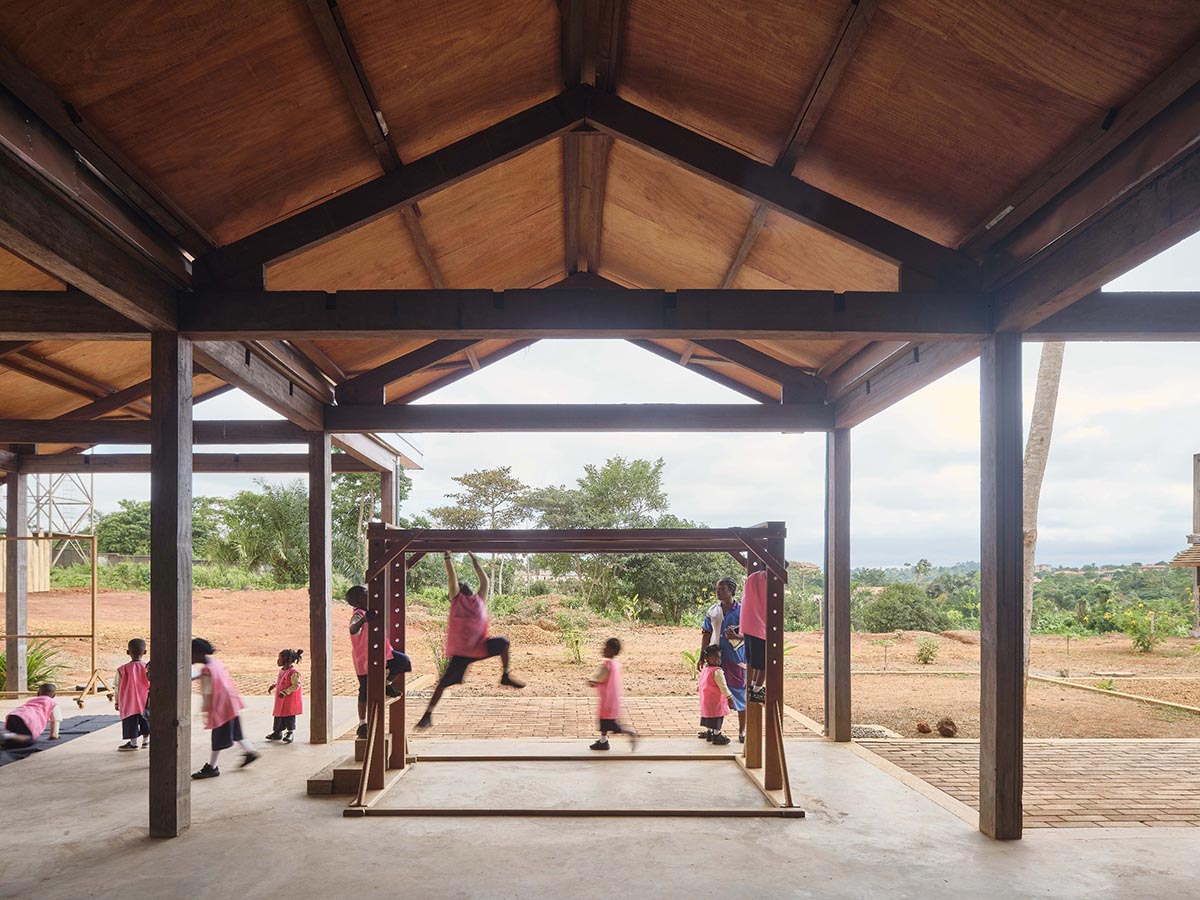
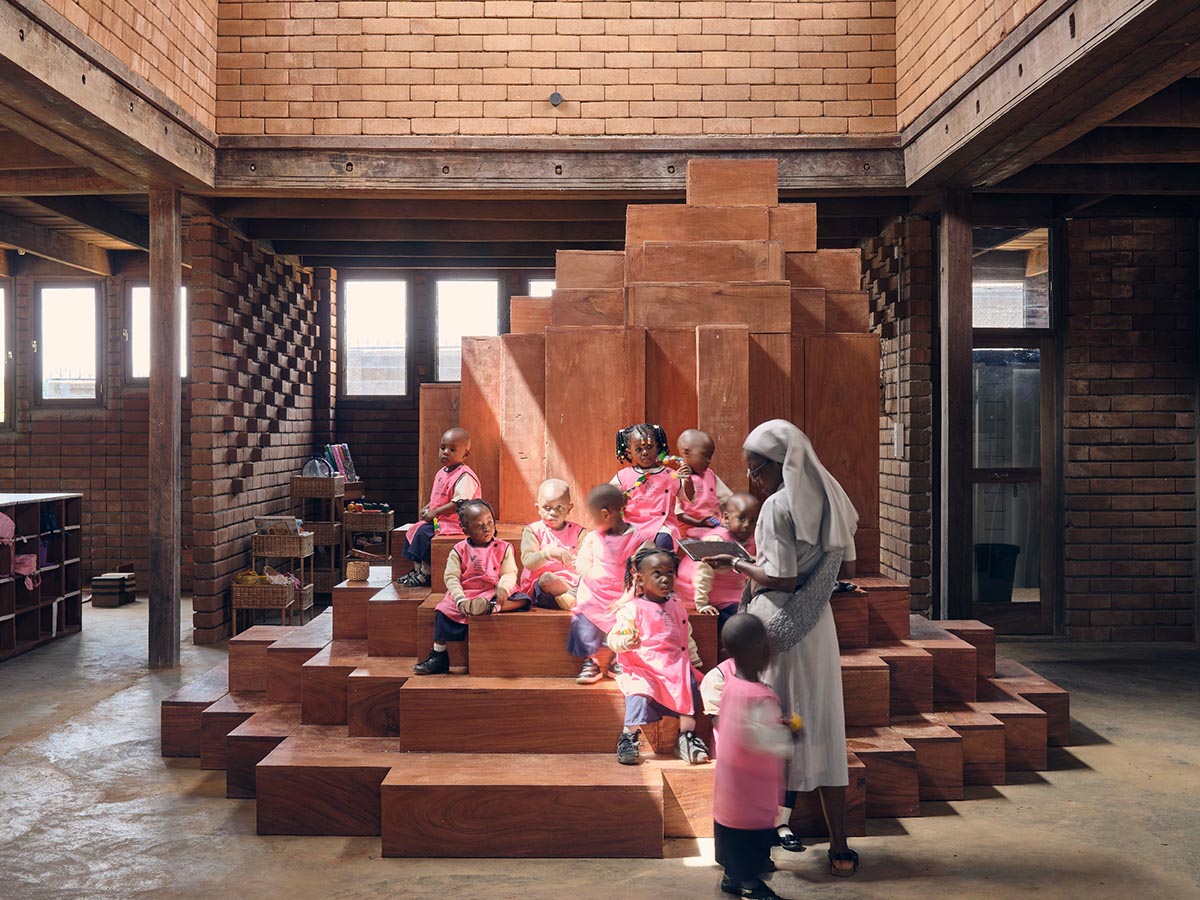
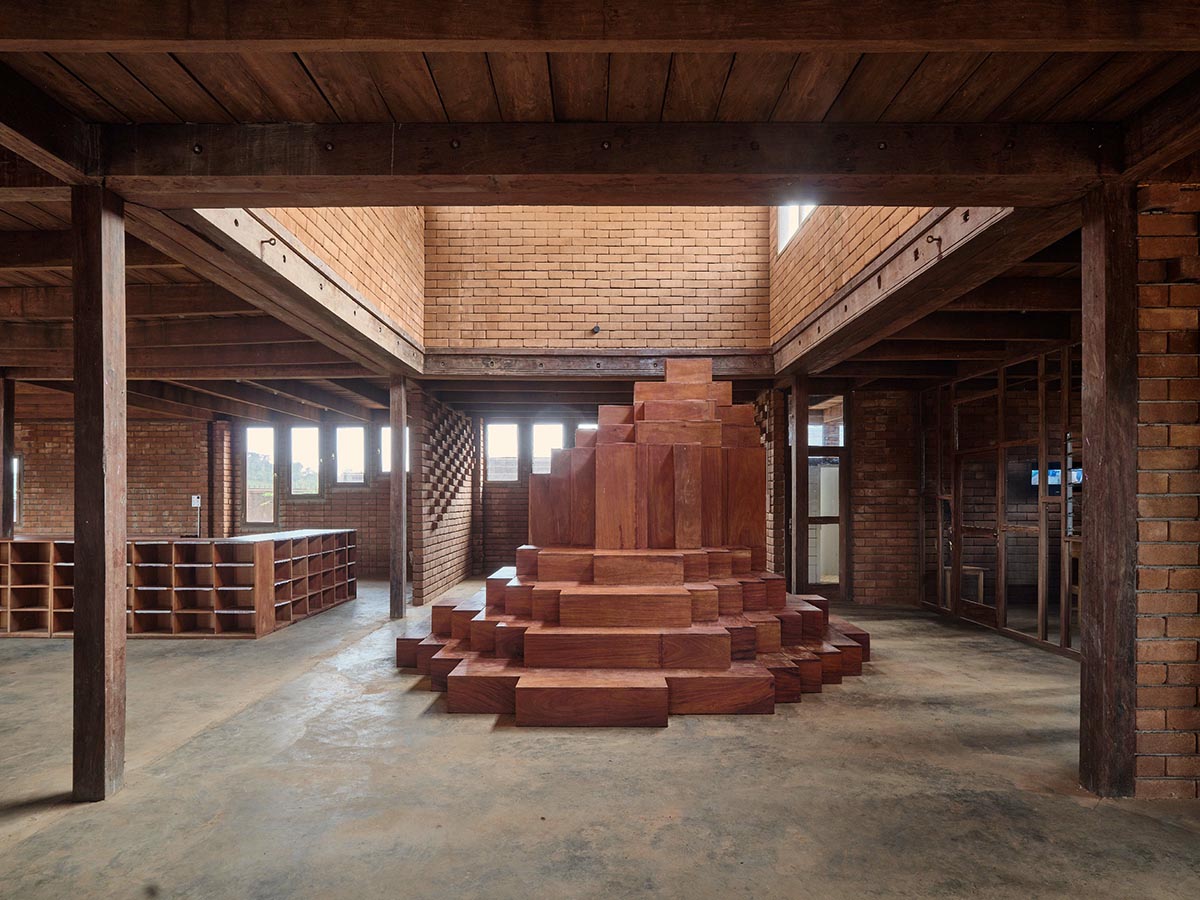
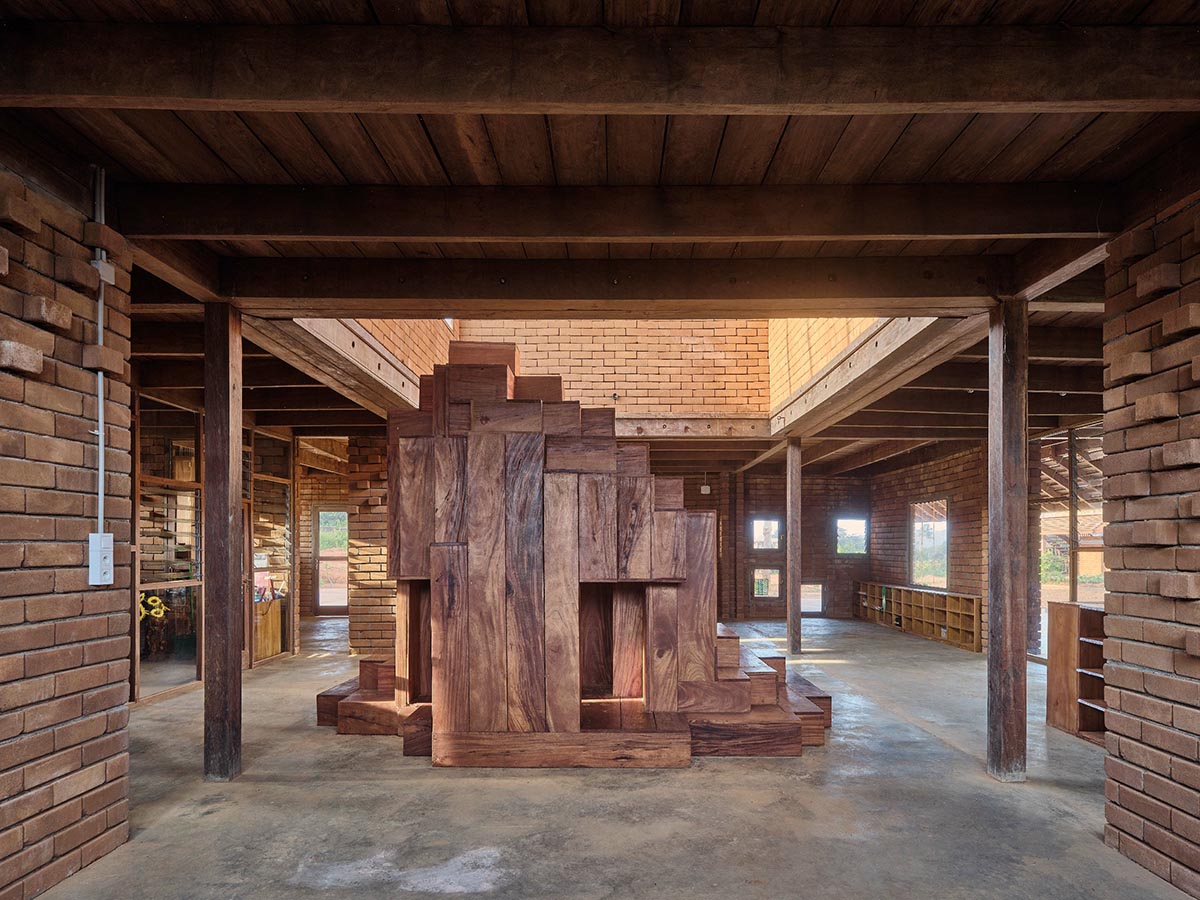
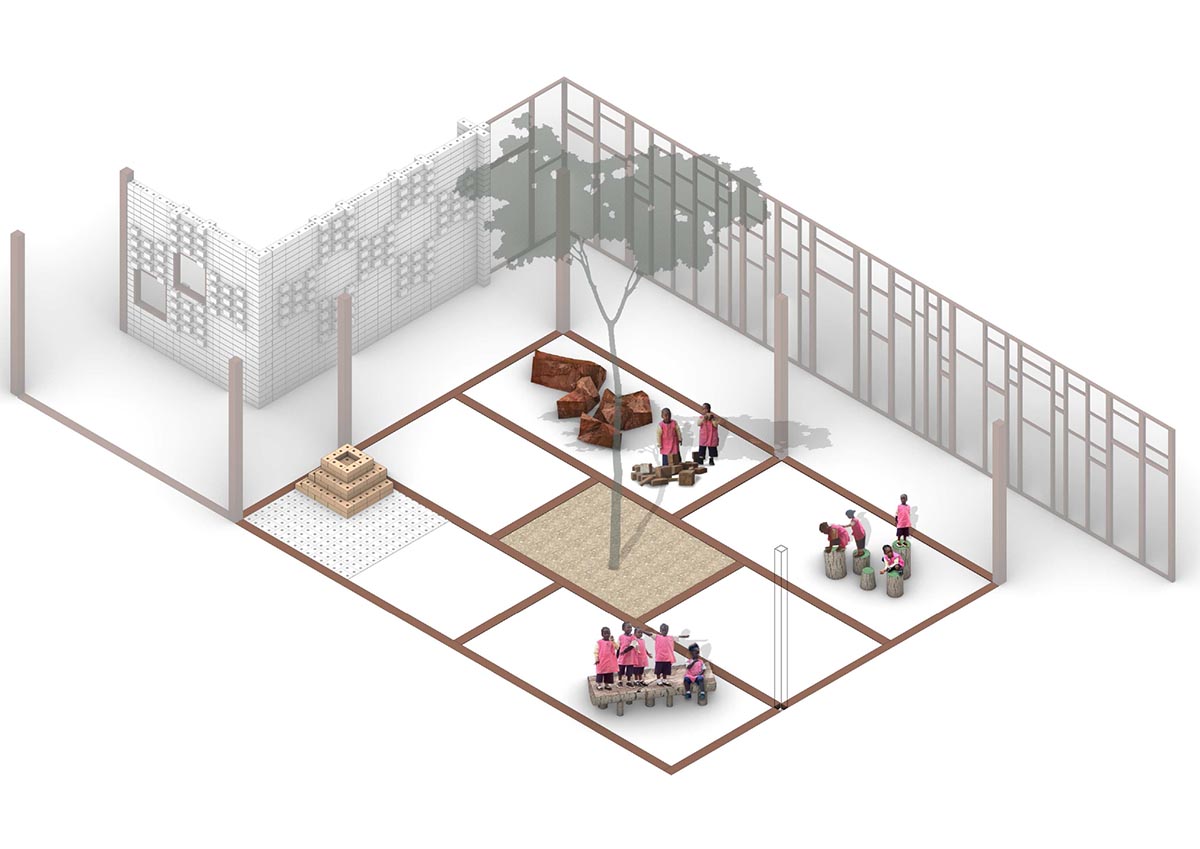
Forest is a space that connects the interior and exterior, with a man-made tree that resembles an occupied Lego building, adjacent to a tiny natural forest.

The children engage in activities throughout the day that are relevant to the areas in which they are housed.
The general assembly, where they meet with the teachers, informational tidbits, brachiation bars and ladders, reflection in a spiritually inspiring environment, playtime in the central courtyard, small-group exploration, materials laboratory experiments, and music sessions with local instruments are some of these activities.

Simple building methods and basic geometric patterns that emerge organically from the use of the selected materials have an impact on the school's design.
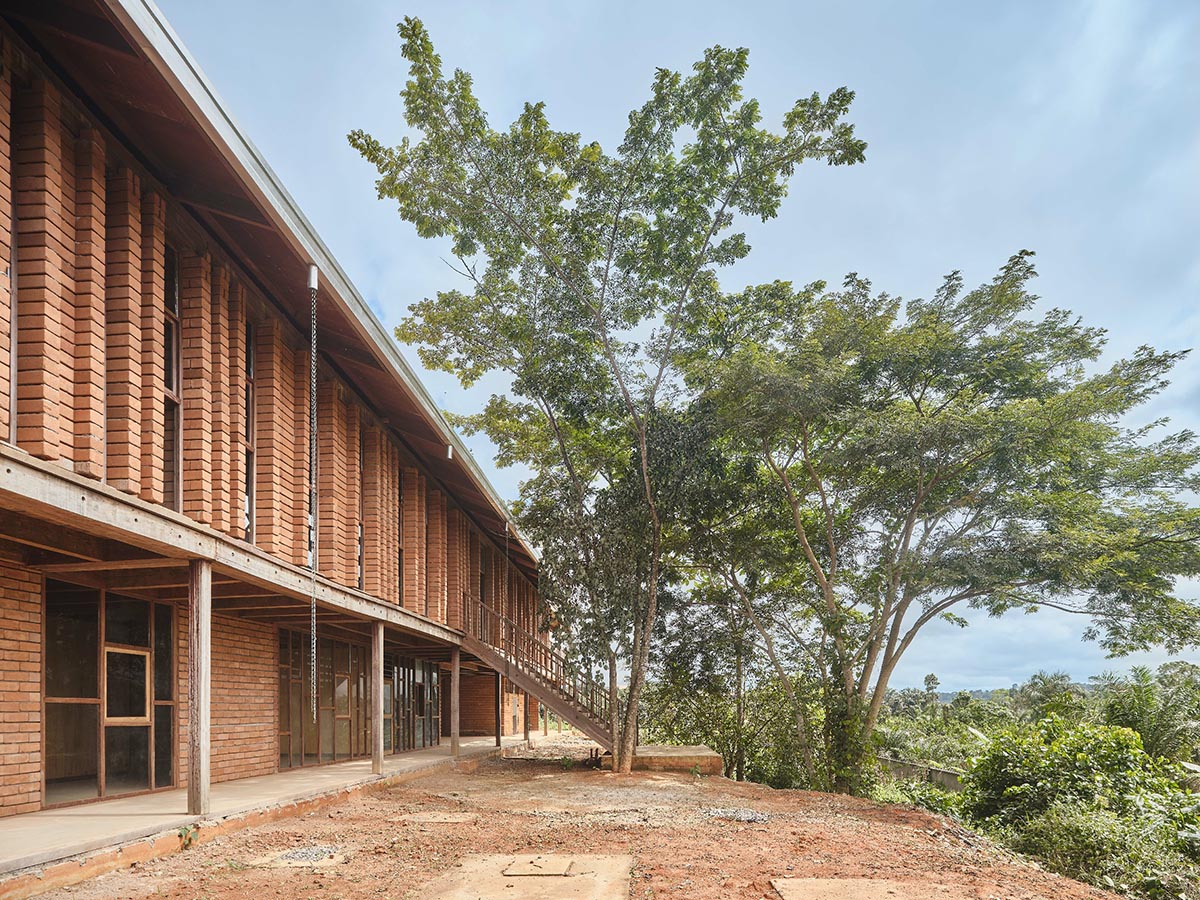
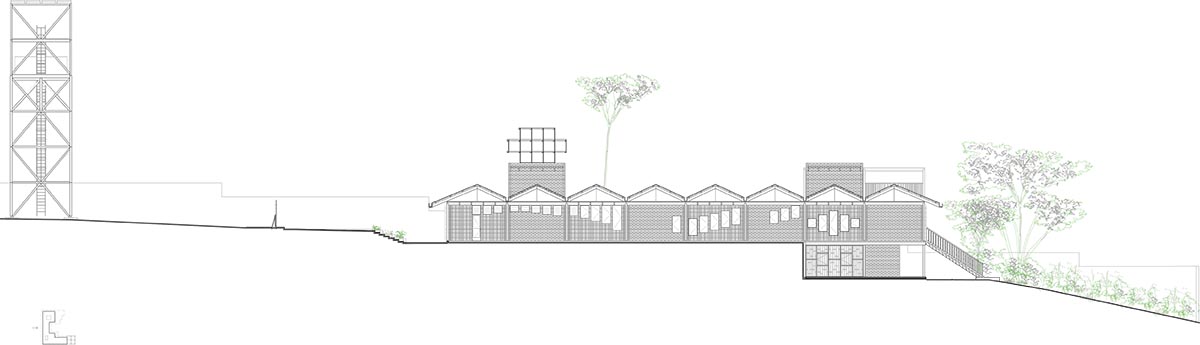
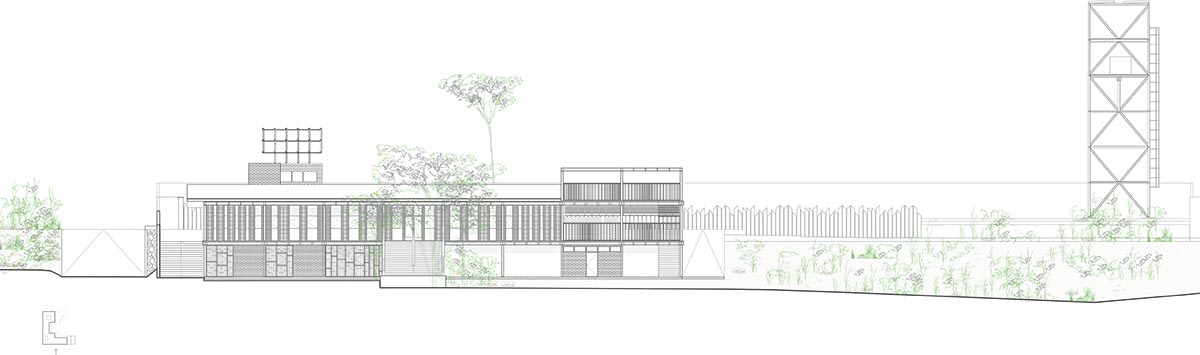
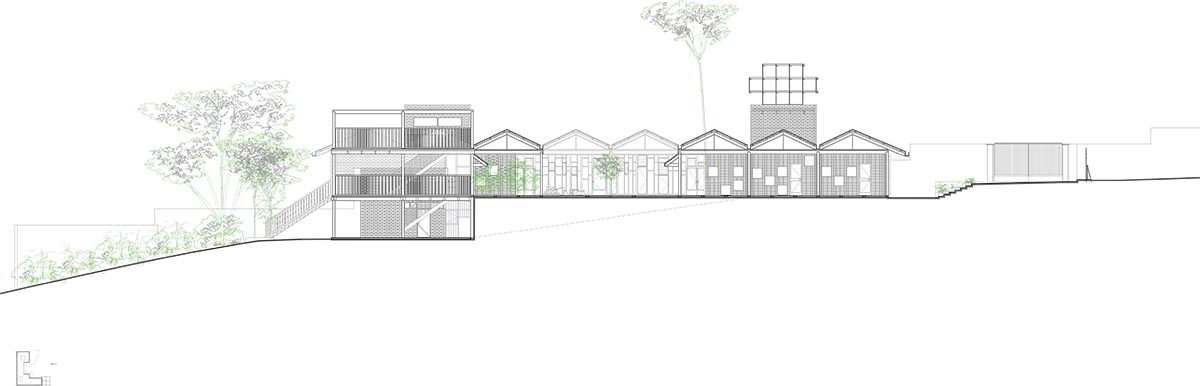
Additionally, the second level, which will initially serve as the housing for the community in charge of African Flow, was made possible by the site's natural topography.
An Innovative Approach to Construction Utilizing Local Materials
It is only possible to approach the construction of a project designed by a European team in Africa as a process of mutual learning.
The goal was to determine how a small-scale initiative could excite the neighborhood, teach new building methods, and have an impact on a global level.

The use of industrialized systems, materials, and processes that are intended to standardize outcomes is commonly referred to as "progress" in the modern global economy.
In this case, the goal was not only to design and build a structure but also to innovate Cameroon's building industry.
This included training employees, educating teachers to present the project as part of a social pedagogy that supports communal empowerment, using low-carbon local materials, and negotiating contracts with suppliers to market their goods locally.
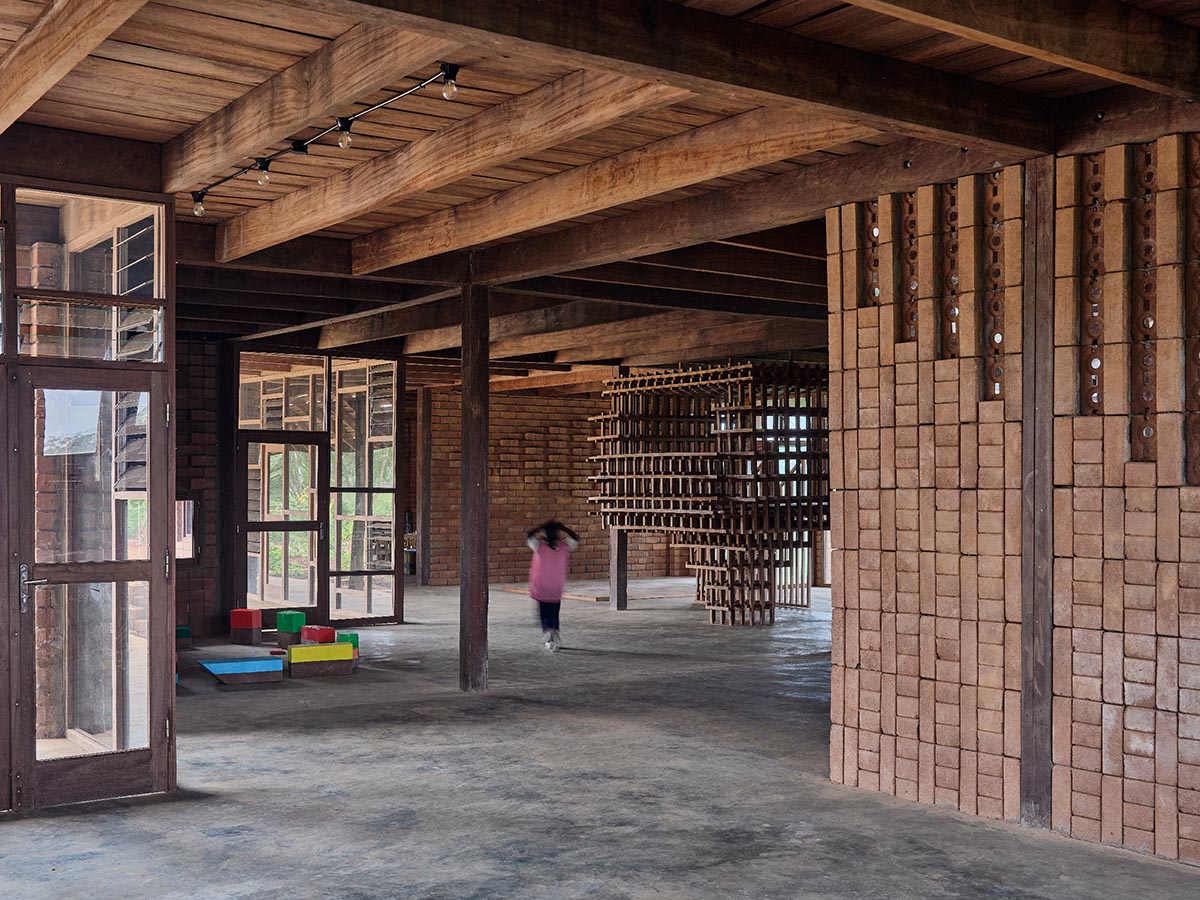
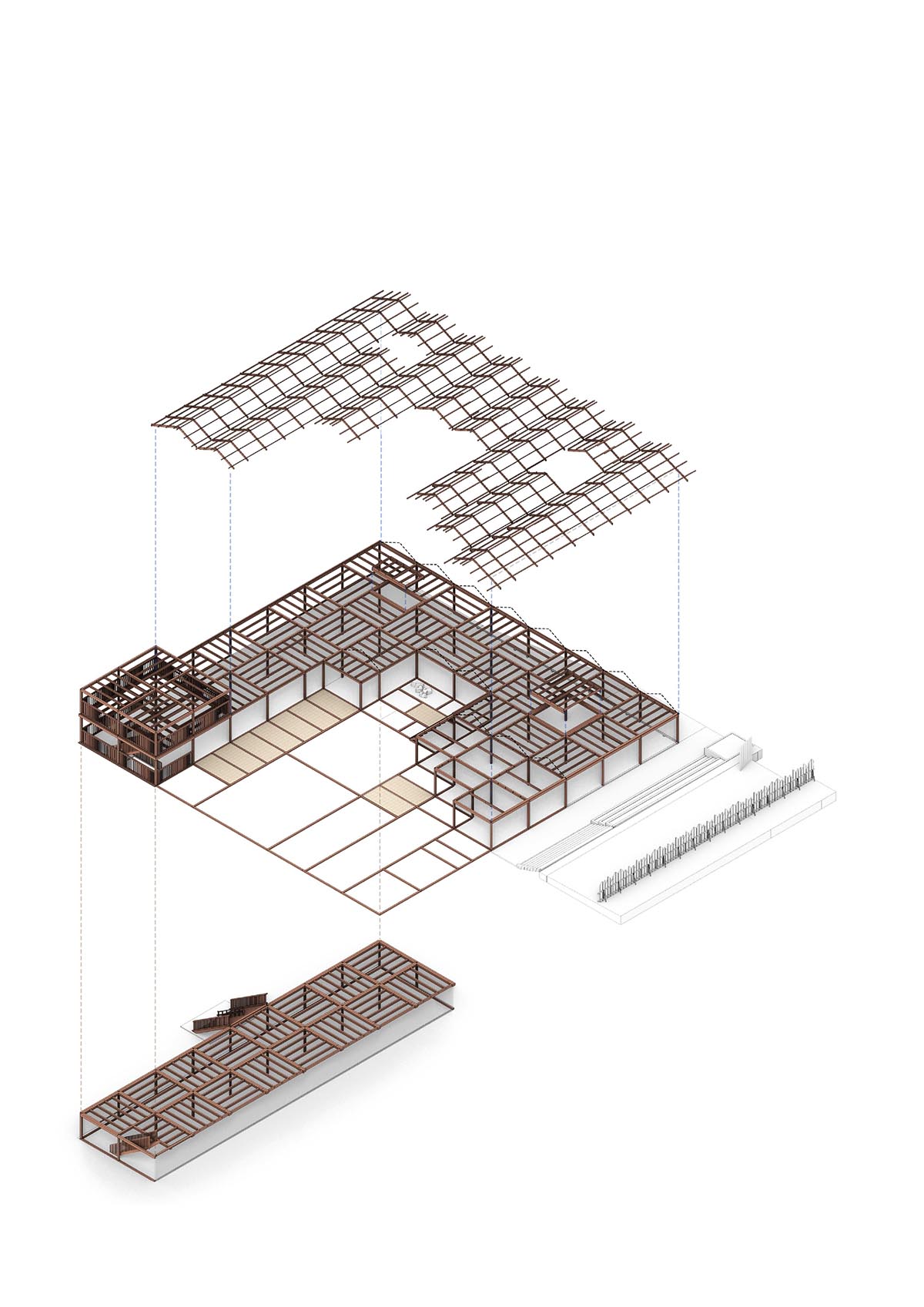
A thorough research was done to find local producers who usually ship to China or Europe in order to build African Flow. The structure was then built using azobé, a high-density wood that is locally obtained and known for its ability to withstand termites.
Local workers with no prior woodworking experience completed the project, promoting low-emission building in the face of fast urbanization and creating a communal learning process that may be repeated in subsequent projects.
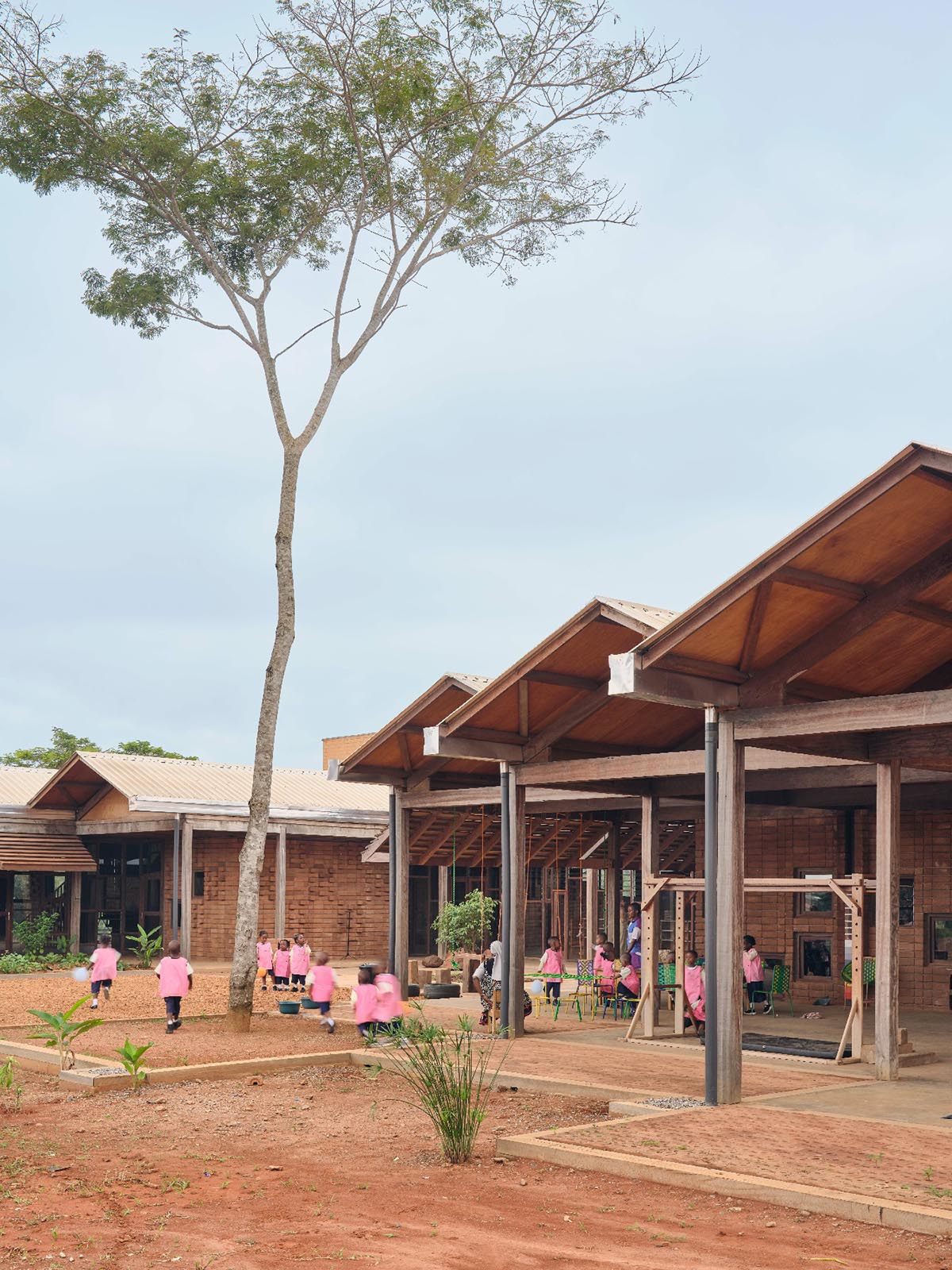
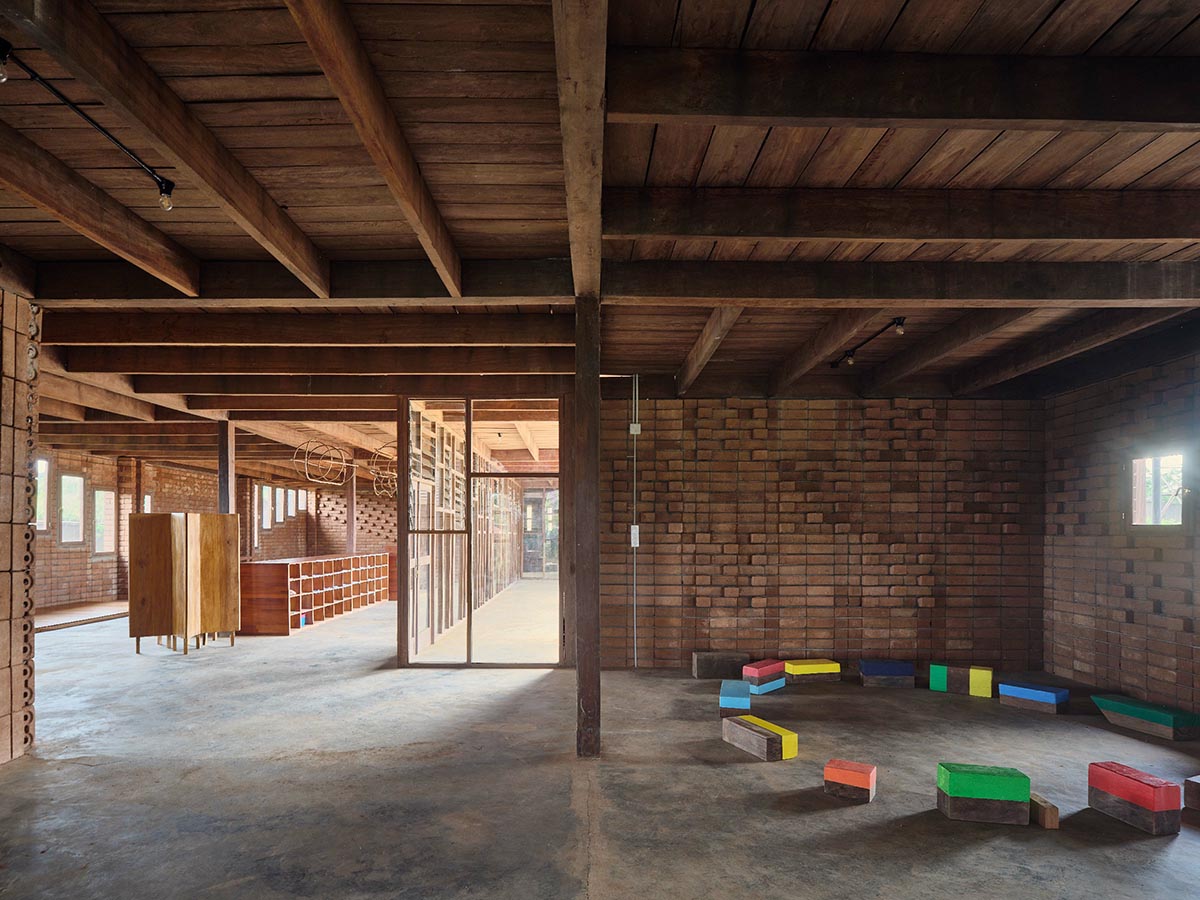
The enclosures are constructed with unfired rammed earth bricks that use different patterns to let light in between the inside and outside.
As a result, the building that sits on top of the native reddish earth is continuous with it. The selection was made utilizing extremely simple manufacturing technology from a local source of earth bricks.
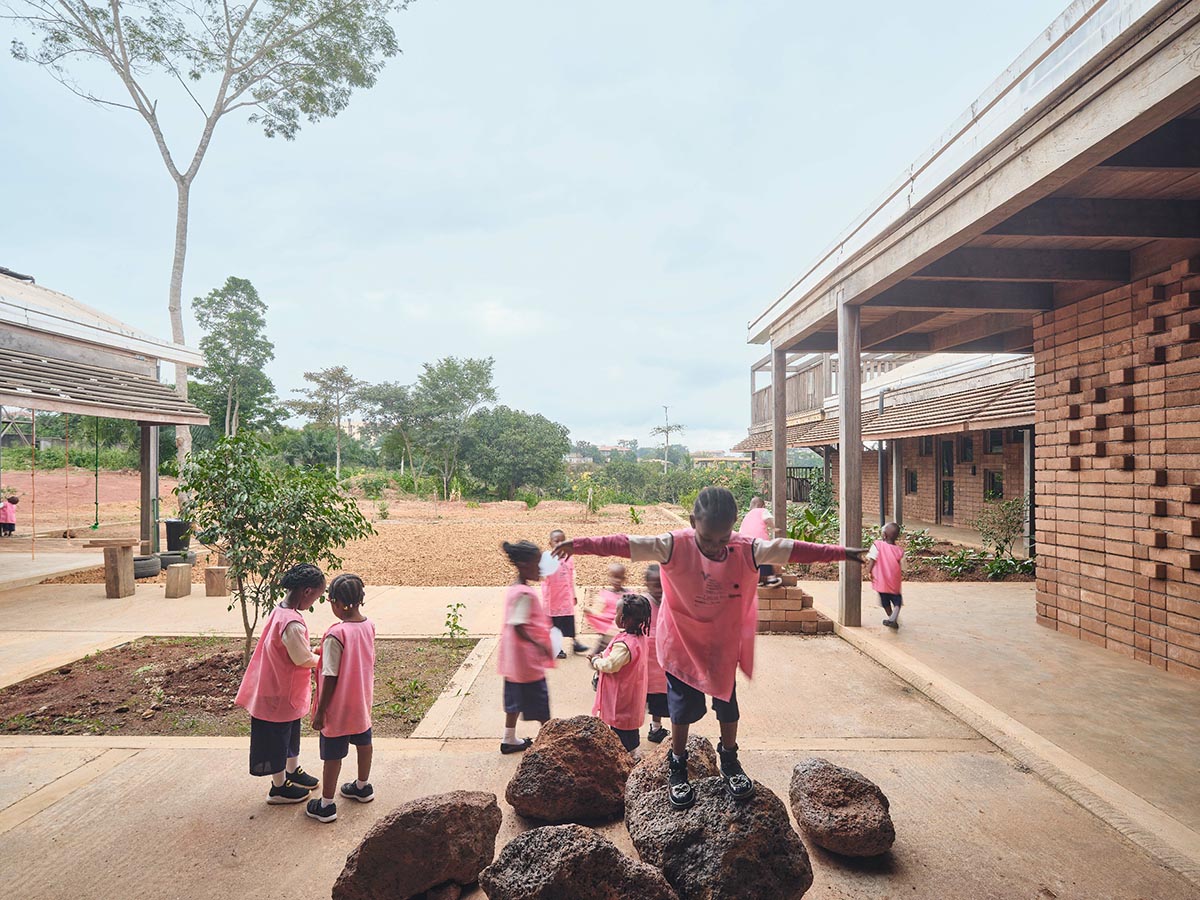
Iroko, sapele, doussie, and movingui are among the local woods utilized inside. Although they are typically expensive and categorized as tropical hardwoods abroad, Cameroon regularly uses them as building materials.
Normally constructed of concrete, the complex's water tower was redesigned as a spatial timber structure with a solar surface on top. This ensures that the building will always have water and electricity in a setting where power outages are common.
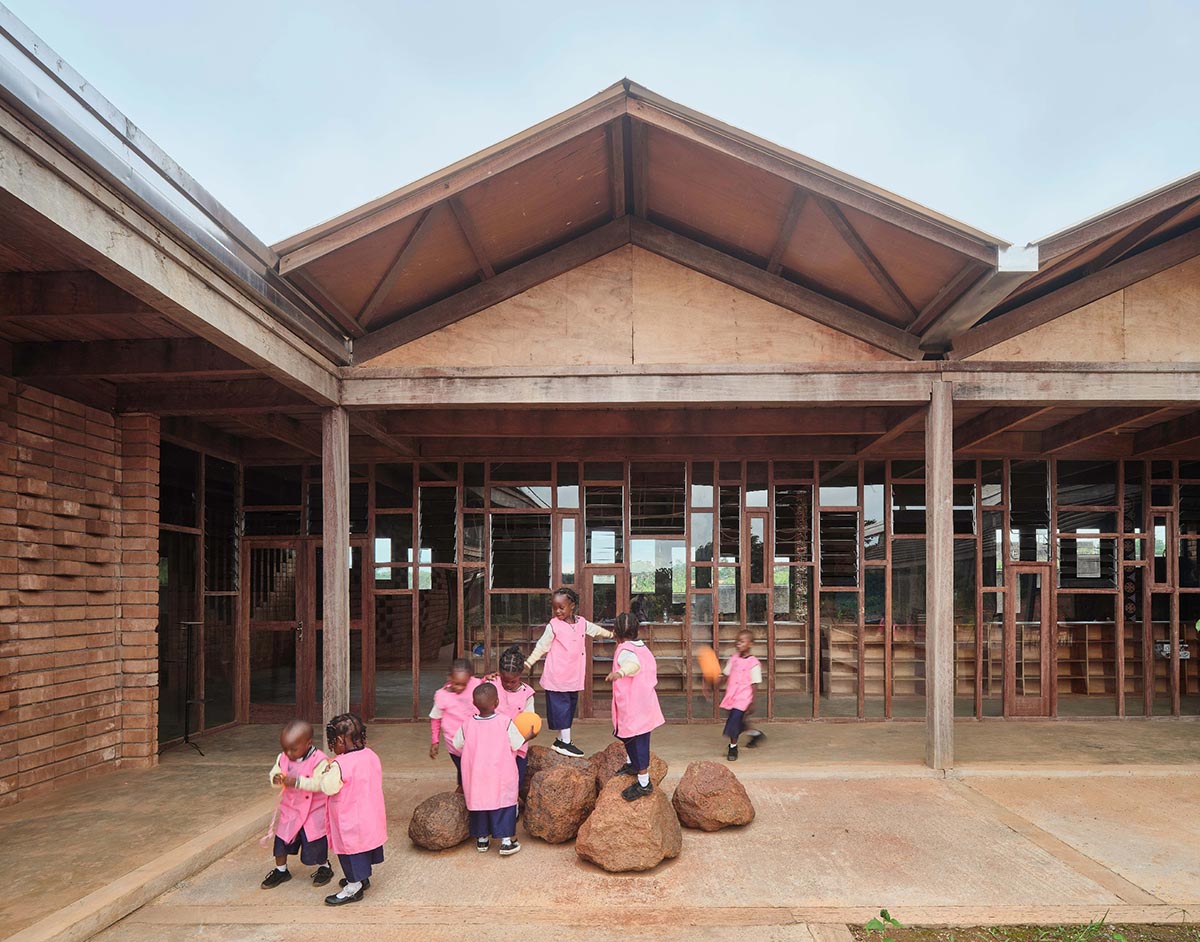
The final product is a community-recognizable area built with traditional architecture that has been modified to fit the local climate. In addition to using geometric patterns and incredibly simple building technologies, the design integrates local materials and culture.
The complex will grow in the upcoming years to provide a full educational cycle, from kindergarten to secondary school.






Vicente Guallart and Daniel Ibáñez are the directors of Urbanitree, a design and research company that was established in Barcelona. The studio uses a decarbonizing, circular design approach that covers the whole value chain, from buildings to forests.
Project facts
Developer: Community of Nazareth
Architecture: Vicente Guallart and Daniel Ibáñez (Urbanitree)
Project director: Elisabeth Fábregas
Collaborating Architects: Ali Basbous (BAD Architects), Daniel Fraile (Arquivio)
Patronage: Missionary Daughters of Nazareth
Contractor: GIC Ma’asapkeng
Carpenters: Alexandre Onguene, Tchawe Fabrice Ronelle, Germain Atanga
Site: Soa, Cameroon (Africa)
Year of Completion: 2024
Floor Area: 1,600 m²
Project Cost: USD 900,000
Communication: Pati Nunez Agency
All images © Adrià Goula.
All drawings © Urbanitree.
> via Urbanitree
earth brick educational building kindergarten rammed earth school Urbanitree