Submitted by WA Contents
3D printing embraces urban density as Luxembourg addresses housing needs
Luxembourg Architecture News - Mar 06, 2026 - 05:02 3261 views
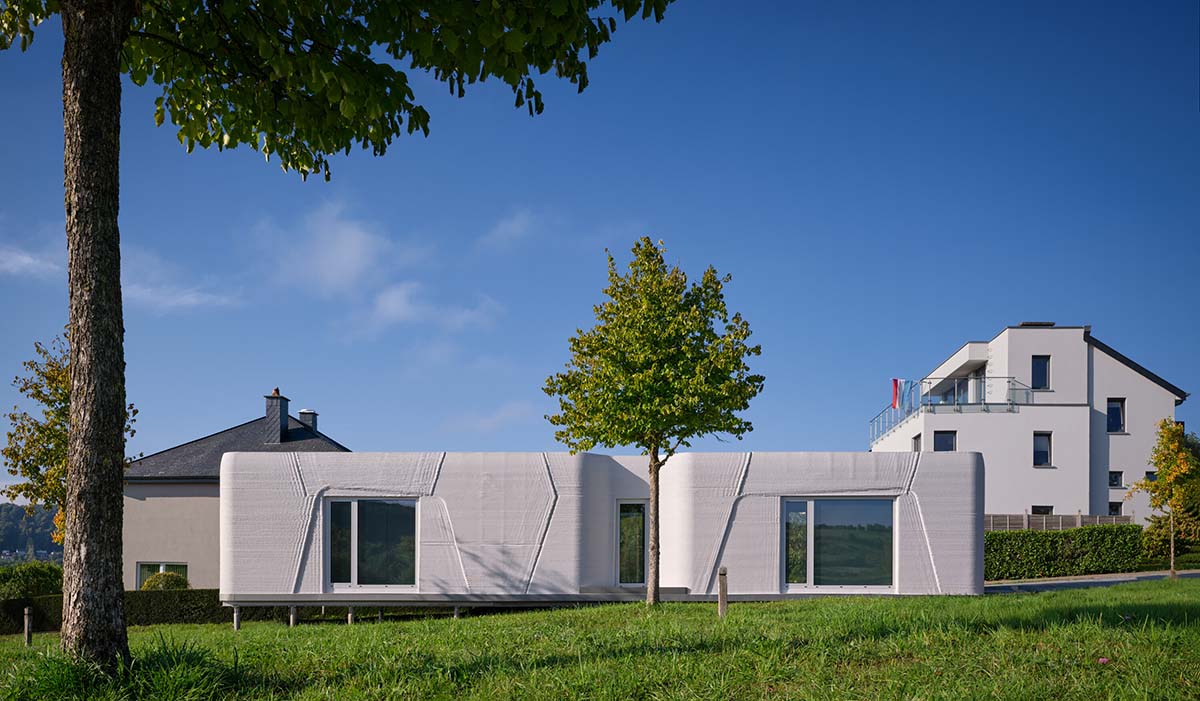
There is a noticeable housing shortage in Luxembourg. Approximately 7,000 new homes are needed annually in the nation, but only about 3,600 are constructed, and less than 200 of those are funded by public or affordable programs.
The little, unused plots that are located inside of established communities are being used in various ways by the municipalities.
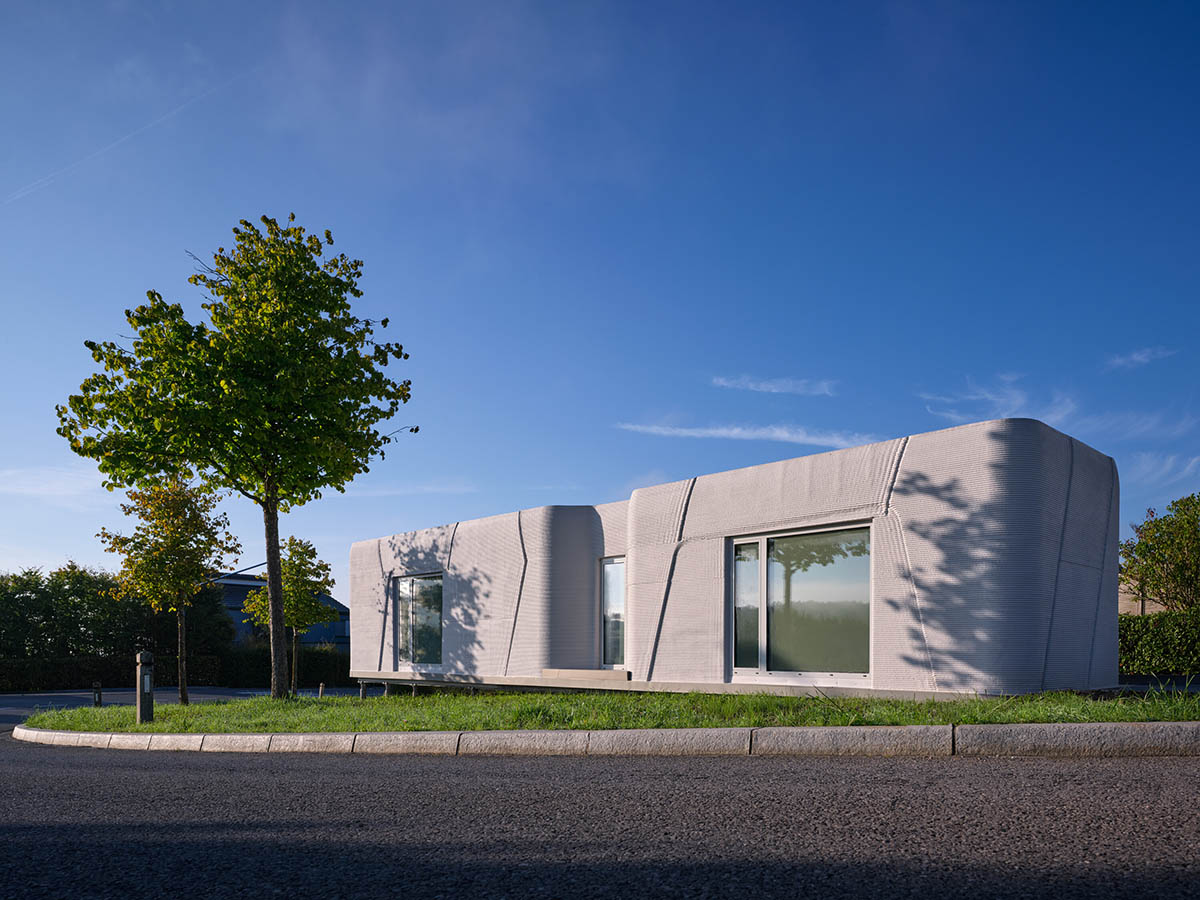
Since they are too uneven or too narrow for traditional construction, many of these properties are written off.
The Tiny House initiative poses a straightforward query. What if these locations developed into a new supply of affordable, well-built homes that allow residents to remain near their communities?
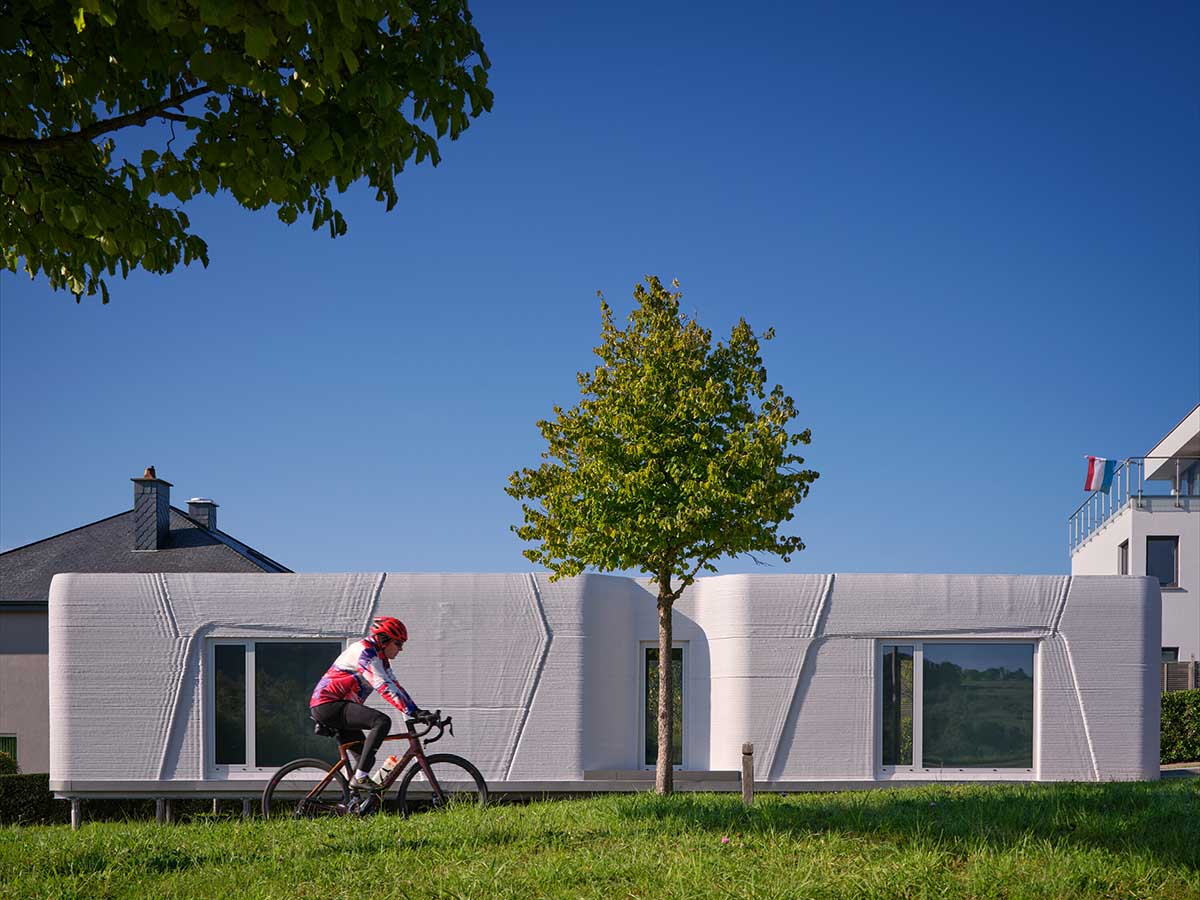
The Idea
Working closely with the Municipality of Niederanven, architect Bujar Hasani of ODA Architects came up with the concept. Together, they found a way to encourage young people who choose to remain in the neighborhood while building compact homes that adhere to Luxembourg's thermal and structural requirements.
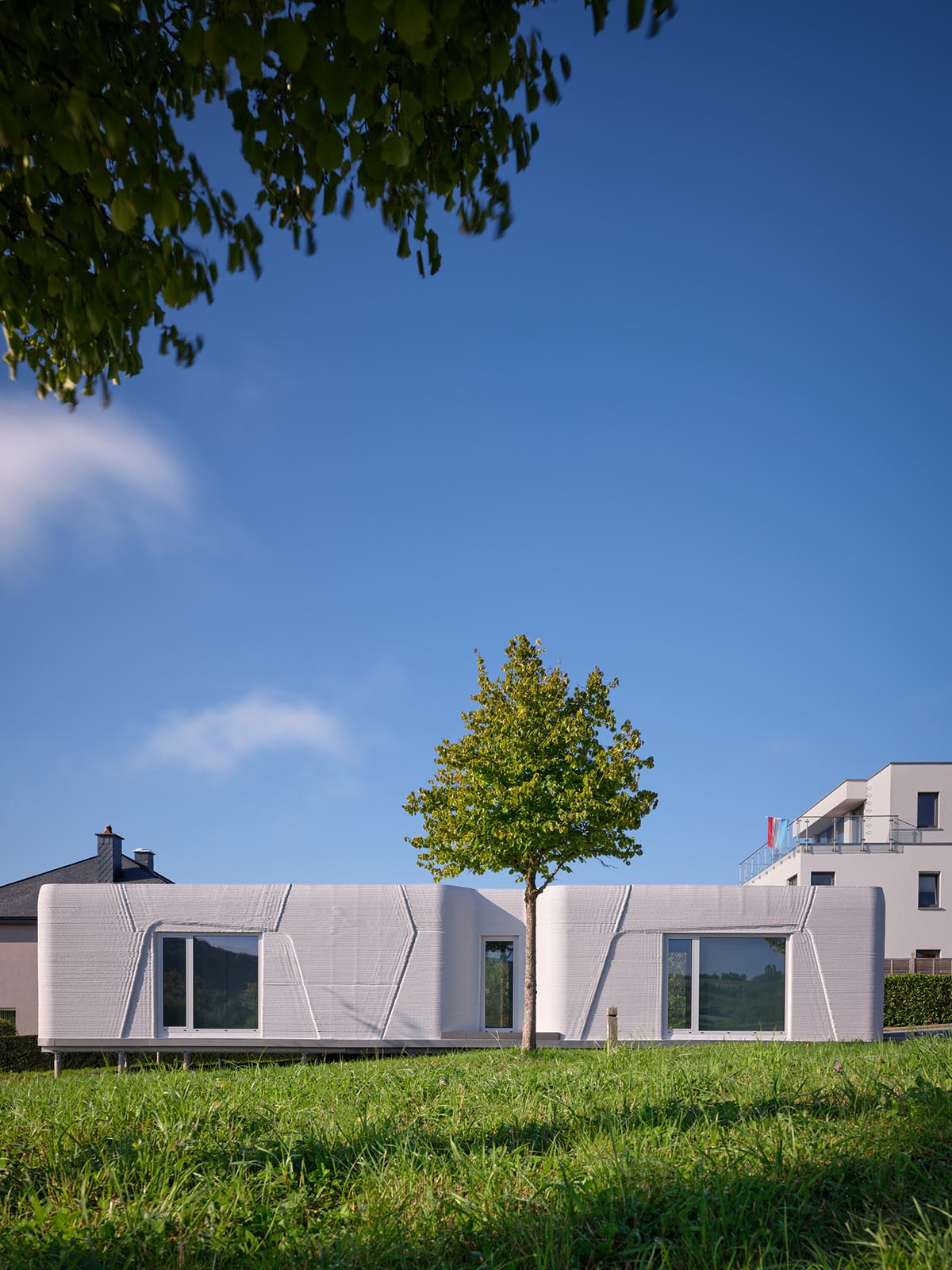
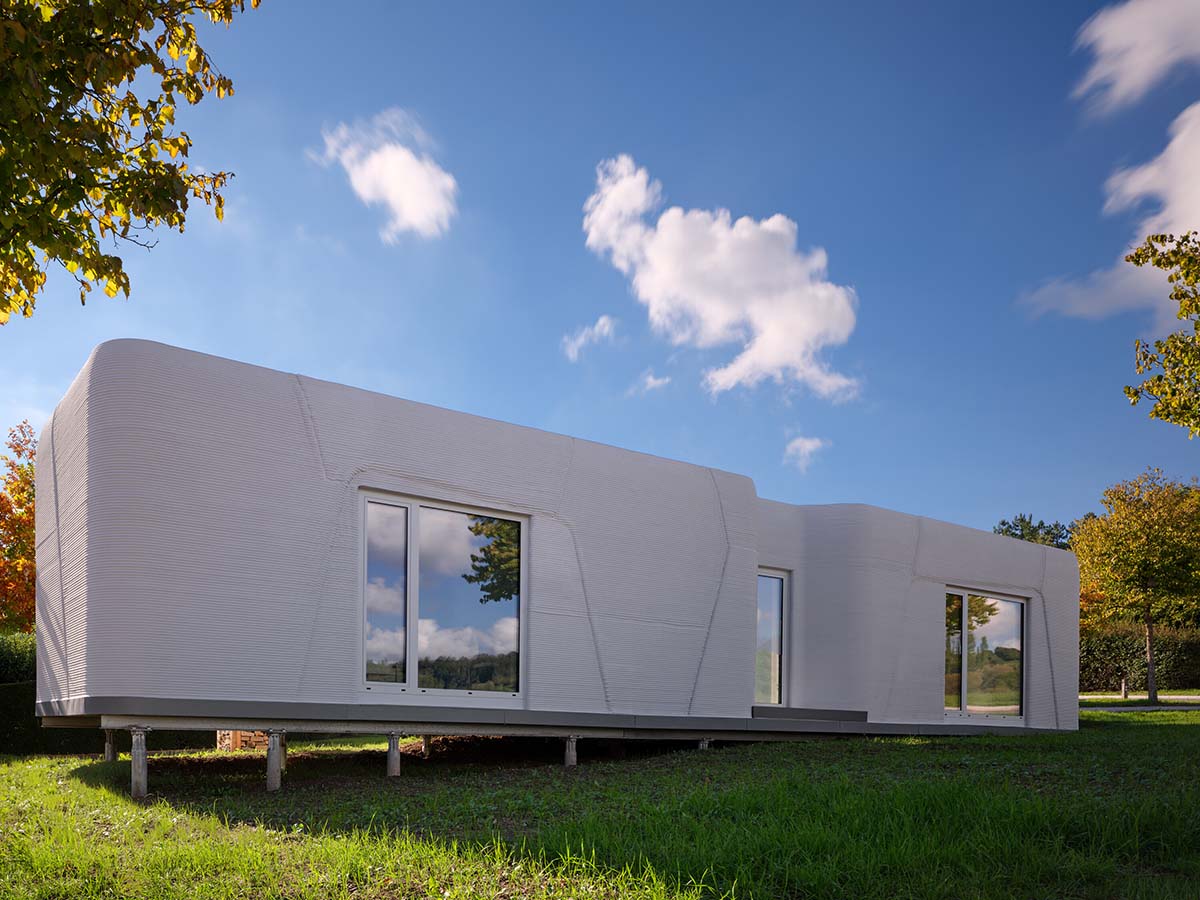
The crew decided to use 3D construction printing as the production method right away. It was not a lightweight box or a temporary cabin.
The objective was to create a long-lasting, effective housing that functions similarly to a conventional residence and can be delivered quickly and precisely.
The Solution
ODA teamed up with ICE Industrial Services and its Coral Construction Technologies business to deliver on that promise on a construction site. Industrial automation is the main emphasis of ICE. Coral, which was introduced in 2021, creates efficient on-site concrete printing systems.
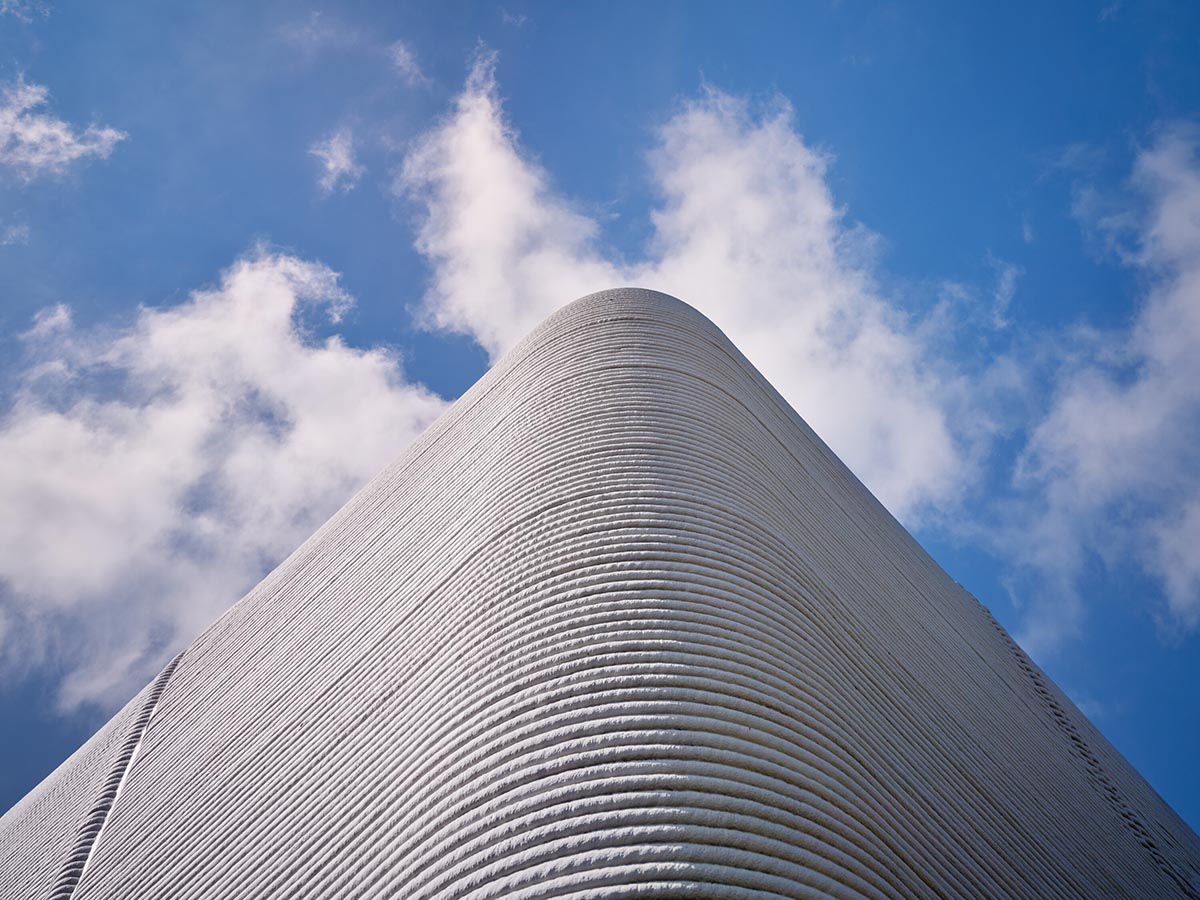
Coral converted Hasani's architectural model into a digital file that could be printed out and included all the information required for on-site robotic devices.
There was a real design and build rhythm to the partnership. The intent was established by the architecture. It was rapid, reproducible, and constructible thanks to digital fabrication.
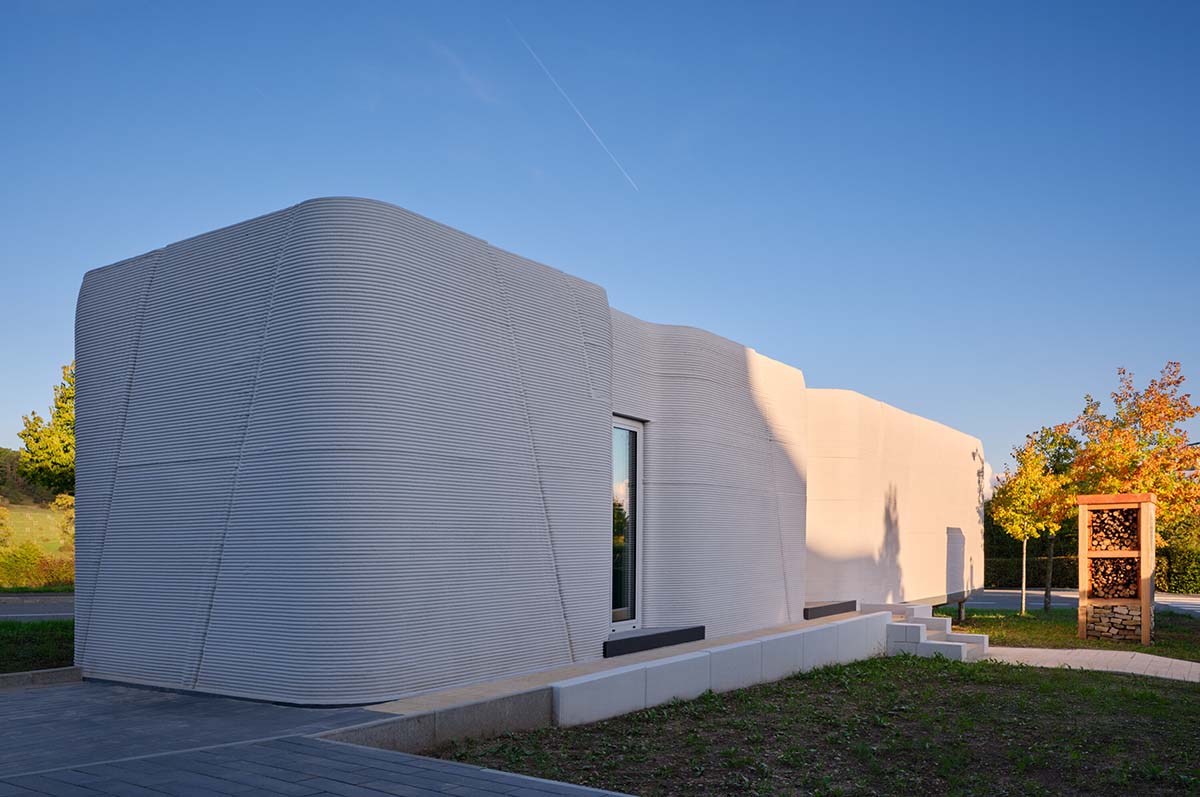
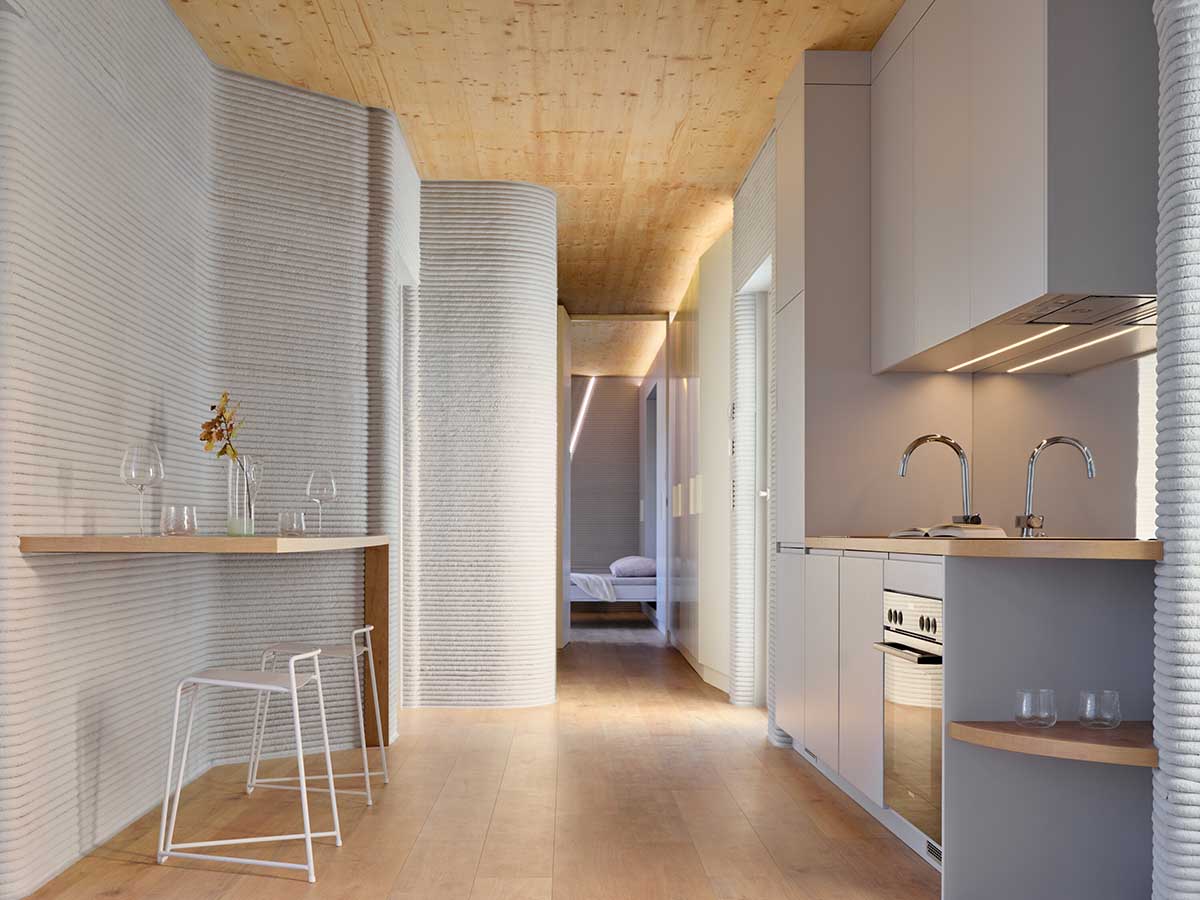
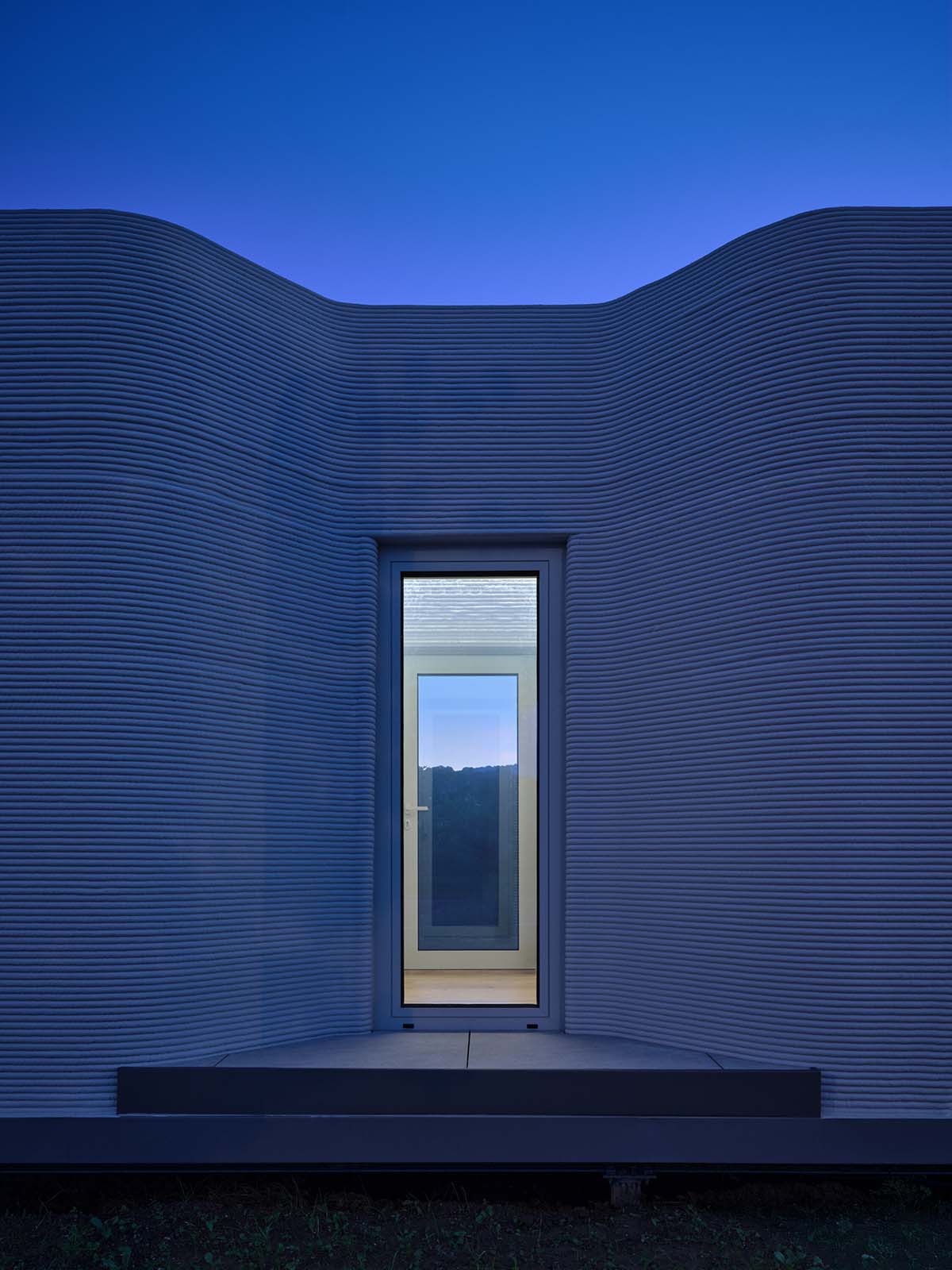
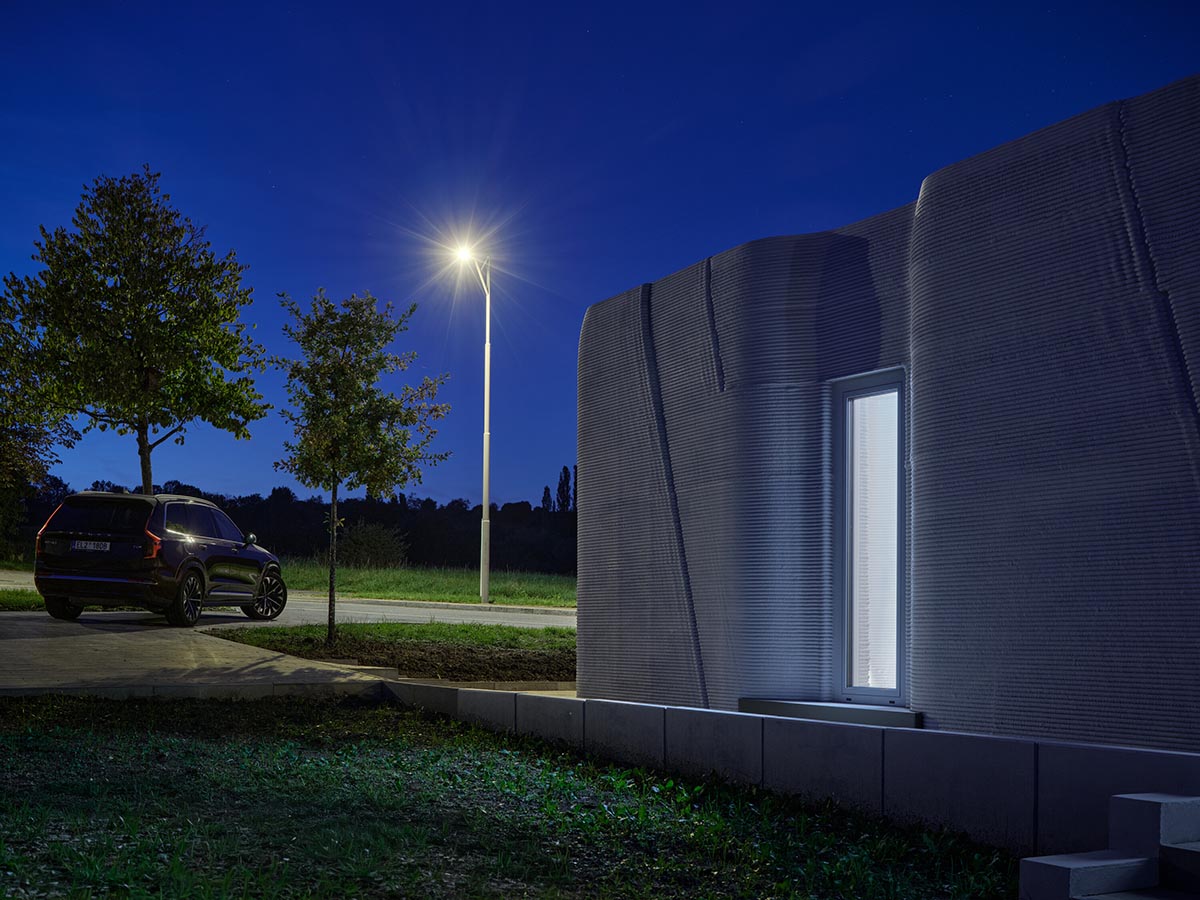
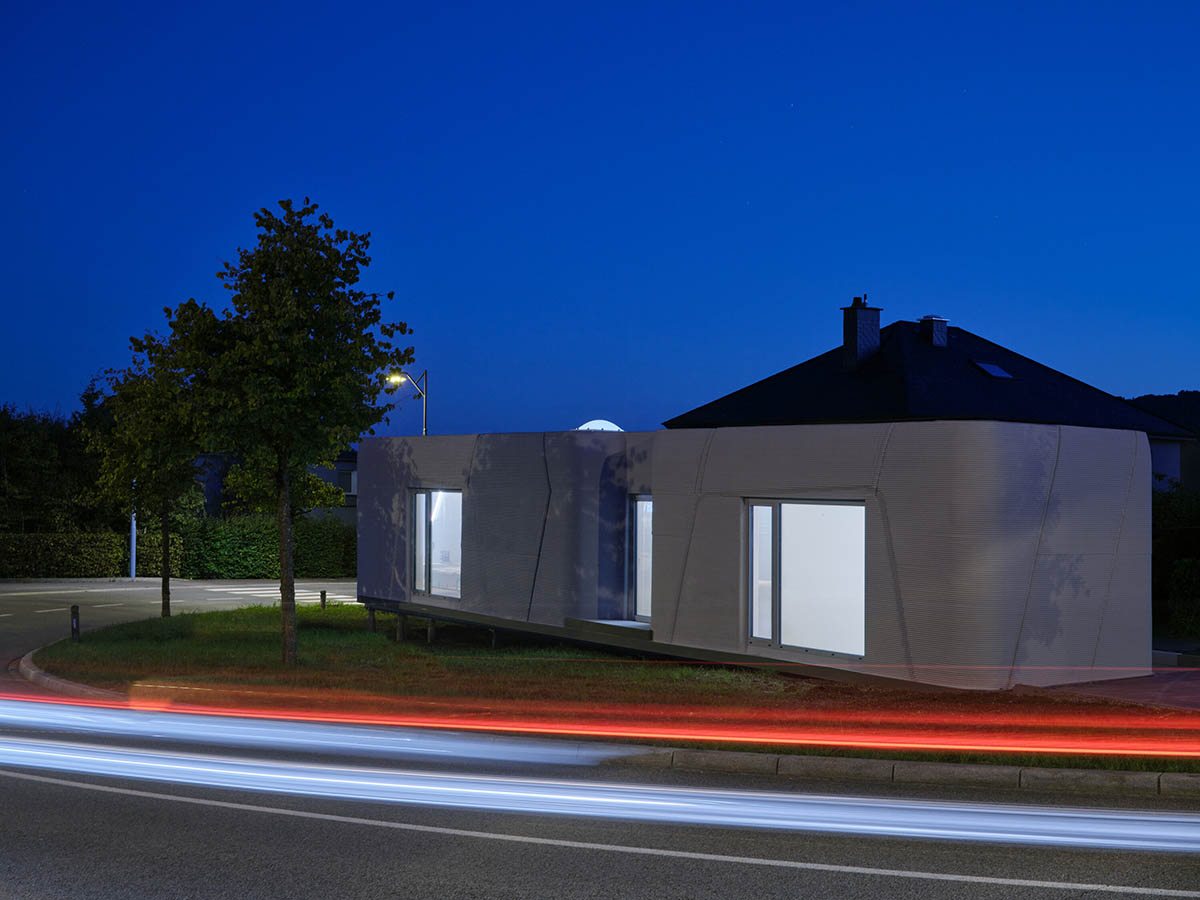
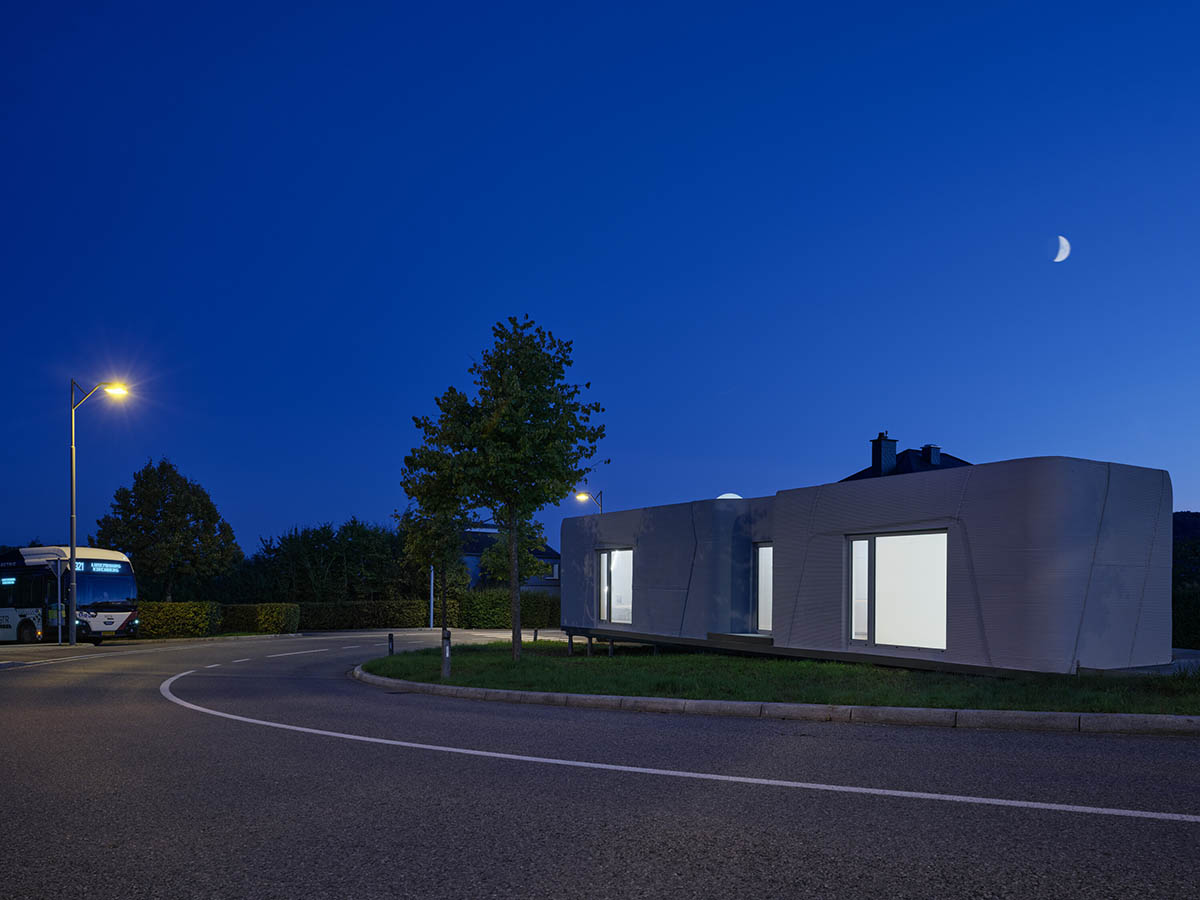
The first pilot occupies a long, narrow space on the outskirts of a Niederanven neighborhood. The plot's net useable size is just 47 square meters, with dimensions of 3.5 meters for width and 17.7 meters for depth. The major perspective remains open from front to back because to the plan's robust core axis.
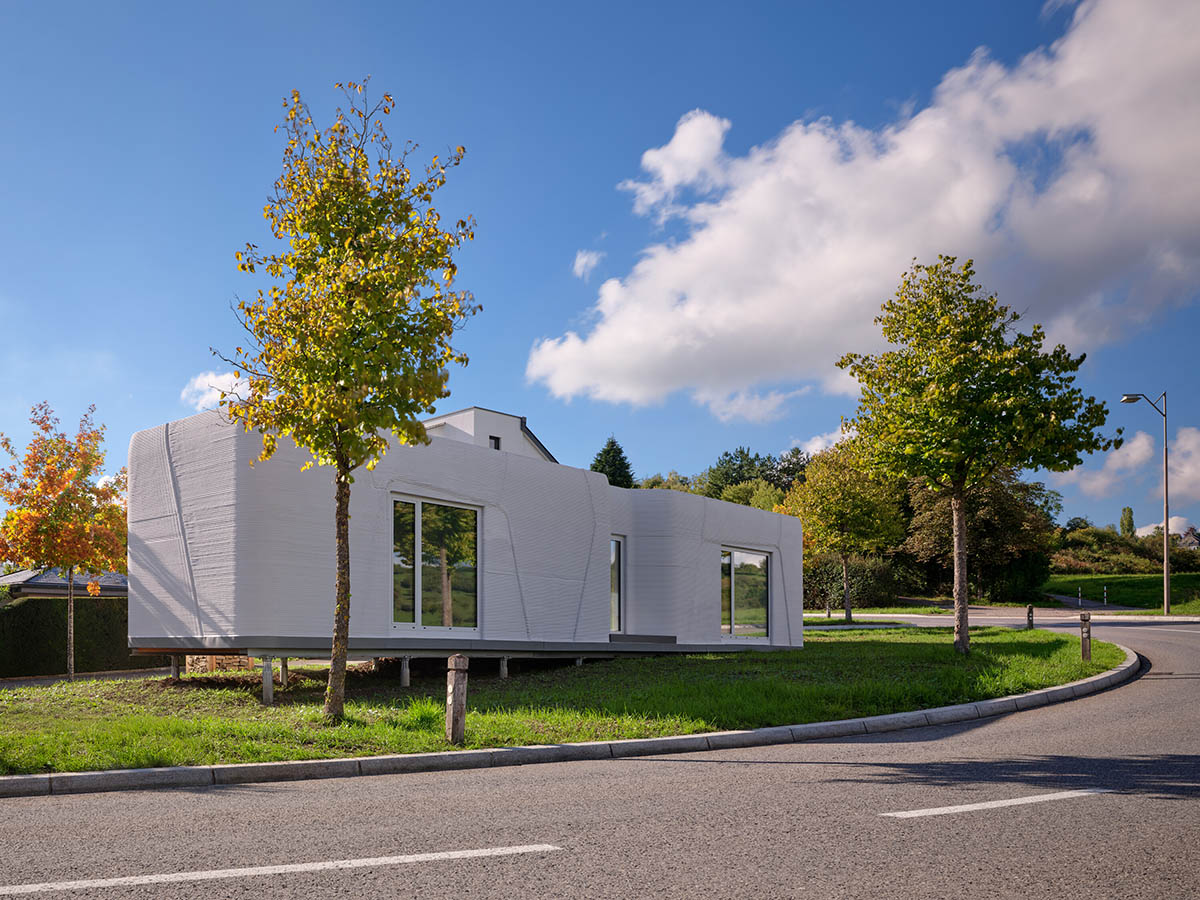
On either side are areas for furnishings, storage, and service. The tiny footprint lives larger because the eye perceives the house as being calmer and longer than its measurements indicate.
There are two firsts for this house in Luxembourg. Using local aggregates, it is the first residential building to be 3D printed. Also, it is the first to be printed on a platform made of wood and supported by screw foundations as opposed to concrete footings. This foundation option lowers weight, requires less groundwork, and facilitates possible disassembly or relocation at a later stage of the building's existence.
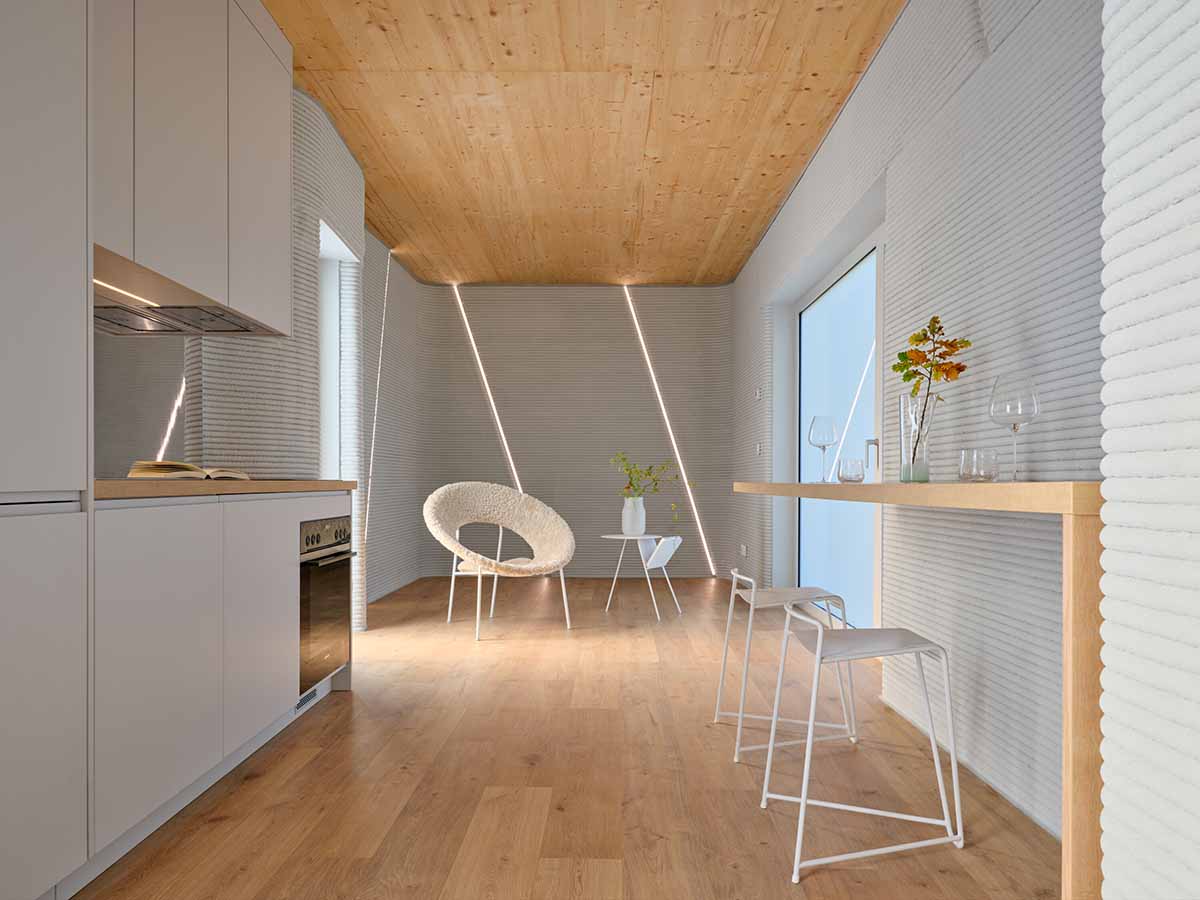
Coral's mobile printer and on-site 3D concrete printing are the main focus of construction. Standard concrete delivered in a transport mixer from nearby batching facilities is only compatible with a relatively small number of systems worldwide.
This feature reduces emissions associated with the transportation of different special ingredients, enhances cost control, and eliminates dependency on imported dry mixes. On-site printing takes roughly a week.
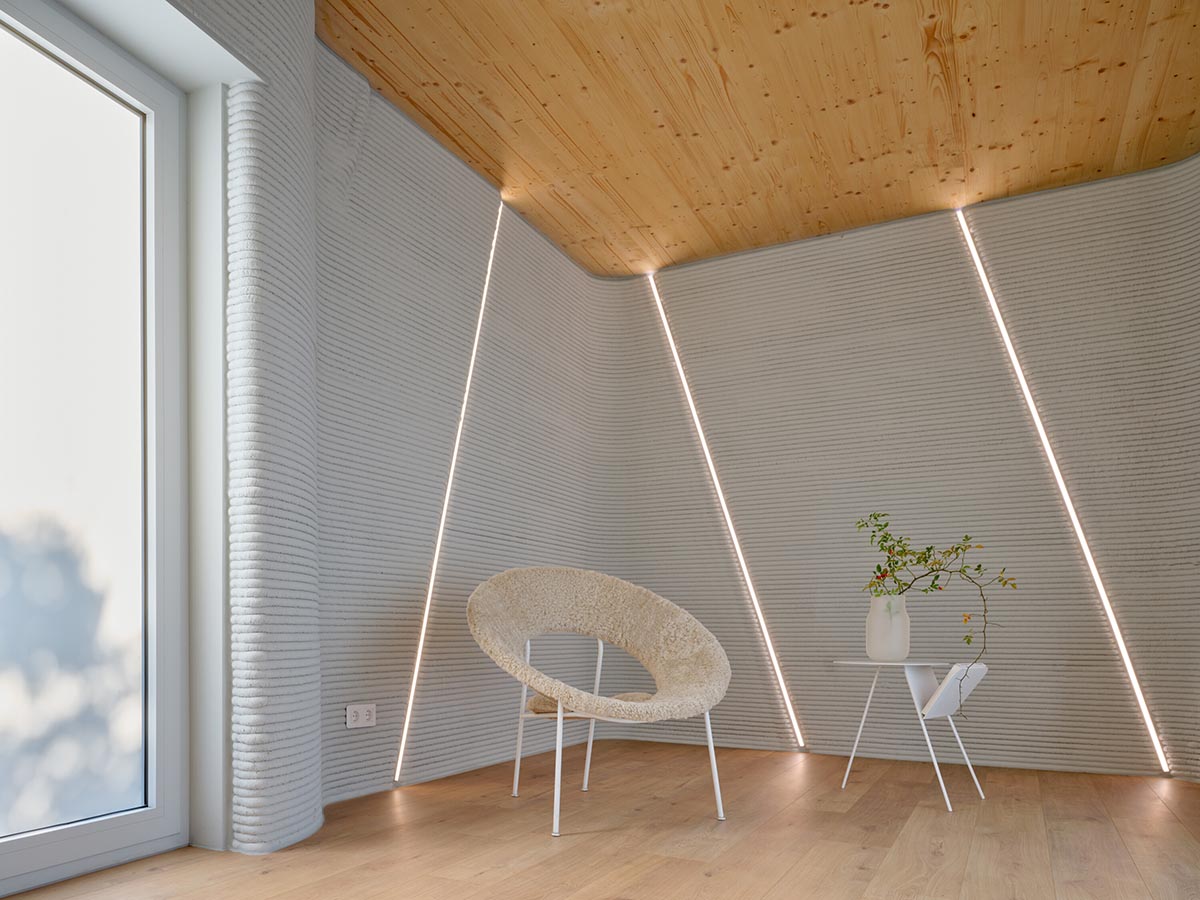
Only four weeks are needed to finish the entire project, including finishing touches. Technical components can also be created directly during printing thanks to digital fabrication.
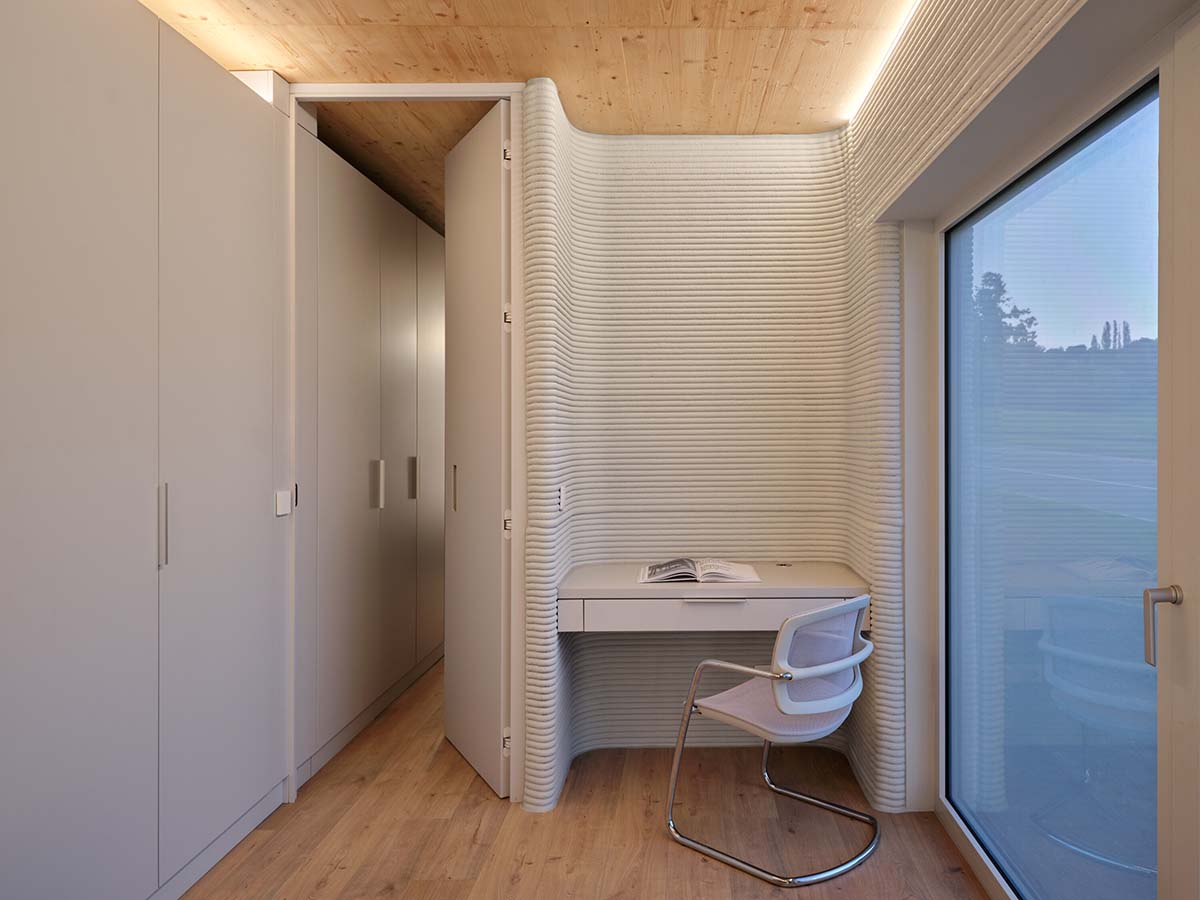
The shower niche and the space for a wall-mounted toilet are printed into the wall in this proposal. The completed areas precisely match the design, and the crew spends less time cutting and fixing.
Today
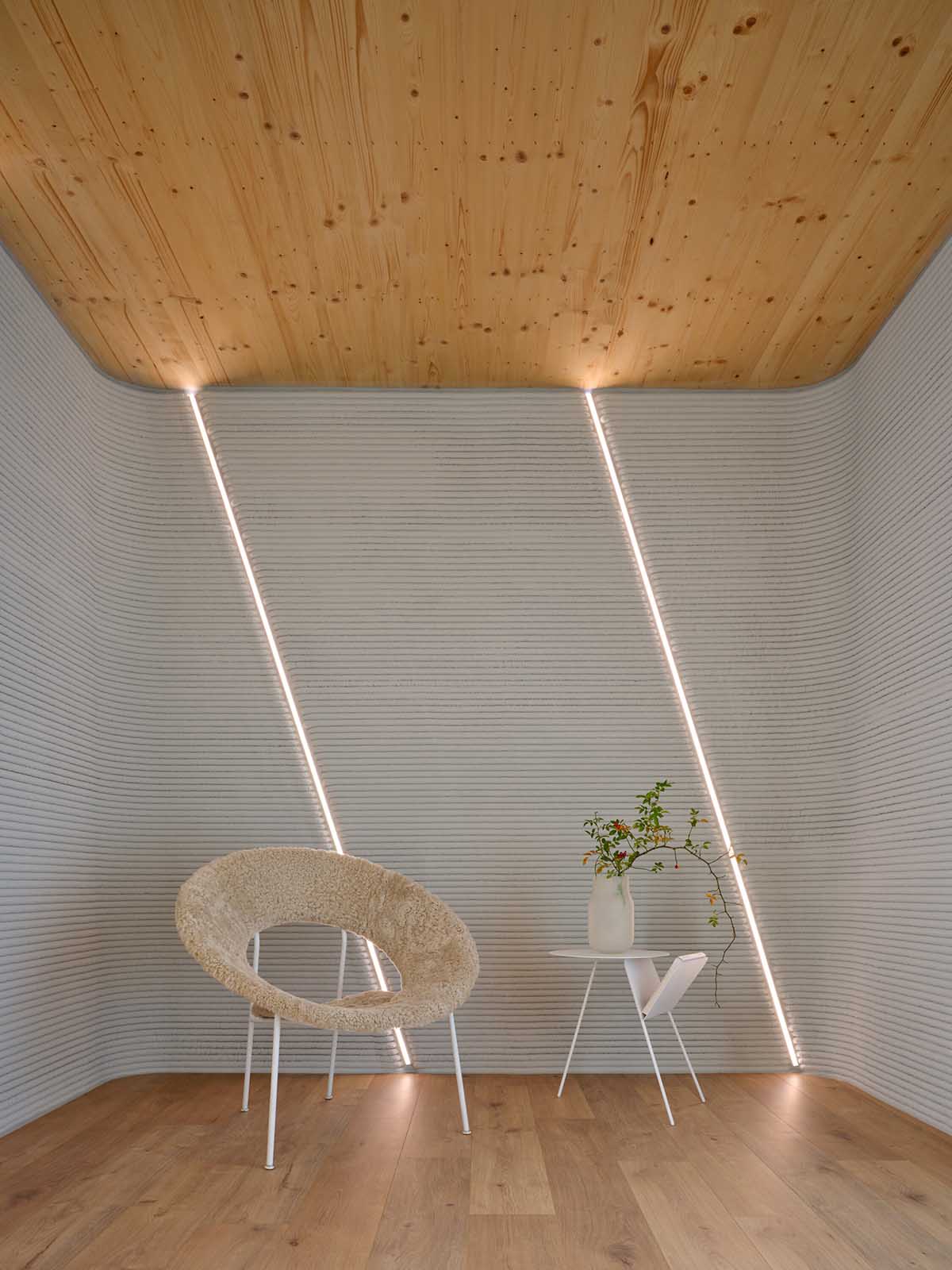
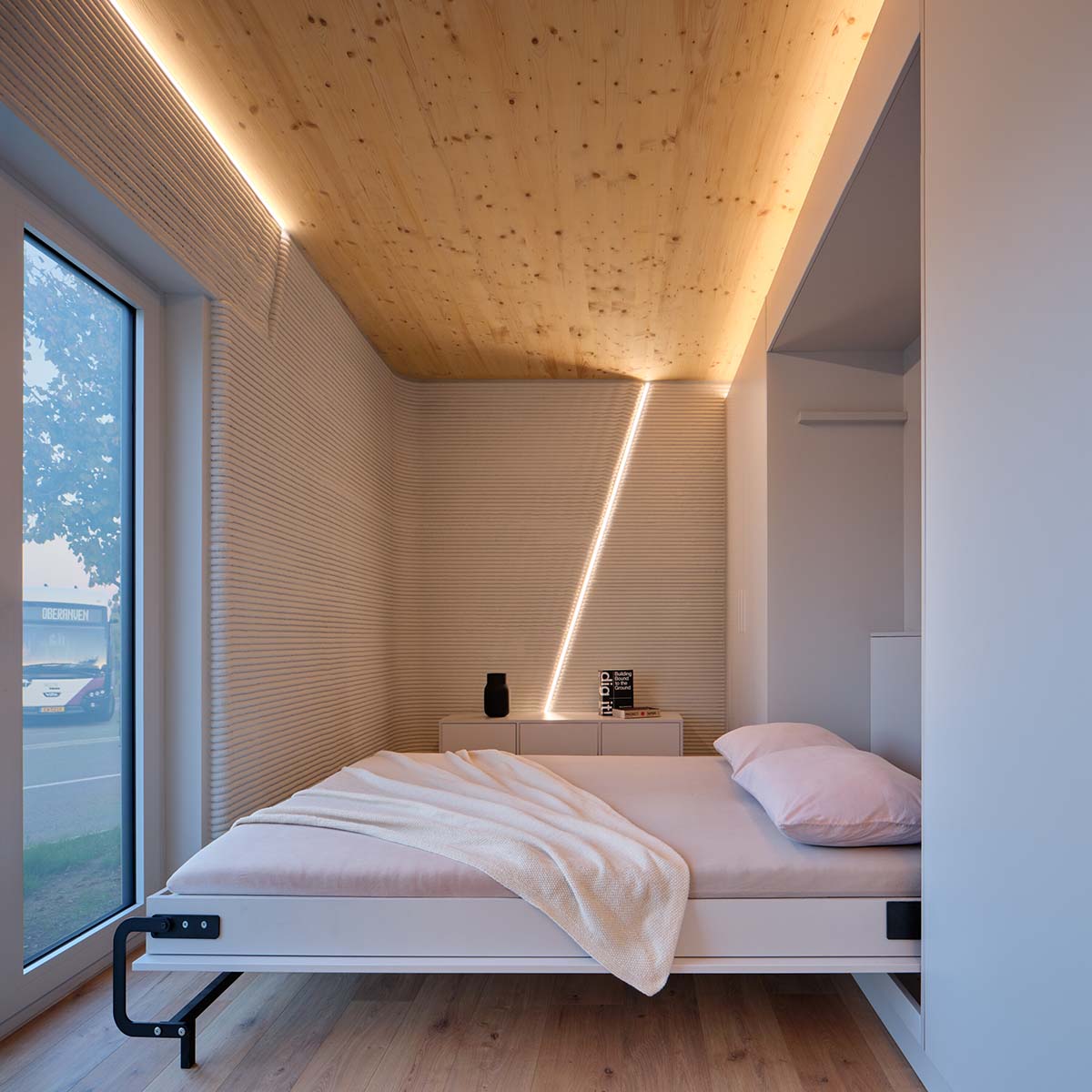
The low-impact strategy is maintained by the superstructure. Both the roof and the frame are made of wood. There are no synthetic materials used in insulation or reinforcing; they are completely mineral-based. For future disassembly, the lightweight roof and hardwood base promote a circular thinking while lowering overall mass.
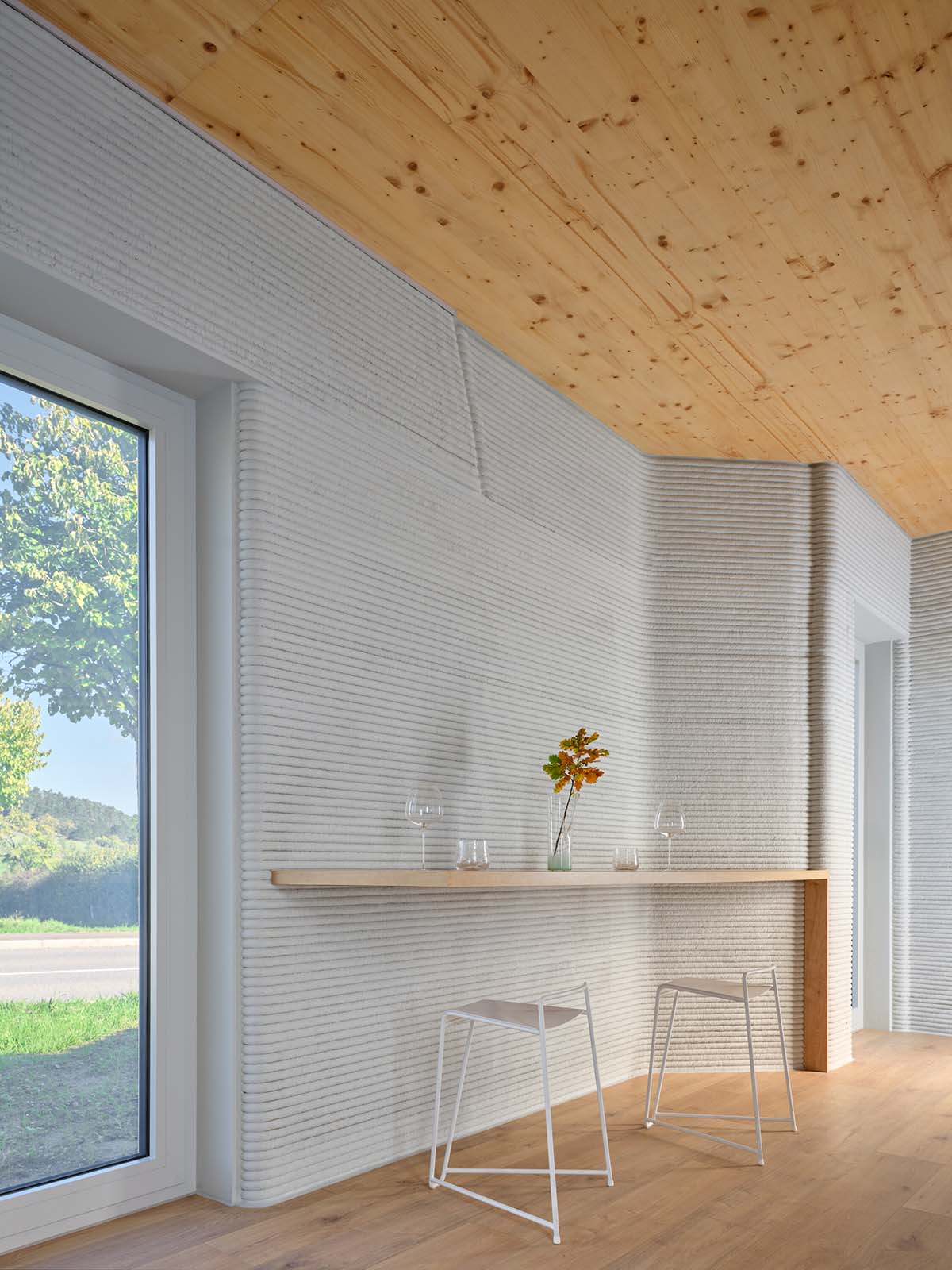
The printing process itself is adjusted to only print the necessary material, reducing embodied carbon and conserving resources. The house and the film-based floor heating system are powered by solar panels mounted on the roof. Windows facing south provide beneficial solar gains that lower the need for heating.
In addition to being a residence, Tiny House LUX functions as a municipal pilot. The project on public land was approved by the Municipality of Niederanven in order to test a different construction paradigm in practical settings. The end product is a little home that adds subtly to an existing neighborhood while preserving environmental performance and design quality.
The approach may be used to locations with comparable constraints without having to start from scratch because it is based on a digital workflow, standard batching-plant concrete, and a mobile printer.
Coral's role is to connect field execution and design ambition. With millimeter accuracy, the company's design-to-print pipeline transforms architectural intent into robotic toolpaths.
A portable printer that uses standard local mixes is included. It provides the expertise to combine technical and architectural elements during printing, which minimizes waste, cuts down on trades, and expedites timelines. Small, underutilized properties become buildable potential because to their qualities.
The Future
Replicability is of greater importance. There is a lengthy tail of undeveloped, narrow, or uneven plots in many municipalities. Cities can add well-built, energy-smart homes where people already live, learn, and work if they have a clear approvals procedure, a library of printable details, and an on-site printing technique that employs local concrete.
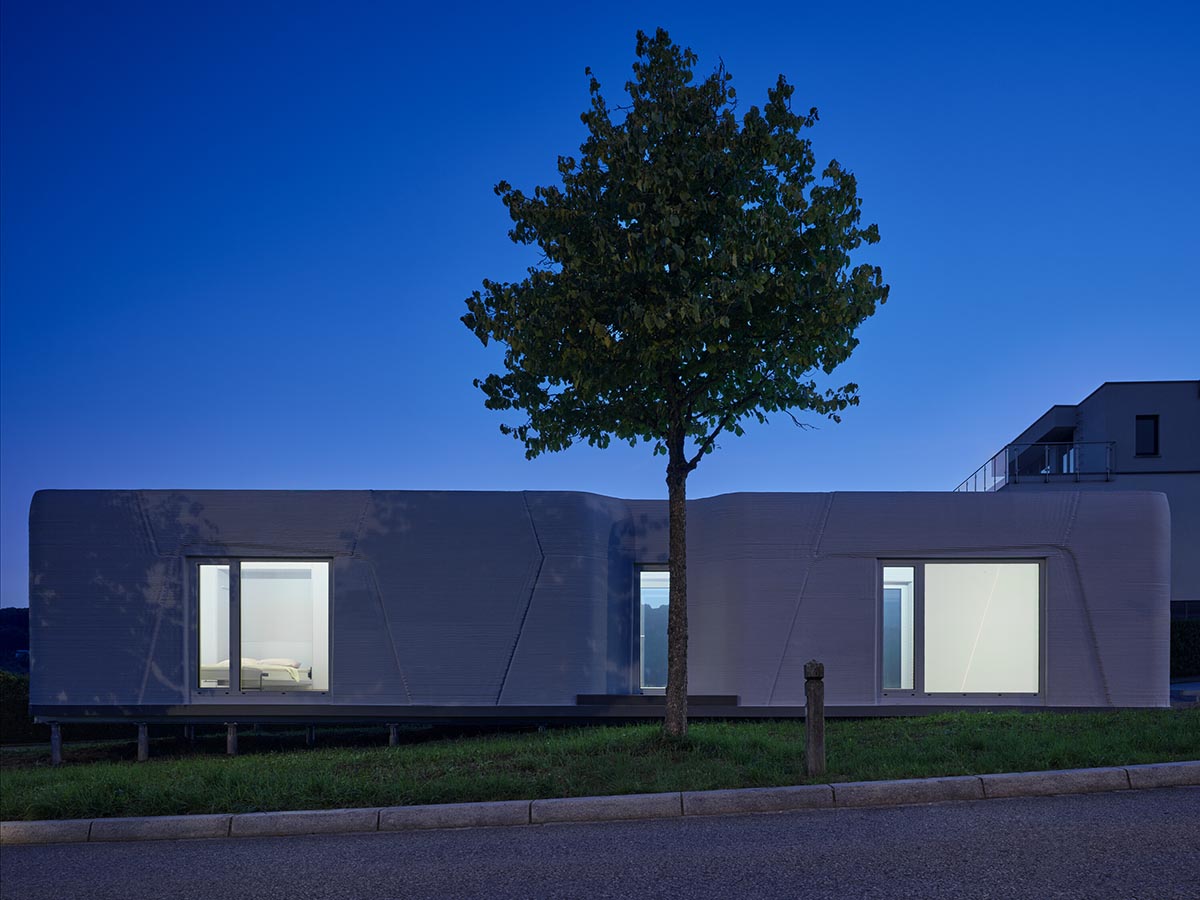
This is not a hypothesis, as demonstrated by Tiny House LUX. It is an approach that can grow with local demand, satisfies national performance standards, and honors local craftsmanship. Here, innovation and tradition do not conflict.
They come together in an exact, small home that demonstrates what is possible when engineering, design, and site-ready automation work together.
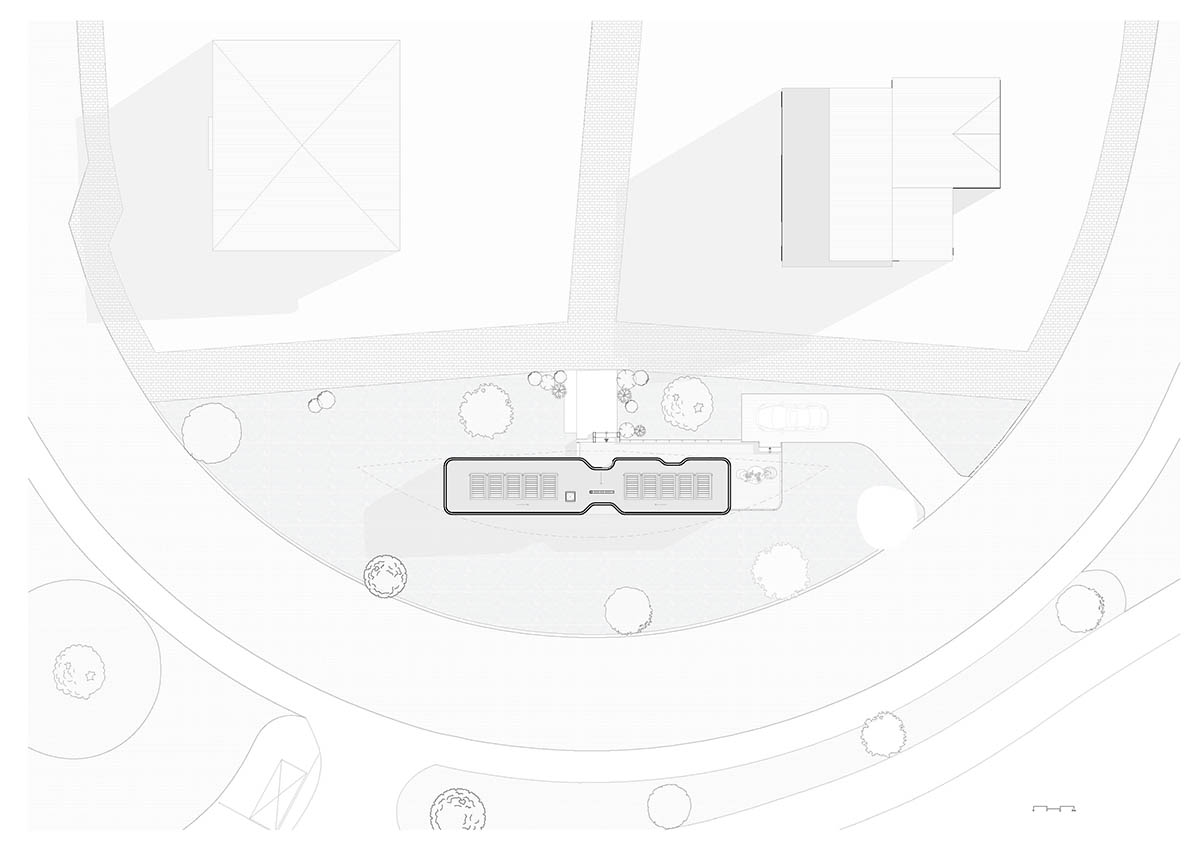
Site plan
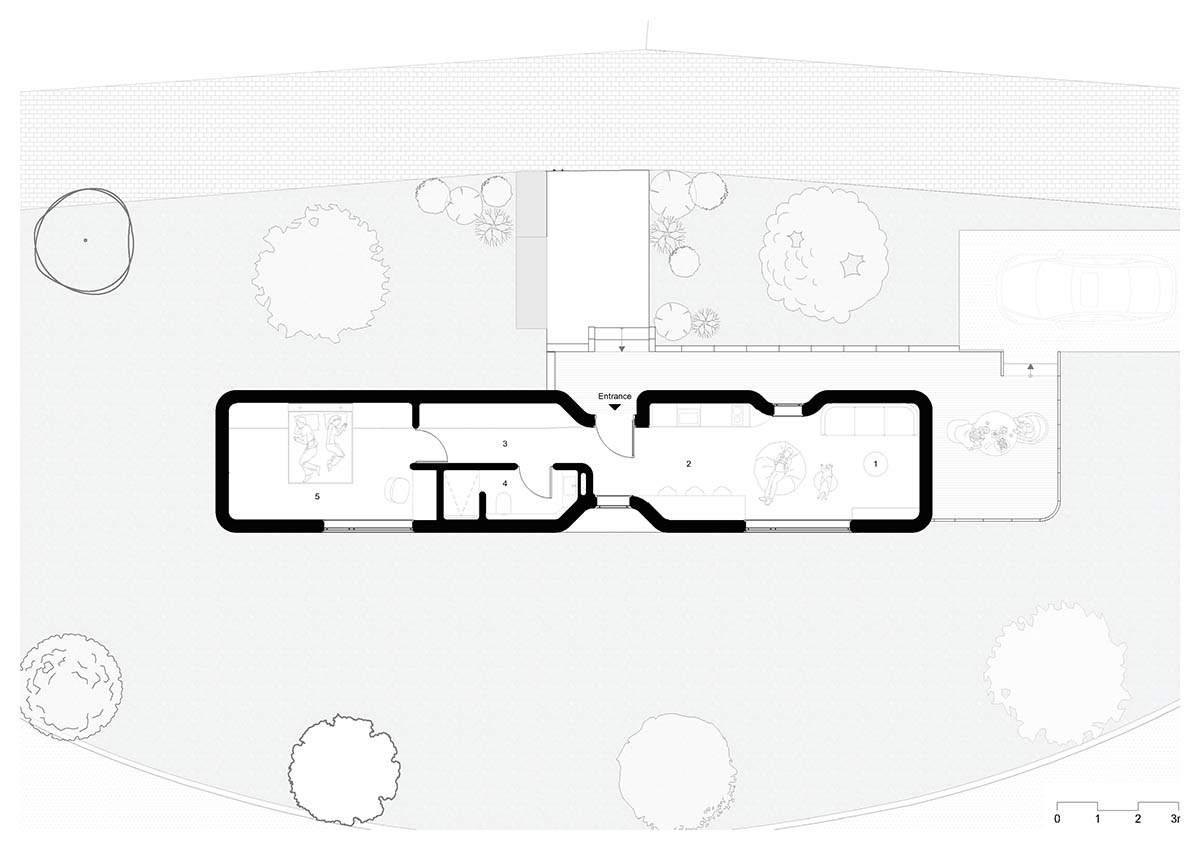
Ground floor plan
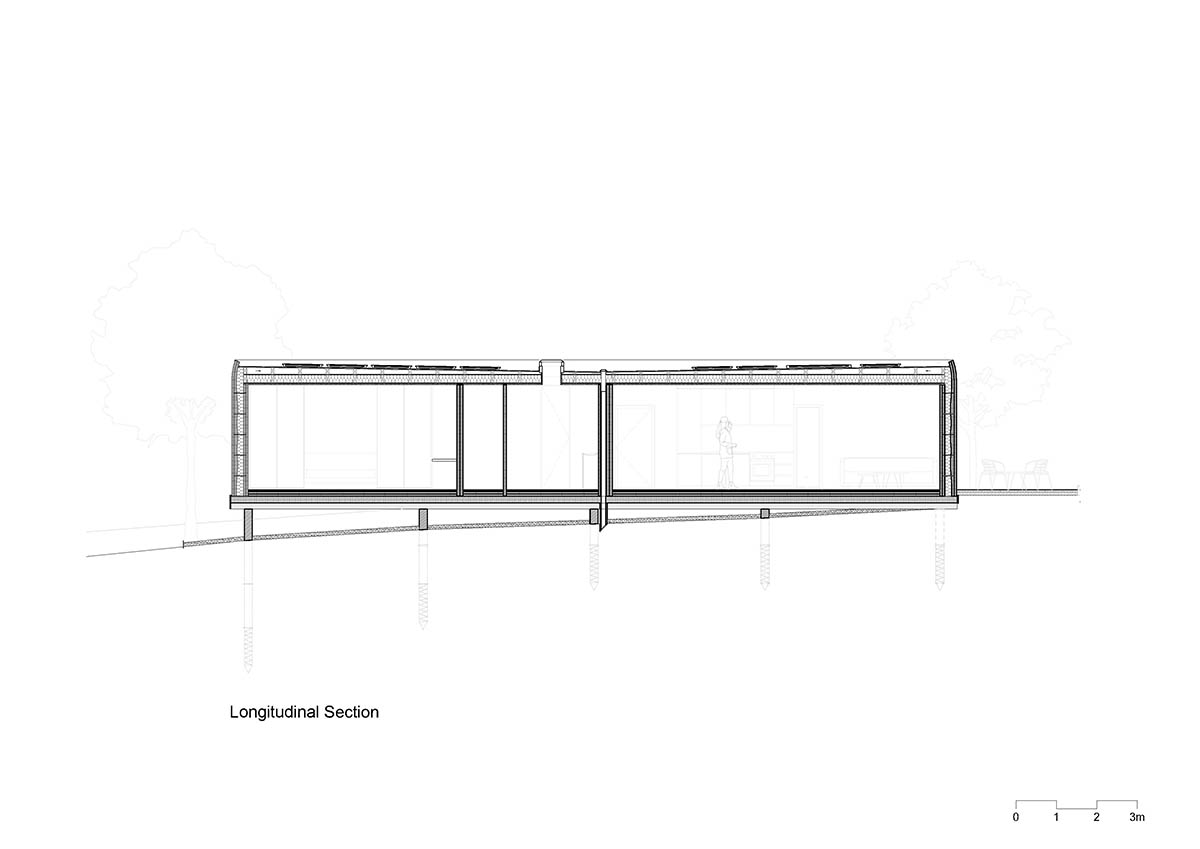
Longitudinal section
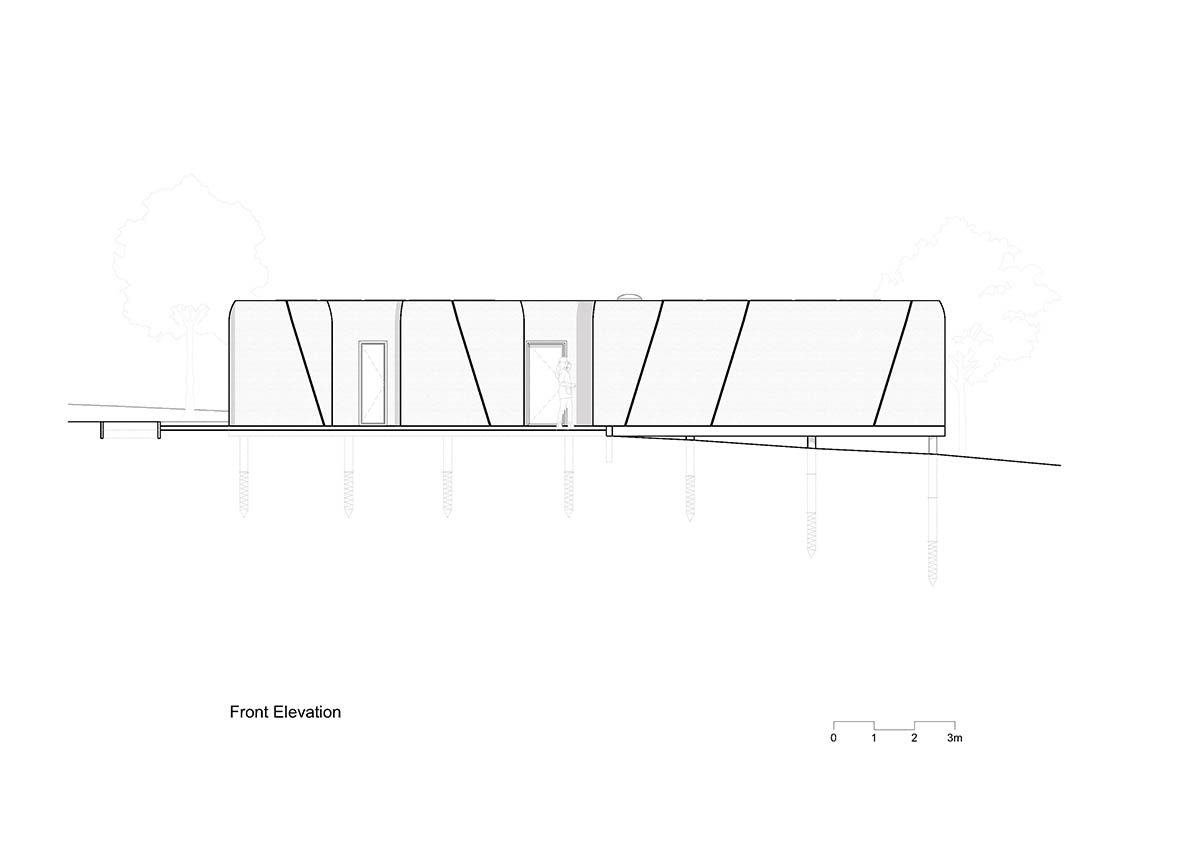
Front elevation
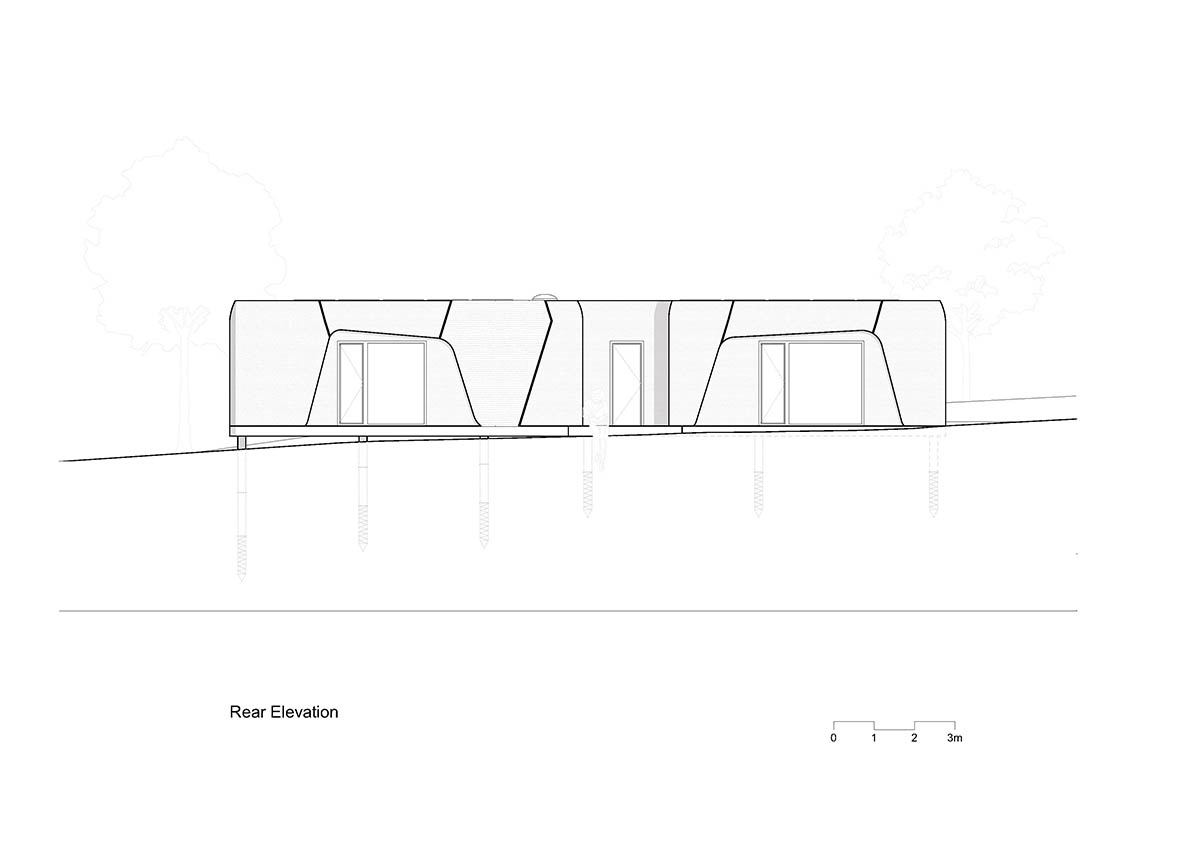
Rear elevation
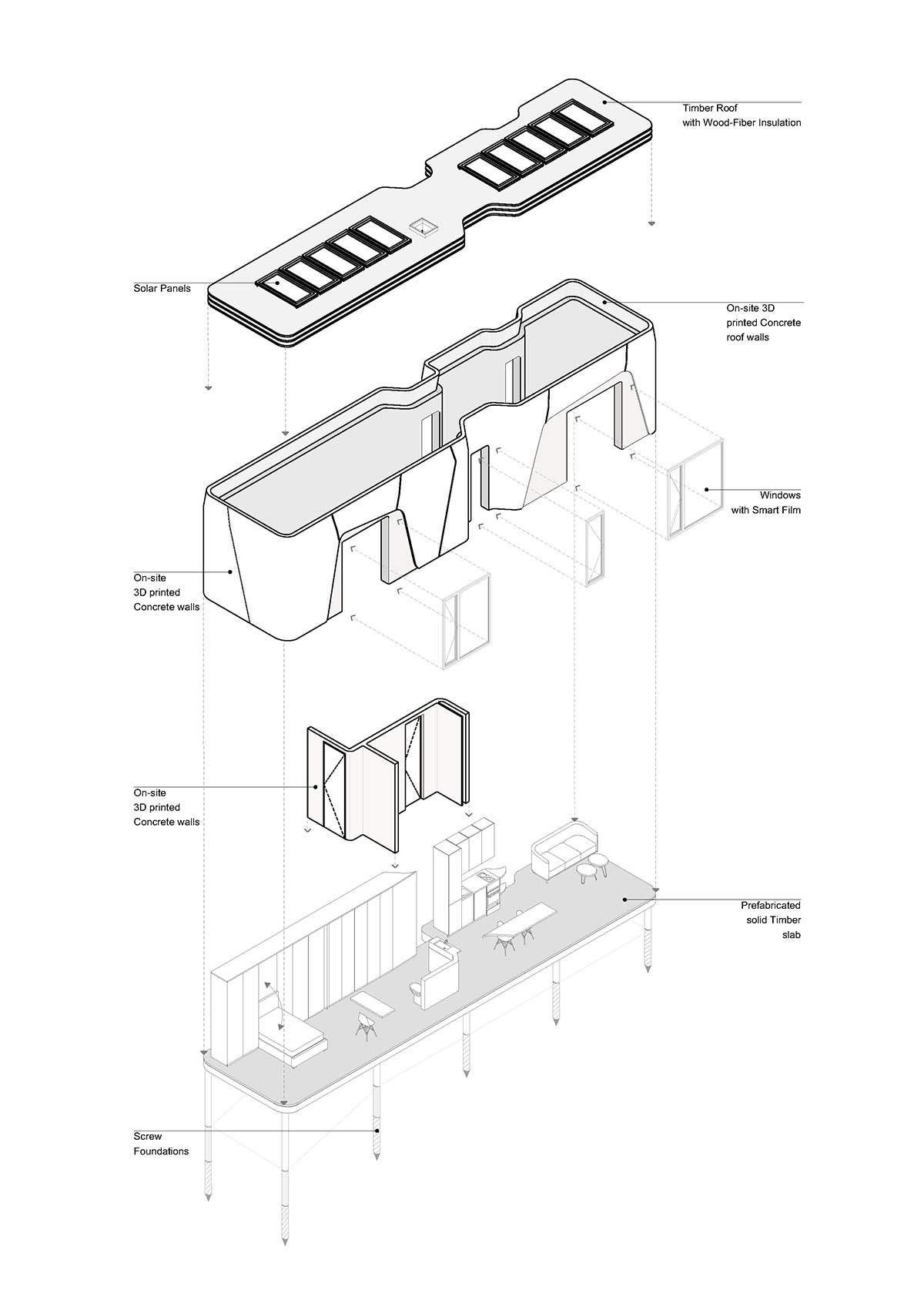
Axonometry
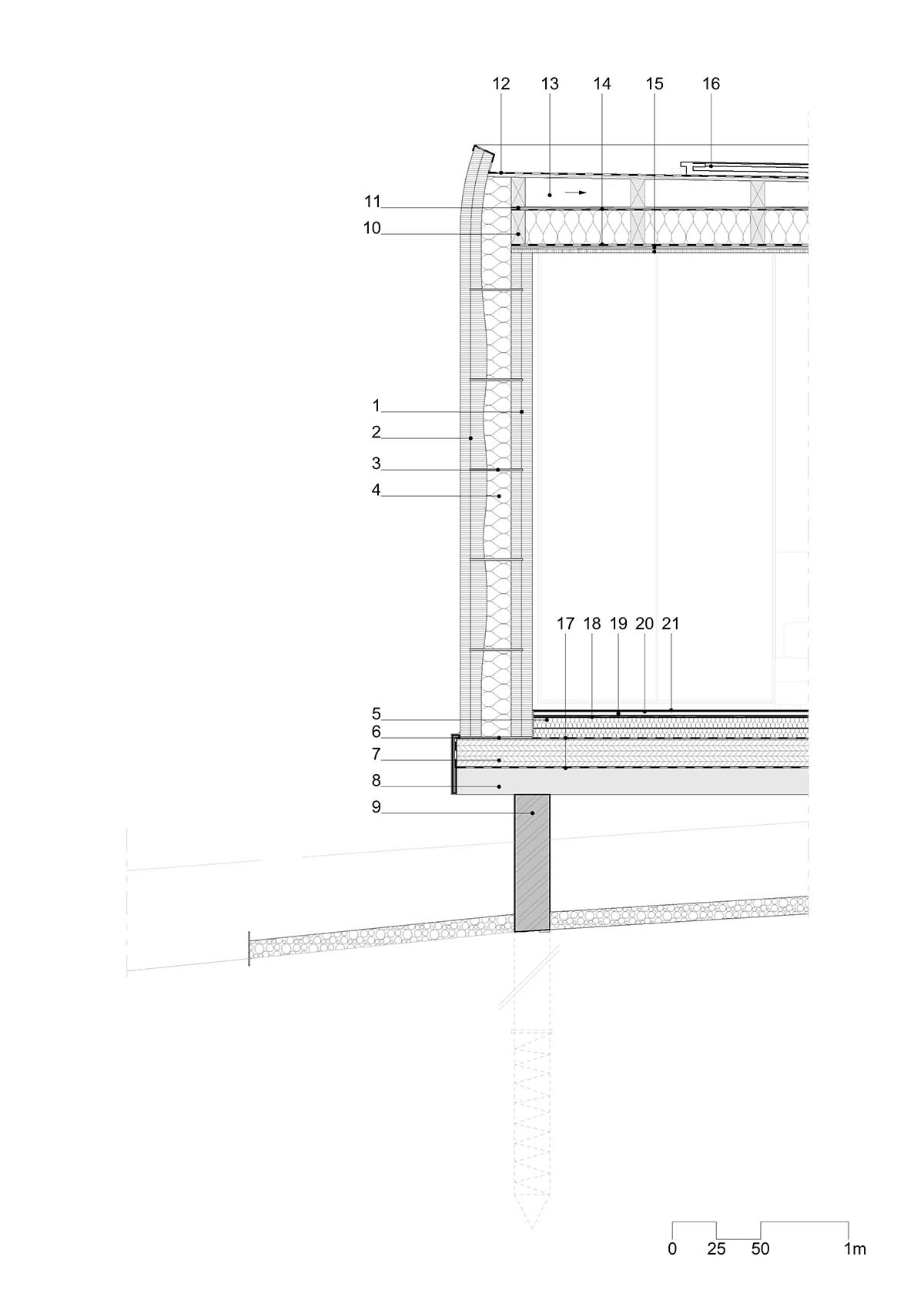
Detail
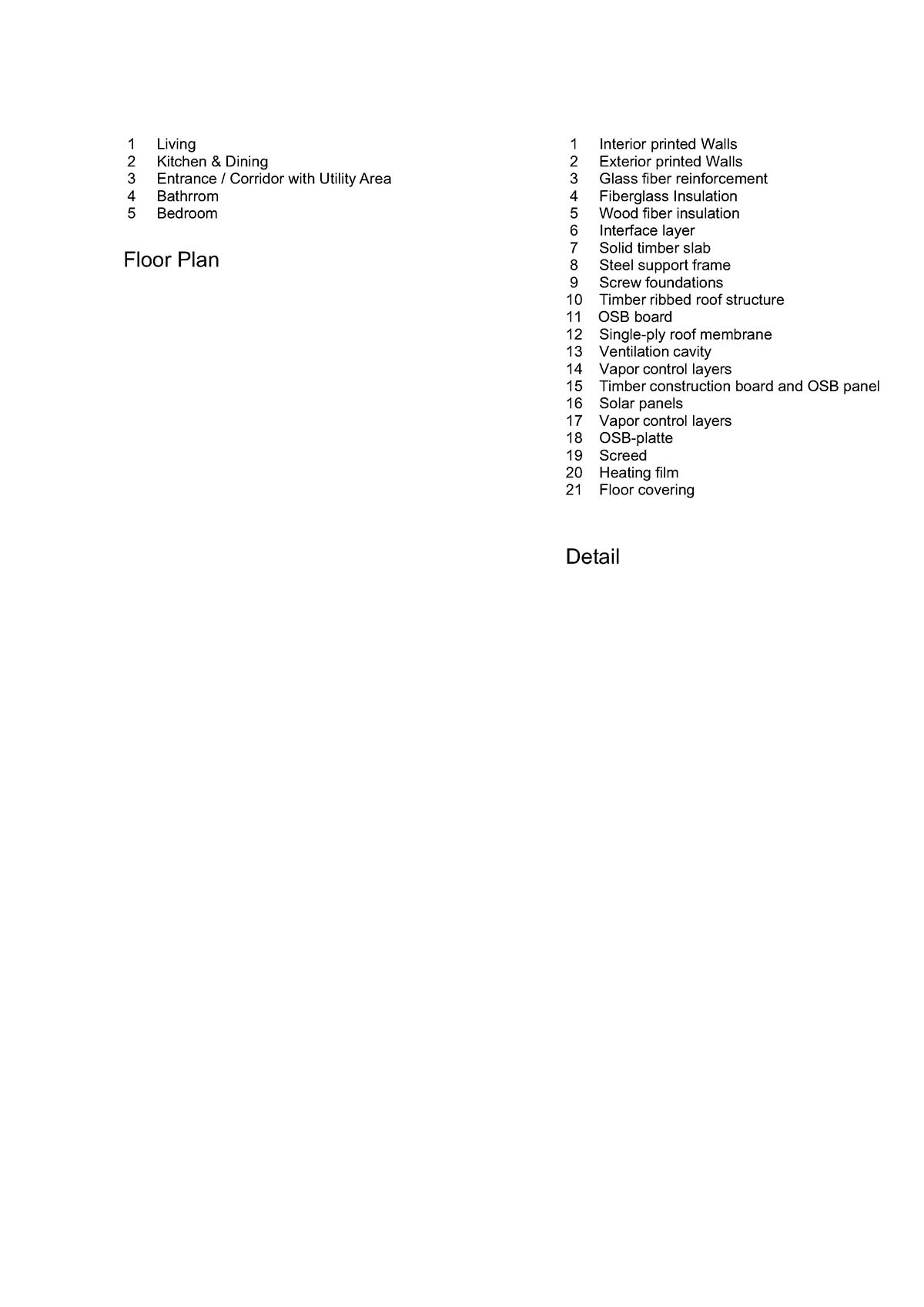
Ground floor plan and detail legend
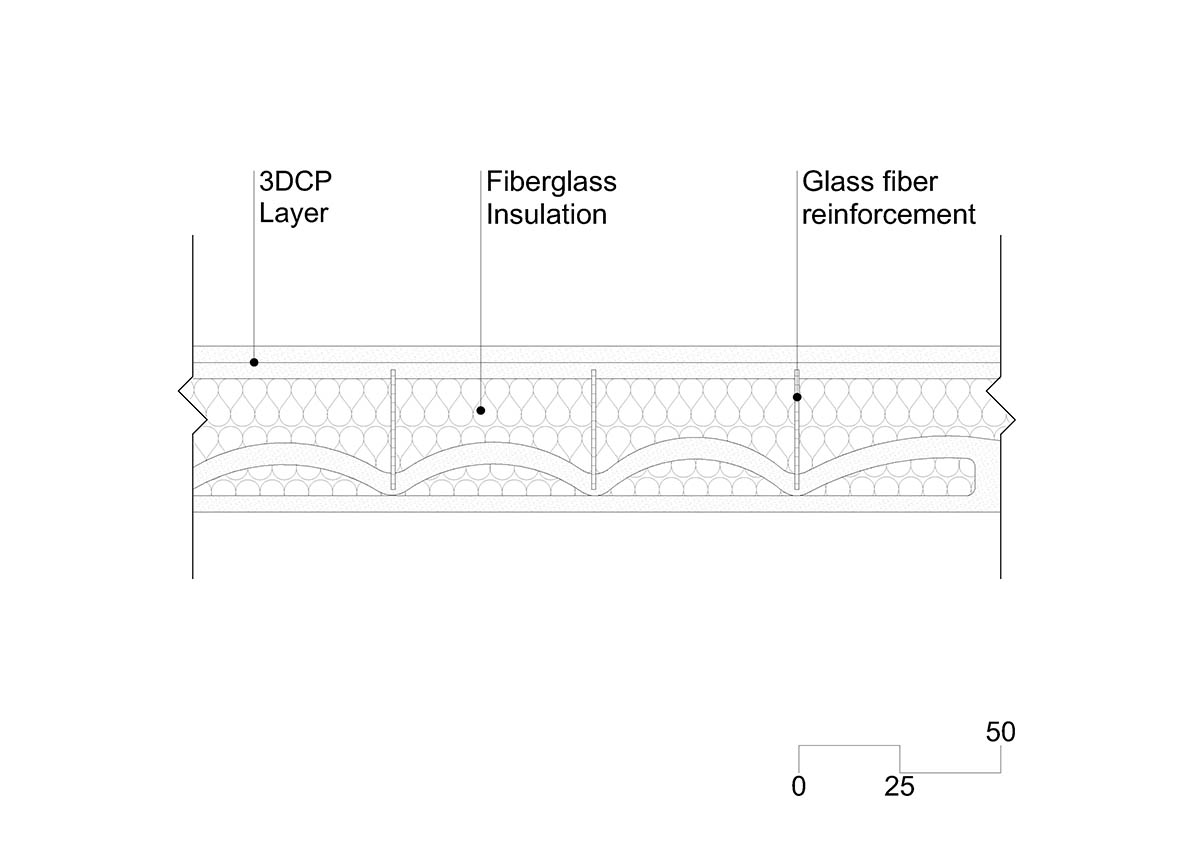
Detail wall
Project facts
Project name: Tiny House LUX
Concept and architecture: ODA Architects
3DCP design and data coordinator: Coral Architects
Architects: Bujar Hasani [ODA Architects], author, lead architect, Michal Mačuda [Coral Architects], conversion for 3DCP and data preparation
Team: Kristýna Uhrová [Coral Architects], model preparation and data for printing
Location: Niederanven, Luxembourg
Completion date: 2025
Built-up area: 64m2
Gross floor area: 56m2
Usable floor area: 47m2
Collaborators and suppliers:
Construction: Georgios Staikos [Staikos 3D]
3D concrete print: Coral Construction Technologies
All images © BoysPlayNice.
All drawings © ODA Architects & Coral Architects.
> via ODA Architects & Coral Architects
3D printing Coral Architects house housing ODA Architects residence residential