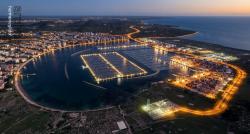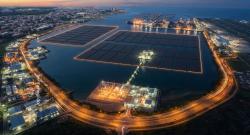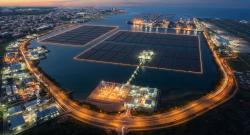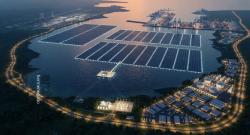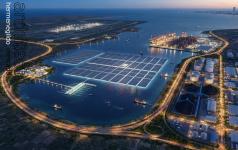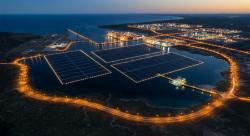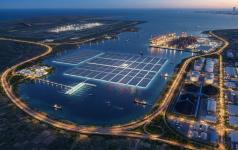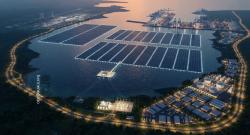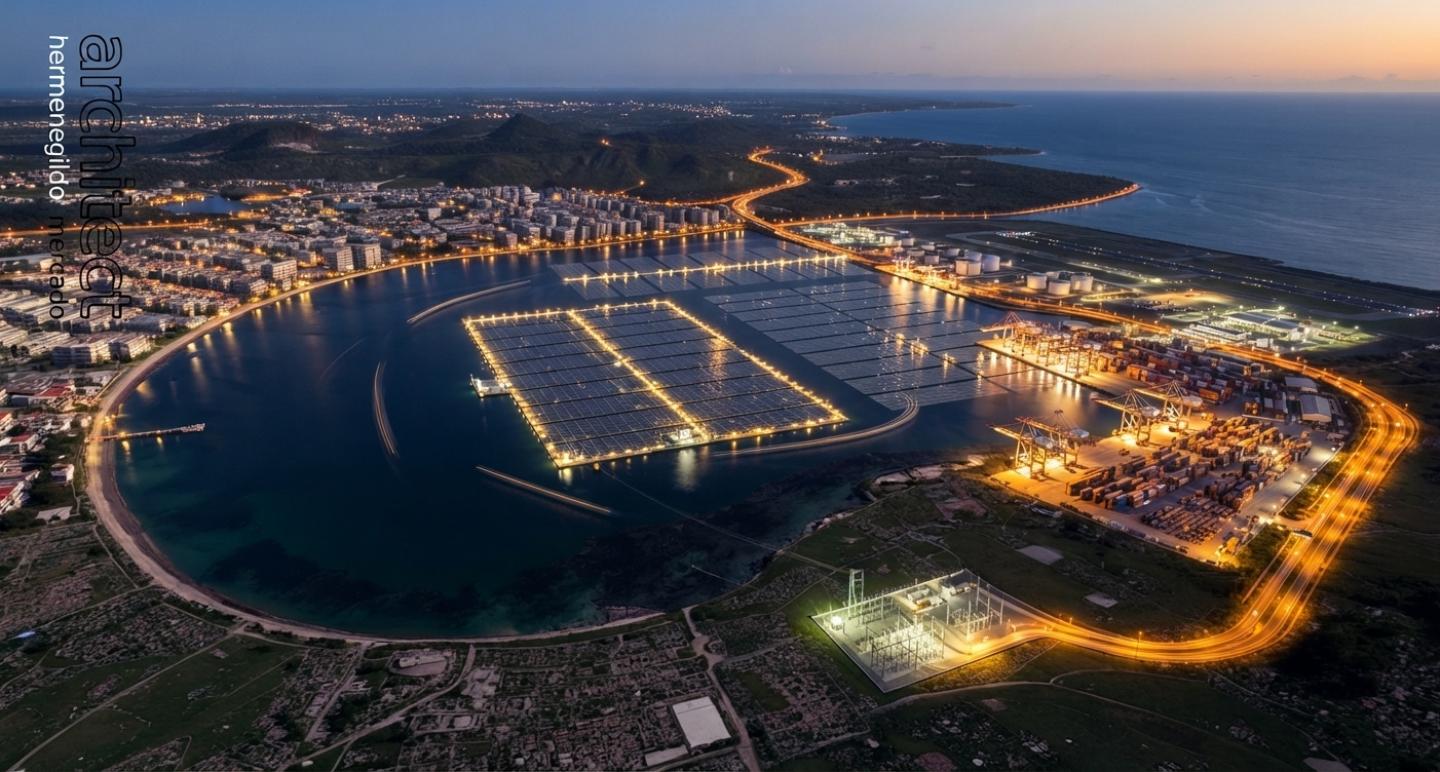
PROPOSED 7.2 GW CAGAYAN FLOATING SOLAR PHOTOVOLTAIC POWER PLANT
1. EXECUTIVE SUMMARY
The Proposed 7.2 GW Cagayan Floating Solar Photovoltaic (FPV) Power Plant is envisioned as one of the largest floating solar renewable-energy developments in the Philippines and a principal component of the Proposed Mega Infrastructure Development in Sta. Ana, Cagayan.
The project will utilize large-scale floating bifacial photovoltaic arrays installed over suitable marine or sheltered-water areas, supported by smart electrical infrastructure, private substations, energy storage, AI-enabled monitoring, automated operations and dedicated transmission facilities.
The development is proposed as three 2.4 GW phases, with each phase capable of becoming independently operational as its generation, substation and transmission infrastructure are completed.
The project is designed not merely as a power plant but as the renewable-energy backbone of the Sta. Ana Mega Infrastructure Development, supplying electricity to planned industrial, logistics, port, manufacturing, healthcare, education, commercial and residential developments.
Indicative Project Economics
Item Indicative Value
Installed Capacity 7.2 GW
Development Phases 3 × 2.4 GW
Indicative Water Area ~7,000 ha
Total CAPEX US$8.00 Billion
Annual OPEX US$155 Million
Annual Generation ~15,768 GWh
Average Tariff US$0.06/kWh
Annual Gross Revenue ~US$946 Million
Annual Operating Surplus ~US$791 Million
Indicative Project Life 25 years
Target Construction 24–36 months
Indicative Simple CAPEX Payback ~10.1 years
Strategic Role Renewable-energy backbone of Sta. Ana Mega Hub
The project therefore represents a strategic energy infrastructure investment, rather than simply a conventional solar-generation project.
The Proposed 7.2 GW Cagayan Floating Solar PV Power Plant is a large-scale renewable-energy infrastructure project proposed within the Casambalangan Coastal Corridor, Barangay Casambalangan, Santa Ana, Cagayan, Philippines.
With a proposed installed capacity of 7.2 gigawatts, the project is envisioned as one of the largest floating solar photovoltaic developments in the Philippines and Southeast Asia.
The project will be developed over approximately 7,000 hectares of strategically selected coastal water area, subject to detailed bathymetric, geotechnical, marine-environmental, navigational, typhoon, wave, wind, and transmission studies.
The proposed US$8 billion investment will be implemented in three major phases of approximately 2.4 GW each, allowing progressive commissioning, testing, revenue generation, and expansion of the power-generation and transmission infrastructure.
The project is specifically designed to complement the emerging Sta. Ana–Casambalangan Mega Infrastructure Development Corridor, including:
1. Proposed Cagayan Automated Deep Seaport – US$10 Billion
2. Proposed Cagayan International Airport – US$20 Billion
3. Proposed Cagayan National Strategic Energy Reserve & Industrial Energy Park (CNSERIEP) – US$10 Billion
4. Proposed BESS Smart Farm & Business Park
5. Proposed BioNutra Biodegradable Waste Recycling & Liquid Food Supplement Production Facility – US$20 Million
6. Proposed Cagayan Smart Hospital – US$270 Million
7. Proposed BRICS International University – US$170 Million
8. CEZA and Port Irene
9. Other proposed industrial, logistics, agricultural, energy and technology developments within the Cagayan economic corridor
The floating solar facility therefore becomes a major renewable-energy component of a proposed integrated maritime, aviation, industrial, agricultural, energy and technology economic corridor.
2026
2. PROJECT OVERVIEW
2.1 Project Name
Proposed 7.2 GW Cagayan Floating Solar Photovoltaic (FPV) Power Plant
2.2 Location
Sta. Ana, Cagayan, Philippines
The project is intended to form part of the larger:
Proposed Mega Infrastructure Development in Sta. Ana, Cagayan
An AI-Driven Industrial, Logistics, Energy, Health & Education Mega Hub
The strategic objective is to establish an integrated economic zone where renewable energy, industrial production, logistics, healthcare, education, digital infrastructure and commercial development operate as an interconnected system.
2.3 Project Capacity
The project will have an ultimate installed capacity of:
7.2 GW / 7,200 MW
Proposed implementation:
Phase Capacity Indicative Status
Phase 1 2.4 GW First commercial generation
Phase 2 2.4 GW Expansion
Phase 3 2.4 GW Full build-out
Total 7.2 GW Ultimate capacity
Each phase may be subdivided into smaller 1.2 GW commissioning milestones to allow progressive energization and revenue generation.
2.4 Strategic Purpose
The Cagayan FPV project will:
· Provide large-scale renewable electricity.
· Support the Sta. Ana industrial and logistics hub.
· Reduce dependence on fossil-fuel generation.
· Supply power to energy-intensive industries.
· Support cold-chain and logistics facilities.
· Provide electricity for hospitals and healthcare facilities.
· Support universities and research facilities.
· Supply power to smart-city developments.
· Support electric transport and port operations.
· Provide potential energy for green-hydrogen and future industrial applications.
· Improve regional energy diversification.
CRITICAL DEVELOPMENT CLARITY
This project should presently be identified as an:
ADVANCED CONCEPTUAL PROJECT / INVESTOR-PRESENTATION PROJECT
and not as a shovel-ready power project.
At this stage, the project concept consists principally of:
· advanced conceptual planning;
· preliminary project configuration;
· conceptual infrastructure integration;
· preliminary financial assumptions;
· conceptual architectural/engineering direction; and
· proposed integration with the larger Cagayan Mega Infrastructure Development.
The final project cannot be considered construction-ready until completion and approval of the required:
· marine surveys;
· bathymetric surveys;
· geotechnical investigations;
· environmental studies;
· hydrodynamic studies;
· typhoon and extreme-weather studies;
· transmission studies;
· detailed engineering;
· architectural and engineering drawings;
· EPC documentation;
· financial close;
· permits; and
· government approvals.
hcm hcm