Submitted by WA Contents
Snøhetta built a station that features a mirror-like overhang structure in Riyadh
United Arab Emirates Architecture News - Feb 23, 2026 - 05:01 4288 views
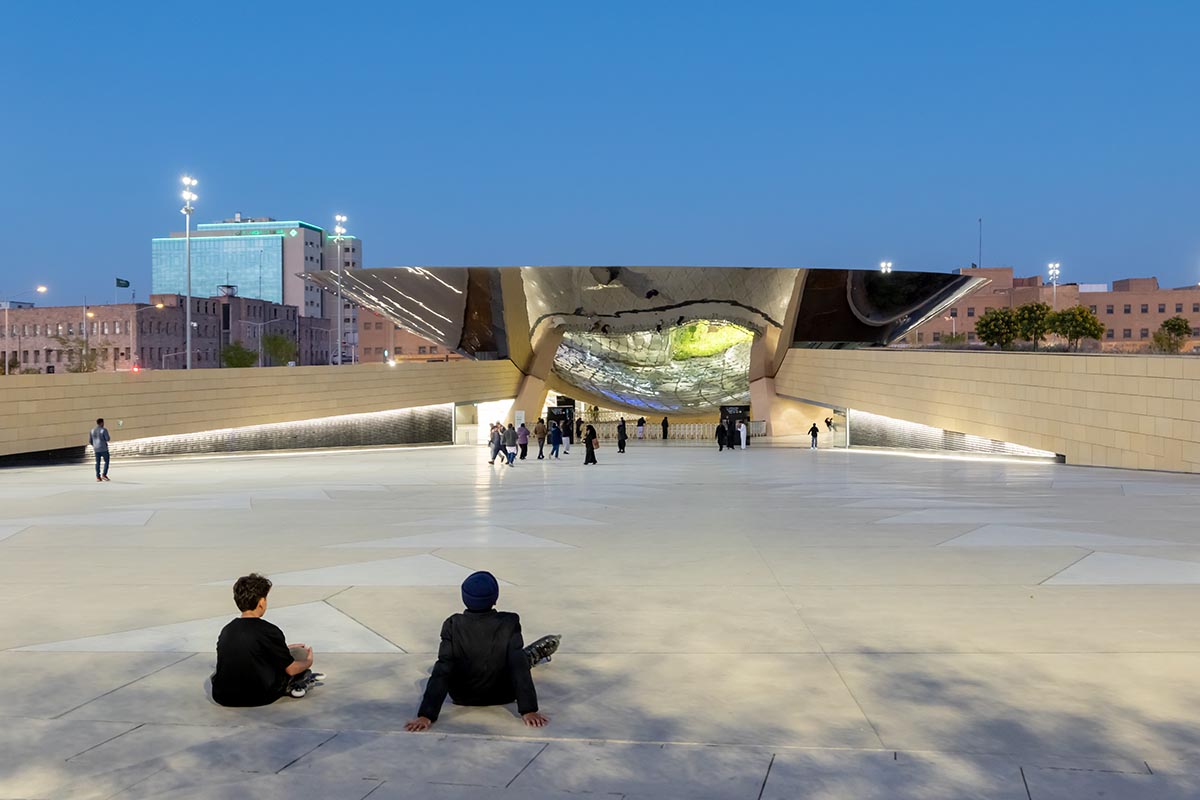
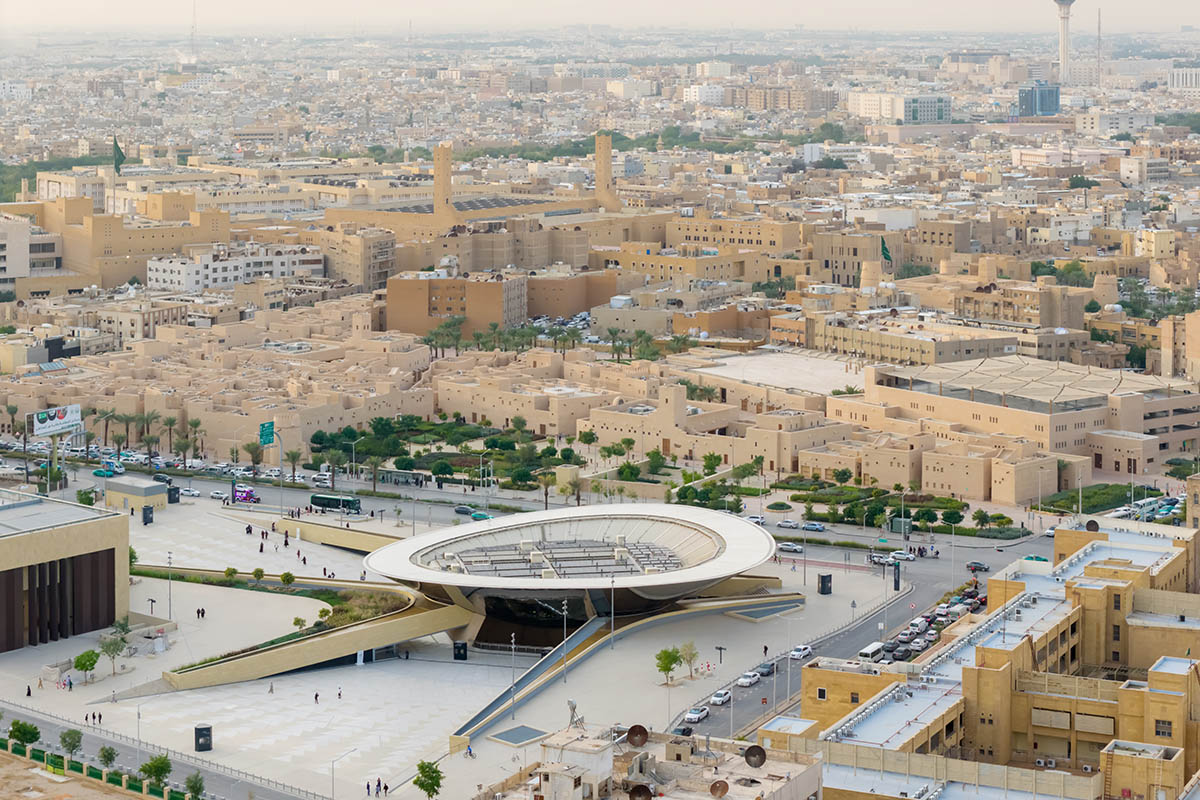
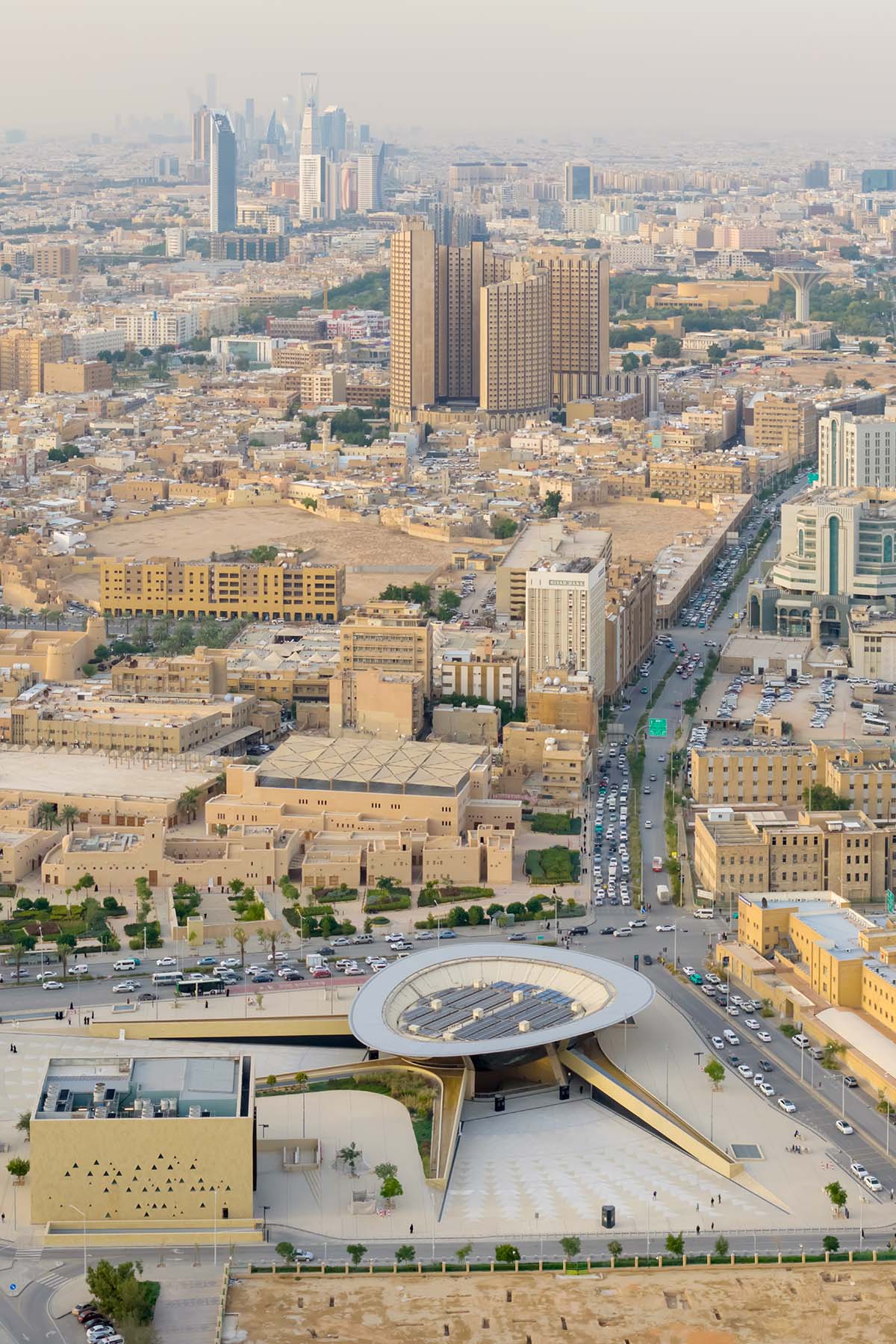
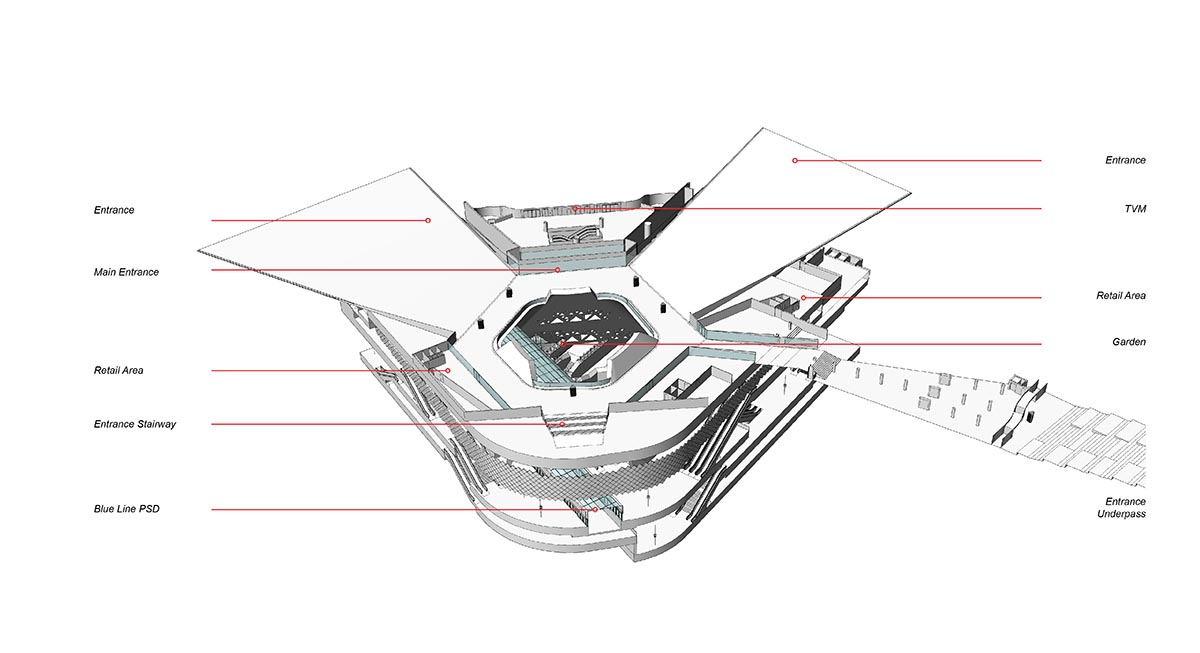
Connecting two of the main metro lines, the historic Al-Qiri district station is one of four major hubs in the Saudi capital's new metro system. It is planned as an open urban and pedestrian plaza with a massive stainless-steel canopy that serves as an urban periscope.
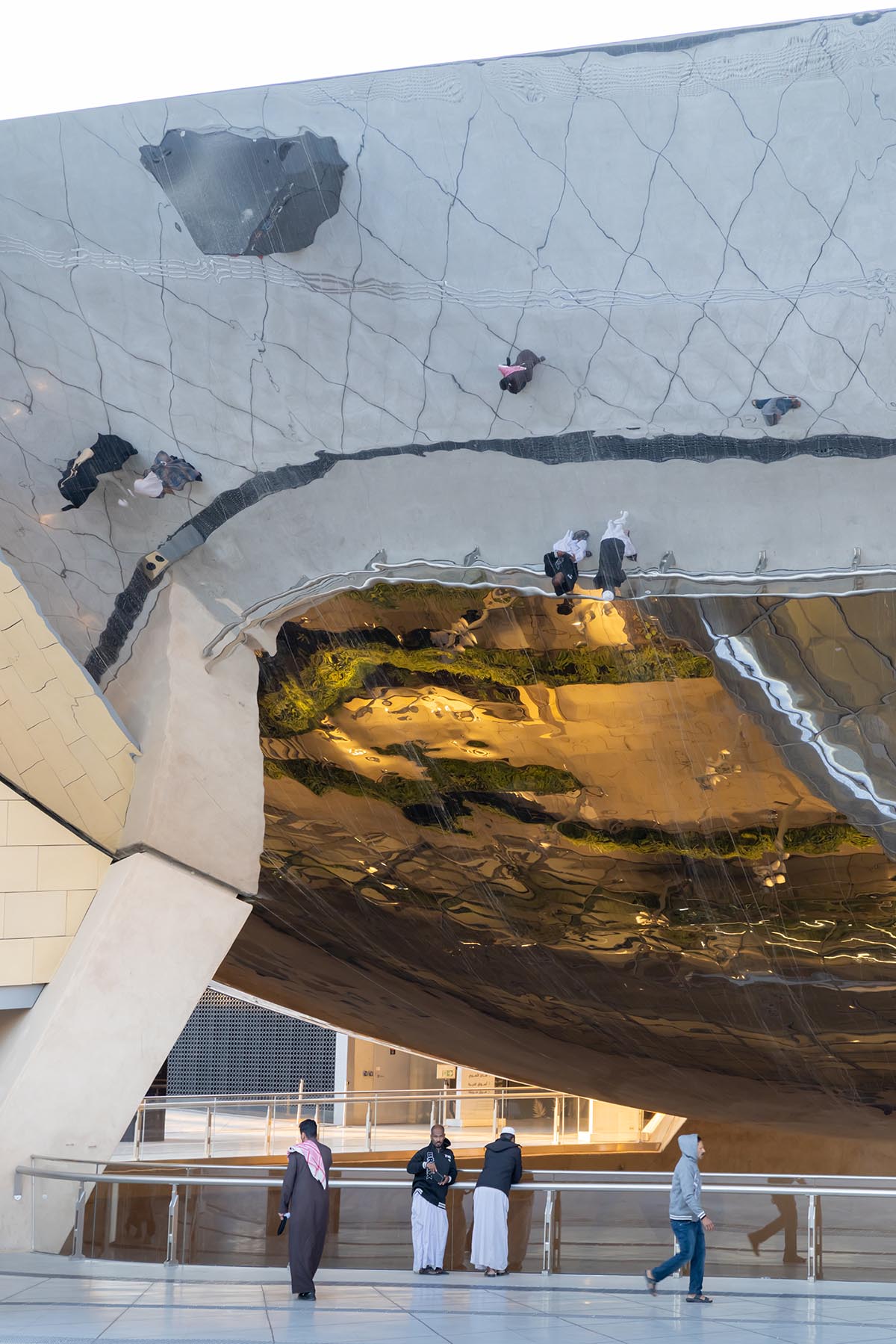
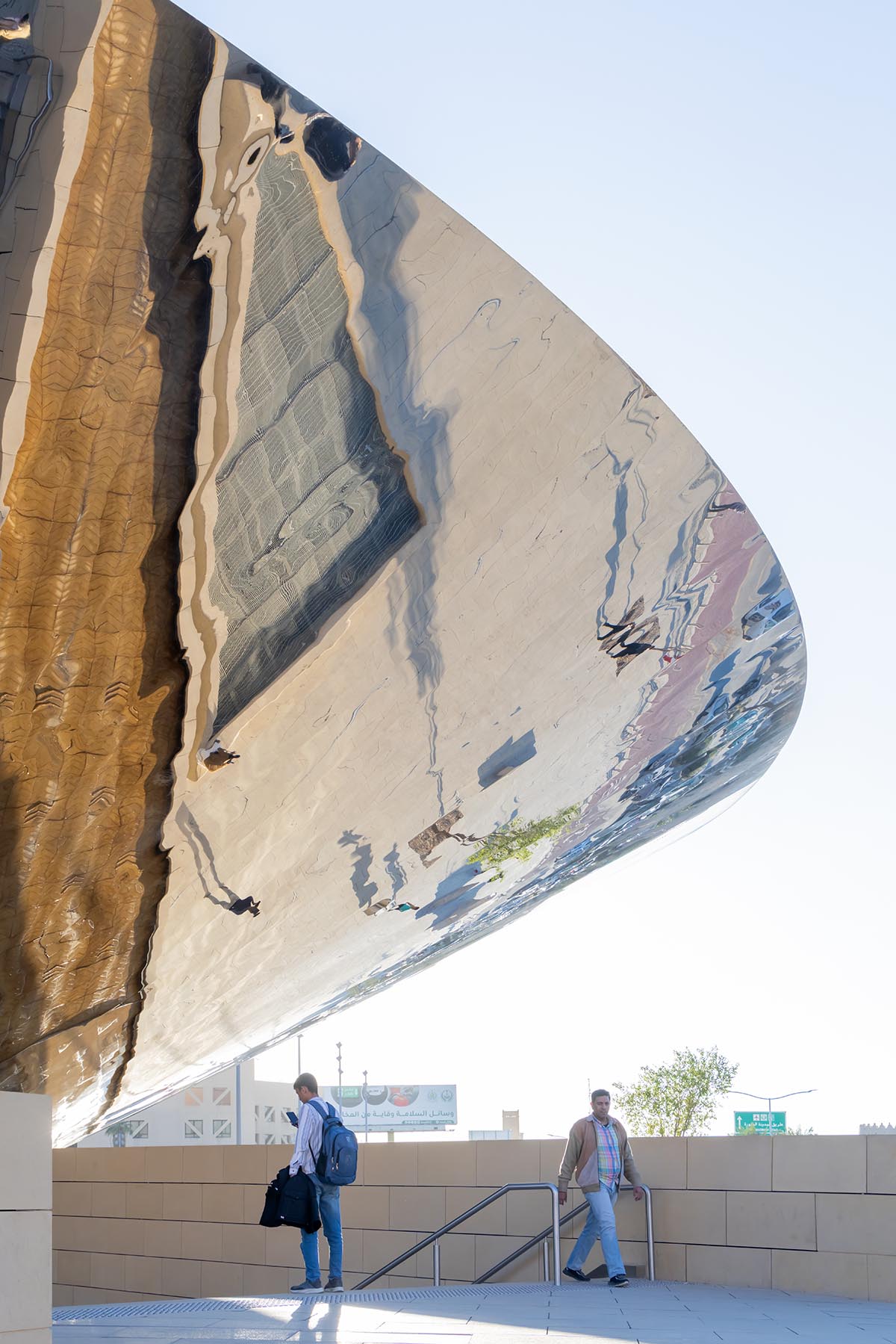
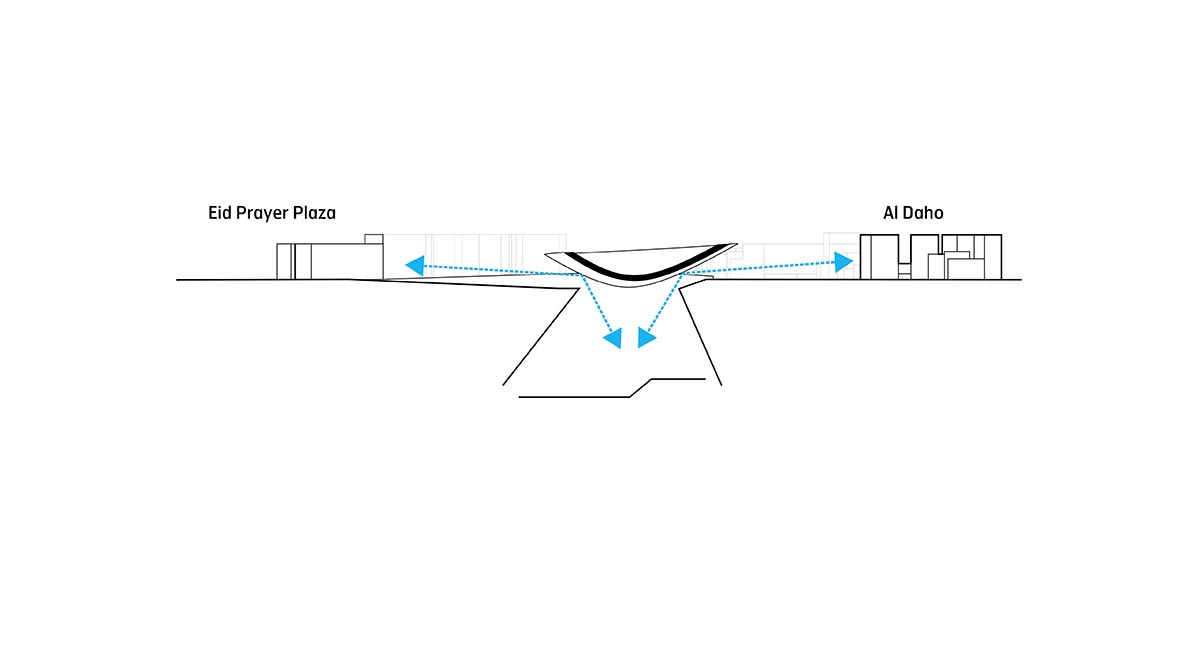
The mirror-like overhang structure, which reflects the outside inward and the inside outward and directs natural light into the subterranean station while shading the nearby public spaces, visually connects the station levels.
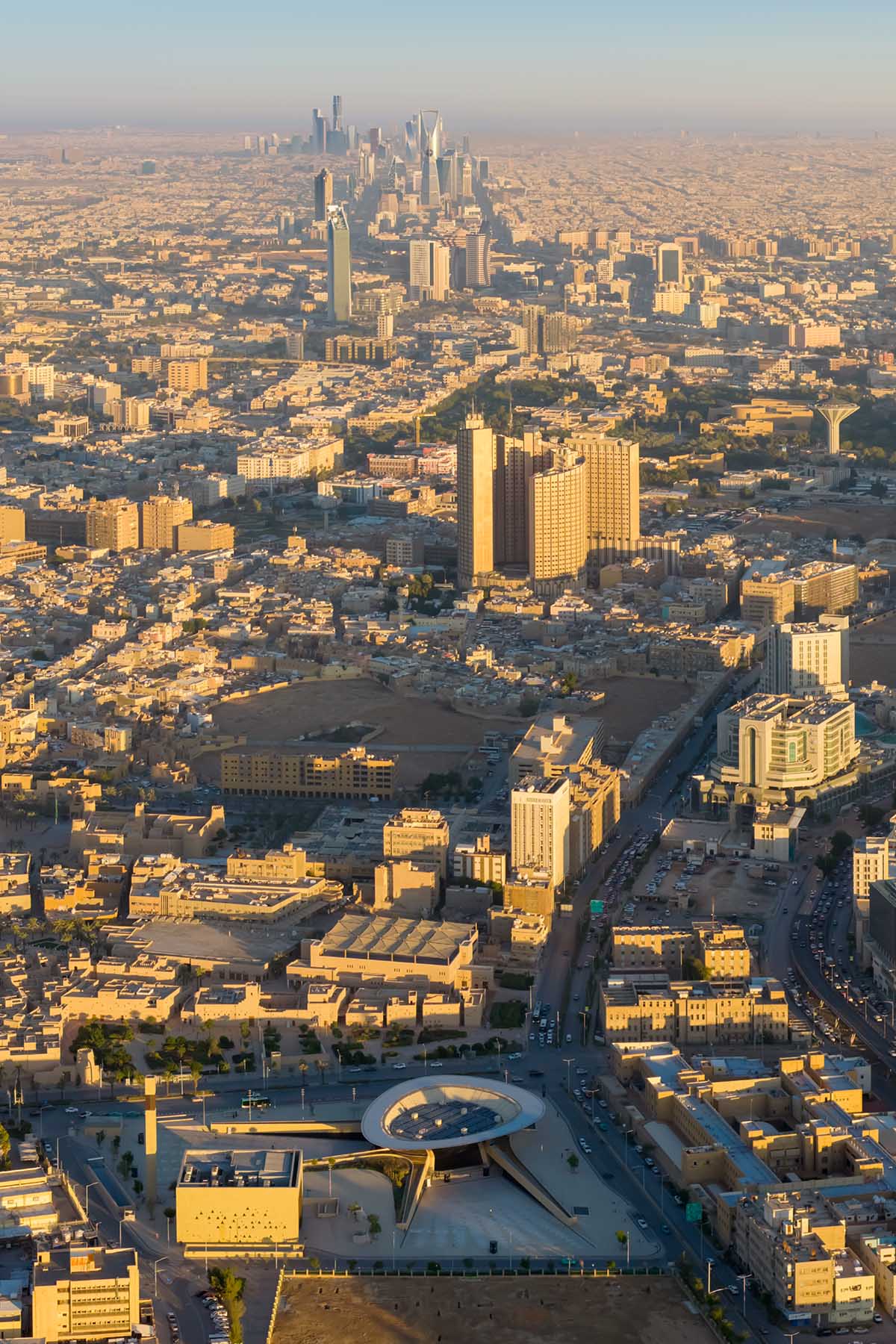
In 2012, Snøhetta created the station's winning competition concept. Open to the public since January of last year, the 85-station metro system can accommodate up to 3.6 million passengers daily.
The new transit network not only makes low-emission transportation accessible to all, but it also connects important districts and eases traffic in the quickly expanding city, where private vehicles still account for almost 97 per cent of all journeys.
"When you come off the train and look up, you see a 360-degree view of the city reflected on the underside of the canopy. So, you get an immediate picture of where you are in the city. Likewise, if you're coming from the city, you look up into the canopy, and it mirrors everything that happens below," said Robert Greenwood, Snøhetta Partner and Project Lead.
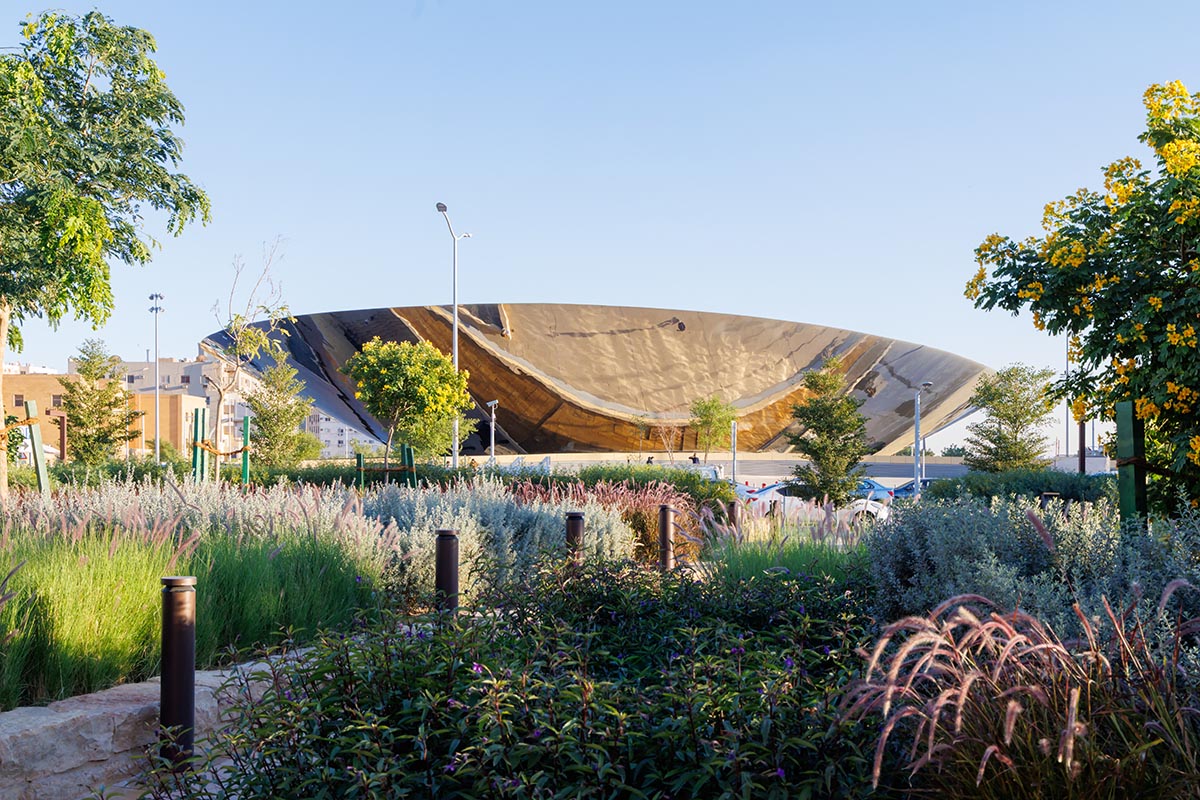
Mirroring the surroundings
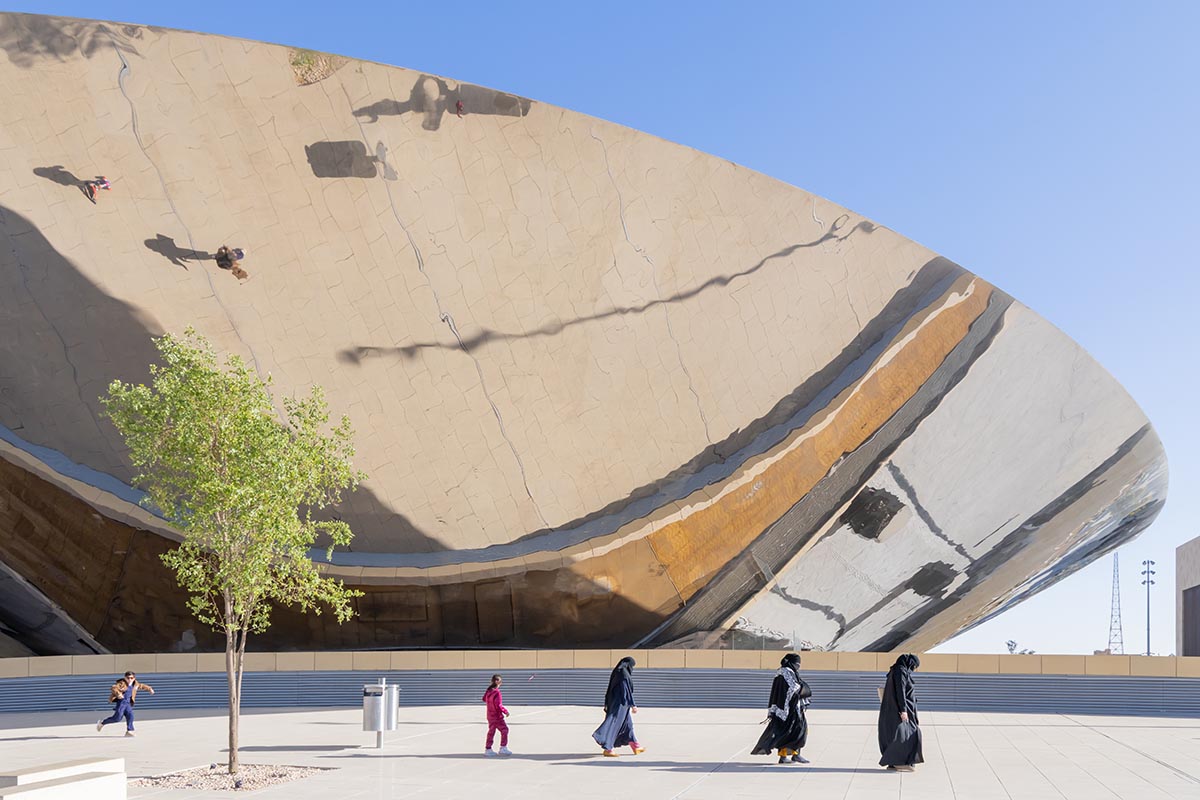
The station's main entrance is marked by the steel canopy, which also acts as the focal point. The 8 mm double-curved stainless-steel panels that make up its glossy exterior are completely welded and polished to give it a smooth, seamless look.
The canopy can expand above and beyond its base, a large cone wall, thanks to the supporting steel spaceframe, a sturdy, lightweight steel structure with movable tie rods for the connection to the stainless skin.
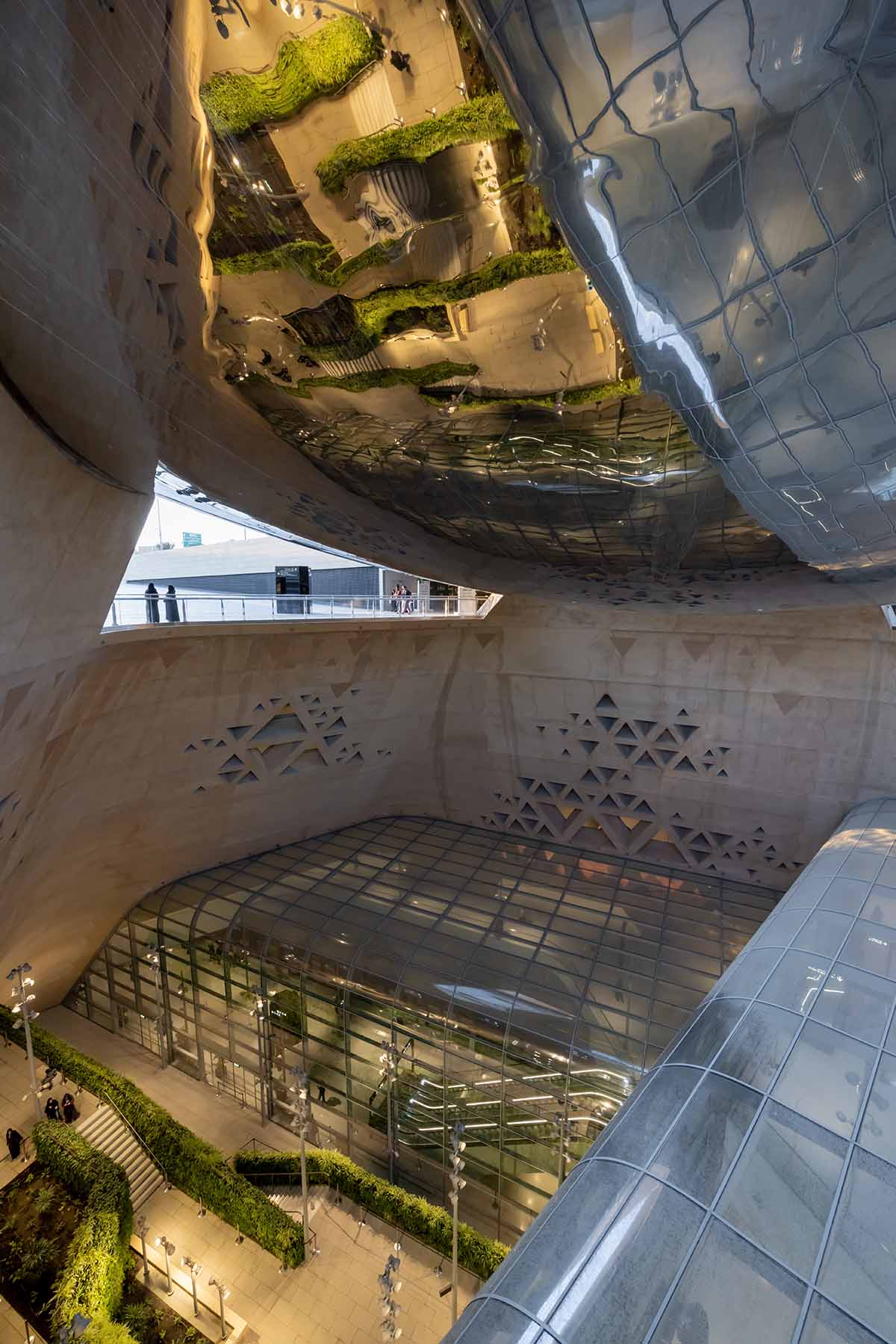
The sloping interior walls below ground level are finished with a rendered surface that draws inspiration from the traditional architecture of the region.
"When you come off the train and look up, you see a 360-degree view of the city reflected on the underside of the canopy. So, you get an immediate picture of where you are in the city. Likewise, if you're coming from the city, you look up into the canopy, and it mirrors everything that happens below," said Robert Greenwood, Snøhetta Partner and Project Lead.
Glass‑tube platforms opening into the atrium
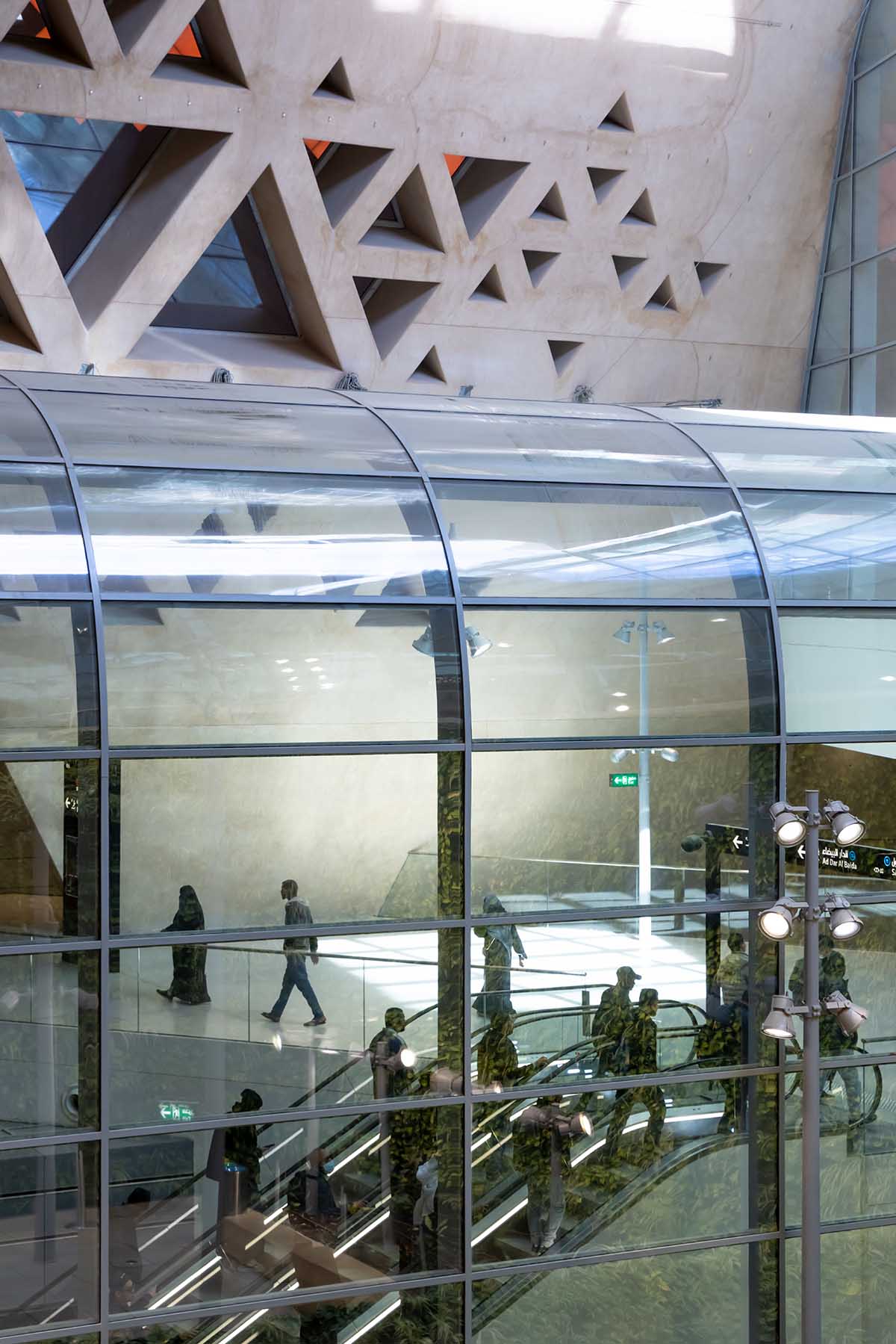
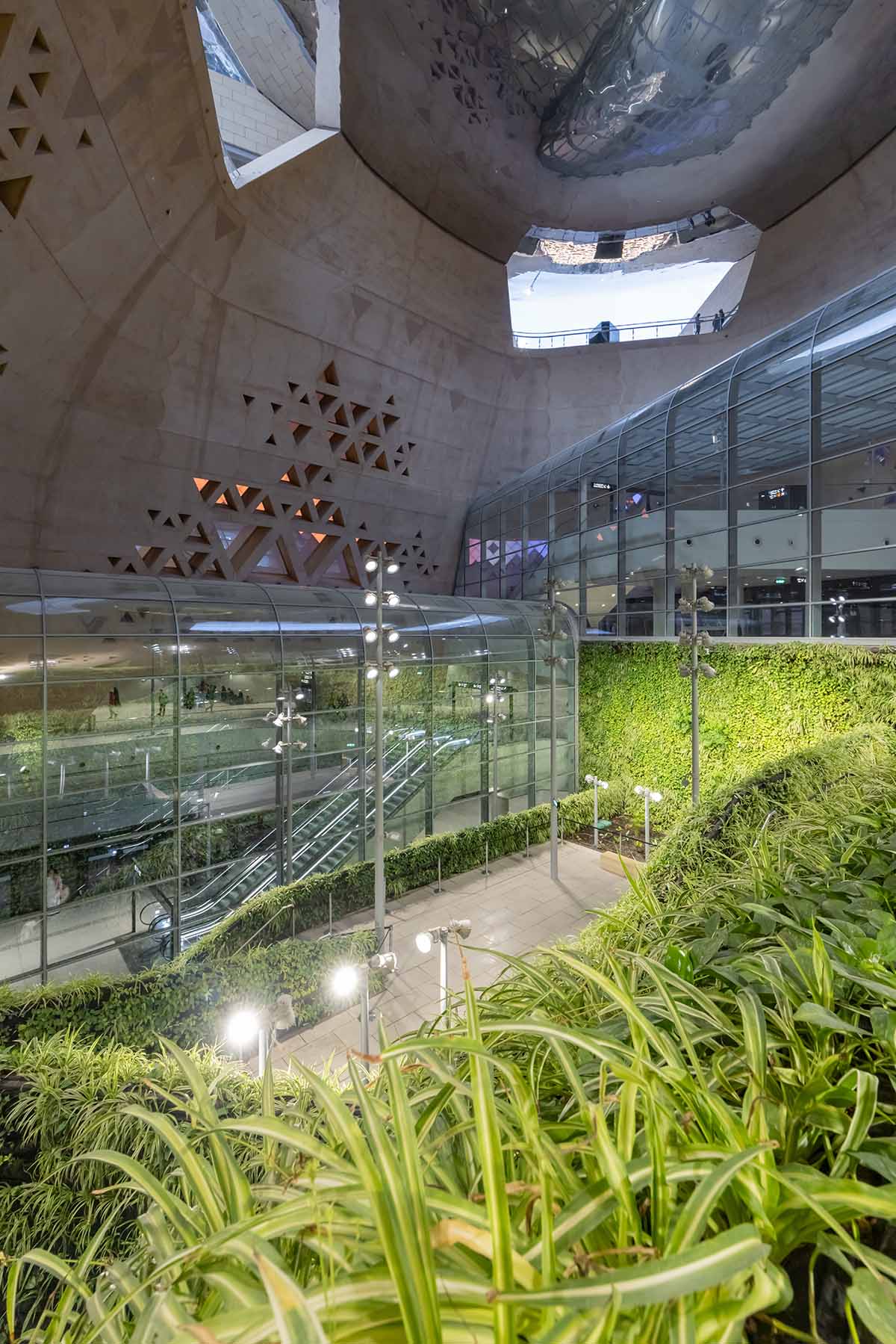
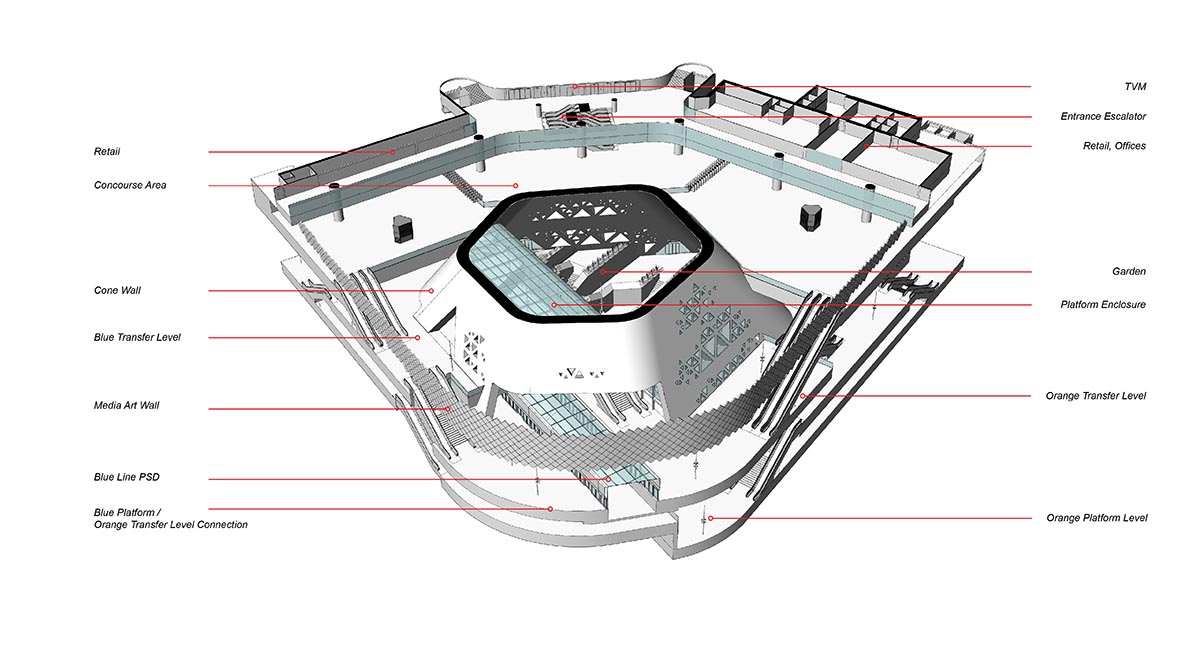
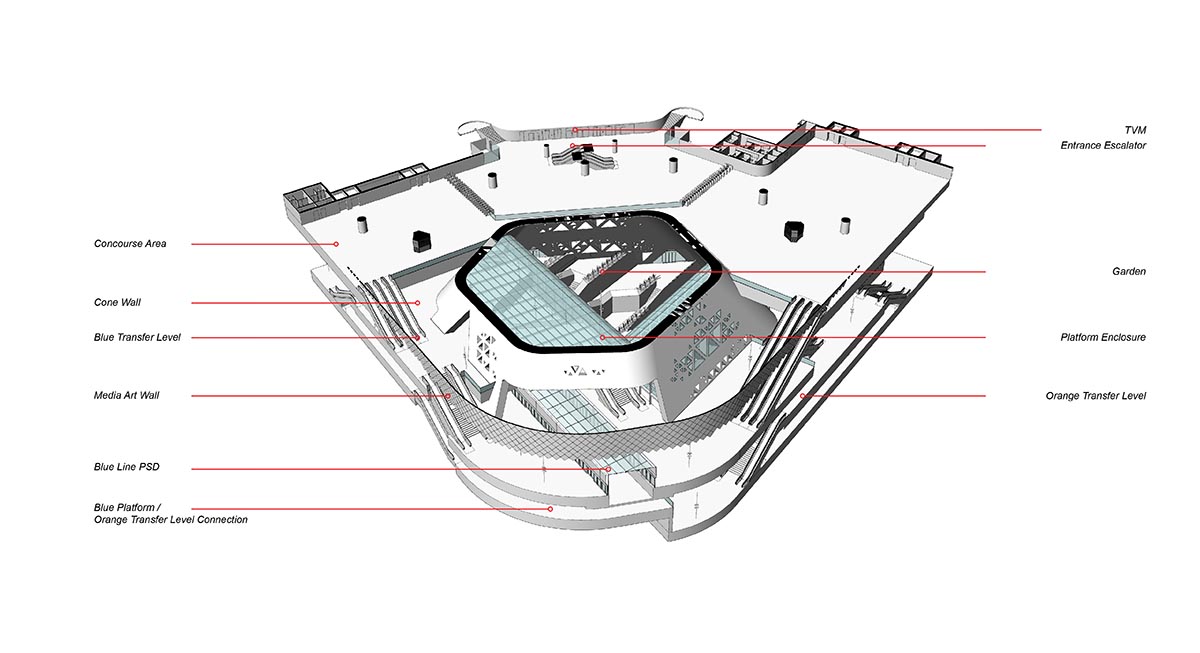
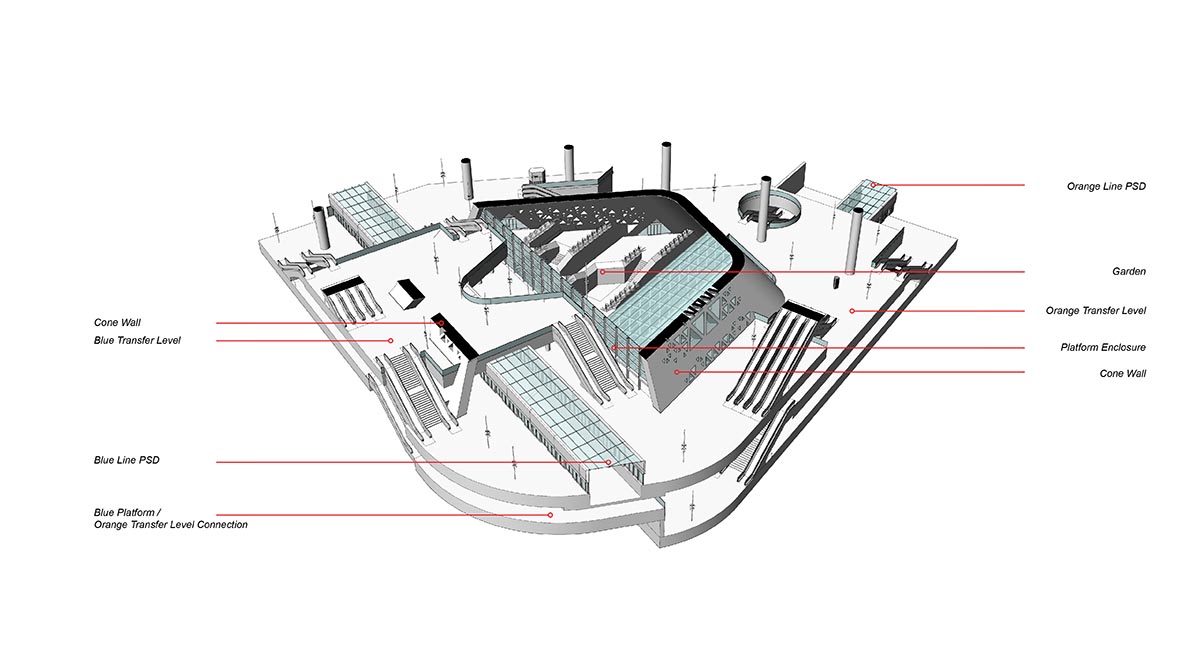
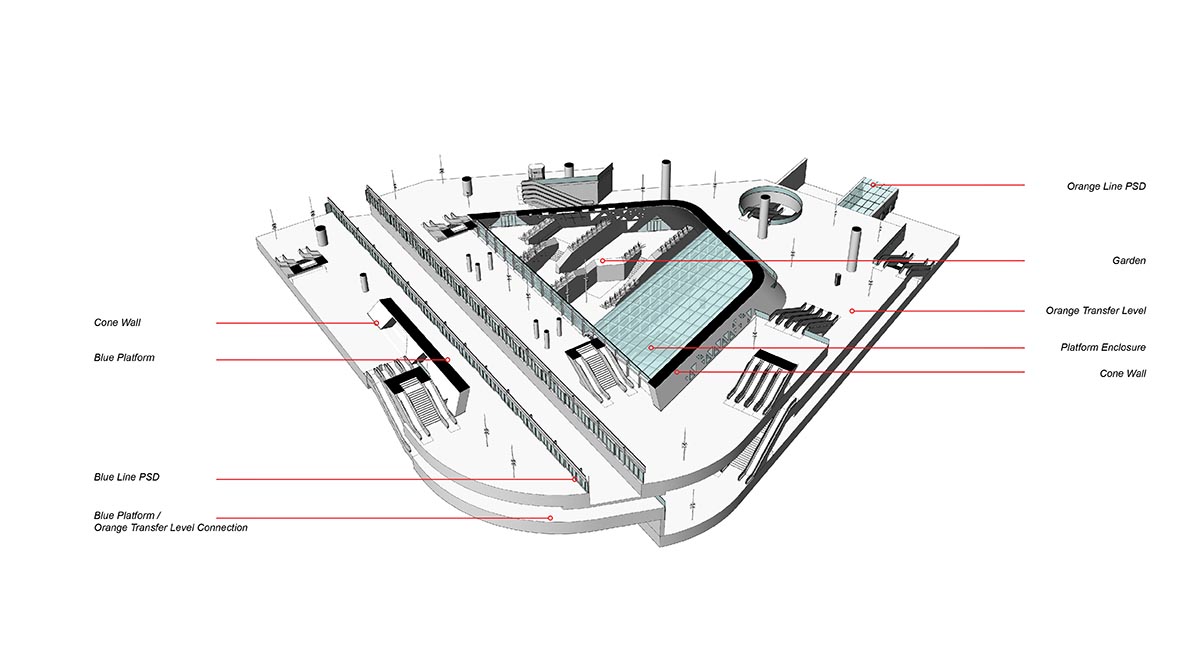
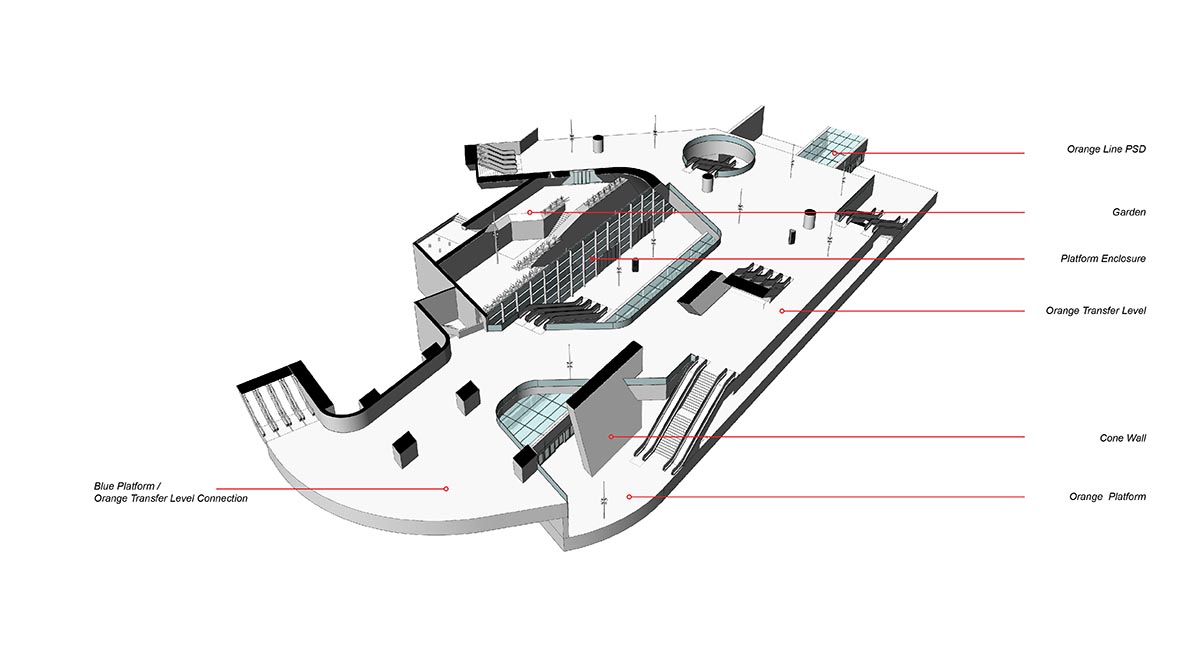
Transparent tubes carrying the two metro lines cross the open area, improving station navigation and making a dramatic visual impact.
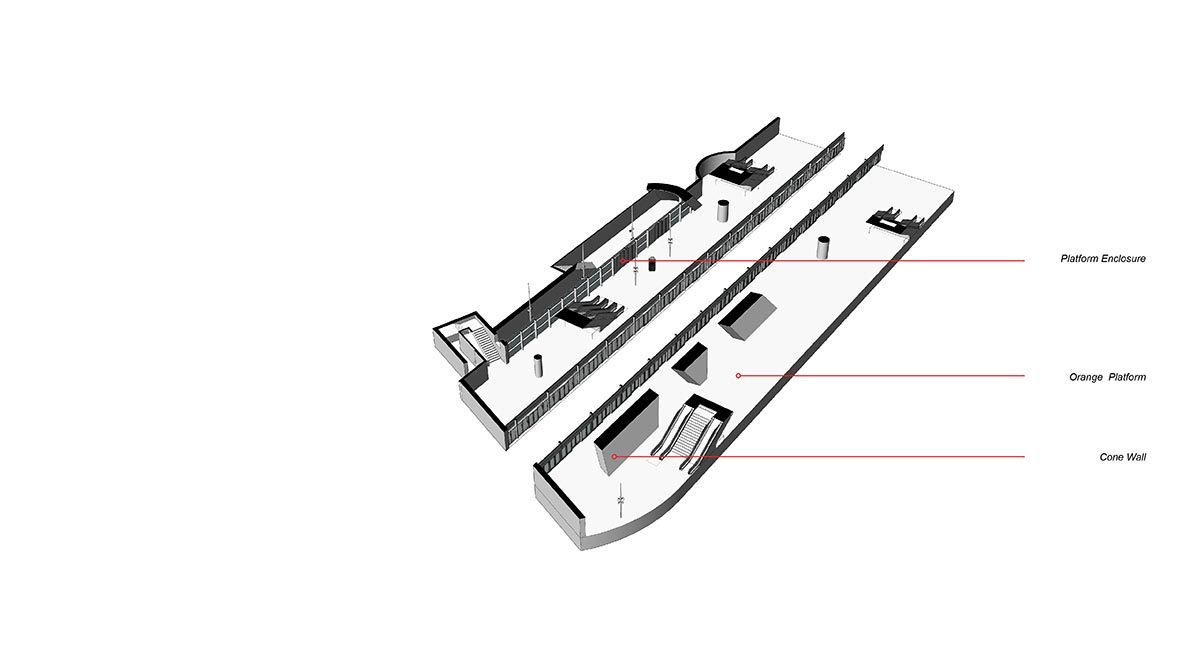
The platforms are entirely enclosed by glazed tubes that extend into the atrium's empty space, enabling a smooth transition between the inside and outside and exposing the platform areas to the atrium's grandeur for both passengers coming and exiting.
This remarkable sight emphasizes to visitors the significance of Riyadh's historic core and represents the link between the city's past and its current transformation.
Underground, tempered garden
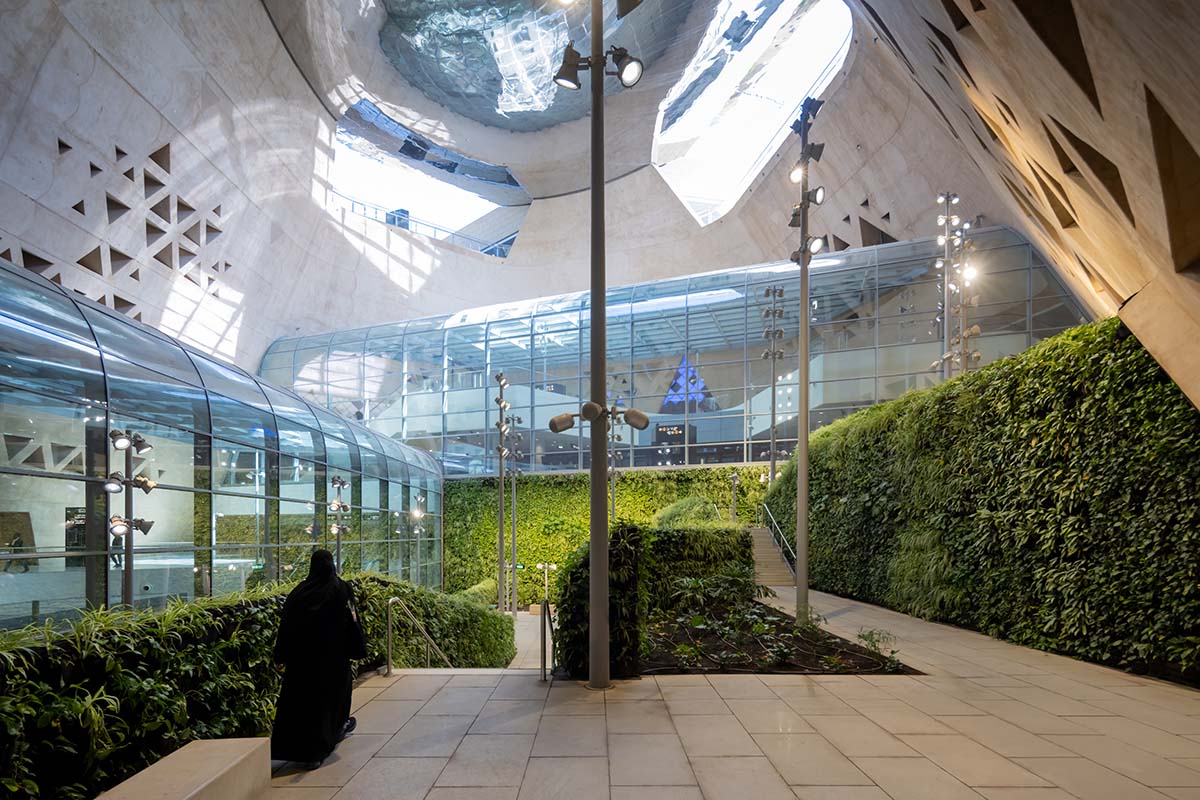
An accessible, tempered garden has been created at the base of the atrium. Passengers can unwind in a green, shaded area while waiting for their train in the garden, which is accessible from both lines and the transfer level.
Even during the sweltering summer months, the garden, which is around 35 meters below city level, remains temperate. The canopy above and the paved plaza portions provide water for irrigation.
"The arrival of public transport in Riyadh represents a remarkable step forward. This station is designed as a place for all citizens, regardless of gender or social status, and promotes both environmental and social sustainability. The new plaza and garden further strengthen the public realm, providing valuable shared spaces for the nearby communities," said Snøhetta's founding partner Kjetil Trædal Thorsen.
A public gateway in Riyadh's historic heart
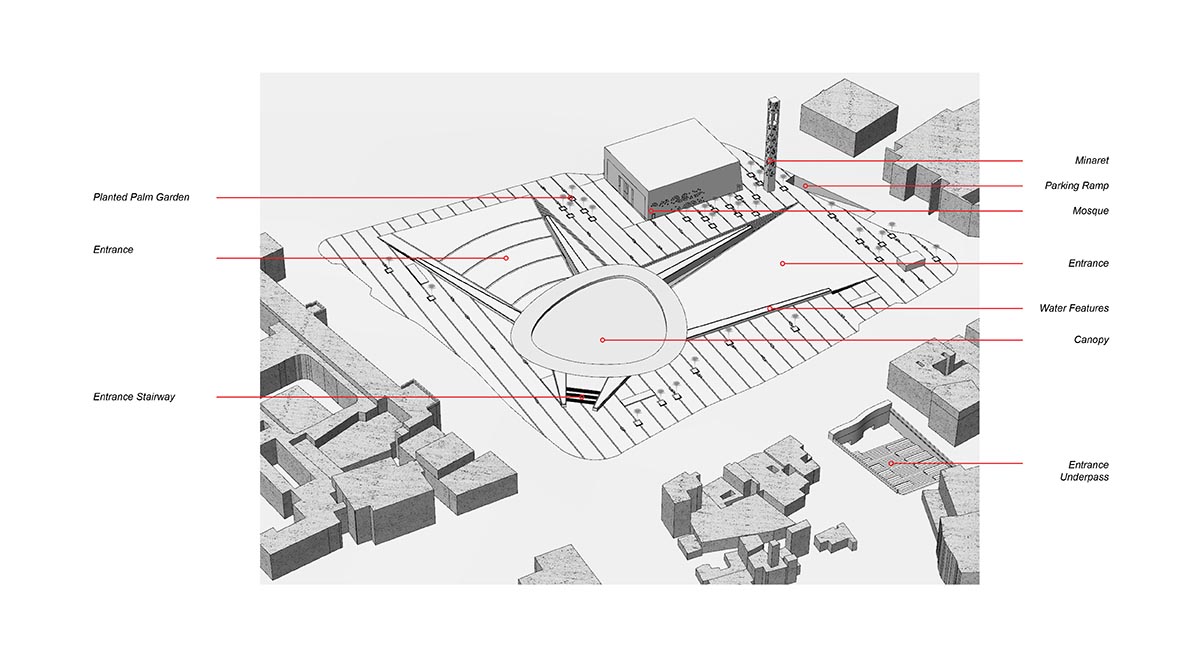
The Qasr AlHokm station is located in the historic center of Riyadh, near the original palace and the old adobe buildings of the Al Daho district. It is situated next to a significant Eid prayer field, which is sized to allow thousands of people to gather and disperse during the annual event.
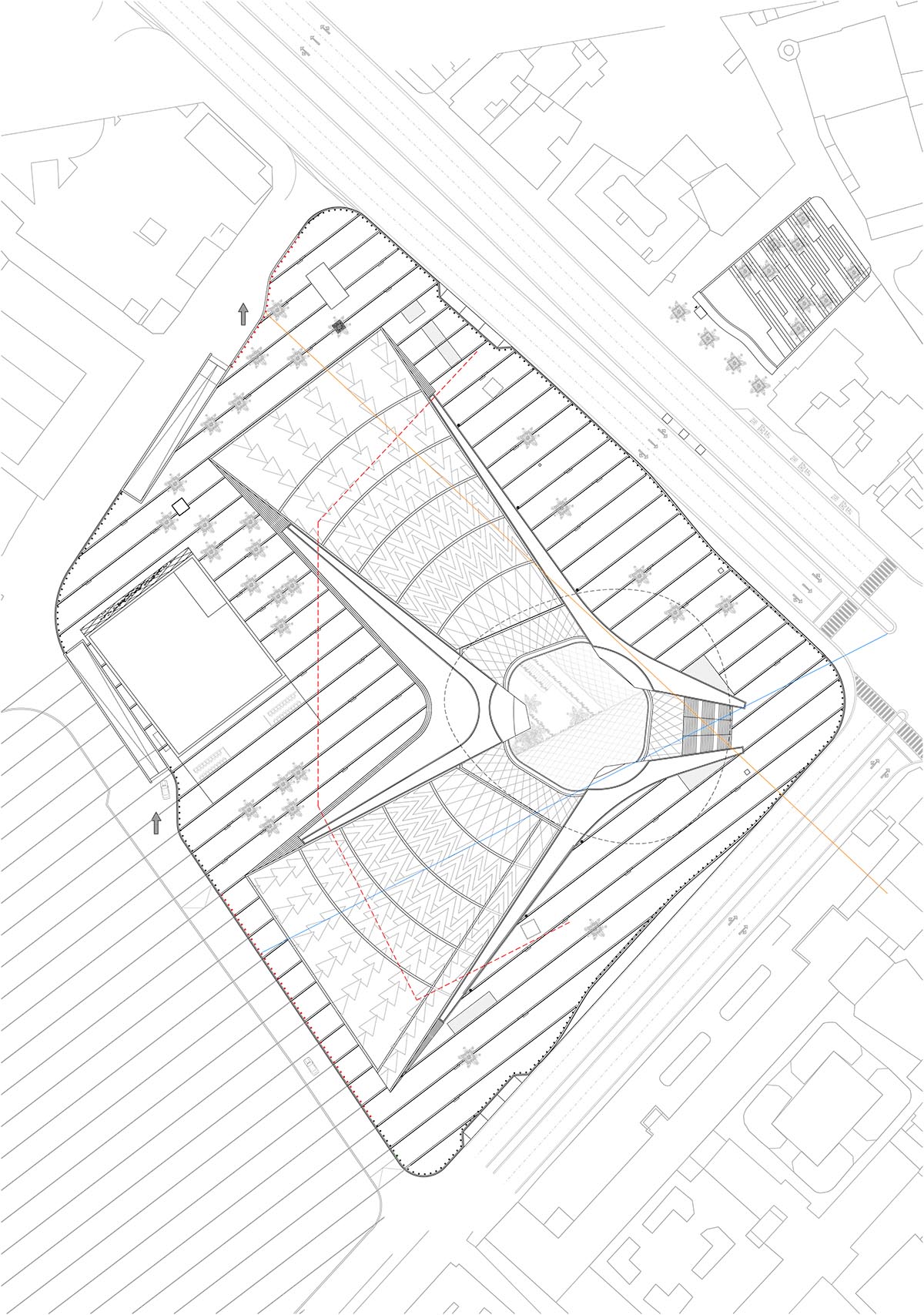
The plaza area is unmistakably an open civic space because of its smooth terrazzo surface that stretches to the site's boundaries. Along with the new mosque, which was rebuilt as part of the project to fit major alterations to the site's structural plan, this expansive public area creates a single surface devoted to the public services of the metro station.
The area can serve as an external extension of the mosque thanks to the lit drainage channels that line up with Makkah.
"The arrival of public transport in Riyadh represents a remarkable step forward. This station is designed as a place for all citizens, regardless of gender or social status, and promotes both environmental and social sustainability. The new plaza and garden further strengthen the public realm, providing valuable shared spaces for the nearby communities," said Kjetil Trædal Thorsen, Snøhetta's founding partner.
Merging tradition and new media art
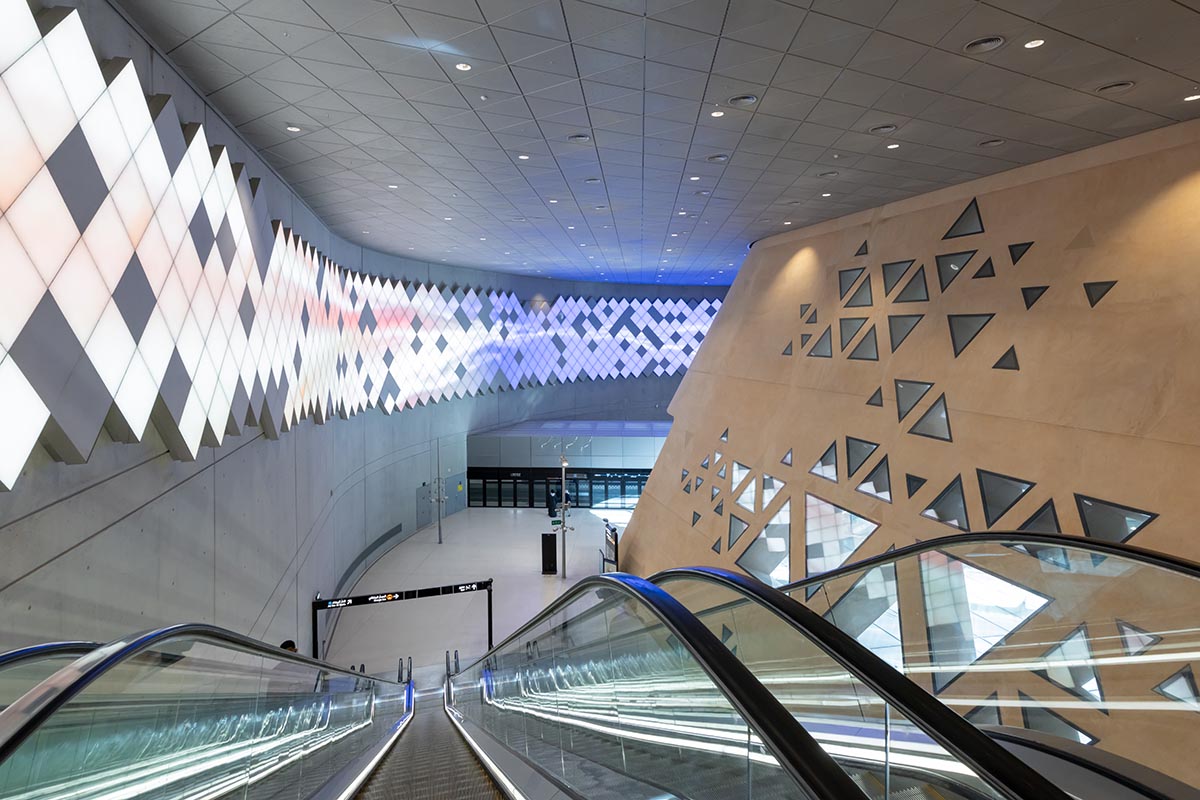
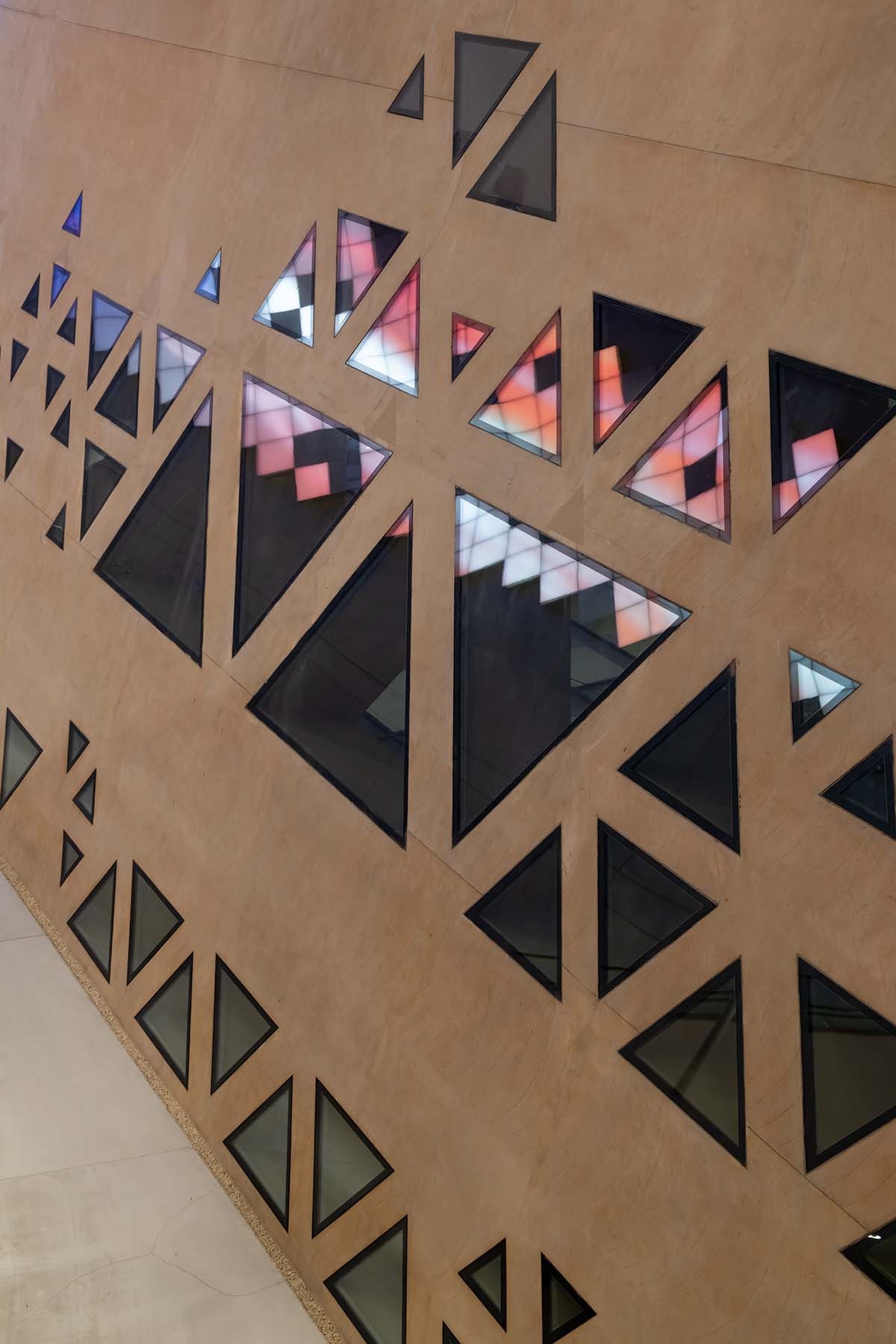
With respect for the station’s historic setting, the inner atrium walls are adorned with a windowcut pattern inspired by traditional Najdi motifs, echoing the architectural character of the surrounding neighborhoods. Designed to create subtle glimpses between the different sections of the station, the patterned openings – formed by 326 triangular carvings in three different sizes – also filter light gently into the atrium.
Outside of the concrete cone, a liner wall is decorated with a continuous media art installation more than 100 metres long, designed for light and artistic displays. Composed of 879 panels – a mix of acoustic, lighting, and video units – the media art wall functions both as a standalone design feature and as a dynamic backdrop.
Both orientation and the general wayfinding approach are supported by the shifting movement of light over the media wall, which aids visitors in comprehending the size and dimensions of the primary circulation area.
The media art wall has been designed to maintain a smooth, serene visual expression, providing a purposeful contrast to the fast trains and the stream of people approaching them, even if its content will change.

Recently, Snøhetta, in collaboration with Beijing Institute of Architectural Design (BIAD), won the competition to design the Beijing Art Museum in Tongzhou District, Beijing, China. In addition, the firm unveiled design for a new opera house featuring a cave-like ground floor in Düsseldorf, Germany.
Moreover, the studio unveiled design for a tropical masterplan to revitalize the port area of Kota Kinabalu, Borneo, the world’s third largest island.
Project facts
Location: Riyadh, Saudi Arabia
Size, station: 20.000 sqm, 8 underground levels
Size, plaza including mosque: 20.000 sqm
Scope: Architecture, Landscape Architecture, Interior Architecture, Art
Typology: Public space, infrastructure
Timeline: 2012-2025
Client: Royal Commission Riyadh City (RCRC)
Certification: Green Building Rating System: LEED 2009 Gold Certification
Executing Consortium: ArRiyadh New Mobility (ANM)
The station design is based on a competition winning concept by Snøhetta, who undertook the detail design in collaboration with Cremonesi Workshop (Crew) and One Works.
Concept design, original competition collaboration with:
Structure: Akt
Services: Hilson Moran
Estimates: David Adamson
Lighting consultants: dpa lighting consultants Dpa.
All images © Iwan Baan/Snøhetta.
All drawings © Snøhetta.
> via Snøhetta