Submitted by WA Contents
Snøhetta designs Düsseldorf Opera House with a cave-like ground floor
Germany Architecture News - Dec 05, 2025 - 05:49 3212 views

Norwegian architecture practice Snøhetta has unveiled design for a new opera house featuring a cave-like ground floor in Düsseldorf, Germany. Snøhetta's design is inspired by the Rhine's meandering path through the region.
The architectural plan, which was unanimously chosen by a 25-person jury in the esteemed Opera House of the Future competition, is intended to serve as the Oper am Rhein in Düsseldorf's future residence.
The design allows daylight to enter and encourages public interaction on the small center plot by splitting the building bulk into three asymmetrical, trapezium-shaped parts and adding paths throughout the ground floor.

The new opera is a densification within a triangular block, bounded by three central streets
The three figures' roofs slope in opposing directions, rising to signal the opera's presence and falling in reaction to their immediate surroundings.
The resulting tripartite silhouette represents the collaboration of the Music Library, the Clara Schumann Music School, and the Deutsche Oper am Rhein under one roof.

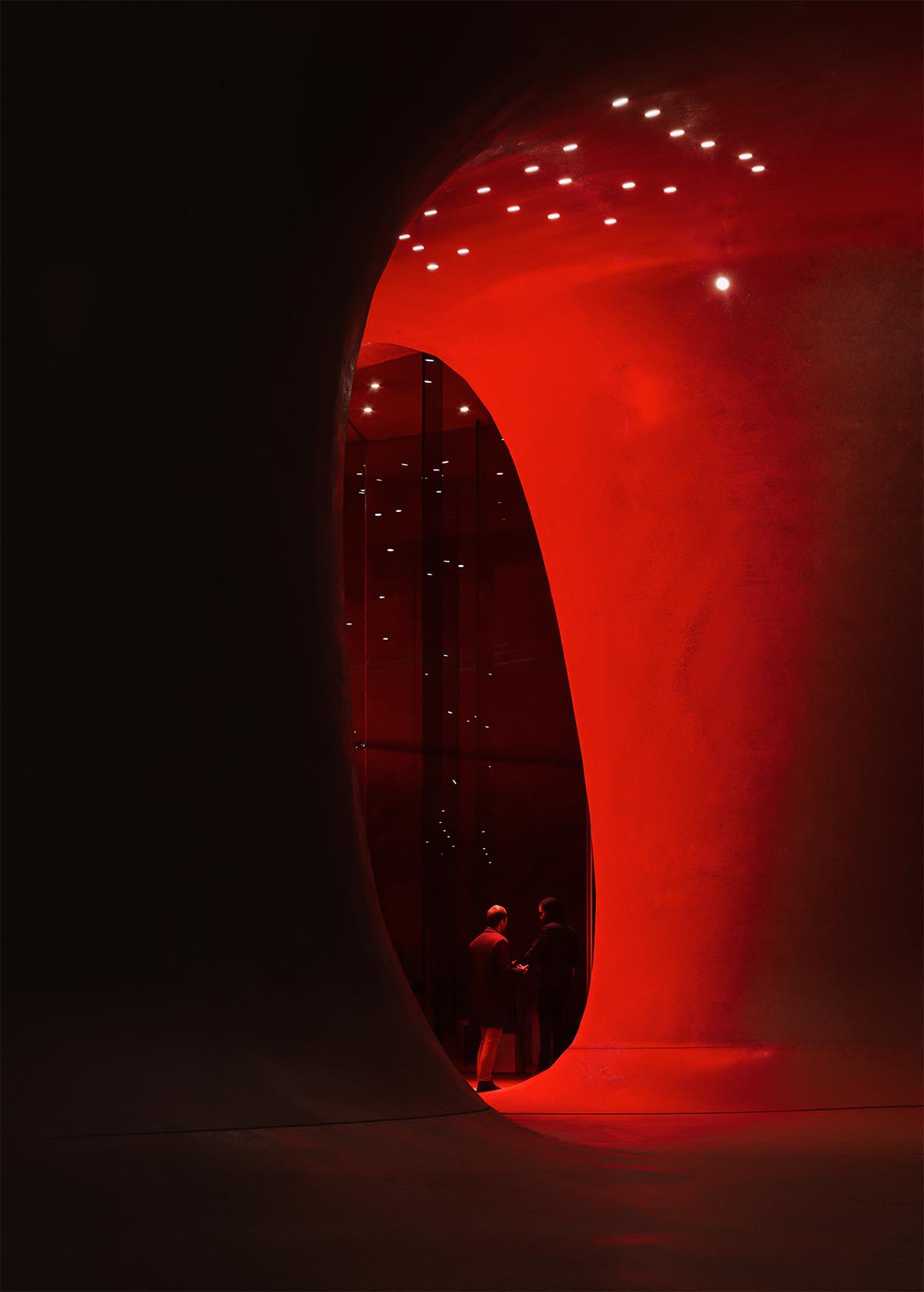
A striking architectural gesture opens up the ground floor on all sides, forming a completely public forum. The urban space flows seamlessly into a terraced, organically shaped interior landscape
An organic, open space
The ground floor of the opera is designed as an eroded cave, an organic, open space that will serve as the city's new cultural arena, much as the river has sculpted the sedimentary basis upon which Düsseldorf is built over millions of years as it meanders through the Rhineland.
Everyone is invited to interact with the opera's content thanks to this carved-out architecture that opens the ground floor on all sides and creates broad links between the opera and its urban surroundings.

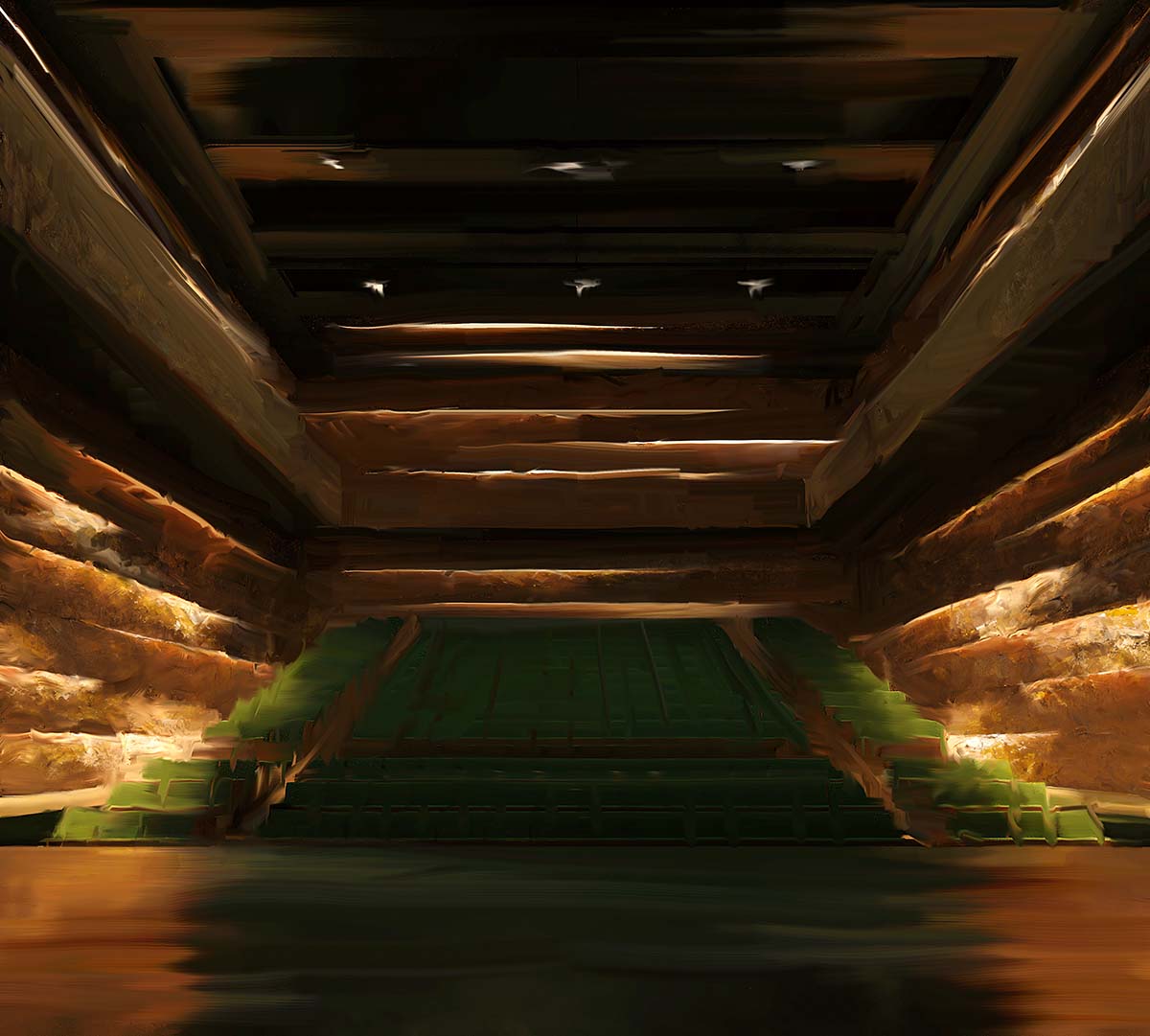
The studio stage with neutral, warm gray tones, and dark green seating
"When designing the Düsseldorf Opera House, it was essential to us that this central building should not shut itself off from the city, but instead draw the public into the ground floor, creating a public forum where urban life can flow freely in and out," said Snøhetta's founding partner Kjetil Trædal Thorsen.
"This forum, filling the entire ground floor, will become a large, open, and accessible space in the heart of the city — staging a clear gradient from city to stage: a constellation of rooms for encounter, rehearsal glimpses, informal performance, and pause. As a result, the opera is not conceived as a stand-alone monument, but as an integral part of the urban fabric."
"Just as the Oslo Opera House opened up to the fjord and invited people onto its roof, we envision this as a contemporary house that will embrace not only art, but also everyday encounters, conversations, and community. Through the integration of the three components, the building opens itself to users of all ages and becomes a true gathering place for the citizens of Düsseldorf," Thorsen added.
Harmonizing with Düsseldorf’s palette
The façade is made of natural stone cladding that is light in color and has back ventilation. In addition to lowering summer heat gain and lessening the urban heat island effect, its tone complements Düsseldorf's urban color scheme.
Different stone module formats reduce waste and material thickness. The eroding ground floor concept is connected to the facade by a variety of surface finishes, ranging from extremely rough to finely ground. These finishes are grouped in wave-like bands that resemble sedimentary strata.
Flexibility and performance are guaranteed by two window concepts: while smaller "filter windows" offer consistent lighting, shade, and ventilation, larger apertures draw attention to key public spaces like the lobby, bar, and some practice rooms.
Together, the window arrangement, recessed terraces, and silhouette produce a dynamic yet context-sensitive presence—a cultural institution that is both confident in its expression and integrated into its surroundings.

The main auditorium is designed to provide visual and acoustic intimacy for all 1,300 seats
Roof landscape and biosolar roof
The interiors use mineral materials with a serene flow of tone and texture, adhering to the façade's logic and the notion of erosion. The 1,300-seat main auditorium's red seats and smoked oak paneling match the color pattern of the current opera house, which is scheduled to be demolished.
A biosolar roof is created by combining photovoltaics, skylights, and technical infrastructure. Between PV fields and technical strips are striped, green terraces planted with plants indigenous to the Lower Rhine floodplains.
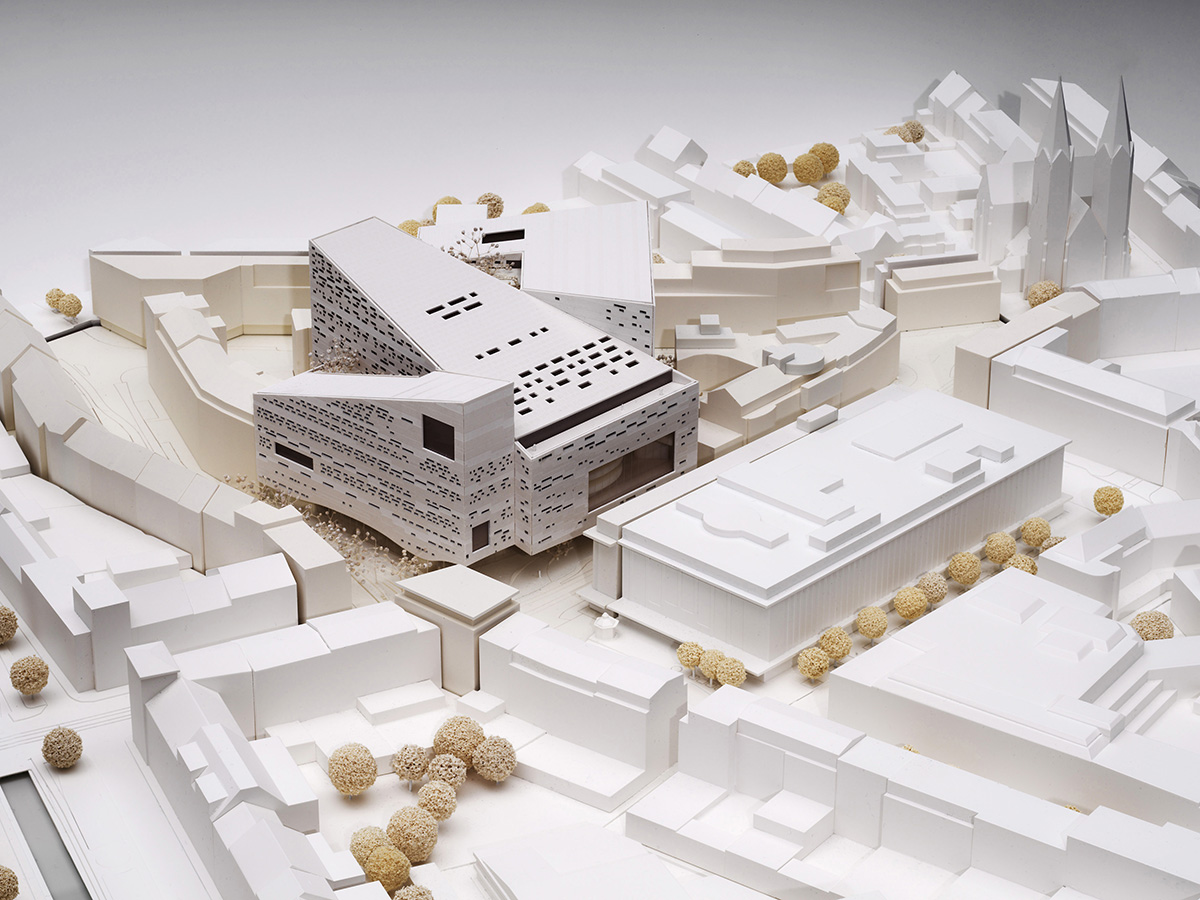
Photography © Landeshauptstadt Düsseldorf/Claus Langer
"The new cultural building block will be integrated into the urban context with a high mark. The building, which is cleverly divided into three segments, skilfully reacts to its surroundings, opens up a variety of views of the city and shows a design of high sophistication. The Forum offers a unique atmosphere and thus creates a place of encounter in the environment of culture for all citizens," Heiner Farwick, architect, urban planner and chairman of the jury said at a press conference.
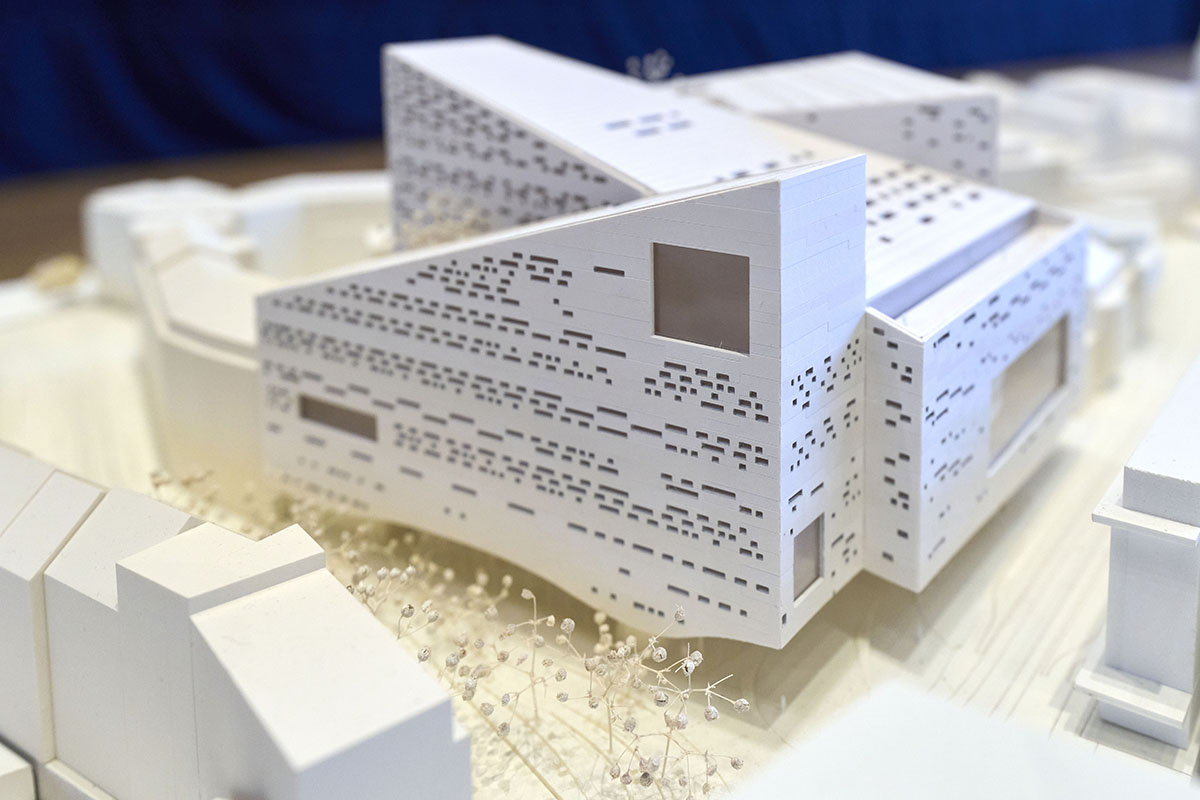
Photography © Landeshauptstadt Düsseldorf/Claus Langer
Recently, Snøhetta unveiled design for a tropical masterplan to revitalize the port area of Kota Kinabalu, Borneo, the world’s third largest island. In addition, the firm Snøhetta transformed the Far Rockaway Library into a sculptural painting in Queens.
Project facts
Client: Landeshauptstadt Düsseldorf
Status: Ongoing
Typology: Performance space
Location: Düsseldorf, Germany
Disciplines: Architecture, Landscape architecture, Interior architecture
Collaborators
Structural & Facade Engineering: Bollinger + Grohmann GmbH
MEP Engineering: Buro Happold GmbH
Acoustics: Nagata Acoustics International, Inc
Theatre Planning: Theatre Project Consultants Ltd, TheaPro GmbH
General Planning Management Services, Cost Consulting: Drees & Sommer SE
Fire safety Consulting: Gruner Deutschland GmbH
Lightning Design: Kardorff Ingenieure Lichtplanung GmbH
Model building: Made by Mistake
All renderings © Mir unless otherwise stated.
> via Snøhetta