Submitted by WA Contents
Seeing through design: The biophilic essence of Auga optical salon
Poland Architecture News - Apr 01, 2026 - 09:42 46001 views
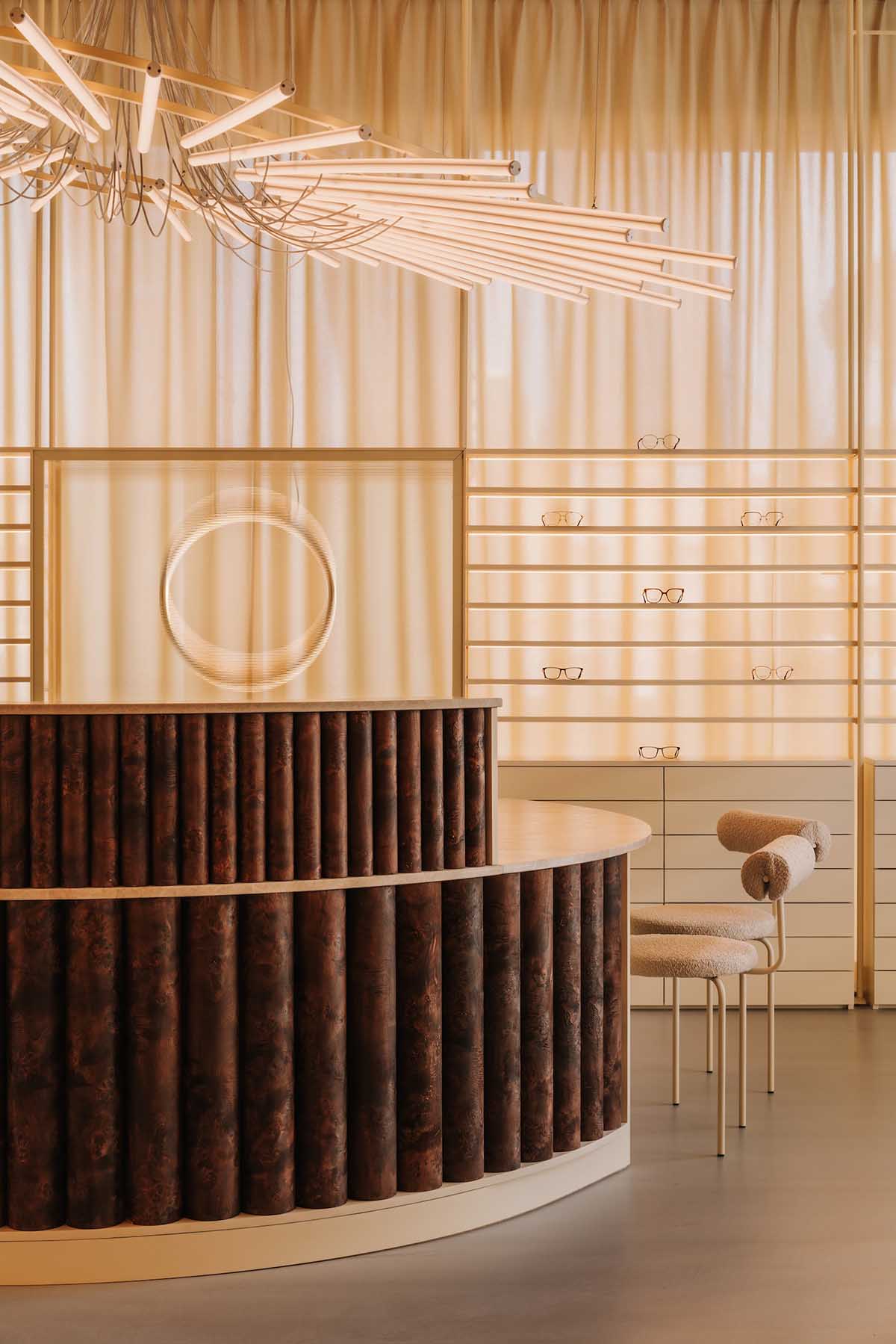
In this project, biology and architecture blend together almost imperceptibly, as delicately as light through a lens.
Designed by Wrocław-based studio Znamy się, the interior of Auga, an optical salon with specialist consulting rooms, was inspired by the process of seeing – a complex and precise biological mechanism.
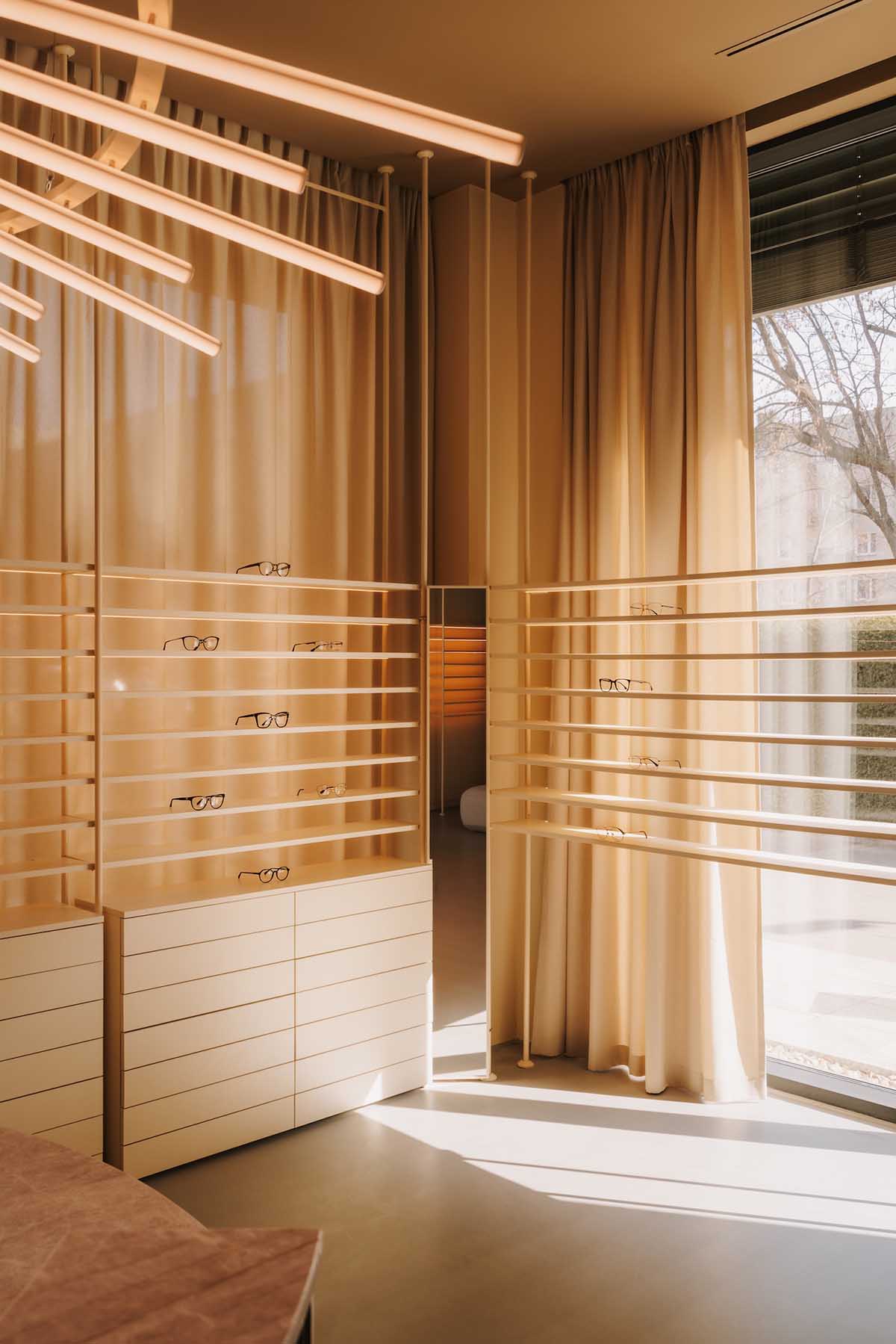
The shape of the space itself echoes the natural form of the eye, and individual elements within the interior reflect its internal anatomy. The colour palette, shapes and materials all draw from the physiology of vision, creating a coherent visual narrative.
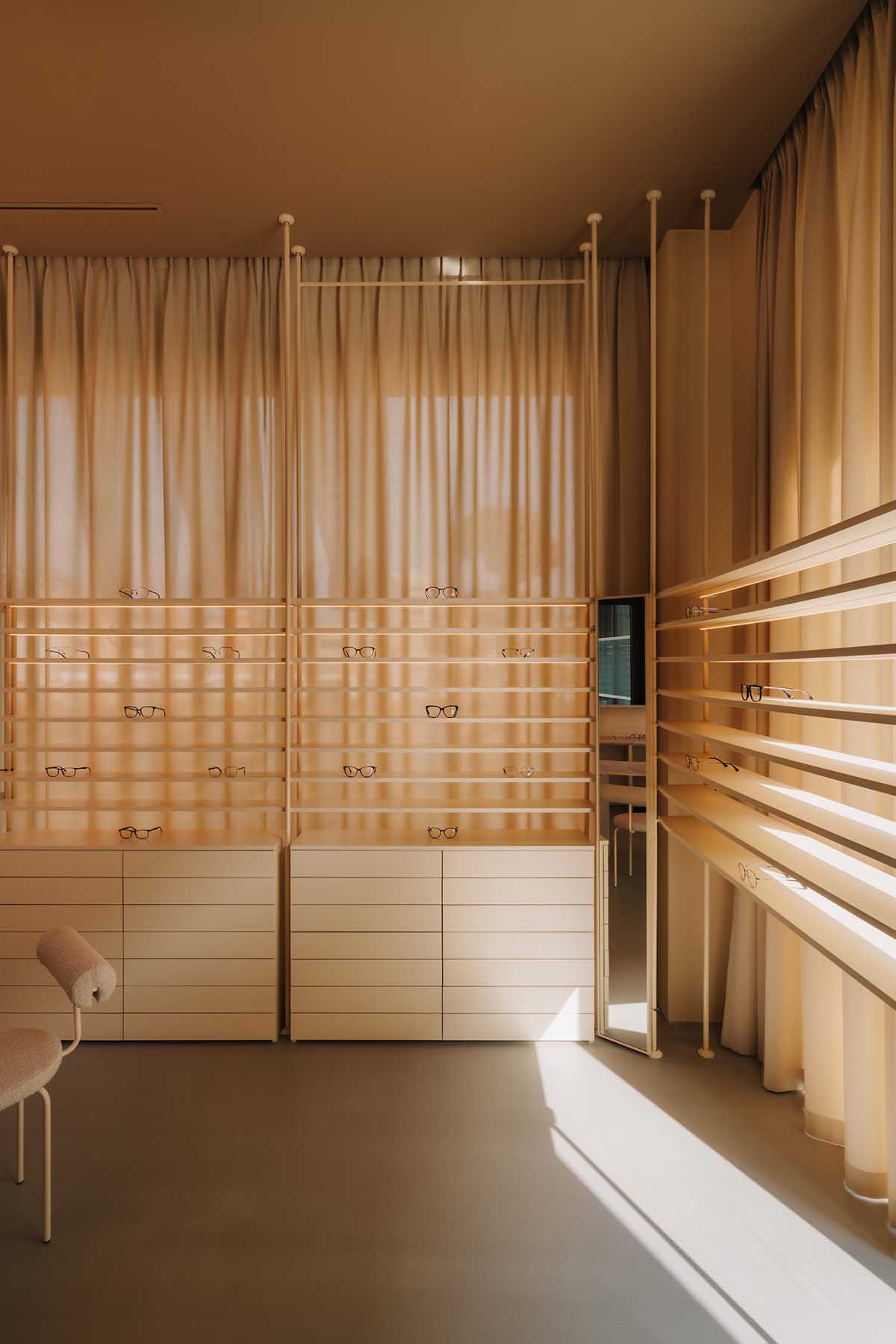
Luminance
The arrangement of the spaces reflects how light moves through the eye, from the cornea and lens to the brain, where it is converted into a nerve impulse.
Similar to this, visitors to Auga transform into light itself when they approach from the outside, turn on the facility, and then slowly lose themselves in its layers, passing from the lobby via the optical salon to the specialized consultation rooms. The concept of seeing serves as the foundation for the whole experience, which creates a cohesive story.
The Lens
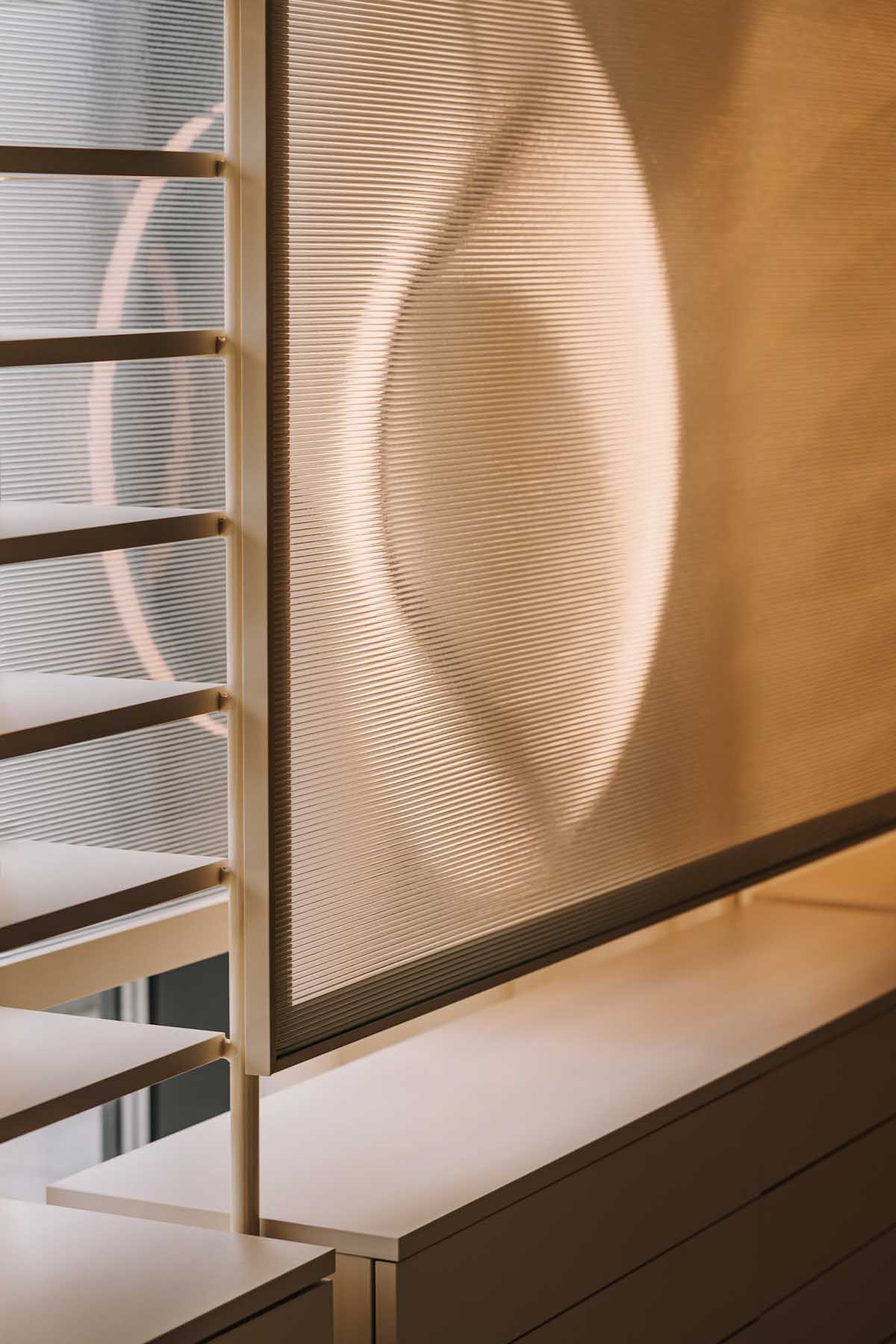
One of the interior's most notable aspects is a glass form that resembles the eye's lens and has a ridged, biconvex structure.
Similar to how the lens of the eye bends and concentrates light onto the retina to allow for fine vision, it also refracts and distorts the sunlight that comes in through the window, making it more than just a visually arresting ornamental element. Here, light takes on an active role in forming the room.
The Centre
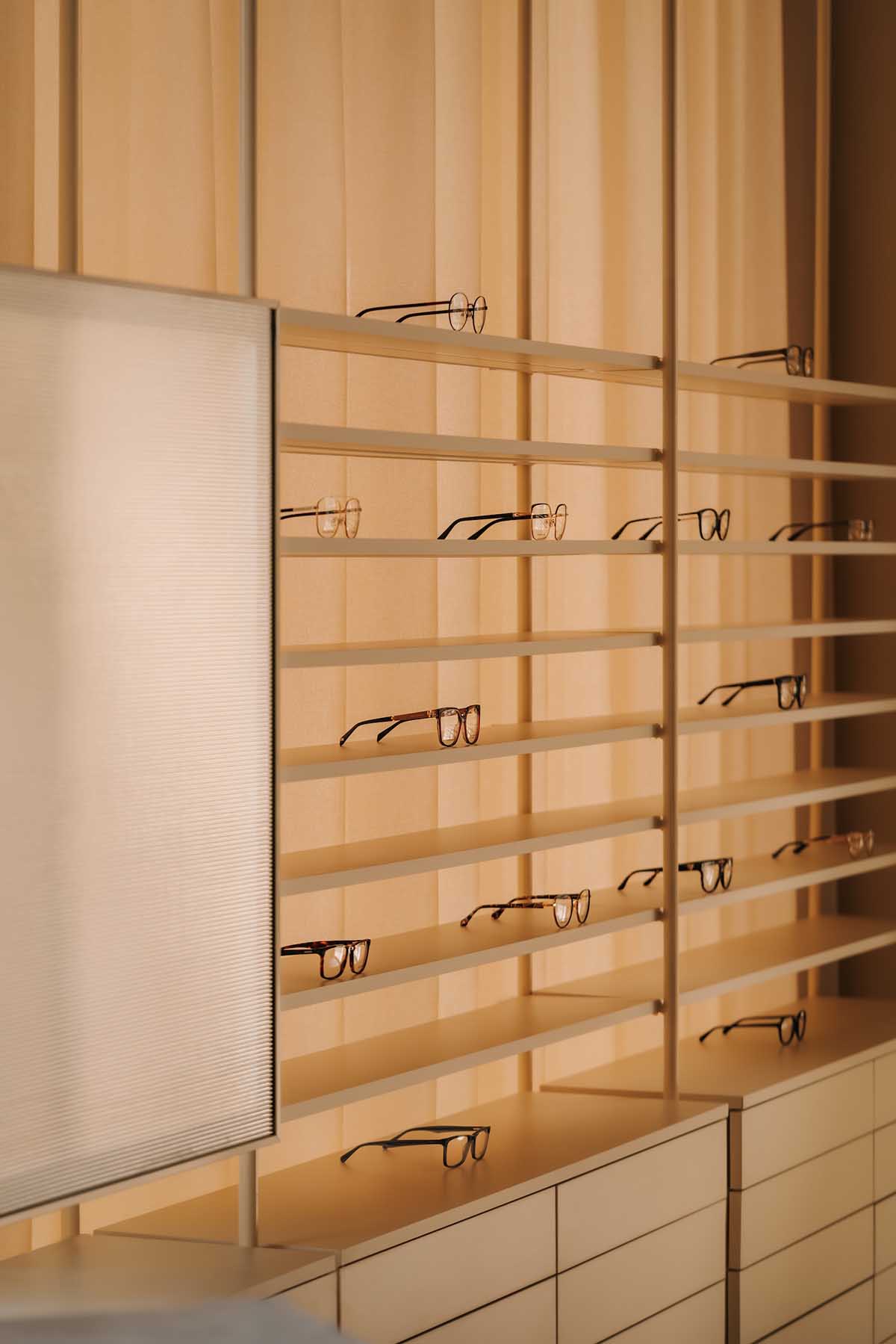
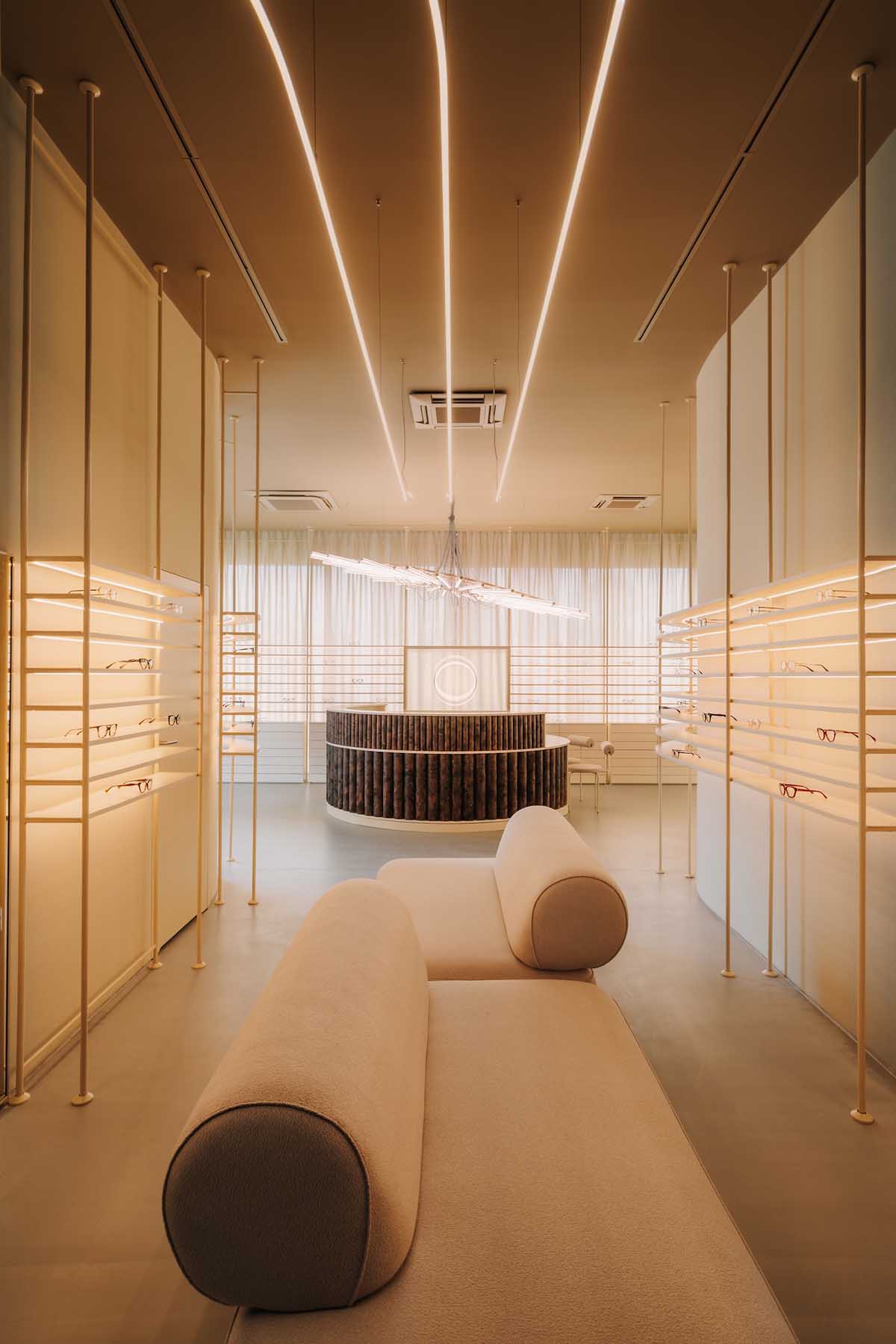
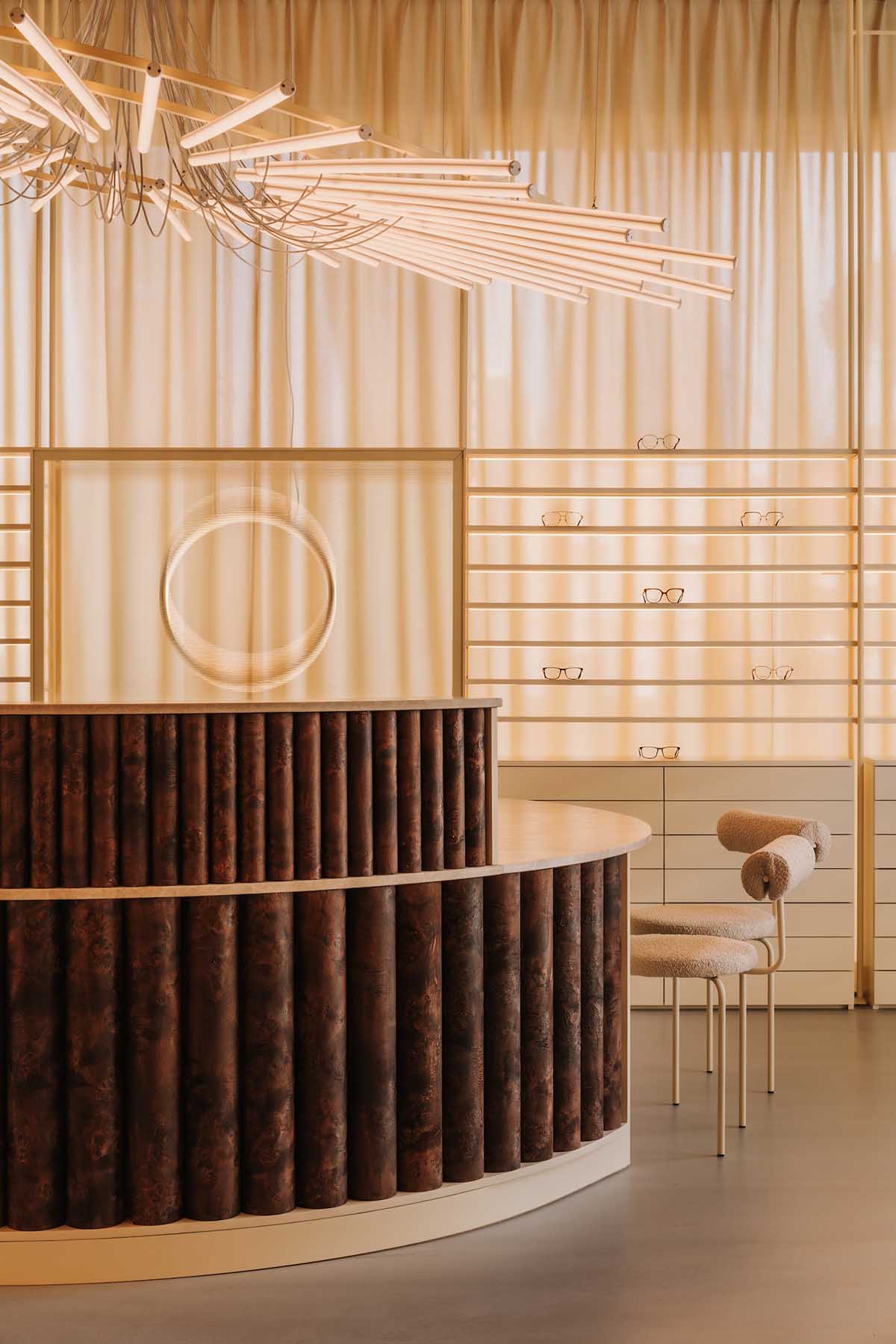
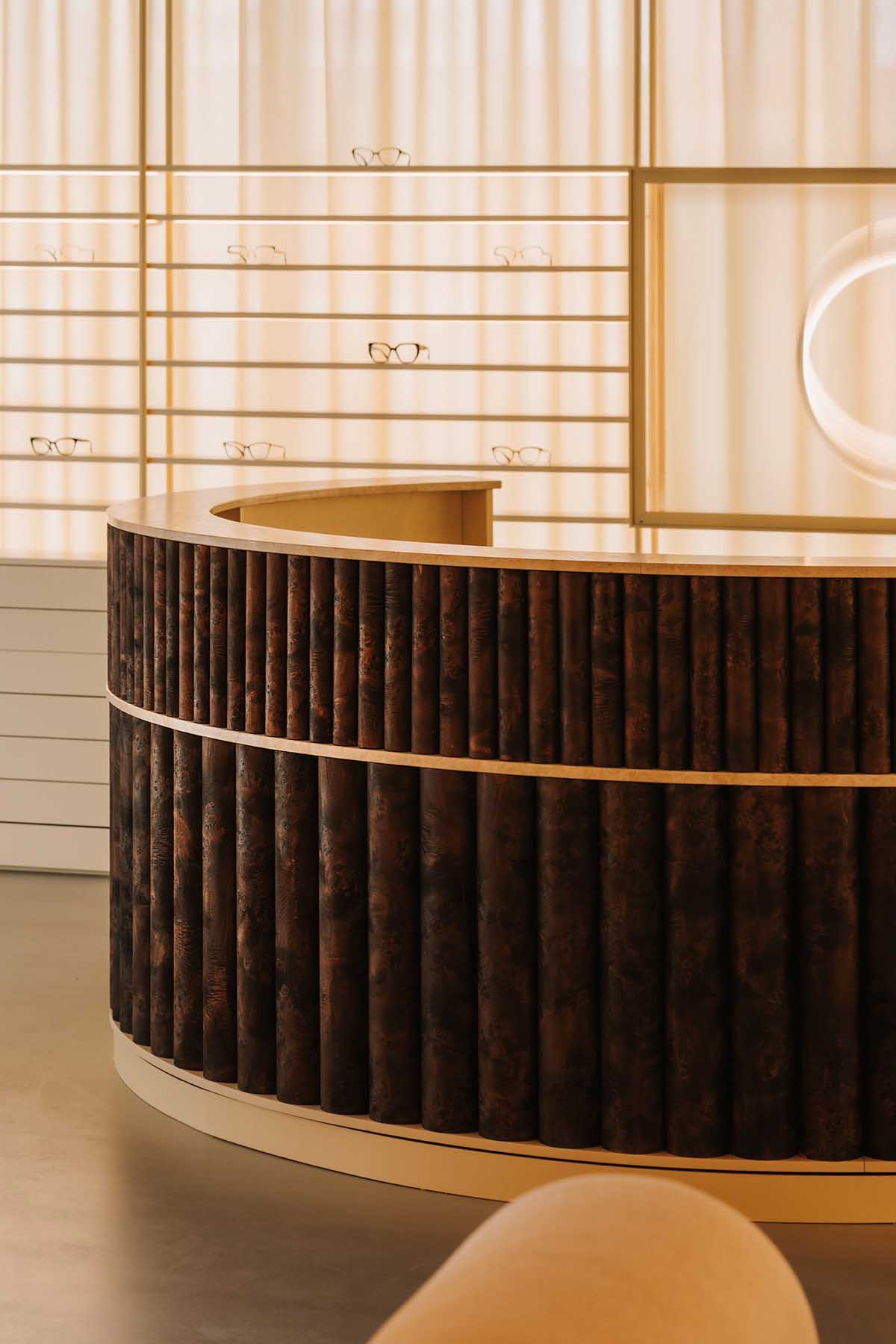
A brilliant LED chandelier illuminates a circular burl wood counter in the center of the salon. The macula, the part of the eye in charge of center and color vision, is represented architecturally by this region.
The counter serves as the primary focal point of the room, just like the cones in the macula enable us to concentrate on a particular location. This metaphor is further supported by the center lighting above it, which echoes the idea that cones work best in bright environments.
The Periphery
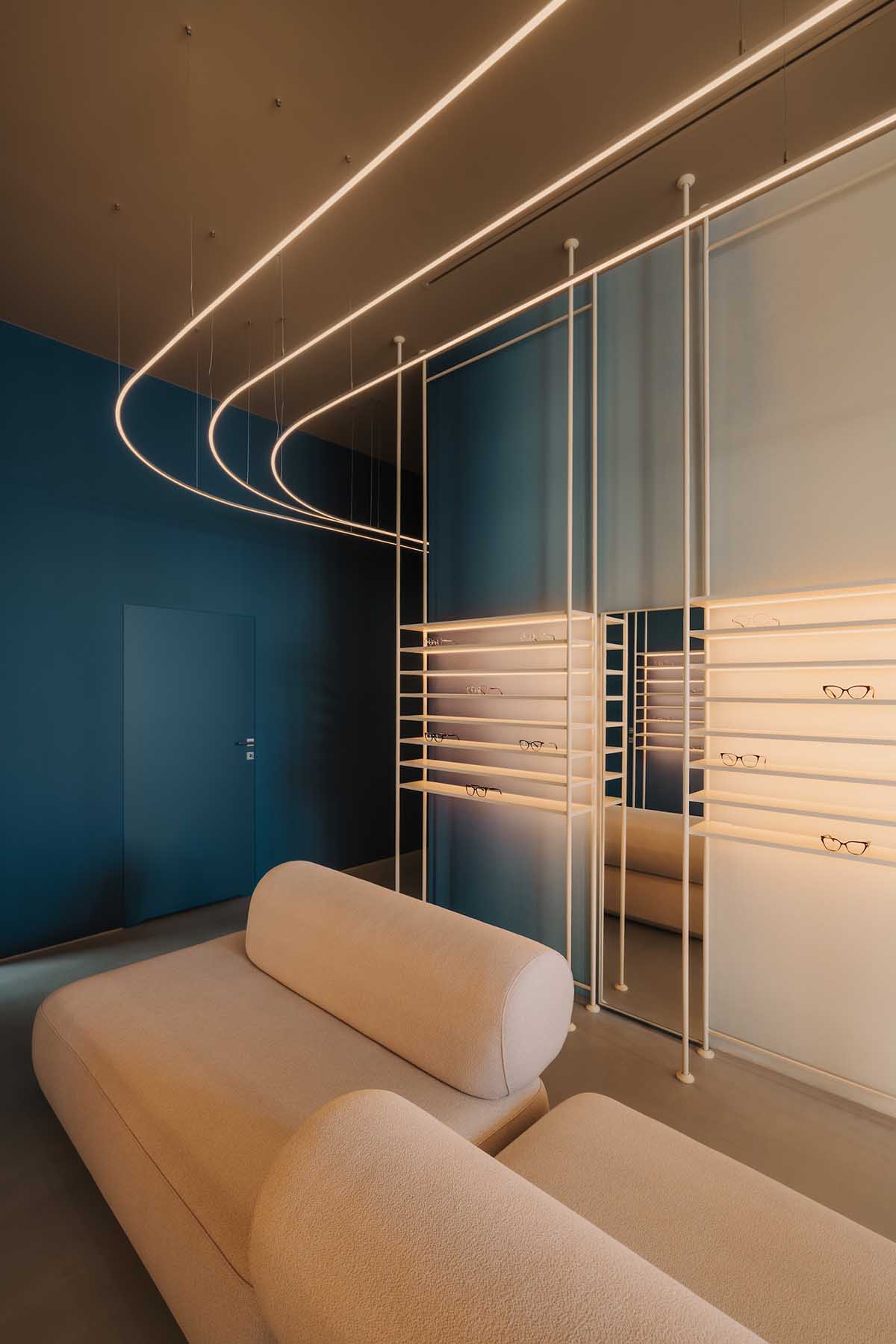
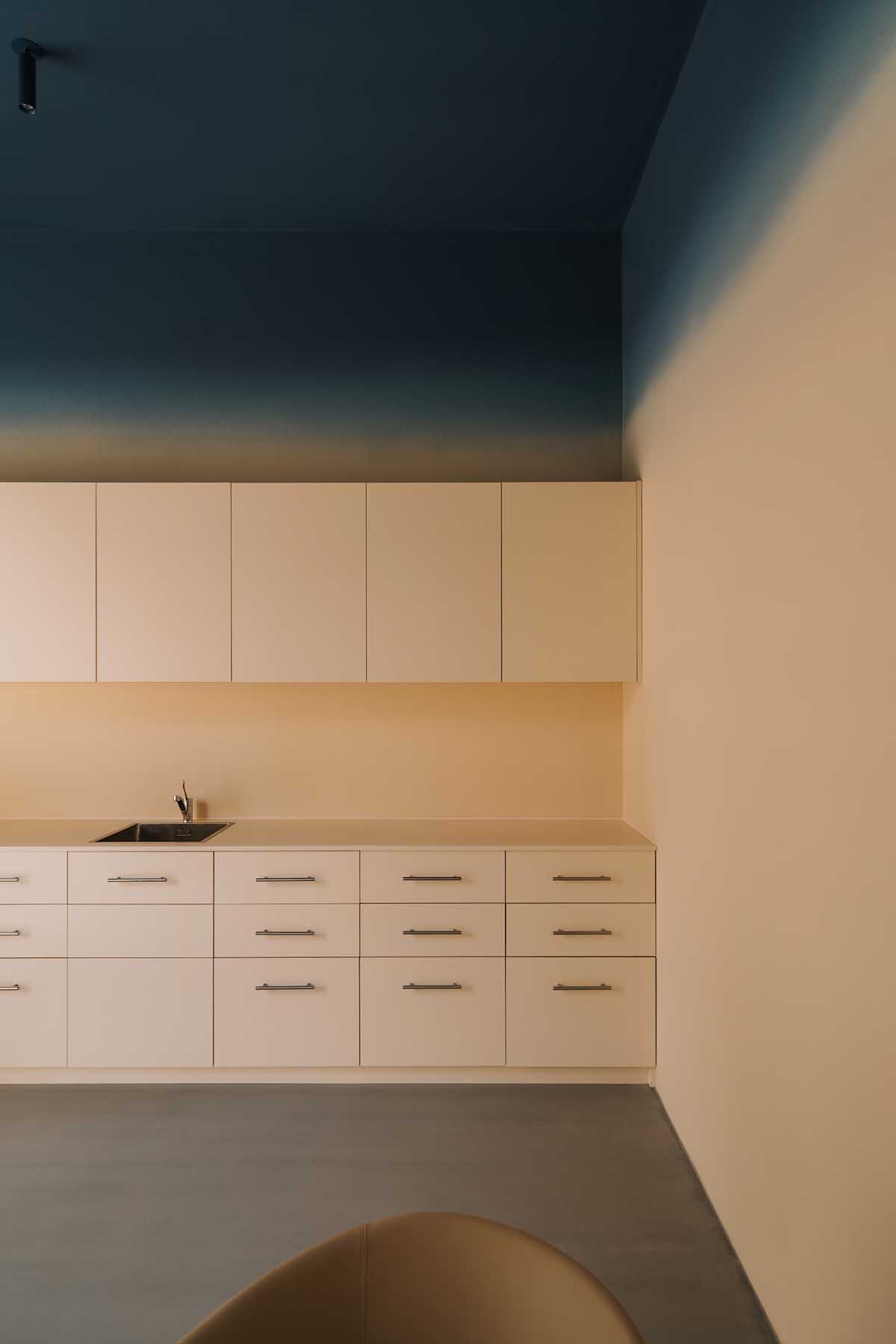
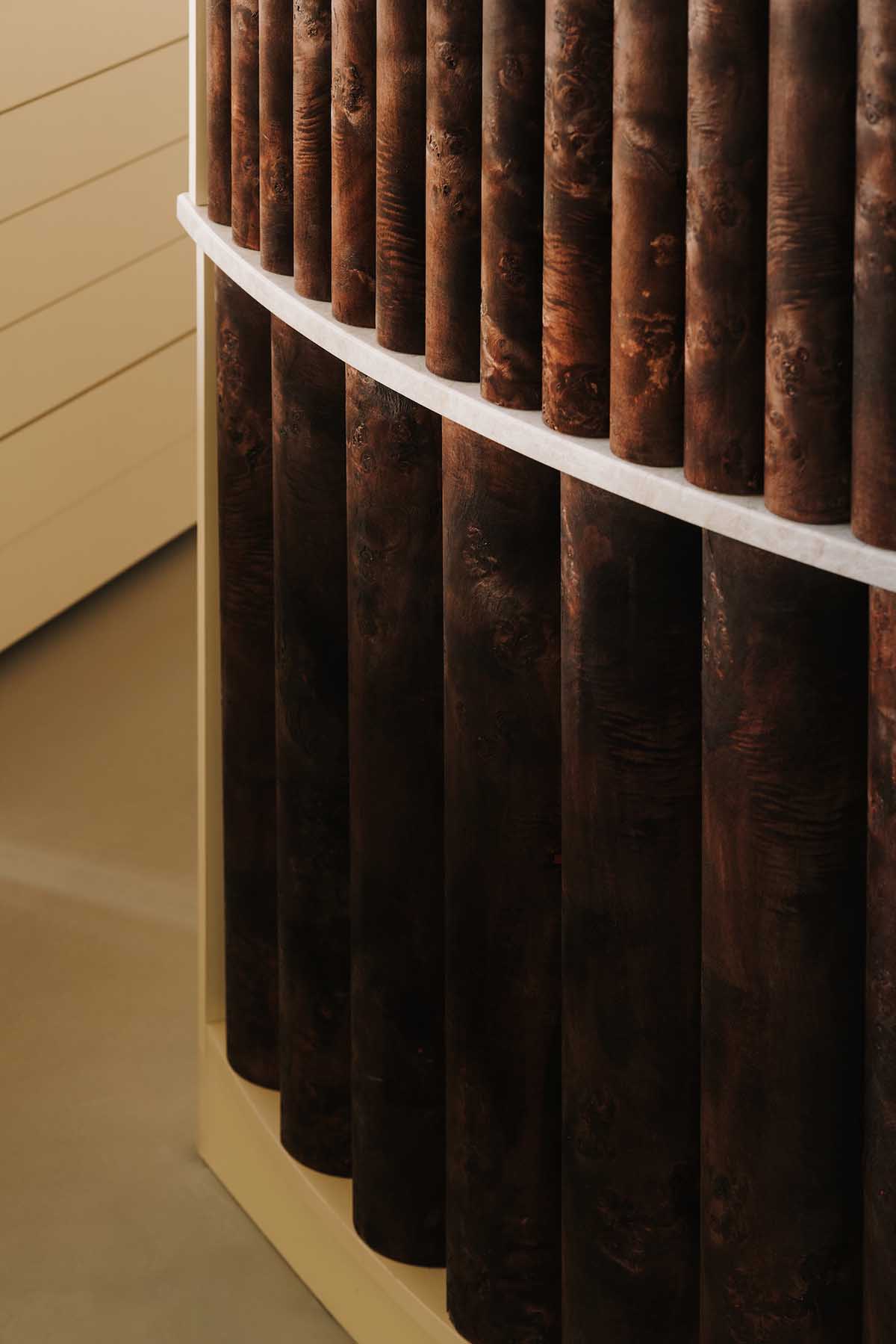
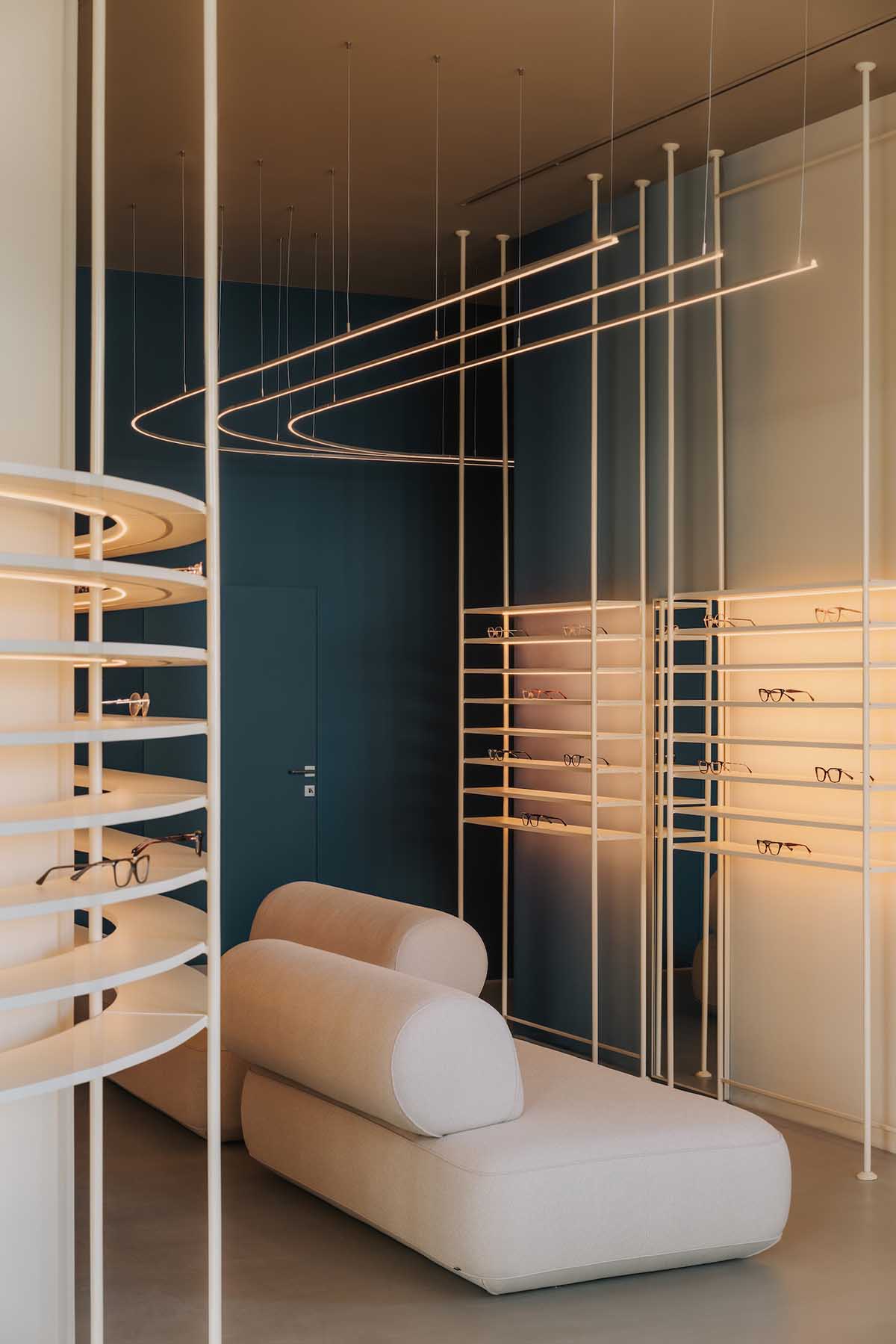
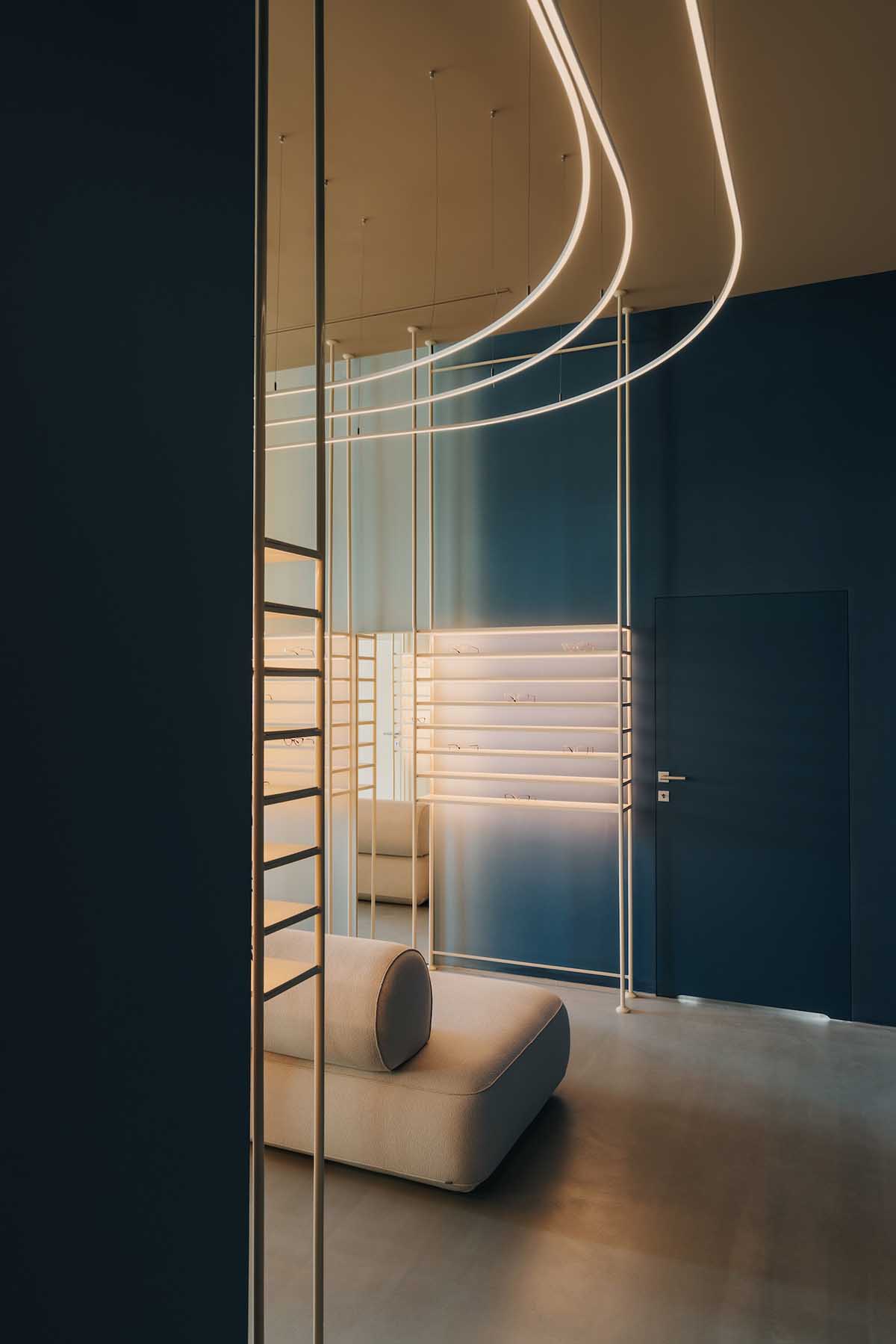
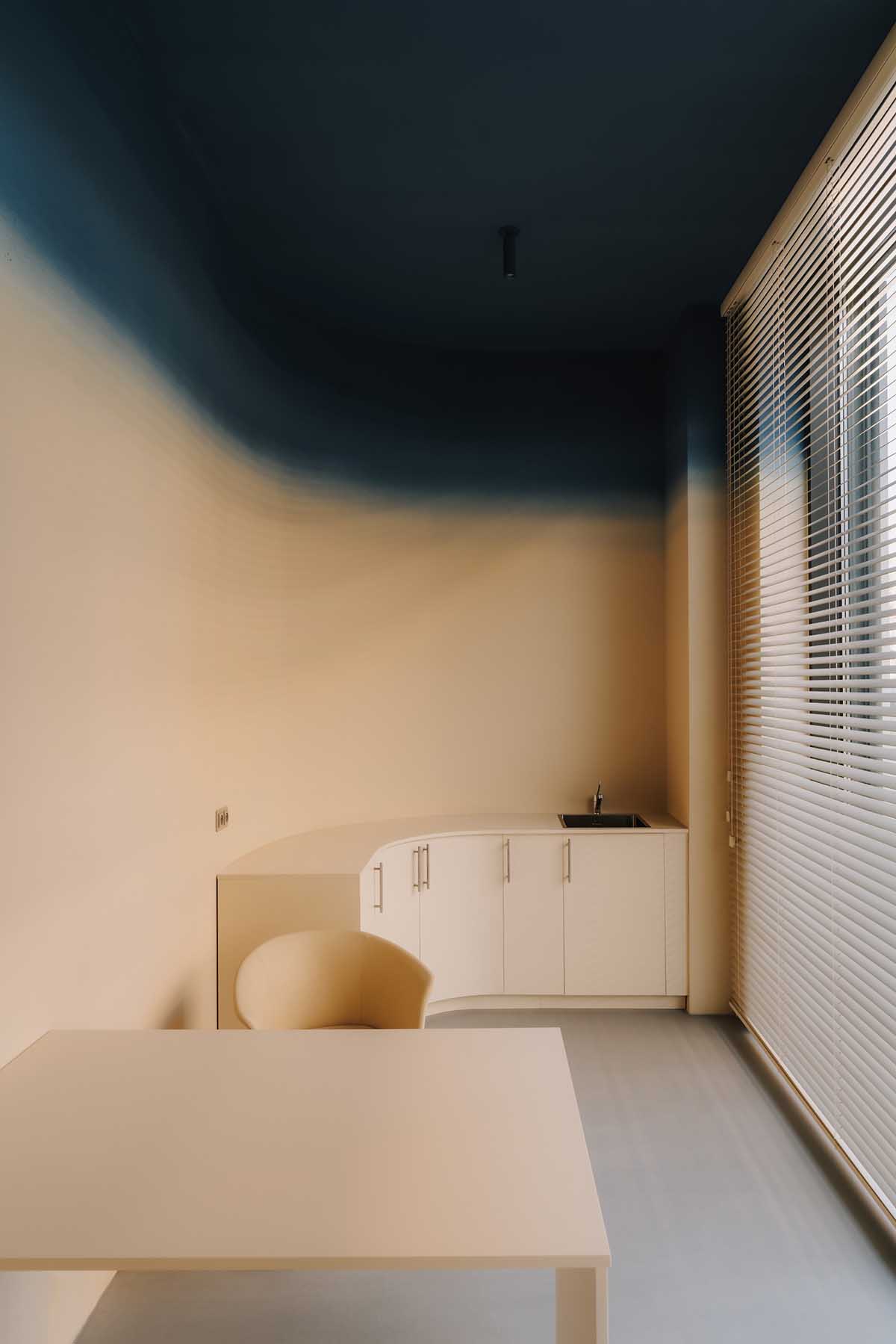
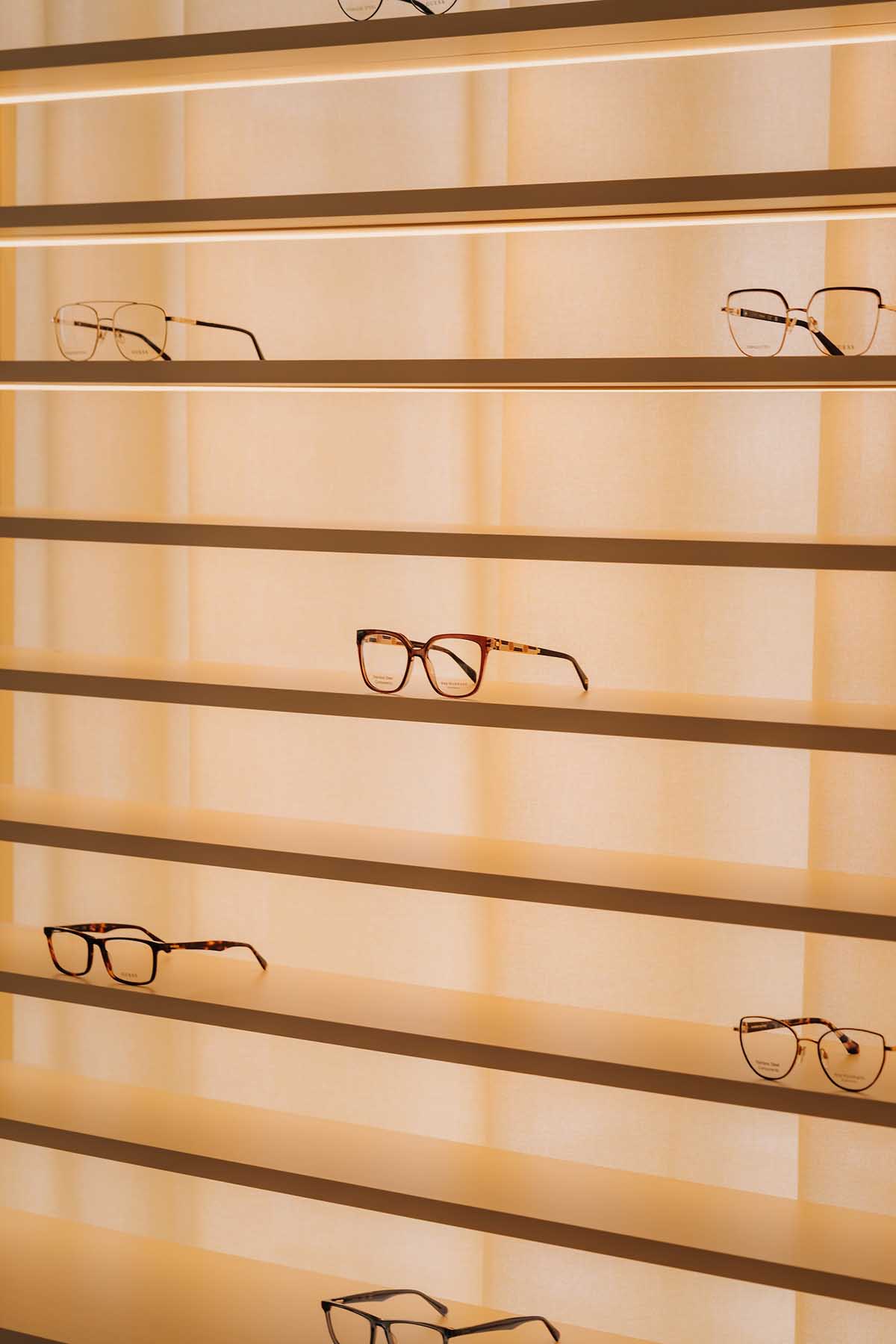
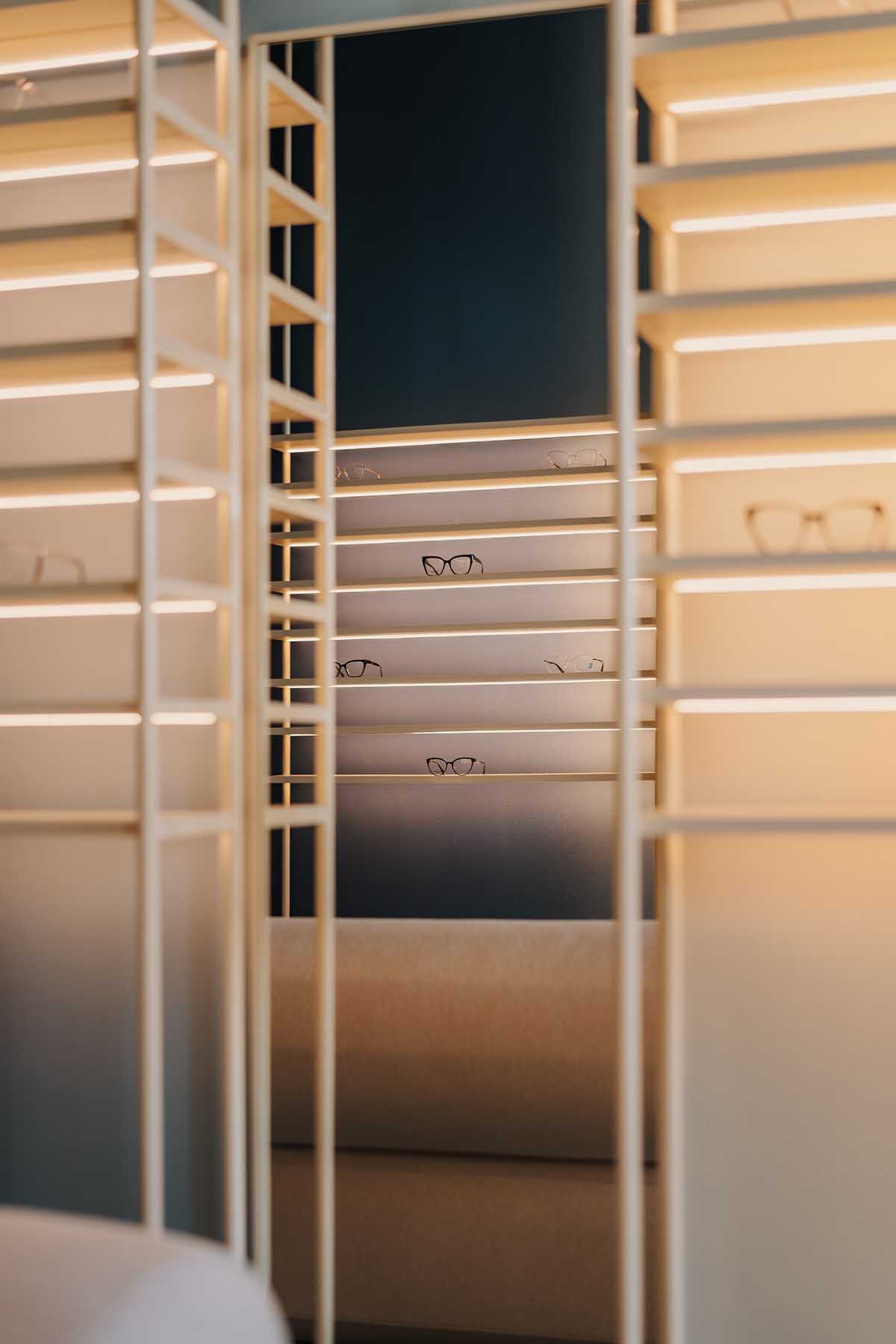
A blue gradient that extends from the entrance all the way into the consulting rooms adds to the sensation of movement created by the horizontal shelves that run down the walls.
The second type of photoreceptor, rods, which are in charge of peripheral vision, motion detection, and low-light vision, were referenced in the design of these components. The Purkinje effect, in which blue is the last color to show as light fades, is evoked by the walls' deep navy color.
The Impulse
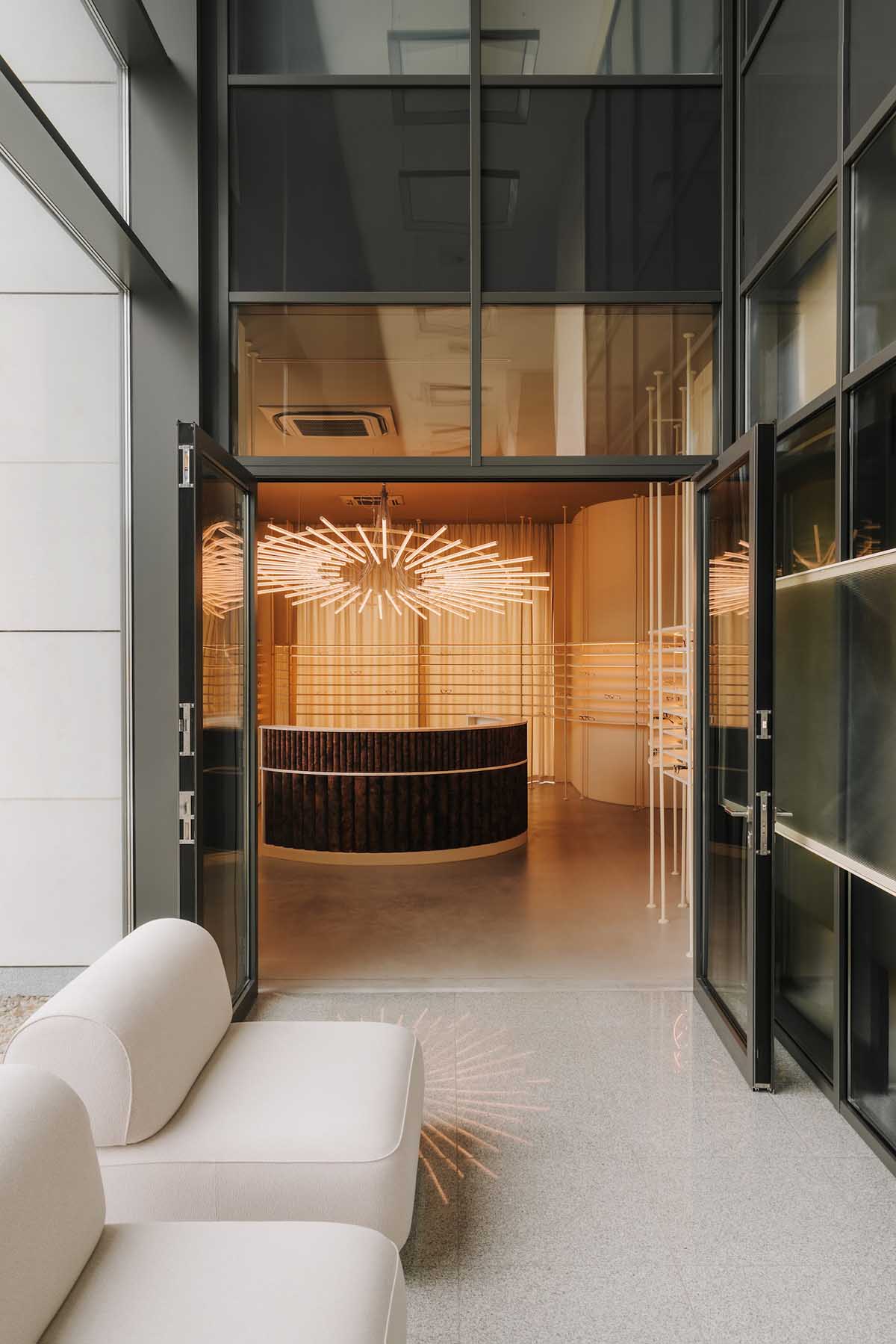
LED light guides that are suspended from the ceiling and extend across the salon and into the consultation rooms complete the interior. Their purpose was to stimulate nerve impulses, which are the signals that light sends from the eye to the brain.
Just as the brain interprets incoming information and enables conscious vision, they also act as a symbolic guide for visitors, guiding them to the location where their own eyesight is closely inspected.
Znamy się previously completed a coastal-inspired patisserie in Warsaw, Poland. In addition, the studio designed a cobalt bar and orange-tinted circular element to create a club-like atmosphere and the feeling of the setting sun.
Project facts
Project name: Auga
Architects: Znamy się (Wojtek Nowak, Bogna Kawa-Nowak, Monika Jokiel, Ula Dachnij-Seredyńska, Anna Petryszyn)
Client: Auga Clinic
Area: 191 m2
Location: Wrocław, Poland
Completion year: 2025
Furniture & Materials: The Good Living, Noti, Steelcase, Chors, Kluś
All images © Migdal Studio.
> via Znamy się