Design Intention – Boutique Hotel in Hormuz Island
The design intention for this boutique hotel on Hormuz Island is rooted in the extraordinary geological identity, climatic conditions, and cultural atmosphere of the island. Known as the “Rainbow Island,” Hormuz is characterized by its mineral-rich soil and vibrant landscape of reds, oranges, and yellows, which creates a unique natural canvas for architectural intervention.
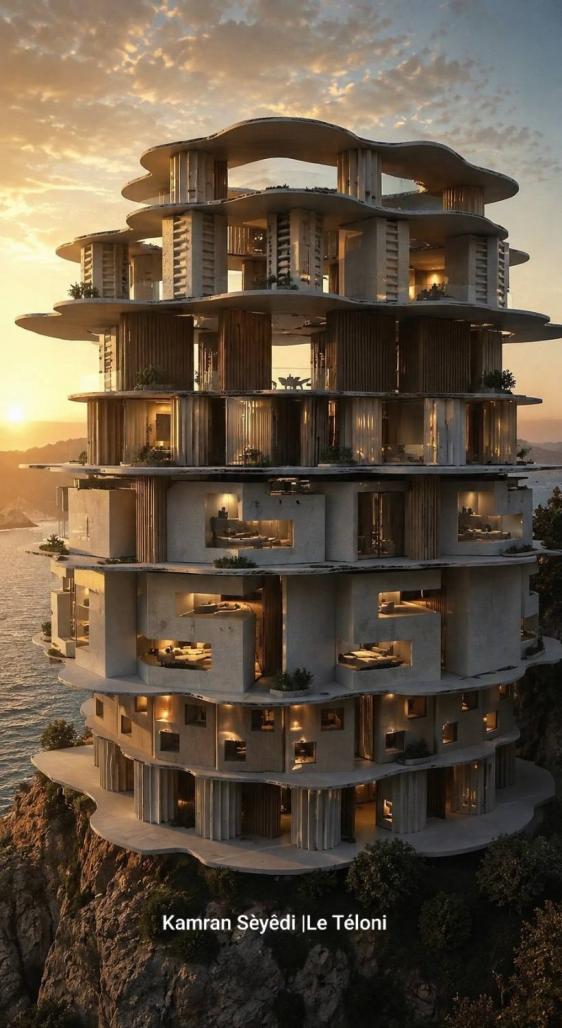
The core concept of the project is to dissolve the boundary between architecture and landscape. Instead of imposing a dominant built form, the hotel emerges as an extension of the island’s topography, blending with the colorful terrain and respecting its fragile ecosystem. The volumetric composition is inspired by organic forms and fragmented clusters, allowing the architecture to sit lightly on the land.
Taking cues from successful contextual projects on the island, such as the use of dome-based modular systems and community-driven construction, the design emphasizes simplicity, adaptability, and local participation. This approach not only enhances sustainability but also strengthens the social connection between the project and the local community.
Given the hot and humid climate of Hormuz Island, passive environmental strategies are fundamental. The design incorporates natural ventilation through courtyards and wind corridors, thick earthen walls for thermal insulation, and shaded outdoor spaces to create comfortable microclimates. Roof forms and openings are carefully designed to control solar exposure while allowing diffused natural light.
Material selection is directly inspired by the island’s geology. Earth-based construction, colored plasters, and local textures reflect the chromatic richness of Hormuz while minimizing environmental impact. The architecture becomes a continuation of the island’s mineral palette rather than a contrasting object.
Spatially, the hotel is organized as a sequence of experiential layers: from public gathering spaces facing the sea to semi-private courtyards and intimate guest units. This hierarchy enhances both social interaction and privacy, offering visitors an immersive experience of the island’s nature, culture, and silence.
Ultimately, the project aims to create a sustainable, site-specific, and sensory-rich hospitality environment—one that does not compete with Hormuz’s landscape, but reveals and celebrates it.
2025
Hormuz Hotel
Kamran Seyedi