PROPOSED BIODEGRADABLE WASTE RECYCLING & BIONUTRA™ LIQUID FOOD SUPPLEMENT PRODUCTION FACILITY
PROJECT BRIEF
PROPOSED AI-DRIVEN BIODEGRADABLE WASTE RECYCLING &
BIONUTRA™ LIQUID FOOD SUPPLEMENT (LFS) PRODUCTION FACILITY
A waste-to-agriculture production facility that combines biogas fermentation technology,
artificial intelligence monitoring systems, and renewable methane-based energy generation
Part of THE PROPOSED MEGA INFRASTRUCTURE DEVELOPMENT IN STA. ANA, CAGAYAN
An AI-Driven Industrial, Logistics, Energy, Health & Education Mega Hub
Casambalangan–Port Irene, Santa Ana, Cagayan, Philippines
Cagayan Economic Zone Authority (CEZA), Cagayan, Philippines
Master-Planned Footprint: 1.0 Hectare (10,000 SQM)
Project Designer & Master Planning Consultant: Architect Hermenegildo C. Mercado, UAP
Project Proponent / Local Developer & Operator: Rapid Technologies Development Inc.
Corporate Equity Alignment Structure: 80% Foreign Strategic Investor / 20% Local Industrial Partner
Document Version / Status Baseline: Advanced Post-FS Integration Framework
Executive Summary & Consolidated Commercial Positioning
The Proposed AI-Driven Biodegradable Waste Recycling & BioNutra™ Liquid Food Supplement (LFS) Production Facility is engineered as a world-class eco-industrial node within the broader Cagayan Global Gateway Infrastructure Corridor. By deploying high-velocity controlled anaerobic fermentation arrays and automated molecular synthesis Clean Rooms, the facility diverts organic municipal and commercial residues from multi-regional networks and processes them into a highly stable, premium organic liquid nutrition input in exactly 24 hours. Operating at a fixed capacity baseline of 400,000 Liters per Day, the facility transforms structural environmental management into an active commercial asset. The complex directly integrates waste tracking with high-volume agribusiness supply chains, supporting domestic crop, livestock, and aquaculture operations while dedicating a major structural volume block for maritime and air cargo distribution into broader ASEAN markets.
The Proposed AI-Driven Biodegradable Waste Recycling & BioNutra™ Liquid Food Supplement (LFS) Production Facility is envisioned as a world-class, AI-driven circular economy and biotechnology mega-hub within the Proposed Mega Infrastructure Development in Sta. Ana, Cagayan. The complex targets the conversion of regional organic biomass into bio-fuels, clean organic outputs, and premium liquid food supplements (LFS) for global distribution.
“BioNutra” Regional Waste-to-Agriculture Industrial Platform
The Proposed AI-Driven Biodegradable Waste Recycling & BioNutra™ Liquid Food Supplement (LFS) Production Facility is a large-scale circular-economy industrial project designed to convert biodegradable waste from agricultural, livestock, poultry, public-market, food-processing, abattoir and related organic sources into high-value organic Liquid Food Supplement (LFS) called BioNutra™ in just 24 hours.
Operating at an initial commercial baseline capacity of 400,000 liters of LFS per day, the platform stabilizes multi-regional organic fractions while generating methane gas to drive on-site renewable thermal and electrical power plants.
The investment framework establishes a high-value, tech-driven alternative to traditional solid waste management. It positions the facility as a central link between urban municipal management and high-yield commercial agriculture, aquaculture, and animal husbandry sectors across the Philippines and ASEAN export corridors.
The facility is designed for an initial commercial production capacity of:
400,000 liters of BioNutra™ Liquid Food Supplement (LFS) per day
The project integrates:
biodegradable waste recycling;
anaerobic fermentation;
organic nutrient recovery;
methane capture;
renewable electricity generation;
AI-assisted production monitoring;
automated LFS packaging;
domestic distribution;
online sales;
institutional supply;
and ASEAN export distribution.
The project will establish a regional feedstock network rather than relying upon a single municipality or individual waste source.
A contracted feedstock target of approximately: 440–480 TONS/DAY will provide an operating reserve above the approximately 400 tons/day planning requirement.
This makes the Proposed AI-Driven Biodegradable Waste Recycling & BioNutra™ Liquid Food Supplement (LFS) Production Facility a regional waste-to-agriculture industrial platform, rather than simply a conventional waste-processing facility.
This makes the Proposed AI-Driven Biodegradable Waste Recycling & BioNutra™ Liquid Food Supplement (LFS) Production Facility a regional waste-to-agriculture industrial platform, rather than simply a conventional waste-processing facility.
The Proposed AI-Driven Biodegradable Waste Recycling & BioNutra™ Liquid Food Supplement (LFS) Production Facility is an integrated circular-economy industrial project designed to convert biodegradable waste into high-value agricultural inputs. This is the only biodegradable waste recycling technology in the world that recycles bio-waste in 24 hours into an organic ODORLESS amber-colored Liquid Food Supplement (LFS) called BioNutra™ with a daily production capacity of 400,000 liters. The facility converts biodegradable waste from agricultural, livestock, and public-market sources into organic Liquid Food Supplement (LFS) called that can be sold and used as Plant Supplement/Fertilizer or Animal Food for livestock, poultry, aquaculture farms. The facility also produces methane gas for cooking and electricity.
BioNutra™ Liquid Food Supplement (LFS) is rich in Vitamin B12, amino acids and is an ideal animal food for livestock , poultry, aquaculture (prawns, crabs, and fish) farms. Chicks bred and fed with LFS for poultry farms and cockfighting have been proven to be stronger, healthier and more resistant to disease. A recent grower using LFS food supplement had zero mortality rate for 20,000 chickens he raised.
Apart from being a nutritious animal food, the odorless, organic Liquid Food Supplement (LFS) can also be used as a cheap plant food supplement or organic soil fertilizer for all plants, crops, ornamentals and fruit trees. A one-hectare rice farm will use 6 gallons of LFS for the seedlings as plant supplement in the preparation bed, 2 drums of LFS as soil fertilizer during soil cultivation, then 2 drums of LFS when the rice plant is knee-high until harvest. Second harvest will use 3 drums and lesser as soil becomes increasingly more fertile over time. This makes the soil so fertile that LFS will be no longer be needed after four years. Traditional fertilizers will cost much more per hectare of farmland. Liquid Food Supplement (LFS) has been used extensively since 2014 to the present in agricultural farms of Misamis Occidental.
2026
B. FACILITIES & TECHNICAL DEVELOPMENT
B1. Land Envelope & Master Campus Layout Architecture
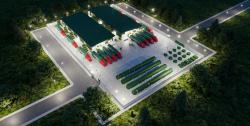
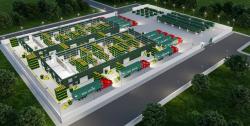
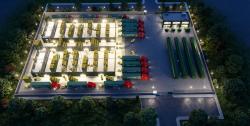
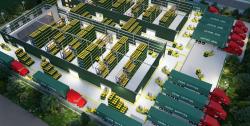
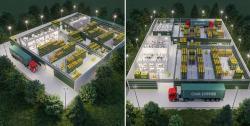
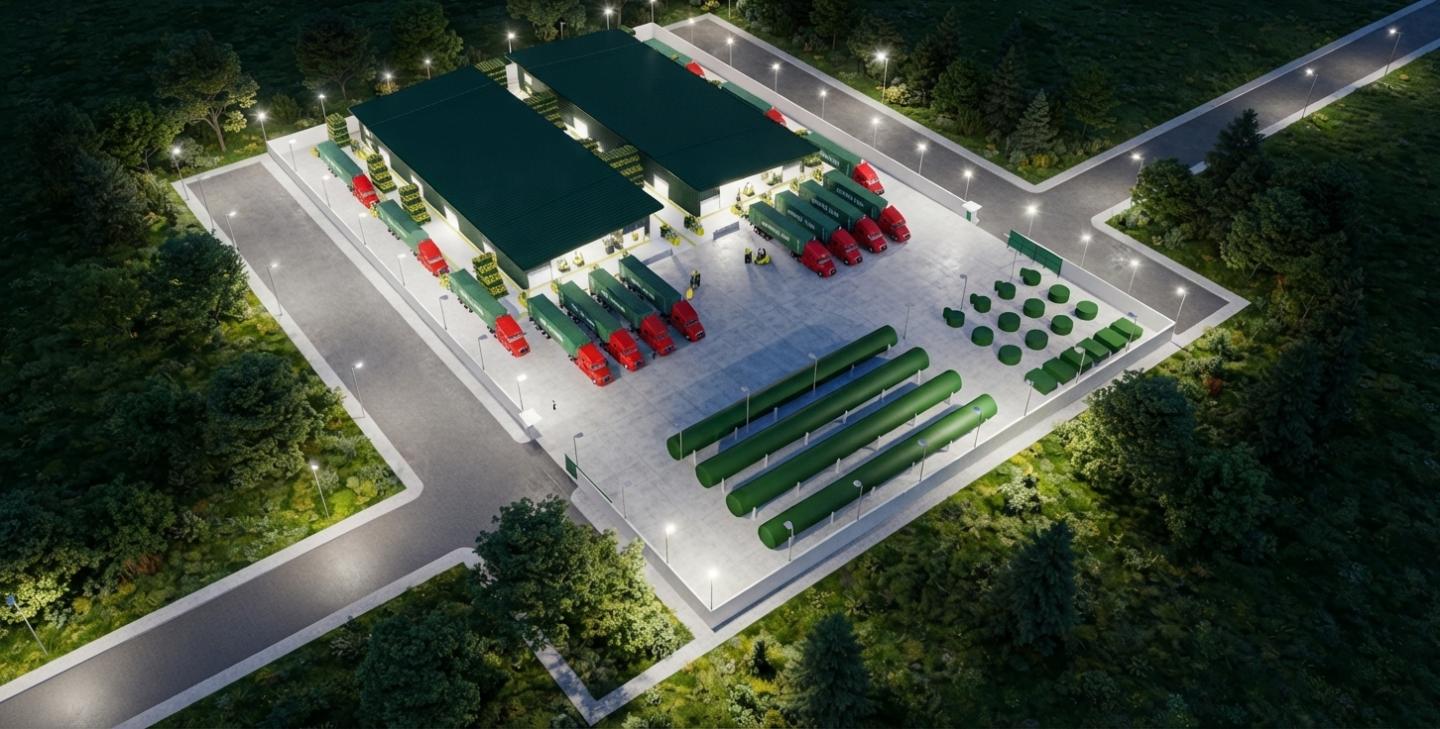
The master-planned land footprint spans a standalone corporate property parcel of 10,000 SQM (1.0 Hectare). The facility layout applies a space-optimized architecture designed by Architect Hermenegildo C. Mercado, UAP, dividing operations into three dedicated zones to enforce biochemical containment, bio-safety sets, and logistics fluid pathways.
B2. Core Industrial Production, Fermentation, Packaging & Support Facilities
· A. Biodegradable Waste Recycling Zone (Approx. 4,000 – 5,000 SQM): Consists of fully enclosed stainless-steel anaerobic digestion tanks, high-throughput pre-mixing and mechanical grinding bays, nutrient-recovery platforms, process water loops, and underlying gas-collection manifolds.
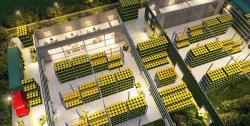
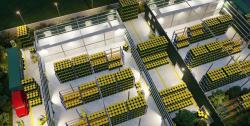
· B. BioNutra Production and Packing Complex (Approx. 3,000 – 4,000 SQM): Integrates automated aseptic bottling assemblies, retail capping arrays, specialized containerizing layouts, industrial multi-tier pallet racking, and isolated Intermediate Bulk Container (IBC) and drum staging warehouses.
· C. Administration and Support District (Approx. 1,000 – 2,000 SQM): Features the facility's centralized AI command station, real-time telemetry centers, round-the-clock drone surveillance hubs, safety testing laboratories, and engineering maintenance complexes.
B3. Design Language, Technical Systems & Connectivity Costs
The project adheres to a clean, cohesive architectural design language. It integrates all structural skins with clean environmental utility surfaces, heavy industrial concrete base pads, and automated telemetry connections.
The advanced automation strategy incorporates real-time biochemical monitoring arrays to track digester pressures, enzymatic activity rates, container inventory logs, and fleet tracking matrices. This approach reduces manual material handling and provides the AI command core with continuous operating data.
E. INVESTMENT, OWNERSHIP & LAND STRUCTURE
E1. FDI Framework, SPV Corporate Architecture, Joint-Venture Options & Ownership Framework
To accommodate corporate capital structures, Rapid Technologies Development Inc. presents two entry pathways for the facility's development phase:
Pathway Option A (Joint-Venture Development SPV)
The investor funds the acquisition of the 1.0-Hectare land footprint at the fair market baseline rate of ₱2,500.00 / SQM (totaling ₱25,000,000.00 or approximately US$ 403,225.81), structuring a 80/20 corporate equity split.
· The Investor holds 80% equity control, assuming absolute management of operational revenue, engineering services (DAEDS), and facility infrastructure CAPEX.
· Rapid Technologies Development Inc. retains a 10% non-dilutable free share as the Industrial Partner, taking direct responsibility for local licensing coordination, bio-industrial zoning conversions, and regulatory compliance layers with CEZA and national bureaus.
[INVESTOR / CAPITAL PARTNER (90% Equity)] ═══► Funds Project Development, Building CAPEX & Operations
└──► [SPV DEVELOPMENT ENTITY] ◄─── [INDUSTRIAL PARTNER (10% Non-Dilutable Free Share)] (Contributes Zoned Lands, Local Licensing, CEZA Accreditations)
Pathway Option B (Independent Land Bank Purchase)
The investor purchases the 1.0-Hectare site directly as a standalone, unencumbered corporate property bank under 100% solo ownership. This option provides total autonomy to develop, lease, or land-bank at their own pace, entirely free from joint-venture carries or partner carry-backs.
E2. Land Acquisition, Valuation, Payment Structure, Title Subdivision & Closing Gates
The 10,000 SQM site layout is fully integrated within the US$ 10.0 Billion CAPEX ceiling and is not an additional line item outside the project budget.
Project Execution Milestone Gates
Gate 1: Board Approval ➔ Gate 2: Land Due Diligence ➔ Gate 3: SPV Structuring ➔ Gate 4: Definitive MOA ➔ Gate 5: Site Control ➔ Gate 6: DAEDS Engineering ➔ Gate 7: CEZA/FDA Permitting ➔ Gate 8: Financial Close ➔ Gate 9: Construction ➔ Gate 10: Commissioning ➔ Gate 11: Commercial Operations
E3. Land Payment Schedule, Escrow Conditions, TCT Delivery & Investor Protection Protocol
The transaction operates under a strict documentation safety sequence to ensure financial capital protection. Rapid Technologies Development Inc. will execute and deliver the finalized, legally binding Memorandum of Agreement (MOA) before any financial movement occurs. Upon signing the pre-issued MOA, the transaction triggers via a clean clearing structure:
1. Delivery of a one-time 30% lump-sum Downpayment (₱7,500,000.00).
2. Simultaneous delivery of Twelve (12) structured Post-Dated Checks (PDCs) dividing the remaining 70