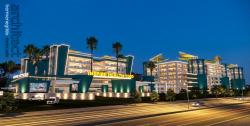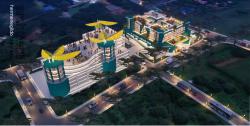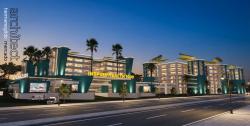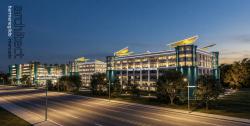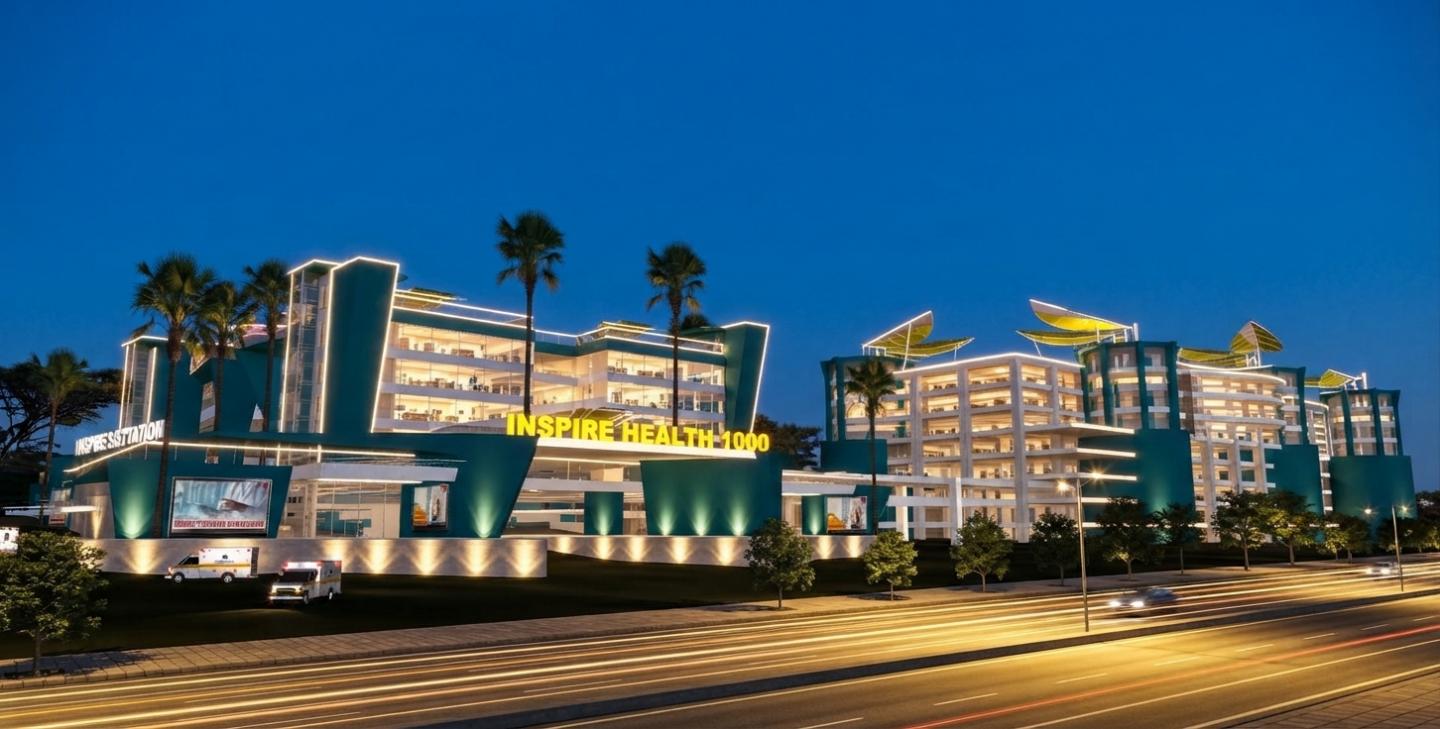
PROPOSED CAGAYAN SMART HOSPITAL
A 300-Bed AI-Driven Smart Tertiary Teaching Hospital
Part of THE PROPOSED MEGA INFRASTRUCTURE DEVELOPMENT IN STA. ANA, CAGAYAN
An AI-Driven Industrial, Logistics, Energy, Health & Education Mega Hub
_________________________________________________________________________________
Executive Summary & Investment Core
The Proposed Cagayan Smart Hospital is envisioned as a 300-bed AI-driven smart tertiary teaching hospital forming an integral component of the Proposed Mega Infrastructure Development in Sta. Ana, Cagayan.The Hospital is also planned to be physically connected by an enclosed, climate-controlled elevated bridgeway to the Proposed BRICS International University, creating an integrated Health, Medical Education, Research and Innovation District.
The Hospital will serve as the principal healthcare and medical-education anchor of an emerging integrated economic corridor encompassing the Proposed Cagayan International Airport, Cagayan Automated Deep Seaport, Cagayan National Strategic Reserve & Industrial Energy Park (CNSERIEP), 7.2 GW Cagayan Floating Solar PV Power Plant, BioNutra Biodegradable Waste Recycling & Liquid Food Supplement Production Facility, CEZA and Port Irene, together with the proposed BRICS International University.
The Hospital will combine advanced tertiary healthcare, artificial intelligence, robotics, digital diagnostics, telemedicine, biomedical research, precision medicine and smart-building technologies.
The proposed US$270 million CAPEX represents the comprehensive development investment for the hospital, while the reference operating expenditure is approximately US$119.81 million annually, based on the operating-cost structure of the established Smart Hospital feasibility model.
At ₱62.00 per US dollar, the proposed CAPEX is approximately ₱16.74 billion, while annual OPEX is approximately ₱7.43 billion.
Development Parameters & Spatial Allocation
The current conceptual development envelope comprises an approximately 2.0-hectare (20,000 sq.m.) hospital site supporting a 300-bed smart tertiary teaching hospital. The planning basis identifies a fully integrated clinical, educational, research, digital and smart-building platform.
The present brief does not establish a final internal departmental area schedule or detailed spatial allocation by clinical department. These parameters are to be fixed through hospital functional programming, detailed architectural design, clinical planning, engineering coordination and independent quantity surveying.
Critical Development Clarity
This project should presently be identified as an: ADVANCED CONCEPTUAL PROJECT / INVESTOR-PRESENTATION PROJECT
and not as a shovel-ready power project.
At this stage, the project concept consists principally of:
· advanced conceptual planning;
· preliminary project configuration;
· conceptual infrastructure integration;
· preliminary financial assumptions;
· conceptual architectural/engineering direction; and
· proposed integration with the larger Cagayan Mega Infrastructure Development.
The final project cannot be considered construction-ready until completion and approval of the required:
· marine surveys;
· bathymetric surveys;
· geotechnical investigations;
· environmental studies;
· hydrodynamic studies;
· typhoon and extreme-weather studies;
· transmission studies;
· detailed engineering;
· architectural and engineering drawings;
· EPC documentation;
· financial close;
· permits; and
· government approvals.
B1. Proposed Hospital Capacity and Services
Proposed Hospital Capacity and Services
The Hospital will provide approximately 300 beds distributed among general, specialty, critical-care and diagnostic functions.
Major proposed departments include:
· 24/7 Emergency and Trauma Center;
· Intensive Care Unit;
· High-Dependency Unit;
· Operating Theaters;
· Hybrid Operating Rooms;
· Robotic-Assisted Surgery;
· Cardiovascular Institute;
· Cancer and Oncology Center;
· Women's and Maternity Services;
· Pediatric Services;
· Advanced Diagnostic Imaging;
· Digital Radiology;
· Clinical Laboratories;
· Digital Pathology;
· Pharmacy;
· Rehabilitation and Allied Health;
· Executive Health and Wellness;
· Telemedicine Center;
· Medical Simulation Center;
· Medical Education Facilities;
· Biomedical Research Facilities;
· Healthcare Innovation Laboratories.
These service lines are consistent with the established Smart Hospital model, which includes emergency care, critical care, robotic surgery, cardiovascular and oncology services, advanced imaging, laboratories, telemedicine, education and research.
B2. Integration with the Proposed BRICS International University
Integration with the Proposed BRICS International University
A major feature of the project is its planned integration with the Proposed BRICS International University.
The University is planned as an international smart university specializing in medicine, artificial intelligence, engineering, biotechnology, robotics, computer science, renewable energy, digital technologies, smart manufacturing, international business and research.
The proposed Cagayan Smart Hospital will function as the principal clinical training environment for the University's proposed medical programs.
The two institutions will be connected by a:
FULLY ENCLOSED, CLIMATE-CONTROLLED ELEVATED BRIDGEWAY
This creates a direct physical connection between:
UNIVERSITY → MEDICAL EDUCATION → HOSPITAL → CLINICAL TRAINING → RESEARCH → INNOVATION → INDUSTRY
The same integrated hospital-university concept has previously been structured around a fully enclosed elevated bridgeway in the Smart Hospital planning model.
B3. AI-Driven Smart Hospital Technology & Smart Building/Energy Systems
AI-Driven Smart Hospital Technology
The Cagayan Smart Hospital will be designed as a digitally integrated healthcare platform.
Artificial Intelligence
AI systems may support:
· Clinical decision support;
· Diagnostic assistance;
· Predictive analytics;
· Patient-risk assessment;
· Hospital resource optimization;
· Bed management;
· Predictive maintenance;
· Medical scheduling;
· Pharmaceutical inventory management;
· Emergency-response coordination.
Digital Hospital Platform
The Hospital will incorporate:
· Electronic Medical Records;
· Hospital Information System;
· Digital patient records;
· Computerized physician-order systems;
· Digital imaging;
· Telemedicine;
· IoMT patient monitoring;
· Smart pharmacy;
· Automated laboratory systems;
· Cybersecurity infrastructure;
· Hospital command center.
The reference Smart Hospital model specifically identifies AI-enabled clinical decision support, EMR/HIS, IoT monitoring, telemedicine, smart pharmacy, automated laboratories, cybersecurity, digital twins and an integrated command center.
Smart Building and Energy System
The Hospital will be designed as an energy-efficient and resilient smart building.
Potential systems include:
· Smart Building Management System;
· AI energy-management platform;
· Renewable-energy integration;
· Battery Energy Storage System;
· High-efficiency HVAC;
· Intelligent lighting;
· Smart water management;
· Solar photovoltaic systems;
· Emergency power systems;
· Automated building monitoring;
· Digital twin technology;
· Energy-performance monitoring.
The Hospital can potentially obtain a significant portion of its electricity from the wider renewable-energy ecosystem of the Sta. Ana development, including the proposed 7.2 GW Cagayan Floating Solar PV Power Plant, subject to final grid, transmission and power-supply arrangements.
1926
An AI-Driven Industrial, Logistics, Energy, Health & Education Mega Hub
Project Location: Barangay Casambalangan, Santa Ana, Cagayan, Philippines
Project Site Area: Approximately 2.0 Hectares / 20,000 sq.m.
Zoning Fair Market Value Basis: ₱2,500.00 / SQM
Total Land Acquisition Cost: ₱50,000,000.00 (Treated independently of building development package)
Hospital Capacity: 300 Beds
Proposed Development: Smart Tertiary Teaching Hospital
Architectural Designer: Architect Hermenegildo C. Mercado, UAP
Baseline Building CAPEX: US$270 Million
Reference Annual OPEX: US$119.81 Million per Year
Planning Exchange Rate: ₱62.00 = US$1.00
Indicative CAPEX in Philippine Pesos: ₱16.74 Billion
Indicative Annual OPEX: ₱7.43 Billion per Year
Project Architect: Architect Hermenegildo C. Mercado, UAP
E. INVESTMENT, OWNERSHIP & LAND STRUCTURE
E1. FDI/SPV, Joint-Venture Options & Ownership Framework
To capture international institutional capital strategies, the Proposed Cagayan Smart Hospital will be legally structured through a dedicated corporate project Special Purpose Vehicle (SPV), engineered in strict accordance with the foreign equity restrictions of the Republic of the Philippines and CEZA special economic provisions.To accommodate corporate capital parameters, Rapid Technologies Development Inc. presents two structured transactional entry pathways for the pre-development layout phase:
· Pathway Option A — Joint-Venture Development SPV
The strategic medical infrastructure investor purchases the 2.0-hectare designated hospital parcel at the locked strategic incentive rate of PHP 2,500 / sq.m. and enters into a capitalized project development SPV. The definitive commercial matrix follows an asymmetric 90/10 structure:
o Strategic Lead Investor (90% Equity Control): Incurs all downstream physical campus construction CAPEX, imports the advanced clinical diagnostic imaging, settles detailed architectural/engineering (DAEDS) fees, and mandates operational capitalization.
o Rapid Technologies Development Inc. (10% Non-Dilutable Free Share): Retains an equity footprint as the primary Industrial and Land-Sourcing Partner, managing local regulatory interfaces, local authority permits, and multi-modal logistical zoning connectivity.
· Pathway Option B — Independent Land Bank Purchase
The investing entity may opt to execute a direct, outright acquisition of the 20,000 sq.m. coastal corridor land asset under a 100% corporate ownership model, free of immediate joint-venture operational structures. The buyer maintains total autonomous discretion to lease, master-develop, clear, land-bank, or leverage the asset independently, subject only to environmental zoning compliance and statutory development horizons.
Indicative SPV Capitalization Framework
Investor Classification Group Target Equity Participation %
Lead Strategic Hospital Infrastructure Fund 40%
International Clinical Operator & Academic Affiliates 20%
Healthcare AI, MedTech & Digital Platform Pioneers 15%
Domestic Institutional Trusts & Sovereign Wealth Allotments 15%
Project Founding Group / Land Development Syndicate 10%
TOTAL SPV PARTICIPATION CEILING 100