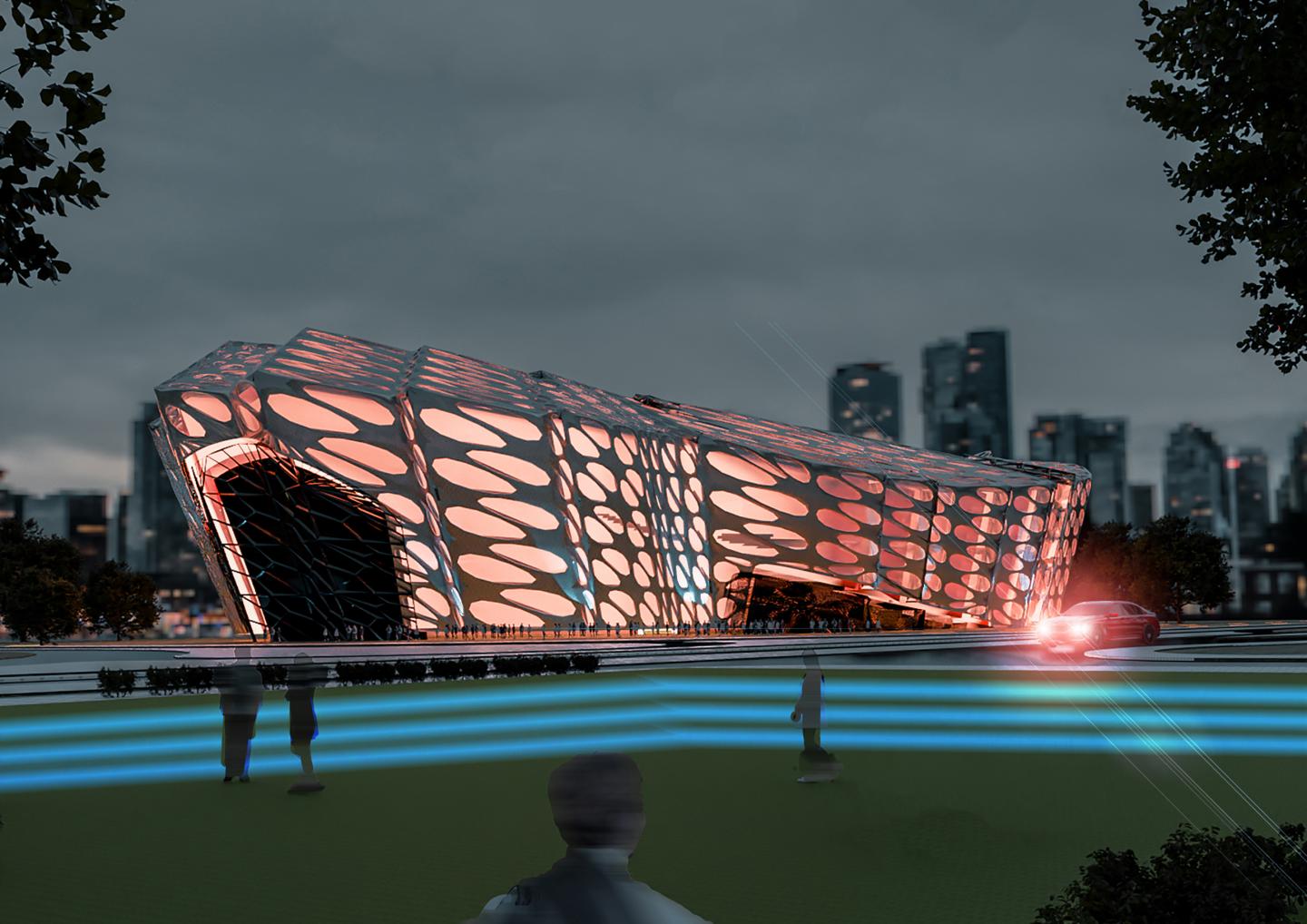
Barracuda Stadium: A Fluid Synthesis of Motion and Architecture
Barracuda Stadium: A Parametric Fusion of Aerodynamics and Cultural Identity
1. Introduction: A Vision for 2034
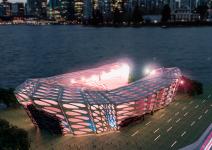
As Saudi Arabia prepares to host the 2034 World Cup, the architectural discourse must shift from mere aesthetics to high-performance solutions. The Barracuda Stadium, strategically located west of Jeddah on the Red Sea coast, is not just a sports venue; it is a bioclimatic machine. It seeks to redefine the "iconic" by merging the organic silhouette of the Red Sea’s most formidable predator with rigorous fluid dynamics. The goal is to provide a world-class experience that overcomes the harsh Saudi climate while ensuring long-term investment through a multifunctional, "comprehensive" design approach.
2. Concept Evolution: The Barracuda and the Red Sea
The project’s DNA is extracted from the Red Sea’s ecosystem. The barracuda fish, known for its sleek, aggressive, and efficient form, serves as the primary formal generator. This is not a superficial imitation but a structural abstraction. The stadium's mass reflects the aerodynamic prowess of the fish, tailored to the specific coastal environment of Jeddah. By situating the stadium near its biological inspiration, the architecture creates a dialogue between the "Silent Art" of the structure and the vibrant life of the sea.
3. Thermodynamic Engineering: The Venturi Effect & Bernoulli’s Principle
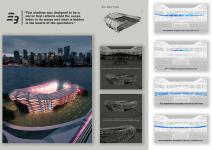
The core innovation of the Barracuda Stadium lies in its ability to combat extreme heat without relying solely on energy-intensive mechanical cooling. The design utilizes the Venturi Effect, a phenomenon derived from Bernoulli’s Equations, to create a self-sustaining microclimate.
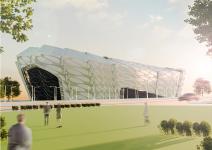
The stadium’s geometry is engineered to facilitate air entry. As the coastal breeze enters through the wider openings, it is funneled through narrower passages created by the stadium’s curvature. According to the Venturi effect, this reduction in cross-sectional area increases the air velocity while decreasing its pressure, creating a natural suction that pulls cool, humid air into the heart of the arena.
To enhance this, a green belt of strategically placed trees acts as a natural pre-cooling system. Winds are directed by these trees to collide with the vegetation, increasing air humidity through evapotranspiration before entering the stadium. A dynamic, kinetic window on the southern side of the roof plays a crucial role; it controls a humid air current, maintaining an optimal speed that cools the spectators and players without interfering with the trajectory of the ball or the sporting event's integrity.
4. The Architectural Cut: Connectivity and Sunset Aesthetics
Unlike traditional closed bowls, the Barracuda Stadium features a deliberate "cutout" section in the stands. This serves multiple philosophical and functional purposes:
* The Urban Lens: This opening offers spectators a breathtaking view of the Red Sea sunset before the match begins, connecting the internal drama of the game with the natural beauty of Jeddah. It also allows visitors to catch glimpses of the city’s rapid urban development, turning the stadium into a window to the future of Saudi Arabia.
* The Stage of Glory: The cutout area is designed to transform into a massive platform for concerts and global events. The surrounding stands are shaped to direct all sightlines toward this stage, making the stadium a multifunctional cultural hub that remains active long after the World Cup.
* Future Expansion: This spatial void provides the structural flexibility to increase the stadium’s capacity for future high-demand events, ensuring the building never becomes a "static mold."
5. The "Ultras" Geometry: Influencing the Atmosphere
Recognizing that the audience is a vital "building material" for the match atmosphere, the southern side of the stadium features increased height and density in the stands. This area is specifically designed to house the "Ultras." The verticality of this section amplifies the vocal impact of the fans, creating a psychological "wall of sound" that can influence the opposing team’s goalkeeper or forwards. This is architecture used as a tool for sports strategy.
6. Functional Masterplan: Ground Floor Facilities
The ground floor is a masterpiece of "detailed organization," ensuring total separation and efficiency for different user groups:
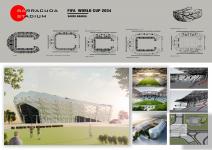
* Athletes’ Zone: Dedicated private entrances lead to a high-performance lobby. Facilities include warm-up and training halls, medical examination rooms, ten showers, four restrooms, and specialized waiting areas. Every detail, from the coach’s private restroom to the administrative offices, is placed to ensure the "perfection" of the pre-match ritual.
* The Media & Officials Hub: A referees’ lounge, a state-of-the-art press room, and a match control room are strategically positioned with direct access to the pitch via a dedicated tunnel.
* VIP Experience: The VIP section features a grand lobby, information desks, cloakrooms, and a spacious lounge. Two dedicated staircases provide exclusive access to the main VIP platform, ensuring security and prestige.
7. Commercial Hub: The Stadium as an Investment
To avoid the "White Elephant" syndrome, the Barracuda Stadium functions as a year-round commercial center. Beneath the stands, a vast network of retail shops, restaurants, and cafeterias serves the public. The first and second floors house investable spaces that can be adapted into wedding halls or corporate event venues, ensuring the stadium remains a vibrant economic engine for the Jeddah community.
8. Technical Execution and Materiality
The structural integrity of the project is based on a hybrid system that reflects the architect's quest for "Iconic" durability:
* The Framework: A reinforced concrete frame system supports the massive weight of the stands, ensuring stability and safety.
* The Roof System: A lightweight yet high-strength steel structural system forms the roof. The vertical steel columns, with spans reaching up to 720 cm, connect to a peripheral steel beam that secures the entire envelope.
* The Shell (Cladding): The external skin is made of ACP (Aluminum Composite Sandwich Panels). This material was chosen for its exceptional formability, allowing the complex curves of the Barracuda's "scales" to be realized. ACP is sustainable, weather-resistant, and offers a long lifespan.
* The Light Fill: White opaque glass is integrated into the openings, filtering the harsh Saudi sun into a soft, ethereal glow that illuminates the interior without the heat gain.
9. Conclusion: A Comprehensive Intellectual Statement
The Barracuda Stadium is more than concrete and steel; it is a "human and philosophical experience." It represents the subtle thread that connects a biological form to Bernoulli’s equations, and a musical concert to a football match. By integrating the Venturi effect, cultural connectivity, and commercial sustainability, the project stands as a beacon of modern Saudi architecture. It is a work that seeks "glory" through its precision, its organization, and its refusal to be put into a "rigid mold." It is the Barracuda—sharp, fluid, and iconic.
2025
2025
Technical Specifications: Barracuda Stadium
1. Structural Systems
Substructure & Stands: Reinforced concrete frame system. The raking beams of the stands are designed to support dynamic crowd loads with high-performance concrete (C40/50).
Roof Structure: A long-span steel spatial truss system.
Support System: Vertical steel columns with spans up to 720 cm, interconnected via a peripheral steel beam and secondary tie beams to ensure lateral stability and seismic resistance.
2. Materiality & Cladding
External Envelope: ACP (Aluminum Composite Sandwich Panels). Selected for its exceptional flexibility to achieve the aerodynamic "Barracuda" curves, lightweight properties, and high resistance to the corrosive saline environment of the Red Sea.
Glazing: White opaque tempered glass inserted in strategic openings to filter natural light and minimize solar heat gain (low-E coating).
Pitch: High-tech hybrid grass system with integrated sub-soil cooling and drainage.
3. Bioclimatic Engineering
Cooling Mechanism: Passive cooling through the Venturi Effect.
Airflow Control: A southern kinetic roof window designed for dynamic adjustment based on wind speed and direction (Bernoulli-based automation).
Humidity Control: Peripheral green belt integration for natural evapotranspiration.
4. Sustainability & Efficiency
Material Optimization: Use of parametr modeling (BIM) reduced structural steel weight by approximately 15-20% compared to conventional designs.
Water Management: On-site greywater treatment system for irrigating the surrounding green belt and the pitch.
5. Safety & Logistics
Evacuation: Designed for a full-stadium evacuation in under 8 minutes through the radial circulation system.
Accessibility: 100
Lead Designer: Bayan Maslem (Fernando)
Academic Supervisor: Prof. Seba Khadour
Academic Institution: Arab Private University for Science and Technology (AUST)
Bayan (Fernando) visualization Maslem visualization
Favorited 1 times