Casa Cabo Blanco
CRN Architecture
Hillside Retreat | Cóbano, Puntarenas, Costa Rica
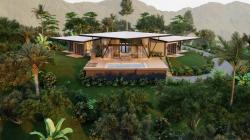
Casa Cabo Blanco is a contemporary hillside residence located in Cóbano, Puntarenas, within the Nicoya Peninsula of Costa Rica. Positioned atop a forested slope, the project is conceived as a calm retreat that engages with its natural context while offering expansive views toward Cabo Blanco, Las Delicias, and the mountainous landscape of Cabuya. The house is designed as a place of pause and refuge, where architecture, landscape, and daily life coexist in balance.
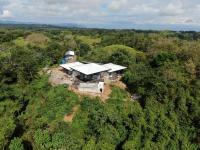
The project responds directly to the site’s topography and climate. Rather than imposing a dominant object on the hillside, the architecture adopts a horizontal composition that follows the natural contours of the terrain. This approach reduces visual impact and allows the building to settle naturally within the forest canopy. Orientation and sectional design were carefully studied to optimize views, daylight, and prevailing breezes, ensuring comfort while reducing reliance on mechanical systems.
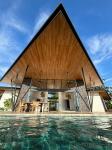
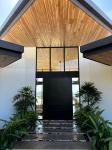
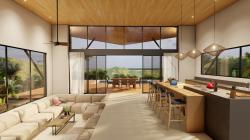
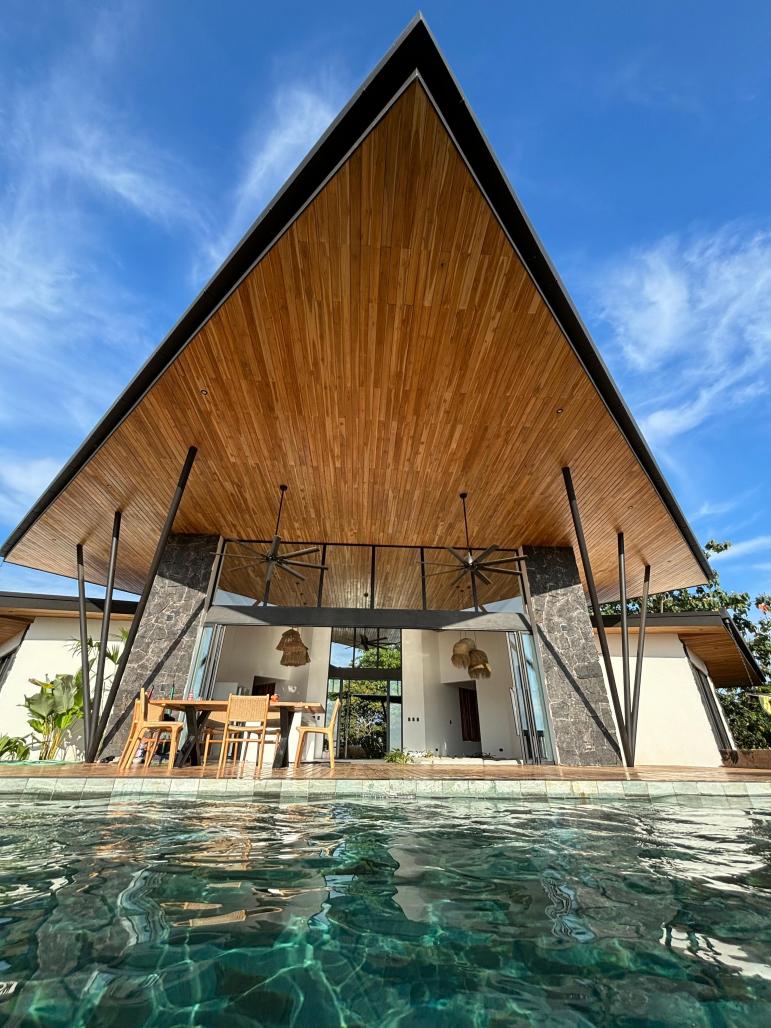
Materiality plays a central role in reinforcing the relationship between the house and its environment. A restrained palette of exposed concrete, steel, and teakwood defines the architectural language. Concrete and steel provide structural clarity, durability, and resistance to the tropical climate, while teakwood cladding and ceilings introduce warmth, texture, and a tactile connection to the surrounding vegetation. Over time, these materials are intended to age gracefully, reinforcing a sense of permanence and authenticity.
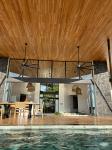
The interior organization is centered around a generous social core that integrates the living room, dining area, and kitchen into a single, fluid space. This central area functions as the heart of the house, encouraging social interaction and visual continuity while maintaining a strong connection to the landscape. High wooden ceilings enhance spatial generosity and thermal performance, while large glazed openings allow natural light to penetrate deep into the interior and frame long-distance views of the surrounding hills and coastline.
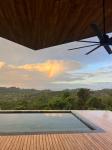
Extending from the main social space, a covered terrace acts as an essential intermediary between inside and outside. Conceived as an extension of daily living rather than a secondary outdoor area, the terrace accommodates gathering, dining, and moments of contemplation throughout the day. Its orientation transforms it into a privileged lookout point, offering changing views of light, vegetation, and sunsets, reinforcing the experience of living within the landscape rather than simply observing it.
The private areas of the house are organized to ensure comfort, privacy, and tranquility. Four bedrooms are strategically positioned to take advantage of views while remaining visually protected from one another. Each bedroom incorporates natural materials and carefully controlled openings, creating intimate spaces that maintain a constant relationship with the exterior. Bathrooms follow a minimalist and functional approach, combining clean lines, durable finishes, and efficient layouts suitable for long-term use in a tropical environment.
Landscape design is treated as an integral component of the architectural concept. Existing vegetation is preserved wherever possible, and native plant species are introduced to stabilize the hillside and enhance biodiversity. This approach minimizes maintenance requirements while reinforcing the ecological balance of the site. The architecture is experienced as emerging from the landscape, with built and natural elements forming a continuous spatial system.
Casa Cabo Blanco reflects CRN Architecture’s commitment to responsible tropical design, where spatial quality, material honesty, and environmental awareness guide architectural decisions. The project embodies a contemporary interpretation of the Costa Rican lifestyle, offering a refined yet relaxed family home that prioritizes longevity, comfort, and a deep connection to place. It stands as a quiet sanctuary that embraces the essence of the Nicoya Peninsula and the spirit of Costa Rican “Pura Vida.”
2024
2025
Technical Data – Materials and Construction
Floor Finishes:
Hydraulic cement tiles supplied by Mosaicos San Antonio, selected for their durability, thermal performance, and artisanal character. The tiles contribute to interior cooling while reinforcing local craftsmanship and material authenticity.
Woodwork and Cladding:
Locally sourced teakwood, custom-crafted by regional workshops. Used in exterior cladding, ceilings, and selected interior elements, the teak provides natural resistance to tropical conditions while adding warmth and tactile richness to the architectural spaces.
Swimming Pool Finish:
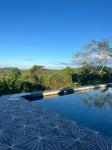
Sukabumi natural stone tiles, chosen for their non-slip surface, durability, and thermal comfort. The material enhances the pool’s integration with the surrounding landscape through its natural tones and reflective qualities.
Wall Construction System:
Structural and enclosure walls constructed using cinder block masonry. This system was selected for its thermal mass, durability, and capacity to improve interior comfort by reducing heat gain and maintaining cooler indoor temperatures in a tropical climate.
Project Team
Josué Artavia — Master Architect & Design Development
Lead architect responsible for the conceptual design and architectural development of the project.
David Canales — Execution Control & Technical Direction
Responsible for construction oversight, execution control, and technical coordination during the building process.
Taína Ardón — Interior Design & Site Inspection
Led the interior design development, material coordination, and periodic site inspections to ensure design quality and coherence.
Mauricio Segura — Project Director & Site Inspections
Oversaw overall project coordination, strategic decision-making, and on-site supervision throughout design and construction.
Gustavo Gómez — Structural Design
Responsible for structural analysis, engineering design, and coordination to ensure performance and durability in a tropical environment.
Minor Vindas — Electromechanical Follow-Up & Inspections
In charge of electromechanical systems coordination, technical follow-up, and site inspections during construction.
CRN TEAM CRN TEAM