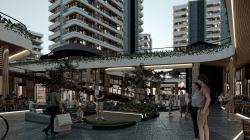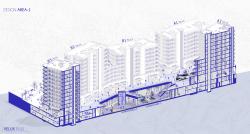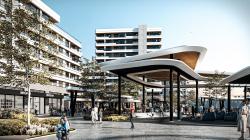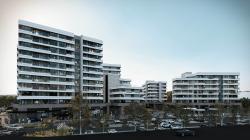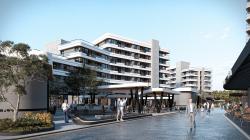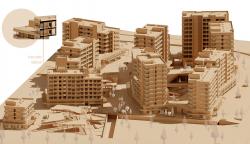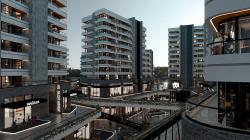
Velux Plus emerges as a proposal that seeks to address to the growing complexity of contemporary urban life by positioning itself as an architectural continuation of the urban scape rather than an isolated complex. The project operates as an architectural intervention along the İstanbul road which is one of the primary city corridors of Ankara.
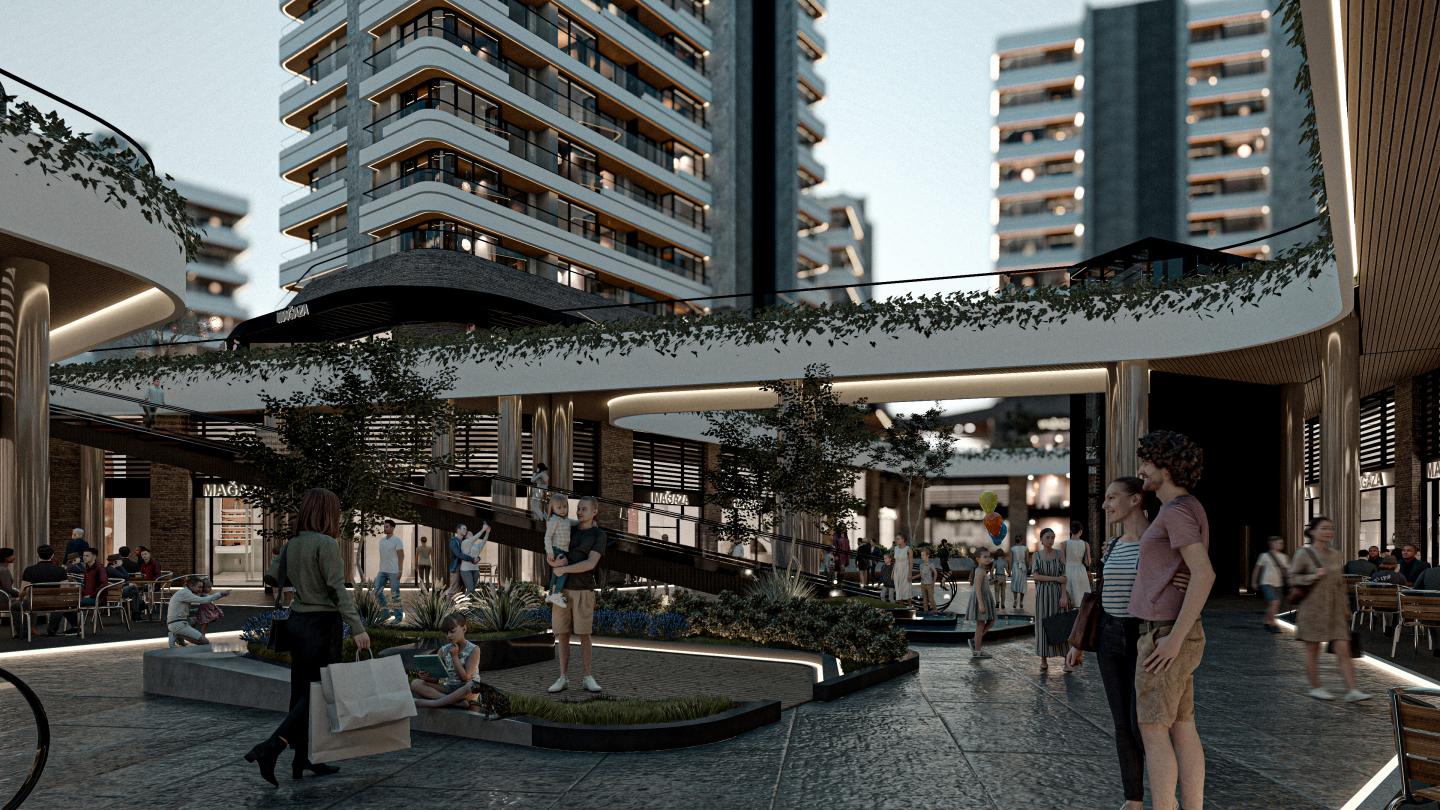
Velux Plus deals with the challenge of accomadating the diverse programs including residential, commercial, and recreational programs within a populated metropolitian area. Rather than dividing the programs into isolated zones, the project suggests a spatial framework that public activity and daily life overlap, intersect, and intensify in a manner that enhances permeability.
The balance of solids and voids of the project articulates the building in human-scaled fragments, while the system of terraces, setbacks, and base configuration as the primary elements shaping the overall form of the Velux Plus.
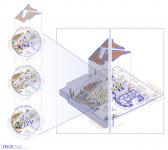
The residential units which are located in blocks are designed based on a modular system that can adapt to various uses. Each module consists of a core containing a bathroom and kitchen to meet essential needs, a large primary space for daily living activities, and a smaller room intended for more private functions. While the modules offer a minimalist living approach, they also aim to prioritize functionality and privacy. A high level of privacy is proposed for the restroom, while dual access is provided through the shared living area and the private room. In addition, the private room includes an en-suite bathroom defined as a separate zone. A flexible design approach has been adopted in order for the project to address a diverse range of users. Modules positioned side by side to offer the opportunity for spatial integration, allowing them to be merged when required to create larger living units.
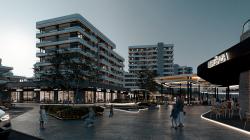
Along the perimeter, the blocks form a defined edge that encloses a central recreational space. Inside this boundary, interior landscape functions like a sunken plaza evolving terrain shaped by seasonal variation, collective occupation, and the patterns of everyday use. In contrast, the linear arrangement of blocks in the second zone transforms the in-between spaces into a sequence of activity corridors by reinterpreting the role of circulation in a mixed-use environment.
This spatial logic sets the foundation for the system of lightweight canopies that introduced in the linear zone. The canopies create spatial rhythm, turning the in-between corridors into active urban passages rather than leftover spaces. Their porous structure of the canopies allows light, movement, and atmosphere to permeate these spaces, enabling the corridors to host diverse temporary programs including street food events, open-air screenings, concerts, and seasonal markets that redefine the public life of the project. Through this flexible and event-driven framework, the canopies transform the linear zone into a cultural hub that evolves in response to its users and the broader city.
Velux Plus is conceived as an urban fragment that goes beyond a conventional mixed-use development by integrating diverse programs and public spaces into a cohesive system. Extending beyond its architectural presence, it acts as an active urban component contributing to the economic, social, and cultural transformation of Ankara’s urban environment.
2023
Site Area: 38,733 m²
Gross Floor Area: 139,746 m²
Orçun Ersan, İrem Ardıç, Feyza Nur Tekdemir, Simay Demirel Üstündağ, Oğulcan Korkmaz, Berna Balçık, Enes Topçu, Beyza Yağlı
Ace Architecture Ace Architecture