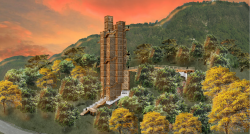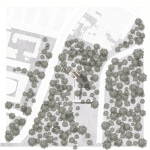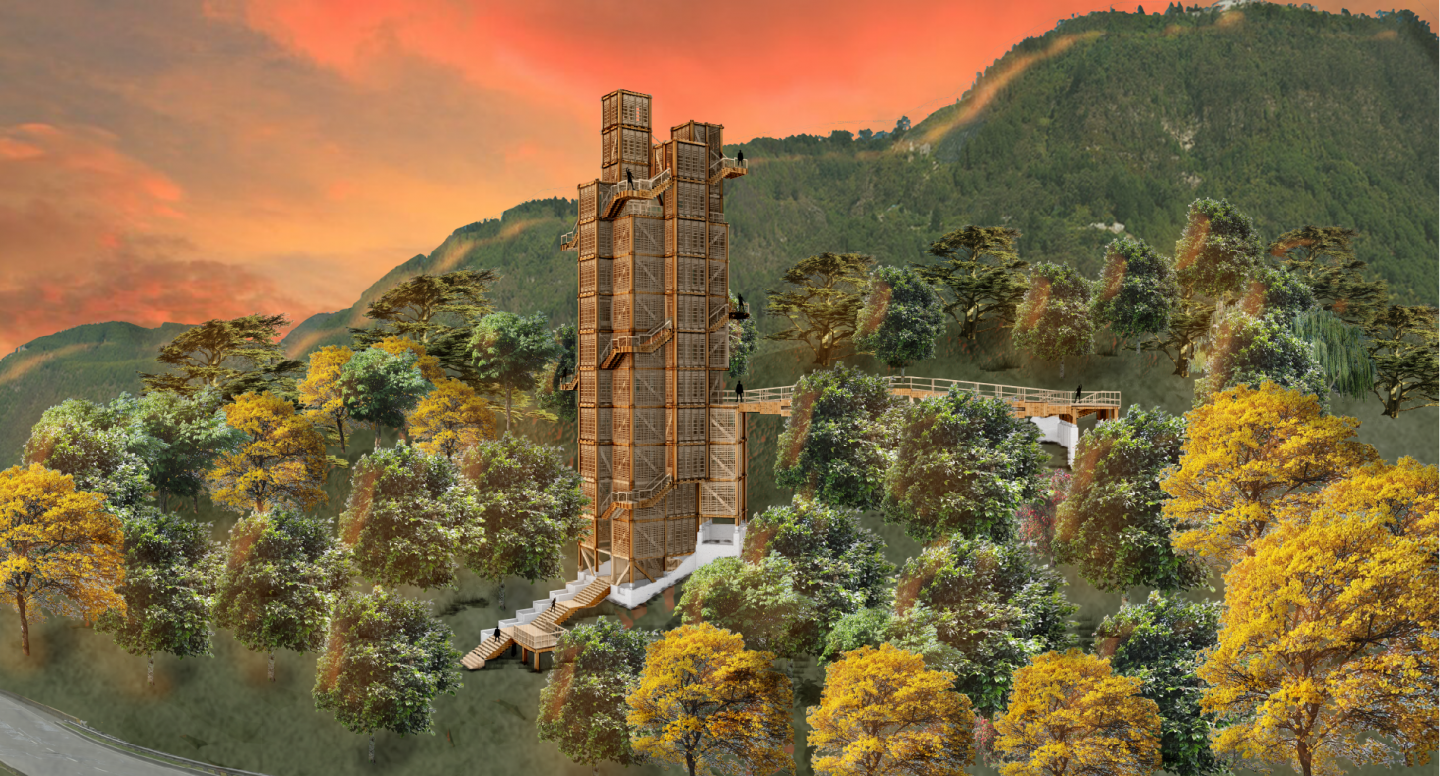
Quye Amarú, a name derived from the Muisca Indigenous language meaning Wooden Serpent, is a lookout tower and suspension bridge located in the Eastern Hills of Bogotá. The project is conceived as a landmark emerging from the lush forest and as a tribute to the city, establishing a symbolic connection between the natural landscape, ancestral memory, and the contemporary urban environment. Its form and circulation reinterpret the figure of the serpent as an element of connection, movement, and transformation within the territory.
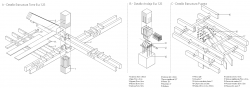
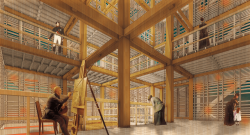
The proposal is developed through traditional woodworking techniques applied to both the main structure and the façade. The construction system is based on wooden components that fit together, seeking to minimize the use of metal elements and to highlight the value of carpentry as both a structural and expressive strategy. This material approach allows for visual and sensory integration with the surroundings, reinforcing the idea of an architecture that is respectfully embedded within a sensitive ecosystem.
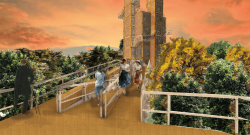
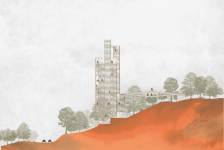
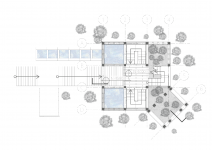
The architectural experience begins with a suspension bridge that weaves through the middle and upper tree canopy, placing visitors at an elevated level rarely experienced within the forest. The bridge connects the sixth level of the tower to the highest point of the site, which aligns with the north-south carriageway of Avenida Circunvalar, while the base of the tower relates to the south-north carriageway, consolidating the project as an articulating element between different elevations and infrastructures.
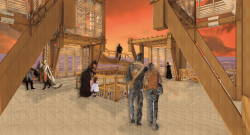
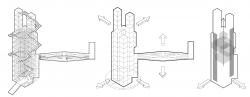
Spatially, the tower is conceived as an introverted observation refuge. Throughout its levels, selectively placed openings in the façade frame specific views of the natural landscape of the hills and the built landscape of Bogotá, encouraging a slow and contemplative experience. The ascent unfolds through a circuit of exterior staircases that gradually open toward the surroundings before leading into interior resting spaces, generating a continuous sequence between exterior and interior.
2025
The project was conceived as a tribute to the carpentry tradition. It was designed so that its entire wooden structure fits together, aiming to minimize the use of metal elements as much as possible. The lookout tower has a maximum of 14 floors. The bridge connects the 6th floor with the highest point of the site, which coincides with the north–south carriageway of Avenida Circunvalar. The lower part of the tower aligns with the south–north carriageway.
Designed by: Paulo Puentes & Juan Darío Silva
Tutors: Camilo Villate & Camilo Isaak
Darío Silva Paulo Puentes