
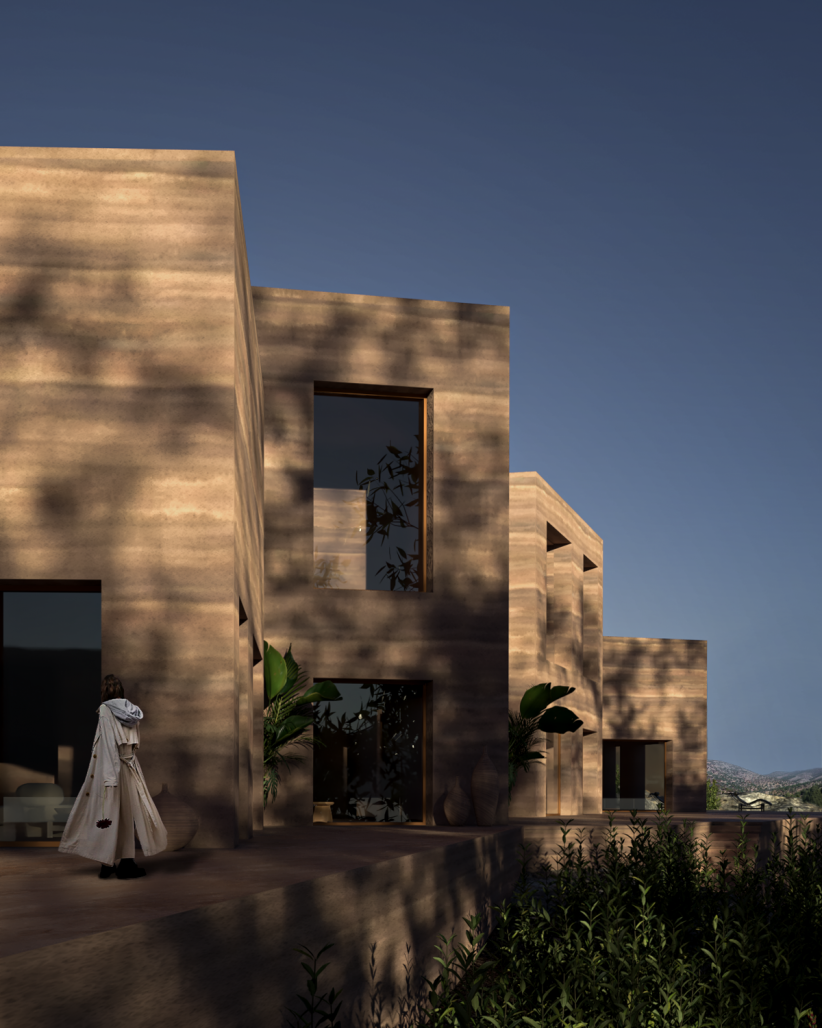
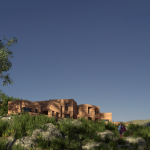
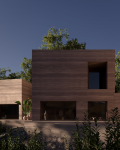
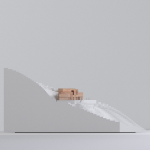
The design of the Visitors and Researchers Center in the Berkane Mountains is guided by a deliberate intention to establish a strong and respectful relationship between architecture, landscape, and local culture. Central to the project is the integration of the building within its natural setting, achieved through careful attention to scale, orientation, and volumetric composition. Rather than asserting a dominant architectural presence, the project seeks continuity with the surrounding mountainous terrain and distant horizons.
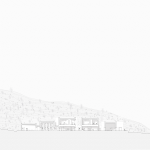
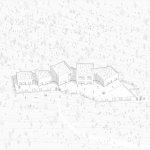
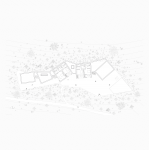
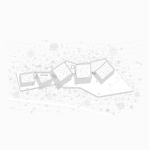
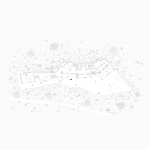
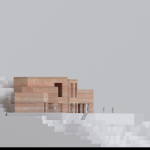
A key design intention is the reinterpretation of regional vernacular rural architecture. This is expressed through the fragmentation of the program into multiple volumes of varied heights and proportions, forming a cohesive ensemble that echoes traditional settlement patterns. The strategic rotation and placement of these volumes respond directly to the site’s topography, anchoring the building to the landscape while reinforcing visual and spatial connections to its context.
Sustainability constitutes a fundamental design driver. The project prioritizes the use of locally sourced materials and traditional construction techniques, notably rammed earth and wood, in order to reduce environmental impact and ensure long-term durability. These materials are selected not only for their ecological performance but also for their capacity to convey material authenticity and reinforce a sense of place.
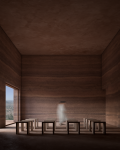
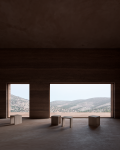
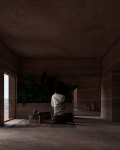
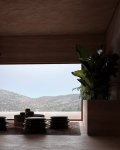
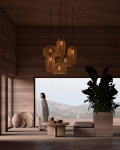
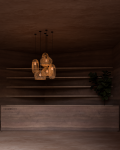
Another core intention is to create an immersive spatial experience that strengthens the relationship between users and the surrounding environment. Interior spaces are conceived to maximize natural light, openness, and framed views, thereby enhancing comfort while maintaining a constant visual dialogue with the landscape. This approach extends beyond the interior through the incorporation of terraces and outdoor spaces designed for contemplation and direct engagement with the natural setting.
Finally, the project aims to support educational and research-oriented activities by accommodating both visitors and researchers within a shared architectural framework. The spatial organization encourages learning, exchange, and reflection, positioning the center as a catalyst for cultural transmission and environmental awareness. Collectively, these intentions articulate an architecture that is situated, sustainable, and culturally responsive, emphasizing process, context, and experience over iconic form.
2024
The construction strategy of the Visitors and Researchers Center in the Berkane Mountains is founded on a hybrid structural system that combines traditional earthen construction with timber-based elements. This approach reflects both structural efficiency and a commitment to environmentally responsible building practices rooted in local knowledge.
The primary load-bearing system consists of rammed earth walls, which provide structural stability while offering significant thermal mass. The rammed earth is produced using locally sourced soil, compacted in successive layers within temporary formwork. This technique ensures durability and climatic performance while minimizing embodied energy and reinforcing material continuity with the surrounding landscape. To address moisture-related risks, the rammed earth walls are raised on reinforced concrete strip or raft foundations, incorporating a capillary break to prevent rising damp.
Timber is employed as a complementary structural material, primarily for horizontal elements such as beams, columns, and roof structures. Lightweight wooden systems allow for greater flexibility in spanning interior spaces and contribute to a clear structural hierarchy in which massive earthen walls support lighter superstructures. Traditional carpentry techniques are adapted to meet contemporary structural and safety standards, ensuring both resilience and constructability.
The envelope system is defined by the dual role of rammed earth walls as both structure and finish. Exterior walls remain largely untreated to preserve material authenticity, while interior partitions alternate between rammed earth and timber-framed systems according to functional and spatial requirements. Openings are framed in timber, integrating doors and double-glazed windows that balance thermal performance with visual permeability.
Roof assemblies are constructed using timber frameworks supporting insulated and waterproofed roof build-ups, designed to respond to the climatic conditions of the mountainous context. Floor systems vary according to programmatic needs, with ground floors composed of stabilized earth or concrete slabs providing thermal inertia, and upper levels relying on timber joist systems where applicable.
Overall, the technical configuration of the project demonstrates a deliberate synthesis of traditional construction techniques and contemporary performance requirements. By prioritizing rammed earth and wood as primary materials, the project establishes a structurally coherent, climatically responsive, and environmentally sustainable architectural system that reinforces its contextual and cultural grounding.
Designer: Nassereddine Chaib
Supervisor: Soumaya Samadi
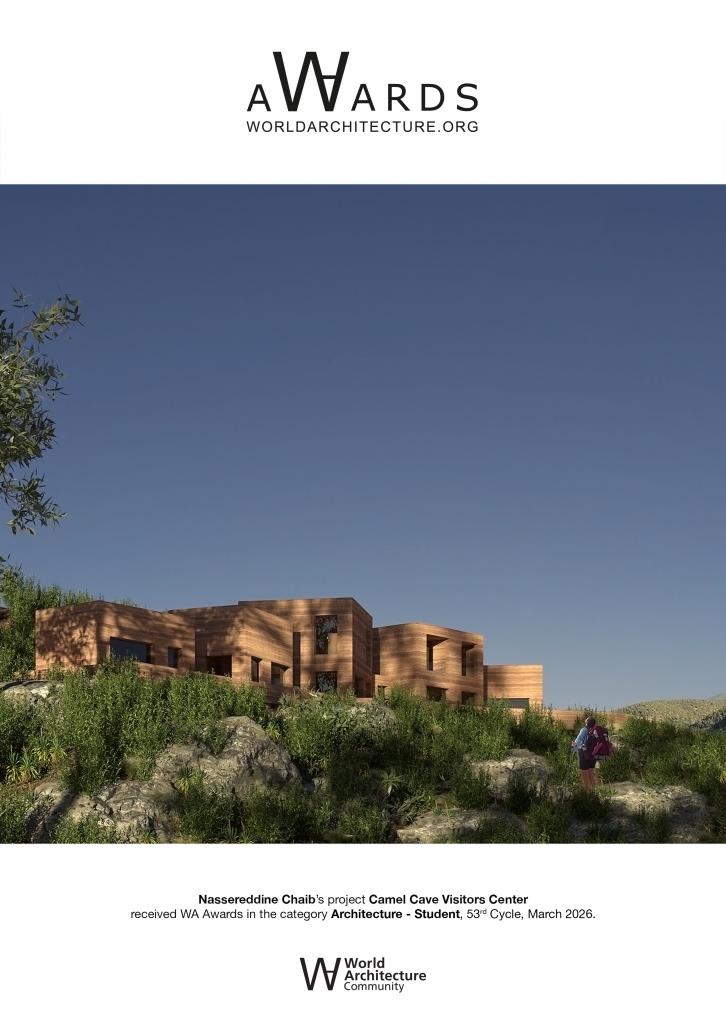
camel cave visitors center by nassereddine chaib in Morocco won the WA Award Cycle 53. Please find below the WA Award poster for this project.
Downloaded 0 times.
Nassereddine Chaib

Favorited 3 times