Silent Outbreak: The Architecture of Coexistence and the Urban Reef Manifesto
1. The Anthropocentric Delusion and the Urban Context
Humankind constructs with the delusion that it is the primary focus and ultimate priority everywhere on Earth. For centuries, architectural endeavors have been driven by an impulse to conquer, enclose, and isolate—carving out sterilized territories from the wild. Yet, in response to every intervention, nature strives to reclaim its essence through a slow, steady process of optimization. The "Silent Outbreak" project interprets this inevitable reclamation not as a threat, but as a manifesto for the future of dense metropolitan centers.
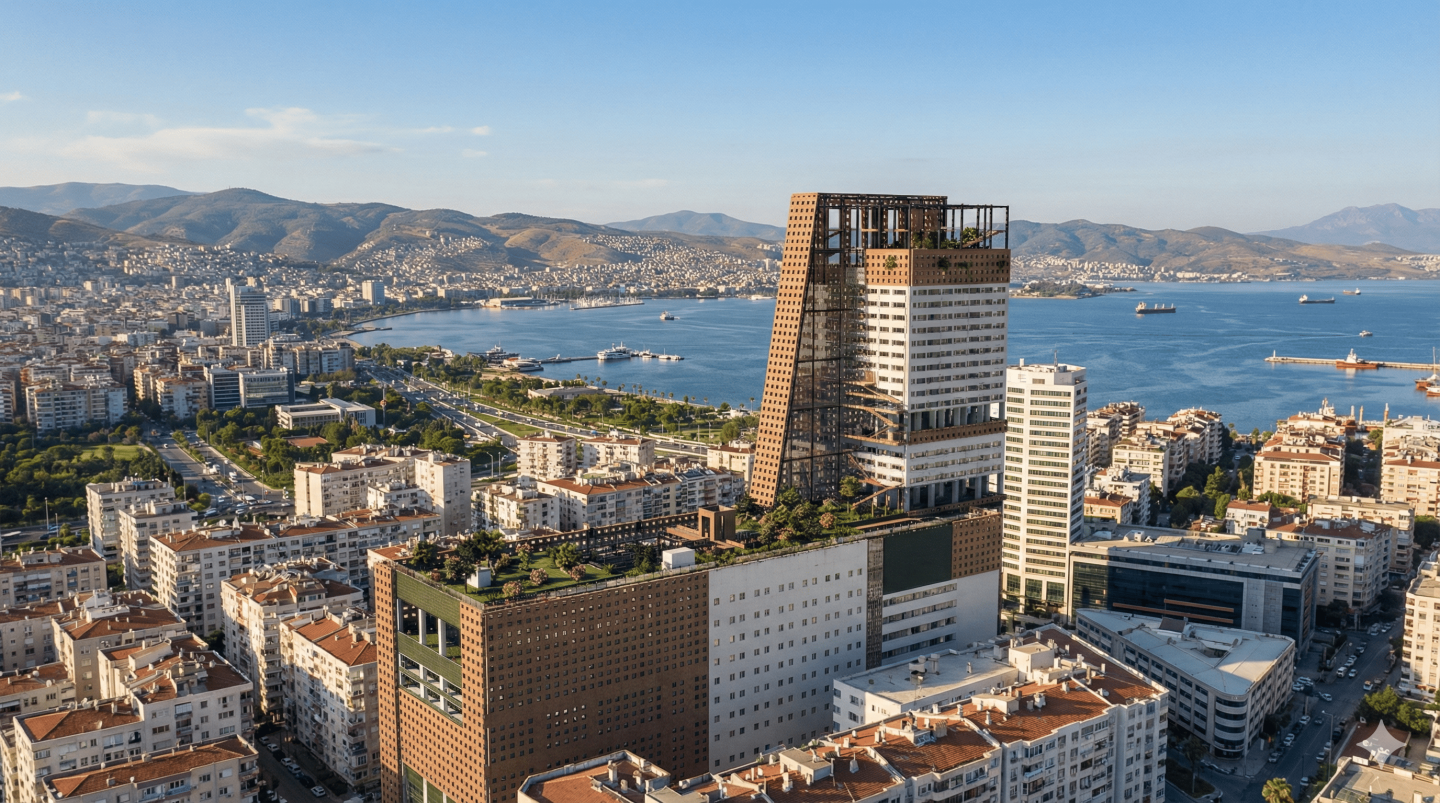
This theoretical framework finds its physical manifestation in the heart of Izmir. The project area is situated within the existing, historically significant, yet currently obsolete skyscraper of the Izmir Hilton. Located in a highly central urban node close to the coastline, the site is surrounded by key urban nodes and active public spaces, including Kültürpark, Sevgi Yolu (Path of Love), Cumhuriyet Square, Montrö Square, Dokuz Eylül Square, and the extending Gazi Boulevard. By re-evaluating a total structural and urban area of approximately 9.2 hectares, the project aims to shift the building’s typology from an introverted monolith to a porous urban organism.
2. Radical Subtraction and Structural Interventions
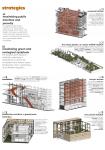
Originally constructed as a monolithic skyscraper hotel with the majority of its podium dedicated to parking, the structure undergoes a radical spatial subtraction while preserving its original silhouette height of 142 meters. Before the design, the structure held 8.5 hectares of strictly enclosed, private space. This is transformed by introducing 3.8 hectares of semi-open and open public voids.
A massive central atrium has been surgically carved out to democratize the space. This new void is supported by a robust steel dilatation system, utilizing HEM400 and HEA400 equivalent main columns and beams, interwoven with IPE300 equivalent secondary beams. The floor plans are dynamically reconfigured around this central canyon. Vertical circulation within the atrium is resolved through the directly integrating of escalators, providing direct and continuous public access from the street level to the upper tiers.
3. Parasitic Architecture and the Bio-Mechanical Envelope
The concept of the "Urban Reef" is physically realized through the introduction of parasitic architectural elements. At the ground level, a continuous spatial volume extending along the z-axis—measuring 8 meters in width and spanning the entire length of the mass—was previously squandered by existing elevator cores. This vertical volume is reclaimed and enveloped by a modular, voided facade crafted from recycled oak.
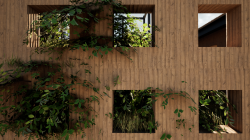
This timber shell acts as a parasitic, biological sponge designed to foster moss growth and accumulate organic matter, filtering the air and retaining moisture. Internal circulation within this organic skin is facilitated by integrated wooden ramps. To mediate between the conditioned interiors and this newly introduced "nature volume," an adaptable intermediate membrane composed of modular fritted glass is deployed. The resulting transitional buffer zone acts as an ecotone, essential for maintaining the climatic and functional sustainability of the adjacent spaces.
4. Institutional Symbiosis: Art, Science, and the Avant-Garde
Guided by the principles of adaptive reuse, the building accommodates two major, hybrid-functioning programs: a Faculty of Fine Arts and a newly conceptualized "Urban Wildlife Research Institute" (UWL). To accommodate the specific spatial needs of the Fine Arts faculty, certain floor heights have been increased within the tower section, with its circulation strategically isolated from the general public via dedicated elevators.
The UWL operates to evaluate the presence of non-human actors within the urban fabric, studying their coexistence with humans and the resulting cumulative benefits. The institute continuously acts as an active resource for the Faculty of Fine Arts through avant-garde intersections of biology and art—such as extracting natural pigments from the lichens growing on the oak facade, or translating the bio-electrical signals of fungal networks into avant-garde synthesizer music.
5. Operational Feasibility and the Future Typology
The operational structure of the area is designed within the framework of an ecological public-private partnership model. Advanced under a joint consortium between local municipalities, educational institutions, and environmental initiatives, the project involves continuous ecological monitoring, maintenance of the integrated nature systems, and operation of the public amenities. These processes are designed to evolve and adapt until the year 2075.
Ultimately, the integrated exhibitions, interactive zones, and workshops actively encourage visitors to socialize within this newly democratized public volume. The "Silent Outbreak" project is highly implementable and showcases a realistic model for the adaptive reuse of large-scale monolithic structures, contributing to the socio-ecological resilience and vertical urban planning of the region.
2025
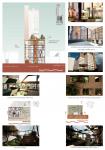
The project is situated within the Izmir Hilton building, an existing but currently obsolete skyscraper. The tower's original silhouette height of 142 meters has been preserved. Located in a highly central urban node close to the coastline, the site is surrounded by diverse functions and key public spaces, including Kültürpark, Sevgi Yolu (Path of Love), Cumhuriyet Square, Montrö Square, Dokuz Eylül Square, and the extending Gazi Boulevard.
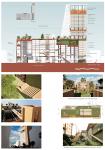
Originally constructed as a monolithic skyscraper hotel with the majority of its podium dedicated to parking, the structure undergoes a radical spatial subtraction. A massive central atrium has been carved out, structurally supported by a steel frame system utilizing HEM400/HEA400 equivalent main columns and beams, alongside IPE300 equivalent secondary beams. The floor plans are dynamically reconfigured around this new void. Vertical circulation within the atrium is resolved through the continuous network of escalators, providing direct and continuous public access.
At the ground level, a continuous spatial volume along the z-axis—measuring 8 meters in width and spanning the length of the mass—was previously underutilized due to the existing elevator cores. This vertical volume is now enveloped by a porous, moss-fostering modular facade crafted from recycled oak, acting as a parasitic shell. Internal circulation within this organic skin is facilitated by integrated wooden ramps.
The main architectural mass is separated from this newly introduced "nature volume" by an adaptable and transformable intermediate membrane composed of modular fritted glass. A transitional buffer zone is introduced between these layers, which is crucial for maintaining the climatic and functional sustainability of the adjacent spaces.
Guided by the principles of adaptive reuse, the building accommodates two major, hybrid-functioning programs: a Faculty of Fine Arts and an "Urban Wildlife Research Institute" (UWL). To accommodate the specific spatial needs of the Fine Arts faculty, certain floor heights have been increased. This program is primarily concentrated within the tower section, with its circulation strategically isolated from general public and institute staff via dedicated elevators.
Concurrently, the UWL operates to evaluate the presence of non-human actors within the urban fabric and the building itself, studying their coexistence with humans and the resulting cumulative benefits. The institute continuously feeds the Faculty of Fine Arts through avant-garde intersections of biology and art—such as extracting natural pigments from lichens or generating synthesizer music through fungal bio-electrical signals. Ultimately, the integrated exhibitions, interactive zones, and workshops actively encourage visitors to socialize and engage within this newly democratized, highly permeable public volume.
Designer: Ege Özkan
Instructor/Supervisor: Prof.Dr. Didem Akyol
ege özkan