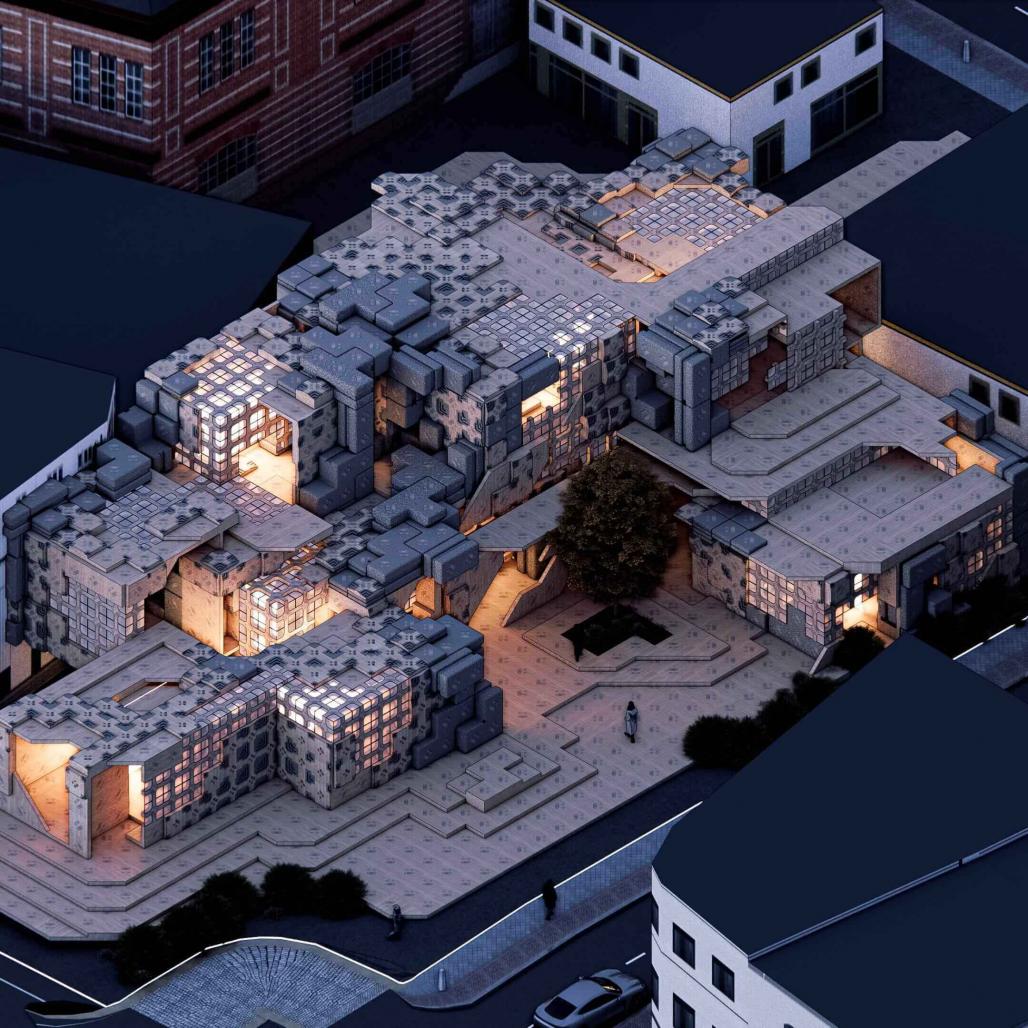
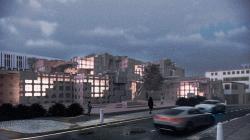
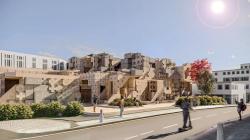
ANIMA (Adaptive Nexus for Intelligent Modular Architecture) is a cooperative housing platform that re-conceives architecture as a continuously evolving socio-technical system. Combining reconfigurable blocks with modular robots, ANIMA enables living spaces to adapt over time to changing resident needs, environmental conditions, and collective priorities. Rather than treating housing as a fixed product, the project frames architecture as an open-ended process shaped by negotiation, feedback, and collective agency.
Hybrid carbon-negative materials—mass timber and hempcrete—support a lightweight, durable construction logic within a circular economy, where components can be disassembled, reused, and recycled across multiple lifecycles. This material strategy reduces embodied carbon while enabling incremental growth, repair, and reconfiguration without demolition, aligning environmental performance with long-term adaptability.
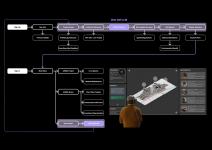
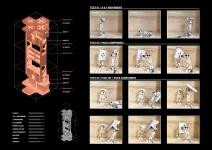
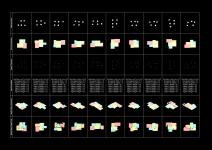
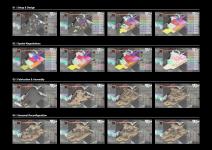
A multi-agent simulation and control system, trained through reinforcement learning, governs both construction and spatial transformation. Informed by spatial planning algorithms and operating across multiple temporal scales, ANIMA coordinates real-time adjustments with long-term structural and material strategies. Residents interact with the system through evolving spatial demands, which are translated into architectural responses mediated by robotic assembly and computational decision-making.
By integrating cooperative housing models, adaptive robotics, and intelligent material systems, ANIMA proposes an alternative to linear construction paradigms. The project demonstrates how architecture can function as an adaptive infrastructure—capable of learning, responding, and transforming over time—while supporting resilient communities and sustainable modes of living.
2024
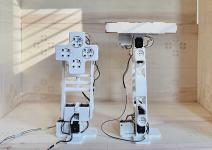
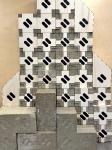
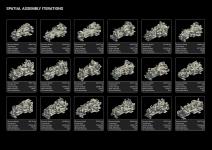
Construction System: Reconfigurable modular blocks assembled by modular robotic units
Robotics: Multi-robot construction system inspired by natural builders
Computation: Multi-agent simulation and control framework
AI Methods: Reinforcement learning for adaptive construction and spatial reconfiguration
Materials: Mass timber, hempcrete (carbon-negative, disassemblable)
Structural Logic: Lightweight modular frame with reusable infill panels
Lifecycle Strategy: Circular economy; components designed for disassembly and reuse
Adaptation Scales: Real-time spatial adjustment; long-term material and programmatic evolution
User Interaction: Resident-driven spatial needs integrated into planning algorithms
Konstantinos Smigadis, Selen Bektas, Nujud Alangari, Priscilla Maura
Konstantinos Smigadis
Favorited 1 times