Extensive budget cuts are directly affecting public schools ability to meet changing
education and facility needs. School district administrators have limited resources to
address growing student populations and aging buildings that are ill suited to modern
needs. We worked with the district to find impactful solutions that worked within their
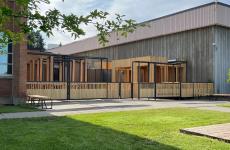
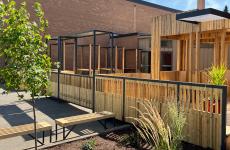
limited budget. This project resolves two acute needs at the middle school; providing an
all-season outdoor lunch area and reclaiming a neglected space. It was a collaborative
effort between [redacted] and a wide array of stakeholders within the school district. This
partnership demonstrates effective use of low and no cost design solutions that optimize
existing conditions and foreground waste material as viable building stock. By reconfiguring
and systematizing offcuts, scrap, and salvaged material, the project was made feasible
and achieved a scope much more impactful than the district initially thought possible with
their very limited budget.
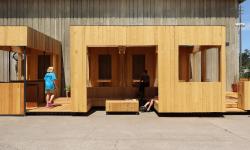
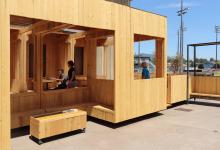
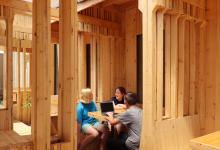
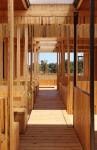
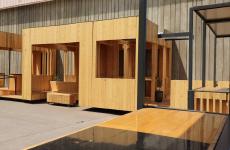
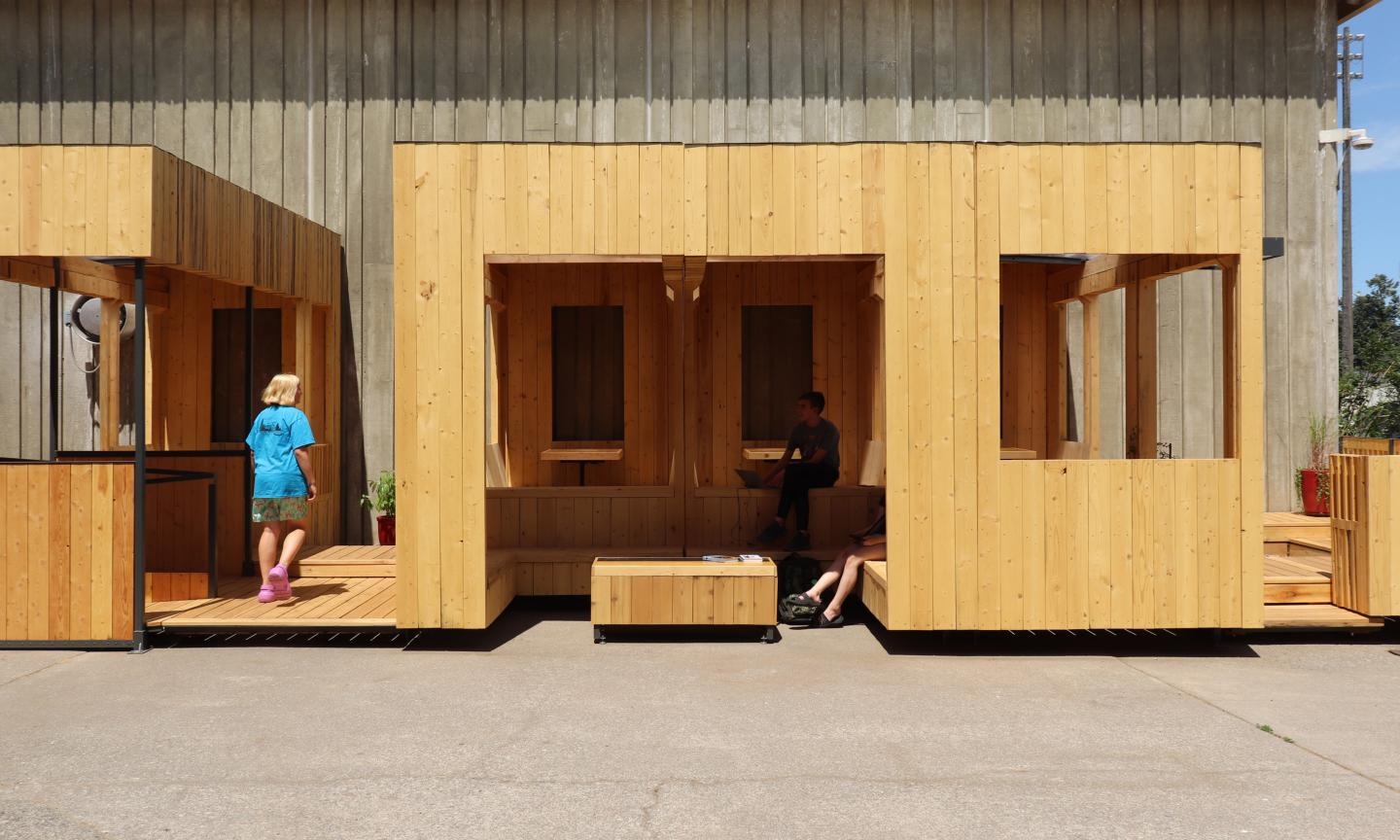
The primary structure of the covered lunch area is constructed from discarded lumber that
was salvaged and re-milled by the studio. The lumber was used to create a prototype post-
tensioned dowel-laminated mass timber modules that are easily disassembled, and don’t
require glues or resins. The adjacent but independent modules are easily adaptable and
expandable as the district’s facility needs evolve, and are kept to 86 sf to eliminate the
need for permitting in future configurations. Roofs are made of offcut material from prior
projects. All the steel used was processed from offcut lengths under 9’, with most ranging
from 2-3’ and finished with leftover material. Tabletops are cut from old gymnasium floor
panels, and interior walls are made from salvaged dorm room furniture at the university
that the studio disassembled and adapted for this project.
2025
2025
This project prioritizes the use of scrap and salvaged material to resolve acute needs at the
middle school amid extensive budget cuts. 540 salvaged boards were planed to a similar
thickness and evaluated by defects to determine use. We optimized parameters for size,
use and structure, creating multi-functional element types that are consistent across the
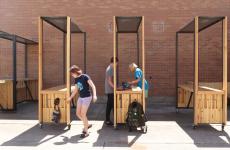
project to limit waste and homogenize assembly. We systematized offcut lengths of steel
and discarded basketball flooring to develop modular furniture providing moveable
classrooms tables, standing tables, benches and backpack storage more than doubling
the seating capacity at lunch, activating an unused space.
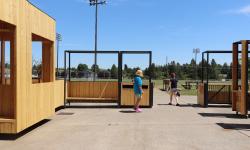
The independent 86 sf modules can be rearranged without permitting or reconfigured to
meet the changing needs of the school. We prototyped and integrated a post-tension
dowel-laminated construction strategy that eliminates adhesives ensuring simple
breakdown and allows for future material reuse.
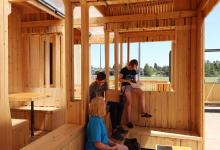
The covered seating area floats above the existing planter and cantilevers over the curb to
expand available square footage. Offcut polygal diverts rainwater from the existing storm
drain to a rain garden and brings daylighting into the backs of the modules, eliminating the
need for artificial lights.
Quinn Anderson, Aly Avery, Bernardo Bautista Jr, Emma Binsfield, Ben
Borkowski, Kacen Cook, Kira Craig, Jade Fredericks, Rhys Gallagher, Jayden Horton, Cole
Kelsey, Ryan Lorensen, Jonas Wentzel, Rivaldo Verano Porta, John Gross, Syringa Riley
Scott Lawrence