
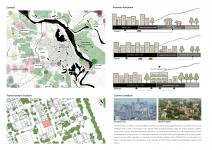
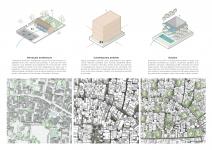
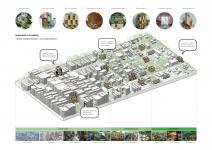
Vietnam’s rapid urbanization is pushing the city outward into peri-urban belts, where rice fields, ponds, gardens and village-based housing patterns are being replaced by fragmented housing, small industrial plots and transport infrastructure. This uncoordinated expansion erodes the ecological buffer that used to regulate microclimate, increases surface heat, reduces trees and water surfaces, and lowers living quality in the suburban fringe. In this situation, architecture is required to act not only as a building but as a new ecological infrastructure that can restore green layers, keep local cultural memory and be replicated in different regions of Vietnam.
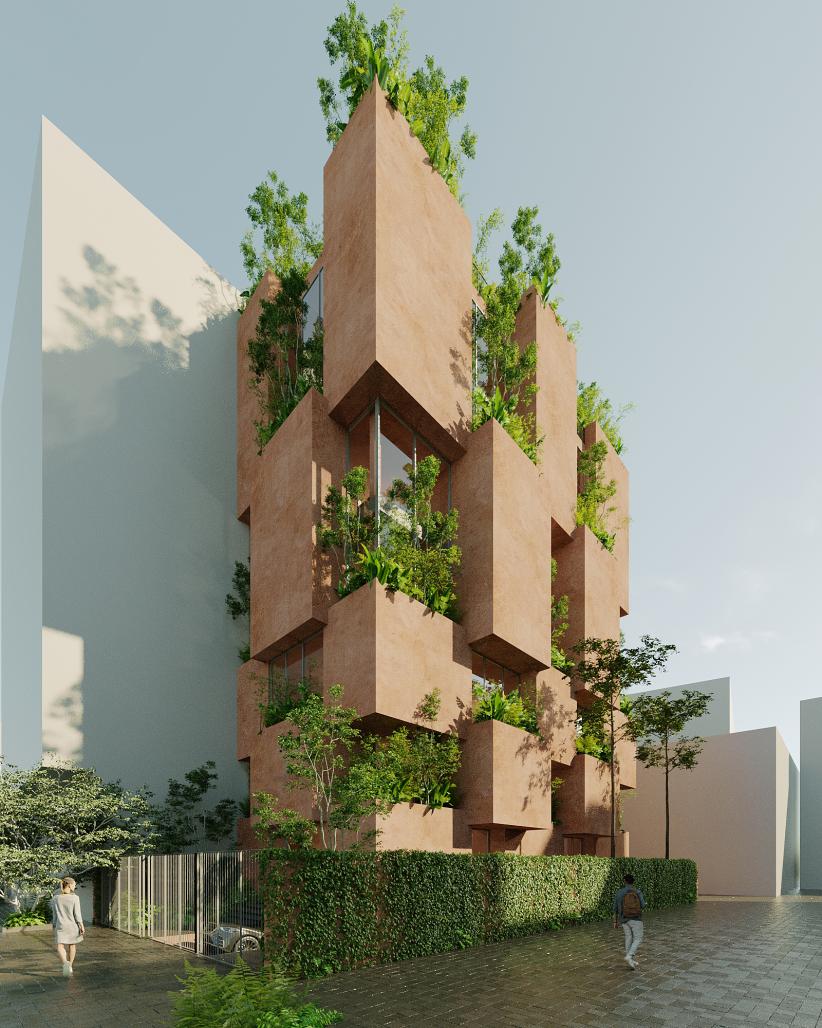
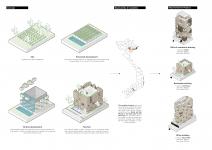
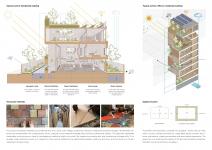
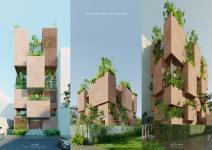
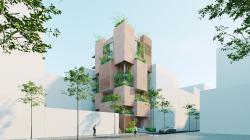
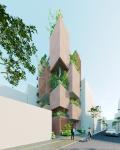
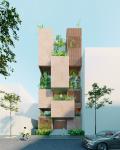
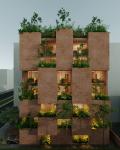
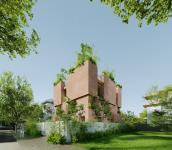
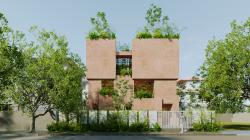
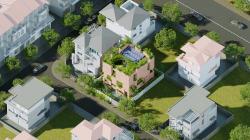
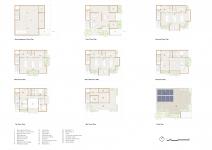
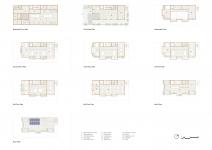
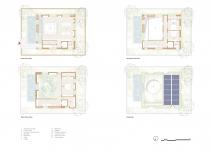
“The Greenery Stacks” reinterprets the Vietnamese traditional spatial sequence of pond/water – veranda – garden into a vertical, stacked form that fits small plots and higher densities of peri-urban areas. Green buffers, semi-outdoor spaces and water surfaces are placed at multiple levels so that users can access nature at any height. The project is conceived as a replicable architectural model based on modular design, local materials and simple assembly so it can host housing, office–residential (live–work) or small community programs. Energy sustainability is achieved through passive ventilation, daylighting, rainwater harvesting for irrigation/cooling and the integration of solar energy to reduce operational loads.
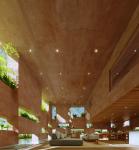
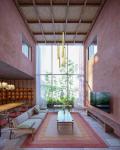
By integrating traditional spatial logic into a contemporary form, the project protects core cultural values while giving users a familiar way of living even inside a multi-storey building. Layered greenery, urban gardens and water elements help reconnect people with nature, improving indoor and surrounding environmental quality. The use of sustainable energy and local resources contributes to environmental protection, while the visible systems for planting, watering and collecting rainwater create an everyday educational experience about ecology and local culture. The porous, breathing structure also introduces “voids” into a dense suburban fabric, offering semi-public spaces for social interaction.
The key innovation is transforming the horizontal village garden into a contemporary vertical garden that becomes the main architectural identity of the building. Productive green – urban farming, edible plants, even small aquaponic systems – is treated as part of the architecture, not decoration. Local craft and village-based materials (handmade bricks, lacquer, bamboo, dó paper) are hybridized with modern construction techniques to create a language that is both vernacular and current. Thanks to its clear modular logic and climate-responsive layers, the model can be easily replicated in other Vietnamese peri-urban contexts while keeping the same green, stackable character.
2025
Project Type: Series of “The Greenery Stacks"
House: 510m2 – Hanoi, Vietnam
Office: 1550m2 – Ho Chi Minh, Vietnam
Mixed-use office–residential building: 1200m2 – Hai Phong, Vietnam
Architecture Firm: NaP architects
Lead Architect: Nguyen Viet Anh, Pham Ngoc Son
Design Team: Trinh Dang Huy, Nguyen Thien Thao, Nguyen Hoai Linh
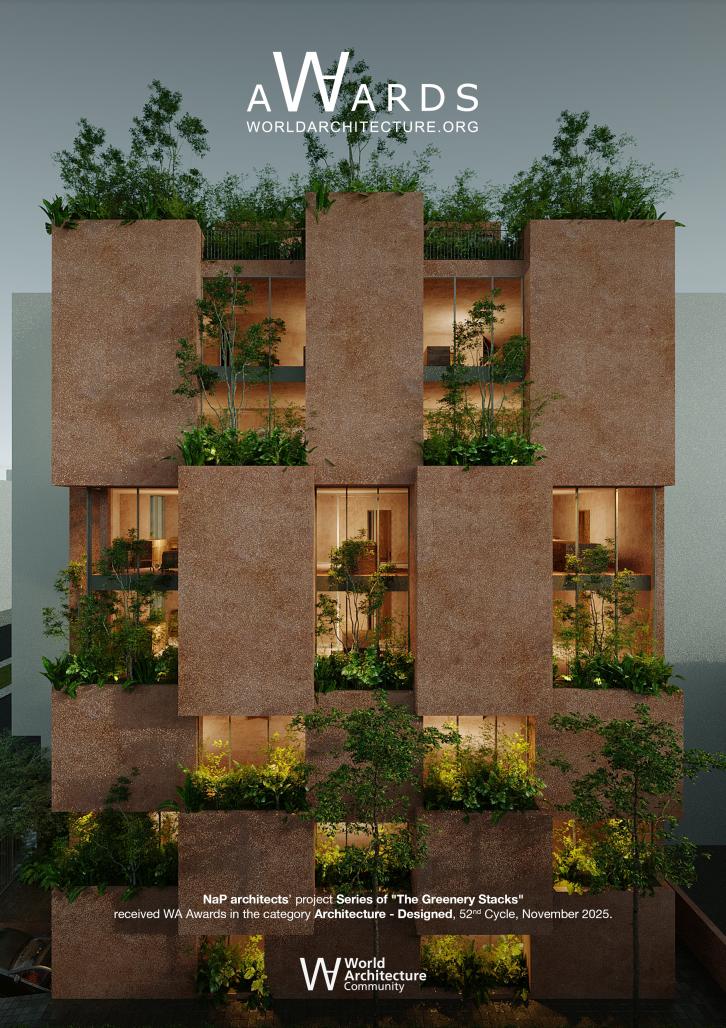
Series of "The Greenery Stacks" by NaP architects in Vietnam won the WA Award Cycle 52. Please find below the WA Award poster for this project.
Downloaded 0 times.
NaP architects

Favorited 13 times