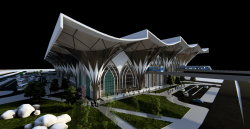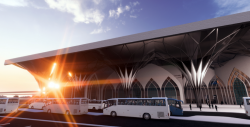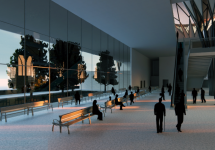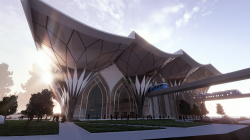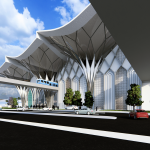
The Makkah Metro Main Station is designed as a sustainable and inclusive transportation hub to serve citizens, residents, and the millions of pilgrims visiting Makkah each year. The project’s primary objective is to improve urban congestion, enhance mobility, and create a modern, culturally rich environment that reflects the spiritual and social unity of the city. Inspired by the principles of Saudi Vision 2030, the design harmoniously merges functionality with identity, transforming the metro station into both an efficient and an architectural landmark that celebrates diversity, connection, and community.
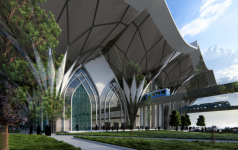
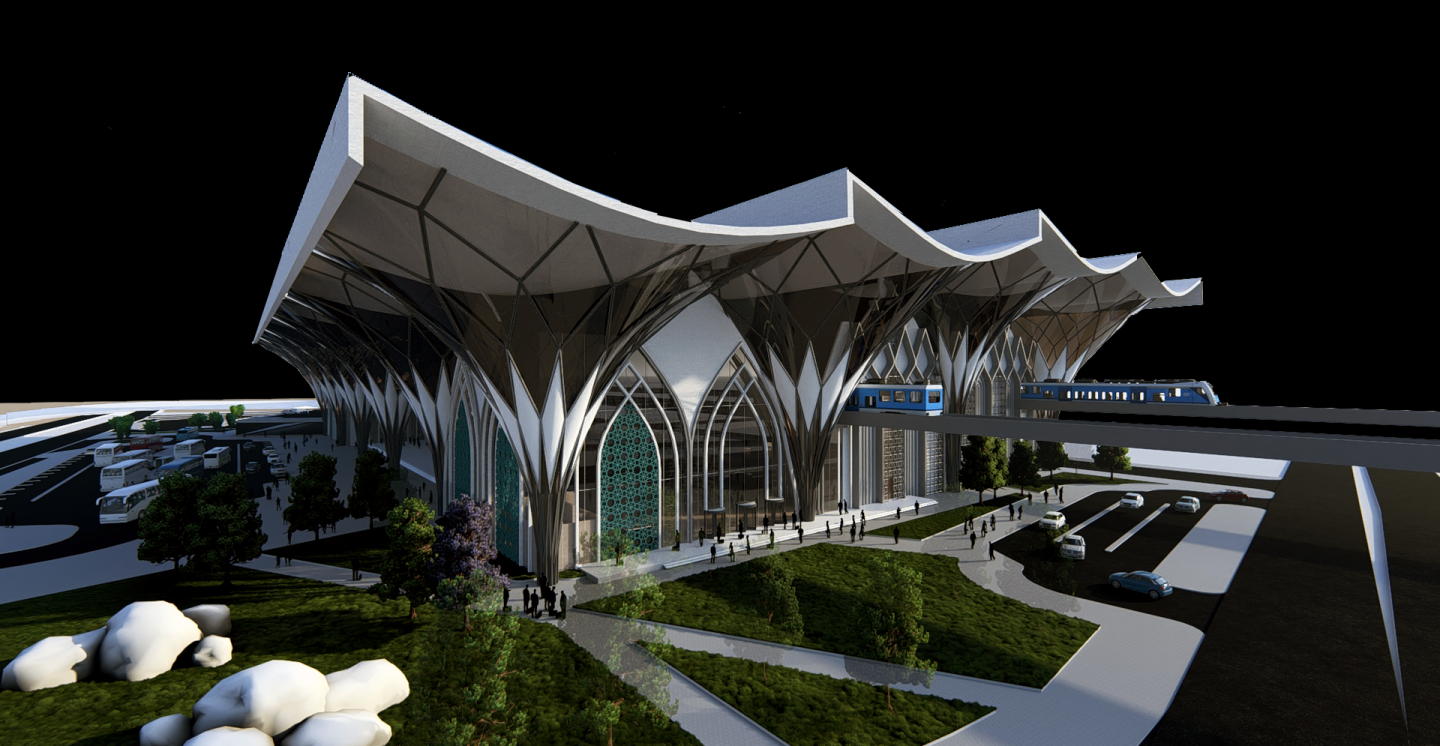
The design approach emphasizes accessibility, fluid circulation, and cultural symbolism. Circulation routes are distinctly organized to separate arriving and departing passengers, ensuring an efficient flow and reducing crowding, particularly vital during the Hajj and Umrah seasons. The spatial configuration is based on clear zoning to improve orientation and passenger comfort, while the architecture captures a balance between practicality and expression. Drawing inspiration from Islamic geometry and traditional patterns, the design reinterprets cultural motifs into a modern structural language defined by a visible framework and a dynamic, curved roof.
The form development responds directly to the functional demands of the railway path and the unique characteristics of the site’s topography. A grid canopy system with varying heights articulates the different levels and functions of the building, creating a visually engaging skyline that reflects movement and rhythm. The sweeping curved roof not only enhances the building’s aesthetic presence but also improves natural ventilation and lighting, contributing to sustainability and passenger comfort. This architectural expression symbolizes unity within diversity, representing individuals converging under one harmonious structure.
Structurally and culturally, the station embodies the concept of community and resilience. The exposed framework conveys both strength and transparency, symbolizing the support and cohesion that arise from collective purpose. Culturally, the external detailing references Islamic architectural heritage through refined geometric patterns and proportional harmony, connecting the station to its sacred context while maintaining a contemporary identity. Together, these design strategies establish the Makkah Metro Main Station as a vital piece of infrastructure and a timeless urban symbol, an intersection of faith, functionality, and forward-thinking design.
2024
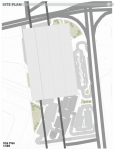
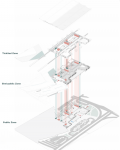
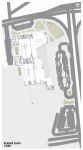
The project occupies a site area of around 52,000 m², with a built-up area of 14,800 m² and a building footprint of 8,300 m², accommodating up to 100,000 passengers per day. The spatial program is organized into five main functional zones:
- The Terminal Zone (main hall, ticketing, and information)
- Concourse Zone (lounges and restrooms),
- Platform Zone (platforms and security checkpoints)
- Commercial Zone (retail and food court)
- Services Zone (maintenance and emergency facilities)
Each zone is designed for operational efficiency and passenger comfort, reflecting a functunal approach to mobility and user experience.
The structural and environmental strategies emphasize sustainability and resilience. A grid canopy system with Different heights provides structural rhythm and daylight modulation, while the curved roof enhances spatial fluidity and natural ventilation. Material selection and construction methods were guided by energy efficiency, durability, and climatic responsiveness. The project aligns with Makkah’s urban mobility strategy and Saudi Arabia’s broader goal of developing sustainable transport infrastructure, offering a design that harmonizes cultural heritage with future-oriented engineering innovation.
Student: Yara Madkhali
Instructure: Ahmed Hashmi
Yara Madkhali