How can a minimal intervention transform an existing condition into a space that not only remains functional but also nurtures social interaction and provides comfort for its users?
Defined access, a place for every role:
The monotony of daily routines and the pressures of work make solitude and tranquility an undeniable necessity for both staff and management. Spatial differentiation in this context goes beyond preserving privacy—it creates opportunities for rest and mental regeneration. Much like a well-orchestrated ensemble, this separation establishes a balanced flow and circulation throughout the workspace.
A window to the sky — a bridge between inside and outside:
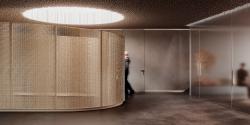
In most conventional office environments, employees spend their entire day in enclosed, isolated interiors where contact with nature is minimal. In such settings, a simple window to the sky becomes more than an opening—it becomes a bridge connecting the inside to the outside world. It invites natural light, expanding perception and offering an experience that transcends the confines of walls and frames.
A pause space — silence within the noise:
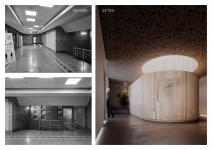
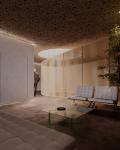
Within the fast-paced rhythm of contemporary organizations, the need for moments of stillness is more vital than ever. Through the subtle contraction and expansion of the corridor’s spatial form, a pause area emerges—a quiet pocket that allows individuals to retreat briefly from the surrounding bustle. This space offers not only rest and calm but also a ground for informal encounters, spontaneous dialogue, and human connection. It reminds us that space is not merely a container for activity, but a field for social interaction—a gentle interruption in the continuity of everyday life.
Ultimately, with minimal yet thoughtful interventions, familiar spaces can be reimagined into new worlds for their users.
What this project proposes is not merely a physical renovation, but an opportunity to reconstruct the everyday experience of work—a chance to enhance the collective quality of life within organizations.
2024
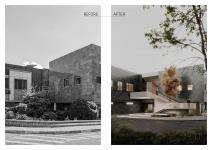
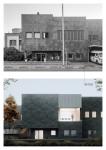
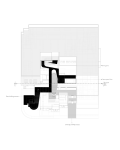
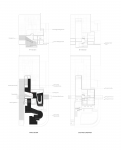
The project was developed within the industrial context of the TOGA factory, a site dedicated to the production of massive metallic turbines and heavy machinery. The existing building, formerly serving as the factory’s cafeteria, was to be redefined and divided into two independent zones with separate entrances.
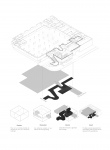
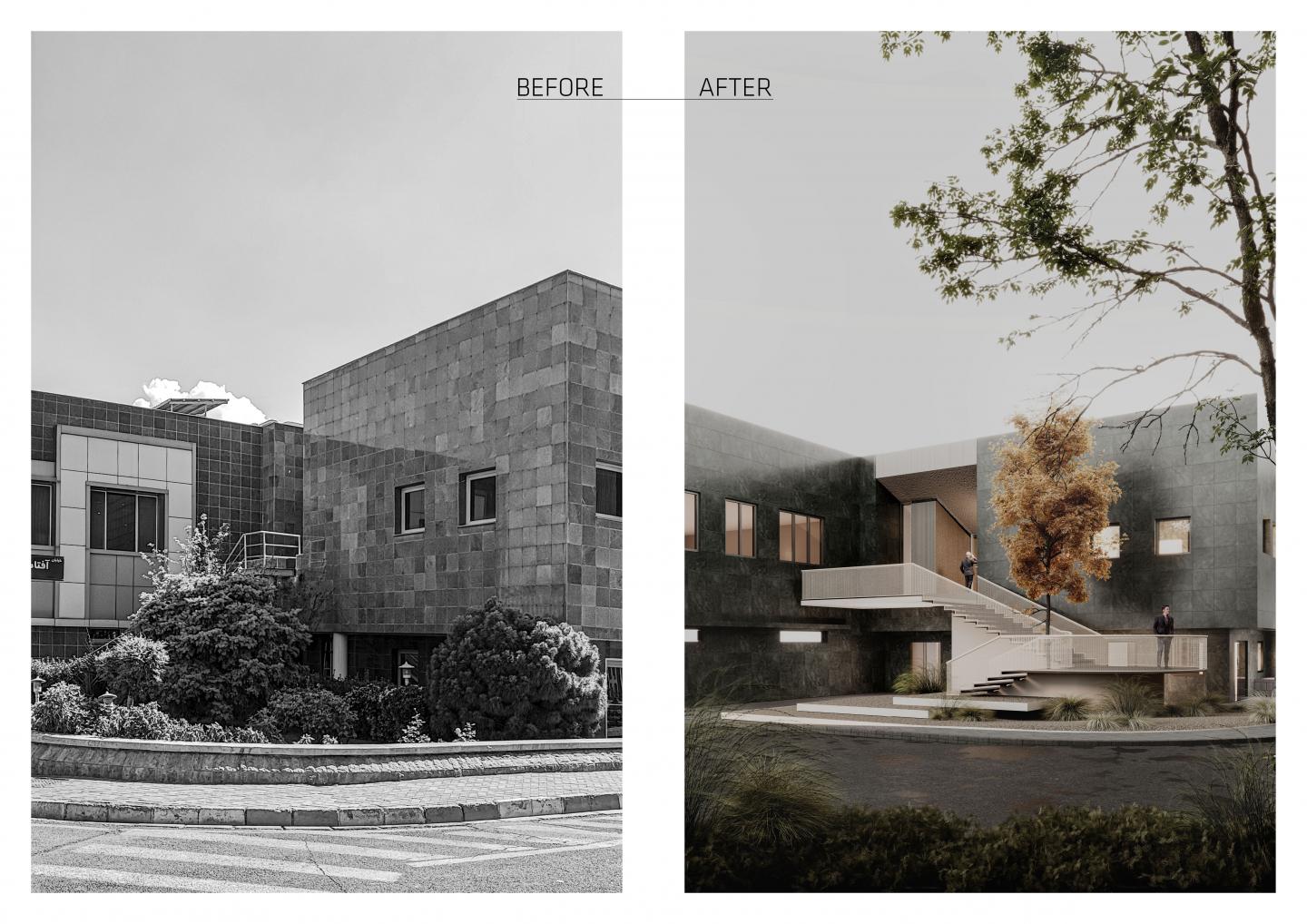
Rather than pursuing demolition or a full reconstruction, the design adopted a strategy of minimal yet transformative intervention — introducing a new spatial organism that reconfigures the interior from within.
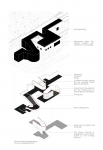
At the heart of this approach lies a metal bridge element made of perforated steel sheets, penetrating the existing structure from the second floor. Like an intruding presence, it anchors itself within the old body of the building, generating new circulation paths and defining two distinct entrances while maintaining a balanced spatial flow between the two parts.
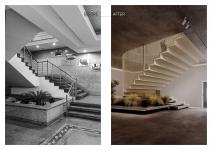
The use of metal directly responds to the project’s industrial setting — reflecting the material language of the factory itself, where steel is both the medium and the spirit of production. The same material continues through the design of the stairs and interior partitions, reinforcing the sense of a foreign yet integrated body inhabiting the existing frame.
To enhance spatial quality, a series of openings in the roof and walls were introduced, bringing daylight and natural ventilation into the formerly enclosed and airless interior.
The contrast between the new metallic insertion and the heavy, raw shell of the old building establishes a dialogue between past and present, solid and light, memory and renewal — a conversation that transcends mere renovation and gestures toward rebirth through coexistence.
Architecture Firm: Momken Studio
Architect: Meysam Feizi
Lead Designer: Behrooz Nakhaei
Design Team: Masoud Faraji, Motahareh Sadeghi, Iman Panahi
Momken Studio