On a spacious family plot in the Sharon region, where an old unused house once stood, a new residential project was born — one that embodies a meeting between generations. The plot was divided in two: one part for the son, as a home, and another for the father, as an investment. Both structures were designed by architect Ron Spiegel, with the focus of this project being the son and his family's home — a private, modern, and considered residence.
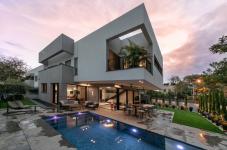
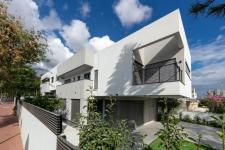
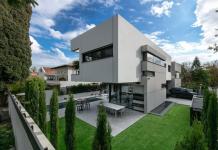
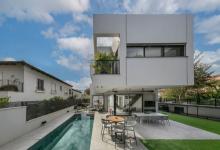
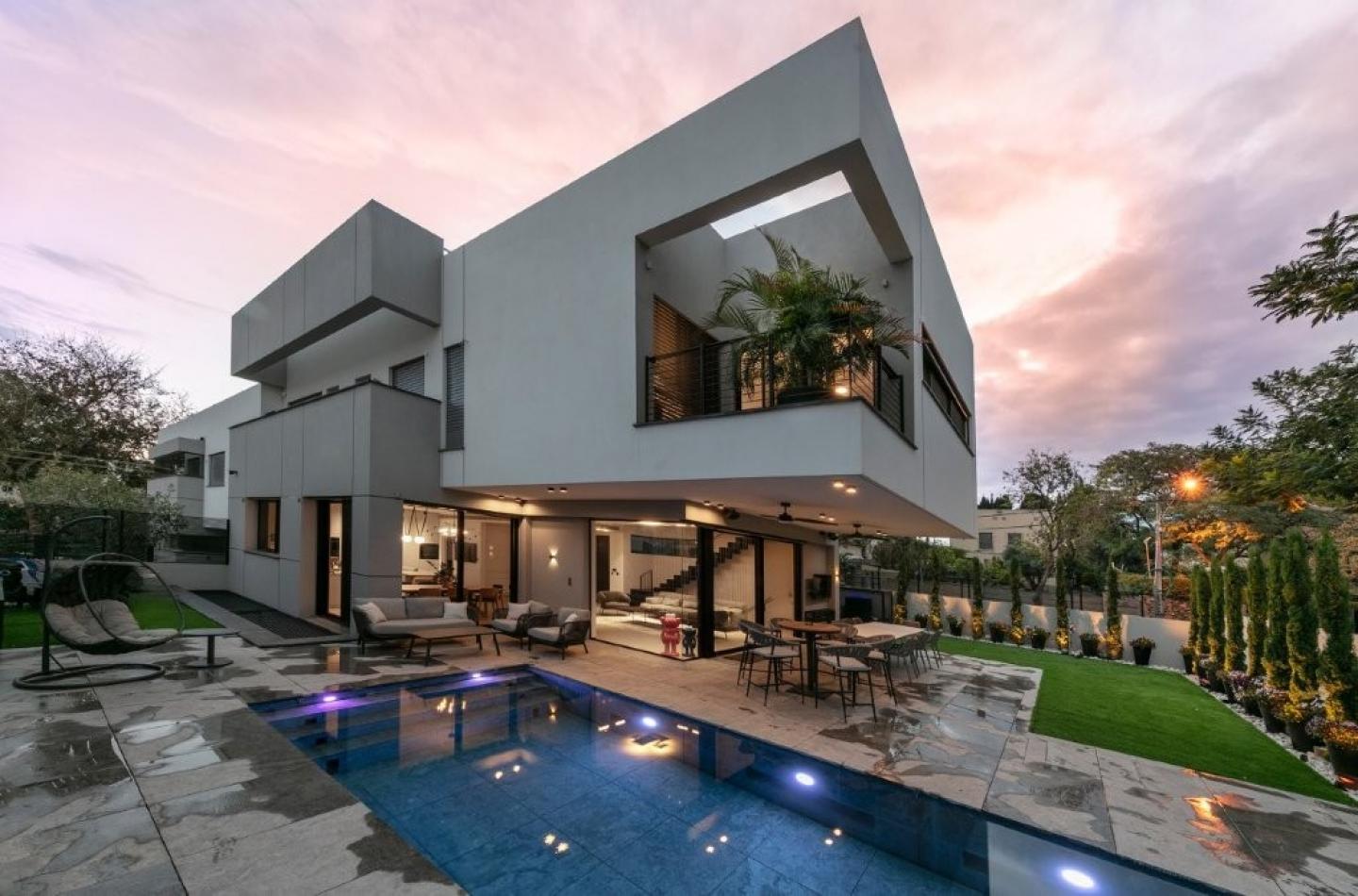
At the heart of this home's design lies a clear and deliberate architectural concept based on the interplay of interlocking volumes. The lower volume, in a dark tone with a concrete-like finish, forms a stable, grounded base, while above it "rests" a larger, more prominent white volume containing the main living areas. The meeting of these two masses creates a dialogue of contrasts — weight against lightness, dark against light — while also serving a functional purpose: the projection of the upper volume creates a shaded outdoor seating area that flows directly and naturally from the interior.
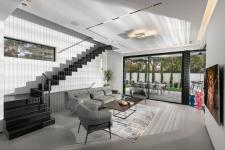
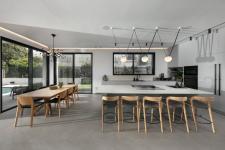
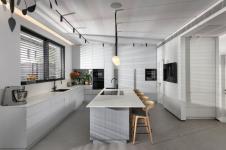
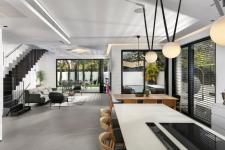
The entrance to the home is from a main street, through a tall, prominent flush door clad in granite with slender tiles. From the very entrance, an open L-shaped public space is revealed, wrapping around an internal courtyard and drawing the outside in. The living room is positioned on one side, with the kitchen and dining area across from it, alongside a utility zone including a pantry and direct access to the parking — a precise layout that allows for a natural, easy flow of daily life.
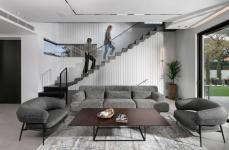
Within this space, the staircase becomes a dominant sculptural element — almost a work of art. The stairs, made from bent sheet metal, appear as though cut from a single sheet and folded in a free, flowing movement through the space. Slender tension cables rise all the way to the upper floor, creating a sense of weightlessness and blurring the boundary between structural element and architectural sculpture. The result is a staircase that seems almost mass-free, unburdened by a heavy railing, generating a dynamic visual experience.
The natural light filtering through the tall openings and the street-facing façade further emphasizes the sculptural qualities of the staircase: shifting shadows throughout the day break across the walls and floor, creating a continuous interplay of light, line, and movement within the public space. In this way, the staircase becomes not merely a means of moving between floors, but the element that defines the entire architectural experience.
The street-facing façade remains relatively restrained, with narrow, tall openings that preserve privacy, while the interior opens generously toward the courtyard. The design language rests on modern minimalism in monochromatic tones — white, grey, and black — with contrast between light cladding and dark frames, and concrete-effect plaster on the lower floor alongside white plaster above.
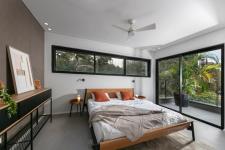
On the upper floor sits the master suite — a secluded and intimate space facing lush greenery that provides a sense of privacy alongside openness. The bedroom features tall, narrow windows overlooking the treetops, along with a private balcony hidden from the street. The bathroom opens fully onto the balcony, creating a distinctive experience of connection between inside and out. Adjacent to the suite are the children's rooms, a family room, and service areas.
The home continues outward into a courtyard paved with natural bluestone, which integrates with the clean lines of the architecture and underscores the connection to natural materiality. At the heart of the courtyard sits the pool, designed and built by Pelagim under the direction of Avner Tzadok. The pool incorporates advanced current systems, meticulous ceramic cladding, and a UV system to maintain water quality, forming an integral part of the outdoor design.
What makes the pool particularly distinctive is a mechanism that allows it to rise and lower, so that when not in use, it can become a continuous outdoor surface — a smart solution that expands the courtyard's possibilities and combines functionality with maximum use of space.
The result is a contemporary, precise, and refined home in which the architectural concept and sculptural elements come together as a complete experience — a private space that manages to be both fully functional and architecturally commanding.
2025
2026
On a spacious family plot in the Sharon region, where an old unused house once stood, a new residential project was born.
Ron Shpigel
Elad Gonen