Some homes try to impress from the very first moment. Others open slowly. The home designed by Nitzan Horovitz belongs to the second kind — one that invites you to stay, to look, to feel. This is a spacious private home in central Israel, 280 sqm built on a 400 sqm plot, designed for a family with three children. The relationship with the family began with a previous home Horovitz had designed for them, and that early familiarity allowed for a personal and precise process — one built on a genuine understanding of their needs, rhythm, and character, not just their design preferences.
From the entrance, the choice of quiet is already felt. Not an empty quiet, but one that comes from precision — in materials, proportions, and light. It is a quiet built layer by layer, allowing the space to breathe without burdening it.
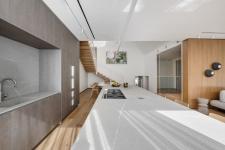
The public living area opens to a height of approximately 6.5 meters, yet the feeling is neither dramatic nor cold. On the contrary — there is a surprising softness to it. Natural light filters through a distinctive skylight in the ceiling, broken gently through bamboo shades, painting shifting patterns of movement across the walls and floor throughout the day. Here, light is not merely illumination — it is part of the space itself, almost a material in its own right, one that defines the atmosphere at any given moment.
The staircase, with its clean lines and natural wood, rises quietly between floors. It is present, but never dominating — woven into the overall design language so that movement through the home feels natural and fluid, almost intuitive.
The material palette throughout the home is restrained but precise. Natural wood, mineral tones, soft textiles — all returning gently across the spaces to create a sense of continuity. This repetition is not coincidental; it is part of a design philosophy that seeks to produce stability and calm through material.
The parquet flooring, richly textured, does not remain only underfoot — it continues onto the stairs and occasionally onto wall cladding as well, creating a pleasant sense of envelopment. There are no sharp jumps here, only soft transitions between areas, binding the home together as a single whole.
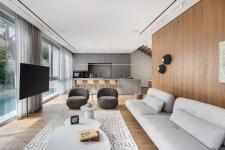
The living room reflects the same approach: a wide, low sofa, soft armchairs, and tables finished to resemble pale concrete. Everything was chosen to allow genuine comfort — a place to sit, to lie down, to gather together, without formality and without effort.
Alongside the main living space sits the family room — a more intimate zone intended for the small moments of daily life. Here the furniture is especially soft, the fabrics invite touch, and the atmosphere is less formal. This is where the home turns slightly inward — becoming more personal, more close, a place that allows for relaxed and unplanned time.
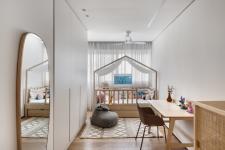
The children's rooms maintain the same calm language, with a slightly lighter interpretation. Natural wood, bright colors, and smart storage create pleasant spaces that are not cluttered, leaving room for growth and change over time. Here too the choice of simplicity is felt — not at the expense of comfort, but in service of it, creating an environment that feels stable without being rigid.
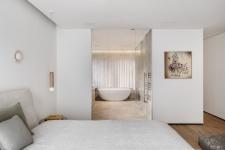
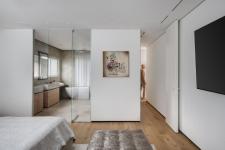
In the master suite, the quiet gains further depth. The bedroom is wrapped in soft tones, delicate curtains that filter the light, and textiles that add a layer of warmth. Everything is measured, precise, effortless — a space that allows for disconnection, while still remaining connected to the home's overall language.
The bathroom continues this feeling, while adding a moment of quiet presence: a sculptural freestanding bathtub stands at the center of the space, almost like a still object. Around it — a transparent shower enclosure, mineral surfaces, and wood cabinetry that balances coolness with warmth, creating an experience that feels almost spa-like, yet everyday and accessible.
Light accompanies the home throughout. Through wide openings, sheer curtains, and a direct connection to the outdoors, it enters and transforms the spaces across the course of the day. Walls, floor, and furniture respond to it — appearing one way in the morning, another in the afternoon. The result is a home that is not static, but alive, changing, breathing.
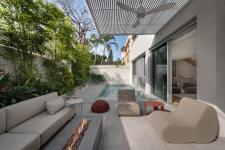
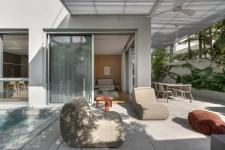
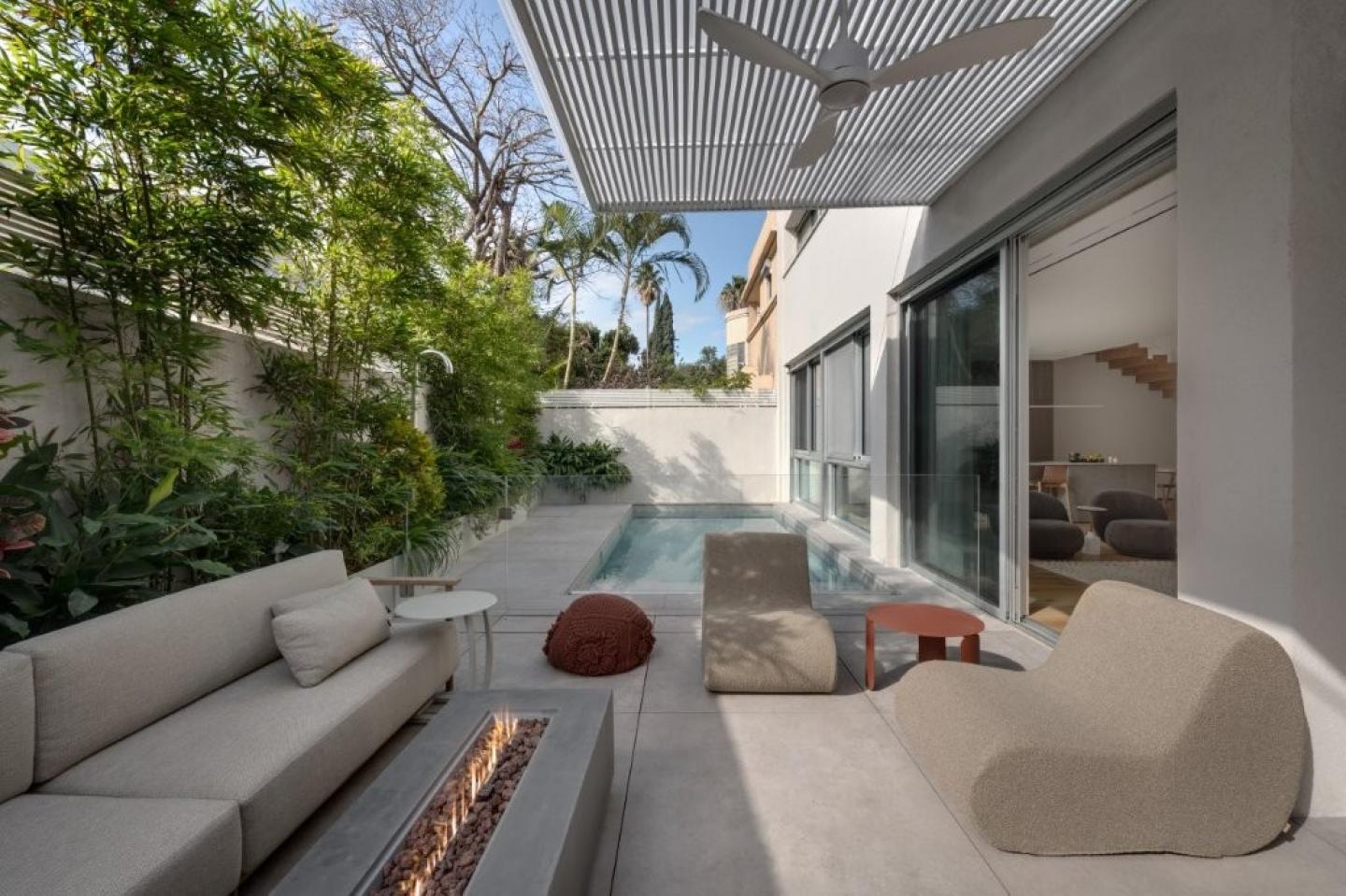
The transition to the outdoors is almost imperceptible. The interior opens onto the courtyard, where the same materials and the same calm language continue. Soft furnishings, gentle shade, and a pool that integrates naturally into the space create a seamless continuity — no sharp boundaries, no clear divide.
The outdoors is not an "addition" to the home, but part of it — one more layer of the same quiet.
2025
2026
This is a spacious private home in central Israel, 280 sqm built on a 400 sqm plot, designed for a family with three children
Nizan Horovitz
Oded Smadar