History You Can Live In - Where Ottoman Grandeur Meets Modern Living
The home is located in the Greek Colony neighborhood of Jerusalem.
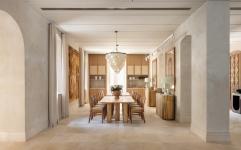
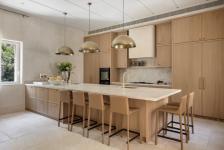
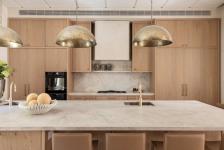
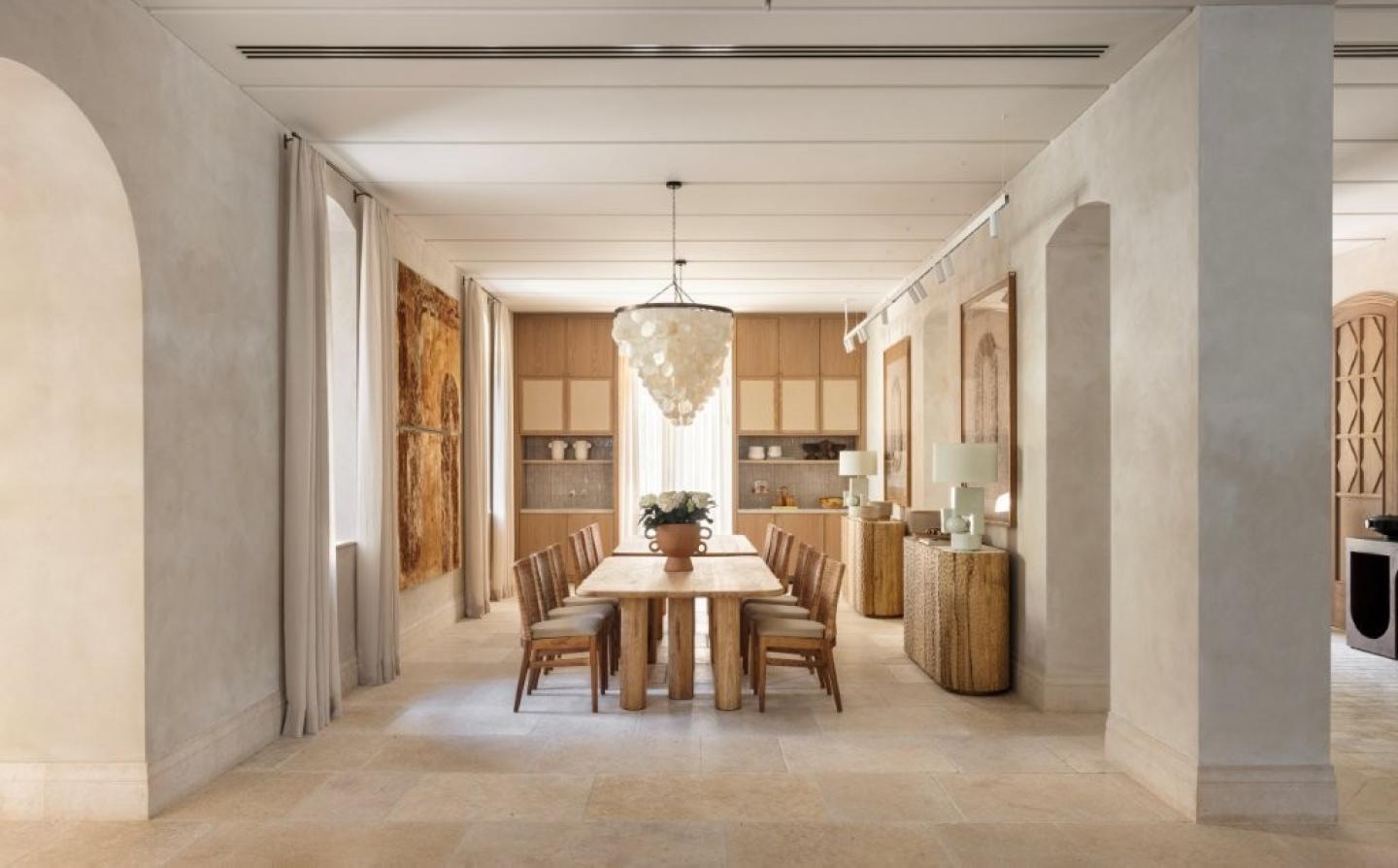
It is a heritage-listed building. Two new floors were added to the original structure, but this apartment is the original, spanning two levels: ground floor and one level below. The upper level has very high ceilings of nearly 4 meters / ~13 feet. It includes a grand entrance corridor with a guest bathroom, a master bedroom with walk-in wardrobe and en-suite bathroom, a formal living room, a large dining room, and a spacious kitchen. The apartment also has two courtyards — one accessible from the kitchen, with a pergola, outdoor living room, outdoor kitchen, and BBQ; the second is at the entrance to the home with seating areas. Between the two levels, a staircase was designed with a library spanning both floors. On the lower level, a communal space was planned with a seating area and a dedicated spot for a washing machine under the stairs, along with a family room and four bedroom suites — two of which were carved out of a water cistern that existed on site, giving them rounded ceilings. From this level there is an additional courtyard, accessible from three of the rooms.
The residents are a family from abroad seeking a vacation home in Jerusalem — a couple with many children who visit Israel frequently, as their children live there. Following the project, the clients became close friends.
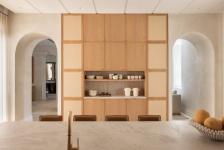
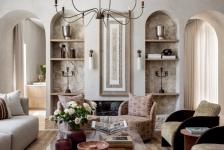
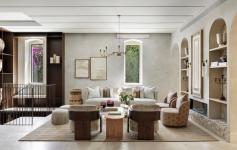
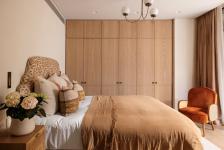
The inspiration for the design came from the original home itself — the architect's approach was to make it contemporary and modern while staying true to its character. The goal was to use authentic materials while meeting the needs of a family today: local stones, authentic lighting, and a recreated Ottoman-era ceiling aesthetic. The clients trusted the architect completely and gave her total creative freedom. The guest bathroom features stone in a tunnel-like aesthetic, as in historical times; beneath the fireplace, an authentic historical look was recreated using original stones; and the flooring echoes the stones of the Western Wall. The home makes extensive use of natural materials and colors that dialogue with the surroundings — lots of terracotta, earth tones — with the intention of bringing the palette of the environment indoors: oranges, clay, wood, and powder tones. The bedroom designs drew inspiration from Morocco, Iran, and Persia — authentic to the original period of the home, yet with an interpretation that is more deeply rooted in Jewish heritage. The walls are plastered rather than smooth; smoked oak with a carved appearance is used throughout, lending an aged quality. The home features many arches, a rug made from stones, authentic Berber rugs from the Atlas Mountains of Morocco, and hardware in genuine bronze. The art collection is eclectic, drawn from both Israeli and international artists.
The furniture and soft furnishings were produced and designed by Leelou Home. According to Lee Shadmi Hadad, owner and lead designer: "The living room blends old and new — antique ottomans with fringe, Bauhaus-style wooden armchairs from Paris with an antique look, authentic chandeliers and light fixtures, alongside new modern pieces: sofas in a 'Hamptons chic' — American high-end style — and armchairs with vintage retro prints. We brought authentic pieces into the home, such as a tree trunk serving as a table, original stone art pieces we hung, and a collection of baskets and vessels gathered from Israel and around the world. In the bedrooms, the soft furnishings are very carefully considered — rich, layered textiles that are also highly comfortable and practical."
There were several significant challenges on this project. Due to the ceiling height of nearly 4 meters / ~13 feet, reaching the ceiling for painting and renovation work was extremely difficult. The guest bathroom was excavated within a water cistern - it was dark, requiring exterior excavation to ventilate and properly waterproof the space, as well as lifting very heavy stones for its design. The lower level was very dark, so windows and an English courtyard (light well) were designed from scratch to bring in natural light and ventilation. Additionally, the original building had many structural columns whose positions had to be respected throughout the planning, as they are load-bearing foundations that could not be touched or moved — the layout of the floor was organized around them. These challenges were overcome through close collaboration with craftspeople who felt like family.
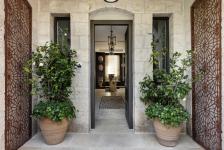
The architect's favorite parts of the project are the entrance to the home and the entrance to the guest bathroom. The entry already tells the story of the home's spirit — with a mashrabiya screen greeting visitors, the history and authenticity felt immediately upon arrival, the impressive ceiling, the natural light, and the staircase descending below. The guest bathroom is truly moving — it looks entirely historical.
2025
2026
The home is located in the Greek Colony neighborhood of Jerusalem.
It is a heritage-listed building. Two new floors were added to the original structure, but this apartment is the original, spanning two levels: ground floor and one level below. The upper level has very high ceilings of nearly 4 meters / ~13 feet.
Architecture and Interior Design: Sharonne Turen
Itay Benit