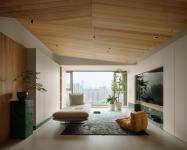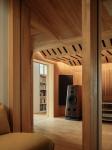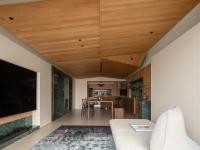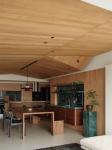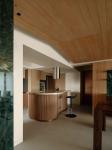
In the bustling historic district of Yuexiu, Guangzhou, an old residential dwelling has undergone a comprehensive renovation focused on both acoustics and living quality. Breaking free from the spatial constraints of traditional old-house layouts, the project addresses core residential challenges such as storage, circulation, and sound insulation. By meticulously designing the acoustic environment, it brings the warmth of music into everyday life, transforming an ordinary home into a spiritual sanctuary that combines professional-grade sound performance with natural aesthetic textures. This initiative redefines the value of existing urban housing and creates a sustainable living space suited for future lifestyles.
The design follows the principle that human activities define spatial functions, avoiding rigid zoning that restricts daily routines. Using the concept of “spaces nested within spaces,” the home concert hall becomes the core, gently connecting all functional areas. This approach eliminates wasted space from long corridors typical in traditional layouts and ensures smooth transitions between public and private spaces. The circulation path to the secondary bathroom was restructured, removing redundant traffic zones to prevent visitors from passing through the core bedroom area. While maintaining privacy and comfort, the layout also creates layered social scenarios, supporting diverse family interactions.
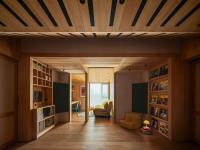
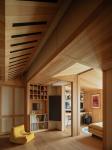
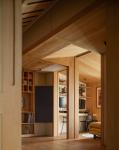
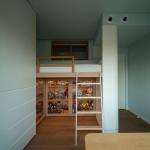
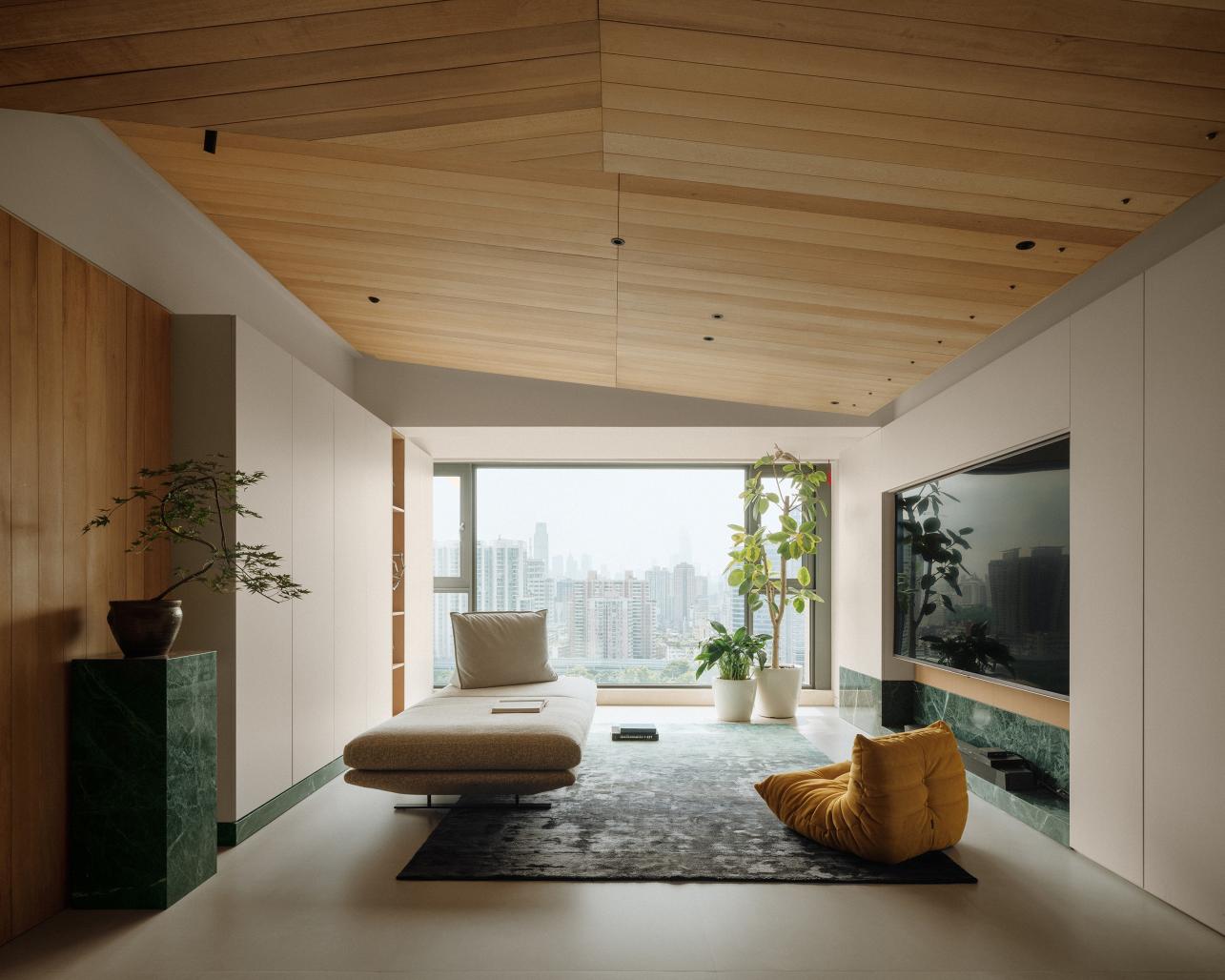
Multi-dimensional spatial openness further reduces the enclosed feeling common in older homes. Visual connections between the living room, audio-visual room, and children’s bedroom allow daylight to penetrate the interior, establishing a deep connection between the home and natural light. Each step reveals a new view, alleviating the cramped atmosphere of the old layout. To address low ceiling heights, the design uses variations in structural beams to create tiered storage systems that meet extensive storage needs while improving ventilation. Flexible door configurations allow the living room, master bedroom foyer, and multi-purpose room to be connected or separated, adapting the acoustic field for different musical scenarios. A three-tier sound insulation system—comprising in-room acoustic buffers, custom acoustic modules, and upgraded soundproof doors and windows—ensures private melodies do not disturb neighbors.
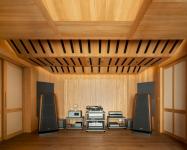
Unlike conventional modular audio-visual rooms, this project draws on the acoustic design of professional concert halls to accurately recreate high-fidelity sound environments. Stepped ceilings and corner low-frequency traps optimize sound wave propagation. Materials were carefully selected, prioritizing natural wood and professional acoustic absorbers, and all finishes use traditional dry-hanging techniques rather than industrial adhesives. This detachable construction allows for easier maintenance and creates a “breathable” acoustic space. The combination of natural wood’s fine pores and carefully calibrated acoustic materials produces a warm and realistic sound field. Traditional woodworking craftsmanship and modern acoustic technology coexist harmoniously: spatial structure forms the framework, while sound becomes the soul, allowing music, nature, and daily life to resonate together.
The renovation process faced multiple technical challenges. Integrating wooden textures, acoustic modules, mechanical and electrical systems, and storage functions within low ceilings and dense beams required precise coordination. Multi-phase layout planning and digital modeling ensured millimeter-level accuracy for prefabricated wooden structures. A comprehensive BIM model coordinated equipment, pipelines, and structural nodes, while on-site supervision managed details such as keel inclinations and finishing edges, achieving precise synergy among multiple systems. Custom supports and hardware for low-frequency trap equipment allowed secure installation while maintaining accessible concealed storage, balancing acoustic performance with practical usability.
Sustainability was a key consideration throughout. Renewable natural materials such as solid wood and refinishable stone were prioritized, and cabinetry adhered to strict international environmental standards with minimal adhesive use, reducing pollution and resource waste. The detachable and replaceable construction system embodies sustainable material reuse, exceeding basic environmental benchmarks and reflecting a philosophy of harmony between humans and nature.
This revitalized old urban home goes beyond optimizing spatial layout. Through thoughtful design, it provides residents with a space to listen to their inner selves, embrace nature, and enjoy music. It sets a new benchmark for contemporary residential renewal, blending warmth, aesthetic quality, and professional acoustic performance.
2025
2025
Project Name: Sonic Realm · Acoustic Mansion
Location: Yuexiu Dist., Guangzhou, Guangdong, China
Area: 132㎡
Design Cycle: May 2023
Completion time: August 2025
Main Materials: Goncalo Alves, natural marble, handcrafted copper metal, detachable solid wood ceiling, sound-absorbing modules, low-frequency traps, etc.
Client Name: Mr. Cen
Photographer: Xian space
Design Company: VALUE WORKS ARCHITECTS
Chief Designer: Vincent Wu
Assistant Designer: LIU Weijing, GUO Sihua
Xian space