Geometry Dash: A Simple Game with Remarkable Depth

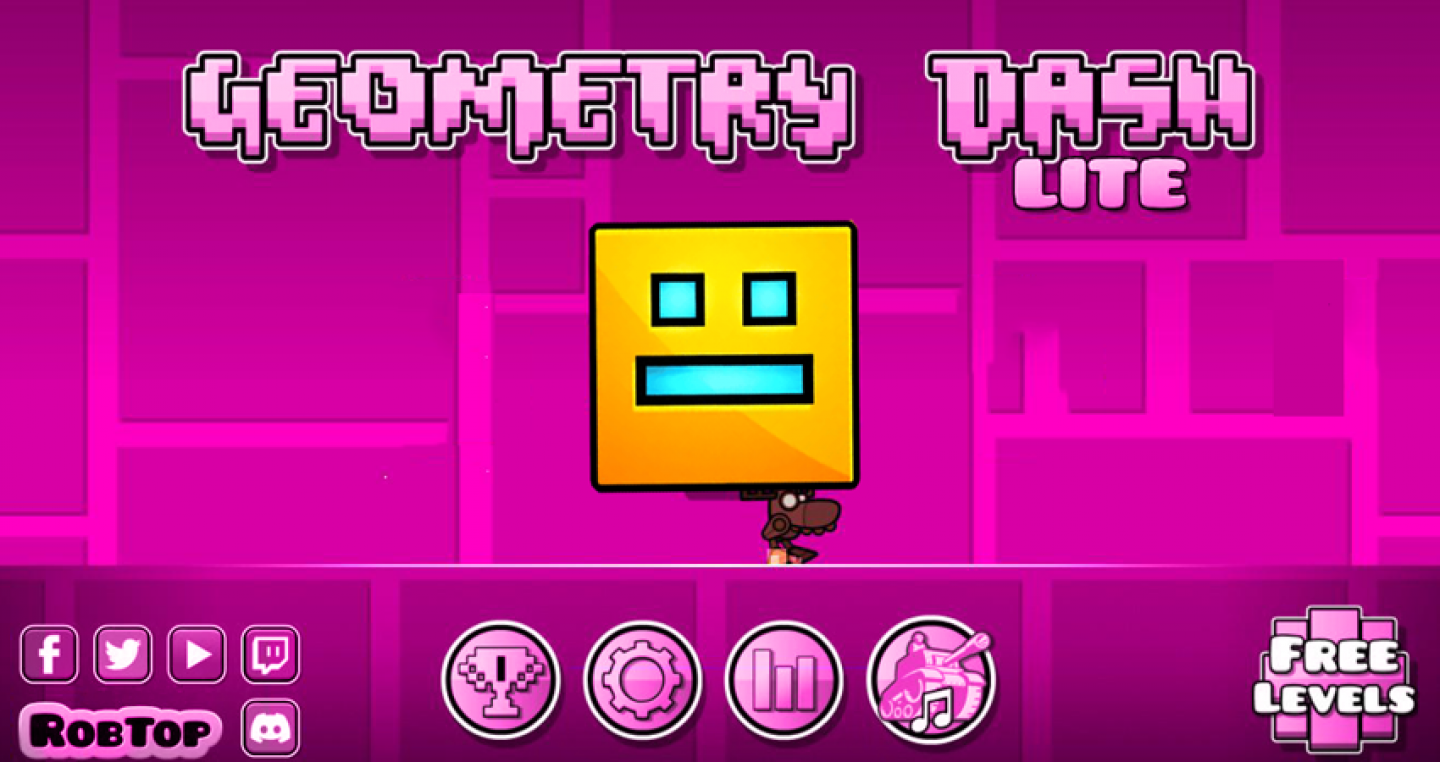
At first glance, Geometry Dash looks straightforward: guide a small geometric character through a level without hitting anything. In practice, it is a demanding rhythm-based platform game built around timing, repetition, and precision. Created by Swedish developer Robert Topala under the name RobTop, the game first appeared in 2013. Its enduring popularity comes from a combination of accessible controls, challenging gameplay, energetic music, and a creative player community.
How the Game Works
The core action is simple. The player taps or clicks to make the character jump, fly, or otherwise move through an obstacle course. Controls vary with the character’s form: a cube jumps, a ship rises while the button is held, and other forms use distinct movement rules. Portals can change a character’s size, gravity, speed, or mode, often within a single level.
Levels are synchronized with electronic music, so obstacles frequently arrive in time with the beat. This makes sound more than decoration: the soundtrack can help players anticipate jumps and changes in pace. However, rhythm is not a substitute for skill. Successful play still requires close attention, quick reactions, and knowledge of each level’s patterns.
Failure sends the player back to the beginning of the level, which can be frustrating. Yet attempts are usually brief, and immediate restarts make it easy to try again. A practice mode allows checkpoints, giving players a way to learn difficult sections before attempting a complete run.
Challenge, Learning, and Accessibility
The game’s steep difficulty is both its greatest attraction and its most common criticism. Supporters argue that repeated attempts produce a satisfying sense of progress. A section that once seemed impossible can become manageable through memorization and improved timing. Completing a demanding level can feel like a genuine achievement.
Critics, meanwhile, may find the trial-and-error structure punishing. Long levels can require sustained concentration, and a mistake near the end may erase several minutes of progress. The game offers practice tools, but these do not remove the challenge of completing a level in one uninterrupted attempt. For younger players or those sensitive to frustration, setting time limits and taking breaks can make the experience healthier.
Creativity and Community
A major reason Geometry Dash has lasted is its level editor. Players can design courses using obstacles, visual effects, triggers, and music, then share them with others. This transforms the game from a fixed set of challenges into a platform for user-created content. Community levels range from short, playful experiments to elaborate stages with animated backgrounds and carefully choreographed effects.
That creativity also brings challenges. The enormous volume of community content means quality and difficulty vary widely, and newcomers may not know where to begin. Still, featured levels, rankings, and player recommendations help people discover worthwhile creations. The community also contributes tutorials, gameplay videos, music discussions, and competitions, making the game a social experience as well as a solitary one.
Why It Endures
Geometry Dash is often described as a test of reflexes, but it also rewards patience, pattern recognition, and persistence. Its controls are easy to understand, while its best levels demand practice and precision. The balance is not for everyone: some players value the satisfaction of overcoming a tough course, while others see repeated failure as an obstacle to enjoyment.
Ultimately, Geometry Dash succeeds because it offers more than a simple jumping game. It combines music, challenge, and creativity in a format that invites players to improve—and to build experiences of their own.
2025
2026
If you want to explore the wider community around Geometry Dash. Most importantly, take your time—then enjoy the moment your timing finally clicks
Geolite
/