Chinese Medicine Hospital and Government Chinese Medicines Testing Institute of Hong Kong
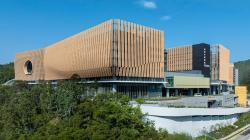
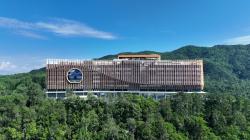
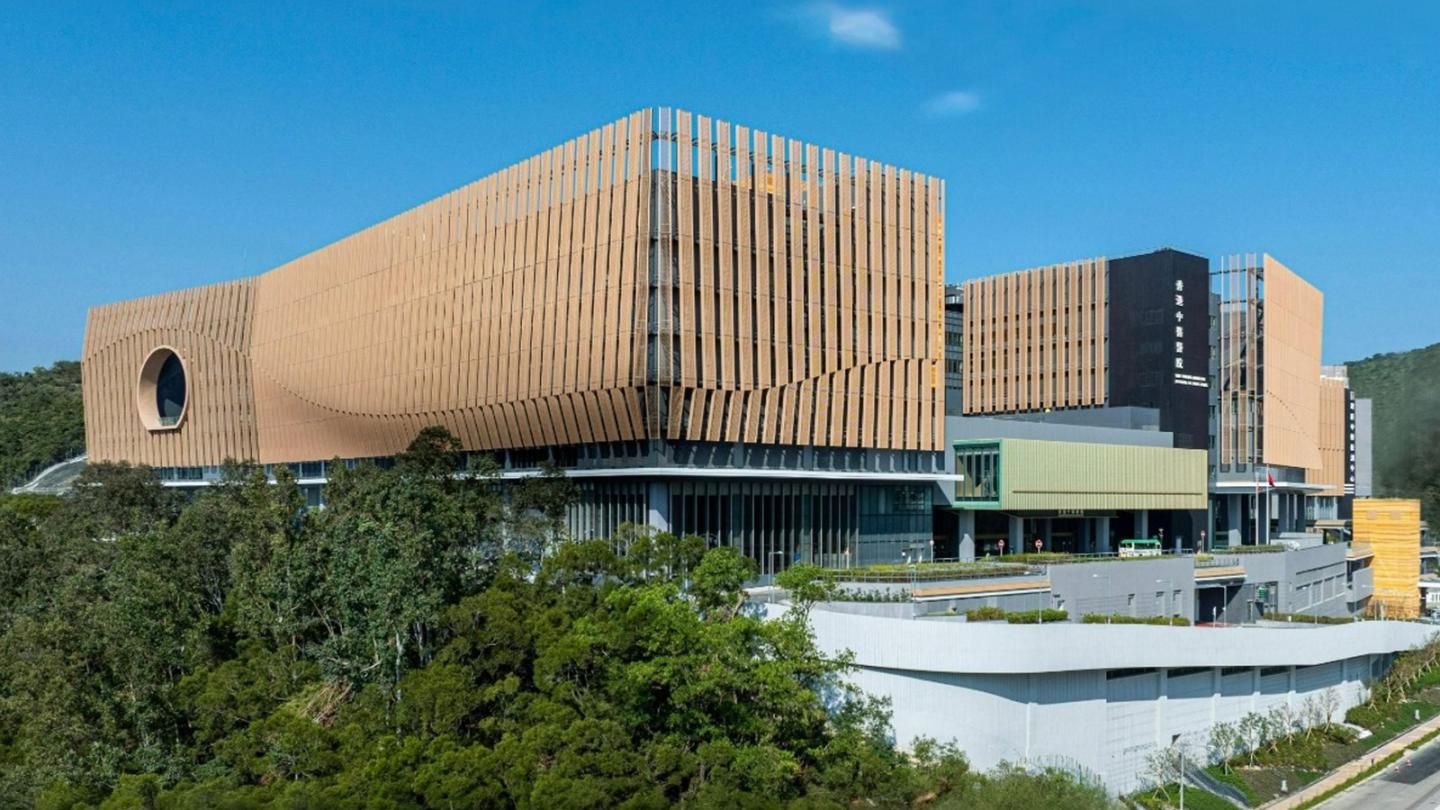
The Chinese Medicine Hospital (CMH) and Government Chinese Medicines Testing Institute (GCMTI) form Hong Kong’s inaugural “Chinese Medicine Hub”—a civic landmark integrating clinical services, research, education, and public engagement. Situated on a 4.3-hectare plateau in Tseung Kwan O, the masterplan creates a “campus on a hill,” where two complementary buildings frame a Central Medicinal Plant Garden, harmonizing architecture with landscape.
The design is a physical expression of Chinese medicinal philosophy, with Yin-Yang balance and the Five Elements (Wood, Fire, Earth, Metal, Water) informing spatial organization, materiality, and experience. The façade combines articulated aluminium fins, high-performance glazing, and textured GRC panels, while the iconic medicine cabinet (bai zi gui) is reinterpreted as a perforated aluminium “Tao Passageway,” linking interior and exterior circulation.
Circulation is rigorously segregated for public visitors, inpatients, staff, and autonomous logistics robots (AMRs), ensuring operational efficiency, dignity, and infection control. The GCMTI layout separates secure laboratories from public exhibition areas, maintaining operational integrity while fostering community engagement. Both buildings are oriented to engage with the Central Garden and surrounding context.
A Five Elements-inspired material palette—wood tones, rammed earth textures, metal accents, glass, water features, and controlled lighting—creates a holistic healing environment. The CMH features a triple-height atrium with an oculus skylight, thematic ward floors, and specialized spaces such as a serene mortuary and a tranquil CM library. In the GCMTI, the “Herbarium Path” maps the journey of medicinal materials, with each laboratory aligned elementally: Wood (Plant Specimen Curation), Fire (Plant-Originated Curation), Earth (Specimen Repository), Metal/Gold (Decoction Reference), and Water (Formulation Reference).
Modular Integrated Construction (MiC) is deployed for repetitive units, improving quality and programme certainty. The “Smart Hospital” integrates AMRs, pneumatic tube systems, smart toilets, and digital wayfinding to enhance operational efficiency and patient experience.
This project synthesizes clinical functionality, cultural expression, technological innovation, and environmental stewardship into a cohesive architectural ensemble—a forward-looking model for integrative, humane healthcare design.
2021
2025
Address: 1 Pak Shing Kok Road, Tseung Kwan O, Hong Kong, HKSAR.
Total Site Area: 60,000 sqm
Total CFA: 190,000sqm
Bed Capicity: 400 beds
Completion year: 2025
Client: - Architectural Services Department
Design and Build Contractor: - China State Construction Engineering (Hong Kong) Limited
Medical Planning Designer: - China State Construction Int’l Medical Industry Development Co., LTD.
Architectural Designer: - Wong & Ouyang (HK) Ltd.
Interior Designer: - ARVA Limited
Specified Interior Fit-out Works Designer (CMH): - James Law Cybertecture International Holdings Ltd.
Display Designer (GCMTI): - One Bite Design Studio
Specified Interior Fit-out Works Designer (GCMT): - Room 23 Limited
Building Services Designer: - WSP (Asia) Ltd.
Structural and Geotechnical Designer: - Siu Yin Wai & Associates Ltd.
Landscape Designer: - ADI Limited
ASD HKSAR