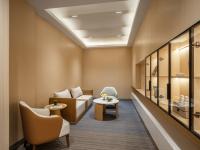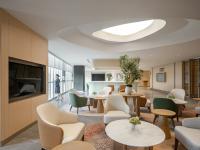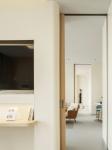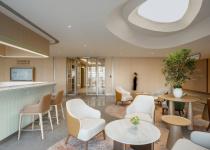
Following the holistic spatial design for the Taikang Hospital International Medical Department in Shenzhen Qianhai, WIT Fongxia Design, led by Luo Zhenhua and his team, further realized the spatial design for the Taikang Tongji (Wuhan) Hospital International Medical Department, centering on the theme of "Artistic Healing"
Compared to the prior project, the Wuhan iteration delves deeper into the city’s architectural memory while resolving fundamental spatial constraints . The design delivers an exceptional spatial experience, supporting the client’s vision to “create a beacon of health and a source of pride for the people of Wuhan” .
Chapter 1
Integrating a Robust Healing Ecology
In recent years, cutting-edge medical space design has undergone a paradigm shift: from pure functionality to integrating experience and efficacy; from risk aversion to proactively promoting wellness; from standardization to personalization and inclusivity . Rooted in this evolution, Fongxia Design sought to establish a powerful healing ecology by uniting spatial artistry, natural connections, sensory comfort, and technological innovation . This approach transcends aesthetic enhancement, embodying a systematic optimization informed by neuroscience, environmental psychology, and evidence-based design .
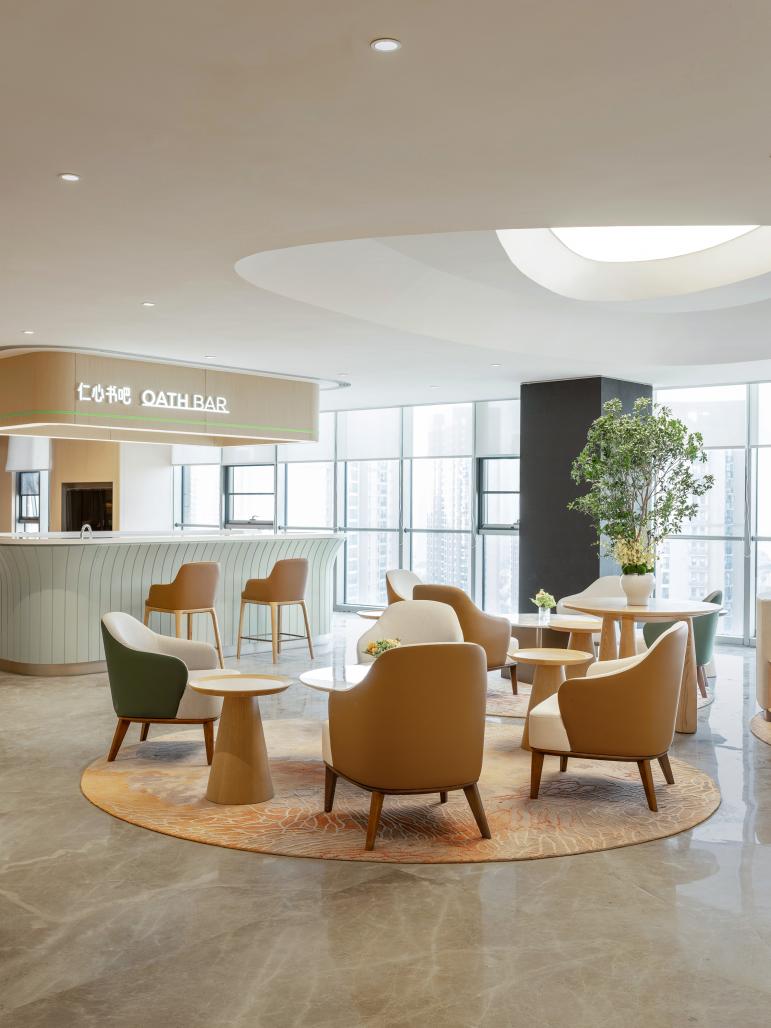
Natural light is maximized in public areas—including the health lounge and the Renxin Book Bar resting zone—creating a non-clinical, warm, and comforting atmosphere . Warm, simple materials and soft, elegant hues emphasize texture and a caring tactile and auditory experience . These elements give rise to interconnected yet independently functional spaces that encourage informal communication, mutual support, and sharing .
Simultaneously, the design balances efficient medical workflows with a serene ambiance. Through meticulous circulation planning, clear signage, and acoustic insulation, the space maintains relative tranquility and order despite high foot traffic .
Chapter 2
Artistic Healing – Honoring Life’s Quality
From the International Department’s entrance, the design incorporates a sequence of soothing, thoughtfully detailed elements . Delicate LED lighting traces patterns symbolizing life stages, reflecting the institution’s care across the full lifespan in the longevity era . A cloud-inspired ceiling feature on the top level elevates the spatial experience, creatively addressing the low ceiling height of lower floors .
Within the space, art evolves beyond standalone pieces into an environment imbued with artistic qualities—ambiance, atmosphere, and tactile richness . These intentionally orchestrated experiences can, in a sense, non-invasively help regulate the nervous system and activate positive emotional pathways, serving as meaningful complements to medication and technology .
The benefits of a healing environment extend beyond patients. Medical staff working long hours in high-pressure, high-intensity settings directly impact healthcare quality and safety . Bright, comfortable workstations, efficient layouts, and green, art-filled common areas are key design strategies to counter burnout and enhance focus and empathy .
Investing in the environmental well-being of healthcare teams is an intrinsic requirement for sustaining medical system operations and ensuring exceptional service .
Chapter 3
Beyond Function – The Core Value of Future Healthcare
Leading medical centers recognize that delivering excellence in healthcare extends beyond advanced equipment and technical skill. In moments of vulnerability brought by illness, the compassionate care and emotional comfort conveyed by the environment hold irreplaceable power.
Integrating artistry, natural connections, and sensory comfort into design is a pivotal practice in shifting from a "disease-centered" to a "whole-person health-centered" model . Such spaces not only treat the body but also nourish the mind, ease family stress, and enhance the workplace well-being of medical staff . They articulate the institution’s respect for life quality and form an essential part of the future value and core competitiveness of healthcare brands .
Acknowledging this, WIT Fongxia Design has delivered this response. The most direct user feedback captures its success:
“Whether it's the environment or the service, this place doesn’t feel like a hospital at all—it’s more like a five-star hotel!”
2023
2024
Location: Wuhan China
Area: 8000 sqm
Design Period: 2023
Completion Time: 2024
Design Team: Luo Zhenhua, Niu Qianxuan, Zhou Haixin, Zhao Gongpu, Wang Yixian, Li Yuxuan, Chen Wenyi
Interior Design: WIT Design
Installation Art: FANG ZHOU Intelligent Fabrication
Photography: TOPIA Image Visual
Copywriting: NARJEELING
Project Planning: LE Brand Strategy Agency
TOPIA Image Visual