Rethinking Workspaces: A Sustainable Office Hub in High-Density Qianhai
In fast-paced, high-density urban areas, how can office buildings break away from traditional, closed designs to create more relaxed, open, and nature-inspired work environments? Aedas’ winning proposal for the Qianhai Shenzhen-Hong Kong International Service City Unit 15 Block 02 Opening Area Office Project, led by Executive Director Fiona Chen and Founder and Chairman Keith Griffiths, offers a new solution.
Located in the core development area of the Greater Bay Area’s eastern coast, the site is adjacent to the Qianhai Bay River ecological corridor, with excellent connectivity via nearby roads and Metro Line 5. However, as Keith highlights, ‘In a high-density area like Qianhai, public space is a scarce resource.’
Breaking Up Space to Introduce Nature
‘This project is highly customised with significant design constraints. Creating a distinctive office project on such a tight site is a real challenge,’ explains Fiona.
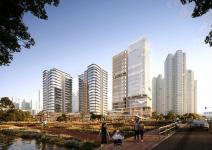
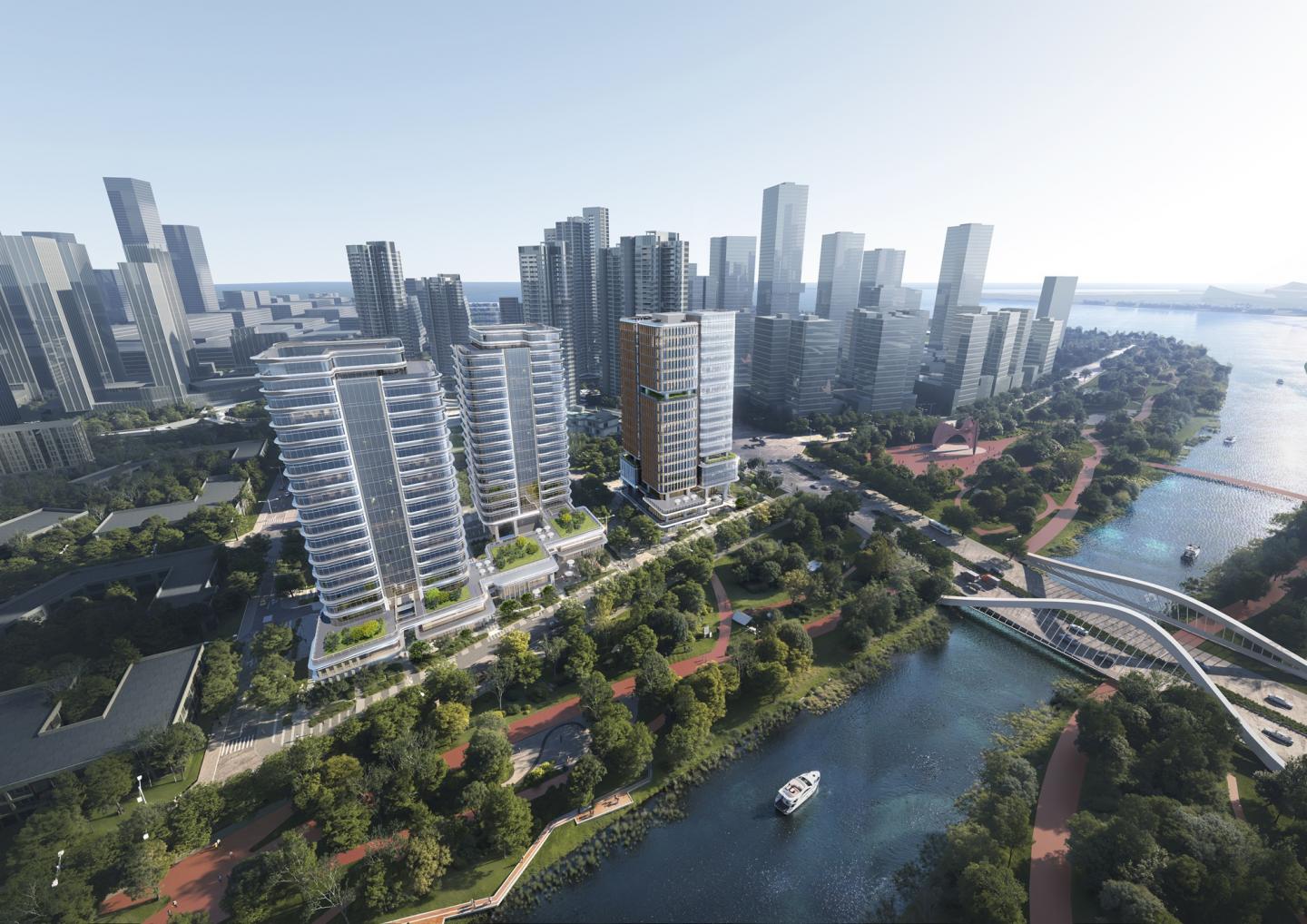
To address challenges like high plot ratios, height restrictions, and limited space due to metro tracks, the team position three towers in a staggered layout to create urban corridors. This avoids direct sightlines between towers, opens views to the waterfront, and optimises the spatial arrangement.
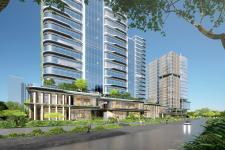
The segmented tower forms break up the mass and create dynamic skylines, while the façade design balances differentiation between the northern and southern plots. Vertical terraced elements bring natural features into daily office life, achieving a vision of a ‘garden-style office.’
Integrating Green and Sustainable Designs into Architecture
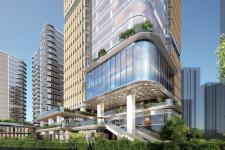
The design incorporates features such as arcades and breezeways. The ground floor is elevated to create open spaces, while riverside commercial podiums enhance the pedestrian experience. By blending natural elements into the architecture, the building forms a harmonious relationship with the surrounding environment.
A central courtyard filled with greenery extends towards the Qianhai Bay River greenbelt, creating an organic connection. The elevated ground floor provides open public spaces, extending the visual and spatial connection to the river. This openness facilitates airflow, allowing breezes from the river to flow through the towers and naturally cool the space. This not only creates a comfortable microclimate but also mitigates the urban heat island effect, bringing a sense of nature into a dense urban environment.
The riverside commercial podiums, combined with layered canopies, soften the massing and provide continuous sheltered walkways for public activities.
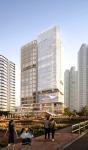
Lush greenery grows in the courtyard and elevated spaces, extending along terraced platforms and pedestrian corridors, ultimately integrating with the waterfront. This design blurs the boundary between architecture and nature, creating a dynamic and lively urban experience.
To further emphasise ecological principles, green balconies and viewing terraces are introduced at various levels, offering multidimensional views of the surroundings. The west-facing façade features planted balconies that reduce heat gain while providing spaces to enjoy the cityscape.
Balancing Function and Aesthetics
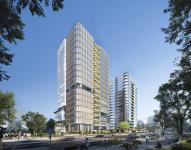
The tower façades reflect a balance of functionality and aesthetics, with distinct design languages for the north and south plots to incorporate ecological features. The north tower features segmented forms with contrasting solid and transparent elements.
Warm bronze vertical lines and gradient glass provide shade and ventilation, while creating a layered appearance to enhance the tower’s landmark presence.
In contrast, the south tower incorporates horizontal lines to maximise views and create a rhythmic design. These horizontal elements extend into the podium, unifying the overall façade. Vertical warm-colored ceramic panels are added in select areas to enrich the design.
From open arcades and ventilated corridors to green balconies and waterfront spaces, the project introduces a multi-layered ecological office environment. This approach brings a rare connection to nature within a high-density urban context. ‘By integrating wind, light, water and greenery, we aim to bring architecture closer to nature and set a new benchmark for park-style office environments in Qianhai,’ says Fiona.
2025
Project: Shenzhen Qianhai Unit 15 Block 02 Opening Area Office Project
Location: Shenzhen, China
Design and Project Architect: Aedas
Client: Shenzhen Qianhai Shekou Free Trade Investment Development Co., Ltd.
Gross Floor Area: 70,647 sq m
Completion Year: 2027
Design Director: Fiona Chen, Executive Director; Keith Griffiths, Founder and Chairman
Design and Project Architect: Aedas
Design Director: Fiona Chen, Executive Director; Keith Griffiths, Founder and Chairman
Aedas -