The project is envisioned as a landmark mixed-use development that redefines contemporary urban living through the integration of luxury residential spaces, hospitality, retail, leisure, and public interaction within a vibrant metropolitan context. Conceived as more than a singular building, the development aims to establish a dynamic urban destination that contributes to the evolving identity of the city while creating a strong architectural statement on the skyline. The overall vision is rooted in the ambition to merge innovation, elegance, sustainability, and human-centered design into one cohesive environment that responds to both present and future urban lifestyles.
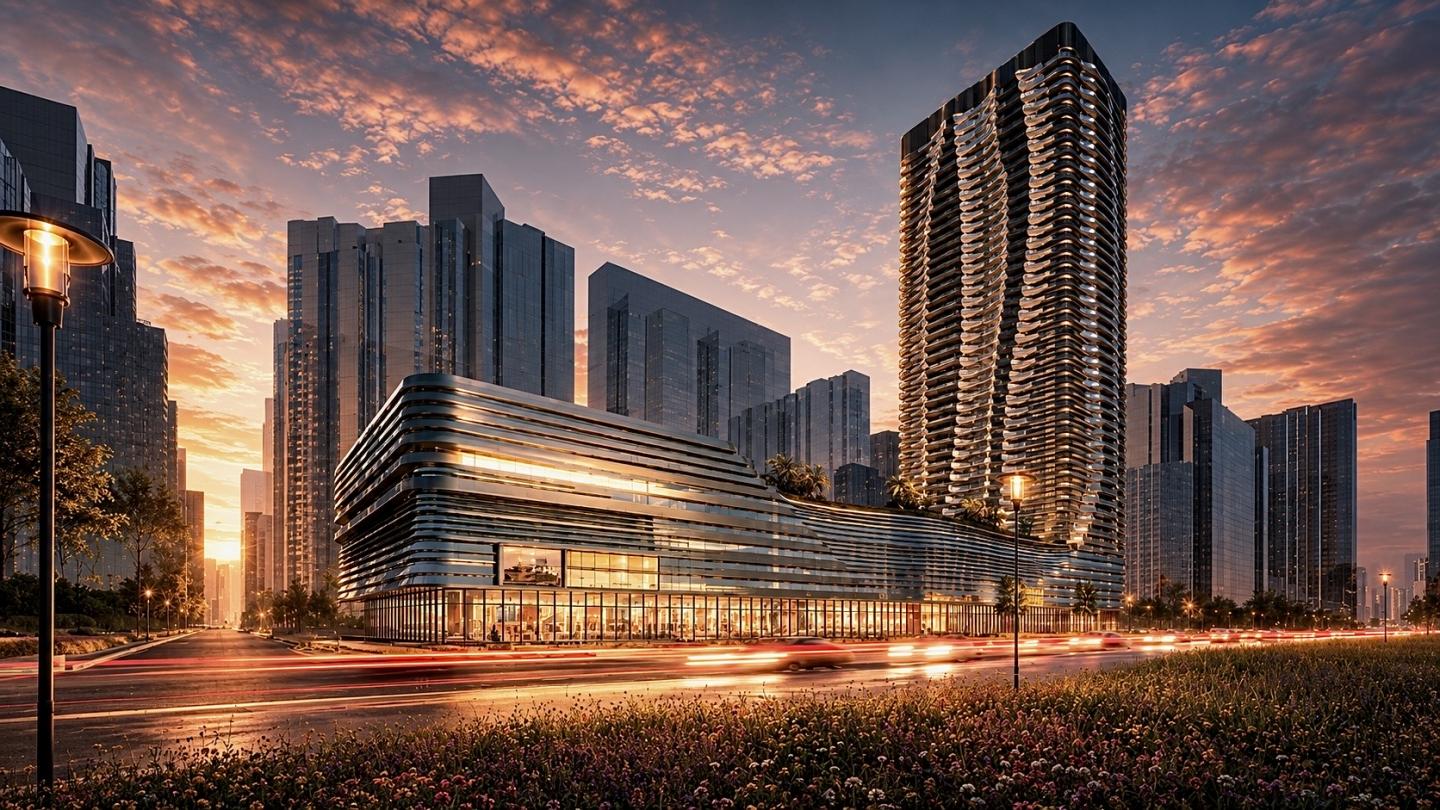
At the core of the design concept lies the intention to create architecture that expresses movement, fluidity, and sophistication. The sculptural building form is characterized by sweeping horizontal lines, layered façades, and organically flowing geometries that soften the visual mass of the development while establishing a distinct and recognizable identity. These fluid architectural gestures are intended to evoke a sense of continuity and rhythm, giving the building a timeless and futuristic presence simultaneously. Rather than relying on rigid or static forms, the design embraces dynamic compositions that interact with light, shadow, and perspective throughout the day, allowing the structure to appear constantly evolving from different viewpoints within the city.
The tower component of the development rises as an iconic vertical element that symbolizes ambition, growth, and modern urban progress. Its elegant proportions and sculpted façade composition contribute to a refined skyline presence that can be recognized from a distance. The design intentionally balances monumentality with elegance, ensuring that the tower becomes a defining landmark without appearing overwhelming or disconnected from the surrounding urban fabric. Through carefully articulated balconies, façade recesses, and layered terraces, the building achieves a visually lightweight appearance despite its significant scale and density.
A major design objective was to establish a harmonious relationship between the tower and the podium. While the tower serves as the vertical landmark element, the podium creates the human-scale urban interface that activates the streetscape and connects the development to public life. The podium is envisioned as an active social and commercial platform containing retail areas, cafés, restaurants, lounges, and lifestyle-oriented functions that encourage interaction, movement, and urban vibrancy. Transparent glazed façades at ground level strengthen the visual connection between interior and exterior spaces, fostering openness and accessibility while enhancing the pedestrian experience.
The integration of public and semi-public spaces plays a central role in the overall architectural strategy. Landscaped plazas, terraces, and open gathering areas are designed to function as extensions of the city, inviting residents, visitors, and the wider community into the development. These outdoor spaces are not treated merely as transitional zones but as essential social environments that encourage leisure, interaction, and cultural engagement. The project therefore seeks to create a seamless transition between architecture, landscape, and urban life, allowing the built environment to feel integrated rather than isolated.
Another important design intention was to maximize experiential quality for occupants through the strategic organization of views, daylight, privacy, and spatial openness. The tower orientation and façade articulation are carefully developed to optimize panoramic views toward the city skyline, landscape, and surrounding urban scenery. Large glazed openings and generous terraces enhance visual connectivity while allowing natural light to penetrate deep into interior spaces. This approach not only improves user comfort and spatial quality but also contributes to energy efficiency by reducing dependence on artificial lighting during daytime hours.
The residential components are designed to reflect contemporary luxury living standards while maintaining functionality, comfort, and flexibility. Interior layouts prioritize openness, natural light, and seamless spatial transitions, creating living environments that feel both elegant and livable. Balconies and terraces extend the private interior spaces outward, allowing residents to engage with the surrounding cityscape while benefiting from outdoor living opportunities within a dense urban setting. The residential experience is therefore conceived as both exclusive and connected, balancing privacy with urban engagement.
Hospitality and lifestyle functions within the development are intended to create a destination-oriented atmosphere that enhances the overall identity of the project. Hotel facilities, wellness areas, rooftop lounges, and entertainment spaces are strategically integrated to provide a high-quality user experience while supporting economic and social activity throughout the day and night. The development seeks to establish itself not only as a place to live, but also as a place to experience, visit, and interact with. This mixed-use approach strengthens urban vitality by ensuring constant activity and diversity of users across different functions and times of day.
Sustainability and environmental responsiveness are fundamental principles embedded within the design process from the earliest conceptual stages. Rather than treating sustainability as an isolated technical addition, the project integrates passive and active environmental strategies directly into the architectural expression and spatial organization. The façade system incorporates horizontal shading devices and layered envelope elements that reduce solar heat gain while maintaining transparency and visual openness. These shading strategies are particularly important within warm climatic conditions, where controlling direct sunlight significantly improves indoor comfort and reduces cooling loads.
The integration of landscaped terraces, sky gardens, and green roofs further reinforces the environmental strategy while enhancing the visual identity of the building. Vegetation is introduced vertically throughout the project to soften the urban character of the development, improve microclimatic conditions, and contribute to occupant well-being. These green elements create moments of relief within the dense metropolitan environment while supporting biodiversity and reducing urban heat island effects. The landscape concept therefore operates both aesthetically and environmentally, strengthening the relationship between nature and architecture.
Pedestrian-oriented urban planning forms another key aspect of the project vision. The design prioritizes walkability, accessibility, and public connectivity by creating inviting streetscapes, shaded pathways, and active ground-floor uses. Vehicular access and service functions are carefully organized to minimize conflicts with pedestrian circulation, ensuring that the public realm remains safe, comfortable, and visually engaging. By emphasizing human-scale experiences at street level, the project contributes to a more livable and socially connected urban environment.
Materiality also plays a significant role in communicating the architectural intentions of the project. The combination of glass, metal, and high-quality façade finishes reflects a contemporary and sophisticated aesthetic while emphasizing precision, innovation, and elegance. Reflective surfaces interact dynamically with changing daylight conditions, allowing the building to visually transform throughout the day and evening. Warm lighting integrated into the façade composition enhances the nighttime identity of the development, reinforcing its presence as a vibrant urban landmark after sunset.
Flexibility and future adaptability are integrated into the planning approach to ensure the long-term relevance of the development. The mixed-use nature of the project allows for evolving user needs and changing urban demands over time. Flexible floor plans, adaptable commercial spaces, and multifunctional public areas create opportunities for future transformation without compromising the architectural identity of the project. This future-oriented mindset supports long-term sustainability not only environmentally, but also economically and socially.
The project also reflects broader aspirations regarding urban growth and modernization within emerging global cities. It represents a vision of progressive urban development that embraces international architectural standards while responding to local climatic, social, and cultural conditions. The architecture aims to communicate confidence, innovation, and opportunity, positioning the development as a symbol of urban transformation and economic advancement.
From an experiential perspective, the design seeks to create an emotional connection between people and place. The interplay of scale, light, movement, landscape, and spatial sequence is carefully orchestrated to produce memorable architectural experiences for residents and visitors alike. Arrival zones, public plazas, lobby spaces, terraces, and skyline views are all designed to contribute to a sense of identity, prestige, and belonging. The architecture is therefore not only intended to function efficiently but also to inspire, engage, and elevate everyday urban life.
Ultimately, the project aspires to become a contemporary architectural landmark that embodies luxury, innovation, sustainability, and urban connectivity within a unified design language. By combining iconic form-making with human-centered planning and environmentally responsive strategies, the development establishes a strong vision for future metropolitan living. It aims to contribute positively to the city’s skyline, public realm, and social life while creating a lasting architectural identity that resonates both locally and internationally.
2026
2026
* Project Type: Mixed-Use Development
* Functions: Residential, Retail, Hospitality & Leisure
* Building Height: Approx. 180–220 m
* Floors: 45–60 Storeys
* Construction System: Reinforced Concrete Core with Steel/Composite Structural Elements
* Façade System: High-Performance Curtain Wall with Horizontal Shading Elements
* Parking: Integrated Multi-Level Parking
* Sustainability Features: Green Roofs, Sky Terraces, Energy-Efficient Façade, Natural Ventilation Strategies
* Site Development: Urban Plaza, Landscape Integration, Boulevard Connection
PROJECT TEAM:
* Architecture & Urban Design: Godwill Mensah
* Lead Architect: Goodwill Mensah