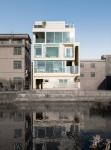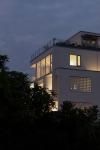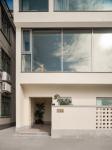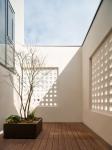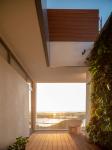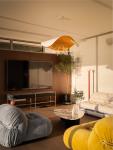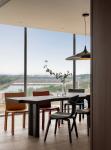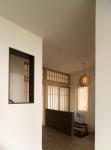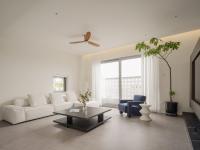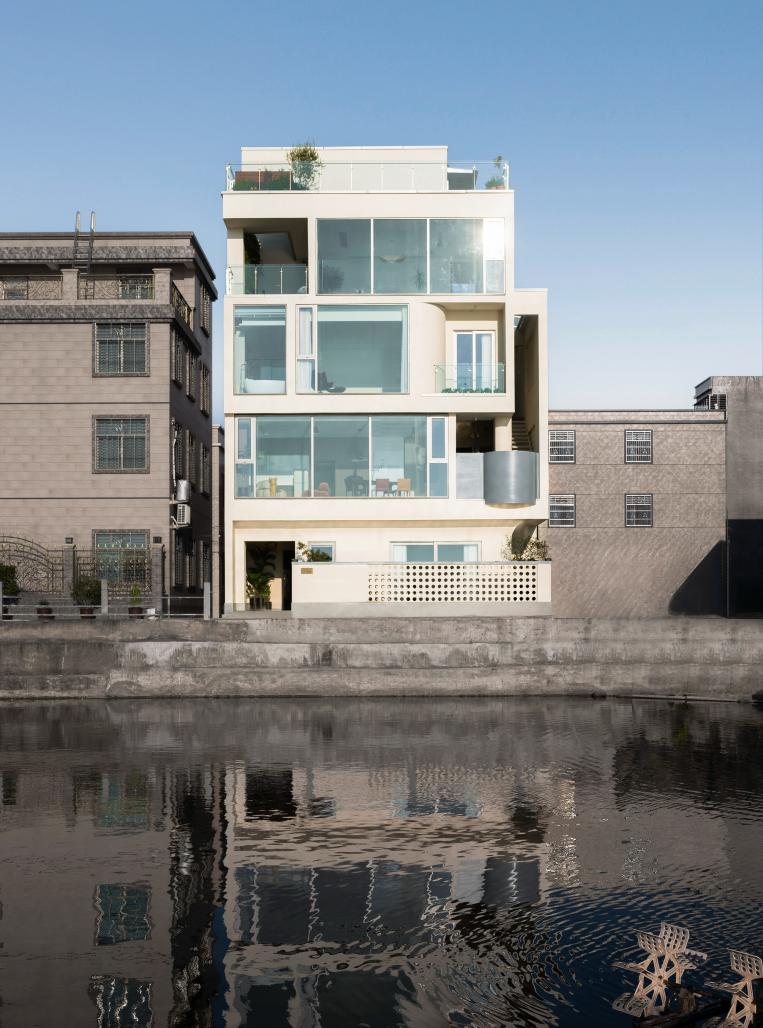
Located in a coastal village of Chaozhou, eastern Guangdong, the project is developed for a hometown returnee who upholds family heritage and longs for multi-generational gathering. Focusing on the contemporary design of small rural homestead plots, the project aims to realize multi-generational co-living, independent household layout and maximum utilization of landscape resources.
It breaks the constraints of traditional rural self-built houses: limited base area with large family population, as well as possible sense of spatial crowding and strained neighborhood relations from future surrounding construction. Within the limited site of approximately 110 ㎡, the design systematically solves common rural housing problems in daylighting, ventilation, heat insulation, seismic performance, privacy and long-term serviceability.
It also meets the spiritual needs of family reunion, children’s recreation and harmonious neighborhood communication, shaping a "family vessel" with local adaptability and spatial charm. The residence can adapt to lifestyle changes in the coming decades and provide full-life-cycle livability, achieving an in-depth value reshaping of rural existing homestead resources.
Within the limited homestead area of approximately 110 square meters, the design systematically solves typical rural housing problems such as daylighting, ventilation, thermal insulation, seismic resistance, privacy protection and long-term serviceability. It also fulfills the spiritual needs of family reunion, children’s play and harmonious neighborhood coexistence.
The project creates a family vessel with local adaptability and spatial interest, creating a full-life-cycle livable space that can adapt to lifestyle changes in the coming decades. It represents an in-depth reshaping of the value of rural stock homestead land.
An integrated innovative design is carried out from multiple dimensions: spatial order, circulation optimization, neighborhood coexistence and ecological energy conservation. In terms of space, a differentiated layout of dual living rooms is adopted: the first floor is designed as a rural community living room, creating a public social scene relying on half-height walls and an open porch to meet the needs of rural neighborhood communication and elderly leisure chat; the top floor is equipped with a private family parent-child living room, realizing the functional division between public social space and private family space.
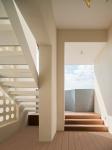
The overall design adopts a split-level spatial structure: the front public area raises the floor height to create a transparent pattern in line with humanistic feng shui; the rear residential space appropriately reduces the height through split-level design, and eliminates building obstruction through staggered spatial organization to ensure the sea view, natural daylighting and ventilation efficiency of the rear space.
Abandoning the traditional corridor-style layout, the transportation system adopts a circulation mode of core staircase multi-point diffusion, which naturally shapes the split-level spatial hierarchy and interesting tour routes, streamlines the number of vertical transportation steps to ensure the convenience of the elderly, and realizes the continuous experience of landscape vision during movement.
Considering the potential spatial oppression caused by future surrounding construction, in terms of local adaptation and ecological construction, a setback design is adopted on the side adjacent to neighboring houses to reserve a daylight buffer zone and privacy distance. To meet the basic residential privacy needs while weakening spatial boundary barriers and continuing the rural acquaintance social atmosphere, enclosed high walls and intelligent security modes are abandoned. Instead, low walls and semi-open spaces are used to create a flexible neighborhood barrier, constructing an open, symbiotic, natural and warm rural residential environment.
Adopting the pile-cap and pile foundation structure, the building is designed in compliance with rural residential codes with integrated seismic structural systems. Adapted to the geological and climatic conditions of coastal eastern Guangdong, the overall structure meets the standard seismic fortification intensity for rural dwellings, improving structural durability and service life to achieve long-term sustainable occupancy.
Drip edge structures are arranged along all eaves. Rainwater is drained through intercepting ditches and the drainage system under the elevated wooden floor, avoiding exterior wall contamination and reducing maintenance costs. The facade adopts plain light coating with customized stainless steel pipelines, balancing minimalist aesthetics and weather resistance.
2024
2024
Project Name: Coastal Villa Residence
Location: Raoping, Chaozhou, Guangdong
Area: 373㎡
Design Cycle: 2021
Completion time: 2024
Main Materials: Latex paint、Solid wood flooring、Antique tile、Marble stone、Hollow brick
Client Name: Mr. Zhu
Design Company: VALUE WORKS ARCHITECTS
Chief Designer: Vincent Wu
Assistant Designer: Liu Weijing、Guo Sihua
Photographer: AMAZING STUDIO
AMAZING STUDIO