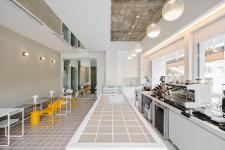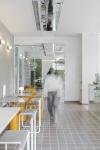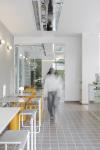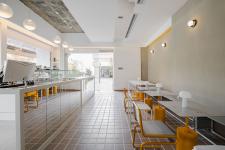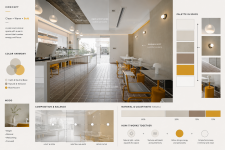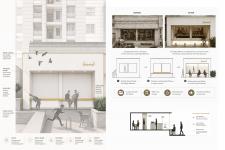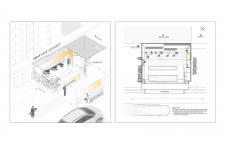
The primary intention of the “Inbar Café” project is to reinterpret the connection between the interior bar space and the adjacent pedestrian street. In this approach, architecture is not treated as a static shell but as an active interface that facilitates a contemporary urban experience.
Transformation of the Existing Classical Façade
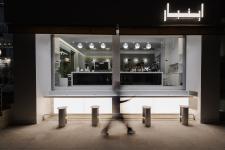
The existing building originally featured a classical Roman-inspired stone façade that was inconsistent with the project’s architectural direction. During the design process, this ornamental layer was removed and replaced with a unified, light, and translucent surface. This transformation establishes a more direct visual and spatial relationship between the interior and the urban environment, while introducing a minimal and contemporary architectural expression.
Additionally, the façade is enhanced by a carefully calibrated urban lighting strategy. At night, the building becomes a distinctive element along the pedestrian path, strengthening the spatial identity and vibrancy of the street.Mirror Surfaces as Instruments of Interaction
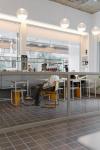
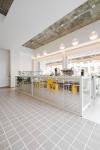
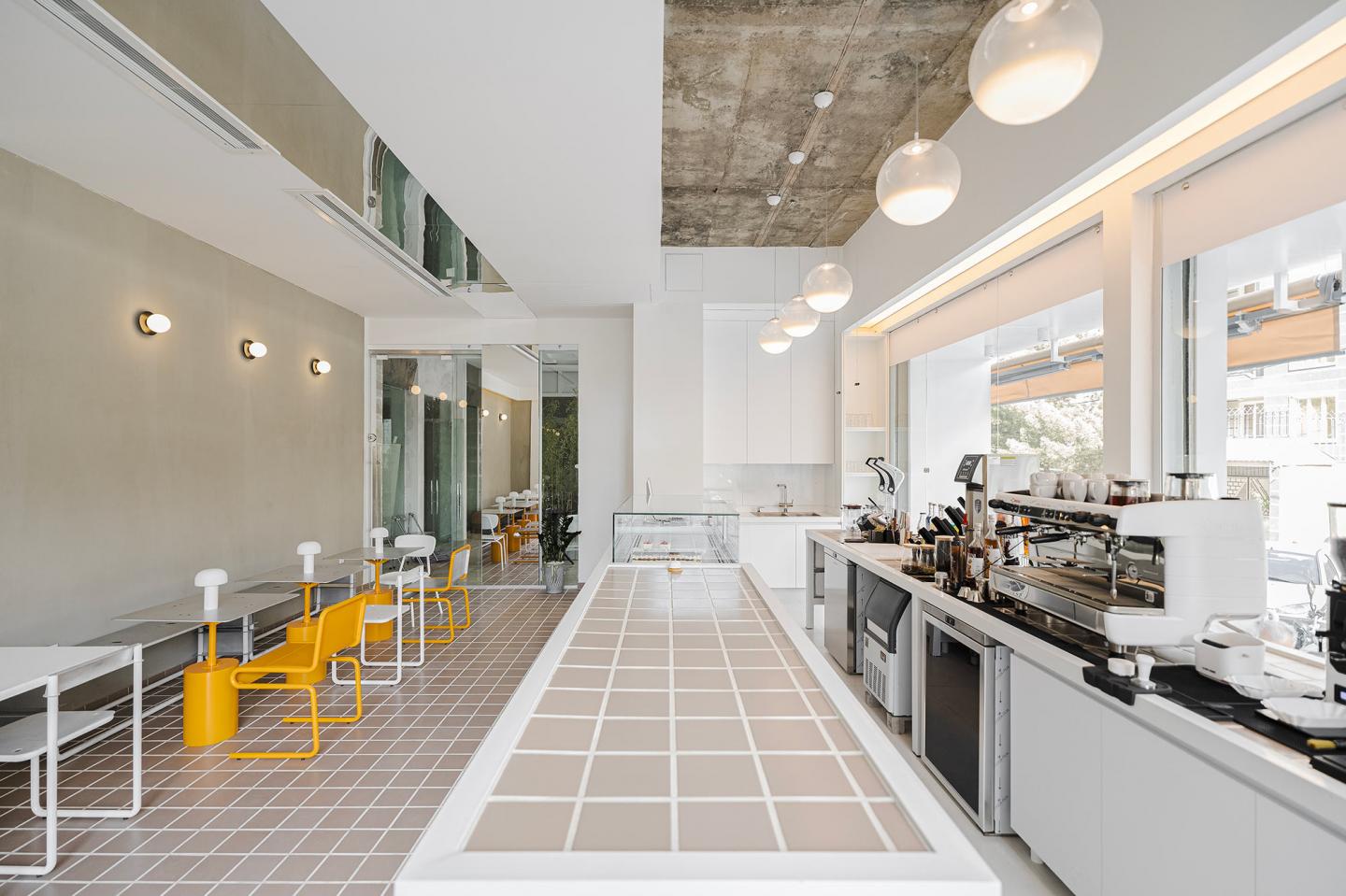
Due to the level difference between the café interior and the pedestrian street, a unique condition for visual interaction is created. Mirror surfaces integrated within the bar area not only expand the perceived spatial volume but also establish a reciprocal visual relationship between inside and outside.
Reflections of passersby within the interior space allow individuals to become visually embedded in the café experience, even without entering the building. This bidirectional visual exchange dissolves the conventional boundary between public and private realms, aligning with the conceptual identity of “Inbar”—a space where the presence of people becomes an integral part of the architectural experience.
Ultimately, the project seeks to connect human scale, urban perception, and a contemporary architectural language, transforming architecture into a platform for interaction, reflection, and collective urban experience.
2023
2023
Mirror Surfaces as Instruments of Interaction
Due to the level difference between the café interior and the pedestrian street, a unique condition for visual interaction is created. Mirror surfaces integrated within the bar area not only expand the perceived spatial volume but also establish a reciprocal visual relationship between inside and outside.
Reflections of passersby within the interior space allow individuals to become visually embedded in the café experience, even without entering the building. This bidirectional visual exchange dissolves the conventional boundary between public and private realms, aligning with the conceptual identity of “Inbar”—a space where the presence of people becomes an integral part of the architectural experience.
Ultimately, the project seeks to connect human scale, urban perception, and a contemporary architectural language, transforming architecture into a platform for interaction, reflection, and collective urban experience.
Identity Design : Iman Eftekhar
Sajjad Rahimi