An Architectural Journey Through Time and Identity.
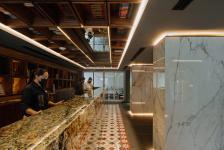
From its foundations, this space has been conceived as a visual dialogue that transcends mere architectural structure, exploring the rich duality between the imposing French-inspired architecture of the facades and a contemporary and contrasting interior design. The formal response to this premise has been manifested with a modern and elegant aesthetic, where the careful selection of indigenous materials such as henequen, Tzalam wood, and pasta floor rugs not only becomes an aesthetic choice but also an act of deep connection with regional roots.
The central purpose of this space goes beyond fulfilling its physical function; it aspires to be a generator of sensations and a transmitter of emotions for those privileged to enter its dimensions. Every corner has been meticulously designed to participate in a fascinating architectural game of volumes, light, and shadows, where the sensory experience becomes the soul of the design.
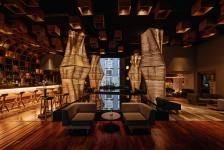
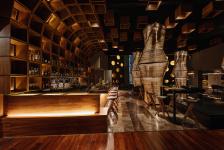
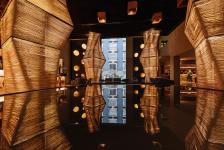
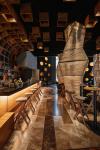
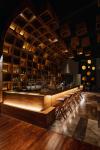
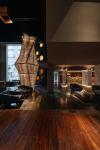
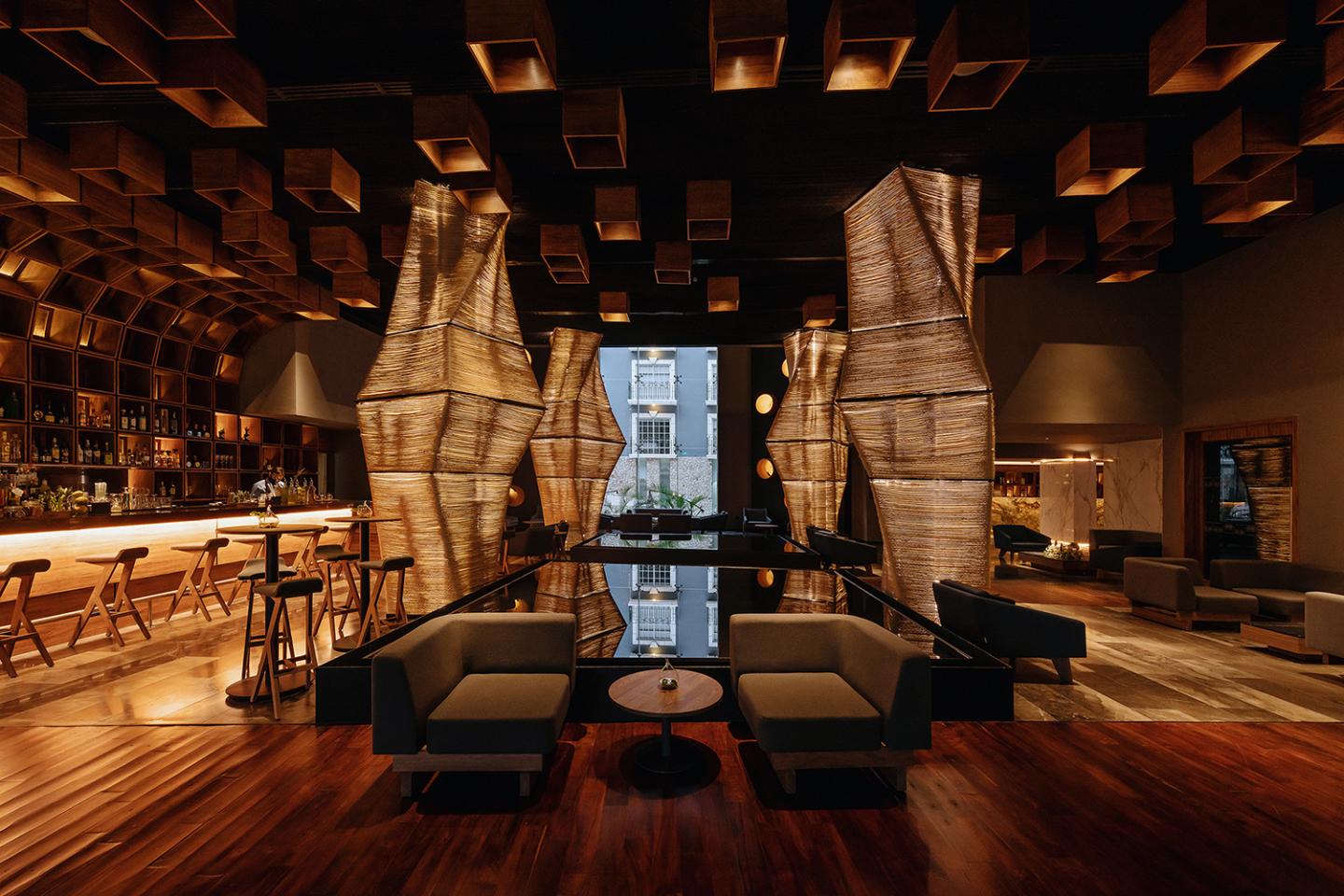
The bar, a highlighted nucleus and architectural gem, presents itself as a dynamic work of art, where the strategic arrangement of wooden cubes unfolding to become part of the roof creates a visually captivating structure. The masterful use of henequen threads, both dyed and in their natural state, enveloping discontinuous columns, not only contributes to an impressive ceiling but also acts as imposing luminaries, generating a sensation of movement and depth.
The design skillfully appropriates the play of lights and shadows, turning it into an essential protagonist that weaves various atmospheres throughout the day. This dynamism not only highlights the versatility of the space but also adds an additional layer of sensory experience for visitors, transforming the perception of the environment with each change of light.
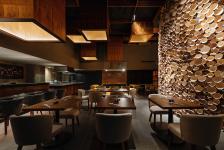
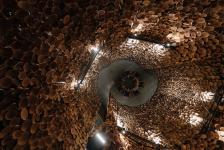
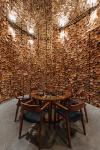
The visual culmination is revealed in a triple-height wall, where clay vessels, illuminated from within, seem to defy gravity as they ethereally float. This closure is not simply an aesthetic component; it is the epilogue of a captivating architectural narrative. The wall, with its imposing presence, guides attention towards a large window that frames the central courtyard, completing the visual narrative of the space magnificently and offering a panoramic view that merges interior and exterior.
The main concept of this space encompasses the creation of diverse atmospheres, taking advantage of a natural chromatic range and playing with shapes. For this purpose, traditional jicaras in beige tones were selected as design elements, which are organically repeated throughout the place, creating a play of architectural elements that provide rhythm and texture to the environment. This hotel is located in one of the most representative areas of the city of Mérida, where history and vibrant tourist activity converge. It is an enclave that merges architecture of great historical and artistic value with contemporary creations, thus offering an eclectic space where tradition and modernity coexist in harmony.
The jicaras, carefully selected and arranged inside the hotel, follow the concept of "The heart of the sky," emphasizing their connection with the environment and generating a visual continuity with the sky as the protagonist. The architectural design was conceived with the intention of reinterpreting Mérida's rich cultural and historical heritage in a simple yet elegant manner. Local techniques and materials, manufactured in workshops in the region, were used in all aspects of construction, thus highlighting the commitment to local identity and regional craftsmanship.
Curio represents a careful integration between architectural tradition and contemporary elements. It is a space that, beyond fulfilling its practical function, is an experience that evokes emotions and leaves a lasting impression on those privileged to immerse themselves in its unique architectural narrative. Every detail, every choice, is part of a visual story that celebrates regional identity and projects a bold vision for the future.
2020
2021
Site: Mérida, Yucatán, México
Year: 2021
Built Area: 818.00 m²
Architecture Firm: Arkham Projects Esquiliano ARQS
Architects in Charge: Benjamín Peniche Calafell / Jorge Duarte Torre / Edgardo Esquiliano Martinez
Branding: Bienal
Construction: Arciconstru
Photography: Zaickz Moz
Tamara Uribe