Conceived as a winter refuge in the Parnassian landscape, the house is composed through two archetypal forms: a grounded stone base and a pitched timber volume poised above it. Reading almost as a periscope, the upper guesthouse frames distant views across the forest canopy, transforming the act of dwelling into one of observation.
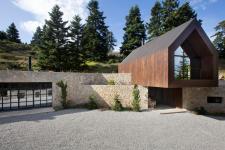
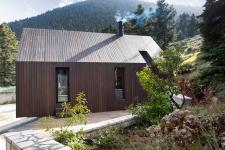
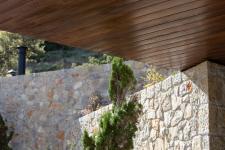
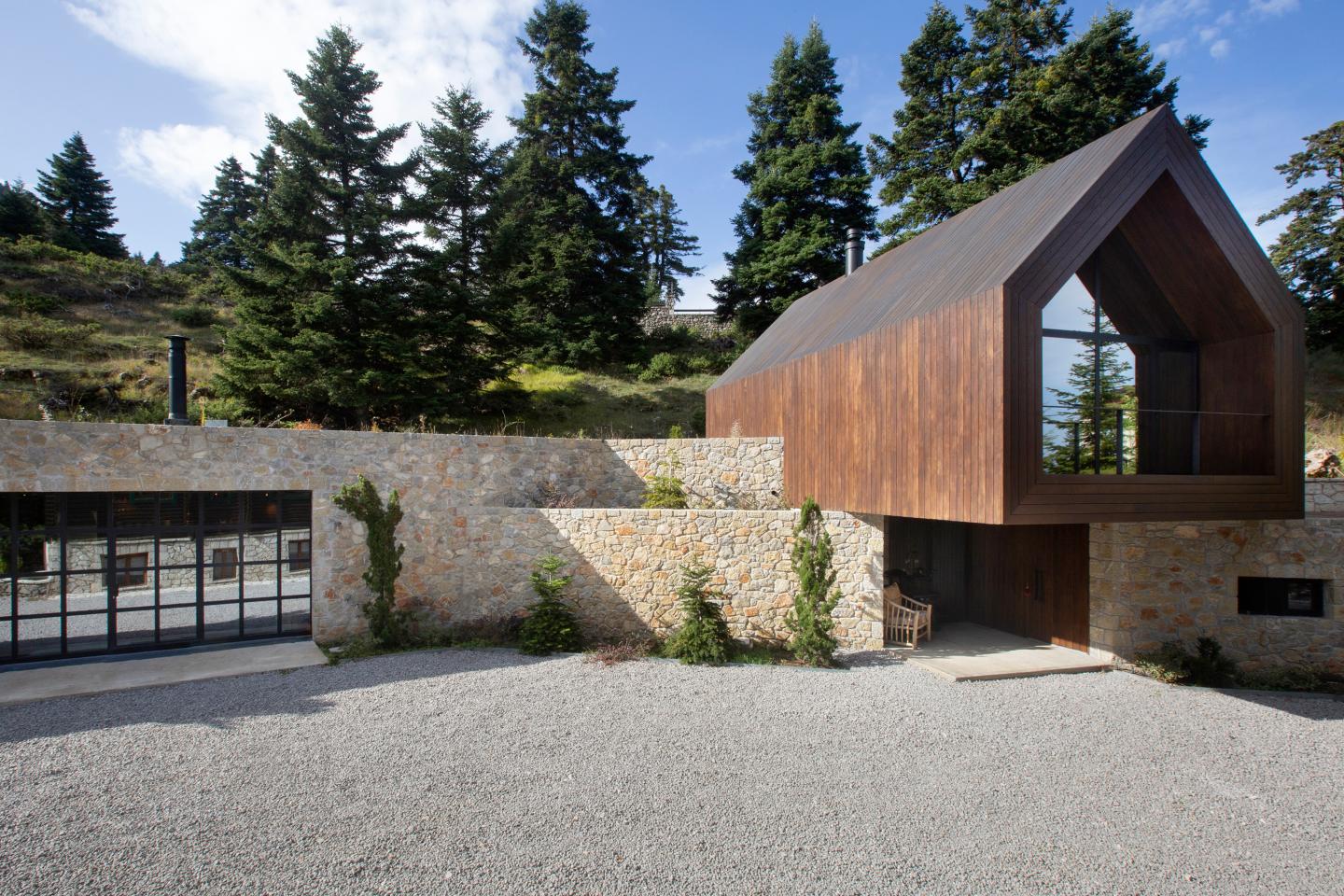
A holiday house on Mount Parnassus, conceived as a winter refuge within an idyllic landscape, stands against the threshold of a wild forest. The composition is defined by two iconic gestures: a stone plinth and an archetypal image of the house itself, a timber volume with a pitched roof, evocative of a birdhouse.
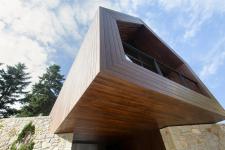
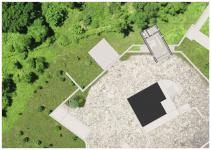
The stone base contains the public life of the dwelling at ground level, while supporting the more secluded part of the house: an independent guesthouse. Perched above like a periscope, this upper volume captures uninterrupted views over the treetops toward the dramatic forested mountain backdrop. The elongated stone plinth runs parallel to the site boundary and is carved out at one point to create a recess, within which the entrance is set.
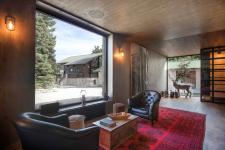
Entry is made through a narrow-glazed fissure in the otherwise solid stone main façade, leading into a long, open-plan interior articulated into three distinct yet fluid zones. Along the rear brick wall unfolds the kitchen and its storage spaces. At the center lies the dining area and fireplace, forming the human-centered heart of the home. Running parallel to the main façade, a more informal sitting area occupies the third zone. The dining element appears as a monolithic extension of the kitchen, occupying the preparation area before stretching lengthwise into the dining table itself. At one end, the pantry takes the form of a display cabinet, where raw ingredients are presented almost ceremonially, at the other, the space dissolves into the lounge and bar. The recurring presence of the deer throughout the interior—appearing as wall-mounted sculptures, paintings, and even as an almost lifelike taxidermy figure—seeks to draw the untamed essence of the surrounding landscape into the domestic interior.
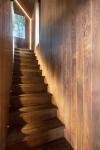
Within the stone ground-floor volume, an adjacent and independent space accommodates the caretaker’s room, as well as the circulation leading to the upper level, each accessed through its own separate entrance.
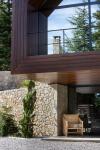
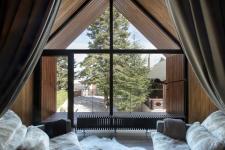
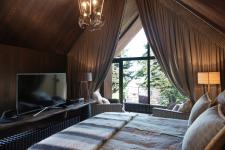
Hovering above the stone base and projecting beyond it in a surprising act of balance, the guesthouse reads as both shelter and lookout. Its interior is arranged in clearly defined zones. The timber roof forms a sheltered balcony, while a recessed glazed opening spans the full height and width of the sitting area façade, following the geometry of the pitched roof. A curtain, echoing the roofline, defines the private realm of the guesthouse and protects it from view. Beyond this soft threshold lie the bedroom and bathroom. Timber boards wrap the room in a continuous skin, cladding the façades, roof, internal walls, and ceiling alike, creating a seamless continuity between inside and out.
2019
2025
Architect: Panos Nikolaidis
Interiors: Poshpigalle
Photography: Louisa Nikolaidou
Location: Mount Parnassus, Greece
Building area: 350 m²
Status: Completed
Date: 2025
Principal Architect: Panos Nikolaidis
Louisa Nikolaidou