
Inwol-sa Temple; A Buddhist Temple Inspired by the Shape of the Buddha’s Eyebrows
- Project Background
Three years ago, a major wildfire along Korea’s east coast completely destroyed a temple operated by a Buddhist nun, leaving nothing but the robes worn by the monastics. Through nationwide donations from monks and Buddhist devotees, the project was reborn—transforming loss into an opportunity to create a new typology of religious architecture.
- Name & Concept
The name
- Site & Program
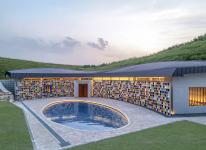
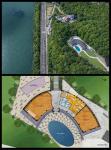
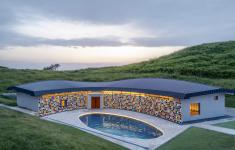
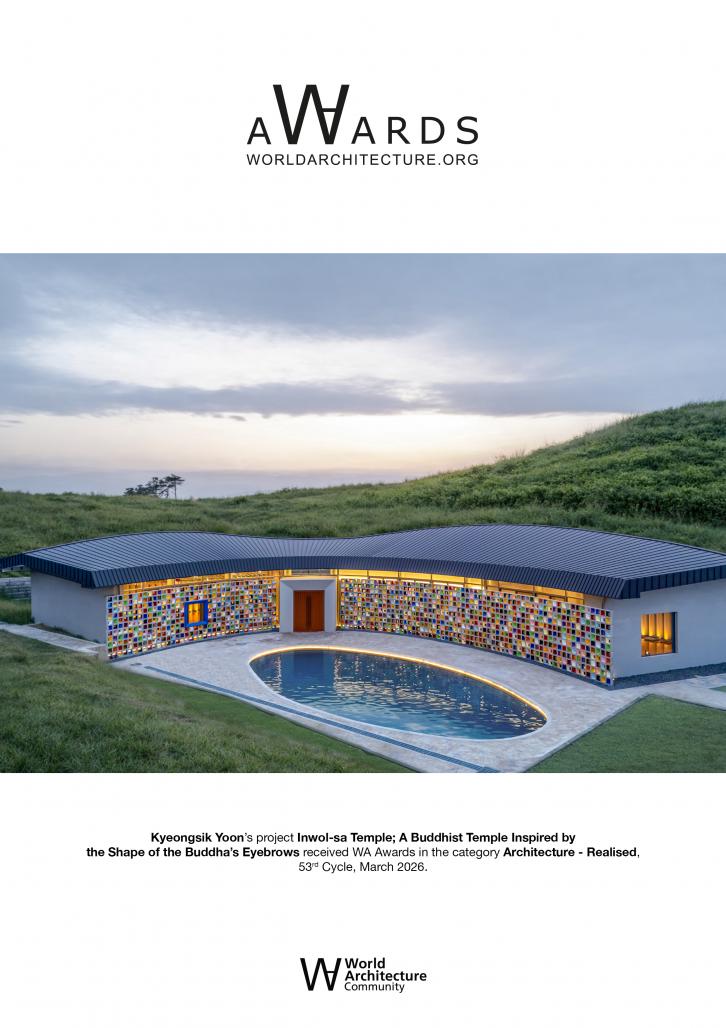
The site is long and narrow, making a conventional rectangular layout unsuitable for accommodating the two main functions: the main Dharma hall and the meditation center. The architect resolved this by unifying both programs within a single, gently curved structure inspired by the Buddha’s eyebrows, organized around a central lobby with the two functions symmetrically placed on either side.
- Philosophical Framework
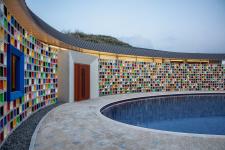
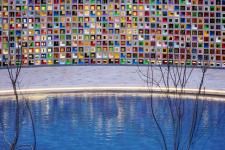
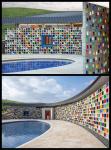
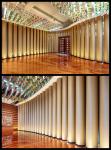
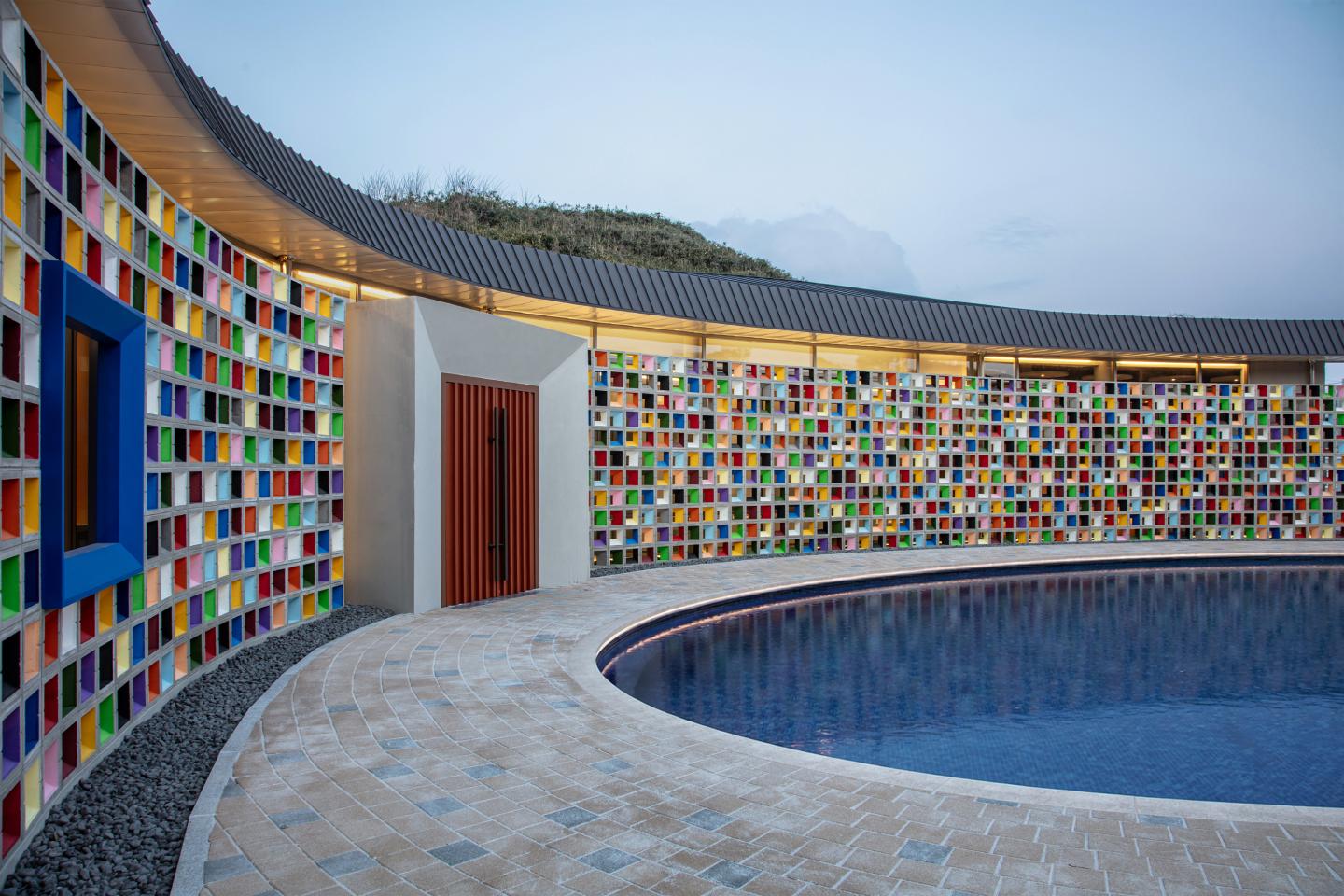
A core teaching of Buddhism is that all phenomena arise through interdependent relationships. This is symbolized by "Indra’s Net", a vast web of jewels reflecting one another, representing the interconnectedness of all beings. This concept is expressed architecturally through a long façade wall composed of multicolored blocks and voids, symbolizing diverse humanity while enveloping the temple spaces.
- Façade & Light
Named the “Indra-wall,” this façade mediates between interior and exterior. Inside, filtered light animates the spiritual atmosphere; outside, indirect illumination projects outward, visually expressing the Huayan philosophy of mutual reflection and interdependence.
- Roof Form
The dual curved roof ridgelines respond to the surrounding low mountain ranges and simultaneously express the building’s two primary functions.
- Approach & Landscape
Visitors encounter a reflecting pond in the front courtyard called the “Mirror of Karma,” symbolizing self-reflection as one’s accumulated karma is mirrored on the water’s surface before entering the sacred space.
- Interior Atmosphere
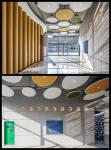
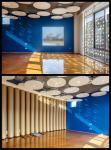
Suspended acoustic panels in the lobby and meditation center absorb sound while evoking a cosmic sky, inviting contemplation of the Buddhist principle of dependent origination.
2024
2026
- Location: Gangneung-si, Korea
- Fuction: Temple
- Completion Date: 2026. 2.
- Site Area: 2,459 ㎡
- Bldg. Area: 548.45 ㎡
- Gross Floor Area: 487.58 ㎡
- Bldg Scale: 1 story above ground
- Structure: R.C.
- Exterior Finishing: Exposed Concrete, Clear double-glazed glass Glass, Design Block, Zinc
- Interior Finishing: Exposed Concrete, Papertube, Metallic Epoxy Flooring
Architect : Kyeongsik Yoon
Client : Inwol-sa Temple / Chief Rev. Jae-bum
Associated Architect : Han Kook Architects, KACI / Yoonjung Kim
General Contractor : Il-jin construction / Yoonduk Bang
Site manager : Bumsoo Yang
Paper tube, Acoustic panel and Door : Yoonsung / Soohun Jeong
Metallic Epoxy flooring : Forsroc / Youngsik Yang
Photograph: Jongoh Kim
Inwol-sa Temple; A Buddhist Temple Inspired by the Shape of the Buddha’s Eyebrows by Kyeongsik Yoon in Korea, South won the WA Award Cycle 53. Please find below the WA Award poster for this project.
Downloaded 0 times.
Jongoh Kim