Unseen to Seen
A Computational Civic and Hydrological Apparatus
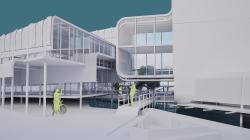
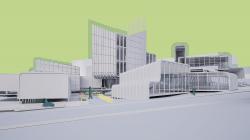
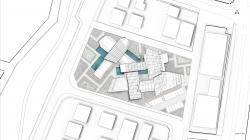
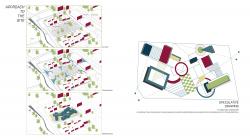
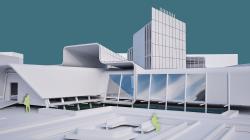
From Unseen to Seen positions architecture as an instrument of exposure. Institutional buildings often present authority as neutral and seamless, while hydrological infrastructures remain buried and invisible. This project challenges that condition by spatializing governance and water systems within a single civic framework. Located in Urla, İzmir, it proposes a civic and hydrological apparatus where environmental processes, negotiation mechanisms, and institutional control become publicly legible. Water operates not as hidden infrastructure, but as a generative and political agent shaping geometry, circulation, and hierarchy.
Computational Generation of Form
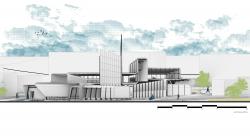
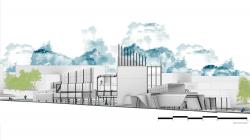
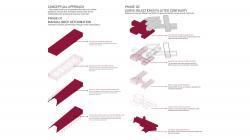
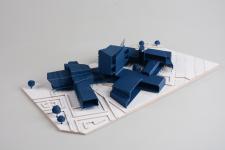
The design is grounded in a computational conceptual framework that translates abstract site-driven relationships into spatial continuity. An initial volumetric mass is manually deformed through controlled Brep vertex manipulation, introducing calibrated bending and shear while maintaining geometric hierarchy. These deformations are recomposed through curve selection, filleting, and lofting operations to establish structural logic and spatial coherence.
The Brep-based process transforms intangible conditions—flow, delay, accumulation, and pressure—into architectural operations. Geometry functions as both analytical tool and spatial generator.
Distributed Program and Vertical Authority
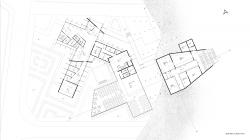
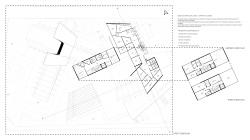
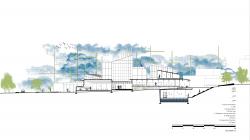
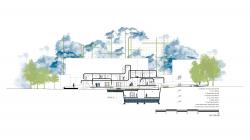
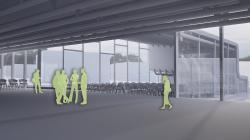
The program operates as a layered civic system rather than a conventionally zoned building. Negotiation chambers, mediation rooms, archives, and civic halls are distributed across ground and elevated platforms, maintaining spatial continuity with the landscape.
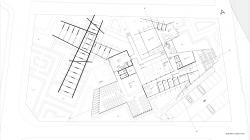
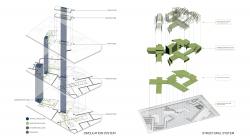
Hydrological components—including cisterns, overflow chambers, and silt observation areas—form a continuous infrastructural layer embedded within and beneath the mass. Upper floors accommodate orchestration spaces positioned for oversight rather than participation, establishing a vertical gradient from collective negotiation to controlled observation.
Structure, Permeability, and Revelation
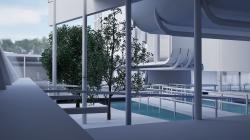
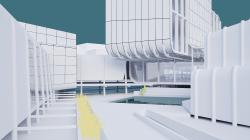
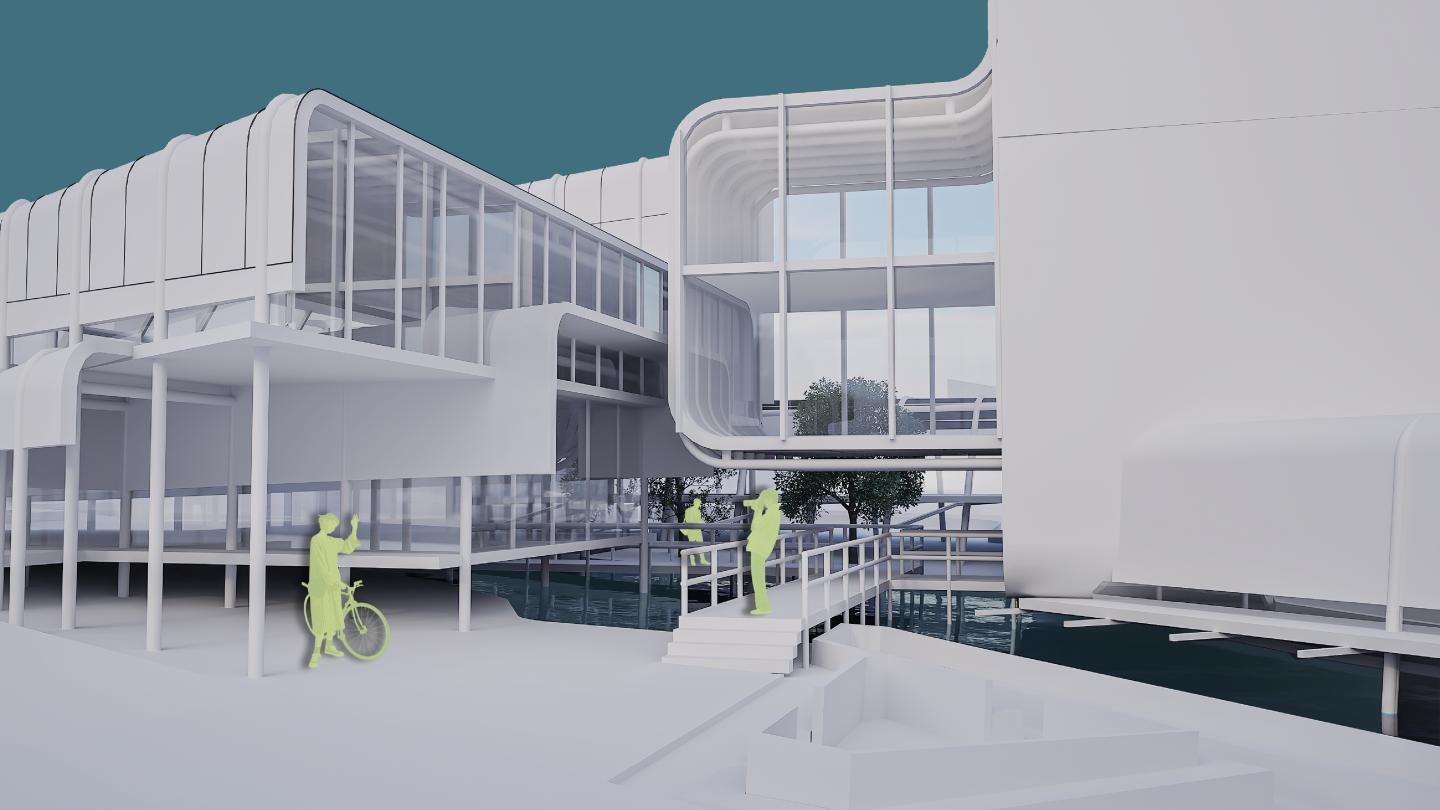
Elevated on pipe columns, the structure preserves ground permeability and allows water to circulate beneath and through the building. Circulation unfolds as a gradual revelation, guiding visitors from open civic zones into enclosed chambers of compromise, delay, and memory.
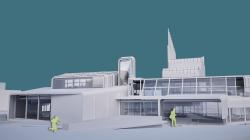
By rendering hydrological behaviour visible and experiential, the project challenges the neutrality of institutional architecture. Governance is not merely housed; it is spatialized. Infrastructure is not concealed; it becomes civic experience.
2025
Location: Urla, İzmir / Turkey
Project Type: Civic and Hydrological Complex
Site Area: 4500 m²
Built-up Area: 1,800 m²
Number of Floors: 3 Above Ground 1 Underground
Structure System:
Elevated reinforced concrete slabs supported by pipe columns, minimizing ground contact and preserving hydrological permeability.
Water System Strategy:
Layered drainage system integrating underground cisterns, overflow chambers, and silt filtration zones to render hydrological processes spatially visible.
Spatial Organization:
Vertically layered civic system distributing negotiation, mediation, and archival programs across ground and elevated platforms, with orchestration spaces positioned above for oversight.
Design Method:
Computational form generation through Brep deformation, curve selection, filleting, and lofting operations.
Designer: Esma Nur Biçer
Instructor: Michael Edward YOUNG & Nazlı Kök
Esma Nur Biçer