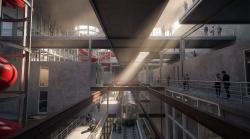
In Izmir, waste management operates through a linear disposal model. Materials generated within dense urban districts are transported outward through surface-based logistics and processed at peripheral facilities. This spatial dislocation produces two structural consequences: economic value loss and systemic inefficiency. Material that holds high potential as secondary raw input exits the urban core before it can be reabsorbed. The cycle remains incomplete.
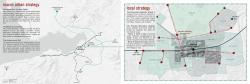
Matter Discloser is grounded in urban metabolism research, which frames the city as a system of material and energy flows rather than isolated functional zones. Studies correlating public transport corridors with high-density consumption patterns reveal that metro networks often overlap with areas of intensified material output. In İzmir, the metro line operates as a structural spine of urban intensity. The proposal uses this spine as a logistical reference, introducing a parallel rail-based transfer system that enables reverse material flow.
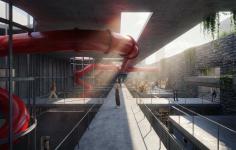
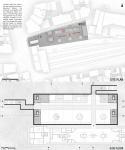
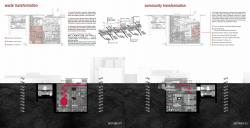
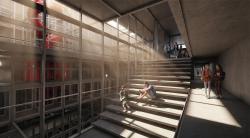
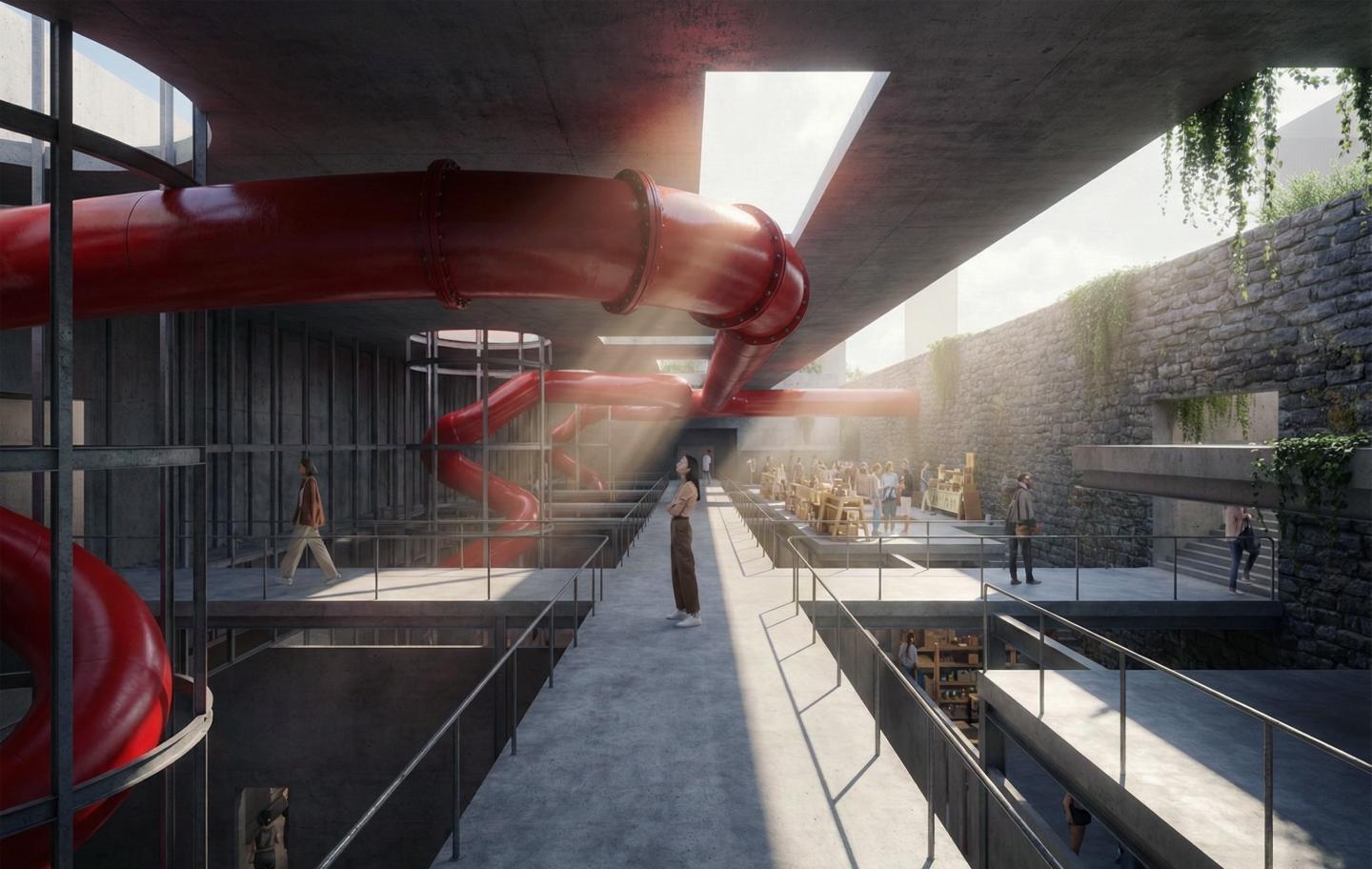
The project begins with a structural diagnosis of the waste cycle itself: the invisibility of waste within daily urban life. By positioning the structure at the existing Basmane metro entrance, the project deliberately inserts the waste cycle into an active public threshold. Collection, separation, and observation are spatially embedded within a civic environment, where users encounter the process as part of their routine movement. The architecture compels confrontation rather than concealment. Through this visibility, the project aims to transform collective perception; as citizens begin to recognize waste as recoverable material, source-based pre-separation becomes possible. In this sense, societal transformation precedes material transformation, the cycle begins with awareness.
Analysis of the region identified three high-potential recyclable streams: textile waste, paper, and electronic waste. Yet the transformation of these materials depends on three interdependent conditions:
Pre-separation and public awareness:
Without source-based separation, material recovery becomes technically limited and economically unviable. Underground pneumatic waste collection system transport pre-separated waste to the facility, where the process can be visually monitored by the public without interrupting circulation. The project integrates observation into everyday transit, positioning civic engagement as the first operational layer of the cycle.
Logistical cost reduction:
Research indicates that transportation can account for 70–90% of the total cost of waste processing. Surface-based truck systems not only increase carbon emissions but structurally limit economic viability. By introducing a rail-based transfer line aligned with the metro corridor, the project reduces surface congestion and establishes a continuous, scalable logistics infrastructure. Locally recycled portions are processed on-site, while the majority of recovered raw material is transferred via rail to the existing Halkapınar Waste Transfer and Recycling Facilities for industrial-scale processing.
Secondary market reintegration:
Only a limited portion of collected waste is transformed locally; this facility is not conceived as a centralized recycling plant, but as a civic interface. Repair workshops, repurposing ateliers, and secondary market allow materials to re-enter daily circulation while simultaneously embedding citizens within the cycle itself. Through these public functions, the community becomes an active participant in regeneration rather than a passive producer of waste. The secondary market closes the visible loop, reinforcing both the economic and social continuity of recovery.
These three operations, awareness, logistical restructuring, and reintegration, are spatialized within a public architectural framework at the Basmane node. Waste moves from collection to observation, from separation to rail transfer, from processing to market. The building operates simultaneously as infrastructure and as civic space, where the mechanics of recovery are not hidden but integrated into everyday urban experience.
While implemented at a district scale, the system is conceived as expandable. The metro network’s growth historically parallels urban expansion; by using it as a structural reference, the reverse logistics line anticipates long-term integration across future stations. The project therefore establishes the groundwork for a distributed material network embedded within the city’s existing mobility spine.
The project approaches waste as an intrinsic product of urban metabolism, an extracted resource in transitional form rather than an expendable remainder. By ensuring visibility, logistical continuity, and market reintegration, the project enables the city to reabsorb its own output and restore continuity within its material cycle.
2025
Location: Basmane, Izmir | structurally coordinated with the Izmir Metro corridor
Typology: Civic Hub & Subterranean Metabolic Infrastructure
Site Area: Approx. 10,000 m²
Construction Strategy:
The project employs a top-down excavation method, enabling rapid restoration of the urban surface while construction continues below grade.
A 3.5 m diameter logistics tunnel is constructed via low-vibration microtunneling, minimizing settlement and protecting adjacent metro and historic structures.
Structural System:
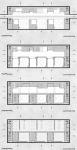
The building is organized through a Shearing Layers strategy:
Permanent Shell: Reinforced concrete retaining walls with recycled aggregate, utilizing ground thermal mass.
Adaptable Core: Modular steel framework designed for disassembly and long-term flexibility.
This separation allows infrastructural permanence and programmatic adaptability to coexist.
Waste Collection Network:
A 1 km radius underground pneumatic waste collection network establishes a zero-truck district for textile, paper, and e-waste streams.
Pre-separated waste is transferred directly to the facility via vacuum silos.
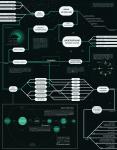
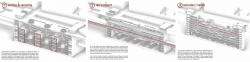
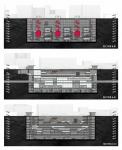
Operational Sequence (Vertical Flow):
The system operates through a bottom-up material process across multiple subterranean levels:
Base Level: Vacuum silos discharge into Manual Sorting & Pre-Classification Units.
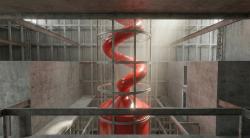
Mid-Level: Materials ascend via a multi-stage vertical conveyor to Shredding and Transformation Units.
Upper Bifurcation Level (Material flow divides into two distinct paths):
Path A - Civic Loop:
Recycled materials feed directly into Design Studios and Secondary Market programs.
Path B - Industrial Loop:
Compacted bulk raw materials are transferred into the 3.5 m diameter logistics tunnel and transported via autonomous rail pods to the existing Halkapınar Waste Transfer and Recycling Hub.
Logistics Infrastructure:
A dedicated underground rail tunnel runs parallel to the metro corridor, forming an expandable reverse logistics spine. Autonomous pods transport bulk materials without interfering with passenger systems.
Programmatic Innovation Clusters:
Rather than functioning as a centralized recycling plant, the facility operates as a civic-metabolic interface organized into thematic cores.
- Paper Core: Publishing Studio & Stationery Workshop
- Textile Core: Open Fabric Library & Digital Pattern Lab
- E-Waste Core: Disassembly Lab & Redesign Start-Up Studio
- Civic Zone: Secondary Market & Repair / Swap Points
- Digital Interface: “Track Your Waste” interactive dashboard displaying live metabolic data
Environmental Impact:
- Zero-truck district within 1 km Radius
- Rail-based reverse logistics reducing carbon-intensive transfer
- Subterranean construction leverages stable ground temperatures to reduce thermal fluctuation and mechanical cooling demand
- Modular steel system enabling long-term adaptability
Designer: Defne Demir
Instructors: Assoc. Prof. Dr. Ülkü İnceköse, Assoc. Prof. Dr. Ebru Yılmaz, R.A. Ceren Ergüler
Defne Demir